Published Last updated
Read Thuy Reed’s bio and speaker profile →
View in Podcast Library: stories, quotes, books, and resources in one place.
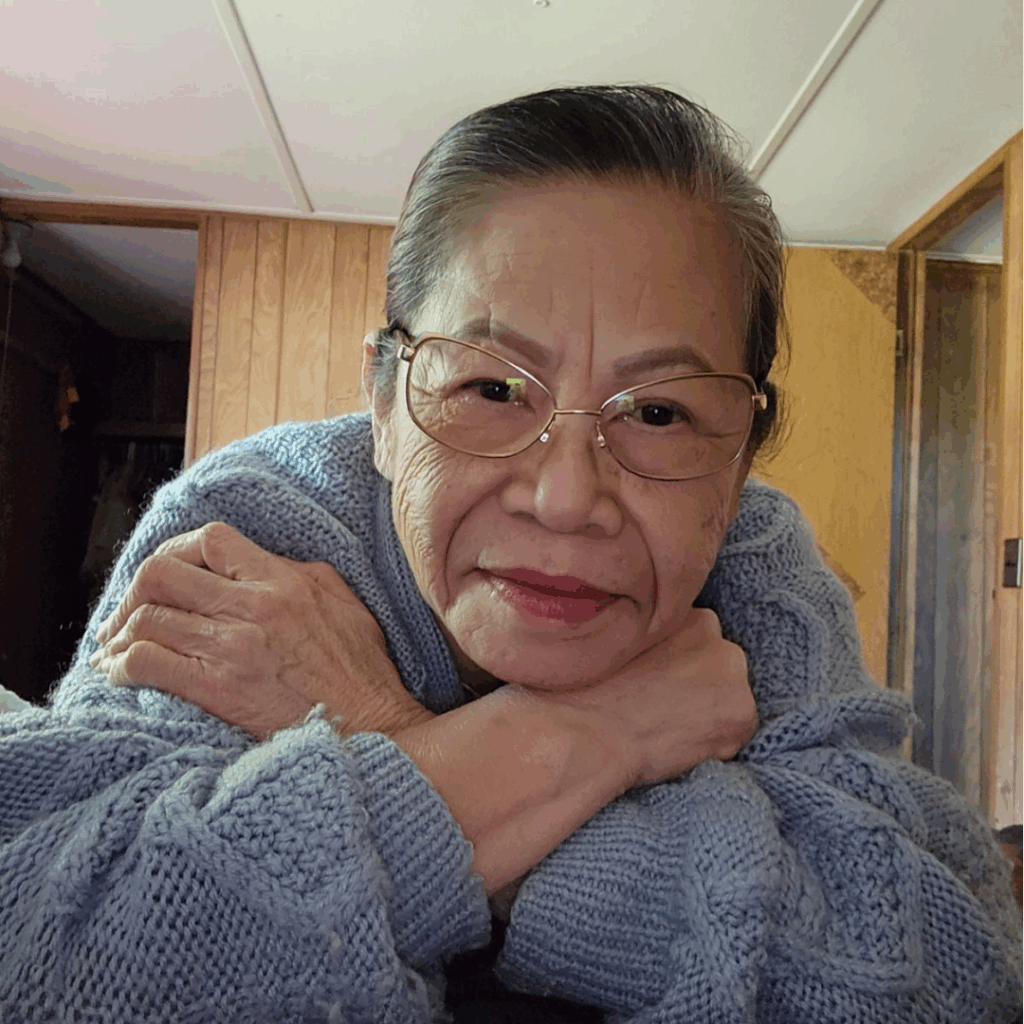
Thuy Reed covers War and democracy memoir in this Marketer of the Day episode. Thuy Reed shares how war in Vietnam and a new life in the US led her to fight for freedom and reconciliation. At 21 she landed at LAX and was stunned that the streets held no checkpoints, soldiers, or war posters. After marrying a Kansan and moving inland, Saigon fell three months later, ending any plan to return quickly. She describes losing her brother to a sniper on his 21st birthday and how that grief echoed through her family. Channeling pain into policy, she worked 12 years, from Reagan to Bill Clinton, to help lift the US trade embargo on Vietnam. January 6 pushed her to write her book as a letter to America about democracy, civic responsibility, and staying pro science and education.
Thuy Reed is a Vietnamese American author whose life was shaped by war, loss, displacement, and resilience. Born in a small village in Vietnam during the war, she witnessed firsthand the devastation inflicted on families and communities, including the death of her brother, who was killed by a sniper at the age of 21. She left Vietnam as a young woman, believing she would return, only to have South Vietnam fall months later, permanently altering the course of her life. After immigrating to the United States, she navigated profound cultural shifts, built a new life, raised a family, and transformed her painful experiences into a lifelong commitment to peace, civic responsibility, and honoring the true cost of freedom.
In this episode of Marketer of the Day, Thuy Reed shares how her experiences motivated her to write Dear America: From Vietnam with Love, a memoir written as both a personal reflection and a message to her adopted country. She discusses her 12-year effort to help lift the U.S. trade embargo on Vietnam, her deep concerns about political violence and civic disengagement, and her belief that democracy requires education, participation, and accountability. Through her story, she emphasizes that war leaves generational wounds, violence does not win hearts or minds, and freedom must be protected through informed action rather than fear. The key takeaways center on valuing democracy, rejecting violence, staying engaged, and remembering the human cost behind political decisions.
Quotes:
“I do not like war, because the bullet that killed a boy on the battlefield went straight into his mother’s heart.”
“You cannot win hearts and minds with guns and bullets. You cannot.”
“This is America. If you want change, you work hard, you vote, and you stay engaged. You do not tear it down.”
“I love America with all my heart, because this is where everything that is me and mine is found.”
Resources:
Podcast: Play in new window | Download (Duration: 28:31 — 39.2MB) | Embed
Subscribe: Apple Podcasts | Spotify | Amazon Music | iHeartRadio | Podchaser | RSS
Transcript
Download transcript (.txt)Thuy Reed is here. She is a remarkable Vietnamese American woman whose life story spans war, loss, courage, resilience, and the unbreakable pursuit of freedom. Her journey began in a small Vietnamese village torn apart by war, continued through an adolescence marked by survival and difficult choices, and ultimately brought her across the world to the United States, where she built a new life, raised a family, and found her voice. We are here to talk about her amazing, excellent book called From Vietnam with Love, and it's a memoir, and it's a letter to America. It is a heartfelt reflection on the country that gave her refuge, the freedoms she cherishes, and the concerns she carries for its future. It has everything. It has vivid storytelling, painful memories, thoughtful observations, and profound love for her adopted country. Thuy brings listeners a powerful message about democracy, compassion, and the true cost of freedom. So, Miss Thuy Reed, it's amazing and wonderful, and I'm grateful to be speaking
with you. Thank you very much for having me,
you're very welcome. And so what did I leave out of that introduction? What should we know about you?
Well, I would like to share a bit of my endeavor to bridge the relationship between Vietnam after the war. After the war, the United States post an embargo on country of Vietnam and during the book, I keep thinking, you know, if all the smart, capable Create with creativity, leave the country, what they left to Vietnam, and beside the United States cannot take in all of so I thought, you know, the best way is to Lift this trade embargo. And I spent 12 years of my life from Ronald Reagan to Bill Clinton to help lift the train bug. And I'm very proud of that achievement. And today, Vietnam is nothing like the Agent Orange and bomb busting days. She's not, you know, where we will like her to be, but much better, and she's unhealthy,
very good. And you have done your part. There's that aspect of you. We went through these life changes, these location changes, but you also were politically active. You also made a difference. And so you have this book called from Vietnam with love. And you say that you know so much time has passed, right? Vietnam is completely different than now versus then, and what was it like back then? What led you to coming here,
be here to the United States? Well, I can say that from what had happened that lab, what's what brought me here is that on the cover of the record albums, the rock and roll record, albums that I received from my American friends in Saigon, like if, if they to go home, back up, back in those days, they can't go back to The world. They've been going back to the United States, and they will leave me a memo of Bill yours and record albums. And on those records albums, I would see, you know, concerts and, oh, I want to see. America.
So you listen to the record albums, and how did you end up here?
Because there was a during the war. I believe it's also today, too that an exit visa from country of
the and there was a man, a guy from Kansas, who were willing to wait to all that paperwork to fish me out of Saigon. Okay?
And when leaving Saigon, leaving Vietnam was that difficult? Were there, like family friends? It's like you have to leave everything behind forever. Sounds scary?
Oh no. When I left Vietnam, you know, the war was still going on. No one's thought four months later, Saigon will fall. When I left Vietnam was the idea of to go see America and return. I was not, not in this situation like I have to leave everything, abandon everybody. I knew, no, sir. It was not like that. I came with glee.
Okay, so it was an improvement. You were escaping the war and coming here. And what were those first few days and weeks like, I know, like when I take a vacation to even something like Japan or Thailand, there's a culture shock there, so I can only imagine you coming here. So what was there, anything that stands out as far as the big differences, or the initial awkwardness being here
I came when I was 21 years old in Vietnam. I cannot say in Vietnam, in Saigon, I you know, city, Saigon was formally command of the French colonists. So Saigon is a bursting city, so I was not shocked to see street lights or paved roads. Well, my first impression though that when I exited lax, there were no checkpoints. And I further noticed that, I don't know how well you know that area, but when you go down to Century Boulevard, when you turn right on in Inglewood to go to Redondo Beach, and I saw no sight of war, no olive green uniform Soldiers, no war propaganda billboards, no smell of spent ammunitions. So it struck me from LAX to Redondo Beach, 1520 minutes away, I realized there was no war in the United States. At that time, I was too young to think about, oh, why there was no war here, and why a war in my country. I just just let you know happy that I made it
great, wonderful to have escaped that. And then, as far as getting your new life built, what was that like? Did you have to get a job? Did you start a family? What happened, as far as building your
life here at the beginning,
I married to this boy from Kansas who brought me here, then to. Work, I hung out in Southern California, and then we moved back to Kansas, is where these folks and there, three months later, South Vietnam fell. That's where my life changing event began.
Well, wonderful and and so and so you've, you had this culture change. You went to Southern California and then to Kansas. You have been doing this work to get the trade embargo lifted. And it's all in this wonderful book. And can you tell us about, like any other of the kind of noteworthy moments, what else will we find in this book?
Oh, and in the book, the book you will find, of course, tragedy of war. In the book you find how war. It doesn't matter how much land you own, and if the war take place in your land, then you cannot till the land. And then so you don't have harvest, then you don't eat. But what I like to if you ask me about the war, do you know my brother, two years older than me, to help light the wait for the my mom, for my family. He joined the military when he was 17 years old, and he was took down by a sniper. On his 21st birthday, climbing out of a turret. Is that how you say, you know the gun, hug on a tank? Yeah, determined to retreat. He had made body. Buddy. And you know, folks, I do not like war because, you know, the bullet that killed the boy in the battlefield went straight to do his mother's heart
and everybody else still hurt today.
Thank you. And so it seems like you see you have this message about war, and isn't it just seems so so stupid, pointless, all of it like you, when you look at like, you know why wars happen? Well, it's because, like, this country just happened to be positioned there. Someone wants some resource, and then, you know, leaders or politicians, they'll send young people there to shoot at each other, just because that's what the the message is, that's what the order is. And it just, it seems so weird and silly. So Can you unpack that a little bit like just, can you tell us about what, what your message is, about war, and just how, how dumb it is, and what we should do instead?
Well, you know, doing that, ring stage that the amount of weapon that driver on Vietnam, a country is smaller than the state of California, my dear. And I would say the line back then was what heart and minds or something like that.
Minds, yes, dear Lord,
You cannot buy or get hearts and minds with guns and bullets. Cannot
so to me, the war.
To today, Vietnamese are still hate each other, and you know, that's no different.
Than where I'm at here in Georgia, I'm just hop, skip and jump from Savannah, historical city, war still hurt. It shows so war doesn't fix anything for people who are innocent bystanders
makes it worse for many decades later, the Vietnam War was 5060, years ago. And how does all that lead to you writing this book? What was the inspiration for that many people? They imagine writing a book, they start, but they don't finish. What was your motivation for this book from Vietnam with love.
I spent a time 12 years, as I said, help. I was not the only one worked to lift the train, bugger, but I spent 12 years that I worked hard, that the day bill clinton lifted the train. Boggle the local newspaper call me up to have an article about me when I take on a test. I'm dedicated and I want to write this book I want to share with you and the viewers a long time ago.
What's this say? Ah, it's about the Middle East is domestic.
And if you go do cough and testing this carbon cardboard pieces is at least 25 years. I want to say something for a long time, but January six was the grand impetus. Is that the right word to say, Sir, yes.
Thank you. When I saw that, I thought, Oh, my God, you know what
I've been I saw 13 changes of government before that. Nothing like that happened. This is America. All you have to do is go back work hard, dedicate more time finance. What knock doors for candidate that you wish to you know that you can do you support. Don't have to do that. This is America, the United States of America. So that's caused me great worry, because during those days in Burma, there was a took down of a government, and some of the folks in the United States, I heard, because now, nowadays you can go online and hear everything and her, some people Want to copy that, dear Lord, You don't want that. You don't want to do that. For the last century, the White House is set by all. Most even number of time that each party you know, were elected in so, you know, I think 13 time Republicans, 11 times Democrats. I can be a year or so a couple, but I'm sure I was close. So to me, that's very even, right. So the government is not that awful. But now my first topic in the domestic issues, Robert, I'm sorry, but I have to read it. Lazy motives. We vote when we're unhappy. We vote in when the familiar name on the ballot, we vote with nice, easy soundbite, but so I am sorry, but that's how I feel, and because of that, we keep send back the same politicians and they and when they click, they scratch each other backs instead of taking care of us. So yeah, that's how I feel.
Okay, that is profound and deep, and it is scary that people resort to violence when you imagine that the United States is a you would hope a place above that. But these things still happen, so the problems still remain, and we need to be educated and be politically active to stop the evil from coming back. And we've discussed many different topics here. Miss till you read about your book about politics, about Vietnam, but in these final minutes of our discussion, do you think there might be a missing question? Do you think Is there something I should be asking you? I just don't know to ask you? Do
presently,
in wars and I want to share a vision. I don't know what you call it, a memory or an as an image,
okay, that I can see it and this is that why I do not
my sister in law crawl up the stair. We live in third floor apartment the end time judgment I general, tan was killed. Tan was killed
that always with always with me, my sister in law crawling. So that's for sure. I think we can solve this if corporations find way to make money, other ways to make money, instead of make things that kill people. But I guess with new technology, you you don't, you don't see the gruesomeness of combat, war. Yes, thank you, Mr.
Plank, thank you Miss tui Reed for sharing with us. You've seen so much in your decades, and you've helped many people and. Given us a lot to think about. And if this is a topic that excites or interests or just intrigues you, and you want to get that deep dive and find out more, you need to check out Miss Chewie Reed's book on Amazon. It is called Dear America from Vietnam with love. And her name is t, h, u, y, r, E, E, D, and you can also go to her website that's tui. Read.com tui Reed story is one of courage and perseverance. She's witnessed the hardships of war, dedicated 12 years to urging the US to lift trade restrictions on Vietnam. She's a successful author and former Miss Saigon. She's committed to giving back to the country that welcomed her with open arms, and she has this passion that she shared. Powerful voice, new perspective, story of hope, a call to action, a unique story. It's a new perspective on the Vietnam War unlike any other that's g, h, u, y, r, e, e, d.com, and her book is called Dear America from Vietnam with love to we read Yes. And as we're wrapping up here, Miss tui Reed, do you have any final parting words of advice? Is there a powerful quote or lesson that you think you might share with us at this conclusion of our discussion,
you know, Mr. Blank, I love with all my heart,
because this is where everything that's me and mine is found. And if anything I want to say to fellow Americans, this is not a time to go anti science or anti education. You know Beijing. I said Beijing. I would not say the Chinese. I would not say China, but Beijing have committed this attack that they call salt, Typhoon salt, like the sodium that you use to attack the cyberspace, American cyberspace. And you know, American Cyberspace, or civilians Beijing, a concentrated is concentrated. So we need to be careful. This is not the time to anti science or anti education, please. Thank you so much.
Thank you. It's more than important than ever to be aware of these problems. Get educated with computers, science, politics, all the above to stop repeating the mistakes of the past and have this brighter future. Do we read Dear America from Vietnam with love, wonderful speaking with
you. Thank you. Thank you for having me. You.