Published Last updated
Read Edward H. Muñoz’s bio and speaker profile →
View in Podcast Library: stories, quotes, books, and resources in one place.
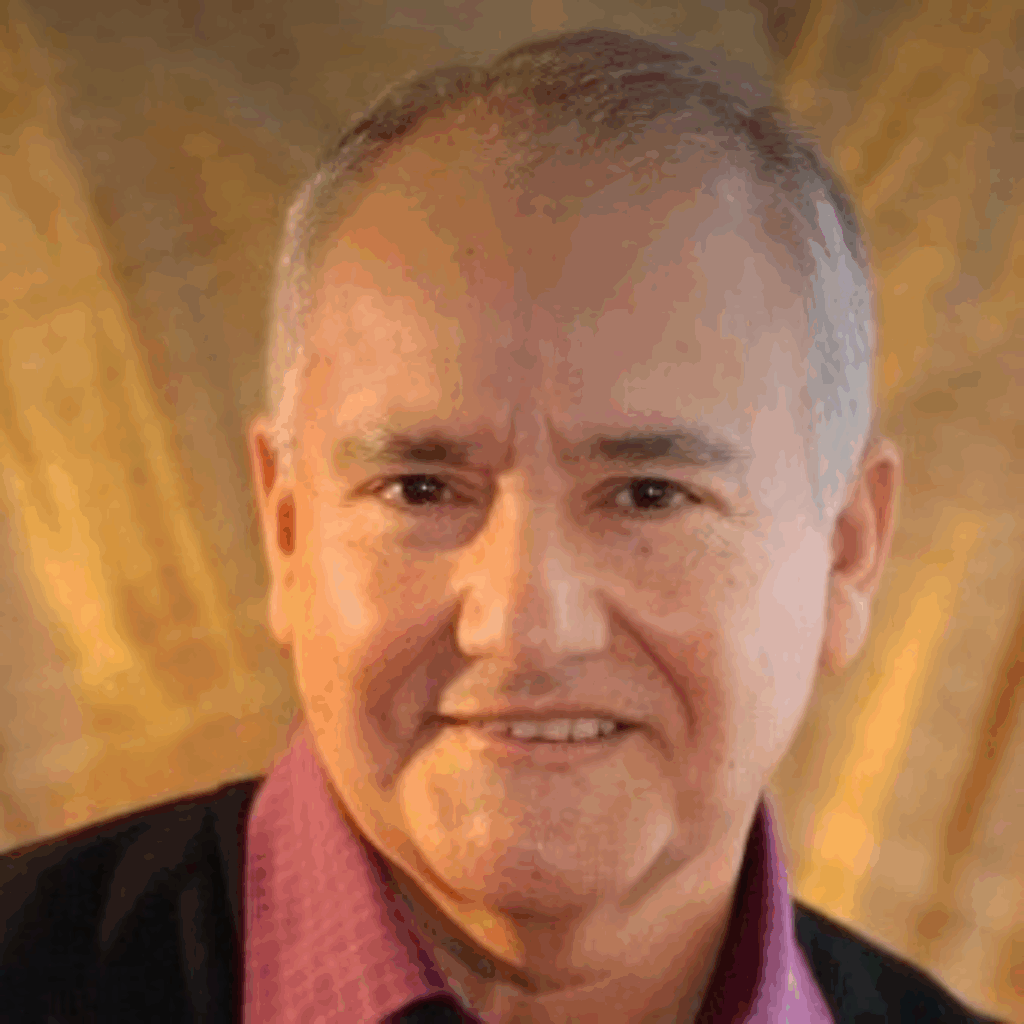
Edward Munoz covers Engineering Leadership Memoir in this Marketer of the Day episode. Edward H. Munoz shows how an engineering career can become a legacy, turning adversity into decades of impact and meaning. Living with Parkinson's, he keeps moving through yoga, morning basketball, and speech therapy while he tells the story. He joined Celanese in 1967 after UT Austin, helping shift the firm from polyester into polyacetal materials that challenged DuPont. By tapping an overlooked PhD's expertise, he helped build customer credibility and market share for the product. In 1984 he led a German joint venture where Celanese owned 45% and learned to earn trust across hard cultural lines. He is candid about the cost of ambition, including divorce, and later rebuilding family while writing for his kids and grandkids.
Edward H. Muñoz rose from humble beginnings as a first-generation Mexican American in a South Texas border town to build a 33-year career at Celanese, where he played a key role in transforming the company into a global leader in engineering materials. After earning a chemistry degree from the University of Texas at Austin, he joined Celanese during its pivot from fibers to high-value engineering resins and helped establish its polyacetal product as a serious competitor to industry giants like DuPont and GE. His journey included navigating corporate takeovers, leading multinational teams, confronting cultural bias, and accepting personal sacrifices, particularly the strain his ambition placed on family life. A near-fatal car accident that killed a close friend became a defining turning point, propelling him into international leadership roles and reshaping both his career trajectory and personal life.
In this episode of Marketer of the Day, Edward Muñoz reflects on his legacy through his memoir Challenges, Triumphs, and Heroes: Memoirs of My Celanese Odyssey, which honors the people behind corporate success while capturing the human cost of leadership. He discusses his work in Germany and Mexico, his commitment to inclusive leadership, and the lessons learned from balancing ambition, culture, and responsibility. Now living with Parkinson’s disease, he remains active through photography, travel, and leadership within the arts community, helping an organization not only survive the pandemic but grow significantly. Key takeaways include the importance of resilience, values-driven leadership, preserving personal history, and leaving something meaningful behind for future generations.
Quotes:
“The hardest challenge was balancing ambition with family. You gain a career, but you pay a price, and you have to decide what you are willing to give up.”
“I am an American. That moment taught me how perception works and how easily people define others before they listen.”
“You are not going to be around forever, so you have to leave something behind that others can learn from.”
“When I think I might get fired, I remember this: I was looking for a job when I got here.”
Resources:
- Edward H. Muñoz on LinkedIn
- Muñoz Group Investment Banking (official site)
- Challenges, Triumphs, and Heroes: Memoirs of My Celanese Odyssey (Amazon)
Podcast: Play in new window | Download (Duration: 30:39 — 42.1MB) | Embed
Subscribe: Apple Podcasts | Spotify | Amazon Music | iHeartRadio | Podchaser | RSS
Transcript
Download transcript (.txt)From humble beginnings as a first generation Mexican American in a Texas border town. It's Edward H. Munoz here, and he has succeeded in establishing a remarkable track record in the engineering materials world. He worked for 33 years for Celanese, which is a company that recognized his skills at building diverse multinational teams to grow the business, survive takeovers and help the company become a world leader in its market. He's lived to tell a tale, and now it's in this amazing book called Challenges, Triumphs, and Heroes: Memoirs of My Celanese Odyssey, and he is here to give recognition to Celanese's heroes and weave this captivating story of his personal journey in this amazing book that we are discussing today. So Mr. Edward Munoz, how the heck are you? "I'm fine."
I'm feeling good, feeling good. I, as you might know, I have Parkinson's. I have it a little bit under control. No one can control Parkinson's. There's no There's no cure for it. So it affects me in different ways, but I do a lot of things to keep going and still live a lifestyle that I enjoy, do yoga, shoot baskets in the morning, speech therapy. Yoga can affect your speech, so if I start to sound funny, you might know the reason. But anyway, what I'd like to talk to you about today is the exciting life that I led for 33 years. I started with celinese in 1967 after graduating from the University of Texas at Austin with a chemistry degree, celinese was getting into engineering materials. Its background had been fibers. You might have heard of fortrel, celines, fortrell, it was the king of polyester. They don't like to brag about it, but they were the leaders in polyester technology, the polyester suit, polyester bottles, polyester fibers. But they wanted to move into high value engineering materials, so they came up with a few some not so good, but they had a winner in a polyacetal by the brand name of silicon. The competitor was Dupont. So we had Dupont, the giant Dupont, and the little celines, and they and the little celenes, hired this Mexican American chemist down in South Texas to help out with the technology. And I did that. It was a technology challenge, but I had a lot of help. I had a PhD sitting just 30 minutes away, who had really invented the product. Somehow he got stashed away in the basement of a laboratory, not recognized, but I knew what he had done, so I tapped into his knowledge, brought out the best, and solved him a lot of problems, and we established silicon as a leader in the materials world. For a while, DuPont was DuPont and GE were leading the pack, but after a few years, we had market share, customer credibility. And just a few years ago, a couple of years ago, Celanese, I was retired. Then Celanese bought the engineering material resin business from DuPont. DuPont exited the business. Celines bought it. So that was the first and interesting challenge and success that I can point to.
So his story, right? You, you changed the world with some of these materials.
Well, the people down the line, change the world, and we help them. And I did it, not only in Texas, but having been recognized as somebody who contributed, I was sent to Germany because we had a joint venture in Germany making some of the same type of materials. And. And so Celanese owned 45% of that German company. 55% was owned by the huge German company Hirsch sounds funny because it's spelled funny, H, O, E, C, H, s, t, but herch was part of a huge conglomerate called I gay Farber, and that was Hitler's war machine. So after the war, General Patton broke up that huge company into half a dozen. The biggest three parts of it were Hirsch, bear and BASF. Now BASF and bear did a better job in giving recognition to their name, selling, selling A's and hers, kind of laid back. So when I went to Germany in 1984 I took over a staff that were basically ex Nazis, and it was a challenge, starting from the first time I met my colleague. I got off the plane at Frankfurt, we sat down in one of the lounges. He looked at me and says, Pierre Munoz, welcome. We are very glad to have you. But I thought your company was going to send an American. I said, Dr Barr, I am an American. You obviously have a lot to learn about the US and America. I have a lot to learn about Germany. Let's help each other. It was tough, but we, after four years, became good friends.
Yeah, and what was some of that toughness, like, like, over all these decades, all these companies you work with teams solving problems. But it's never straightforward, is it? It's never a straight line. There's personality problems, production problems, just planning problems. I mean, tell me about where have you struggled? Where has the stress been?
Well, culture is one, but I'll tell you personally, what I think is the is the keenest and most challenging part. Of my journey, and it would be of anybody's journey, trying to do the same thing, climb the corporate ladder. The hardest part was balancing your ambition to do that with family, family versus career. That was the hardest part, and I'm not sure I in fact, I know I did not succeed in the family part so much I got divorced. For one thing, it led to a divorce. But every cloud had silver lining after that divorce, I married a wonderful woman, and as I wrote the book this last couple of years, in fact, last year, we celebrated our 30th anniversary. So great the second one took but you know, kids suffered, and there was, there's some scars, but they've healed, and that has been one of the biggest challenge. And I think everybody's going to has to face that challenge and recognize how much do I want to give up here, and what do I get? What do I give?
Yeah, sacrifice. You can do it all.
Yeah, I think, I think you can get a balance that leaves you satisfied. And I think one of the reasons I wrote the book was to actually, as the as my kids and grandkids read the book, they tell me, my grandkids, Grandpa, I didn't know you did this. I didn't know you were here. I didn't know you did that. So it's, it's a satisfying accomplishment, as far as I'm concerned.
Oh yeah, well, there's some some messages here, and what we're speaking about, right, these ideas of pursuing your dreams, pursuing. A career embracing the risk. And then, after all, that's done, if you have lessons to pass on to the next generation, if you're thinking about writing that book, write it to get yourself immortalized, because you won't be around forever. And it's helpful just to get this, these ideas solid, that way others can learn from them.
Robert, you got it, you hit it on the, on the, on the head. You're not going to be around forever, and you've got to leave something behind. I have history as one of my one of my hobbies, and it's just so interesting to read what people were. You know, people have changed, yes, but right at the bottom of bit of your stomach, values and morals have not changed. Which which leads to different cultures. Different cultures treat those morals in different ways. And I stress the part where I was a Mexican American in a in a corporate world that was really dominated by Anglo males. And you know what, looking back, most of the racism that I'll call racism that I ran into, yeah, so some of it was bad, but most of it was not, was not mean spirited. I'll give you an example. When I started working in Texas, I worked in a huge factory where we were making the plastic that I talked about Silicon was a mile long. I wasn't one end. There was another engineer on the other end, and we used to trade data every day. We didn't have cell phones. We didn't have the systems we have today. It was all by phone. So I'd call him and say, Hey, Bill, what have you got? This is Ed Munoz. What have you got for me today? And would exchange data. So one day he happens to be in my end of the plant. He hasn't met me yet, only by phone. He walks into my office. I was kind of a bullpen office. Several desks is Edmund here. Let's say Edmund. Edmund. Who? Edmund Yost, my desk mate, that's not all. And I'm saying, what's going on? And he looks at me and says, Ed, you don't realize when you introduce yourself on the phone, when you say, this is Ed Munos, people hear Edmund Yost and Bill, who's still standing in the doorway. He looks at me, oh, gee, over the phone. I thought you were an American, and I look at him. I said, Bill, I am an American. Oh, of course, of course. Sorry, sorry, it's just the way you brought up, you know, just how we perceive people.
Yeah, that's a cute, funny story, and takes us right back. And that's why it's great to read a memoir like that, right? Where we can kind of, like, experience the past as you have with, like, different time, and it's almost like an alien world, right? Like the the 70s, 80s. I mean, it's it used to feel like a few decades ago. Now it's like so long ago, and then we can still get, like you said, there's the there's like the morals and the ethics and the lessons and the culture. There's some things that, even with everything else around us, like that technology changed so much. But then there's some, like universal humanity that has not changed and and you this book, and what are you working on now? You see that you're in kind of more like the the retirement legacy, passing on, the the message years, the kind of keeping the Parkinson's at bay and staying physically fit. But what are you currently working on? What do you have to look forward to?
Well, I'll tell you, I've been busy just with the pandemic that we experienced a few years. A couple of years ago, I was a member of I took up photography. I didn't take it up. I really devoted more time to it. I've been a photographer bug ever since I can remember as a young child. But I was a member, or I am a member, of the artists of Palm Beach County in Florida. When the pandemic hit, we thought that was the end of the world. The artists were didn't know what to do. Yeah, so I, I talked to them and told them, Well, look, what we need to do is sit down and write a mission statement, a vision statement, a strategy, a plan on how we're going to survive this, and I can't do it alone. It's going to be a team effort anyway. Make a long story short, we formed an organization, a team, and put a strategy together. We had 50 to 70 members, and we were losing them daily after we put the plan together. Well, let's jump to today. The pandemic hit hardest that 19 2000 22,021 2025 we have over 250 members today. So we not only survived, we have flourished. So I've been part of this artist community now, and as a photographer, I take part in their exhibits. You mentioned my website, it's blue.com it's really about photography. I've traveled a lot, visited a lot of places, and I've documented those places with my photographs, and so that's really what spent most of my time doing, and family.
I'm looking at the photographs. It's amazing. Antarctica, China, Great Wall of China. Hawaii, coastal Maine. Is there any of these areas that you think is like the was the most beautiful or most profound? Because sometimes you hear about this like you, you look out on the Grand Canyon or the polar ice caps, and you're just like, forever changed. Is there any location on Earth that really took your breath away,
in a way they all did, but that's not really the answer you want. Is it because it doesn't differentiate? They'll tell you how I differentiate it. I am most comfortable in Alaska. I don't know what it is. It's the fresh air, the density that, or lack of density of population or traffic, except in the summer, of course, but most of the time it's a place where there's no distractions. I love Alaska. The most impactful was Antarctica. I felt I wasn't another planet. In fact, the little storybook that I wrote on Antarctica is with pictures. Antarctica is a continent without streets or highways, nothing, nothing's paved. The only streets, quote, unquote, belong to the penguins. They get in line and form little furrows that you follow. It's a place where, place of extremes, the coldest temperatures, are recorded in Antarctica, the highest winds, the lowest humidity. It's indeed, like another planet, third place that struck me as so strange, but yet there was something in deep in me that said it's strange, but it's like part of my birth, part of my origin was Tanzania and the Serengeti you get off, and the first thing that hits you is The smell of coffee, the smell of plants, the musky smell of animals, earthy, primal, no skyscrapers, just man as You the we visited, a Maasai village. They live like generations and generations of their of their kin have lived, but they're happy different world, right here in our own world. So those are the three places that really, really hit me.
Yeah, I love your passion for this, and you're so right, we have all these little micro worlds that are all available to us, right, just a plane flight away to check out some of these places. And if we're if we have all these commitments, obligations, excuses, reasons, we can't travel, well, hey, we can do the next best thing and check out your photography of all of these places, at EDS, blue.com, and you've given us all sorts of little lessons here in our conversation Ed, there's like the project management aspect of things with your photography club, right? You think about, well, you figure out some, some goals, plans, meetings, people, assignments. You've talked to us about the culture and the value of people and and go going out and building your career. You told us about sacrifice and family. We've jumped around. But I want to make sure that we talk about you and your book and what's important to you, especially in these last few minutes. So do you think in our conversation, there might be a hidden question that I should be asking you. I just don't know to ask you.
Well, it would be, what was the most impactful event in my life, probably because I did have one that changed the course of my career, I think, and the course of my marriage and family. Along with it, when I married, I married a girl from the same neighborhood in South Texas that I was from, also Mexican American, not wonderful girl, by the way. We have remained friends and and my my wife, my current wife, knows this, and she has also a good relationship with her. But when I started in that long, large plant that I mentioned, you know, mile long, I settled in pretty nicely. I was getting comfortable, and everybody around me were the kind of people that did a good job, left what they did. Love to go home and grill and have a barbecue and drink beer, watch sports on TV, and I had a friend who he was married and had a kid just like like we did. So the two families were very close, and one day actually was the day that the Munich horror in the Olympics happened when terrorists assassinated, killed several Israeli sports people, my friend and I were going to work listening to The news on the horror. And as we stopped, about to cross the busy highway into the plant, somehow, some way, when we got to the stop sign, I looked over at the oncoming traffic and said, um, traffic's kind of heavy. It's going to take a while to find those, you know, a gap. So I settled back, and my friend was driving. All of a sudden, the car started to move across the highway, and I thought to myself, what is what is he doing? And that's the last thing I remember. The next thing I remember. I was on the pavement. I was very injured.
Everywhere. I blacked out. I came to again, this time in the in the ambulance that was taking me to the hospital,
and I heard the driver say, I'm taking one to the hospital. We need a coroner for the night for the other and I know my friend had died. Somehow that event, as I recuperated, I kept asking myself, why? Why Steve? Why not me? Why not both of us? Somehow that changed me. A few weeks later, after I returned to work, I went to my boss and said, I want a new assignment. Send me an. Anywhere. I can't stay here anymore. And that's when I had already done my my heroics on on helping them produce silicon they sent that's when they sent me to Germany, and I started to move Germany, here and there, and my wife was my current my first wife said, I left Texas. I want to stay there. And I said, I'm sorry, I can't.
So there I went, on a new direction. And in fact, I end the book
by saying that I love the movie Saving Private Ryan. And the movie has a scene where the aged old Private Ryan is visiting his captain's grave, and he's saying, I hope I was worth saving. I hope that I've lived a good life. And I'm thinking the same thing as I see my friend's face. So that's the personal part that I haven't told
I'm glad you did tell it. Yeah, you lived the life. You've seen things, many places, locations and dates, and it's all in this book, challenges, triumphs and heroes, memoirs of my celines Odyssey that's on Amazon by Mr. Edward H unios, and not Ed What did they say? You're they misheard your name as
Edmunds. Oh, Edmund Yost,
yeah, so it's not Edmund Yost, it's Edmonds Munos, and you can also find his website at EDS blue.com to see all that photography. And there's so many galleries there. There's Yellowstone, there's St Augustine, the Danube River, Cancun. It's beautiful. There's many pictures, but we really want you to go and check out challenges, triumphs and heroes, memoirs of my celines Odyssey. But before I let you go, Mr. Edward Munoz, it's time to ask you about a fun or interesting quote or lesson that has served you in life or in business. So what comes to mind as far as a fun or interesting quote or lesson.
A quote or lesson, okay, when I was in Mexico, one of my assignments was to be Director General cell Mex in Mexico, the largest chemical company in Mexico. And my two shareholders, big shareholders were Carlos Slim, who's one of the big billionaires on this planet, and Isaac Saba, who's not far behind. And when I got there, the staff, I recognize the staff was saying, Mr. Saba wants this. Mr. Saba wants that. My message to them was, listen, you don't work for Mr. Saba. You report to me. So quietly, one staff member became a good friend of mine said, and if you repeat those kind of things, you're going to get fired. I said, You know what? It won't be the first time that that I hear that, but it's this is what I always think when I hear I might get fired. You know, I was looking for a job when I got here. So, well, that was my Yeah.
Anyway, yeah, that was one of many adventures that we can find out about in the book, challenges, triumphs and heroes, memoirs of my Celanese Odyssey. Edward H Munoz, it's been such a blast speaking with you. Thank you for sharing.
Well, thank you, Robert, for having me and listening. You're a good listener. That's you're a good listener. That's very important. You humble me, sir. All right.