Published Last updated
Read Luis A. Rivera’s bio and speaker profile →
View in Podcast Library: stories, quotes, books, and resources in one place.
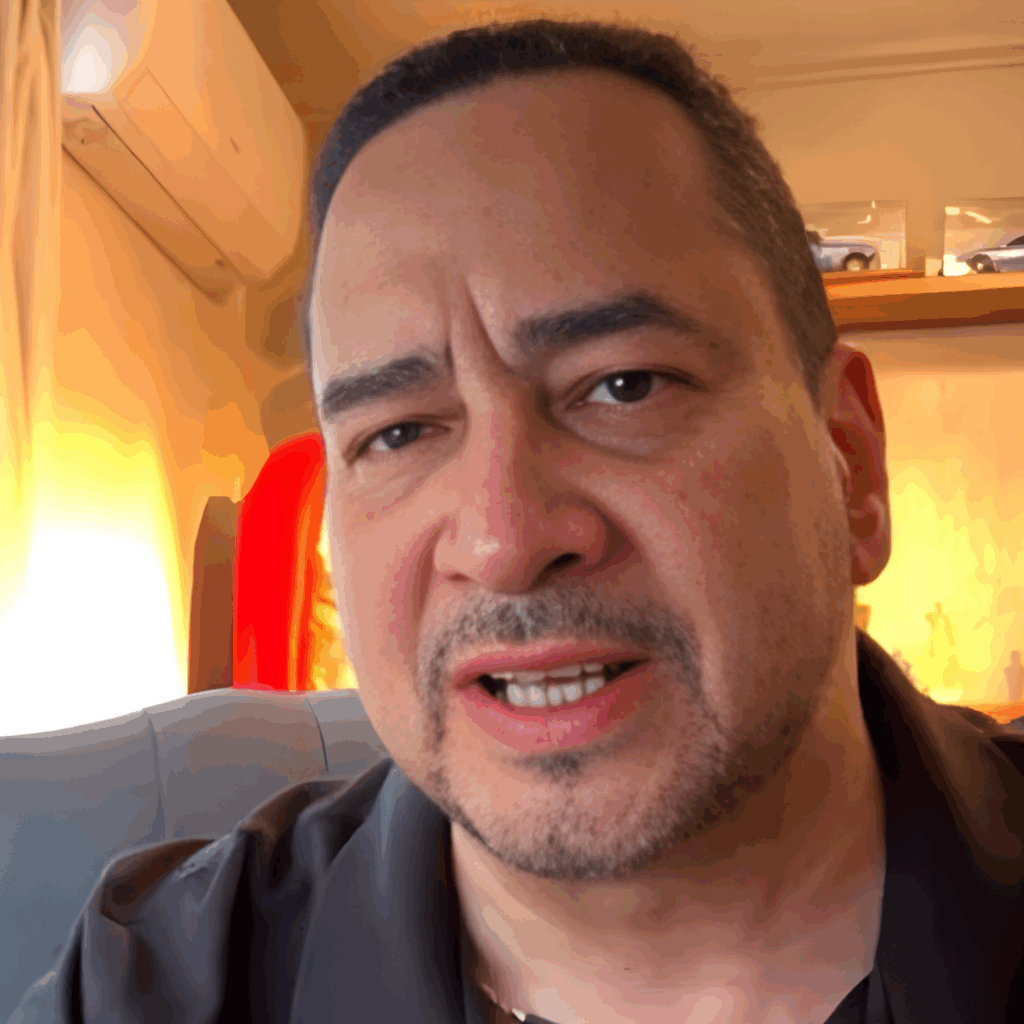
Luis Rivera covers True Crime Memoir in this Marketer of the Day episode. A retired NYPD officer explains how passion turned a Bronx kid into a steady rescuer and cop. In high school he joined the police auxiliary and the 46 precinct Volunteer Rescue Unit, checking in nightly by radio. With 1980s EMS facing 911 backlogs, the team moved from basic first aid to stabbings, shootings, and jumpers. He recounts a DOA case from an elevated train fall and the paperwork maze of hospital, EMS, and morgue rules. He later entered the Police Academy in 1989, worked the 52nd, and saw major NYC riots plus 9/11. His operating rule was to do the job first, set fear aside, and watch for internal politics that break careers.
Luis A. Rivera is a retired NYPD officer, author, and storyteller who brings a raw, behind-the-scenes perspective to policing in New York City. From surviving the turbulent streets of the South Bronx to handling riots, 9/11, and internal challenges, Louis chronicles a real cop’s journey through two gripping memoirs: The 52nd and 46-Rescue to Central. His firsthand account covers his start as a high school volunteer with the 46 Precinct Rescue Unit, his rise through the NYPD ranks during times of social change and unrest, and the relentless passion that drove him.
In this episode of Marketer of the Day, Luis Rivera joins Robert Plank to share powerful stories about coming of age in 1980s New York, the importance of passion and teamwork, and how volunteering laid the groundwork for a career in law enforcement. Luis discusses how internal obstacles can rival street dangers, reflects on evolving police culture and diversity, and delivers insights for those motivated by service. Explore what it truly means to follow your dream, whether facing riots, corruption, or the call to make a difference.
Quotes:
“Proudly we served; everyone who volunteered with the unit lived by those words.”
“Follow your dream, your passion; become a cop and be the best cop you can be.”
“You don’t let obstacles get under your skin. You push back, you persevere, you serve.”
Resources:
Podcast: Play in new window | Download (Duration: 24:48 — 34.1MB) | Embed
Subscribe: Apple Podcasts | Spotify | Amazon Music | iHeartRadio | Podchaser | RSS
Transcript
Download transcript (.txt)From patrolling the gritty streets of the South Bronx to surviving riots 911 and internal scandal, it's retired NYPD officer Luis Rivera, who has lived the real New York city cop story, and he wrote the two books to prove it, he has these raw, no holds barred accounts that take you behind the badge. We have the 52nd and we also have Four Six Rescue to Central. So Luis Rivera, he's a retired police officer from the city of New York. He's depicted his experiences growing up wanting to become a New York City police officer and becoming one. And we'll talk about both of those books. So the 52nd is based on his experience as a Hispanic kid becoming a police officer. And Four Six Rescue to Central is a book illustrating a young teenager joining a volunteer police force during his high school days. So, he's seen some stuff and lived to tell about it, and has many anecdotes and lessons to teach us. So, Mr. Luis Rivera, how are you?
Good. I'm good. Thank you. Thank you for having me. Mr. Plank, appreciate it
Happy to have you. And so what did I leave out of that introduction? What are these books about, and what is the unique message you have for us?
Well, actually, you said it all by this. The only thing that I can add is just happens to be that my first experience was the Four Six Rescue to Central, and my second experience was the book that I wrote, The 52nd but I wrote the 52nd first. And what we can start with is the Four Six Rescue is here. I am a high school students and wondering, What am I going to do for the summer and stuff? And we see these police cars running here and there, and then we decided to look into it happens to be that you can join a volunteer police force within the city of New York. And I was like, wow, that looks interesting, especially the fact that I always wanted to become a cop. So in my high school days, who would think that you would join a police force while going to high school.
Right.
In the short time after that, I realized the same the same force had this Volunteer Rescue Unit, and this rescue unit went around. Providing and rendering first aid, basic first aid to anyone who came up needing assistance in time. Within the four six rescue the police officers and the fire department and EMS took a liking to us, and every time there was an emergency with with EMS, because back in the 80s, a lot of people didn't know EMS had a backlog for the for the emergency 911, calls the city took a liking that we would help them out. So what started out basic first aid. We wind up rescuing people from suicide, from a dealing with victims of stabbings, victim of shootings, car accidents. We were all journey on the spot when it came to that era and to what we were doing. So it was a great experience, and it had to be written.
Yeah, because of what you've gone through. And so right off the bat, that's good, like, career advice, because you hear that a lot lately about, like, policemen, firemen. There'll be one opening, and there'll be, like, 1000s of applicants. So how do you differentiate yourself? Or how do you maybe, if you say, Well, I like to become a cop, and a lot of people say that, but then maybe you don't know what you're getting yourself into, or you don't like it. So the the volunteer force, seems like you can get in a great item on the resume to say, hey, here's how I stand out. I've I've done some of this, and so even the way you describe some of the EMS services, it sounds scary, but it sounds adventurous, and it sounds like something that is a much needed service, right? If you imagine the Hundreds 1000s of people that you've helped out in various ways from what you've seen. And so can you tell us about just like, why would someone be crazy enough to risk their life in the way that you have?
Isn't that something I always say Who would do this on their right mind. But here it is, someone who's always wanted to become a cop, someone who always wanted to be a fireman or something, or get into a rescue unit and be out there. Growing up in the 70s, in the 80s, everything was about cops. Every show that you see, every movie you saw they had to be about cops. What do the cops know? I don't know, but once you're in there, you see everything from shootings to stabbings, from jumpers, from train wrecks and stuff. And you get involved. In this case, you have to have some type of passion, whether to become a cop. Up or or just be out there, or a little nuts. Because I always say anybody who lives in New York City got to be a little bit nuts, but in joking, of course. But the point is that you got to have a passion. And whatever that passion is, that's what drives you to do these things, to join volunteer, especially in the 80s, when when crime rate was high, the muggings were out there. But you know, once you do these, or you volunteer these, these units, and you don't look at the you don't face the danger, you don't look at the danger, you don't think about that, you just do it because your passion tells you this is what you want to do.
Yeah, that's wonderful. So the passion overrides the lesser factors. Where you might say, well, there's a lot of work or training, or it says I have to wake up early in the morning and put on a goofy uniform. Well, there's the passion outweighs all that. Then it's, you know, it's, it gets you on your way. It gets you on this adventure. And and you mentioned, like, the the crime, and it's, it seems like the like the public sentiment is that it's a lot safer than it was in the 80s, right, with the cameras everywhere and cell phones and the training and the techniques. But you tell me, like, has the crime situation just improved since the 80s?
Well, you're always going to have crime, but the prevention of crime has changed that you said the cameras, these people who's willing to come up forward and say, hey, you know this guy, or this guy, or they did this. The point is that back then in the 80s, crime rate was crazy. And just to in my case, a high school student, who would think a high school student is out there saving lives, running around in this truck, they're here, and this truck with these guys going out there, the stories that is put together, and knowing that you're doing, you're in a venture, you're doing this because you want to. And then you see cops who get paid at that time who who really was disgruntled, and it's like, oh, you know. And I'm like, for me, it was a passion and speaking, not speaking, but speaking for the other guys, we had bus drivers, we had mechanics, we had guys who were actually working for EMS. They were driven to do this at night. So we all got together with this passion beyond not thinking about crime and just being out there to make a difference, and we did.
And I wonder about the people that maybe wash out, because I'm sure you've seen people that maybe had a bad attitude or didn't take it seriously. So what differentiates the people with the passion who enjoy it, versus those that maybe didn't last?
Well, those people who didn't last Robert, I tell you, is,they didn't have the passion. They didn't see that vision. They just joined just for whatever the short reason, but the long reason is, you got to have a passion to do this. Because, like I said, You got to be a little nuts to be out there in the 80s, out there wearing a uniform, making a difference, ready to take action, whatever that action is, and and the and then the funniest thing, but the greatest at the same time, is that you have the same group of people with the same passion riding around this truck, going out there and making a difference. We went into crowds blaring our nice sticks back then you could, you could have a nice stick over your head, you know, if you have to be out there, helping the officers, helping the the accident of car accident victims, helping them out, evacuating from fire, evacuating buildings from before the fire engulfed The whole building, which I have that in, in there justice experience before I went to high school in the morning. It's like, that's, that's what separates those who want to do it and those who don't want to do, I hope that makes any sense.
Yeah, it does. It's, it's like, there's an amount of fun to be had, and that, I mean, you still, it's still, like a very serious profession, and it's very important, but still, like, you have to enjoy what you do and and, you know, go into it all in and so what's were the difficulties? Like, I mean, I can only imagine, like, the skills that you have to develop as a cop, right? There's the physical fitness and the you have to memorize a lot of stuff. You have to write your reports. You have to know the do's and don'ts, but you tell me like what was difficult in your training or your skill building?
Well, as far as the training is concerned, I don't want to mix both books. But yes, as a volunteer . Police auxiliary policy the 80s, yes, of course, you had your training, you had your paperwork and stuff. But the more paperwork in the the in depth of doing paperwork and and all these things comes from actually becoming a being a cop. You know, when you have your paperwork and you have to go to court and you have to present your your case and stuff all that. I don't want to mix it, but it there is a slight difference what they do and what as a cop, what you did as a cop, and then as you, as you did volunteer. So it's two different things.
Okay, well, fair enough. So then, in the spirit of not mixing it up, maybe we should focus on Four Six Rescue to Central. So you said that you wrote this after the first other one, but this was about you in high school doing that volunteer police force. And so since we're time limited, what would you say is like the the elevator pitch, or what's the quick explanation of the four six rescued essential book.
I would say it's, it's a group of guys going out of their way, focusing on coming in for the night, suiting up, getting on That truck, picking up that radio and say, for six to rent, for six to Central, and central will respond, Yes, for six friends rescue, go with your message. I'd be advised this, this unit is it's available. It's available for the night. So now you may have a shooting or stabbing, and Central is very picky. They don't want us to respond. Because here's the thing, and the volunteer force, you have no fire up. So I would say, if you have a passion, if you have a drive, if you like the adventure, and and you want to become a cop or or an ambulance person, which is EMS or in a fire, and you like that adventure. This is for you, but if not, it's not for you. Yeah.
And so passion seems to be the the key word of the day, right? It's like, it's so important, it drives the rest. And what is that schedule? Even like, like, if you're in in high school and you're doing the volunteer policing, is that, like a weekend thing is that at night. When do you even fit that in? In between homework, sports, all that stuff,
I used to fit it in practically every night. I used to go to school late. I should go to school late, but it was worth it. It was worth it.
Okay, and, and so, um, as far as, like, maybe, like, one interesting story. Or if we were to tell someone, like, something about something that's in four, six rescue to Central, and they say, oh my gosh, just based on that, I have to go read the book. Is there any story that jumps out at you or something you feel like sharing today?
Wow, there's a few of them. I think all of them are nice. I would imagine the one that, and we got funny stories too, but I would say the one that, I'm trying to I'm trying to embody the force from the elevated train station, you know, in New York and cities of like Chicago, New York City, we they have elevated trains. So they call them the L so I don't know if the person fell because if I had a heart attack or something, but fell off the track. Well, from the platform, fell into the track. From the track, since it was outside, I don't know how in the world, but he winded up in the streets, and of course, he was DOA. DOA means dead on arrival. That's the tag they. they pronounce when someone is dead, and the ambulance people come in and say, Oh yeah, he's DOA. So that's a pronouncement. So he was already DOA when he hit the streets. That was nuts. And our job is at that time, the cops were waiting for EMS because EMS had a backlog. What happened with EMS in the 80s, before the merger of FD, they were on their own, so we helped out the best we can. So we had a trans the officer says, Look, guys, you know, if you guys don't mind, he's already dead. If you don't mind transferring him, transporting this guy to the hospital. We're like, oh, no, we can't do that. We gotta wait for EMS to come and pronounce he goes, Oh, don't worry about I'll tell him that you did this. We had a we took the we took the body to to the hospital. The hospital said, This guy's already dead. You gotta take him to the morgue. So we go to the mob. The guy said, No, we can't take him in. We need all these paperwork AMS to pronounce him. Then we got a crazy guy. He was a captain, Captain Fango. He comes in and says to the guy, listen, this is a special unit. This is what we got. And we got to do this before, listen, I don't know what convinced him. Guy took the body in, and there it is. And that's not the only comical or serious stories, but there's a few of them in the book that I would say, get the book. Read all the stories.
Yeah. And that gives us an idea where, kind of like a dark comedy, right? Like, there's just this, this, this corpse. And I'm like, well, we need to put, give them to someone, put them somewhere. What do we do when they keep getting passed off? And it's like, it's, it's ridiculous to think about that kind of thing happens, but it's a good thing that you were there and on the ball and focused to get it done. And so you in high school, did the volunteering at and you can read about that in four, six, rescued essential. And then you made this transition. Then, right then you decided that you were so inspired that you wanted to keep that childhood dream going and become a cop. And that is explained in the 52nd and that sounds like on a whole other level, right with the corruption and the 90s and the riots and but So tell me, what is the 52nd all about?
52nd is about, like you said, the dream of a kid, Spanish kid growing up in the South Bronx, seeing the cops responding to these jobs. And I said, that is what I want to be, sure enough. And so the five two is the command that I actually got into after my rookie days I was assigned to the 52nd I would say, touching everything that I've mentioned. You got the crown hunts, the Crown Heights riots, the Washington Heights riots. You had the the Thompson Square Park riots they had in the 88 and 89 I caught the end of it, and there was another. Of course, you have your 911 the pope visit in 1995 A lot happened in the 90s, but I was glad to be part of that. And I guess, I guess, in a nutshell, that's, that's everything in there. I think that I answered a question.
Yeah. We asked, what's it all about? And so you say, basically, action packed, and it sounds like some scary situations, right? Like, when you even when you see a riot on TV, it's frightening. You're like, you know, people, civilians and cops get killed in a riot. It's just by the random chaos that happens. And so as far as all those things that happen, I know, like, they're all important and they're all different. But I mean, what comes to mind, as far as like, Were you scared? Were you surprised? Like, is there one of these events that you feel like is worth unpacking a little bit here,
I tell you this good question. You know, the word scared never came to mind, because, once again, the same passion I had when I was a teenager, a young kid, doing this volunteer. It's the same passion I had as as a cop. You did your job, you did it, you did it well. You did the best, the best to your abilities. But scare was not the issue. It was like one of these things. You could have a dark street. You're my boss. You say, Louie, we're going to go in there and take that street. I'd be like, no problem. You take one side of the street. I take the other, and we'll clean it up, and we'll do what we have to do, because the the worst scared and danger never came to mind. It might have come afterwards, nuts, but you did it.
Yeah, so you're saying like it's it's not useful to you in that present moment, you have a job to do, and it's like how the Eskimos have 200 words for ice and no words for war. And so words are important, right? And if you keep getting stuck in these words, these stories, they take over for you. But if you say, Hey, that's not what I'm here to do. I'm here to get keep the streets safe, to clear this side of the street, to do this patrol, to fix up the situation, scared is just going to get in the way of my job function. And instead, I need to, you know, I need to solve the problem, right? Need to do it here what I'm assigned to do. And so we've been jumping around and talking about all these different aspects of what you've learned, what you do, but hey, you're the star of the show, and so you tell me about the missing question in our conversation here, what should I be asking you? I just don't know to ask you.
Well, I would say, as for example, the meat of the 52nd it was the situations that would be happening with with some offices making other offices uncomfortable, like in the 70s, when women came on the job first, it was something of you. For some reason, some officers make them uncomfortable, as if they didn't belong, sad to say, but it's true. So in the 80s, you had a big influx of different ethnicities, if I'm saying it right, officers of different backgrounds, and they had a difficult time. And my question is, why me? I never let that bother me. I never let that get get in too under my skin. I I just let it be. But that happened, and, you know, it's sad because it wasn't, it was a situation that it shouldn't happen, but it happened, and it was something that was made other officers uncomfortable. So that was more dangerous or more? How would you say that? Well, more dangerous than the streets itself, because these people can shine you. They can talk about you and break and you know, and some people and it could break your career. I've seen that happen a lot. I've seen a lot of female officers quit. I've seen a lot of people quit. And I said, No, don't quit you. You let them get rid of you. You stay on the job. You push back and you tell them a little something, one or two, and I hope, I hope that answers the question,
Yeah, and it's good that times have changed, right? It's good that it seems like law enforcement, in many aspects, is a lot more professional and structured. And there's a saying, choose your heart, right? And it's like, Well, is it hard to be more aware and to be more careful about well, am I? Am I doing things that make others uncomfortable? Or is there this ripple effect with the backstabbing or the politics? Well, that is hard. But you know, what's also hard is being unable to fit in, or you can't do anything, because what if this person tells that person? And so it seems like somehow we've made it right. Somehow, it's evolved in a better way. And you've seen these things through the decades. And so as far as someone taking some next steps here and checking out these two amazing, excellent books, there's Four Six Rescue to Central and there's the 52nd where should someone go to get these books?
Well, there you got them. If you don't mind, I put them up. Okay? Them up, okay, and get them at the amazon.com Barnesandnobles.com but you know what's, what's, what's kind of exciting and nice. When I was growing up, I was reading novels, police novels. This was one of the books I picked up by the guy named Tom Walker. I wrote him a letter saying, Hey, I'm too going to become a cop. And whatever he says, oh, yeah, you be a fine cop. He sent me an autographed copy of this book Fort Apache to Bronx, the return of the Bronx. Then he sent me this one, death of a Bronx cop, huh? This is my favorite. This is nice because this here book, it depicts exactly what a person goes through when they're on the job, and exactly what I just finished saying, that the job sometimes hurts you more than than the streets. This one is exactly what I'm talking about. This book depicts an officer who's doing good on the job, but he's being bombarded by different by different avenues of the job, the bosses, the other cops, and this and that paperwork, it just the mind games. It's an excellent book. So that what I just said, compared to this book, is puts in that thing, where do I really got to look after the guys I'm working with, or the streets? But I took it as I'm going to worry about the guys in the streets, not these guys, like I said, I never let that get get under my skin, I pushed that to the side. Well, nice, and that I took his advice, and I did my own books. Isn't that something?
It is? And maybe someone can write a letter to you, and then you can keep it going right? Then you can expect some, some youngster, who is inspired by you, to pursue this career. And so it's, it's great. What you've done here, right? You've put the experience that you as you had, down on paper, and what, and what you're telling me is, it pays to be a reader, a learner, to be curious whether you're reading fiction or you're reading someone's true biography, just so that way you can hopefully avoid some of the mistakes that they've made. And when you, I'm sure you've seen as a cop, you go into some situation like, this is the 100th time I've seen someone driving this way or acting this way, right? It's like, if you go through those repetitions, then it's, it's, you kind of have a better intuitiveness. So if we're looking to pursue any kind of career, it helps to do some reading on and see what others have put out there. That way, when we're in the thick of it, and when it's difficult, we say, Oh yeah, you know, I read this in this book, and this has me somewhat prepared. I'm not going into it blind. And so do I say your first name Lui or Luis?
Either one is fine, but it's Luis, L.U.I.S
All right, so L.U.I.S A. Rivera. You can find him on Amazon. Those two books that are mentioning is called the 52nd where he was growing up in the South Bronx in the late 1960s and 70s. And he had this dream to become NYPD officer, and he was accepted in the police academy in 1989 he was doing the shooting range qualifications, achieved his dream, and saw many of these riots that we mentioned. And then the other book, you can say it's sort of a prequel, so to speak, because it was written afterwards. Is called Four Six Rescue to Central which chronicles the very real and very dangerous experiences of the men and women of the 46 precinct Volunteer Rescue Unit. So he was just a high school kid and also volunteering and ending up in these crazy situations in the Bronx in New York City. So Four Six Rescue to Central and the 52nd by Luis A. Rivera. Go on Amazon, check it out, get it on Kindle or paperback or both, and you'll love it. You'll be so entertained and educated by what he's experienced and what you can learn from him. And as far as us ending on a high note, ending with a bang instead of a whimper. I always like to end these, Mr. Luis by asking about a fun or interesting quote or lesson that has served my guests. So Does anything come to mind as far as a fun or interesting quote or lesson?
I would say is proudly we served in this book for the volunteer or everybody who volunteered, that quote would be proudly we serve. This one here, I would say, follow your dream, your passion, become the cop and be the best cop you can be.
Very nice, very inspiring. Follow your dream, your passion, be the best you can be and and be proud to serve. So check out those two books, that's the 52nd and Four Six Rescue to Central by Mr. Luis A. Rivera, an author former law enforcement and just a wonderful person. So thanks, Mr. Luis Rivera, for being here and writing these books and having that interesting conversation. So I really appreciate you.
Thank you so much for having me. Mr. Plank, I appreciate it so much.