Published Last updated
Read Sereda Fowlkes’s bio and speaker profile →
View in Podcast Library: stories, quotes, books, and resources in one place.
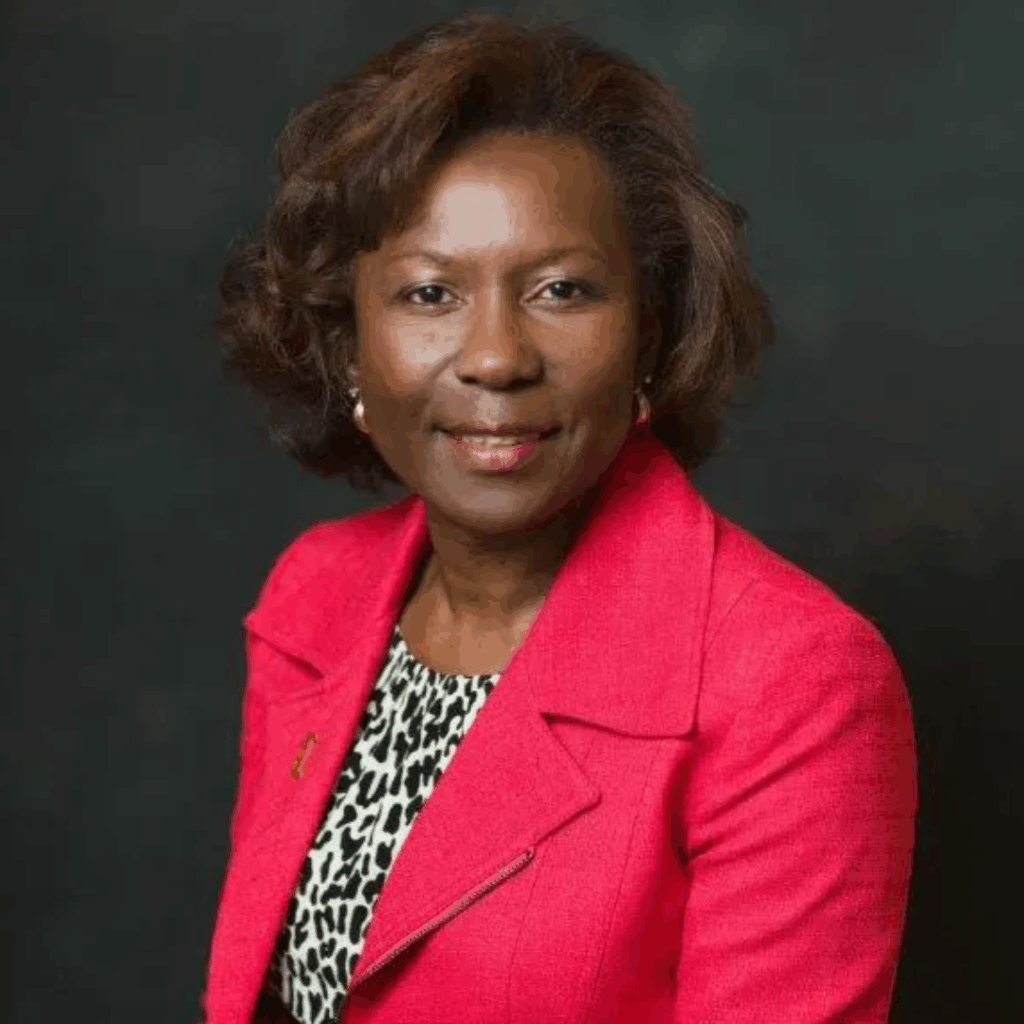
Sereda Fowlkes covers Women's Holistic Health in this Marketer of the Day episode. Sereda Fowlkes shows how women can navigate perimenopause and menopause with practical, faith-anchored lifestyle changes that restore energy and clarity. She notes symptoms can start in the 30s as food, soil, and environment shift, so brain fog or mood changes deserve attention. Her framework begins with awareness, tracking what is new, and using annual checkups to catch problems before hospitals do. Next she targets root causes like nutrient deficiency, pointing to common calcium and magnesium gaps that can weaken bones over time. She recommends real food over processed meals, watching sugars, avoiding seed oils, limiting excess caffeine, and adding daily movement and protein. For menopause relief, she explains HRT is not one-size-fits-all, suggests targeted supplements, and urges a DEXA scan after 50.
Sereda Fowlkes is a holistic health practitioner, wellness educator, and passionate advocate for women’s health. With years of experience guiding women through the challenges of menopause and healthy aging, she empowers clients to understand their bodies, embrace proactive care, and make sustainable lifestyle changes. Her approach integrates holistic nutrition, alternative therapies, and a passion for prevention, helping people thrive at every life stage.
In this episode of Marketer of the Day, Sereda Fowlkes joins Robert Plank to shed light on menopause awareness, the impact of environmental changes on early symptoms, and the critical role of nutrient-rich foods in lifelong well-being. She discusses the privilege of youth, the risks of caffeine, and why listening to your body is key to prevention. The conversation explores the effectiveness of holistic solutions versus one-size-fits-all treatments, the importance of regular check-ups, staying vigilant for nutrient deficiencies, and why a supportive, informed approach can transform women’s health at any age.
Quotes:
“So if it’s not in the soil, it’s not in the vegetables, it’s not in the fruits. So, you know, we’re eating kind of like dead food.”
“You cannot out supplement a bad diet. What you eat matters.”
“Women always pay attention to your body. Something’s different that you’re not used to and you see the and notice the change. Pay attention.”
“There’s no one pill that fits everybody. You have to know your body for yourself, especially women.”
Resources:
- Sereda Fowlkes on LinkedIn
- Why Be Sick?: 25 Strategies and Tips on How to Take Control of Your Health and Live a Longer, More Vibrant Life (Amazon)
Podcast: Play in new window | Download (Duration: 26:19 — 36.2MB) | Embed
Subscribe: Apple Podcasts | Spotify | Amazon Music | iHeartRadio | Podchaser | RSS
Transcript
Download transcript (.txt)Sereda folks is a faith based business woman who loves to help people get healthy, and that's what we're here to talk about today. She is a certified holistic health coach, international speaker and Amazon Best Seller, author of why be sick now. Miss Sereda coaches people to their health, in their mindset, spiritually, physically, financially, and she helps you to see beyond a diagnosis and disease. She focuses on implementing transformative lifestyle changes for women's health and in their menopause journey, important stuff, sometimes awkward or scary or we don't want to talk about it. I mean, no one likes to get old, right? No one likes when things deteriorate, fall apart. But hey, it's important, right? We only have one body, one health, one life. So Miss Sereda, how are you today?
I'm doing great. Thank you for having me. Robert, happy to have you.
And so what did I leave out of that introduction? What currently has you so focused, passionate, fired up?
Well, in the in the health world, you may have, may not have noticed that some of the stars now that are aging, women, especially, are coming out and talking about menopause, so they're making a big roar about it. So which puts more attention on it? Which is great, because in the past, there's not been a whole lot of attention paid to women when they say they have symptoms and issues. A lot of times, women are dismissed. But when you got the Hollywood, you know, ladies talking about and it's like, Ah, this is so terrible, and I'm having this problem, and my doctors doesn't have any answers for me, then people get to start paying attention, because then I see women online have been, you know, chiming in and talking about it because it's, it's real. You can't get rid of it, so you might as well go through it gracefully. So I'm here to help.
Well, they call that the overt in the window, don't they? There are some topics that maybe are taboo or they people don't want to talk about, and then once enough people do, then it's like, okay, we can have this conversation. And I have to admit, as a man, I know very little, and when I do hear things, I get kind of awkward and grossed out. But even now, there's all these discussions of like, pre menopause. So even if someone says, Oh, I'm not at that age, it's like, hey, it might be hitting you sooner than you think. And so is there anything that you wish is kind of would be kind of like commonly known at this point, with people more talking about it. What do you want to blast out there as far as the menopause message,
yeah, and because attention has been brought to it, there are some doctors who are saying women as early as 30 in their 30s, 35 are experiencing symptoms because the atmosphere has changed. The food has changed. Our environment has changed. Everything has changed so that we could be going into perimenopause sooner than we expect, nor Miss 40s and over, but in your 30s. And I talked to a lady the other week, and she says, yeah. She said, I'm only 37 but I'm noticing some changes which are attributed to perimenopause. That's like you could be early stages of getting into perimenopause, so it, you know, the brain fog and all that that goes with it. So just pay attention. I said, Women always pay attention to your body. Something's different that you're not used to and and you see and notice the change. Pay attention. Pay attention, and you can do something about it.
And speaking of paying attention, something that really shocked me was I heard maybe a year or two ago that, like from teenage years and early 20s, that a woman should be going and getting a gynecologist checkup like once a year. And I guess in European countries, that's common, that's well known, but in America, a lot of ladies, they don't even know they should be doing this until mid late 30s, and have you heard this? Or do you suggest this?
Oh, absolutely. That's scary. I mean, I grew up learning that, you know, once you ladies, once you had your period of childbearing age, you should be going to the doctor to make sure everything is good, because, you know, you don't know, and that's to make sure that you're healthy as possible going into your childbearing age. So I'm not sure where I didn't know that that was an issue, that women weren't going to the gynecologist earlier on. But yeah, that's, I would recommend that absolutely.
I guess we're in different circles, right? I guess in my group, the public health education system has failed us slightly, but that's okay. We correct our mistakes. And so speaking of, yeah, speaking of correcting our mistakes, you know, we deal with our health and when we're that, in those teenage years, in our 20s, we're indestructible in many ways, right? Stay up all night studying or sacrifice your sleep or exercise or diet. But then once you get older, maybe these issues catch up to you, or you can't quite bounce back the way that you used to, and so that sometimes led, unfortunately, some people to be stuck on the prescription medication and putting a band aid on things. And so what's your message? There? What should we know about health and aging?
Well, you know what? Youth has its privileges. We, like you said, everything we we do, everything we get away with murder, eat what we want. Look at the teenagers. They eat anything, and they bounce right back. But it does come a point where your body doesn't accept and you can't bounce back as much, so I say eat like you're aging, so that nothing that you will regret. You can't drink like naming names here, Red Bull with all that caffeine, and they expect to be healthy heart wise later on, that is one of the major things that will catch up with you. Too much of anything is not good for you. So too much caffeine, and especially if you're young. You know, we hear about the athletes that are like dropping dead. They don't totally know why, but you anybody cannot have too much caffeine. I don't care how young you are, and it is causing problems with with our youth, especially men, because most of them drink the Red Bulls. I've seen some women drink them, and it's like that's not as healthy. But if you can do things now to know that it will eventually catch up with you. So you don't want to damage your body early on, because it will fail you later on in life. So just be careful not to overextend into extremism on any level so that you can enjoy a quality of life later on.
Oh, yeah, there's that pesky lag time, isn't there? Of decades, and then when you're in your 50s, 60s, there's, oh, I wish I'd had less caffeine. I wish I'd quit smoking, wish I'd quit drinking, wish I'd exercise, drink water, ate better. This a whole checklist of like, if you only had a time machine to go back and do it, well, what if the time machine is now right? What if you can make the changes now and then your future self will thank you. So if someone says, you know, it's easier said than done, or I have all these bad habits that are so tough to break, what would you say to someone like that? What are some steps a person could take now to just get on a good path?
Yeah, so we overeat and we do all of this because our bodies, men and women, our bodies, are talking to us and letting us know I'm not satisfied. We eat and overeat because we're not satisfied. We may be full in our tummies, but our whole body system works together. It's like we're nutrient deficient. So we're missing minerals. We're missing the essential vitamin that the body needs to repair itself, and then at some point, once it starts taking from other parts of the body to survive, eventually it breaks down. So the key is that we're nutrient deficient. We're missing nutrients that we don't get in food because the soil is not managed as it used to be. Because I grew up on a farm, and my dad would rotate crops, and you know, everything that you would do to to to have a good crop the next year, they don't do that anymore, and then they don't put the proper nutrients in the soil anymore. So if it's not in the soil, it's not in the vegetables, it's not in the fruits. So, you know, we're eating kind of like dead food. So they did a study showing that orange 10 years ago had less vitamin C and less nutrients than an orange today, just because of how they package and try to mass market. They pick it green. They spray some chemicals on it, ship it to you. You can see, sometimes you'll see pot green on the orange part orange, you know, so you got a half ripe orange. It doesn't taste like a used to be orange unless you grow them yourself. You need a garden in the back of your yard, if you can, you know, so you can grow your own fruit,
if you have that luxury. But unfortunately, not everyone does. But it's good to have this awareness of, like, look for the nutrients if you can get them. And as far as that part of it, like finding out where the problem is and the lacking. Like, I'm I'm not sure if I'm afraid of doctors, but I'm really hesitant, right? Anytime I tell myself, like, oh, I'll just wait until something's wrong, or I don't have the time for myself, or am I, like, wasting the doctor's time? So do you ever come across that someone that just like, has a never ending list of excuses, of why they can't go get checked out, or why they maybe don't want to look into some of this.
Yeah, don't shoot me, but that's know me, men who don't like to go to doctors, you know, talk to the many wives, and it's like, I just can't get them to go to the doctor, you know. But if you and you don't have to be a hypochondriac, but just to have a checkup to see don't be afraid of the doctors, but the key is to stay out of the out of stay out of the hospital. It's okay to go to the doctor so they can check and see if your vitals are good. The key is to stay out of the hospital, so that way, prevention is always better than getting to the plate where you just so run down or there's an organ that's. Not functioning properly that you have to get end up in a hospital. So if you know what's going on, like once a year checkup is good for everybody, and for anybody who says, I don't want to go to the doctor, well, just make sure you're listening to your body. Pay attention if you know me, you don't normally don't have headaches, and then you start getting headaches. Why are you getting headaches. We deal with root causes. Why are you having this? If your eyes started hurting, you know all of a sudden your eyes are paining you why your throat is always sore, why you know your start having palpitations or any pain or anything unusual, pay attention to that your body is telling you because every symptom has a cause and is leading you back to something's not right. That's when you go to the doctor, it's like, Okay, Doc. And they always ask you, how long have you had this? Then you can say, well, you know how long it's been. Then they'll say, okay, then we need to check this out. So that would be my advice.
Okay, so self awareness, pay attention of something that's changing, and then when you go to that doctor, it's for the prevention, so that way you don't get something worse in the hospital and have that answer ready to go of, how long have you had this? And I think we all know people like that who kind of had some kind of symptom, went to the doctor and it was something bigger, right? Like, I had a brother in law, he lost 20 pounds in like a month, and he was like, Oh, great. But then looked into it, and he had a thyroid issue, had to get like, half of it cut out. Like my mother had changes in eyesight. She was in her 70s, and she had cataracts, and had, like, new lenses put in. And then had a friend that waited too long, and then now is almost blind. So it's like some scary stuff, like there's that window of time when you really should get this checked out and but sometimes, you know, we hear the facts, and maybe the facts stick, or maybe they don't, but you hear stories, that's what really sticks right there. We really help. So as far as what you've done, what you've seen, do you have any like, health or menopause or aging stories of yourself or others you feel like sharing here.
Ah, let's see. Oh gosh, let me see. Let's go with some clients. Have clients who have gone the HRT route, which is your hormone replacement therapy. Every woman cannot take the estrogen, extra estrogen, and so just to let women know there's an alternative, which is the holistic side, which is what I do. And I've partnered with people who do HRT because, you know, some people want it. If you want it, let your body tell you, you'll know. And I've had people who've had and it's like they're miserable. So it just depends. You have to know your body for yourself, because there's no one pill that fits everybody, and women, especially, you have to know. So I had a client who she called me, she got my information. We're on a zoom call with her boss. She heard me tell what I did, and then she contacted me later, and she said, I'm having problems. These are my symptoms, and blah, blah, blah, can you help me? I said, Sure. So you know, she got the products she I work with her. She went on vacation, left, you know how you when you rush in, they leave the hotel. She left her her supplements in the hotel. Didn't think anything about it, except her husband says, Honey, are you okay? And she's like, Yeah, I'm okay. Didn't think anything about it. Then her teenage son said, Mom Is everything okay? And she said, yeah, why do you ask? And she realized she didn't. She was not taking her supplements. She had not brought them with and wasn't taking them so they've her family noticed the difference. And then she realized, oh, this was helping me. And so she got back on him to make sure that, you know it, it worked for her, and passed through until she was able for her body to get back in alignment to where it needed to be. So I thought that was funny. That's like, when you know and you can tell yourself, when it's something is working for you, then that's key. And then I've had people who've had issues. I had a lady, just, this is not menopause, just health wise, her doctor told her that he wanted to pull all her teeth. And she asked me. I said, Well, why do they want to pull your teeth? She said, Because they said it had bacteria in my gums, and only way they could do anything was just if I pull all my teeth. I was like, Well, if you want to pull all your teeth, I say, but you know, let's see if we can help you. I was able to get her some holistic products that helped her. This was two years ago. She still has her teeth. Because I think that's extreme. That's like, really, but yeah, and on and on and, you know, people with bone loss, one thing is to have a DEXA scan if you're over 50 and in your 60s, if you've not had a bone density or DEXA scan to check and see how strong your bones are, because people don't realize, or may not have heard, that you don't fall because you know you're getting older. That means your bones have gotten to the point where they're brittle and they're weak, and you fall and break something, because your bones are not healthy. So you didn't fall and break something. Your bones were broken and then you fell. So it's good to think that check out your bones and make sure that you have some strength there, so that you don't get sidestracked because, boom, you know, you got to fall, and then you end up in the wheelchair and Walker and stuff like that. We can avoid all that.
We've been prevented, and no one wants to go through that, right? It's painful, it's scary. It leads to other things. It's it's financially draining, it's better just to to get a handle on some of this. And the lessons I'm getting from you today is that this is American. We have unlimited choices, right? And as far as you have this problem, don't ignore it. Take it seriously. Look at possible solutions. And everyone's situation is different and custom. But it's not an excuse to ignore things, right? We need to get informed and know, okay, well, if the doctor says, pull out my teeth, then is there some other possibility, if the HRT is making me sick, then is there something else that I can do when I'm getting older? Should I look into the DEXA scan, the prostate exam, the blood test? Should I get the yearly physical? This is all important stuff. And if someone says, you know, I'm so overwhelmed by watching the YouTubes or reading the articles, then what's good is that you can get a amazing book, and just like, have a good starting point, right? Have a good foundation, have some steps, and you have this book that is just that, right? It's called, why be sick, 25 strategies and tips on how to take control of your health and live a longer, more vibrant life. So can you tell us about that book? Like, who's it for, and what will we get from it?
Yeah, well, you know, I hate being sick. That's that was really my whole thing. It's like, why be sick? Once I found out that there was options and choices naturally that we could stay well. It's like, Well, why don't we don't have to be sick. All we need to do is pay attention to our bodies and get our bodies the nutrients, not the essential nutrients, so that the body can continue to work itself. So you may, you may or may not, know that the body needs calcium, and they've shown that most Americans are deficient in calcium and magnesium. So the body needs calcium. All the organs need it. But if the body does not have enough calcium, it leeches it from the bones. That's another thing that helps the bone be weaker. So it's like if we just give the body what it needs to stay vibrant, then you don't have to be surprised with a sudden disaster coming up that blindside you So, yes, I try to get I do give strategy in the book. It's like, just do these things. People have heard them, but they don't do them. You know, watch the sugars, you know, stay away from the seed oils, which they've come out and said more about it. You know, exercise, movement is key, and body needs proteins. All these things help. They may sound like they're simple, but it matters. Your body knows the difference, because we need real food, processed foods eventually will kill you, because your body gets so like, glued with all the junk that the body can't it suffocates itself. It's like, I can't work anymore, and it just puts you down.
And for some reason, whenever I talk health with someone, my brain thinks about, like, taking care of a car, and like you mentioned earlier, about how, like, men won't get tested. I think, yeah, because men won't stop and ask for directions, and you think about, you know, if you're driving a car and there's the check engine light or the oil change light, and you just, you keep driving it, you ignore it, you might break down on the side of the road if you, you know, refill the oil, refill the air and the tires. And you might think, Oh, it's this big, long list of things, and every single aspect of it has to be taken care of. Well, yeah, because you only have that one car you're currently driving in, you only have the one body. So it is important, but we need to take this seriously, because the journey begins with your first step to take action and just do it. We're talking about taking charge of your health, and it's a journey that will change the way you live your life. And before we get into some next steps here, there's the book, why be sick? And there's the website, healthy journey for wellness.com, it's it's time to kind of pass it to you a little bit, because I'm sure there's like, a perfect question I could ask right now, right there's an ideal question I could just ask you to be so amazed that I asked it, but because we've only just met a little bit Miss Sarita. I don't know what that missing question is. So what do you think? What's the question that I should be asking you? I just don't know to ask you,
oh, let's see. You could ask me, hmm, if there was one thing about your health that you could change, what would it be? Because there's every. Everybody complains about something. What's the Nemesis? It's like, what is it? If I could just get rid of this, I'd be so happy. And think about that and realize there is an answer that can help you.
Ooh, yeah, and yeah, I have that question. That's a good question to ask, in general, right? What don't I like about my house? What don't I like about my my relationship? What don't like about my financial situation? Well, what don't I like about my health do? What is there that the headache is there? I wish I was a little more physically fit, and you don't have to go and solve it right this instant. But at least, you know, ask these questions that not everyone asks, and it has me really curious here. Miss Sereda folks, what is that question for you? Is there something like the one thing that you wish was different about your health?
Oh, let's see, Hmm, I've been addressing my health for a while, so really, nothing particularly. I want my hair to be longer. I'm letting it grow back longer I cut it other than that, no, I've been watching my health and doing the things that I know to do to stay healthy. So right now I'm in good health.
Well, great. Well, I know that I wish I did a little more running and a little more lifting weights. I'm good at waking up early, and I need to maybe dial back the caffeine a little bit, but I wish I did more of like the running and the heavy weights and so just so that I can participate, that's my answer to that question. And as far as someone looking into this, there's healthy journey for wellness.com and there's this book, why be sick by Sereda folks, F, O, W, L, K, E, S, and so are those some logical places to go? Or where should someone go now to maybe look into this issue a little
bit more. Yeah. So the book, you mean? To find the book. To find, find the book. Just take some next steps. Yes, yes.
You know, I can I offer a 30 minute discovery call that people can find out, because I have a health evaluation to help you identify issues that you know you just didn't think about. But once people start filling out the evaluation, it's like, oh, but every symptom is telling us there's an issue. And so I can help people to identify things that they think are normal, but being sick is not normal to anybody. So I can help people with that. And of course, you can get the book on Amazon, and it's going to be updated shortly with a new chapter on menopause, so that's going to be coming out in the next month or so. But yeah, everything is everything is fixable. You know, unless you're like on your last leg. So be, be excited that there's an answer for whatever's going on in your body, anything that you want to fix. God has answers for you, and he made our bodies to heal itself. Just think, when you when you cut yourself, there, it heals this. There's a scarring. There's, you know, all the tissue comes back together, and then the scar is gone. And you can't even tell it was there for the most part. This is a deep, deep cut. So the body's meant to heal itself. We just want to give the body the right nutrients so it can do
it very nice. And what a privilege you and I have of being alive in this era, right? If you were I got sick in the year 1700 they say, oh, bloodletting, let's just drain half your blood see if that helps you, right? But now we have science, and we can get advice, and we can get some outside coaching to help us solve the problem, right? If you were stressed out, you'd see a therapist. If the car was broke down, you go to the mechanic if you had needed marriage counseling, if you needed personal counseling. So it makes logical sense that it if you can't solve the problem on your own, if you're tired of these temporary fixes, then check out this personalized health coaching from Sereda folks. You can go to healthy journey for wellness.com. There's an assessment you can take there. You can schedule that call, have that conversation with her. Her phone number is 571-354-0096, and email address is S, E, R, E, D, A. At healthy journey for wellness.com We'll have those links in the show notes, as well as the link to the book. Why be sick? 25 strategies and tips on how to take control of your health and live a longer, more vibrant life. Well, Mr. Rita, you've taken us on quite a journey. Today. We've kind of talked tackled many different subjects, but now is our grand finale to our conversation. It's time for the scary part of the podcast where I tried to stump you. I tried to put you on the spot by asking about a fun or interesting quote or lesson that has served you. So what comes to mind as far as a fun or interesting quote or lesson?
Okay, I received this from a from a doctor that I heard he says you cannot up. Unsup, you cannot out supplement. A bad diet, what you eat matters. You can't out supplement, even if you're taking supplements, if you're still eating junk food and drinking all the extra junk that does not serve your body, well, it won't help you. You have to make lifestyle changes to be healthy and stay healthy.
Very nice. Root Cause fundamentals. What a concept. So yeah, as we go and check out this book, why be sick? By Sarita folks, C, W, H, C, and most importantly, that book is healthy journey for wellness.com. Go there, get educated, have that conversation and get on the path for holistic nutrition, the journey to a healthier, happier life. So Miss Sarita. Folks, it's been such a pleasure, such a blast speaking with you. Thanks for being here and for being you.
Oh, thank you, Robert. It's been a pleasure. Thank you so much. I'm telling you, I enjoyed this conversation very much. So did I well.