Published Last updated
Read Evan Unger’s bio and speaker profile →
View in Podcast Library: stories, quotes, books, and resources in one place.
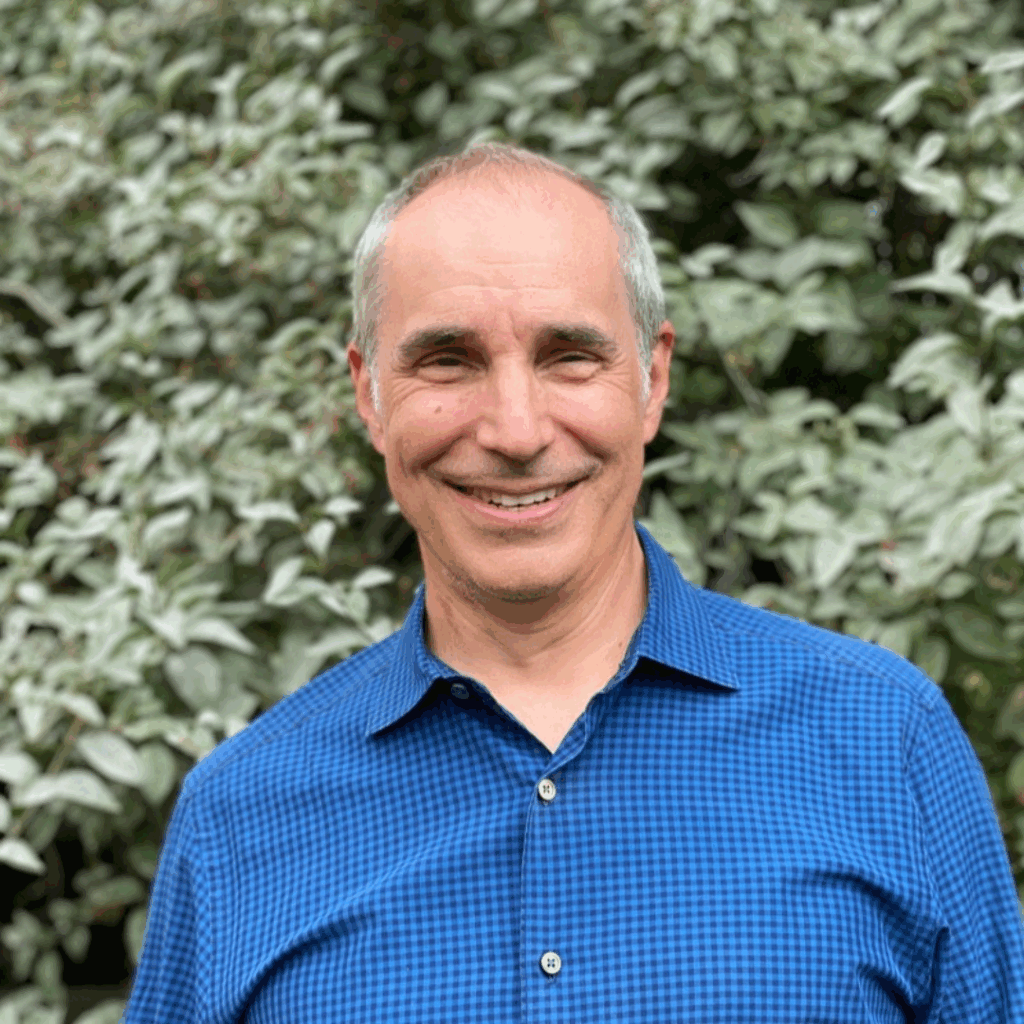
Evan Unger covers Virtual Leadership in this Marketer of the Day episode. Evan Unger explains how leaders can turn draining virtual meetings into better decisions, stronger buy-in, and measurable productivity gains. His approach targets high-stakes collaborative meetings, where strategy, process redesign, capital allocation, and implementation decisions are made. He teaches the POPRA model: purpose, objectives, process, roles, and agreements, so every meeting has a clear takeoff before discussion begins. The framework also addresses challenging people, including the "hippo," or highest paid person's opinion, that can silence better input. Participants practice process design, landing meetings with "who does what by when," and preparing heavily before the meeting starts. The four-day virtual immersion uses two modules, practice labs, feedback, and real application rather than passive videos.
Evan Unger is a recognized expert in organizational change, leadership development, and collaborative facilitation. With decades of experience consulting for major enterprises, including large pharmaceutical companies and insurance organizations, Evan specializes in transforming workplace culture by empowering change agents at every level. His approach moves beyond traditional training, focusing on deep, practice-based skill transfer to foster genuine collaboration, reduce bureaucracy, and maximize meeting effectiveness.
In this episode of Marketer of the Day, Evan Unger joins Robert Plank to discuss the art (and science) of running effective, high-stakes meetings. Evan reveals why most meetings are a microcosm of organizational dysfunction and how targeting meeting culture can boost company-wide productivity. Discover the “five fundamentals” for collaborative leadership, learn how to handle challenging personalities (including the “HiPPO” dynamic), and hear why real transformation starts with top-down engagement and extensive practice, not just passive training videos. Tune in for actionable strategies to reclaim time, drive better decisions, and create a culture of buy-in from the very first meeting.
Quotes:
“The fastest way to transform your company’s culture is to change the way you lead meetings because every meeting is a window into your organization’s soul.”
“Real leadership isn’t about having all the answers. It’s about creating space for every voice and guiding your team to believe, ‘We did this ourselves.’”
“You can’t shift a culture with information alone. Transformation happens when leaders show up, practice together, and model the behaviors they want to see.”
Resources:
Podcast: Play in new window | Download (Duration: 30:06 — 41.4MB) | Embed
Subscribe: Apple Podcasts | Spotify | Amazon Music | iHeartRadio | Podchaser | RSS
Transcript
Download transcript (.txt)Imagine turning your next all hands zoom from a yawner into a productivity engine. Well, that's exactly what Evan Unger does. He's a 27 year veteran of change and leadership, and he has helped Agile Scrum and project leaders boost virtual team effectiveness by up to 50% in just four days. What an amazing promise will hold him to it, and we'll find out about what he's done for some of these massive organizations like Merck and common spirit, and how to use these four day immersive programs to get past meeting fatigue, to get to productivity and to just basically figure out how to make virtual facilitation work and make some change happen. So Mr. Evan, glad to meet you. Glad to see you.
Thank you, Robert, for having me. It's my pleasure. I'm excited to be here,
likewise, and so get us hyped up. What are we talking about here? What has you so focused and passionate? What's the problem to be solved? Well, I
think I'm a little bit older than you, so I go back a ways. When I got out of business school, it's 1989 went and worked for Merck, large pharma company. They had a rotational assignment for MBAs, like what I was doing, and then they just made up this job for me called the director of Change Leadership and Development, which honestly was a fancy title for I had no idea what I was doing. A new CEO came on board and did an assessment, and there was frustration because things were siloed, bureaucratic. People weren't collaborating, and somehow it rolled downstream, and I got involved as the director of change, trying to figure out how to put in place better collaboration, a style of leadership. And I had a lot of people support me in this, but that's how I got into this. Now we're going back 33 years. You don't go back that far looking at your LinkedIn page, but there's no zoom back then. There's no Microsoft Teams, right? None of this stuff exists. So we designed a process wrapped around a change initiative to teach high stakes collaborative facilitation to senior people incredibly well. It got programmatized, and we've offered that as a consultant for decades upon decades, and now we're doing it hybrid, because the world has changed. So anyway, that's how I got into this, and it's something I'm very passionate about.
And so this term, this high stakes, collaborative change, is that, like, if someone sees it, would they know it? Or does that require some explaining?
Well, we generally don't like to consider this a training program. We'd like to see it as a piece of cultural transformation, right? So when we were doing work change consultants, we'd work with the senior team, and we try to help them rip out the bureaucracy, right? Because there's all sorts of unnecessary reports, unnecessary policies, we can drive approvals level, and there are a lot of unnecessary meetings, right? The meetings we're focusing on, they're necessary. They're the major decision making meetings where we're deciding strategy, we're coming up with redesigning process, how we're going to roll things out, really collaborative decisions. And so the focus is on the change agents running those complex collaborative meetings, which tends to be people who are doing things like lean, Six Sigma, continuous improvement. They tend to be doing things like agile or Scrum. They tend to be running major projects or programs, or they're in a change agent role, because those are the people who really need to know this art of collaborative leadership. So that's really the people who we target, because they're the change agents in an organization.
And you change the change agents, right? It's meta. It's It's like they want the change to happen and and they're stuck without you, and you have this kind of amazing approach to things. So tell me about it. Like, what is the before and after picture, if there's this kind of chaos C team, and it's just dysfunctional, toxic, not working, and you go in there and you make things better, like, what's your process like? What's your change?
Well, let me start with a few questions. For 30 years of doing this, I've asked clients two questions, right? How many meetings are gonna take place in your organization today, 24 hours, if it's a global company like Merck with over 70,000 employees, they're likely to have 300,000 meetings in a single day, especially when I'm thinking about the one on ones like we're having, right? And then the second question I've asked them for 33 years of doing this is, I mean, what's the average effectiveness of a typical meeting you attend, 0% not a good use of my time. 100% really well run really good use of my time. In 33 years of asking a question, I've never had someone say 80% right? Ever, rarely, maybe it's on one hands, people say 70% almost always a. We get the answer 50% or below. And I sit here with senior people, and I say, let's do a little math together, right? Because most senior people spend at least 50% of their time in meetings, right? And they never add it up. If they spend 50% of time in meetings, they are literally going to spend a year's worth of their life in meetings in under a decade, how organizations have tolerated this most fundamental area of productivity loss, I have no idea, but they do, and so the secret sauce is targeting the dysfunction at the most fundamental level, which is our meetings are a microcosm of the culture of performance of an organization. And that's where we intervene, and if we begin changing those high stakes, meaning we begin changing the culture of the organization. Now I can go another level down in detail, but that's just at a high level, the way we think about this.
And you would hope that a meeting is something that kind of improves the situation, right? It's like you kind of do your deep work or your soul stuff on your own, and then when you do, meaning, like, you get, you know, you bring the minds together, right? Get everyone pumped up. But then if they're, if it's become this joke of like, oh, there's all these meetings. And it seems like, with the post pandemic and the zoom, the whole idea of like, these meetings, like, it seems like it's become even worse, right? Like, it's become a thing like, oh, I have to hop on to something, and I'll be multitasking while I'm there, and maybe I'll have my camera off, or I'll pretend to be paying attention. It seems like it's just like a compounded problem at this point. Yeah, the
pandemic actually gave people more meetings, because now there's no separation between, you know, whatever their start time and end time is, and I don't know if you've ever read Patrick Lencioni Five Dysfunctions of teams. You may or may not. It's a classic and but there's a quote from his first book, death by meeting, which is and it's just a classic. The hard truth is that when we run bad meetings, it almost always leads to bad decisions, which is a recipe for mediocrity. It's a recipe for productivity loss. It's a recipe, frankly, for morale cratering in an organization, because if I'm being asked to go to all these awful meetings, I can't get my job done right. And it's a recipe for something else, if I'm the one running these 40, 50% effective meetings, over and over and over, where I'm taking people's time, right, and I'm not using it well, then it's a recipe for people seeing me as a bad leader, because I'm wasting their time. And people, they don't hate meetings, what they hate is wasting time. And so many meetings are a waste of time. So the the from a transformation standpoint, there's a lot of meetings that really don't need to be meetings, right? And when we did change work, we were trying to help the senior teams figure out how to stop the bureaucratic meetings and save time for the high stakes meeting, better, major decision making, strategy, planning process, redesign how we're going to allocate scarce capital. So yeah, a lot of meetings, it just drains the health out of the organization.
Oh, yeah, and when there's too much, and what's the point? And, and when you hear about the trendy, snazzy business ebooks, right? You hear about, like, Jeff Bezos and, like, the two of the meetings should be, like, two pizzas or less, right? And have them smaller. They have, like, hear about, like, the standing meetings. But you tell me, like, when? So you go to this, this organization, and you ask them, okay, like, what's the percentage? Like, how effective are your meetings? And they say, like, 50% 20% like, what do you do to fix things up? Do you have a structure? Do you have rules? What's the the prescription?
Yeah, I mean, there's you can think about the the metaphor of a plane flight, right? Robert, I'm in Denver, right? Where would I fly in to see you? So, Sacramento. SFX, yeah. So the metaphor we might use is a plane flight, three part standing plane flight, take off, flying and landing. Now, take off. I was at DIA last week. I timed it. It took about from the time they had jets to wheels up. It was about 47 seconds. If it doesn't go well, we're all dead, right? The same metaphor holds in a meeting, if it doesn't go well, right, in the get go, when we take off, the whole meeting's a train wreck, a plane crash. Now the bulk of the time is going to be flying getting from here to Sacramento, planes don't come flying out of the air, right? The other place we got to pay particular attention is on landing, right? Because we have major plane crashes on landing. So the five things we're teaching, and there are many things, but the five fundamentals, one, how to take off, well, most meetings should be killed because the leader hasn't thought through. And we teach a very simple model called the popra model. It's an acronym proper stands for purpose, objectives, process, roles, agreements, most people haven't thought through. The first thing, why are we having the meeting? And the second question, what are we trying to get done? You should not be allowed to have a meeting if you. Can't answer those two things, and you should not go to someone else's meeting if they can't answer it. The why and the why, if I don't know the destination, we're going to just fly anywhere. We're going to end up down in LAX right now. The other thing we got to get group clear. If I don't know the destination, I can't design the flight plan or the process, and that's what we're teaching people how to design high stakes collaborative processes? Well, I can't think about who should be there, the roles for the meeting right people. We have too many people that are meeting. We have the wrong people. So I've got to get that clear, and I got to make sure the group has working agreements. The A is agreements. So the first of the five core things is just taking off well. Now the second of the five core things is, how do I handle challenging people? Now we're trying to teach people how to do this when the stakes are high, when they're facilitating. I don't know if you ever heard the term it. You know, started at Microsoft, but popularized an agile hippo. Decision Making. Is that term ever come across your desk?
No, just the healthcare acronym, yes. So basically,
there is a that's different. So here's what hippo stands for. It's the highest paid person's opinion that drives the decision. And we've all been in the meeting where the senior person comes in as the hippo, the highest paid person. They're not very aware how they impact the group. They dominate the discussion. They suppress conversation. And it often can be the most junior person, who may be an introvert, who may be speaking English as a second language, who may be a person of color. They may be, you know, from a culture, you know, if you're on a global team from the Far East, where saving face is important, who has exactly the expertise to help the hippo make the right decision. But whoever's leading the collaboration doesn't need to know how to hold space and manage the hippo. So the second of the five core things is the art of handling challenging people, and there is a real art to knowing how to do that. The third thing we're trying to teach them is good process, structure, some of the simplest tools and techniques to make sure we're hearing from everyone. So the hippo makes the most informed decision. And then the fourth thing, we got to land the plane right? And people don't. They just, they don't bring the plane in for a landing. It's Christmas. People are not clear where we go from here. Who's going to do what by when, and then the fifth thing we're teaching them is, in a high stakes meeting, all the work is what you did before you showed up, getting clear with the sponsor. Why are we doing this? What are we doing? You design the the process, right? You've got to figure out who should be, their roles, agreements. That's the work. The change agent. Work is what you do. And then the meeting is running the X's and O's. So those are the five core things we're teaching. And it's, it's simple, it's clean, and it's incredibly powerful,
and it's fun, especially where you put it. So I like your precision here, of like, kind of asking the the micro questions to mean, like, okay, like, where, let's fix this little thing, fix that little thing. And I can only imagine being on a plane ride with you saying, all right, 42 seconds between when the plane moved and we lift it off. But these things matter, right? These things are important. And if we skip over the details, and you get sloppy, and then you end up getting sloppy results. And so this is some, I'll admit some of this goes over my head a little bit, but hey, we're saving this message for the right people. But something that we can all relate to are some of the stories, right, especially of what you've seen, what works and what doesn't work. So what do you have to share with us, as far as perhaps a story of some company that you went in and changed things for? Okay?
So, so I don't want to use their name, right, but there's a major insurance company based in California that we work with for decades now. Where we started with them is working with the senior team, articulating and helping them collaborate to facilitate their vision, the values they wanted to inculcate, the strategy, right? And getting rid of the bureaucracy. So you start at the senior level, and then we trained them in this set of skills, because this is really a cultural transformation. So when it's used and started top down, it begins transforming the culture. Because the leaders go from being people who, as the hippo, are telling people what to do to from a change standpoint, in knowing how to engage other leaders in a conversation where they get the best thinking. So the best practice is always to do this, not as a training program, but to do it as part of cultural transformation, starting with the senior team and rolling down. And when we did this with the insurance company, right? All of a sudden, people started watching the senior leaders lead in a different way, right? They had their core values of teamwork, right? And everyone has a core value of teamwork, inclusion, all these things. These are real inclusion, teamwork, collaboration, accountability, skills. Levels. So you start there, and then you train the next level, and you use it as part of cultural transformation. That's the best practice is when it's not a training program, but it's a part of how we begin transforming the organization at a very fundamental level. Now we don't always have to work at the entire level, and working right now with a pharma company where we're training an entire group of about 100 people in a large PMO, because they're the change agents that then if they start doing this, they can model what this art of leadership looks like. But really what we'd like to do is use it wrapped around transform transformation initiatives, not as just training program. We can run it as training programs as we do, but it is better if you wrap it around bigger change initiatives, transformation initiatives.
Well, wonderful. Well, I'm curious about why this is Am I correct in understanding this is like four days. It's not like ongoing some month, it's just this kind of four day intensive.
It's a great question, right? And a lot of times we'll have senior people, because, you know, if I'm a, you know, the COO or the CTO running the technology group, you know, a very senior person, a hippo, right? I'm not going to take four days to do something like this. I'm just not. But they see what we're doing. They come observe the fourth day of the program, and they're like, whoa. I want all my agile people know how to do this. I want all my lean, lean six sigma people to know how to do all my project managers know all my change agents, and what they'll say to me after I'm watching, I love it. Let's do it. But the less wise of them will quickly say, but Evan, I can't take my people offline for four days. And I say, why not? And they say, because they're too busy. And I'll say, but you just told me you're going to run 70,000 meetings today. At 40% effective, they're too busy to run bad meetings. So I say to them, and they say, em, and I get it. It takes time. This is what I'd like from you. I'd like you to chop this up into 10, two hour videos that my people can watch on their computers, self paced learning when they have time, right? Like watching a master class or LinkedIn learning as all these video series. That's what everyone wants in this stage, and we always say we're not interested. Go find someone else going to waste your time and money. Now, some clients find that rather abrupt, and they're like, Evan, the client's always right, and I say, you're not right, and you know you're not right. And they say, What do you mean? I'll say, did you have kids who learned to drive? And if they're old enough, they'll say, of course. And I'll say, let me ask you, would you have ever let your children go watch 10 videos on how to drive and say, All right, you watch the videos. Take the car keys. Let's see what happens. Or 10 videos on how to swim, and sorry, let's push in the deep end. We never do that. But in this day and age, everyone wants a quick fix. The reason it's four days is it's all practice. That's how human beings learn. In the entire four days, there's probably two, two and a half hours of lecture, the second module and the fourth module are practice labs. We're on two small groups. There's only 12 people, right? Because we're going for real skill transfer. And real skill transfer comes through trying stuff on, getting intensive coaching, getting intensive feedback, having to give other people coaching, right? And so it's all practice and demonstrations, because we're not going for intellectual awareness. We listen to podcasts, right, like this one, we watch videos. We don't learn that way, right? In terms of real ability to integrate that as a leader. So that's why it's four days. We tried it so many different ways. It doesn't work unless people have a ton of time to practice, and that's why people have loved the program for over 33 years of running it around the world in so many different cultures, with so many different organizations. And it doesn't matter whether you're a doctor, a lawyer, a marketer, an engineer, an IT person. You know, it doesn't matter when we go from being knowledge workers to having to lead other people. We are driven to know how to collaborate. And this set of skills is universal, right? It applies. That's why the industry doesn't matter. The technical background doesn't matter, and what culture you're in. Really doesn't matter. When we're being asked to lead others, we're being paid to get them to make great decisions, collaborate to do that, get them to buy in so they go implement. And this is the art of really helping groups make great decision. Get them to buy in and go implement. And that's what we're
up to. You've created something amazing, right? Great format that the podcast just gives you a taste watching videos. Maybe it gives you a little bit of surface level and you put in the repetition. But hey, anyone who's been to a retreat or summer camp or something has experienced that real knowledge transfer, the being immersed in it. There's no replacement for it, and so let's say someone's going into this four day process. Is, is there anything you wish that the attendees, or whatever the term is, right, the the four day goers, do you wish there's something that they knew? Are there any like difficulties to be expected in this process?
So in terms of the process in the program, or just their process of trying to lead collaboration in their real environments.
I mean, up to you just, what are the difficulties ahead?
Well, the first thing is carving out the time for people four days. Now, understand it's four days separated into two modules. So module one and two run. I just finished a second module today, which ran yesterday with this client, and I finished it today, literally about an hour and a half ago. They're going to go off now and apply these things in the real world for three days. Then we're going to finish the program with them Monday and Tuesday next week, right? And there's another practice lab. So, so, you know, so the difficulties are the just pragmatics of man, it's a heavy lift. I mean, the program runs, it's intense. Days on zoom right? We run eight to three, eight to three. The first two days, eight to four, eight to four. I'm running a program with a client where most of the people are in Europe, right? Were me and my partner on the West Coast mountain time they're staying up late to do it, we're getting them up early, but because it's so valuable, they will do it. And in this day and age, people are gonna say, Whoa, that's a lot, because they have to put their regular job aside to really learn. And people do it, but it there's a price to be paid in the short run, knowing they're going to spend years of their lives in meetings, they can't afford as leaders to be wasting people's time for 10 years, because there's their reputation as a leader is formed in some form of meeting. That's where we you know, our leadership manifest. So yes, the time is a challenge, no question about it.
Okay, but it needs to happen, right? It's a necessary minor sacrifice, slight bit of adjustment stress, but that means we'll take it seriously, right? Once they all kind of Dibble and dabble, it's like, no, you put the rest of it on pause, and you get to what's really important, which is to run these better meetings and have some better results. So in the final minutes of our conversation here. Mr. Evan Unger, I'm curious about the ideal question that I should be asking you. I just don't know to ask you. So what's the missing question in our conversation that I just you know that I should be asking you, but I don't know?
Well, I'll give one, because I want to give your listeners a simple tool. The question is, what's a simple thing I could do to enhance collaboration right now, here's what we teach people. It's so simple. We call it simultaneous chat. Pose the question to the group, whatever it is, right, give them time to prepare their answer in the chat and make them wait before they hit enter or submit, so that I've got the other people there. There's 12 people. I'm like, oh, wait a minute. All of a sudden, I've got to say something. Yeah, you're going to have to do it. And if they waited long enough. And then you say, all right, right. Now everyone's simultaneous submit. It streams into the chat, and you now have heard from everyone, and you get to call out the people who may be more reticent to speak, right? The hippos get to see there's other points of view. It is just the this is a tip we're going to give it. Anyone could do it right now. There's a lot more to collaborate, but this is a simple tool that we can do in these virtual meetings. Just because the chat is done, it can be managed in a different way, because otherwise it's the same people who are always chatting, just like it's the same people we're always talking
Yeah, and that goes to show that there's, there's just the these little techniques that can be done. And I mean, you're giving me flashbacks to I took a parenting class a few months ago on Zoom, and it would be like, they'd like, call on random people, or they'd say, put something in the chat, and little things would trickle in, but you're getting me excited just thinking about this. The simultaneous chat, everyone writes it and then, boom, everyone drops it in, and then, and then, based on that data, then the instructor can then drill down on specific solutions. It's a slight tweak, but it's super awesome and cool. And so what are some next steps here. If someone says, Okay, well, I know that the meetings need to be better, and Evan's program sounds amazing, where do they go? How do they take some action on this?
Yeah, you'll probably share in the show notes our landing page. People can access that there. They can go to my LinkedIn page, and if they reach out to me on my LinkedIn page, they can set up a meeting where I can explain this in a little more detail with people from new clients. We always are. We just want them to send their best couple of their best people. We will knock off a ton of money on promotional seeds for new clients. Let's say all right, we're not charging them. We're not trying to make money. We want you to come try this because. We know once they get a taste, they're not going back, they'll realize this is the real deal. So they can reach out to me. They can grab my calendar on my our LinkedIn page, and I always love to meet with folks. And we run this program as open enrollment programs, and I have one coming up in November, just finished one a little while ago, that is the exact same program. It's just, instead of everyone being from the same department or organization, often, I have 12 people from 12 different companies, it's harder for them to go back and implement because they're learning things that may not be culturally as ingrained, but the go getters are going to get so much value. This is awesome, right? Because it's a target rich environment. People so bad at this. If they're just a little better with these five core things, they're going to blow people away. Oh, yeah, yeah. So they're welcome to join us for a very discounted rate for an open enrollment seat.
Yeah, there's a better way to do this. And you kind of think about that analogy you gave about learning how to swim, learning how to drive a car. If you had no instruction at all, you'd drive a car in a really weird way, right? Everyone would drive a car just like, super clumsily and sloppily versus like, hey you you learn a few of the guardrails. And you only have to imagine that the way that these Agile and Scrum and change leaders have been running meetings, have been kind of applying their leadership. It's just what's happened to them, right? Just from random happenstance roll the dice. And so maybe it's time to clean up the mess a little bit and figure out kind of a more like focused, driven and organized way of going about this. And the way to dive into this further is you go to LinkedIn, which, if you're someone that takes all this seriously, you're probably on LinkedIn already, right? You're probably on there right this instant. And you search for Evan Unger. That's e V, A, n, u, N, G, E R. He's with Schwartz and Associates. And then in his contact pop up, there's a link to Terry Schwartz associates.com/virtual, but we'll have the direct link to that in the show notes. And then you can find out about this collaborative leadership virtual immersion program, which addresses the challenges presented when teams are separated and working remotely. And you can even see the schedule of this four day program, fundamentals, baseline, tools and techniques and integration. It's open to anyone whose leadership reputation is based on your ability to help teams get superior results and obtain true commitment to implement. It's for project managers, agile practitioners, Scrum Masters, Six Sigma belt holders, and any leader driving continuous improvement and change. So go on LinkedIn and find Evan Unger and heck, since he's there, you can have this chat. He's the people person you'd hope that he would be, and kind of explain your situation and see if this is the right fit for you. He helps project Agile Scrum and change leaders transform their virtual facilitation skills in four days. So search Evan Unger on LinkedIn, add him as a friend, message him and check out his link. And before I let you go, Mr. Evan Unger, it's time for the scary part of the podcast where I try to stump you, I try to put you on the spot by asking you about a fun quote or lesson that has served you. So what comes to mind as far as a fun quote or lesson?
It's a great question. I don't know if you've read any Eastern philosophy like Lao Tzu wrote a book called Tao Te Ching 1000s of years ago, and early in my career, there was a quote that always resonated with me, and I'll butcher it or paraphrase it. Frankly, it's been translated in different ways, but it's really is an art of leadership. And the quote goes something like this, the best leader is one who speaks little, and when the work is done, the group says, amazing. We did it all ourselves. You can be an unbelievably powerful leader and not have to impose your will on the group, if you understand the art of getting people to collaborate. So that's always resonated with me for a long, long time.
Yeah, it's cute. It's a fun thought exercise, that there is a better way, and that begins with you adding. Evan Unger on LinkedIn. Check out what's possible. He provides immersive virtual programs for teams to fix that mess of meetings. So get it done. Adam on LinkedIn, Evan Unger, it's been wonderful meeting you and speaking with you. Thanks for being here.
Thank you, Robert. It's been my pleasure and privilege. I really appreciate this. You.