Published Last updated
Read Richard A. Allen’s bio and speaker profile →
View in Podcast Library: stories, quotes, books, and resources in one place.
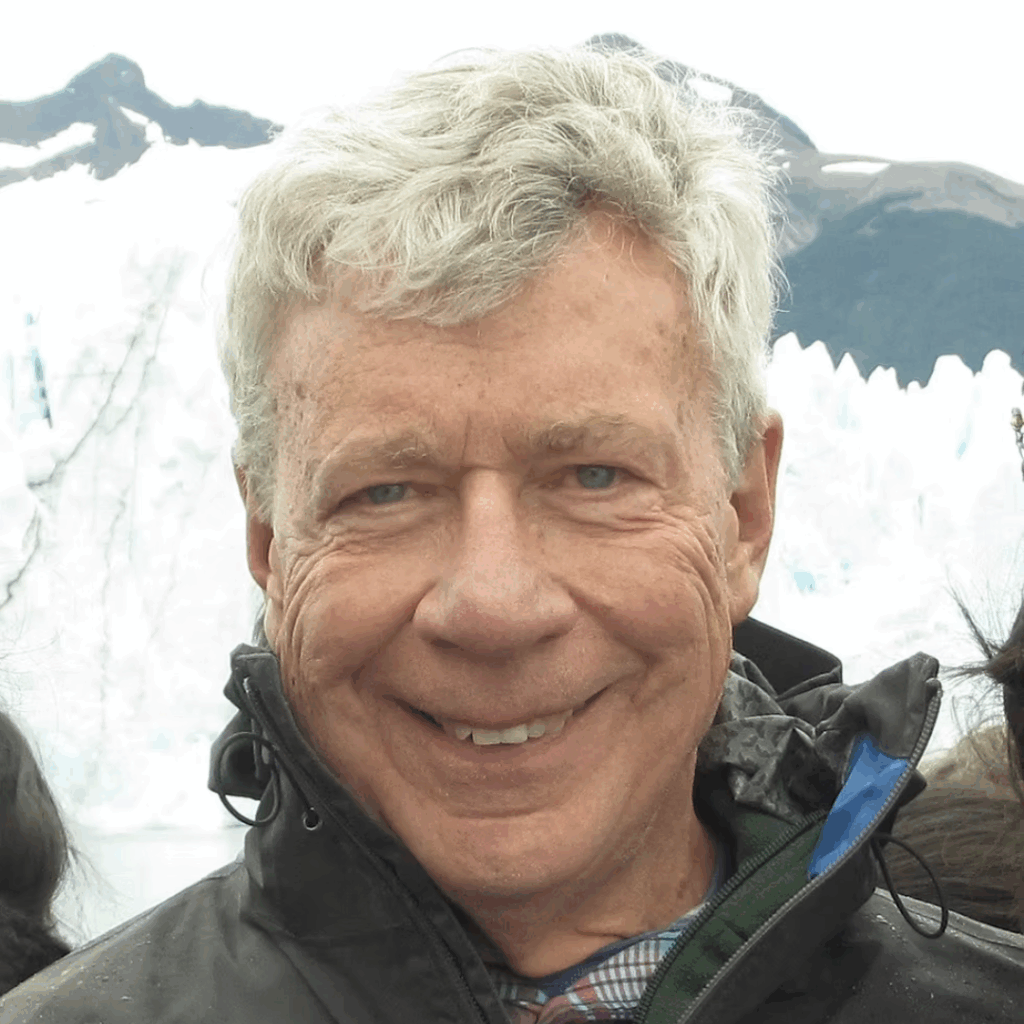
Richard Allen covers Speculative Fiction in this Marketer of the Day episode. Richard Allen turns a pet-owner's question into science fiction about language, freedom, and what makes humans human. His Kobo books imagine people kept by larger reptilian Grobs, first as loving pets and later as mine slaves. Kobo and Ra begin without language, sex education, death awareness, or culture, then suffer when their children are sold like puppies. On Loma, they find hidden humans and a teaching artifact that restores speech, history, and science. The sequel follows Ra leading the community after Kobo's death, with Azu, a wild man raised as prey for Grob hunters. Richard also describes a third book involving explorers from Earth, 20,000 light years away, traveling at 99.4 percent of light speed.
When a constitutional lawyer who once argued before the Supreme Court started wondering what humans would be like as pets fed and loved but stripped of language, culture, and community, he turned that question into an unforgettable sci-fi saga. Author Richard A. Allen joins Robert Plank to talk about Kobo and Kobo’s Children, a series where humans are kept as pets by towering reptilian aliens called Grobs, then forced into slavery on a distant mining world. Richard shares Kobo and Ra’s journey from obedient “pets” to leaders of a hidden human community; the mysterious teaching device that reignites lost human language and history; and the big questions behind it all: What really makes us different from our dogs? Would we accept everything without words to question it?
Richard also teases the upcoming third book, where Earth explorers discover these “pet humans” and bring them back to an Earth 40,000 years in the future thanks to near-light-speed travel and Einstein’s time dilation. If you’re tired of recycled space operas and want science fiction that actually asks something new, this conversation and series will scratch that itch, exploring power, identity, and humanity under alien suns.
Quotes:
“Take away our language, our history, and our culture, and what’s left is the question at the heart of Kobo: Are we still human, or just very clever pets?”
“Before you have words, you accept whatever happens to you. Once you learn to ask why, you can’t help wondering whether life could be different.”
“The Grobs may own the planet, the mines, and even our bodies, but the moment we remember our stories and our science, they no longer own who we are.”
Resources:
Podcast: Play in new window | Download (Duration: 26:49 — 36.8MB) | Embed
Subscribe: Apple Podcasts | Spotify | Amazon Music | iHeartRadio | Podchaser | RSS
Transcript
Download transcript (.txt)Word. He has argued 10 cases before the Supreme Court, then turned around and imagined a world where humans are treated like pets. It's Richard Allen. He is a constitutional lawyer, a former teacher of science fiction, and now a novelist exploring power, freedom and survival through speculative storytelling. Mr. Richard Allen, how are you? I'm good. Glad to thank you for having me. Happy to have you. And so what did I miss in that introduction? What are you all about? What's your focus and passion?
Well, my focus and passion are writing, obviously reading, outdoor exercise. I live now in a town in little town in Colorado, Crested Butte. I'm looking out at the mountains right now. And my wife and I have had Labrador Retrievers for more than 40 years and that. And I've always been interested in science fiction, as you mentioned, I've science fiction many years ago, particularly when I was younger, but having having dogs led me to wonder, you know, what would what would we be like if we were pets in similar circumstances, raised by loving owners, but without language or culture or human community, what would we be like, and Would we be just like our pets? Would we sleep 12 to 20 hours a day? Would we get excited about our two bowls of kibble every day? What would we be different at all? So that's what kind of inspired me to write this book, the first book, Kobo, and then I've written the sequel, cobo's children, which involves humans and pets of alien creatures living very much in circumstances like ours. But the aliens are much larger, larger, as larger as we are from our dogs. And they're kind of reptilian, and we would regard them as repulsive, but humans that they're pets of love them and cuddle up with them, and so anyway, that's what inspired me to write the book. Nice.
Well, it sounds a little bit like a planet of the apes, right? Where it's like the the time of humans running the show has passed,
yes, kind of but Planet of the Apes is more a story about enslaved humans and and rebellion, and so I wanted to explore what we'd be like as pets. So that's the main difference between Planet of the Apes and other other similar stories. And my stories,
yeah, and I've, I've heard this, this kind of idea sometimes mentioned every now and then, right? The idea of, like, well, if AI becomes smarter than us, or if aliens are smarter or bigger or stronger than us, well, like, we just there'll be no, no fighting it, and the future will look drastically different. And so as far as this kind of coming together, were there any like, twists and turns or folks in the road, or did you, did you picture, well, the Kobo, the two books, did you have an idea of how they might be created? And then along the journey, it was the kind of an unexpected path,
sort of my in the first book, Kobo, the main characters are Kobo at the beginning of the book, he's a 14 year old, friendly Labrador, like human Pet, and his when he, when he goes into puberty, his owners get a female a year older than he is, whom he names, ra, she never had a name. And getting a name is kind of gives her a sense of identity. And they know nothing about sex. They know nothing. You know. They know nothing about death and dying and sex, lots of things they don't know about, but by trial and error, they eventually have a child. And a year after year or so after they have a child, the owners sell it as we would sell our puppies, and that puts the Kobo and Ryan and great depression for a year or two. But eventually they get over it, and they have another child, Na, a female. And Na, they have, they their their owners. Let her keep let. Them keep her for three years, but then one day after, the owners have drugged their Kobo and RA they wake up, and na has disappeared, and na has been sold too, and Kobo goes berserk and he attacks the male owner with a knife and sticks it three inches into his cheek. And the next day, Kobo is on a spaceship on the way to the mines on an of another planet in the in the Grob system, Loma, where the grobs, that's the name of the the species that owns them has an industrial mining complex, and so Kobo winds up as a slave working in the mines. So that's kind of the the twist in the story. And then ra one day when she's taken to the park by her owners. Sees, sees her daughter, Na, a little toddler, across the park, and she jumps for it, but the owner steps on her leash and jerks her back. And then the next day, Ra runs away, and eventually she's captured and sent off to this Loma planet and becomes a slave in the mines as well. And of course, eventually they meet and they meet another human community who's been in hiding from the grobs in the mine shafts that are the DIS the no longer use mine shafts, and so that's where the story develops. And the second, the second book Kobo is children, occurs on this planet, Loma, after, after, Kobo has died, and RA has become the leader of the human community. In the meantime, the Kobo and RA discover this artifact that was was brought back with the initial humans the these grobs discovered a colony of humans living in primitive conditions because their spaceship had crashed 1000 years before, and brought a bunch of them back to the Grob planet, together with some artifacts. And one of these artifacts is a teaching device for Young Pioneer children, when when a human holds it, it starts to glow and teach, and a teacher appears. And so eventually, Ra and Kobo have learned to speak and learned a lot about human history and human science and so forth. So the second book these humans on Loma, hiding from the grobs, are led by RA and the main one of the main characters is a wild man who's was raised on the Grob planet to be prey for for grab hunters, because human hunters was a popular sport, and so this Azu is a wild man, and he and he and RA eventually get together anyway, and that takes the story from there. So I think they're both exciting stories they are and raise a lot of interesting questions about, how, what, what is it? What does it mean to be human, and how do we differ from our animals, right?
And I think about that all the time, that, like, I mean, like, the human body and brain hasn't changed a lot in 100,000 years, but even a few 1000 years ago, we were just cavemen, right? We didn't have language. So it's not like we suddenly became smart. It's just maybe like we didn't, like, put the tools in place, and it's, it's just cool how you've developed this wild world. Because sometimes I get, I get frustrated, especially with like, the like, the popular culture of sci fi, where it's just like, they slap a sci fi label on it, don't they? It's adventure. They slap sci fi. It's a it's a police but they slap sci fi and the really bizarre stuff, like I would read some when I was in high school, you know, like the, like, the Slaughterhouse Five, or the Harlem Ellison, are just like, kind of like, really wacky stuff. And it's like, that's, I feel like that tickles the mind a lot more, right? Where you get frustrated when you kind of see the same stories, the same templates, but then when there's a more fantastical world, you're like, hey, that's something new. And it and it's, it's refreshing. So does this ever cross your mind that. Yeah, with with science fiction, it really it opens up new possibilities. And it's not just the same old, tired story structures exactly.
I feel that way Exactly. You know, I love Star Wars and and those kind of movies, but they're basically space operas. They're not they don't raise interesting ideas about the effect of technology or differences. When I taught science fiction, that's what I loved about science fiction stories that raise issues about well, what would it be like if this or that, rather than just melodrama in science fiction garb,
yeah, yeah. And, I mean, that's like, what, you know, like, Star Trek was about, right? Even though it had aspects, it was to get around the sensors and talk about Vietnam War and humanity and the important issues. And it's like, because it's not directly hitting you with the problem, you can, like, kind of come up with your own ideas, perspectives,
exactly. Yeah. Well,
very cool. And so, I mean, what has I know, right before we started talking, you were talking about the or we probably started recording, you mentioned the reviews, and so what has the feedback, or how is that kind of interaction with your readership been like?
Well, the books were, have only been published fairly recently, so they haven't sold a lot. So I don't have a huge number of reviews, although they're they're all mostly five stars, so I'm waiting. It's a slow process, you know, promoting your book. Have you written any books?
I've written nonfiction, and it's, it's tough to get just, you know, a handful of readers. It's like the writing the books, the easy part, that's the one time, and then you have to constantly publicize.
Yeah, exactly. Yeah. So, but the reviews that I've had, and I've had a couple by magazines, Kirkus Reviews and Clarion forward that have been all very flattering, but I think it just takes time,
time and effort. Oh, yeah, like many important things, right? It's if it was easy, everyone would do it, and you wouldn't get the satisfaction. And so when you were putting these books together, did you get frustrated, or did you feel like giving up or get writer's block? Or does that not happen to you?
No, I've been writing for many years for my own pleasure, whenever I have the time, when I was practicing law full time, I didn't have a lot of time, but I've been writing over the years, and since I was a child, I started writing stories so and I'm not doing it for to make a living. Unlike many, most, maybe most authors. So I write when I the Spirit moves me and I don't get frustrated. I just I get frustrated sometimes when I don't have time enough to write, but no, it's been a pleasure, by and large. Nice.
What a amazing hobby to have to write for fun and for pleasure. And so are you working on anything new? Or, you know, are there new like short stories, books in the works?
Well, I have a lot of published screenplays. I have several published novels, unpublished novels, which I'm working on getting published right now. The only thing I'm working on is a second sequel to the Kobo that it'll be the third Kobo series, and it exploit in the second at the end of the second Kobo book, explorers from Earth, which is Earth is 20,000 light years away arrive, and they're they've got their drones out looking at this planet and and they look down at one of their drones sees this campfire, and they're some creatures around it, and they look closely, and these are human beings with bows and arrows. And so the question for these human explorers is, do we make contact with these humans and and with the their owners, these grobs, or would that be too much of a danger to to our race? So that's the question. I won't tell you how it answers, but the third book has these humans go back to Earth, 20,000 light years away with with 100 or so of these primitive humans on the planet Loma and the RE they're traveling at 99.4 Percent of the speed of light. So if you know your Einstein Time dilation, the travelers on the ship age much more slowly. And so 20,000 years of real time takes only 70 or 80 years of ship time. So they come back to Earth 4000 40,000 years from now, and I'm trying to figure out what is the earth going to be like in 40,000 years? So that's I'm having fun with that.
That's quite a question. It blows my mind to even it blows my mind to think about what the earth will be like in 400 years. Never mind.
40,000 is a snap of the fingers in geologic time. I mean, humanity has been around for more than 100,000 years. If human, if humans are still alive, I think they won't be that much different from us today. Whether Artificial intelligence has taken us over, I don't know. I doubt it. I think humans will find a way to use it to their benefit,
yeah, and not destroy ourselves and enhance ourselves instead. And just, I'm a curious person, and sometimes I'll fall down a YouTube rabbit hole or read different things in it. It just it, it hurts the brain to think about the like, the both these huge time spans of the universe, right? Like, even to get to, even to get to the next star, will take centuries. Even to get to the next galaxy will take millions of years, unless you come up with a faster than light. And it's, but it's, it's, uh, it's better than filling out tax forms, right? And it's like, you do the things for your nine to five, and you do your legal work, and then you say, Well, hey, now I need to do the more kind of creative outside the box. And I work this part of my brain to do the, you know, the make sure that my my official language is right, but I need to work this other part for the more creativity. And it's like, we should all consider that right, like the the need to play and have fun and not just be serious 100% of the time?
Yeah, I agree, yep, although science fiction can explore a lot of very serious topics.
Oh, yeah. Well, like, what is there anything in particular that may be like interests you that you haven't written about
lots of things. I have lots of story ideas, but none of them pop into my mind right now, okay, but much of my writing has been historical. My novel, my novel is a novel about little known, Henry the seventh, father of Henry the Eighth who has, I think, a more interesting character and a more interesting life. And I've written screenplays about Napoleon and Josephine, and one about the beginnings of the American Revolution from the perspective of a British Corporal. So history is probably most of my half of my reading is history, history related.
Very cool, and it's fun to think about, right about what would I be like in the Civil War, Revolutionary War, World War Two? What kind of adventure would I be dropped in? It's fun to fantasize about, and with all your prolific creations, maybe we'll see a movie of one of these put out by you. And I can say I knew you back when, but we've jumped around lots of amazing, interesting ideas, but you're the star of the show here. So I want to make sure in our final few minutes of our discussion, do you think there might be a missing question that I should be asking you? I just don't know what to ask you.
Let me look down on my list. I made a little list. Well, one of the things that my book, that one, one of the questions my book raises, are, what makes humans different from dogs and thinking about that I have, there are a lot of interesting questions. For instance, the dogs fantasize, you know, I have my Kobo when he's a pet fantasizing about a little family and little toys playing playing soccer. The dogs do that. I don't know the dogs have a sense of humor, or my my humans. When they're pets and see something funny, they roll, they fall down in the ground and start barking, and their owners don't understand what's going on? Are they distressed? And questions like that, the dogs get do our pets, cats and dogs get bored? I don't know. One thing about humans is my humans, in my story, is. As pets, is, before they acquire language, they tend to accept everything that happens to them. Once they acquire language, they start wondering, Well, why is this happening to me? Could I be better off doing something else? So that's one of my themes in my books,
very cool, and it always seems like a quest to rediscover the child, like curiosity in us, right? How Children have endless questions. They ask, why? And then you give the answer, and then that leads to more questions. And it's like the if we're not careful, when we get into adulthood, we lose that. We lose the enthusiasm of the unknown. And it's that's the lesson I'm getting from speaking with you today, is to tap into that childlike search for endless questions.
Yes, but if we didn't have language, I don't think we'd be asking those questions, right?
We just Yeah. We wouldn't be able to fit the pieces together. Of course,
exactly yes. Or without culture raised by alien creatures, we'd have no no mother to tell us what's right and wrong, right?
And then you're just reinventing the wheel every generation. Why not get a leg up on life and and hit the ground running, and know about mathematics, language, history, all these learning is so important. And so, as someone says, Man, this guy, Mr. Richard A Allen and his so far, two books in the Kobo series. There's Kobo and there's Kobo children. If they say, I have to read this yesterday. I want to find out more. Where should someone go?
Well, first Amazon. My first book was published by Dorans publishing, and you can get it at their bookstore. You can get it on Amazon, you can get it on Kindle. And now my first book has a has an audio version, and my second book just is coming out with an audio version. So I think you can get one or both of them on Kindle, audible.com and other websites that have audible books.
Very great. So there's no excuse, right? If you say I'm a busy professional, but I can just have it. I can listen to a few minutes a day while I'm driving, and get that enjoyment of of some some science fiction entertainment by Mr. Richard Allen, the author of Kobo and cobo's children. And he also has an author website at Richard Allen author.com where you can find out about his books, contact him, and especially when he has new creations coming out, you can get updated on those as well. But for now, there's this two book Kobo series that explores humanity's resilience under alien suns. And before I let you go, Mr. Richard A Allen, it's time for the scary part of the podcast where I try to stump you a little bit, put you on the spot by asking about a fun or interesting quote or lesson. So what comes to mind as far as a quote or lesson, or lesson for my book, from your from your book, from your life, from your travels, anything that comes to mind that could be useful to us.
Well, I have a whole list of memorable quotes, but I can't What comes to mind.
Well, if no quote, then how about a lesson? Well,
here's a, here's a, here's a quote that comes to mind from will and Ariel Durant, one of their books, speaking of an Italian noble in the 15th century, 16th century, he was not handsome, like Most famous men, he was not troubled by that distraction. An interesting idea. Yeah, that
there are other factors, right? Other focuses in life? Yes, yes, you look at like Steve Buscemi, right? He, he doesn't have looks, but he's a famous actor, so it, you know, it's not a limiting factor, yeah?
Winston Churchill. There lots of, lots of famous Abraham Lincoln. Oh, yeah, those people when they first saw him, what a homely man he is.
And especially if you see him without that hat, that that hat, sure, you know, adds a lot. When he doesn't have it on, it's like, ah, put it back on, although,
and since television and and movies, good looks become more important in politics.
Well, anyway, but anyway. On that note, whether you have good looks, bad looks, average looks, you still enjoy this amazing. Amazing book, Kobo and Kobo's children by Mr. Richard Allen. Richard Allen, author.com or go and search on Amazon, you'll love this book, especially if you just want something new and interesting and exciting. Tickle the mind, get your get your brain off of the stresses of politics and good looks and jump into an amazing adventure. It's Richard Allen, who is a lawyer who lives with his wife and their yellow and chocolate Labrador Retrievers in Crested Butte, Colorado. He's a former teacher of science and speculative fiction Kobo and kobo's children. Get it on Amazon. Richard A Allen, such a blast speaking with you today. Thanks for being here.
Well, thank you for having me. This has been great. Thank.