Published Last updated
Read Gilad Bechar’s bio and speaker profile →
View in Podcast Library: stories, quotes, books, and resources in one place.
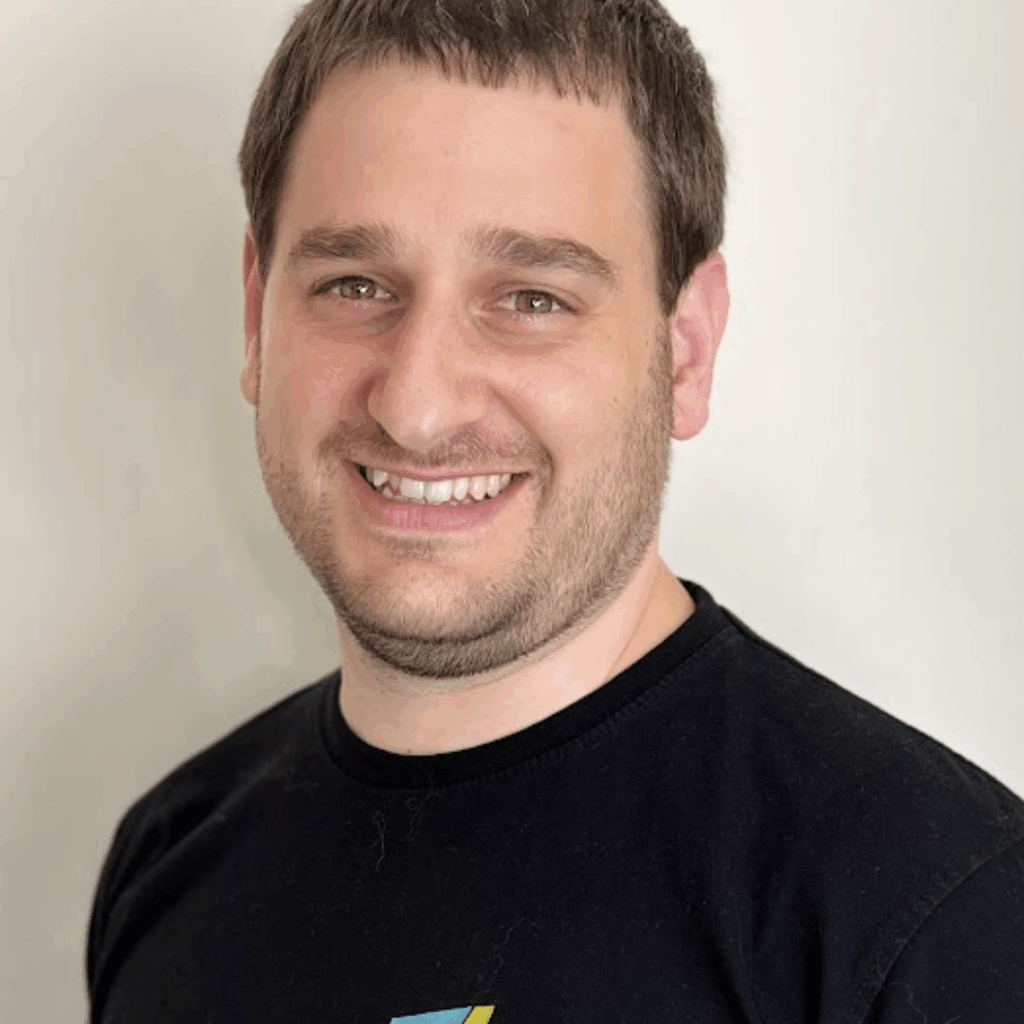
Gilad Bechar covers Growth Marketing Strategy in this Marketer of the Day episode. AI is changing growth marketing, and Gilad Bechar explains how companies can turn stalled acquisition into measurable momentum. He starts with an audit of budget, competitors, market share, channels, creative, and KPIs. From there, Moburst reverse engineers the path to growth, comparing what competitors did two or four years ago with what they still run today. He points to practical levers like desktop experiences, Spanish-speaking audiences in the US, UGC, influencers, Reddit, Pinterest, and TikTok communities of 250,000 followers. AI workflows can speed production, but only after small-scale tests prove the output follows brand guidelines and improves conversion. His own 2017 lesson was tracking hours, tasks, clients, and profitability daily.
From helping scale global leaders like Google, Uber, TikTok, and Samsung to guiding high‑growth startups through user acquisition plateaus, Gilad Bechar is the strategist brands call when “growth problems” turn out to be strategy problems. As founder and CEO of Moburst, he breaks down how to stop spray‑and‑pray marketing, run truly data‑driven campaigns, and build acquisition engines that match real KPIs, budgets, and market dynamics. You’ll hear how AI, new discovery platforms like ChatGPT, Gemini, Perplexity, and Claude, and evolving user behavior are changing SEO, app growth, and performance marketing and how to adapt before your competitors do.
Gilad shares how Moburst audits a business, reverse engineers growth goals, and dissects competitor strategies, channels, creatives, calls to action, and languages to uncover what’s actually working in your niche. He explains when you should rebuild your website or app, when to lean into user‑generated content and TikTok communities, and how to safely leverage AI and automation without destroying trust or firing teams too fast. If you’re a founder, CMO, or growth leader, this episode will help you spot hidden opportunities, avoid costly mistakes, and design a marketing strategy that scales predictably.
Quotes:
“Most companies don’t have a growth problem they have a strategy problem.”
“Marketing works best when it’s brutally data‑driven and wildly creative at the same time.”
“If you’re still using yesterday’s playbook, don’t be surprised when your growth stalls tomorrow.”
Resources:
Podcast: Play in new window | Download (Duration: 31:05 — 42.7MB) | Embed
Subscribe: Apple Podcasts | Spotify | Amazon Music | iHeartRadio | Podchaser | RSS
Transcript
Download transcript (.txt)Most companies think they have a growth problem, but when they actually have is a strategy problem. It's Gilad Bechar, who's here, who spent over a decade fixing exactly this, and he's helped brands like Google, Uber, Tiktok and Samsung break through stalled growth and scale user acquisition. We're here on the marketer of the day podcast, and we're here to talk about how sometimes companies hit this user acquisition plateau, things stop scaling, and you need someone like mobers to go in and and figure it all out, right? To run the math, run the numbers, figuring out some strategy, get just some better solutions. So he's seen so much, and he can help us so much. So he's here to share some stories, suspense, some knowledge, and have a good time. So Mr. Gilad, how are you today? Fantastic. Thanks for having me. Happy to have you. And so what did I leave out of that introduction there? What currently has you fired up? What has you so passionate?
Wow The pace of innovation with AI today is insane. So I feel like every single day you have new tools, new capability, new features, new things that you can do. So this is a very, very rapidly paced type of environment on the digital marketing side, where things that used to work for you phenomenally on meta now fail on and basically you need to find another growth levers, trying to think about how to outsmart chatgpt and Gemini and complexity and cloud and getting you ranked much higher for your specific keywords and phrases and things like nature, which, you know, all of those were not even a problem two or three years ago. You're saying, hey, you know what? If my site will rank high enough, I'll be in a good place, or if my app will be ranked really well, I'm going to be in a phenomenal place. And now there is a new way of doing things that no one thought that basically will change that that drastically, with so many users that are actually prompting and asking chat GPT and Gemini for accommodation, and even if they thought about taking a vacation in here, but they heard about a really, really cool place from GPT or Gemini, they will might actually shift their entire direction and move, instead of to this country, to that country, just because of a specific recommendation and things of that nature. So those accommodations seems like so trustworthy that the entire perception of a user might take you to a completely different type of type of a path because of something that you heard and and if this is the level of trust that you're providing, you're basically getting from those platforms, how do you make them rank you in the highest placements possible? So we're getting a lot more demand in the past, let's say year and a half, because those those are really urging needs that the cookbook on the playbooks, that what used to work for us before does not work anymore.
Of course, the only constant has changed, as they see, right? And with with the internet, especially in AI like, that's, it's that times 1000 and so what I'm getting from you so far is you mentioned this word trust, and to me, trust means consistency, and consistency means we have to just keep up, right? We have to adapt and be, be, always out there and always at the forefront. And when so and someone used to just go and search Google, or it was just a matter of SEO, well, great, but then it's like, we can't rest on our laurels. Can we if there's if we do, then there's some other company that's hungrier, that will work to outrank us in perplexity, Gemini, chat, GBT. And so as far as the problem that brings some company to you, is it this? Is it that they they're losing traffic, they want to rank better on AI like, what's what's the problem that brings them to you? What do you solve?
So it's a great question, every single company is unique, like when we're working with Fortune 500 companies, when we're working with smaller companies, when we're working with startups, each of them, they're all trying to over achieve their growth goal, right? They all have a KPI. They all need to meet the specific criteria, specific numbers, specific type of a growth pattern, so they will be able to come back to their management and saying, Hey, look at that. We've done a fantastic world. But what that entails, it's sometimes you need to rethink about your entire website and rebuild it from scratch, because you have every single mistake and clutter within it, and you're cannibalizing yourself with different things that you're doing on the website that is just sub optimal. Other times it could be, hey, you know what you're doing? Phenomenal on the on most of the campaigns, on Google and Apple Search Ads, or just for example, on a Tiktok. It works really nicely. But then you're seeing that some channels just stop walking or do not provide the same type of level, and sometimes it's all about the creative that you keep on using statics and GIF ads and carousel ads instead of actually using user generated content and influences and things that looks like much more organic, rather than actually being as scripted as you were. And sometimes, you know, thinking about about the scale of things. So if you want to actually being able to penetrate more countries, or even if you're just focusing in the US, but you're in the US, only focusing in English, instead of having saying, hey, you know what? You have here, 50 million Spanish speakers in the US. This was just an audience that you didn't even think about. But there are based in here. They are definitely fantastic customers for you. You're just not even talking to them in the same language. So there are so many. Different hurdles that different companies are facing, and especially when you're looking on fortune 500 company when a we need now a solution for 26 languages, it's a much broader type of a thing. So each and every company has a different challenges. Some of them is on the strategy, on how they're actually approaching the market, and they're not even leveraging Reddit and quota and all of those additional Pinterest and many, many other platforms to actually build the right type of strategy. Others are saying, hey, the creative are stagnant, or I keep on seeing like diminishing return. So it's like something is not really working for me as well, and I can't really get the cost per X lower than that, and we need to have a fresh view on the creative side, sometimes on the organic side, like again, getting ranked on chatgpt, Gemini, perplexity, cloud growth, what have you. And it could be about the product itself, like, hey, we need to rebuild the website. We need to rebuild the app. We need to now rebuild like a tool. It doesn't make sense that we are still doing it in this way. We need dashboards. We need automations. We need a lot of different things to save us time the media side of things. Saying, hey, you know what meta and Google work for us. We do that. But what else can we do? Like, okay, how can we actually scale further? We tried influencers. It's a massive wave, because we are buying impressions. It doesn't convert to anything. Do you have any smarter way of actually doing the activation all the way to the cost per subscription, per registration, like things that are deeper than just getting impressions and paying someone $3,000 to say, Hey, this is a fantastic brand. This is what they're doing. So each company comes with a different growth challenge, and each of them has a different problem. Sometimes, when you're thinking about it, could be like a very local dating service, for example. So you need enough males, enough females, in the same proximity, and then blending them together. If you are getting 100,000 users, but off of them, you're getting two or five different people from every city, and this is a dating service, so you need to swipe right or left, and after five or 10 people, you swipe and you don't have anyone else to be around you, then it's the wrong sludge is the wrong way to go. You need, like, enough males, enough females in the same proximity, so the product will actually work as well. So each and every platform, if you need to connect demand and supply, think about like an Uber type of a product, where you need demand of drivers, you need the riders and you need the restaurant owners. Because without that, it won't going to work. So if you have a lot of customers in and you don't have any restaurants, it's useless. If you have a lot of restaurants but you don't have drivers, again, it's useless. So you need to combine three sides of the equation to make it work. So each and every product marketing challenge is unique, and each of them needs a different level of mix of how to actually make it work in an efficient way. And for each of them, B to B is different than B to C. Like, if you have everything is set up in one product. You're just coming in, and everything is solved for you. Think about like Google Maps. I can just open the app, navigate to somewhere and somewhere, and poof, I'm going there. I don't need any other thing to work for me within, within the product. It just, it's, there's a tool for me to come in and work. But then, if I need to collaborate with someone, if it's a social network that you don't have anyone inside, it won't, it won't going to function before you actually have enough users who's going to be active within the platform to provide you that feedback. So each each product is basically unique, and we are trying to reverse engineer. What do we need to do? What type of KPIs do we need to hit in order to get to the right, to the right type of experience.
Ooh, I like it. And so it's, it helps the way that you explain that, because, I mean, you listed so many things, right? And there's like, Oh, they're always a new bright, shining object, like, Oh, I could use this other app platform. And you're saying, Okay, well there, there's so much that could be done and to sort it all out, you say, Well, what's, what's the end goal? What's that KPI in your reverse engineering and say, Well, hey, what's the problem? Where am I lacking? And how do you stop yourself from just like, going completely insane? Because I love the mix of what you said there. Like, I kind of felt like some there was, like, some engineering and some like creativity and some visualization, and some like entrepreneurial problem solving. Like, do you have a method to the madness when some company comes to you and they say, Hey, our problem is lack of users on a on a social network or something, or the the map app, it's too slow, or whatever the problem is. Like, how do you begin to sort it out? Because it can get really complex if you let it.
Yeah, it's a great question. Basically, what we're starting with an audit, like, really trying to understand where they're at today. What is the level of budget? What are their biggest competitors? What their biggest competitors are doing at the end of the day, you're not you're not there by yourself. Like, there is already an ecosystem that is built around you, and within that ecosystem, we are trying to understand who has the biggest market share. What are the things that they are doing? What are the things that they're actually unique ad. And then if we are as data driven, as much as they are, and we are kind of recreating what did they do today? So I can analyze every single ad that they have right now online, and based on analyzing data and saying, okay, are they using more male actresses or female actresses? I can you see they're using 2d characters or 3d characters to explain that type. Of a problem, I can see what type of call to actions are they using, and what type of audience they are going after with that and kind of answering, okay, so this is what this company is doing now. This is what they have done two years ago. This is what they've done four years ago. So how are they evolving? And actually they stopped doing this, and they're focusing on that. There must be a story there. We don't know by how much this strategy is working better, but if they are going in that path, they probably tested it out, and they probably are not dumb, they're probably data driven, and you can actually learn from what they're doing. You might not agree with them, that's okay. You might have a completely different type of a pitch. That's okay, but you can, you have learnings there. And then, if you're doing it for four or five or six competitors, for example, you start understanding the niche extremely well. Once you start understanding the niche, okay, who are winning on that type of a niche, who are the losers of that specific niche, and then what are they doing, like, Okay, how many blog posts are they actually posting live to their website? How many social activations? What type of social activation are they doing? Which type of platforms are they doing that activations on? And again, if there are data driven as much as we are, there is a story to be taught there. Now, once we get all of that information ahead of us and basically saying, Okay, this is how the lay of the land, this is the goal, the goals of what you want to achieve. This is how many searches you have per month for this specific niche, or identifying the audience, and now saying, okay, so this is what you've done before. These are the results of what you've done before. Let's assume that, okay, great. We are better than the previous solution that you had another 15% 20% shaving of the existing solution that you have today because of 12345, use of these specific best practices. What have you? Great. That's that's one thing. But is that enough to hit the goals? Oh, it's not okay. So we need to rethink about, okay, you're currently sending all of your users into the App Store and Google Play Store, and you're not having anything on the desktop like you don't have a desktop experience whatsoever. There is an opportunity there, and two of your competitors are actually smashing it on the specific side of the business. Now you can continue on letting them have it. Or you might say, hey, we also need to have a desktop version as well for this product, because right now you're just basically leaving that money on the table. So some of those things take longer time to produce, but if I think about the 12 year 12 months plan type of a thing, okay, so q1 it won't be ready. But in q2 or three, it can be ready if we are prioritizing it right now, and if we do think that on social right now, you have a massive amount of demand that you're not seizing because you're not even on those specific platforms. How do we build you a voice? We helped one of the startups that actually reached out to us to build a community of 250,000 people that are following them on Tiktok. And now, every single time that they're launching a new product and a new feature, it's being bombast to again, millions of people that are watching it, because it's not just the 250,000 people that are following them, but they actually the engagement rate that you are getting with them is actually shown for lots of lots of other friends and friends and friends of theirs. So when you're building this type of a massive community around you, and now you can actually being able to spread your message in a much bigger microphone. That's a strategic investment, like building this type of community, building a network of, you know, 200 or 300,000 email addresses, for example, that are actually engaging with you. And the open rate is still 30 to 40% every single week when you are messaging them, they want to give to get your messages, and then being able to spread your word and show your advancements on whatever type of niches that you do, it brings a very different type of a value. Instead of actually buying ads every single time to be able to say, Hey, we are now doing this as well. So you're reverse engineering. What is the growth goal? What is the budget to achieve that? By the way, if the budget is very limited, you're not going to a crazy path of now investing, you know, 60 grand to create a new trying to create a video reel that will actually go go viral with a video production and filming it in four different states. You probably will not do that, but if you have a budget of $20 million it's ridiculous not to try to create videos that will actually spread the word much, much further, because it's a small bet compared to the size of the budget, if you're thinking about what happens if it is getting 16% higher conversion rate compared to your previous ads. So it's all need to be proportional to what is the level of budget, what is the level of sophistication that we can do? How many languages do we need to to fit under that specific growth strategy? And then what are the channels? And what are we doing on each and every one of those channels? If all of your competitors tested their Twitter or x, for example, in the last few quarters, and none of them is now live, there is a story there. Don't, don't even try to go there, because it seems like everyone tried and failed. So why would you be able to be so different than anyone else, maybe just go and hook where you know already you have at least one or two competitors that are doing well there, because otherwise you're wasting your time and resources. So knowing how to edge your bets, there are still bets are still, you know, it's 80% success in here, 70% success in here, 90% success in here. But if you are making it much more data driven process, rather than spray and pray, Oh, hey, I have a really cool concept. I think that Reddit might be a really good idea for us. You know, you're just getting to a completely dive different type of a strategy, and then basically you'll be able to get much more informed decisions. And the success rate of you hitting those goals, goals of your management going to be significantly higher?
Very nice. Well, I love your energy, and especially how you're saying that, like, there's, there's this mix, right? Of a use. You say, Well, what am I, what am I seeing, as far as those untapped opportunities, what's low hanging fruit? But you don't stop there. You also do what's data driven. It's like the scientific method, right? You have some kind of theory, and you go, and you say, Well, hey, is this even worth doing? Have others done it? Okay, we'll do it, and then we'll tweak it to get it right. And so you've, like, you've dumped a lot on us. You given us so much to think about, but I want to make sure that we focus on what's important to you, because you've seen so much, right? You've seen things with Google and with Uber and these companies that you've hired, and with AI and with like, kind of I'm sure there are things that maybe make you angry that aren't done properly, or there's like, common mistakes. But you tell me, like, in this conversation we're having, do you think there might be a missing question that I should be asking you about any of this topic that I just don't know to ask you?
I think that maybe the use of AI, it's something that everyone, the buzzwords are being thrown everywhere, and everyone feel like that, I'm missing out. Everyone are doing so many, so many more things, and so many new things. I feel like with, with the urge of AI, and when you're kind of looking on, you know, a few quarters ahead or a few years ahead, one of the things that is really important is that when you're doing creating those type of workflows or agents, or kind of thinking about automations, you need to make sure that when you're testing something, you're actually testing it out on a smaller scale, seeing what works basically create this type of like you should automate things that are working for you, workflows that are very manual, and kind of reverse engineer them into this type of a button. Okay, great. I'm tapping that button now. The output that I'm getting, think about it like a chef that you need to kind of put it in your mouth and saying, Well, no, this is too salty. No, it's too sour. It's not really quite there yet. And then optimize it and optimize it and optimize it, because you are coming into a world where marketing will become a very, very kind of mathematical thing, like, you know that you want, you have an outcome, you have a goal, you have a budget, and now you need to kind of think, how do I get to that in a very predictable way? And when you're creating all of those automations, when you're thinking about all of those amazing systems, you know, you have nano banana, for example, of Google, that allows you with vo 3.1 that now allows you to create videos and images from from and it looks fantastic. But is it still following my brand guidelines? Is it still helping me to get to the goal that I did? I that I wanted? Yes, it's in the top of a button to create a new creative but is that creative converts? Yes, I can save a massive amount of money not doing anything on the creative side, because now I have those tools in front of me. Do you know how to operate them and use them in a way that can get you to that predictability of getting to a higher conversion rate? Because if it's not okay, you can kill the creative agency that you are currently hiring, but at the end of the day, the performance will tank because you don't have the right type of creative Yes, you have the ability to do everything you want, but do you know how to use it and how to actually create automations and actually create a predictable kind of repeatable process where you're creating the right type of creatives, or creative the right type of outputs to make sure that you're getting to the right goals? I feel like with the with the verge of AI, when you're thinking about how to actually create the right type of efficiency. And every single board on Earth today talks about AI, every single board today saying, Hey, we can probably cut the marketing costs. We can probably cut the HR cost. We don't need as many people. We don't need as many as many, you know, expenses on the marketing, P and L or on many other on the development. Hey, Claude, cod, can can you can prompt it and basically get the code. Why do we need so many developers and so many of those things? And the biggest question is like, how do you actually use AI? You can get to a very, very high level. You can get to a crazy automation, but at the end of the day, you need to make sure that when you are using AI, it's exactly to your liking, and automating things that were very manual is probably the first step to do that efficiently, efficiently, because if you are kind of running really, really fast and breaking things, you'll find that sometimes AI misses, sometimes those hallucinations can cost you a massive, massive trust with with your customers. And we've seen companies that actually fired 3000 or 5000 employees and then went really back to the public after a quarter and saying, Well, guys, we are rehiring for those positions because we've done it too rapidly and we haven't finished all of those automations, and our customer service is not in the same place, or our marketing is not really working as efficiently, and now they're rehiring and rebuilding all of those structures. So. You need to make sure that what you're doing is spot on before you're actually making too drastic of changes. But I do feel like everyone needs to have their hands into all of those AI tools to find those automations and to find the way that you can do more things and much more efficiently.
It seems to be like the analogy that's coming to my mind is like playing with fire, right? You can use fire to stay warm or cook a meal, but it can also, like, you know, burn down a whole hillside, so you have to be careful to not run away with it. And it seems like some structure is necessary, right? That there's the hype, the excitement, and you might like, just get addicted, literally, to using all these tools or trying all these solutions, and someone like you would say, Well, hey, what's the goal? What are we trying to accomplish? Is this going to grow our business, make us money? And is it going to, like, automate those manual tasks, and it's to free up employees? Like, what are we actually trying to accomplish? So that way we just don't come completely, just go crazy and just have all this randomness and run out of time, and the next thing you know, the company's gone. And so if someone is listening to this conversation and they're like, Okay, Gilad Bashar is exactly who I need from mobers. Who are you looking for? Like, what's the kind of company that would want and need your services?
So basically, we're working with a lot of different types of companies. We have the startup division, which is for younger companies, kind of seed round to round a we have the enterprise solution for the fortune 5000 companies, and we have something in between where we're kind of tier one, tier two, type of clients, where we're thinking about size and kind of how many things they need, if they need just one service, or if they need also the PR and podcasting, like lots of lots of different types of line items, of different things that we have and we can serve them with. So we're serving kind of the entire gamut. We just have different departments that are kind of in charge of each and every one of those cycles. And to be very honest, we are in a very, very good place today, where the company can actually choose its own clients. We have our own 300 clients that are reaching out to us every single month. We can only onboard five to six new clients a month. So we are very strategic about what are the clients that we are kind of want to onboard, that we believe that our solution and what they are doing kind of can actually do one plus one equals much more than three. And that's kind of how we are continue on, kind of building ourselves. We will probably be growing 100% year over year, which is very non traditional, very non trivial for a company in our size. But we are really, really fortunate to be able to, you know, create fantastic growth for our clients. Our clients are growing with us year over year in a very significant way. And on top of that, we are very fortunate to be able to be having a fantastic name in the industry where we can just help our clients to do right. We're not trying to sell basically any client. We're really trying to say, Listen, if I were in your shoes, this is what I would do. You can do that with me. You can do that without me. It doesn't matter like this is the right path you might trust or not trust. I know that. Again, this is only the third meeting that we've gone thus far. But we're not trying to pitch to try to win a new new business today. We really try to think about what are the solutions that this company needs, and if I was their CMO, what I would do in their in their specific hands. So that's basically how we're looking at it. And we are serving like various different types of clients, B to B and B to C, and again, all the way from very early stage to companies that are kind of the world leaders in this space.
Very cool. It looks like you guys do so much stuff, right? You do the marketing strategy, video production, the media buying, SEO, AEO, AI, SEO, website design, app development, so much and so as far as if someone says, Okay, well, I want to have that conversation. I want to see what can be done as far as increasing, as far as getting the growth figured out on the results. Should someone go to mo burst.com
yes, if they will go to moburst.com they will be able to see everything that we do today. We've, you know, we didn't start this way, like we acquired five companies in order to be able to have all of those solutions under one roof. And we were looking for hundreds of hundreds of companies of who will have the exact type of type of a fit. I was very scared when I started the company to be actually going like, Okay, this is too wide, or things like nature. So every single time that we were expanding to another niche, we kind of acquired another agency that was doing it for 10 years or 15 years to get a lot of clients fantastic results, and only then, after a very deep due diligence, we actually acquire them to be part of the group. So the notion of the group, and the belief of the group is that every single marketing challenge can be solved with the right data and the right creativity. And in order to do to do that, you need to take a lot of times bold actions, and as long as the DNA is kind of fitting well, and we found fantastic leaders in so many different niches, we kind of blended them together in order to build this type of a growth, a mechanism that can really unlock any single type of a marketing challenge on the digital space.
Very cool. You're a problem solver, and as you say, with data and creativity, you can. You can get to some massive goals, and that website is m, O, B, u, r, s, t.com, that's mo burst.com click around. And if you want to start that conversation, click the button that says, let's talk. And if you're ready to experience hyper growth with Gilead Bashar and his team at mobus, then have that conversation. If you want to just explore some new opportunities and see what's possible and explore the low hanging fruit, those missed opportunities rise above your competitors, especially in this sort of scary day and age we're living where AI's all over the place. There's always the FOMO, the fear of missing out. What are my competitors doing? And then you hop on and you say, now I'm even more overwhelmed. Well, why not set a team on it, get more brains on the problem that can that I've seen all the stuff, and they can take an outside look at your business and say, hey, you know here you can have this desktop version. You can explore this traffic source. You can do that with the content. So get that conversation started. That's mo burst.com, before I let you go, Mr. Gaylad, it's time for the scary part of the podcast where I try to stump you. I try to put you on the spot by asking you about a fun or interesting quote or lesson that has served you. So what comes to mind as far as a fun or interesting quote or lesson?
So I think that we've done a very massive change in 2017 because we weren't data driven in the beginning of our journey where we didn't measure every single thing on the organization, and when we are kind of an agency, back in the day, we were serving a lot of different clients, but we didn't measure how many hours each and every team member was actually spending on each and every task, and Before we had that modeled in and actually reported on on a day to day basis, we didn't know that some of the things of how I started the company back in 2013 and how things are actually being evolved in 2014 1516, different managements, middle management, and things like nature, we didn't have a great tracking of that. And with that, we kind of lost the eye of sight. Like a lot of things actually change, and they change this process to this process, and then another 20 hours to do that, another 50 hours to do that. And I didn't have the feedback loop to understand that some of the delivery side, how we are actually doing and how we're actually evolving. I didn't have that visibility into the sales side of how we are pricing different projects and how we actually scaling those type of projects. And I had a lot of clients and a lot of different types of engagement that weren't as profitable as they should be back in the day. So I feel like being data driven from day one is a big, big lesson that we've learned very heavily, including like systems that are making a lot of people feel like uncomfortable. Why do I need now to report you that I spent 50 hours on this class, on 20 hours on that specific type of a thing. And it's not because we are micromanaging anyone. It's because without that level of conspiracy to the to the management side of what and each and everything cost US per client, per department, per need, per type of report, per each and every one of those things I'm as the leader of the organization won't be able to drive the right type of turns. I won't be able to know this needs to actually be increased. This needs to be decreased. This is like an overkill. It doesn't make any sense. And a lot of times the leadership doesn't know exactly how, how all of the smallest pieces within the organization are working together. And I feel like that level of being data driven about everything you do is a really good kind of methodology. This the only methodology of running the business effectively. So we've made there a massive mistake, and in 2017 we needed to actually have a very sad kind of conversations with some of our employees and some of our clients, saying to them, guys, this is not the right engagement for us, like we didn't build it right. Obviously, the next eight years of theirs were very, very happy, but those first years were very, very scrappy because we didn't build the right foundation there. So I feel like building the foundation before you are pushing the gas tunnel and having all of those things tracked is really key to not lose the sight of what's coming and how you're actually supposed to continue on scaling your business.
Ooh, very good, very wise. So be data driven in many ways, and especially in measuring time. Right? Do that time audit? You can't get the time back if you make mistakes, or you can get other resources, but time is what is finite, and so if you out there in podcast, Len says a lot of what Gilad Bashar says makes sense, but it gives me a headache just thinking about the state of German mindset. That's okay, right? That's why you have a team to help you out, because you've you've gotten this far on your own skill, but now it's time to plug in and have this amazing team that can just figure out some solutions for you, especially those that are both creative and data driven. So the very next step. The thing you should do right now is go to mo burst.com that's m, O, B, u, r, s, t.com, and implement apply some of this. It's one thing to listen to a podcast and get some ideas, but that will only get you so far. Now it's time to take that next step and have that conversation. So go to mo burst.com go. Click the button that says, let's talk and start that conversation. So Mr. Gilad Bechar, it's been so wonderful speaking with you. You've I feel like it's like five podcasts fit into one. I'm so glad that you stopped by and educated us, and thanks for doing
it, of course. Thank you so much for having me appreciate your time. You.