1556: Stop Self-Sabotage and Take Control of Your Life with Mindset Coach Kevin Voisin
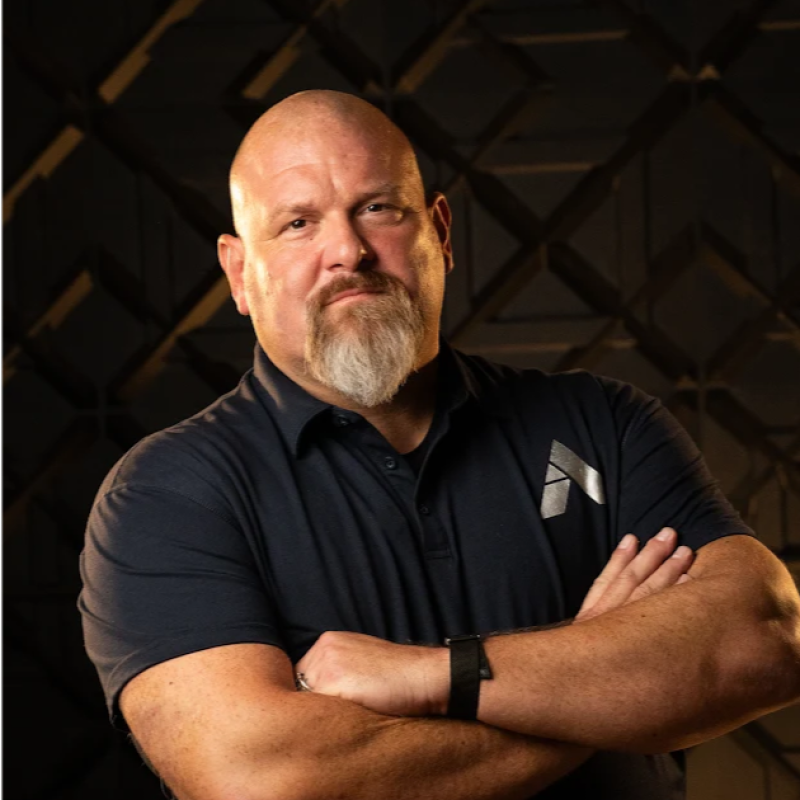
Kevin Voisin covers Authentic Leadership in this Marketer of the Day episode. Kevin Voisin explains how entrepreneurs and parents can stop chasing validation and build real growth through honest self-leadership. He frames people as "forces of nature" who can use choice, clarity, and action instead of drifting through life. His self-sabotage model centers on "rock bottom" and "rock top," where success can feel so unfamiliar that people burn it down. He argues that entrepreneurs win by keeping their head in the clouds and their feet in the mud, creating despite failure rates near 90%. For education, he contrasts school with true education and says AI is the "tractor of the mind." Coaching matters because no one can fully see themselves without outside perspective. The key takeaway is to pursue excellence, not fake perfection, with clear direction and disciplined action.
From waking up “sleeping giants” across five continents to building a new kind of school for the AI era, Kevin Voisin is the coach leaders call when their “mindset problem” is really a radical honesty problem. As Coach of Coaches and co‑creator of Apogee Strong micro‑schools, he shows entrepreneurs how to stop lying to themselves, break out of self‑sabotage, and operate as the force of nature they already are. You’ll hear why most “personal development” advice is fake, how to recognize when you’re at rock bottom and rock top, and why saying “I don’t know why this keeps happening” is almost always a lie. Kevin unpacks why perfection is a horizon you can never reach (but still need), how to live powerfully imperfect, and how to use AI as the “tractor of the mind” instead of a threat to your livelihood.
Kevin also shares how he thinks about parenting and education in a world where knowledge alone is no longer power only what you produce with it. If you’re an entrepreneur, parent, or emerging leader who secretly feels like an impostor despite your wins, this episode will help you reclaim choice, embrace discomfort, and build a life and business that match who you really are.
Quotes:
“You’re not a lost floatie in the ocean you’re a force of nature.” – Kevin Voisin
“Excellence is achievable. Perfection is a lie.” – Kevin Voisin
“Most people don’t have a self‑sabotage problem; they have a honesty problem with themselves.” – Kevin Voisin
Resources:
Podcast: Play in new window | Download (Duration: 26:20 — 36.2MB) | Embed
Subscribe: Apple Podcasts | Spotify | Amazon Music | iHeartRadio | Podchaser | RSS
Transcript
Download transcript (.txt)After coaching more than 40,000 people across five continents, Kevin Viosin has one blunt message. Most personal development advice is fake. It's coach Kevin. He is the coach of coaches, and he wakes up sleeping giants and high achievers to build a powerfully imperfect system for real growth. So we're here to talk about maybe some of the secrets, insights that many people are afraid to tell you, or afraid to tell themselves, pivoting and building things and having that life purpose. So Mr. Coach Kevin is here to educate us and talk to us about how maybe sometimes us entrepreneurs can secretly feel like imposters despite our achievements. So if you're someone who wants to reconnect with your authentic power, instead of constantly chasing validation and live a happier, more satisfactory and fulfilling life that encourages and lifts others up, this is the exact podcast conversation to listen to. So Mr. Coach, Kevin, how the heck are you today?
I'm doing great. Thanks, Robert, appreciate. Appreciate you having me on man,
happy to have you. And so what did I leave out of the introduction? What are you all about? What's got you so passionate?
You know, the thing is, like, I personally, right? I'm a force of nature, like I just am. I'm a force of nature, like, if you're around me, you'll feel who I am, you'll you'll have to reckon with me. We'll probably get along really well, and then if we disagree, we'll have a really intense disagreement, while still being friends at the end, in the beginning and all through the middle. But what I've realized in coaching is like you also, whoever's listening to this, you, Robert, you're a force of nature. It's just that most of us pretend like we're not, like we go through life as if life is this big ocean, and we just have a life preserver, and we're hoping that waves will take us in the right direction, and we're just kind of hoping and praying. And the truth is, you know, you're not on a life preserver. You have a surfboard right now, I can't surf. I mean, I can't get up on a wave to save my life, but you know, there's a lot you can do on a surfboard. I can lay down on a surfboard. I can paddle with it. I can use that to leverage the waves of life. Sure, I'm not the only force of nature. I'm not the biggest force of nature, and I have to contend with lots of forces of nature around me, including all the other people who are around me, but I think it's time we stop pretending that we're just these lost floaties in an ocean of what's happening around us. We can influence our surroundings. We can leverage what's happening. We can pivot with the waves. And when you start to live that life that way, it's amazing, how you start to get where you want to go. You start to decide, oh, here's who I am, here's where I want to be, here's where I am, here's where where I want to be. And if you can get honest with yourself, I mean, there's a lot you can do.
And what I hear from that is, we have more choices than we think, right? It's not hopeless, and we need to maybe consider this. And why do people end up in the self sabotage cycle? Is it just not thinking this through, or telling themselves bad stories, letting others push them down, like, why is this such a problem?
So, you know, we always have a choice. I mean, that's the one thing, right, that that no one can ever take away from you. One of my favorite books is Man's Search for Meaning, by Viktor Frankl, and he's like, look, even knowing you're gonna die walking into a death chamber, you have a choice. You have a choice of who you walk in as you have a choice. And he said, like watching that happen again and again and again, you could see the different choices of who people decided to be in that moment, even when everything else was stripped away from them, even their own life, they had a choice of how they showed up, right. And as a human being, you have a choice and the self sabotage conversation is one where I think there's just a whole lot of bullshit. Like, you know, here's why most people, quote, unquote, self sabotage. You're just a coward. Like, I've been a coward many but why? Because? Because we know a certain set of things, and we don't want to get out of what we know. And if life's been going bad a lot, we just know that we we know how to be that mess up, or we know how to be that disaster. We know how to be cheated on, or we know how, like, we know these things, and they're very familiar, so we keep putting ourselves in the same thing, right? It's like our third divorce from the guy that we met at the same bar. It's like, man, just go down the street maybe, you know, come on. Like we, we are afraid of something new. It's not a fear of success. It's not a fear of failure. Like that is all just silliness. We're afraid that we're not enough for something new. And you are, like, you're, you're equal to anyone else who's on the earth. So, like this, self sabotage is usually like, everybody understands rock bottom, right? So there's a rock bottom, so there's, there's if you get addicted, or if you have really bad problems in business, you know, like, maybe your business is going down. Like, for entrepreneurs, that's like, when you when you pull the plug, rock bottom is, like, things are so painful that you can't take it anymore, and so you are just forced to change, like you won't take any more pain. So rock bottom is pain at. Level that you will no longer tolerate the status quo. But most people don't realize that there's also a rock top. Like Rock Top is things are going so good that you can't handle it, that you don't know what to do. There is a band in which you're comfortable and to go through the rock top, right? The cool thing with rock bottom is, most of us want to bounce up Rock Top, though, you just got to break it. And unfortunately, especially as an entrepreneur, usually break it with your face, like just in the most uncomfortable, painful way. But the truth is, there's a certain level of success that you're comfortable with, and you're going to have to break through that. And so when we say self sabotage, it's because, oh, things are getting things are getting too good, right? You know, things are good, so then we kind of burn it down. But that's just a choice you're making. It's really clear. You know, I think one of the biggest lies people tell themselves, Well, I don't know, I don't know what's happening. I mean, that's so rarely true. That is so rarely true, that we don't know what's happening. We we know. We just don't want to face it. And I get it, man, I'm I'm the same. I'm not. I'm not saying this from a place of perfection. I'm not saying this from like, oh, be like me. I never have these feelings. Of course, I have these feelings. We're human, but we've got to transcend these feelings like we we've got to see that saying, I don't know, I don't know why this always happens to be No, you do, you do know, right? That you do know like, the struggle isn't real. It's not like, if you're trying to lift 1000 pounds, okay, you could struggle like struggle is very real externally, right? I mean, it is like, maybe I can push this thing, maybe I can't, maybe I can lift this maybe I can't, but internally, there's no struggle, right? I want to lose weight, but I'm not losing weight. Equals, I didn't want to lose weight, you know? I just didn't want to be honest about that. And so when we create these struggles, then we kind of kind of dilute or dampen our lives for no good reason.
Yeah, I mean that, yeah, that's deep. That's a lot to think about. So we need to maybe rise above the mediocrity. And with all that you said, like, do you think that entrepreneurism is kind of silly? Like, there's a there's a need to have the controlled chaos and the risk taking. It's like, you almost have to, like, like, I don't know if like hard or challenge is the right thing to say, but you have to kind of create a little bit of a mess and maybe over some overwhelm in order to grow, don't you?
Well, I but that's what's awesome about entrepreneur like for me, is we're we want to get in the arena. We want to do something right if you look around the world, everything, everything you see right now, the camera, I'm looking at the screens. The building is outside. Every single thing you see that isn't nature, right? Somebody had a thought, and they're like, Oh, we could. And then between that thought and all the actions that followed, they made that thing you're looking at, whether it's the microphone or the camera my watch, someone was like, We can do this. And then they brought it all the way to completion, and then it was good enough that I bought it right? At least if it's in my office or whatever you're looking at, that's pretty cool, but that's getting in the arena that's making an impact, that's actually creating something. And most of the time, it doesn't go well, right? Like over 90% of businesses fail within two years, and I think over five years, it's almost 98% don't make it. And every entrepreneur kind of knows that, like we all know that we've all heard that number, and yet we all are like, but not me, right? It can't be that all of us are the 2% but we all will keep trying, and the entrepreneurs who fail, the entrepreneurs who make it, just keep pushing through the failures until they are part of the 2% however, many times that takes but, but I think that the entrepreneur likes creation, and creation is where the high ideals get down to the dirty ground, right? Like, I always say this to my clients, is it's it's fine to have your head in the clouds. Like, great you have great vision, you have this great feeling, you have these great intellectual thoughts, awesome. You it's okay to do that, as long as your feet are in the mud, like you've got to get your feet in the mud of what's actually being delivered, and what are you actually creating? And that's what I think is kind of fun about being an entrepreneur. It's like you have this thought, there should be a building there, and then you got to go figure it out, and you got to find the money, and then you got to find the semen. Then it turns out you bought the wrong seaman. And now what do you do with that? And then I don't know that that is not everyone is a mountain climber, right? Not everyone likes to see a high place and then say, Hey, I'm going to climb up there. But I think the entrepreneur, at least emotionally or socially, is that it's like, Hey, I'm going to do the hard thing. I'm going to go make something. I'm not just going to consume. I'm going to I'm going to make,
yeah, I'll do the hard thing. I'll go on that interesting adventure. And sometimes I tell myself, like, it's, it's a test to see how badly I want it, right? When there's, like, all those, all those problems and conflicts and all this, all this to be done, it's like, well, like, how badly do I want it? And if I don't want a. Anything else, right? If you don't, if you don't, didn't lose the weight, well, you just, you didn't want it enough. And it's, it's straightforward about what you need to do. And so how does this translate into your business and making money? Like your coach, Kevin, and so is coaching like primarily what you do, or what's the service? What's the offer?
Yeah, sure. I mean, I honestly, if, if I could sell you anything, it would just be that you matter, that you inside of you are a force of nature, and you can use that to create the life that you want. And that is not a whole lot of dollars. I'm just going to give you that. Right, what I'm doing right? I've been a coach for a long, long time, and right now we've been opening schools with Apogee strong. If you go to Apogee strong.com you can check out what we're doing. It is a return to the way humans have been educated for their whole lives. I mean, for everywhere until the Industrial Revolution. The school system right now is built to create employees, and it's built to create employees in a world where knowledge is power, and that is rapidly changing. You know, in my opinion, knowledge is not power anymore. I mean, we have these great AI tools. We have this incredible technology. Just knowing stuff is not super useful. What can you do with it? What can you produce with it that matters? And so we're opening schools around the US and around the world to help produce leaders who know what to do with information, how to create and not just tick boxes and not just learn some subjects, but to actually be educated to lead in a dynamic environment, you know, and use these AI tools to do something great, not wonder, you know, while I finished my degree, so where do I get My paycheck?
Yeah, and it's and that that's huge, right? That kind of that concept, that that school is kind of meant you may it's meant to kind of give you some rules and push it through a system, which is great, but if you're not content with that, if you want more than that, if you want to be more of the entrepreneurial risk taker, then that's one of these choices that we talked about, that you have that you can rise above. And if you want, if you know that, well, I want that combination of the risk and the hard but also the bigger reward, then you don't have to necessarily just go through that a predetermined path. And this is something I think about a lot, because I have a five year old son, and of course, you know, I don't want to force him in anything, and I want him to maybe see the light and to pursue his dreams. And so you're all about these schools and nurturing that next generation. And so like, is there anything that that any advice that you have for me as a parent, like, what I should keep in mind for my son, as far as, like, wanting to achieve the best he can, and should.
Man, so much I have. I'm the father of five kids, just so you know, four of them are out of the house. I have an 11 year old still at home. Education matters a lot. School doesn't matter that much, okay? Education versus school, very big difference, right? School is and I want to be really clear too, that I'm talking about the school system. The system itself was designed to do a certain thing, to create someone who could follow a certain set of rules, which, let's be honest, right? The industrial revolution, we needed a ton of employees. I get it like turn of the turn of the 19th century or 20th century. We really needed that. We needed employees. We needed people who could follow directions and not question them, right? Today, that is no longer true. If I was going to tell you anything with a five year old, I mean, who even knows the world that kid's going to live in at 15? Right? Yeah, I remember when I was little and I had to memorize stuff because my teacher said, You'll it's not like you're going to have a calculator in your pocket your whole life, right? Of course. Now I'm carrying a supercomputer that's like 10,000 10,000% stronger than whatever sent people to the moon, right in my pocket all the time, connected to AI that has all the knowledge of all humankind. Read like 100 times over with analysis. And, you know, adds to it every day when
you get it in half a second,
yeah, like, right now, you know, and what's what's crazy that what I would say for your son is this, and is AI, is the tractor of the mind. And what used to be the field, we were all in the field. We were subsistence farmers, and we had to learn to hoe and we had to learn to shovel, and if we didn't, we couldn't survive. And then the tractor came, and the tractor changed the game. And the way to be successful as a farmer, as a human, wasn't to learn to dig faster than the tractor, or to learn to use a shovel better than a tractor. It was to learn to use that tractor to set up your family, to set up your community, to be good. And I think AI is going to be the same thing. It's like, Hey, don't you're not here to compete with it. You're here to say, hey, how do we use this? Like, how do you lead this tool? And the truth is, most human beings right now a tractor, maybe they could use as a tool. Maybe, I don't know. Maybe not most. It's a tough thing. It's actually. When you actually get out on a tractor and you want to do something productive with it, it's not as easy as it looks, right? Ai, can we even lead it right? Because what do we have to do it to be able to lead ourselves? We have to know what where am I? Where do I want to go? Who am I? Who do I want to be like, what's the difference between a terrible prompt and a great prompt in AI. How clear can you be with what is the base set of facts? What is, what are the roles we need you to fill? And what is the base set? What do I actually want to fall out of the other end under what constraints most people can't do that in their own life because they have a tool called their mind that they haven't really disciplined at all. They stuffed it full of information and content, but haven't really disciplined themselves to realize that even their own mind is a tool. It takes a leader. It takes someone who knows who they are and where they want to go. And again, as a coach. I mean, that's what I do, like coaching is a coach is what? It's a horse drawn carriage. You get picked up in it somewhere, and you get dropped off somewhere else. And so as a coach, my role is to help someone really see where they are, really define where they want to go. And then my experience is, once they know those two things, the figuring out how is easy.
Yeah, that's great. So you're saying, like, what does success look like? And and apply the disk like the daily discipline, and I feel like, with since chat GBT, especially, like, whatever point it became mainstream, I've, I've used it like every day, right? It's been like two and a half, three years, and I feel like I really had to dial in my own, like, focus and goal setting. Like, hugely, right? And I feel it, because if I didn't, then I would just be just experimenting with it all day and not getting anywhere. So I've had to really, like, run, run circles around the ideas and say, Hey, this is good enough. Or like, hey, we need to, like, apply some extra focus and pressure. And, like, I don't really know if I'm doing a good job focus wise. Or, like, how to get more in that direction. And there's always this talk about, like, being coachable, right? And there's some, some really good coaching relationships that I'm sure you have where it's like, you get on track, you get things figured out. And so what would you say, as far as, like, if someone hears about what is possible with their own leadership and with AI and especially, like, with you being a coach. Like, how do we be for ourselves up or, like, what do we need to do to have the right attributes to be a good coaching client of yours?
Yeah, so, I mean, think about this, like, there is no world class, top performer in anything. And I Yes, sports, but dancing, or, I don't care what it is, like anything without a coach, like, there's just not right? You are not going to be elite at anything without a coach. Why? Well, if you walk into a room of 100 people, right, and you look around, the only person in that room that you can't see is you. Like, our eyes are out, set right, our emotions are outset. Everything that we have is outside. It's about dealing with the world outside, right? And so our senses are set to protect us from out here. Not real great at seeing ourselves right? Without a mirror, I can't even brush my own hair, right? It's not possible. So what a coach does? It adds a perspective, right? It adds a perspective. So I can see, oh, wow. Okay, I'm doing this here. I'm doing that there. You have no problem seeing other people's problems. Like, think about it. When other people are have come to you with a problem, it's like, so quick you can see, oh, a plus b, and then they're doing this. And, yeah, I bet that too. Okay, cool, easy. But then when it comes to your own life, it's hard, same thing. It's just perspective, because it's because you're inside your own life, so it's you don't see from the outside the pressures that are hitting you. You just feel tense, right? And having a coach allows that to happen, right? And so I just think that's to be coachable is to admit that you don't have a full view of yourself. This is 1,000% even more true for me. Like, of course, I have coaches, of course I have people who help me along the way, because I also can't see myself. You know, it's universal. It's a universal problem.
It almost sounds like a 12 step program, right? Like you mentioned rock bottom earlier, but it's like the first step is admitting that you're powerless and that you need help from others, that you can't do it yourself. That's That's huge. That's deep. Well, we've jumped around a lot of different aspects of life and business, but in these final few minutes, I want to make sure that we focus on what's important to you, Mr. Coach. Kevin. So do you think there might be a missing question in our conversation that I should be asking you? I just don't know to ask you,
yeah, okay, so I thought about this one, and it's, what is the role of perfection, right? What is the role of perfection? And how do you how to be perfect? Like, how could I be perfect, right? How can I be perfect? And what is the role of being perfect? And I think this is such an important question, because, believe it or not, whether, whether people admit it or not, especially scrolling and seeing the best of 8 billion. People all the time. We ask this all the time, why am I not perfect? And I can tell you, the secret to being perfect is to lie. Just lie, because perfection is a lie, right? Excellence is achievable. Perfection is a lie. We can be powerfully imperfect, right? Now, that doesn't mean we don't strive. I love striving, but you're never going to achieve perfection, like if you look out across the world, you'll see the horizon. If you're outside, you're going to see the horizon. Here's the secret. The horizon is not a real place. You can't actually over touch it, because the horizon is constructed by your mind to help you orient your surroundings. Where does the sky touch the ground? Everywhere. Where does the sky touch the ocean everywhere. Every single square millimeter of the ocean touches the sky, but our mind creates this line out in the distance, and that helps us to orient and understand who we are. It's not real, but it's super important. It's so important that even airplanes have to have a mechanical horizon to help them stay upright. Like if you lose the horizon while you're flying an airplane, you're in big trouble, right? So super important, even though it's not real, even though it's not actually a point, perfection is the same way your mind will create an ideal of perfection. Why? So you can orient yourself to where you're headed, to who you want to be, but it's not a real place. So just Yes, so important to move towards it. But arriving is not the point, because every time you take a step, just like with the horizon, 10 Steps, 10 steps towards the horizon, moves the horizon, 10 steps back.
That's cool. So Right? Arriving at perfection is not the point, but it's still a useful tool, right? It's not something to be ignored, but it's the the journey, not the destination. And as we think about that, we have some links to drop here, right? There's Apogee strong, which we mentioned a few minutes ago, which there are these hybrid schools, micro schools, that teach about leaders and to help people to to be more entrepreneurial, not more employee base. There's It's Coach kevin.com where you Mr. Coach Kevin, bring accountability, permission, passion, perspective and power. So that you out there, if you're struggling with business or building something, you can stop living with lies and live on purpose, on fire and on point. And I know that you have a YouTube channel as well where you got your first hater. That's a nice milestone. Yeah,
won't be the last. Promise. Won't be the last
Yeah, but youtube.com/it, coach Kevin. But as far as next steps, like, where should someone go? If someone says, Hey, I was really inspired with what you had to say, Where's, where's the link, Where's, where's the actual destination.
I'm at, I'm at, it's coach Kevin. Just about on all social media, reach out. We can connect that way, or check out apogee, strong if you want to have an idea of what the solution is. Because in my life, I'm not someone who wants to bitch about the problem. I'd rather create the solution. So when we saw the issues with the school system, again, not the people in it, amazing people in the school system. So the system itself is bringing us the wrong way right now, and so we, we devised a solution, and I'm really proud of it.
Yeah, you built your own schools. And Apogee strong.com. We can see that Apogee exists to reseed freedom in our children and in our nation through education for the entire family. So you've given us so many cool stories, metaphors and advice today, Mr. Kevin, that's it's coach Kevin on all socials and Apogee strong.com. That's a, p, O, G, E, E, S, T, R, O, N, g.com. To figure out how we can further help out those future generations, those those young kids who kind of need these high powered mentors. But before I let you go, it's time for the scary part of the podcast where I try to stump you. I try to put you on the spot by asking about a fun or interesting quote or lesson that has served you. So what comes to mind coach Kevin, as far as a fun or interesting quote or lesson?
Yeah, it's a poem by Robert Frost that I I've had it either on my desk or in front of me my whole life starts 12, and I heard it first. It's the woods are lovely, dark and deep, but I have promises to keep and miles to go before I sleep, and miles to go before I sleep. And yeah, it seems great to want to break Yeah, it seems great to take a rest and take it in. But, man, I got promises to keep to myself to other people, because I got shit to build, I got shit to do, and so there's miles to go before I sleep. And you know, in life, I feel like I'm just getting started. 50 years old, I'm just getting started, and I can't wait to travel those miles.
You're on a mission. And if you out there in podcast land, if you yourself are on a mission, we've been saying at many different parts of our conversation, you can't do it alone. Need a coach, mentor, guide. So follow it's coach Kevin on social media to get a taste of that. And if you need. That help. If you want to go and book that meeting, go to I T, S, C, O, A, C, h, k, e, v, i n.com. It's Coach kevin.com you click the let's talk button, you book an appointment with us or coach Kevin himself to get unstuck with those business problems, because, as we said, your eyes see everything except for yourself. You need that additional perspective and guidance. So it's Coach kevin.com and Mr. Kevin, it's been such a blast speaking to you today. Thanks for showing up and stopping by.
Thank you. Thank you. Pleasure to be here. Bye.
Subscribe
If you enjoyed this article, subscribe to receive more just like it.


