Published Last updated
Read Wendy Cole’s bio and speaker profile →
View in Podcast Library: stories, quotes, books, and resources in one place.
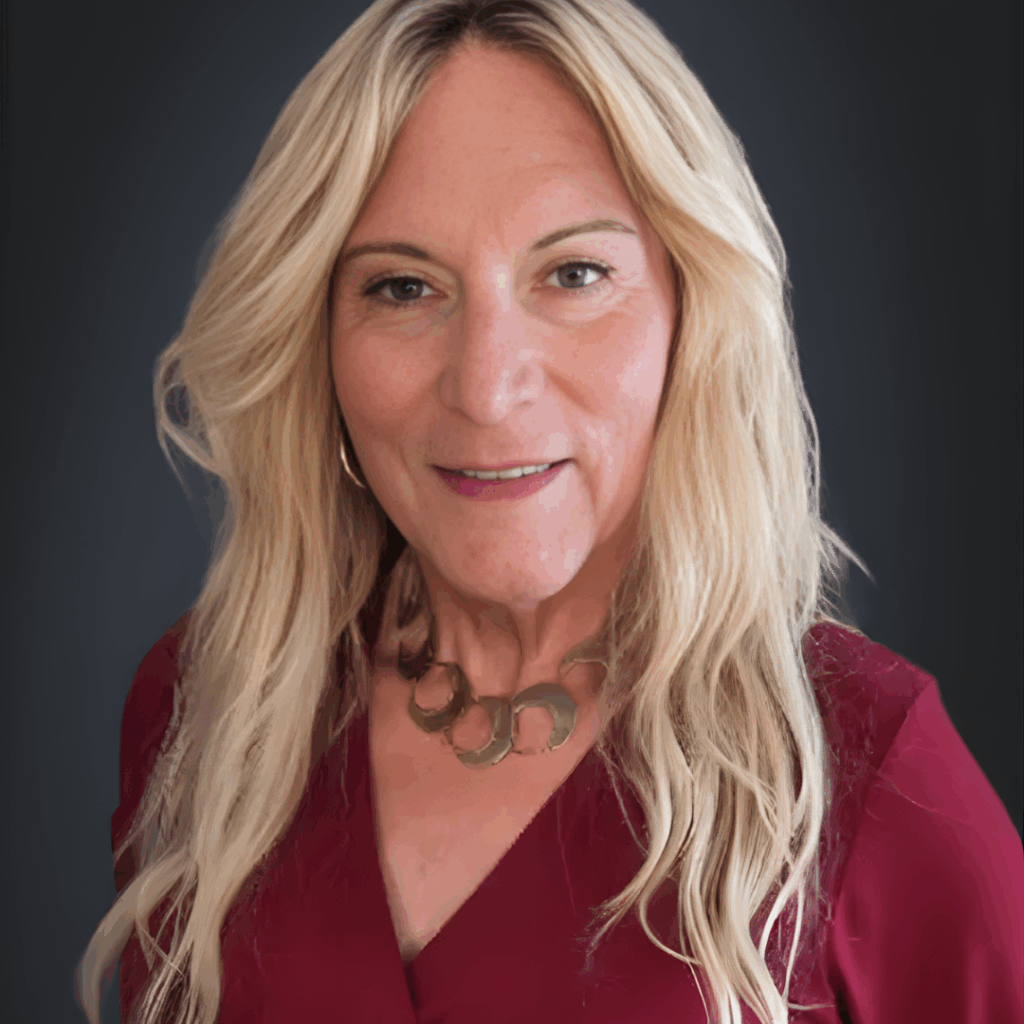
Wendy Cole covers Gender Diversity Education in this Marketer of the Day episode. Wendy Cole explains how transgender understanding grows when people hear lived experience and see a clear path to acceptance. She frames being born transgender as part of the birth process, where body and brain do not always align. Her own transition began in 2015 after decades of repression, therapy, fear, and survival mode. She says the 2012 medical recognition shift helped make treatment, hormone therapy, and surgery more accessible. Her outreach focuses on open conversation, workplace training, community meetings, and the practical rule that nothing is off limits. Rather than trying to reach the immovable extremes, she aims for the 60 percent in the middle.
From childhood repression and medical gatekeeping to living authentically and educating others, Wendy Cole has walked the transgender journey in a way few have and she’s turned that lived experience into a powerful force for change. As a gender diversity consultant, speaker, and co‑host of the podcast Demystifying the Transgender Journey, Wendy helps organizations, communities, and leaders understand what it really means to be born transgender and how to create environments where everyone can belong.
In this episode, you’ll hear how early rejection and threats of institutionalization shaped Wendy’s life, what finally made transition possible in her 60s, and why she believes gender is “between the ears, not the legs.” You’ll learn how clear, compassionate education can replace fear with understanding, why focusing on the “60% in the middle” creates the biggest social impact, and how organizations can better support transgender and LGBTQ+ employees, customers, and community members.
Quotes:
“Gender is between the ears, not the legs your body is just the costume, not the character.” – Wendy Cole
“I didn’t transition to become someone else; I transitioned so the world could finally see who I’ve always been.” – Wendy Cole
“The most radical act a transgender person can take isn’t changing their body; it’s refusing to be ashamed of who they are.” – Wendy Cole
Resources:
- Empower Your Organization with Gender Diversity Training
- Connect with Wendy Cole on LinkedIn
- Follow Wendy Cole on Instagram
- Wendy Cole on Facebook
Podcast: Play in new window | Download (Duration: 46:21 — 63.7MB) | Embed
Subscribe: Apple Podcasts | Spotify | Amazon Music | iHeartRadio | Podchaser | RSS
Transcript
Download transcript (.txt)Wendy Cole is a gender diversity consultant who helps agencies, businesses and organizations, navigate evolving social landscapes through education and training on transgender and LGBTQ plus issues. Wendy is a sought after speaker, and she guides audiences through unfamiliar terrain with clarity, compassion and lived experience, with the mission to foster meaningful change by humanizing what it means to be born transgender and LGBTQ, plus offering a map where there was once uncertainty. So we're going to learn some stuff and get some breakthroughs, some ahas and and figure out all this. So Wendy, glad to see you. How are you?
It's great to be here. Robert, thank you for having me.
Happy to have you. And so what did I leave out of the introduction? What are you all about? What has you so excited these days?
Oh, God. One of the things that I discovered when I first transitioned in 2015 was how many people even on my street that I lived on, there were three gay couples that lived there as well. They didn't get me either. There was no difference between whether the people were gay or straight. This is a foreign concept in our culture, in our society. And I found I lived in that same community of New Hope, Pennsylvania for about five years. And during that five years, I was totally out, totally open, and talked with everybody, and I found that I really enjoyed that, and I have the ability, or a gift, to be able to put it out openly, authentically and vulnerably. And that was confirmed by one of my neighbors, David, at a Christmas party on my first Christmas as Wendy neighborhood Christmas party. It was great. I'm sitting there in the kitchen with David, everybody's kind of trashed party was three o'clock in the morning, and it was a great one of my best Christmases ever. And he's got tears running down his face. And I said, What's wrong? He said, I have to apologize to you. I said, why? He said, I used to have horrible thoughts about people like you. As a gay man, he didn't like us, didn't understand us. Didn't want to have anything to do with anyone who was transgender, but he said to me, you've been so open, so authentic, so vulnerable, and shared your entire life history with not only everybody in the neighborhood, but in the town and in the entire area in in your first six months living here, and I'm now embarrassed what I used to think and we became good friends. I walked over, hugged them and said, You don't need to apologize. You now get it. You now understand we are born this way. Everybody goes through the same birth process. You did, I did, but the birth process is not absolute. You happen to have been, I assume, assigned male at birth, correct. Yes. Okay, and by the time you were three or four, did you ever think you were anything else other than a little boy, and played with other little boys, right? Right? And you knew you were going to grow up to be a man, and you never questioned that. People like me, that's all we do. Because from the time I was around three. In fact, I know from around the time I was two, I had feelings toward things that were for girls. That was my first confrontation with my father. Was at age two when he took my doll away. I have no idea why I had a doll, but it was my favorite toy. So that's how powerful this is, just as powerfully as you knew you were a guy. That's how powerfully knew I knew I was a girl. But here's the catch, when we're born, our parents begin our socialization. In great integrating us into society. So I was made to play Little League, go to Cub Scouts, play with other little boys, all. I didn't like it. I didn't want anything to do with it, and it was a constant struggle. But. Between my father and I. So by 10, I told my parents that I really was a girl, and I had heard them talking about Christine Jorgensen, who was the soldier that came back from World War Two as a woman. And these were transsexuals, and I'm going, Oh, my God, that's what I am. This was at around age four or five, so at 10, when I told them, that was when they were going to they took me to a psychiatrist. I had five appointments. They talked with my parents, not me, and children were supposed to be seen and not heard so and the story is I was threatened with being committed to the psychiatric facility where I would be kept until I was fixed. And that scared the hell out of me, and that was psych facility in Cold Spring, New York. I grew up in Fishkill, New York, so that was that began my life of repression and hiding because I was given the option, stop saying you're a girl, get on with your life, or you're going to be committed. That was how my parents handled me. And by contrast, on demystifying the transgender journey, the podcast I co host with Lynn Murphy, we have interviewed parents mothers, and it's just amazing the difference that happens when a parent accepts who you say. You feel like one of the parents we just aired her interview. Renee, she had twin sons at age seven when she went into one of her son's bedrooms to wake him up on his birthday, he was under the cover sobbing his eyes out that I didn't get my birthday wish. And she said, Well, what was it? And she said, I wanted to wake up a girl, and she had no clue before this. She didn't address it. She moved on with the day, and that night, she went in and talked with them, and she said, Well, what if I told you it was possible? We'll find doctors, we'll find people, and we'll get you the help. And she said, the relief that came over this child was palpable. Fast Forward, both her twins, one now her son, the other living as her daughter are now 18. They're graduating high school, living as a girl from age seven till 18. It is He. She is the most well adjusted happy child, and has girlfriends and friends in school and is doing wonderfully. And the only thing that happened was she wants her her her son or two twins to go to college, but she doesn't want the one to go to college before she has her surgery. And of course, our government has just increased the age on surgeries from 18 to 19, so she's going to take a year off in week. But those are the stories that people need to hear, and that's why I go out to do what I do. I've volunteered for organizations within my state and my city, to go out and speak, to go to community meetings around the state. It's it needs to be done. The reason that there's all this BS going on in in our political world now about transgender people and LGBT in general is people don't comprehend or understand this. It's physically how we're born, during the birth process, second and third trimesters, when the body differentiates between male and female. People know about that, and they figured, well, you're born, you have either of either a vagina or a penis, and that's your sex assignment. But that. Doesn't define who you are. Gender is between the ears, not the legs. That's just a flesh, and it doesn't define who you are. Period. What defines it is what happened during that differentiation between male and female the brain also differentiates, but not necessarily in sync with the body. You get to a point where you just realize there is no way you can go on. And that's what I hit around in around 1970 71 I decided, no, I can't go on anymore. And I started a transition. In those days, there was no knowledge of this. Today, we have cell phones, we have Google, we have the internet. We have all of this back then nothing. And I looked, I went through libraries and everywhere, I found a psychiatrist. He started helping me. I made good progress. I was coming out to I lived off campus in an apartment so I could privately do this and not be visible to anyone in my college. And end result was going very well until my psychiatrist took me as a quarterly patient to a meeting, quarterly meeting of psychiatrists in upstate New York, and I talked for about three or four minutes, five tops, and that's when one of the psychiatrists stands up and says to me, says to the room, I'll see you all next quarter turns to me and said, You're a freak. You should move to New York City and turned tricks like the rest of them. I had no clue Robert what he was talking about. We had no information. I found out afterwards that, yes, my diagnosis was psychological, no treatment, no cure. Same for gay people too. There's what. Was removed and changed in 1973 it took until 2012 for people like me born transgender to be recognized officially by the medical community and the therapeutic community, and now I had treatment through therapy, hormone replacement therapy, and any necessary surgeries, because the end of surgery is incredibly important, because I Didn't realize during the first almost exactly two years before my surgery, that I was living with, I was walking around with still my as I called it, to my gay friends, who would ask me, Wendy, how can you do that surgery? And I'd say, I'm having my birth defect corrected. That's what it is I needed for my body to be congruent with my brain. That's what all cisgender people have, and that's all we want. No special treatment. We're all human. Excuse me. So that's all I ever wanted, was to just be myself when I transitioned. And started my transition, I started with a psychiatrist and a therapist. Both had experience working with people like me, and that's what I look for, and that was the hardest thing to find in December of 2015, finding a therapist who had experience, because we weren't recognized. So I did. I found them, and my therapist told me about two years after, I was living full time, and I'd seen her for two years, she said the two of us talked, we couldn't get over it, meeting you as your male facsimile, my Male representative, as I called him, it was just incredible how good I felt just being me and they couldn't get over the personality change. I went from being withdrawn, depressed, anxiety ridden and just generally miserable. A guy to happy, open, energetic and enjoying being me finally, not having to hide that the psychological pressures of that are terrible, and you grow up feeling ashamed not because you were born transgender, but because of society and the socialization process letting us know that this is not acceptable, and that's my mission, is to change that part of society so that we can be accepted. And what I found over my first five years of living authentically is I would let people get to know me, first as a person and somewhere along the line, either within a matter of hours or days or weeks or months, as I got to know them, I would reveal what my past was and how I was Born, and that this is now me and invariably, it really made a difference in the conversation. So now what I do, in terms of my public work and all of that, I openly, if I'm speaking to a group of people. My name is Wendy Cole. I was born transgender. I am a woman. I am female. Gender is between the ears, not the legs, and I'm an open book. Ask me anything you want to and absolutely nothing is off limits. And then what's your question?
Oh, boy, that's tricky. Well, yeah, so this is powerful stuff, and I'm proud of how far you've come and and, like, the lessons that I'm getting from what you've been explaining so far is that, like, I will never have a firsthand understanding of transgender, transgender, right as, like a straight white man. It's just like, I can, I can have empathy for you, but it will just, I'll never get to 100% comprehension. And it seems like there's been, there's so much disinformation, and maybe people that scared, and it's such a low population, a lot of us have, like, never met a transgender. So it's easy for the lies to win, and then you counter the lies, and then the more lies pile on. But it's like, when you're making me think about when, when I hear some of this, or how these conversations, it's like, well, if, if, if transgender, if they're people that are just like you and me and want equal rights and just want to be happy. Like, would that change things? Or if, if they they're not doing it just to have fun, or it's not just to get attention, if it's really a thing that they I mean, who would choose to be kind of like, you know, bully, bullied, persecuted, be so unhappy. Hear about, like, the, like, the teen suicides and all that. Like, if that part of your misunderstanding had changed, would that make a difference? So it's, there's a lot of like, mental badness and clutter to undo, but just hearing that you went through this in the 1970s makes me think, man, isn't it so much better nowadays? It's, you know, it's not perfect, it's not solved, but it seems like we've come such a long way, right, medically and understanding wise of like this. This, like marginalized group of people.
2012 was a big change. That was what told me that, yes, I can do this now. Doesn't matter that I I transitioned in my 60s. Doesn't matter. I could do it, and I did it in terms of how to integrate into society. Now I took the position when I started this. I was always a woman. I was always a girl. I was always a female. I just had the misfortune of having my birth defect with my body coming through as male when it should have been female to match my brain. But I will never put the word trans in front of woman and apply it to myself. And the reason I won't do that is personally for emotional reasons. I don't want to walk around feeling different from other women. I want to just in my daily life, when I go to the store, the supermarket, the local bakery. Wherever I just want to be accepted as just another woman. That's it, and that's how I see myself, and that's the energy that I bring into my daily life and then into my work. Is I'm female. I'm a woman. I've always been that way, and I know it, and I acknowledge the fact that I was born transgender. Transgender is a condition of how we are born. It's part of the birth process. I am convinced from my early days of filling out transgender surveys that come out annually. I filled them out. A lot of my friends and acquaintances around the country that I was acquainted with online even never filled them out. So I think the population is actually smaller than actually surveyed. And in terms of suicides, I'm convinced also that there are far more suicides than what because of being born transgender than what is reported. If I had committed suicide in 2014 like I was planning on, no one would have known that it was because I was transgender. My wife knew about the fact that I felt this way from our conversation in 1978 long after we were married, I had been told as a child by the psychiatrist they took me to, oh, once he has a career, he has a wife, he has a house and family, he'll forget all about being a girl. And I said, No, I won't. And that didn't go well for me either, but I found that there was a definite need for someone to talk about this with people, and I absolutely enjoy doing it. I'm not afraid to integrate into society. I'm very open. I got pissed off during 2022 of all the bullshit going around, going around about us, and that's when I started in 2023 podcast guesting, going on podcasts, talking about it, being interviewed, all of that. And I met Lynn in a mastermind group, and I announced myself in the group. My first meeting, she unmuted and said, Wendy, we need to talk. She was doing a book and etc. That's in the whole other story. But we've been in a collaborative relationship and friendship for almost three years now, and we started a podcast, which I named demystifying the transgender journey, because that's what I do, demystify it for people. And you made an important point, Robert, I do not expect you or any other cisgender person to ever understand this. If you've never looked in the mirror and said, I should have been a boy or I should have been a girl, you won't understand what my work entails. Is providing a framework by which people can begin to comprehend this, and that's important, because one they don't understand the birth process, and two, it's part their beliefs in just binary male, female and no variation, is part of our Western European heteronormative culture, which we've been under for Hundreds of years, it's also part of all of our religions, and it's also now part of our politics, and that has to change. The culture is inherently wrong, especially about the birth process and the variations nature is not absolute on anything there are. There's rooms for variations. There is an excellent book transgender families, written by Dr Diana Sorrentino, who transitioned in 1990 in New York with the help of a doctor New York City. I knew all along, back in the 70s, that if I had gone to New York City and lived underground, I could have transitioned, then my life would have been very different. I wouldn't have been part of society and. New York State and most other states in the country, and even in San Francisco, California, transgender people would be arrested, thrown in jail and fined for appearing in public as female. That's it. That's what it was back then, and that's what they're trying to take us back to. But now I know they're not going to it's they're not going to win. As far as I feel. We have cell phones, we have Google, we have social media, and we have connections. We never had that in the 70s. We've got tools now that we can organize, we can do things. My focus is, you've got 20% of the people in this country who absolutely hate and fear and despise people like me, and I know I'll never reach them. And we got 20% or so who absolutely love us and support us and do their best to comprehend us. I want to work with the 60% in the middle. Meet them where they work. Meet them where they have organizations, and just start putting myself out there to make a difference?
Very nice, very good. And this is important stuff, right? Because imagine being the transgender and having difficulty making friends, finding employment. I mean, they're like, like you said, 2022 they try to take away the bathrooms. It's it's ridiculous, it's barbaric. And so this is important stuff. And so since this is, like a business podcast, I like to kind of talk about the, you know, there's the personal, then there's the business side of things, right, right? So my understanding, so you have the podcast, right? There's demystifying the transgender journey. And you also do, like speaking and consulting about this, correct, \
Correct? And tell me about that. Well, I before this year, I was doing a lot of coaching of transgender people, and that also got me out into the public where I could speak to groups of people. And I love going in and having a group of maybe 2030, people, and just, I'll open it up with a talk about this, something similar to what we just did, and then I open it up to questions, because that's where I can really make a difference with that type of a group of people, whether it's in a in a business and a company, or in an in a community organization, just being able to speak with a group of people and then answer their questions and have a dialog with this and what I've always found over the last 11 years is the more I get to meet people, and people get to meet and know me, it begins to change their perspectives. And that's basically what I hope to do. I put together my brochure because what I found is people don't understand I would be in a networking event, talking with other business consultants, and they don't understand what I do, why I do it, and what the benefits are. The benefits are very simple, people who are employed by a by a company or a business, who are transgender. A lot of us go through this point of even though I'm accepted and I feel good about myself, if anyone says anything to me that triggers me or whatever, a lot of transgender people feel that they are different because they were born transgender and a cisgender person doesn't who's never met a person like that, and with all the controversy, they have no idea how to relate to that person or talk to that person. I That's why I make it abundantly clear, ask me anything you want to. And even with Lynn, my co host, she, at the beginning of our relationship, didn't fully understand anything about LGBT, especially the T now she's just as passionate about this as I am, and just as knowledgeable, and it makes such a difference. So the brochure I put together outlines what. I do, how I do it, and I invite anyone to contact me and go from there. But I haven't done this yet, but I'm perfectly open to doing it, and I'm talking with people on my city council. I've started that dialog with them. I'll if they have trainings that they would like to do for the police department, the fire department, or anything along those lines, any government agencies, I will definitely go in and talk with them.
Very cool. You're getting the message out there helping people.
I'm kind of doing it on a grassroots level right now. I'm doing it on social media, but locally in my state and my community, I'm joining organizations so far, two women organizations that I'm connected with, and I volunteered if they need people to go out to Well, one of the founders of the leninity organizations told me her board of directors has a real issue with her going out to a public meeting somewhere in the state and talking about LGBT issues as a cisgender heterosexual woman with a family, so, hey, I'll do it. Yeah, you've lived it. I've lived it. That's the that's also the difference between me and some people who just teach dei and work on that. I have lived experience as well.
Very good. And as you say, we have the tools now, right? There's social media, and you think in decades past, like even like you researching this, right? It's like, well, maybe there's a book in the library, if you're lucky, or maybe you order something, or you go to some other town to that library or get a VHS tape, and that might have been it, but now it's like, there's, I mean, there's YouTube, there's podcasts. If you want to learn something, you can't really learn much instantly, overnight, but to have the steady supply of like, Hey all, I'll, you know, start binge listening to this when I'm working out, or I'll check in on whatever when Wendy and Lynn are talking about on the podcast this week, you can just kind of keep that steady drip, and before you know it, you're like, hey, now I've, kind of, I've ingested 10s, hundreds of hours of content, just because there's that the technology exists, right? We can, can store it, we can stream it. We can listen to it on our phones. It's here now. And so it's up to us of any kind of learning to we can squander it and stay ignorant, or we can use it and open our minds and learn some some new, interesting material. And you know when you've mentioned a few times that when you say, hey, ask me anything, nothing is off limits. Has there any been like, a wild question or something that just like made you laugh, or one of these questions that sticks with you?
Oh, the conversation always does bring up the word choice, which is why I always preface everything With I was born transgender. It's not a choice. I did have a woman in a networking group ask me, Well, how does a two year old, three year old, four year old, or even a six or seven year old know that they were a boy, but they should have been a girl. And I walked her through that same question series. I turned it around that I that I asked you, you were assigned female at birth. Oh, yeah. And it was like a deer in the headlights when I said, Well, the way you know you felt, that's how I felt, and that's how we all feel. It's and there's really more about that that we didn't cover. Like gender as a spectrum. It's not absolute. No one is absolutely male or female and how they identify and feel about themselves. It's a blend, and that's all part of the birth process. But yeah, oh God. And when some of the people go off on you of attributing this to something that's psychological, and you're a very sick person, and all of that there's besides blocking all of those things on social media, it can have a lot of fun going back at them. And once you start getting into the facts and away from the God stuff or any of the other beliefs. Beliefs that they have, forget it. They're lost. They can't come back at you.
Yeah, looks like you were mentioning earlier about the curve, right? There's the 20% on each side and that, right? It's like immovable either way, right? The ones that that love you and support you, they'll never stop. But the ones that just hate you for no reason and have the bigotry and the ignorance, there's no moving them either. So why not put your energy where you can make a difference, which is in that middle space. And so it's been just quite an education. I've been having so much fun speaking with you, Miss Wendy Cole, and we can get that flyer that you mentioned at meet Wendy cole.com is that correct? Correct? Very nice, well. And then these last final minutes here, I want to make sure that we've covered so much, and you've educated me so much, but I want to make sure that we fit in, like, one last little tidbit, which is, I'm in any kind of discussion, especially this one, I'm never quite sure what to ask someone to, like, make them really shine, right? Because, like, you're the expert in this, but I'll have some expert about, you know, like, search engine optimization. I'll be like, Well, I don't know, like, the the exact ideal question to ask to seem so smart, so in this topic of gender diversity and LGBTQ, etc, do you think there might be a missing question that I should be asking you, I just don't know to ask you.
Well, this actually applies to all people, but I I think that is really important for any transgender person or even LGBT person in general, to know what I discovered during my transition is the most important part of my transition was working on the mental and emotional aspects of transitioning. The physical is the window dressing. I'd never liked cross dressing because I wasn't about to close for me that wasn't, in fact, cross dressing I hated because it made me realize what I couldn't be at that point in time. So I started my transition in January of 2015, diving in to the mental work of and my therapist was really on board with that, from the very first session, all the beliefs that I held which kept me safe as a child, all the way through my adolescence, into my early adult life, and especially after the traumas of trying to transition and not being able to I basically lived in survival mode for the rest of my life until 2015 that's when we started breaking down all my beliefs that were keeping me Safe and except find getting self aware and self acceptance. Self acceptance is so key to this, accepting yourself for who you are and forgetting about society's feelings about it. Just embrace that feeling when I I used various tools to do this and with the help of my therapist, but by April of 2015 I couldn't wait to be living full time. I was no longer afraid. I was doing my thing. I was out there, and I moved away from my home moved away from everybody, moved to a new town about 40 miles away, and just started living authentically. And I've never looked back. The personal growth from doing that, the personal experiences from doing that, were so powerful. And so I have a firm belief in the powers of the human mind, and it's our thoughts and our beliefs that can propel us forward. Can completely block us from doing anything or even seeing that possibility, because life is about possibilities, so you can see them and do them, not see them at all because of your beliefs, or worse yet, see what's possible, but because you're holding on to those old beliefs, You're going to sabotage yourself, and I see that on so many people's transitions, which is why it takes years for some people to transition, or for somebody to change their career and hate my job. Gonna move. But no, I might not do that, because. Worse. It could be worse. Those are beliefs. Change them and you can move on. It's the power of the human mind, and that's what benefits everyone, once you learn to deal with that and make changes. And as you can see, change is good. I've embraced change since 2015 and I continue to do so.
Very nice, very helpful. So you're saying, don't let the fear win, and that there's milestones in life when you're at safety now, and safety can be good, right? Because it's stability, it's security, but there's also to be there too long and too much comfort. Then you don't take the risk that you need to. Then get to some new part of your life, which you know could be gender transition, could be moving in that new town, that new career, and then you get to the new safety, and then figure out the next steps. It's it's helpful to look at the big picture of life in that way, and to just not be so dang afraid. And there's resources, right as you say, there's tools, there's people, there's friends to be had, there's information we can learn, and especially like working on yourself, having that self awareness that you speak of. And that's why listening to a podcast such as demystifying the transgender journey can be so helpful, because it can't be scary to go this alone. You don't have any friends like this. It can be scary to see the psychiatrist, or to, like, take all these kinds of actions, but a podcast is like a passive way to just start educating yourself without a big commitment. And then now you now you know what can be done, what is possible, as far as your own transformation, in many ways. And so we mentioned that website, meet Wendy cole.com and demystifying the transgender journey. And so as far as next steps are those? Is there any other place someone should go? After listening to this conversation,
I'm open for conversation,
okay, and there's a Contact button on Meet Wendy Cole, correct?
Correct. And this book I highly recommend, Dr Diana Sorrentino, the Miss and it's the transgender families. But going through the book, she dedicated her entire life, since 1990 and all after her transition to researching this, the by biology, the neurology and the psychology of how it affects families and the individuals as they age. And it's a it's an excellent resource. I highly recommend it
Transgender families by Dr Diana Sorrentino. We'll add that link in the show notes, and before I let you go. Wendy Cole, it's time for the scary part of the podcast, probably not too scary for you, where I try to stump my podcast guests a little bit by asking them about a fun or interesting quote or lesson that has helped them in their journey. So what comes to mind for you as far as a fun or interesting quote or lesson?
Well, recently, I watched the documentary becoming Led Zeppelin, I am I love music, all kinds of music
And including cell phones ringing. That's
Okay. Edit that out. Now, I watched a documentary becoming Led Zeppelin and the way Jimmy Page ended, it was just so powerful for me. He said, You know, if you have something that's special about you, I'm paraphrasing. I don't remember it word for word. If there's you have something special about you, you need to give it work, work on it. Work, work, work. And you need to believe in what you're doing. And if you have all of those, and you stay true to that, you will succeed. And that's what I believe,
That's great fulfill your potential. And if you need help, you need some education in this meet Wendy Cole is the place to go. She empowers your organization with gender diversity training, transforming your workplace or organization into an inclusive environment, tailored education on transgender and LGBTQ plus issues can foster meaningful social change and enhance community engagement. You go to meet Wendy Cole. Com, and she has this very excellent eight page flyer. When, when I first met her, I was I couldn't stop talking about it. It's like every speaker should have this. It's like a mini PowerPoint presentation. You can find out everything that you want to know about her, whether you want to listen to the podcast or hire her to speak for your organization. Meet Wendy cole.com is the hub. And thank you so much, Wendy for showing up, stopping by. You ran us through all the emotions, right? There's the sadness, the happiness and everything between I'm so glad that we had this conversation. Thank you for being here.
Thank you, Robert. And I'll finish it off by saying, you'll find joy on the other side of any major. Transcribed by https://otter.ai