Published Last updated
Read Mark Z. Jacobson’s bio and speaker profile →
View in Podcast Library: stories, quotes, books, and resources in one place.
Read Mark Z. Jacobson’s bio, books and speaking topics
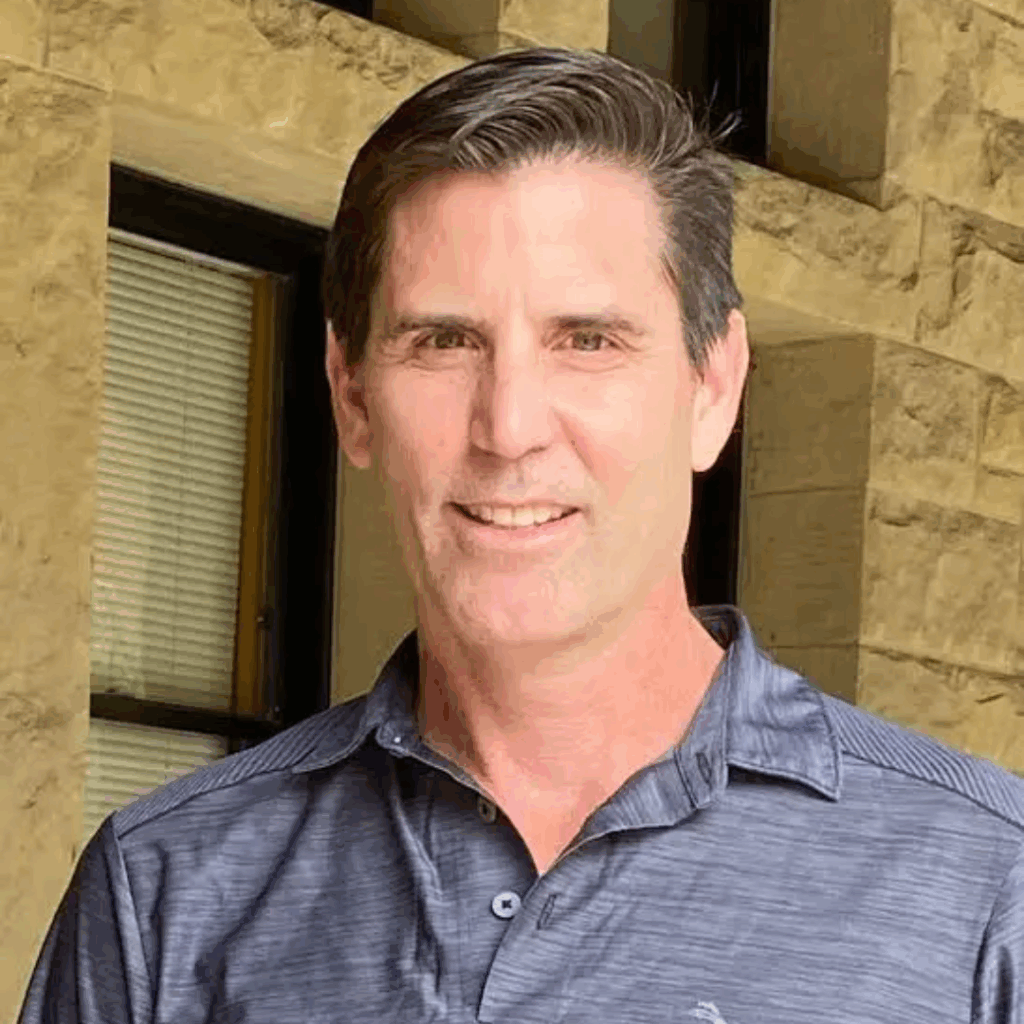
Mark Z Jacobson covers Clean Energy Transition in this Marketer of the Day episode. Mark Z Jacobson explains how today's renewable technology can cut pollution, stabilize energy, and address climate change without waiting for miracles. His framework starts with electrifying almost everything, then powering it with wind, solar, geothermal, hydro, storage, and demand response. He says electric vehicles and heat pumps use about 75% less energy, while induction cooktops use about 60% less than gas. He rejects carbon capture, direct air capture, blue hydrogen, biofuels, and nuclear as costly distractions pushed by entrenched industries. His research covers 150 countries, all 50 states, and over 120 towns and cities aiming for 100% renewables. He argues air pollution kills 7.5 million people yearly, making fast deployment urgent.
Climate change and air pollution are no longer distant threats; they’re here, they’re deadly, and they’re wrapped in a fog of conflicting claims. Are we really out of time without breakthrough tech? Is carbon capture our last chance? Or are renewables secretly too weak and too costly to power the world? In this episode of Marketer of the Day, Stanford professor and world-leading atmospheric scientist Mark Z. Jacobson makes a bold claim: we already have 97% of the technology we need to solve air pollution, global warming, and energy insecurity, no “miracle” inventions required.
Mark shares how growing up under the smoggy skies of Southern California pushed him to devote his life to understanding and fixing air pollution and climate problems. Decades later, he’s authored seven books, published over 190 scientific papers, testified in major climate trials, helped shape the Green New Deal, and built detailed plans for 150 countries, all 50 U.S. states, and 120+ cities to move to 100% clean, renewable energy. If you’ve been overwhelmed by climate headlines, skeptical of energy claims, or unsure how real a 100% renewable future actually is, this episode gives you a clear, evidence-backed roadmap and a reason for grounded optimism.
Quotes:
“We don’t need miracle technologies to solve climate change, we need the courage to deploy the solutions we already have.”
“Every year we delay the transition to clean energy, seven and a half million more people die from air pollution. Waiting is not neutral, it’s deadly.”
“This isn’t a technology problem anymore; it’s a focus problem. When we ignore the distractions and double down on wind, water, and solar, a 100% clean energy world becomes inevitable.”
Resources:
- Connect with Mark Z. Jacobson on LinkedIn
- Follow Mark Z. Jacobson on Instagram
- Connect with Mark Z. Jacobson on Facebook
- Mark Z. Jacobson Stanford University Profile
Podcast: Play in new window | Download (Duration: 33:58 — 46.6MB) | Embed
Subscribe: Apple Podcasts | Spotify | Amazon Music | iHeartRadio | Podchaser | RSS
Transcript
Download transcript (.txt)We are here with the number one most impactful atmospheric scientist in the world, who says we don't need futuristic breakthroughs to fix climate change. It's just that we're not using what already works. We're here with Mark Z Jacobson, who is a Professor of Civil and Environmental Engineering, and he is the director of the atmosphere energy program at Stanford University, published seven books, 190 papers, and he helped shape the green New Deal. He testified in landmark climate trials. So we're here to talk about saving the planet, saving the world, you know, just a little snippet, little problem like that, and we're talking about these solutions to climate change, renewable energy, and having a better future for those future generations by solving these various energy crises that we hear about, including what we're smack dab in the middle of, as we're recording. So it's a timely issue. So Mr. Mark Z Jacobson, how are you good?
Thanks for having me on Robert, great. I'm really excited about this book. Still no miracles needed. It's really the culmination of my life's work on trying to understand and solve large scale air pollution and climate problems and through clean renewable energy systems. I mean, I was, became interested in this topic. I really, in fact, decided my career basically when I was 13 years old, playing tennis down in San Diego, in Los Angeles, and air pollution was so bad, I just thought, why should people live like this? And from then on, I said, I'm going to dedicate my life to try to understand and solve this problem, the air pollution problem, which gradually morphed into the climate problem. This is back in the 1970s and early 80s and and so I've been trying to understand that, you know, I figured that, you know, in order to understand or to solve these problems, you really need to understand them. So I spent like when I finished my undergraduate career at Stanford University, where I couldn't really study these problems, because there was no program to study air pollution or climate there. So I really had to wait till my graduate work at UCLA, where I did have the opportunity to study air pollution and build computer models to simulate and understand air pollution. So I figured I had to understand the pollution problems by modeling them and then comparing with data, and then understanding the detailed interactions that happened in the atmosphere among chemicals, and also between chemistry and sunlight and heat to affect temperatures and also how different pollutants affected people's health. So to spend a lot of time, in fact, I spent years and years trying to understand air pollution and climate problems, because the ultimate goal was to solve these problems. But to solve them, you know, you really under have to understand the problems, because otherwise you can come up with lots of solutions that don't work, and they're good examples in history, many examples of proposed solutions that don't work like using ethanol for transportation fuels. I mean, you're just trading one pollutant for another, whereas people pushed, in the early 2000s for example, pushed ethanol for transportation and but it turned out that that was in some cases worse than gasoline in terms of air pollution, health, and also in terms of climate, it wasn't any better. So, which is another lesson. It's like, you know, some people focus on climate only, and when you focus on climate, you can come up with a different set of solutions than if you try to understand both air pollution and climate impacts of what your what your proposals are. Another example is carbon capture. I mean, carbon capture is where they try to reduce carbon dioxide by putting equipment on a coal plant to basically absorb carbon dioxide coming out of a smokestack. But it turns out it takes a lot of energy to do that, and a lot of that energy just comes from coal itself. And so you actually have more coal mining, you have more coal burning, and you have more coal pollution, because carbon capture equipment doesn't remove any pollutants aside from carbon dioxide, which is not a health direct health of pollutant, it's an indirect health pollutant, but not a direct health of pollutant, but it affects climate, and so you end up polluting The air more with a technology like carbon capture, same with direct air capture than not doing anything. And so it's really critical, I found, to understand these problems. And this is why a lot of solutions are not good, is because a lot of people who are proposing solutions do not have that background in trying to understand the problems. Anyway, the book still no miracles needed. It's it's not only about saying what does work, but it's also talking a lot about what does not work and why. So what does not work as I mentioned, carbon capture, direct air capture, what's called Blue hydrogen, which is hydrogen from gas, where you add carbon capture to it. Have electro fuels where you instead of using gasoline, they take the manufacture of fuels that replace gasoline, and they but you need carbon capture for that, carbon dioxide, and you need hydrogen from Blue hydrogen too. So you have two bad solutions combined together to form a third bad solution,small and large nuclear reactors, bio energy, bio mass, bio gas. Biogas, biofuels, and in geoengineering is another proposed solution. So we talk a lot about these poor solutions in the book, but we then really focus on what does work. And what does work is clean renewable energy. As you would expect. This doesn't take it's not a rocket science problem. It's like something that doesn't emit and is renewable. That's the ideal thing. So the idea is to electrify almost everything you can provide the electricity from clean renewable sources, wind, solar, geothermal, hydro primarily, and use storage. Existing storage, or hydro itself is storage with batteries. There's different types of storage that are talked about in the book, but there's also heating. We need, not only electricity, but we need heating cooling, and we'll need some hydrogen for some purposes. So to get heating, we can heat with like homes with electric heat pumps, which are existing technologies, use 75% less energy than gas for heating, create no emissions if the electricity for the heat pumps from wind water or solar power, electric induction cooktops for cooking. These are simple. These are commodities you can buy in the store install. Fact, I have a house that I talk about in the book that's it's 100% renewable. It just uses these technologies. It's simple, and I've had it since 2017 haven't paid an electricity bill, a gas bill or gasoline bill in down nine years, and then I get paid for extra electricity I generate and send back to the grid. So this is how every new house should be, should just be well insulated. Have electric heat pumps, electric induction cooktops, solar on the roof, maybe one or two batteries in the garage, people using electric cars. This is the future. It's the cleanest, the safest. You know, the benefits are so numerous of a transition, reducing direct cost, energy cost, as I said, No, bills haven't paid bill in nine years for anything, any type of utility except water and but it pays, but so pays back the system. You even though there's upfront cost, there's a payback time of five to 10 years and but you all have then have health cost benefits, climate benefits, job creation. It turns out, you use less land with clean renewable energy than with fossil fuels, and have more energy security. You don't what we see right now in the world is many countries depend on other countries for fossil fuels, and so when there's a crunch, when one country withhold or it makes it difficult to transfer those fossil fuels, prices go up. You'll see blackouts like Cuba, for example, has black has had many blackouts the last few months, because it relies first of all on a centralized oil plant for its electricity, which is one another thing you get rid of with clean renewable energy, because it's more distributed. It's hard. You don't have to rely on just one plant, but then it relies on importing fuel for that plant from multiple countries that are all now not giving them as much fuel as they used to. So we get rid of energy insecurity problems by having homegrown energy. And when it's clean, it saves lives, saves people money, reduces health costs, reduces hospitalization costs, reduces health insurance, workers compensation rates, so many benefits to reducing the health impacts of air pollution. And air pollution itself kills seven and a half million people per year worldwide. It's the second leading cause of death worldwide after heart disease, and most people don't realize that it's actually the most costly environmental problem in the world, air pollution, mortality and morbidity. And these plans that I set out in this book, and which are backed up by numerous papers that we've written over many years to transition the world to 100% clean renewable energy, it reduces health costs enormously, and climate costs as well direct energy costs, energy use. We need a lot less energy with a clean renewable energy system, because everything is so much more efficient, as I said, electric vehicle, electric vehicles use 75% less energy than gasoline vehicles to go the same distance. Electric heat pumps, as I mentioned, to use 75% less energy than gas heaters to provide the same heating. Electric induction cooktops 60% less energy than gas for the same cooking. So there's so many benefits, and there's we don't and we have 97 Percent of the technologies we need. This is why this book is called, well, the reason he chose the title and still no miracles needed. I mean, a few years ago, Bill Gates was saying we need a miracle technology. We need miracle technologies. And he was trying to promote technologies that didn't exist, to spend money on them, to try to be the one to solve the climate and pollution problems. But the fact is, we don't need miracle technologies. We have 97% of what we need today, and we know how to get the rest. What we don't have are the long distance aircraft and chips, but we know how to do that with clean renewable sources, and that, you know, even if we have trouble getting those last 3% we that 97% we can implement today on a large scale. We can see this. Many countries are actually doing this. China is putting so much renewables on their grid, replacing slowly replacing coal. But at the pace they're putting renewables, there'll be 100% renewables across all energy sectors, if they keep up this pace and they electrify all energy by 2051 which is in 25 years from now, the US, for example, it'll take till 100 years later, 2048 at their current pace. But doesn't mean we can't turn things around. The good news is that China is emitting 35% of all the pollution in the world, putting greenhouse gasses and air pollutants, and it uses 35% of all the energy. So a country that big creating so much problem in terms of air pollution, is so good to see that they're actually trying to do something. The US is doing some stuff, especially certain states, are doing really well in some things. But still, just the scale needs to be just ramped up. And not only US and China, of course, but the rest of the world, India, European Union, Russia, Brazil, every country in the world really needs to participate. But it's to everybody's benefit to transition fast in terms of, as I mentioned, cost benefits, health benefits, climate benefits, jobs, land use, so many different benefits of a transition.
Very nice. Well, this is amazing, and it's important, but it's complex, but it's also fascinating with everything that goes into it. And narrating your book, that was that seven and a half million people dying per year figure, that was huge. Like, I hadn't heard that, right? That isn't very mainstream, and unfortunately, as you said, like, especially in America, there is just so much, like, I don't know, disinformation, assumptions, backwards thinking, old fashioned thinking, and it's important to to know these things. And you know what? What I love about the positioning of this book about the like, no miracle technologies are needed that. Well, it's, I can see the danger in, like, going down the wrong path, right in, like, in, like, going for the blue hydrogen, or going for the carbon capture and putting all these resources in it, and kind of like, just, you know, not solving the problem, or kicking the can down the road, or saying, Well, now that we put a band aid on it, it's okay to keep on using the coal and fuel because, you know, we took, moved it over here, so I can see how it can be just, it's already complex enough, but it can get even more unnecessarily complicated if we, you know, if we just make a whole mess of it, which is, it's so easy to do, even with the best intentions. And I think after I narrated the book, I looked up some of your speaking, and I think I saw something where, like, there's, like, full on plans, right? You said, like, there's the technology, but there's also, like, it's very smart. People have said, hey, if we, you know, build these wind farms, if we do these solar panels, if we do X amount of work, then we can get to these 2030, 2050, goals, right?
Oh, yeah, no, we've developed plans since 2009 for now, 150 countries, all 50 US states, over 120 towns and cities around the world, all to go to 100% renewables across all energy sectors. So that's across electricity, transportation, buildings and industry, so basically, for all energy purposes. And we find that, and we also have done grid stability analysis, because that's what most people are concerned about, is, well, okay, we it's good, well and good to have like wind and solar, but the wind doesn't always blow, the sun doesn't always shine. What are you going to do when you don't have either? And it turns out, well, when you combine wind, solar, geothermal, hydro, first of all, that helps to smoothen out the supply. Add storage, add what's called demand response, where utilities give people incentives to not use electricity at certain times of the day. That's why we have different electricity prices at different times of the day. And you add over generation, and you what's called sector coupling, where you you when you electrify all energy, like you have when you electrify transportation, for example, suddenly you have a lot of electric vehicles that need charging, but they don't need to be charged all the same time. I mean, they can. They're not. You don't. You don't have to. You don't have a plug attached to a car while you're driving it. You charge it at night or in the afternoon, depending, depending on your situation. And so that's called a flexible load. So when you have when you electrify all energy, you have more flexible loads that allows grid operators to shift the time of electricity use and match demand better. Any case, we found that really high resolution in time for like 32nd resolution over multiple years, that we can keep the grid stable everywhere, with 100% renewables on the grid at low cost. So that's that argument goes away as well. But it's you're right about the fact that there are a lot of people proposing technologies like carbon capture, direct air capture, but it's actually, if you really look at it. There's, it's really the special interests that are proposing so the fossil fuel industry, they they're proposing four specific technologies, carbon capture, direct air capture, blue hydrogen and electro fuels. Because these are fuel these are all quote technologies that keep them in business. They can keep using gas, coal, oil, all their fossil fuels with these technologies. And they just claim, they make claims, wild claims, that these are beneficial, but they don't benefit anybody. They just only raise cost to everybody. I mean, you add carbon capture to a coal plant, all that does is increase the cost. And just to give you an idea how crazy carbon capture is, there's, there's only one coal plant in the US that ever had carbon capture added to it. It was in Thompson, Texas. And in order to run the carbon capture equipment, just to give you an idea of how inefficient the system is, in order to run the carbon capture equipment for the coal plant, they built a gas plant next to the coal plant, so they actually now had gas that they had to then have pipelines to mine the gas and pipe it to the to the gas plant, and they provide electricity. The gas plant provided electricity to run the carbon capture equipment for the coal plant, and it's crazy. And then what happened to the carbon that was captured from the coal plant? Well, they then piped it to a nearby oil field, and they attach the carbon dioxide to oil to dig out more oil from the ground, so it just makes the oil less dense, so more of it comes out faster. So they get more barrels of oil with the carbon dioxide. Then they just burn the extra oil. So there's in the whole in this whole thing, all that did was increase air pollution. There was no net carbon benefit when you account for everything, all the coal mining, the gas mining, the gas plant burning, because there's no carbon capture on the gas plant, and the inefficiency of the carbon capture equipment, and the fact that then they send the carbon dioxide to the oil field, there's actually more carbon emitted in the whole system, more air pollution. And it cost a billion dollars. And who paid for this carbon capture equipment? Who paid for that billion dollars? Well, it was passed under ratepayers and who pays the highest fraction of their income for electricity on the grid? It's low income rate payers. So it's basically a tax on low income people. Is carbon capture and these and it did serve no benefit whatsoever to the atmosphere, to our climate, to our health. It just served to give more money to the oil companies or the coal companies in this case. And so just saying that it's a scam. I mean, these things are scam technologies. We have to be really careful. Same thing with bio fuels and biomass. I mean, these are pushed by the agricultural industry. Of course, nuclear is pushed by the nuclear industry, which are very powerful lobby. So you have these three industries in particular, really pushing these inefficient and I would even say useless technologies. But the good thing is, we know what does work, and there is a solution. So if we focus on the solution, then we can't solve the problems, but we have to act collectively and together and with one mind. And this is the difficult to social and political problem, not a technical or economic problem to solve, air pollution, Global Warming and Energy and Security problems.
That's very interesting. But, yeah, it's not a technology problem. It's a people problem, right? It's convincing the politics side and the social the general population side, to to make this change. And I a lot of so much of what you said makes sense. And I've heard a lot of like, the just how, how messed up this all is because the, like you said, the people that are hit the most by pollution, even like worldwide, are poor people, right? It's like people that live in the bad area that's downwind from the power plant and they can't afford to move, or in the poor countries, like in the Caribbean, where they get hit by bigger hurricanes or rising sea levels. And it's like here we are in America, with 4% of the population, but then 25% of the of the pollution of the CO two, and it's like, it's just, it's, it's, it's cruel, right? It's, it shouldn't be this way. And it's great that you have this message. And so as far as that kind of social, political aspect, like when you share these ideas, you try to fight back against the all these lobbies, these industries, like. Is there any particular resistance or pushback you've experienced with some of your ideas?
Oh, yes. I mean, there's, it's every, every day, especially online, because there are many people tied to fossil fuels. There are many people tied to nuclear or agricultural interests and so, and it's in a lot of they're just also a political divide. Some people, they don't necessarily know one way or the other, but they just latch on to a political party that has, you know, maybe against wind or against solar, and so they just feel like they have to support the team. And it's so, yeah, it's very divided. I don't think it's so divided in most countries. I think in the US, it's particularly because there is such a big fossil fuel industry in the US. I think that's one of the problems. Whereas, like in Europe, you don't have as much fossil fuel I mean, they use fossil fuels, but they don't actually have nearly as much mining and refining of fossil fuels as you do here. It's, yeah, it's constant, although, you know, I think a lot of people are more accepting of large scale renewables, but it's, you know, you just still see opposition all the time, I mean. And it's, you know, doesn't help right now, our political in our political system, the there's a lot of pushback against wind and solar, just a lot of misinformation that we have to overcome, and this book is part of it is to overcome that information. But you know, a lot of people who read the book are people who are already converted. You know, they're not necessarily people who are against renewables. Because, yeah, Why would, why would they want to read a book if, if it doesn't support their Yeah, so, but, yeah. But it's, I think it's all a lot of the solution is information. I mean, because we do have the technical and economic solutions right there, but most people are not aware of what's possible, the benefits, and they're also misled by, you know, like, you see these plots online all the time about how electricity price goes up with more wind and solar. And it turns out these are just these plots are just skewed, because if you actually look at the real systems that are being proposed, wind water and solar, now look, in fact, I did this for all countries of the world. There's like 210 entities, countries and a few territories. And when I plot wind water and solar penetrations versus electricity price, you actually see a lower electricity price with more wind water solar penetrations around the world. When you do the same plots with fossil fuels or nuclear, you see an increase of price with more fossil fuels and more nuclear. But you won't see this when you're looking online, you'll see people, they have these graphs that just show wind and solar. You know, price just goes up, and it's because, first of all, nobody's proposing just wind and solar. I mean, there's no no there's no country or state or city that says, Oh, we're only going to have wind and solar. You always have wind, solar and whatever their Geo, other renewables, geothermal and hydro existing. And then you can have batteries too in the future. And some places already have a lot of batteries. But so when you actually look at a real system, you see that they decrease prices, not only worldwide, but in all 50 states. It's the same thing the states. There are actually 14 states in the United States that generated in 2025 50 to 124% of their demand for electricity with wind water and solar. In fact, two states were over 100% South Dakota generated 124% of its demand with just wind water, solar, mostly wind, like 87 88% wind, around 30% hydro, and the rest was solar. In Montana, which was also had a lot of wind and hydro and some solar and but 14 states were over 50 for 50 to 124% 12 of those states had electricity prices two to five cents per kilowatt hour lower than the US average. So only California and Maine had high prices, but for different reasons, nothing to do with renewables. But in California, it's like wildfires and being cost of those being passed on to customers because of transmission line sparks debt for 10 years, have had devastating wildfires in particular, but other reasons as well. And in fact, the states with all the states with 33% or more wind water solar had electricity prices on average three cents a kilowatt hour below those with less than 33% wind water solar. So we see a trend. But then you never see you see people just showing, like their own statistics, where they manipulate statistics and show the opposite results, not with wind and water and solar, but they'll just look at wind or just look at solar. And it's kind of frustrating to have to counter this day in and day out, but you have to do it. It's like it's otherwise, you know, you just get beaten up by these guys. So it is let them win.
But. Yeah, they're making these bad faith arguments, aren't they? They're, they're on purpose, like leaving pieces out, or having just a really skewed extreme view, just to say, Oh, well, you know, we shouldn't even try. We should just stay with the status quo and and see there, there is no better solution. But thanks to someone like you that have has educated us, there is right? And so we have to fight the disinformation that keeps coming up, and we can do that by checking out this book. Still no miracles needed, how today's technology can save our climate and clean our air. By Mr. Mark Z Jacobson, and you, you've educated us so much in these few minutes here. We're getting near the end of the show, but I want to make sure that we focus on what's important to you. So in this conversation we're having about the future renewables, climate change, clean energy, all these things, do you think there might be a missing question that I should be asking you? I just don't know to ask you.
Well, I think you know when people one question that many people want to know is, can we really solve the problem? I mean, is it is it possible, or are we doomed? And my answer to that is yes. I mean, I'm optimistic because I've run the numbers and I can see it's possible. Is technically and economically possible for the world to solve this problem every country, in fact, by going to clean renewable energy, electrification, electric vehicles, electric heat pumps, electric conduction, cooktops, electrified industry and providing all the electricity from clean renewable sources. So the key is really to focus on what works, and try to ignore all the noise of clamoring the fossil fuel industry of what they want, and focus on what works. Keep our eye on the ball. That's kind of my mantra. It's back from tennis, focus, keep your eye on the ball. It applies to this situation too. We got to focus on what works and ignore what doesn't work. And that's the key to solving this problem.
That's an important life lesson in general, right? Sorting, you say, Well, I've got my my life mission, I have my goals, and you know, if distractions come along the way, maybe I'll devote, you know, 5% of my time saying, Okay, well, is this a distraction I've seen before, or is this promising? And maybe that might lead to something else. But if it's just, if the, you know, if the everyday noise just keeps getting thrown at me, maybe it's time to just stay on my course. I had a plan. I had my distraction. It's like, if you're, you know, driving from one end of the country to the other, and you stop it, you take every little detour that you see, you'll, you'll be way off course, right? You'll never get there. But maybe you have to stop at a rest stop, or you see an interesting attraction that it's not too far out of the way. But it's like, Hey, stay on, course, stay focused, especially in this distraction information age where anyone can make a graph, anyone can make that social media post, and if you're too gullible, then you can get your relief changed or not changed enough. And it's like, well, we need to save the dang planet, right? We need to get to 2050, and reverse some of these things. And so still, no miracles needed. How today's technology can save our climate and clean our air? That's the book on Amazon. As far as next steps, Mister Mark, is there a website, or are there any other resources someone should check out?
Well, there are, I mean, we have developed, as I mentioned, plans for all countries and states, most countries and all states of the US. And these are online. They're linkable through my Stanford University web page. Certainly, if somebody wants to get more details, they can email me at jacobson@stanford.edu very easy, and I can point you to more just these are all free papers, and they're all public and peer reviewed papers. And there's, yeah, there's a lot of, you know, we've done a lot of videos that are short videos on a lot of individual topics. In fact, I have a web page for, still no miracles needed on my link to my Stanford site, which actually has links to all these little short videos which talk about subjects in the book. And in case you want little sound bites, they're usually like a minute to two minutes long. There's a, yeah, there's a lot of information. If anybody peruses my website, there's just a lot of done a lot of work over the last, well, 35 years now, and it's but it's all available, and you know, hopefully this can be used to help solve our problems, I mean, and help educate people in the future, and Help really guide future work and research and direction. I mean, I don't think we need to real much more research on the topic of understanding climate or air pollution problems. We really, it's really a deploy, deploy, deploy situation. We need to just deploy things as fast as possible. And so anything people can do to help deploy, whether it's a. Joining a nonprofit, whether it's getting part of a solar company that's deploying, whether it's a policy advocacy this is really what we need at this point. Is deployment. I said we have 97% of the technologies we need, but we need to deploy these technologies, ideally, 80% by 2030, and 100% by 2035, to 2040, but you know, 2050 is kind of the fallback date now, because every year that we don't, seven and a half million more people die of air pollution, climate problems get worse, energy and security problems get worse. Prices go higher with fossil fuels. So every year we delay, it's just causing more problems. But I'm optimistic there is a solution just we just got to focus on the solution and ignore all the other noise that people are proposing.
Very nice, very inspiring. Well, time is of the essence, right? So this is your life's work, and you say that that email address is jacobson@stanford.edu If someone wants to check out those plans or those videos or get that get to that Stanford website.
Yep, it's j, A, C, O, B, S O N.
Very nice. J, J, C, O, B, S O N. At Stanford, O, B, S O n, so complicated@stanford.edu. We'll have the link to that in the show notes and tell Mr. Mark that you loved him on the marketer of the day podcast, that you're checking out the still no miracles needed book, and that you'd like to look at those videos and those plans so that way you can do your part in whatever way that that expresses itself, as far as you know, your own contribution to saving the planet. And so it's been such a great education speaking with you and and reading and narrating this book, and in the final seconds, minutes of our conversation here, it's time for the scary part of the podcast where I tried to stump you. I tried to put you on the spot by asking about a fun or interesting quote or lesson that has served you. So what comes to mind as far as a fun or interesting quote or lesson?
Well, I think the the court that I mentioned like, keep your eye on the ball. That is the most important. And I mentioned that I learned that back when I was playing tennis, you got to focus on the ball. Just don't let distractions get in your way, because every distraction is just going to slow you down from the end goal. And if we know what the solution is, we got to focus on that solution and put all our efforts into the solution. But again, I want to just maintain it. I'm positive. I'm very optimistic that we can solve this problem everywhere, if we focus and also come together, because it does. It's not like one person on their own is not going to solve the problem. It takes a village, takes people from all walks of life. It takes scientists, policymakers, community leaders, cultural leaders and everyday citizens to help in the solution. And so if everybody can do what they can to help solve the problem, I think we can do it. And that is, I will be if I die, and we can see the solution at the end of the end of the tunnel, then that'll make me happy.
Very great. So it's time for optimism, but also focus. Get it done. It's time to take some action, and we've been speaking with Mark Z Jacobson from Stanford University, and the book is still no miracles needed, how today's technology can save our climate and clean our air? Get it on Amazon. Thanks so much, Mr. Mark, for stopping up, showing by and for being such a cool person and making this fun and accessible information for us.
Yeah. Thank you very much. Robert, appreciate it. You. Transcribed by https://otter.ai