Published Last updated
Read Jeffrey A. Barnes’s bio and speaker profile →
View in Podcast Library: stories, quotes, books, and resources in one place.
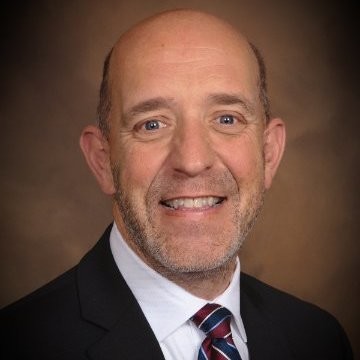
Jeffrey Barnes covers Disney Leadership Lessons in this Marketer of the Day episode. Jeffrey A. Barnes explains how Walt Disney's lessons help people turn fear, adversity, and ideas into courageous action. He frames strong storytelling around conflict, obstacle, adversity, and difficulty instead of chasing only a happily ever after. After a life-threatening brain tumor in 2014, he changed his own story and finished his first book in 142 days. He also discusses a second brain tumor, leaving a 22 year higher education career, and moving fully into writing and speaking.
What if the only thing standing between you and your “happily ever after” is the story you’re telling yourself? Maybe you feel stuck, procrastinating on the book you’ve “meant to write for years,” struggling to show up consistently on social media, or second-guessing every move because you’re afraid of failing publicly. Are you silently waiting for the perfect time, more confidence, or a clear guarantee before you take action? In this episode of Marketer of the Day, Jeffrey A. Barnes shares how surviving two life-threatening brain tumors forced him to stop waiting for “someday” and finally write the book he’d been talking about for over 20 years. That wake-up call turned into his bestselling books, “The Wisdom of Walt” and “Beyond the Wisdom of Walt,” which use Walt Disney’s life, legacy, and the Disney parks as a framework for leadership, courage, and action. Jeff explains why the real difference between Walt Disney and everyone else wasn’t just vision or creativity; it was his relentless willingness to get off the park bench and take action despite doubt, fear, and criticism.
Jeff unpacks Walt Disney’s philosophy on sequels, creativity, and innovation, and what it means for modern creators who feel trapped by their own past success. From the rise of endless Disney sequels to the box office struggle of more original projects like Tomorrowland, Jeff explains the tension between giving audiences what they think they want and pushing forward into new territory. It’s a powerful lens for any entrepreneur or brand wrestling with the question: “Do I keep repeating what’s working, or do I risk something new?”
Finally, Jeff shares a behind-the-scenes look at his new relationship-focused book with his wife, Lindsey, “Nothing Can Stop Us Now: Timeless Tips for Your Happily Ever After,” which uses Disney themes and stories to offer down-to-earth relationship advice. Along the way, he reminds us that “life is hard, enjoy it anyway”, and that happiness is a daily choice, not a distant outcome you’ll reach “once everything finally works out.” If you’ve ever wanted to infuse your business, brand, or life with more Disney-level storytelling, courage, and joy, this episode will challenge you to stop overthinking, start acting, and become the hero of your own story.
Quotes:
“We can sit on the park bench and think ourselves into oblivion. We need to get up and start taking courageous and consistent action.”
“The real difference between Walt Disney and everybody else was his willingness and his courage to take action.”
“What’s required in a great story isn’t a happily ever after ending, that’s what we tend to chase. What’s required in a great story is conflict, obstacle, adversity, difficulty.”
Contact Details:
- Visit Jeffrey A. Barnes’s Facebook Page
- Connect with Jeffrey A. Barnes on LinkedIn
- Explore Jeffrey A. Barnes Official Website
- Get a Copy of The Wisdom of Walt on Amazon
- Get a Copy of Beyond the Wisdom of Walt on Amazon
Podcast: Play in new window | Download (Duration: 26:48 — 36.8MB) | Embed
Subscribe: Apple Podcasts | Spotify | Amazon Music | iHeartRadio | Podchaser | RSS
Transcript
Download transcript (.txt)Jeffrey A. Barnes, Dr. Disneyland is back, and he is a best-selling author, keynote speaker, and Disney historian. He's battled a life-changing battle with a brain tumor. He's written two best-selling books, The Wisdom of Walt: Leadership Lessons from the Happiest Place on Earth, and Beyond the wisdom of Walt Life lessons from the Most Magical Place on earth, and these books use Walt Disney's life and legacy to inspire you to dream bigger, take action, and create your own magic. So, if you're someone that says, I'd love to tap into the mystique, the things done right of Walt Disney into what I'm doing today, such as, but not including using Disney parks as an example, and just how we can, you know, attract the people we want and brand ourselves and present to the world, and all these things that sound simple, but sometimes we're lacking in Dr. Disneyland, Mr. Jeff Barnes is exactly the person we want to speak to. So, Mr. Jeff's been so many years. Good to see you.
Well, hello Robert, and thank you so much for having me back. It has been a minute, and what an incredible riding journey the past decade has been. So, you were one of the first people to reach out to me and say, "Hey, I'd love to have you on the show, I'd love to talk about the work that you're starting," and yeah, I know that you've been living your own great story, and I've been up to some interesting adventures, so again I feel like I'm coming home today.
Very nice, and I feel the same way. We, I think, this is your third time here, and I talked to you when I first started my show, and then maybe three years in, and then now it's over 10 years in, and we will see each other on social media, and I still remember things like, like how cool it sounded that there was a university course for Disney, like that's even cooler than when, when a university has like a film course or a juggling course, and then there was like you were on my show, and then I saw that like you gave some presentation in Modesto, which is like right down the street from me, and I was like, oh my gosh, this guy I'd, I'd been on a podcast, I missed out on missing and meeting him in real life, but in the meantime, I feel like I have met you with all the Zooms and all the social media, and sometimes that happens, right, with the, the communication we put out in the world, or the companies we build, like we're around so much because we're consistent, we apply the 4c that you talk about, and that it almost feels like we're someone's best friend that we know, like, and trust.
You know, that's the amazing reality of the technology that we enjoy in 2026. And I get you, like technology can be invasive and troubling, but there are a lot of benefits, and one of those is we get to meet people before we are ever in the room physically, and we get to learn about folks. I think people are super interesting. We might not know all of their story, but we get to learn some of their story, you know, despite, you know, physical distance, right? And so, as a result, you know, transportation and time and distance aren't the challenges that they used to be, because of the benefits of technology, and I love telling my students, when I was in higher ed, you know, technology is anything invented or created after you were born, and so, you know, technology for me, when I went to college, was a VCR. Technology for Walt Disney, when he opened Disneyland, was television. Today, it's AI, and you know, the constant challenge is learning to consistently grow and adapt and change and evolve, as that term technology is a moving target as we move through life.
That is spooky to think about. Here I was thinking that how weird it is that the young kids these days grew up with internet, and they don't know what life was before internet, but now you're saying it's a whole other step, right? Now, there's the next generation will be they don't know what life was like before AI, and like you said, it can be misused or used well, and whenever I, yeah, it's a tool like any, like a hammer, right? You could, you could, you know, you could hit a hole in the wall, or you could hammer a shelf up there, and I, I for sure, when I'm about to meet someone, I'll go and I'll find them on YouTube, I'll find like Jeff Barnes, I'll find him when he was on a podcast on YouTube, we're like, I know you and Lyndsey have a new show, and so I'll go and I'll grab the transcript, I'll grab their LinkedIn. I'll put it in AI. I'll say, what do I need to know about this person, or you, the AI, since you know me, because I'm always interacting. Where is our overlap? What could we discuss? And it's.. I don't think it's like it's not cheating, but it just gives you kind of some, some meat on the bone, right? If you meet someone, it gives you a little bit of a, of a, an increased chance of success of that first impression going right?
Absolutely, and knowing your audience right, even if it's an audience of one, gives you a leg up in having that connection and getting off on the right foot in building that relationship, I know you know, because of my presence on social media, you know, people, when they meet Lyndsey, and I'll introduce her, they'll, they'll say, "Oh, I already know you. Well, they've never met her in their life, but they've seen that as a result of social media, and that's not really true, but they feel like it's true, and it's a byproduct of technology, and it can be, yes, both a blessing and a curse.
Yeah, and but we want it to be a blessing, and just like how you know, even Disney can be a mixed bag, right, there's people that are Disney haters, but you look at what, what made you like it, and what, what worked well for them, and then perhaps we replicate it for ourselves. And you know something, I'm just clicking with me was after I met you for a lot of years, you started posting this like in my defense post, right? Like a delicious dessert and ice cream, when you say in my defense, ice cream, yeah, that was ice cream, like in my defense, and there was some excuse for having the ice cream, but sometimes it was like every day, and then I realized, like, it's been years since I've seen one of those, maybe I'm not looking on Facebook, but like that just became like a, like an inside joke is the wrong way to say it, but it was just became like a recurring gag, I guess, and it was like it got so much engagement, and it was just so funny, and that's like one of those personality quirks where, like, that's something that you would like have that inside joke with a friend, but here you are doing it like publicly,
Right, so, for a while, and, and it's interesting that you picked up on that I was probably known more for my love of ice cream on social media and defending my love of ice cream, i.e. in my defense than I was for writing two best-selling books, or, you know, being a national international speaker, or even appearing on, you know, the history channels, how Disney built America people, for whatever reason loved the ice cream post, and if I'm being honest, the reason why you haven't seen it for a while is it eventually caught up with me, and so I am like really working now to be consistent with my fitness and with my nutrition, and so we backed off of the ice cream, and when we get to where we want to be, in my defense, it will come back.
Oh, nice, that'll be a good reward, but something like that, like the kind of making the private public, that's what all the young kids these days want to do, right? They all want to be like Kanye West and be an influencer and just hear, I share all of my life, but then it only seems to work for like a very small percentage of people, right? Sometimes it's kind of fringe, or sometimes it's forced, and then there's like the kind of the judgment call of like, well, like, what do I share, and do I just share the boring businessy stuff, or do I share the private stuff, but is that like too personal, or is that too boring? Will people care? So, like, do you ever think about that, like, you know, what, what do you share that you want to be like, you know, honest, and if something catches on, like, in my defense, you want that to happen organically, but I'm sure some people are just saying, like, well, social media, what do I put on it consistently, so that way it helps me.
Well, I think that's a great question, and I'm always thinking in terms of story, and I'm going to lean into my Walt Disney roots here. Walt never wanted to be remembered for Mickey Mouse, for Snow White and the Seven Dwarfs. He didn't even want to be remembered for Disneyland. Walt Disney only ever wanted to be remembered as a storyteller. And what's required for a great story is it a happily ever after ending? That's what we tend to chase, but that's not what's required. What's required in a great story is conflict, obstacle, adversity, difficulty. And so, when you're thinking about, okay, how do I market, what do I share, what do I not share, what is going to resonate with an audience, whether it's public, whether, or it's private is story and specifically your willingness to be vulnerable around your own conflicts, your own obstacles, your own adversities, and the motivation and the encouragement that you can provide in your story to help others through theirs.
Ooh, very nice. So, there's a lot built into that, isn't there? There's like the vulnerability, and then there's also the ripple effect, the kind of giving back on the other side once you've overcome that. And so, since we're here on a podcast, and podcasts are all about story, and stories all about conflict, what kind of conflict have you been dealing with the past 10 years? I know there's the, the brain stuff, but, like, you know what's what's podcast worthy as far as the Jeff Barnes conference.
Oh, Robert, so as you know, I had a life-threatening brain tumor in 2014 which, spoiler alert, I survived, and that provided the inspiration and motivation for me to write the book that I had been saying I wanted to write for more than 20 years, but I had every excuse and every story in the world for why I couldn't do it, and once I got sick, all of those excuses went out the window. I didn't care anymore. I told myself a different story, and what had been woe is me for two decades, I managed to finish in 142 days.
Nice.
I then wrote a second book in 2017, had a second brain tumor. Walt Disney hated sequels. I never wanted to write, or I had trouble writing the first book. I said I'd never write a second. I did that just a couple years later. The real sequel I didn't want to have was a second brain tumor, especially in 2020 because that, of course, was the year of Covid. My personal life fell apart, and since then I have remarried and left a 22 year career in higher education, so that I could focus exclusively on writing and speaking full time, and it's been an amazing adventure, not free of conflict, not free of adversity and difficulty, but truly leaning into this idea of sharing a story and having a message that's helping other people with their story and getting through whatever challenges they're facing personally, professionally, as an individual, or as a company, and corporately.
Very cool. You told yourself a new story, and I'm curious, like, what is the problem with, with sequels, right? Like, because I think there's, you know, there's the worry of, like, well, this is the sequel changed too much, or do I retread, and by also I still want to be known for this thing, but I don't want to be out of date, so when you're making that second book, like, you know what? What would.. why would Walt hate the sequel book so much?
Well, Walt always wanted to be moving forward. He hated repeating himself, and he was interesting because he had one foot in the past, i.e. he loved history, he loved nostalgia, he loved Main Street USA, circa, you know, turn of the century 1901 and yet he had another foot in the future, ie Tomorrowland, and so, you know, his his disdain for sequels really goes back to the silly symphonies in the 1930s which is sort of a almost forgotten series of cartoon shorts that became kind of a sandbox for him after the success of Mickey Mouse, but before he got into full-length animated feature films via Snow White and the Seven Dwarfs and The Three Little Pigs was a massive hit and a massive success, and we're in the middle of the great depression, and you know who's Afraid of the Big Bad Wolf kind of became a theme song for the country, and movie theater operators were like more pigs, more pigs, more pigs, because they enjoyed the revenue, people found a nickel to go see this short about the three little pigs, and Walt did it. He did it reluctantly. It wasn't nearly as popular, and he went on record to famously say you can't top pigs with pigs. And so we don't see a sequel to Snow White and the Seven Dwarfs. We don't see a sequel to Cinderella, even after he built Disneyland. Cities around the country and countries around the world keep calling, and they're clamoring, they want their own Disneyland, and Walt goes on record saying no, they'll never be another Disney Land. Now, of course, today the sun never sets on a Disney park anywhere in the world, and his final dream, and his final vision, and final goal was, of course, Walt Disney World in Orlando, Florida, but that wasn't about Magic Kingdom, or what I like to call Disneyland 2.0 that was all about Epcot, which was supposed to be the city of tomorrow or the city of the future. He was only doing Magic Kingdom to get the revenue necessary for building Epcot, the experimental prototype community of tomorrow, and so for Walt, the sequel story was really about the failure of the second three little pigs short, and then wanting to make sure that you're moving forward and not just resting on your laurels and not just repeating yourself.
Oh, nice. And that seems to be like a show business problem, doesn't it? You think of musicians, actors, filmmakers, there's like, they do all these things, they have highs and lows, and then, and then someone says, Well, hey, George Lucas, I just, I want you to make another Star Wars, don't make, don't make Willow, right, don't make something experimental, just like, make more of the thing I want, and then, like, you know, musicians say, like, they'll have a real big hit in the 90s, and then they'll make new stuff, and it's like, no, I, I like that thing, and so, like, do you ever like unpack that, or think about that, that weird paradox of, like, sometimes you get your peak, and then people just want, like, more of that, that same thing, and you're like, no, but I want to experiment.
Oh, it is a challenge, because as a creator, do you keep creating and exploring new and different frontiers, or do you owe something to your audience and stay responsive to the market, right? And so you know, as we're having this conversation, you know, Disney's getting ready to release not Toy Story two, Toy Story five, and you know, there's a lot that can be said about Disney today and its addiction to sequels versus Walt's philosophy and I think we as an audience bear a lot of that responsibility, because we're going to show up for Tory Story Five. Disney knows that, that's why they make the movie, and when Disney does something new and something different and something unique, like Tomorrowland, the movie from a few years ago, which was phenomenal. No one knew what it was, and nobody showed up,
Right.
So you can blame Disney for it, but the responsibility starts with us as the consumer.
Nice, we did it to ourselves again, and it becomes a capitalism problem. Well, it's, it's good to think about some of these big issues, right? Because then we can, like, can think about our own direction and our life and our business, and it's Disney, especially. It's just, it's so cool because it's an extreme example, right? Like, there's nothing like it, it's its own brand, and then it's got such a history with, like, the cartoons, and then now it's all into, like, you know, Marvel and Star Wars, and all that kind of fun stuff, and it's just like it's cool to think of, to see an example of, of some company that's like stood the test of time, means so many things to different people, done a lot of things right, and you can just like pick and choose a few items that work really well in your business, and so, and you've made a whole career about it, right? You've got the new podcast with Lyndsey, you've got the upcoming book, but since we're limited on time, we only have a few minutes, and I want to focus on what's important to you. Do you think in this whole soup of the conversation, do you think there might be a missing question that I should be asking you? I just don't know to ask you.
Well, I love that question. And yes, so what is the difference vbetween Walt Disney and everybody else? I and you know, you might think, oh, well, he was this amazing visionary, and he was, and he was this phenomenal creative genius, and he was, but at the end of the day, the real difference between Walt Disney and everybody else was his willingness and his courage to take action, you know, the dream for Disneyland started on a park bench when his girls are riding a merry-go-round in downtown Los Angeles, and he starts thinking and dreaming of a place where the parents and the children can have fun together, Robert, we. 70,000 thoughts and ideas a day. Walt got up off the bench and took action on that idea, and he had the courage to consistently take action, despite all of the doubts, all of the conflict, all of the naysayers, and, you know we can sit on the park, bitch, and think ourselves into oblivion. We need to get up and start taking courageous and consistent action, and that's going to move the needle in our life and move the needle in our business more than any other thought or any other idea.
Very nice. And why don't people take action? Why can't people find the courage?
Fear, our brains convince us that we need to stay exactly where we are, because it's safe and because it's comfortable, and if we venture off into the unknown, we're going to get eaten by a dinosaur, or a lion, or a tiger, or a bear. We're not, but it feels like we are, and you know, Walt's wife, Lily, once said, I've never seen Walt beaten at anything, and this is a man who was bankrupt at age 21 This is a man who lost his first successful cartoon character, who was not Mickey Mouse, but Oswald the Lucky Rabbit. This was a man who no one believed he should do a full-length animated feature film, Snow White: The Seven Dwarfs, and this is a man whose own wife and own brother did not have faith in Disneyland, and were convinced it would be bankrupt, shuttered, and forgotten in six months or less. Walt did not care. He believed in himself, he believed in his goals, he believed in his dreams. He got up off the bench and took consistent and relentless action, and that's how you change your life. That's how you change your story.
Very inspiring, very nice. So, override your programming, proceed despite the fear, and you don't even need two brain tumors to get you into action. You can choose to do it today without other things piling up on you, no matter what it is, and so if someone says, "Man, I'm inspired and entertained and intrigued hearing about these, the possibilities, and hearing about these insights about Walt Disney. How does someone find out about the book's website, more about you? What are some next steps?
Well, you can find me at thewisdomofwalt.com, and my number one encouragement is for people to sign up for the 100% free weekly Wednesdays with Walt newsletter. You're going to get stories about Walt Disney, Disneyland, Walt Disney World that are going to motivate and inspire you, where you are, who you are, what you're trying to do, what you're trying to accomplish. Again, it's 100% free, and it will keep you up to date with the Wisdom of Walt podcast. It will keep you up to date with where I'm traveling in the country and in the world, and keep you up to date on the latest books and latest projects.
Very cool. And is it a two too soon to talk about the latest book?
Not at all. So, Lyndsey and I this week are putting the finishing touches on a brand new book, Nothing Can Stop Us Now: Timeless Tips for Your Happily Ever After. And it is a relationship book based on Disney ideas and Disney themes, and so we talk about our life, we share our story. It's very vulnerable in that we are very open about, you know, where we have struggled and where we have had our own conflicts, and then we give what I think is very basic and rudimentary relationship advice, but it's a ton of fun because it is all versed through the lens of Disney, and so if you're a Disney lover, if you're a Disney fan, and you want to have a better relationship, I mean, who doesn't, right? This is going to be the book for you.
Well, how much fun. Well, that's a cute idea, and I can't wait for it to come out. Nothing can stop us now by Jeffrey and Lyndsey, and that website is thewisdomofwalt.com or you can go there and subscribe to those Wednesday newsletters. We've been speaking with Dr. Jeffrey A. Barnes, who's the best-selling author and captivating keynote speaker that engages the audience with lessons learned from Walt Disney. But before I let you go, Mr. Jeff, it's time for the scary part of the odcast where I try to stump you, I try to put you on the spot by asking about a fun or interesting quote or lesson that has served you. So, what comes to mind as far as a fun or interesting quote or lesson?
I heard this the other day, it's not necessarily Disney related, but I love it regardless. Life is hard. Enjoy it anyway.
Nice.
And you know, Walt once said happiness is a choice, and I think that is 100% true. We think it's circumstantial, right? We think we'll be happy when we think we'll be happy if and when we do that to ourselves, we find that we're in this constant state of waiting, and for so many people, it just never happens. You can make the choice to be happy right now. You can make the choice to be happy today, and yeah, you could be very well be going through some hard things, I get it, and you can still enjoy today, and you can still enjoy life.
Very wise, very good. So we can choose to be happy despite any other circumstances, and we can find out more about these books, and about these insights, and so much more by going to thewisdomofwalt.com, and you can be the hero in your own story, and subscribe to that podcast, get the book, subscribe to the Wednesday newsletter, and so much more. So, Mr. Jeffrey A. Barnes from thewisdomofwalt.com, it's been such a blast speaking with you again, catching up. Let's do it again soon.
Thank you, Robert. Can't wait to come back.