Published Last updated
Read Ken D. Johnson’s bio and speaker profile →
View in Podcast Library: stories, quotes, books, and resources in one place.
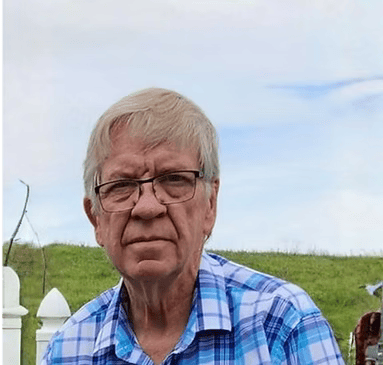
Ken D Johnson covers Revolutionary War Genealogy in this Marketer of the Day episode. Ken D. Johnson shows how genealogy can turn forgotten Revolutionary War records into a clearer picture of family, place, and purpose. He explains Fort Plank's 1778 role as a Mohawk Valley commissary fort supplying beef, pork, fish, candles, soap, and other wartime necessities. His research connects military orders, account books, journals, land documents, and family histories to trace people whose stories sat hidden for more than 200 years. One example follows a four pounds, four shillings, and three pence payment that may point to a colonial dowry.
Most people learn American history through famous battles, the founding fathers, and well-known landmarks, but some of the most powerful stories come from small, forgotten places that never make it into textbooks. In this episode, Fort Plank historian Ken D. Johnson reveals the hidden Revolutionary War history of Fort Plank and New York’s Mohawk Valley, and how one obscure frontier fort shaped the lives of families, soldiers, and communities for generations. Ken shares how a simple genealogical curiosity about his own ancestors turned into a decades-long mission: preserving the stories of the ordinary men, women, and children who defended and rebuilt the Mohawk Valley. What began as researching family roots led him deep into merchant ledgers, military orders, land claims, church records, and personal journals, evidence that allowed him to reconstruct the true story of Fort Plank and its people with remarkable precision. Rather than rewriting history with modern opinions, Ken focuses on documented facts and first-person accounts, which he compiles in works like “In Defense of the Facts: An Ongoing Search for Fort Plank” and “The Bloodied Mohawk.”
You’ll hear why Fort Plank was far more than just a military outpost. Built on the remnants of a French and Indian War site, it became a critical commissary fort, supplying food, candles, and essentials to Revolutionary troops based on complex ration systems. After the war, when local families returned to burned-out farms and ruined homes, they didn’t leave the fort to rot, they repurposed its materials to rebuild barns, houses, and livelihoods, turning a symbol of war into the foundation of a renewed community. Ken also explains how financial records and account books can unlock family and local history in ways birth and death records never could. By tracking payments, debts, and land transfers, he has uncovered relationships and corrected long-standing genealogical assumptions, like tracing a supposed “Bowman” connection back to the more accurate “Bauer” family through a single, telling transaction. His work shows how genealogy and local history are inseparable, and how understanding one brings the other into focus.
If you’re interested in genealogy, Revolutionary War history, the Mohawk Valley, or simply understanding where you come from, this episode will change how you think about the past. Ken shares practical starting points for tracing your own roots, why talking to grandparents and elders matters, and how knowing your family’s story can give you deeper identity, pride, and perspective. To explore further, visit FortPlank.org, where you’ll find research links, contact information, and details on Ken’s books and ongoing discoveries about Fort Plank and the Mohawk Valley.
Quotes:
“In my mind it’s not really genealogy, and in my mind it’s not really history; it’s just this is the way it was, and this is how it happened.”
“You will never, not ever, ever understand your family until you understand the history; and you’ll never understand the history until you understand the families.”
“No one else studies this place, no one else wants to maintain it, nobody else wants to preserve the memories, and so it’s kind of a self‑imposed duty.”
Contact Details:
- Explore Ken D. Johnson’s Official Website
- Visit Ken D. Johnson’s Facebook Page
- Get a Copy of The Bloodied Mohawk on Amazon
- Get a Copy of In Defense of the Facts: An Ongoing Search for Fort Plank on Amazon
Podcast: Play in new window | Download (Duration: 33:08 — 45.5MB) | Embed
Subscribe: Apple Podcasts | Spotify | Amazon Music | iHeartRadio | Podchaser | RSS
Transcript
Download transcript (.txt)Ken D. Johnson is here, and he is a historic historian, or historian plus a historian, and his search for his own family roots led him deep into Revolutionary War America. It began as genealogy, but it became a mission to preserve the forgotten stories of Fort Plank in Colonial New York, and the ordinary people who helped build and defend early America, and Ken has spent years uncovering clues hidden in old merchant ledgers, in military records, in land documents, and family histories, solving mysteries that sat untouched for more than two centuries, so we're here to talk about the legendary, mythical, mystical Fort Plank, plus these two books Ken D. Johnson has written. So, mr. Kenton, glad to see you. How are you?
Good, how are you?
I'm fabulous, and excited to jump into some of this Revolutionary War history up in upstate New York. So, tell me about it.
Well, Fort Plank was an interesting place, apparently in 1778 as the war was breaking out here in the Mohawk Valley, which, and for those of you who don't know, the Mohawk Valley stretches from Albany westward to the village of Rome, and then from the village of Rome you take your boat out of the water, walk a mile, put it in the wood creek, and it'll take you all the way into to Fort Niagara, and eventually you end up in, you end up in Detroit. So it takes about, it takes about three weeks off the trip from Detroit to New York City, if you go up the Mohawk Valley. So Governor Clinton, Governor George Clinton of New York decides that he wants to fortify the Northern Department, and as he fortifies the Northern Department, we see a string of fortresses being built, and Fort Plank is one of them children of that particular military order, and rather than build it on on ground that was that was virgin they took over a site where there was a dilapidated fortress or a dilapidated fortress from the French and Indian War and they took over that site and they rebuilt the redoubt, and when they rebuilt the redoubt, they, they expanded the fort to become what they call a commissary fort, and a commissary in, in revolutionary times, the commissary was the man who issued you beef and pork and fish and candles and soap, and and made sure that you had anything you needed to support yourself physically during the war, and so this was a commissary for it, so the guy that was a commissary had to have this massive, massive understanding of mathematics, because generals were getting x, colonels were getting y, lieutenants were getting W, and so each one of them was getting a different proportion than the other. Same thing you see in the modern military, you know, the general gets a whole lot more, he gets better quarters, he gets better food, he gets better housing allowances, things of that nature than what the private does, so it's an interesting, interesting concept. So the fort, the fort stays put all through the war. It's built 1778 stays put all through the war, and then in 1780 sometime between 1787 and 1790 the people have been burned out all throughout the valley, they've been burned out of their homes, they've lost their, their livelihood, they've lost their barns, they've lost everything. And here you have this very nice fort, and this fort has all the magic ingredients you need to rebuild your house, rebuild, build your barn, plow your ground, and so, like the old Swedes and Germans that I grew up with in Nebraska, they came in and they cleaned everything up, they left no scrap whatsoever behind, and so it has an interesting lifespan and history, and personally, just a personal kind of take on it, but I really find it quite wonderful in a way that it was able to go on, and instead of just being an old dilapidated fort and falling in and rotting away, it actually rebuilt the community when it was when it out served its lifetime,
yeah, yeah, that's great. Even reusing the rusty nails, right? It, it still lived on and had a purpose in constructing other structures, and so we know that your book about this, which we're discussing, and we'll continue to discuss, it's called In Defense of the Facts in an on. Ongoing search for Fort Plank, and we have a website, which is Fort plank.org and I even understand, like, you have, you have a few books on this, right? Like, I found The Bloody Mohawk, is that another book about this?
Yes, The Bloody Mohawk tells the story of the American Revolution, in the words of Fort Plank's defenders and other, and other partisans. Now, when you use the term partisan, we had two sides. We had the rebels, who you and I, being American, we call them the patriots, and and then you have the loyalists, who were loyal to the king and were comfortable with the government the way it was, and in a lot of ways, like it or not, it boils down to the Loyalists were the Conservatives, and they liked the things the way they were, and they didn't want them disturbed, and the Rebels were the Liberals, and the Liberals were willing to change and to adjust and adapt, and so the two parties end up clashing with one another, and in the course of studying these, you find these magnificent stories of personal life. I mean, they're actual, they're actual words of what happens during the war. And then, if you throw into that the account books and the journals and the military orders and things of that nature, and you don't try and interpret them, and you don't try and doctrine, you just take their actual words, what they personally actually said, and you repeat it, and then when you, Robert Plank, sit down and read The Bloody Mohawk, or In Defense of the Facts, and you see the text in italics, you know exactly that, that was what they said, that wasn't what Ken D. Johnson said, that was what they said, and, and in the end, you will find fact becomes far stranger than fiction, and, and I, it's probably a bad analogy, but it's, but when you really look at it at a close thing, when you're trying to decide, well, would I have sided with the liberals, or would I have sided with the conservatives, would I've been a rebel or what I've been a loyalist, I'm, I can assure you, it's like reading 50 shades of gray because you really don't know in the end exactly which side you're going to take and how you're going to play this out,
right? You'd hope and you'd think that you would be on the, you know, the American rebel side, but you never know, right? Like it's easy to say now in hindsight, since we are Americans, but who knows what situation you would have been in. So that's always fun to think about, right? Like when you read a book or you watch a movie, you kind of picture yourself as the main character, right? You're kind of inhabiting that, and you live it through them, and so it's like this. This whole concept of Fort Plank, I like it because it's like very like off the beaten path, and it's not something that you'd normally like hear about, right? It's not one of the famous landmarks, and I'm curious just about like everything that you've built, right? You've got the website, you've got the books, like is there an official like historical society that you established, or like, what is your authority in relation to Fort Plank?
My authority comes from, basically, to put it mildly, it came from a dream, and a grandmother that knew nothing about her father, who turned out to be an orphan that went to Kansas to try and support the family back in Indiana, the grandfather turning out to be the great great grandson of two men that were killed defending Fort Plank, and and then watching my grandmother, who was a very prim and proper Christian lady, and didn't believe in genealogy, and didn't see no need for it, or want anything to do with it. And I came home. I came home after I found out that her grand, her great grandfathers had been killed, and other great grandfathers had been taken prisoner by the British at the same time. Woman lit up like a Christmas tree, and she was the proudest little peacock for the last seven years of her life. She had, she had patriot blood in her family, and you know it kind of ignited an interest in me in that way, but then a few years later, as I was studying other families that we're in the area, I had this really weird premonition three in the morning at the fire station. I was on duty as a paramedic firefighter, and three in the morning I have this premonition, and half asleep, half awake, and I find myself in this crowded block. House full of women and children, and everybody's crying and struggling, and stuff like that, and they come to me, and they say, Ken, Ken, please, whatever you do, Ken, preserve our memories, and so their request, their request to have their memories preserved and recorded and documented, and then shared with you and the public. We come to me, come to me, taking on the moniker, the Fort Plank Historian, because no one else studies this place, no one else wants to maintain it. Nobody else wants to preserve the memories, and so it's kind of a self-imposed duty, I would guess, would be the best way to put it.
Yeah, that's great. And it's, uh, it's good to remember these people, especially if, if no one else will preserve it, and you and me should be so lucky, right? Like, I really sincerely hope that with the internet and AI, and how they kind of index and scrape things. I hope that, like, this podcast we're recording right now, I hope within 500 years our descendants can just dial this up, and they can see Ken and Robert having a chat about Fort Plank. If only we should be so lucky, but then some of the records in past centuries are lost, so you've kind of, you know, pieced it together. And as far as like the following that you've built, like, you know, sometimes if there's like a historical society, there's like there's meetings, there's additional people. Have you have you recruited anyone else in your mission, or is it one man show? Oh
no, there's scores of other people that are now helping with the research and helping with, and thanks to Fort Plank, I've been blessed, you know, I had a foster sister, and I never ever, in 1000 years, dreamed that Susan Watkins would ever be interested in my family, let alone Fort Plank, but but the woman's been an absolute godsend in this research project, because she'll spend three hours totally terrorizing you to the point that you're going to reach out through the phone and grab her by the neck and say, look, Susan, and after three hours she'll finally say, Oh, well, I knew you were correct all the time, I knew it all along, Ken. I just wanted to make sure you know that when that when you were challenged in a, in a setting like a historical conference or something like that, that you could put all your pieces together and make them work, and and then other, you know, distant cousins have have taken up the work, and the distance cousins are taking up the work, and they're starting to go out and search for the for the missing records and things like that, so it's, it's brought together a vast body of people, and, oh, for the lack of a better way to put it, we're the defenders of Fort Plank,
very cool, and I've heard of people like you, right, the genealogy enthusiasts, and it's a lot of fun, because, like, you know, a lot of times with genealogy it's limiting to your own family tree, but what's great about what you're doing is there's that, but there's also like the location and the people that were involved in this, and I also understand that your, your kind of flavor of this is you're not just about like the birth and death records, but also the financial records, right, and like connecting the dots in ways that they might have been unconnected for centuries, and you say, "Oh, well, this person paid that person money, and then you can kind of prove that this person was in this family, or this person knew this other person, correct?
Yeah, it's really fascinating. Well of the ensigns at Fort Plank was a guy by the name of Henry Walrath, and Henry Walworth's wife, Elizabeth, was always said to be a member of the Bowman family, but the problem with it is, is the Bowmans live 1215 miles on either side of the Walrath family, and it's.. and it's like, how in the world did the Bowmans come in contact with the Walrus that one of the children or the children married one another. Well, in the Sanders family account books in Schenectady, where many of these people that were patriots and many of the loyalists did business. You find this entry, and it shows that this Casper Bauer, whose farm was sold by Henry Walrath after the war was in contact with a guy by the name of Jacob Walrath, and Jacob Walrath sold him the farm. Then Bauer lost it to the bank because he couldn't pay his bills, and never mind the fact that he snuck off to Canada in 1780 and the bank decided. To sell it in 1781 and then come to find out that Bauer says I had a very large family, and that's why I didn't leave the Mohawk Valley till 1780 and lo and behold, excuse me, lo and behold, we find Casper Bauer getting a payment in the, in the account books, we find him making a payment to Henry Walrath, the father of the ensign of four pounds, four shillings, and and three pence, and so I don't sound like a lot of money to you or I in modern society, you know, four pounds British or four pounds New York, but you got to understand that the New York army colonel was making a pound per month in 1775 and so mr. Bauer is paying mr. Walworth a four pounds for shillings, he's paying four and a half months or four and a quarter months to mr. Walrath, and it can't, I can't prove it, but can you think of a better amount than 38,000 or roughly $38,000 that would make a wonderful dowry.
Oh, yeah, sounds great.
And so, if you play telephone tag, and you know, you tell, I tell you a story, you tell the next guy a story, you tell the next guy a story. By the time you get five or six generations down the road, somebody forgot, well, you know, they said that Grandma's name was Bao something, and so if you pick up a local history book, they're talking a lot about the Bowman's, and so, oh, she must have been one of the Bowman family members, and here's this obscure guy in the account book called Casper Bauer,
and so you connected the dots, right? So, because there was that extra record, and it's, and it seems like you know that's kind of things not being written down and recorded, that's the unfortunate situation with the with the Native Americans, right? Like, they would pass down stories verbally through many generations, and because of that, like mountains and landmarks, we just kind of sometimes it kept the name, but we just, you know, anglicized, made it our own name, and so by things being written down and solid, then we can like preserve history, especially thanks to you, and so you've got these books, and you've got like that, what you teach about Fort Plank. Do you have any future plans, like, do you plan on, like, a documentary or future books, or, you know, what's happening soon?
Well, I view the bloodied Mohawk and the genealogical clues from from colonial merchants and inserts a fort plank. I, I view them all as living entities, and by being living entities, you're constantly looking and you're constantly searching, and people are constantly finding. About four or five years ago, somebody called me up and said, "Found a fort plank document. Do you know anything about Fort Plank, and I said, "Well, yeah, what do you want to know about it? Well, it turns out it has my one of my ancestral cousin's signature on it, and I said, "Why, you know, I explained Fort Plank to him. I now have the document in my possession, it's upstairs in a fireproof safe, or it won't get damaged. It's the last known document associated with Fort Plank, but, but it fit another, but it put another piece into the puzzle, and you got this giant jigsaw puzzle with like 30,000 pieces, and of the 30,000 pieces, you only got 20 119 of the pieces, and so on rare occasion you find a new piece, and when you find a new piece, you put it into the document, you put it into the bloody mohawk, you put it into the genealogical clues from colonial merchants, you put it into in search of Fort Plank, and and hopefully in the end someday long outside my lifetime the puzzle will be complete, but until that time these are living entities, when the facts change they change, and when I'm wrong I'm wrong, and when I'm correct, well, you know, I guess I can brag, but you know it. It's always nice to learn more.
Yeah, it's a nice, a nice.. I would call it a nice hobby you've picked up, but it's more than that, right? It's like a mission, and it's your life's work. And so these, these books that you have, especially the bloody mohawk that I'm looking at, we say there's never before published accounts of battles, raids, troop movements, supply activities, individual hardships, and every statement of fact is documented to its exact source, so the casual reader or the professional researcher can consult those original source documents, so you're not just making things up, filling in the gaps, embellishing, you're saying, hey, here's what I'm actually piecing together, and it's fascinating, right? You've taken something that on the surface might seem kind of dull, right, this this fort that it's long gone, there's still like the diamond in the ground, but it's like so many years ago, it's like, why, why would anyone care, and you say, well, because of the stories and the history and the people and the ancestry, and just all the, you know, all the activities that were happening back then, and it can be anything, can become a fascinating subject if we dig a little bit, and if we kind of get something accomplished and help others, like even with, uh, with your relatives, right? They kind of lit up, came alive because of what you discovered and pieced together. So, in our last few minutes of our conversation here, mr. Ken, I want to make sure that we focus on what is important to you. So, do you think there might be a missing question in our conversation that I should be asking you? I just don't know what to ask you.
Well, you and others need to understand that in my mind humans are kind of like trees, and trees aren't strong without good roots.
Yeah,
and and if you go back and you look at your family, and, and not even, not even your family, but just look at the history of the families around your family, and, and you look at their struggles and their hardships, and how they personally overcame them, and what they do, did to personally persevere, and, and thrive, you build a whole lot better sense of morals, a whole lot better sense of I belong. It gives you a sense of personal pride.
Yeah,
and I think that's very important between you and I, you know, having been the father of a single son, but, but my son will tell you, I hate history, Dad. I hate history. I hate history. And then he'll turn right back around, and he'll ask you, now tell me again about how this all came about, and don't leave any of the details out, just tell me how, leave the history stuff out, Dad. But tell me, how this all came about, and how it all fits together.
Yeah, it's something that you're passionate about. So, of course, your son wants to know about it, and so we have a website, Fort plank.org where you preserve the memory of Fort Plank and the Mohawk Valley. It's dedicated to honoring the people, families, records, and Revolutionary War history of colonial Fort Plank, Tryon County, New York, and the surrounding Mohawk Valley, and we know that you have a few books, right? There is genealogical clues provided by colonial merchants, and there is in defense of the facts in an ongoing search for Fort Plank, so if someone says, "Okay, you've piqued my interest, I want to know about Fort Plank and the people there and the history. If someone's just, you know, curious about this area and what happened historically, what are some next steps? Where should they go?
Well, you start out the basics, you talk to Grandma and Grandpa, you find out from Grandma and Grandpa, you know who they were, how they, how they thrived, so on and so forth, and and then you just slowly, gradually work yourself backwards, but Marilyn Cramer, who helped write genealogical clues from colonial merchants, wonderful, wonderful genealogist passed away from the COVID pandemic. She came up with this wonderful statement to me when I first started doing my research, and I ran into her because my grandmother was one of the Kramers, and I ran into Maryland, and I was trying to figure this all out and trying to piece this together, and Marilyn said, Ken, let me assure you, you will never, not ever, ever understand your family until you understand the history, and I said, "Oh, okay. And then she turned right back around, and she says, "But you'll never understand the history until you understand the families,
so you just won't fully understand either one, right? It's just it goes in the loop,
yes, this one big continuous loop, and, and even though you're thinking as it being genealogy, in my mind is not really genealogy, and in my mind is not really history, it's just this is the way it was, yeah. Sure, and this is how it happened.
Yeah, and you're, you'll never get to 100% but you're piece by piece, maybe you find one or two additional tidbits of the jigsaw puzzle. And so, a good starting point is we can check out Fort plank.org and we can get to all of it from there. Right, we can see the other interviews you've done about you. There's research links, and there's these links to these other books, and we can just find out all about Fort Plank and mr. Dedicated Fort Plank historian Ken D. Johnson, and you've spent years collecting, transcribing, and interpreting these Mohawk Valley records, and through the real evidence piece together, you've put it into these amazing books. We said there's in defense of the facts in an ongoing search for Fort Plank, there's genealogical clues provided by colonial merchants, and then is the other one we mentioned is that available, or like, what are the The Bloody Mohawk, or what are the other books?
The Bloody Mohawk is available in digital form.
Okay,
it was published in 2000 and because of the huge cost of publication, now this, this volume, this volume that started out in, and I don't know if you can see it there, on
yeah,
start it started out in 2000 and it was, it was $90
whoa,
and and now 26 years later to print the same book and to sell it for for cost, just to sell it for cost, you're looking at about 175 to $180 just sell it for cost, so, so that's why it's been reproduced electronically, and one of the reasons you don't see it appearing on predominantly on the website right this moment is, is because, as I was telling you, it's a living document, and consequently, there's been lots found in the last 26 years that has to be incorporated and has to be digested, and, and, and these wonderful stories have to be put into their proper place and perspective with all the rest of it, and so what started out as a 700 or 702 page book is now up to somewhere around a 900 page book, and at some point in time, you know, this might became, might in theory, become 1000 or 2000 page book, who knows.
Yeah, that's getting into like a multi volume encyclopedia kind of length, and so I can see why you have it in that digital form, that way we can, you know, get it for free. There's not this $100 plus shipping cost, plus you update things, right? You find out new things, and it's just.. it's a lot of fun to think about that, you know, that the past only happened once, and it was so long ago, but there's so much we don't know, and then as you figure out more things, you update that document, and it grows by many hundreds of pages, and that's a great reason why, when you go to Fort plank.org and you scroll down, there's a place to fill in that form and send an inquiry, so am I understanding that if someone fills up that form, maybe they can get updates when you learn new information.
Sure, you know, give me an idea what you're looking for, and who you're looking for, what you're looking for, and I'm not going to make you guarantee that I'm going to have the answer, but part of the responsibility is to respond and to make an effort, so there will be an effort made.
Very cool. What's good that we have people like you who are the stewards of history and who enjoy this stuff and keep records, because not everyone does, but if you're someone who is on a genealogical search that takes you through the Mohawk Valley, or people who lived or were at Fort Plank, then go to Fort plank.org and at least at the very least, fill that form and say hi to mr. Ken D. Johnson, and then, if you're even more curious, then check out those two books on Amazon, but the hub is to go to Fort P L A N k.org And before I let you go, mr. Ken D Johnson, it's time for the scary part of the podcast, where I try to stump you, I try to put you on the spot by asking about a fun or interesting quote or lesson that has served you. So, what comes to mind as far as a fun or interesting quote or lesson?
Well, I hate to tell you this, Robert, but you and I are both history, and everything we do becomes part of history, and someday decades from now. God willing, we'll have children or grandchildren or great grandchildren, and they'll want to go back, and they'll want to look to see what dad did, or what did mom do, or or what did great Uncle Carl do in that last war, and so as we live out our lives and and we document our lives, and more importantly, we share our knowledge, our knowledge, and our – I wouldn't call it wisdom, but our learning that we share our learnings with our offspring, and sadly as it may sound, we become history ourselves.
Yes, that's beautiful. And you think about, like, what, what you might do if you could travel back in time and speak to your ancestor. Well, the time is now, and you think, well, would would my ancestor make me proud or have accomplished something or said something that's really profound and insightful, and did they like pursue excellent hobbies? Well, the time is now. So you're so right that we're part of history, we're making history, we won't last forever, and that's part of the beauty and the significance, right, that we won't be here forever, and then at some point in the distant future our descendants will want to know what we got up to, so it's important to do great things for ourselves and others, so that way our the people that come after us can be proud of us, and what small accomplishments we had, especially of someone such as you, who's written these books, who's educated others, who's helped others with their genealogical searches and just preserved the history of Fort Plank. So we've been speaking with Fort Plank historian Ken D. Johnson, and his book is In Defense of the Facts in an Ongoing Search for Fort Plank. So you can find that link at Fort plank.org or search that title in Amazon in defense of the facts. In an ongoing search for Fort Plank, I'm sure if you just search Amazon for Fort Plank, you'll find the book, and you can just find out with it's got contemporary maps, military correspondence, church records, Revolutionary War journals. It's not just like your typical history textbook, it's a fun account pieced together from real documents from, you know, real people who lived in and did things right and fought in wars and repurposed pieces of the fort, and just, you know, lived these lives that you should definitely find out about if you're curious. So, Fort plank.org We've been speaking with mr. Kendi Johnson, so go get the book, check out the Fort Plank website, and get yourself educated. And so, thanks so much, mr. Kendi Johnson, for taking the time and telling us about this amazing part of history and this location. I'm really glad that we had this conversation. So, thank you.
Well, thank you. I appreciate your time.