Published Last updated
Read Jerry McCormick’s bio and speaker profile →
View in Podcast Library: stories, quotes, books, and resources in one place.
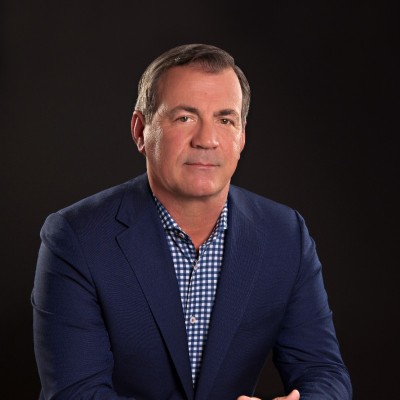
Jerry McCormick covers Workplace Safety Planning in this Marketer of the Day episode. Jerry McCormick explains how practical workplace safety training helps people recognize danger, avoid unnecessary confrontation, and respond calmly without living in fear. His research draws on interviews with more than 10,000 police officers about how they apply professional awareness while off duty. He argues that organizations should focus less on rare active shooter scenarios and more on everyday threats, clear procedures, and prevention. Simple actions include knowing how to lock doors, use a PA code, call 911, and identify evacuation locations. Teams should practice lockdown, announcement, and evacuation drills every quarter or six months in an engaging, nonthreatening way.
In most workplaces, safety conversations jump straight to the scariest headlines, active shooters, and worst-case scenarios, while overlooking the everyday situations that are far more likely to cause harm. Yet the people who consistently stay safe aren’t superheroes; they’re ordinary individuals who’ve learned to notice early warning signs, trust their instincts, and take simple, proactive steps before trouble starts. Today’s guest, Jerry McCormick, Marine Corps veteran, retired police captain, workplace safety expert, and author of Why Some People Don’t Become Victims: What 10,000 Police Officers Reveal About Workplace Violence and Practical Prevention, is here to change how we think about personal and workplace safety.
In this episode of Marketer of the Day, Jerry shares what he learned from interviewing more than 10,000 police officers worldwide about why they rarely become victims of crime off duty, despite constantly being around danger. Instead of teaching fantasy heroics or fear-based “what if” scenarios, Jerry focuses on plain-language, practical safety habits that anyone can use at work, at home, and in public. He explains why most companies don’t actually need “active shooter training” (which is designed for first responders), and why a holistic, everyday safety approach is far more effective and relevant. Jerry breaks down simple, high-impact actions, like knowing how to lock doors, use the office PA system, run basic lockdown and evacuation drills, and recognize when a situation is starting to turn bad so you can quietly leave before trouble starts. He also talks about the psychology of fear, how it hijacks your body in a crisis, and why rehearsed, step-by-step procedures help you act calmly when it matters most. Through real-world examples from offices, schools, industrial parks, and medical practices, he shows how small changes in preparation, communication, and team drills can massively increase safety without creating panic or disrupting operations.
If you’ve ever wondered whether your organization is focusing on the wrong threats, or you want your family and team to be safer without living in constant anxiety, this conversation delivers a grounded, empowering perspective. You’ll walk away with a clearer understanding of actual risks, simple ways to reduce them, and how to turn “safety” from a scary, technical topic into an everyday skill that everyone can understand and use.
Quotes:
“You don’t need active shooter training; you need training that looks holistically at where you work, where you play, where you live, and how you can live safer without living in fear.”
“My suggestion is see danger, recognize it, and avoid it in the first place; you don’t have to be the hero in every story to keep your family safe.”
“When you give employees safety, you give them value, and excellent security is actually excellent customer service.”
Contact Details:
- Visit Personal Safety at Work Today and Discover Expert Training to Help you Stay Prepared, Not Scared
- Follow Jerry McCormick on LinkedIn for Expert Insights on Workplace Safety
- Follow Jerry McCormick on Facebook for Practical Personal Safety Tips
- Why Some People Don’t Become Victims on Amazon
Podcast: Play in new window | Download (Duration: 30:04 — 41.3MB) | Embed
Subscribe: Apple Podcasts | Spotify | Amazon Music | iHeartRadio | Podchaser | RSS
Transcript
Download transcript (.txt)Jerry McCormick is back, workplace safety expert, and he spent eight years in the Marine Corps, another 30-two years in law enforcement, and he is a trainer about active shooter events, high school shooters, and he has a brand new book out called "Why Some People Don't Become Victims: What 10,000 police officers reveal about workplace violence and practical prevention. So it is a scary world out there, right? It can be scary, but it's up to us to kind of balance all the factors and be aware and be vigilant, and but also be calm and peaceful. So that way, if something does happen safety-wise, then we're prepared. We can put a plan into action, and you never know, right? Someone in your workplace might faint, fall down dead of a heart attack. It doesn't necessarily have to be something as scary as an explosion or a shooter. But hey, we live in a world where we might be kind of slow or incorrectly react to danger, so we have the proper man to train us right in front of us, Mr. Jerry McCormick, author of this very excellent book, Why Some People Don't Become Victims: What 10,000 Police Officers Reveal About Workplace Violence and Practical Prevention. Here to tell us about it. So, return guest on the show, Mr. Jerry, how are you?
I'm doing good, Robert. I really appreciate you having me on your show again. The first time was a blast. I'm looking forward to the conversation today. We're coming at a different approach today, more than just saying what you should be doing in a potentially unsafe situation. It's evolved. This has evolved over 11 year period, where I interviewed more than 10,000 police officers to understand when they're away from work, they're with their families, they're out in a volunteer or worship center, or just out in the community. How can they live a safer life? How can why is it they don't become victims of crime? And the base reason is they turn their work safety training. In other words, how do you respond to a domestic or a fight call or somebody littering or more than 350 examples? How do they respond? And then when they find themselves in those situations when they're not working, how do they notice it and then step away from it? And maybe they can still call their buddies in the police department and say, "Hey, can you go take care of this? But with my wife and kids, I don't want to get involved in that. So this all was drawn from me doing research in active shooter events, and that was for first responders. If you work in a corporation, you're listening to this. I'm just going to say up front, please don't say you're doing active shooter training because you're not. In active shooter events in North Carolina and all states did this after Columbine High School. I was a part of the North Carolina effort. There's three parts to active shooter. You know, it's going against going after the person with a gun, and you're probably not going to do that, but police will. We'll run straight to it instead of methodically searching. We'll create a safe environment for EMS and fire to come in, and then we'll get a safe environment for those wounded to get out to a higher level of care. That's all I can share. You need workplace safety training. As we get on in this interview, we'll talk about more about why that's so unlikely to happen. It's very a speck of the violence in our society. So maybe we should probably look at it differently. But on the journey, it took me a while to finish the book. I'm not going to win a Pulitzer Prize for it, but the great thing about you having me on this podcast is, is that anybody can pick up my book. They have a step-by-step instruction of what to do in different areas, how to do drills, how to make sure your your facility's safer, and what's around you to maybe make it safe. What's the procedures to process that when you're at work at home, and finally, Robert, I'll just say that the book is an idea. Think of it like a HR benefit, maybe your dental plan or your vision plank or your health insurance. These are all things you use away from work. This is probably my workplace safety. Is the majority of time would be used away from work because when you're out in society, your work is a controlled environment to some degree or another. But so we're really excited to get this out, and hopefully people will pick it up and find where they need some help and let me help with their safety journey.
Wonderful! I'm here for it, right? I'm all about safety and planning and preparation, and I don't, I don't really know how to articulate it or ask about it, but I feel like it's universal with men. If you're like driving a car and you see like a car broke down on the side of the road, it's fun to like to like fantasize a little bit and say like, oh, what would what would Chuck Norris or John Mcclane do, right? Like from a completely non practical point of view, just for the the man instincts to kick in and wonder, like, huh? I wonder in the Revolutionary War or the Civil War, like, what what would I do as far as like, ooh, I'd I'd like take my gun and like run around that tree. It's just it's fun to just like think about the like the stepping up to whatever situation, but then reality. Kicks in, and you hear stories left and right, right about people panicking and about things going wrong, and just if when like a you know any any kind of danger it happens so fast, people just make stupid panicking decisions. So it would be a very good idea, as you said, when you might have to like something might be off in a situation, or you might just want to say, "Hey, well, if I'm out with my family, like maybe I would kind of err on the side of staying away rather than like confronting or things like that. And so, what motivated you to to make this new book? Like you say, you you had the the other one that we talked about and dealing with all all of that, but here you did like many interviews. So, like, what's the difference with this new book, and why does this one exist?
Now, the answer is the two parts, if you don't mind. What you just said about what people think they would do-if you look at the shows on our drama series at night, the one Law and Order dumped on these are their stories, you know, and and we all look at all the what happens on TV, and I think some of us embody the idea that we can do that in real life, whether they're actors or they're real people. I've I've had a lot of people like, well, when I was a kid, I did jujitsu, so I would do this and this. My question is, are you still practicing jujitsu? If you're really going to engage somebody, my suggestion is seeing it and avoid it in the first place, but the perception of what people think they're going to do from where they're where they are, I don't know. What motivated the book was that I was doing when I I mentioned this a bit earlier when I was going around lecturing at colleges about my research and active shooter events and going to different states to talk to trainers in the active shooter space, and what my research said: just we believe you should go right at it. Here's the formation you should use, and that's been modified since then, which is fine. But what we started initially was just doing something, and then everybody started. What really got me is I got on the stretch with pharmaceutical companies where they just seemed to like the the talk. They seemed it was enjoyable. There's some things I find I try to make it fun, make people laugh, even if even though it's a really serious topic, make people just engage in the conversation, ask a lot of questions, let them open up their thoughts. But what I found though was that they thought I was training them in active shooter response, which simply put, as I mentioned earlier, it's it's for first responders, how please stop the threat, EMS treat the wounded, get them out to a higher level care, and I found myself very frustrated. And I was standing on a stage in North Raleigh, Raleigh, North Carolina, and about halfway through the the presentation, I realized they thought I was training based on the questions I was getting from the audience, and I said, "I'm going to train you. I put my my cursor down on the presentation. The guy bringing me in did not like that at all. Just for the record, didn't go over too well. But I said, and I just went off. Imagine you're on the on a tree limb, and the tree's there, and there's a space, and you're on the limb between you and the tree. Somebody sawing. That's what it felt like. I'm getting ready to fall pretty far, make a mistake, and I said, I got a hunch, and I just went through. I don't know. I did other types of training prior to doing the active shooter training for first responders. And I said, why don't I teach you to be an off-duty police officer? And completely off the cuff, and I had a few reasons why that was the case, you know. And I said, well, I think people pay cops pay attention what's around them, what are their action steps? How would they behave in these situations? And then I left there, and I was driving back to my office, and I thought, you know, I probably should talk to some cops and see if this is right. I had a hunch, and so I came up with this this questionnaire, and I and I was lucky enough that I was going to train three and 400 different police officers for different types of training that were not germane here, use of force or how to respond in protest. I taught folks got things as well, and so I got around a lot of people. And now I got to about four or 500 in the next week. Not one been a victim of a crime. Before long, I was up 2000 3000 and I thought, you know what? I think I'm gonna go to 10,000 I don't know how I came up with that, but it just looks popped in my head. I figured it was a pretty substantial sample size.
Every police officer I interviewed, I'm up to actually 11 as of this interview, 11,380 I still do it just to see if I can find somebody. And again, I've looked on the websites or Google, and I've found people who say that a cop is a victim somewhere, I'm not saying one's never been a victim. I'm just telling you the the 10,000 plus I've interviewed. One of them has, and they all have a lot of reasons why that is. But in the end, what drove me to it was you don't need active shooter training. You need training that covers a holistic look at your life, where you work, where you play, where you live, and how you can live safer. And how about we just help you do that in a reasonable, you know, pragmatic way? We don't have to live in fear. And there's some people walk around in fear all their lives, and some people, much like you said, you drive by a scenario with a broken down vehicle. What would you do if the person did X? You know. That's that's. I think that's more common than we think. That's my perception as much as you've said it. So, the book really came from a place of safety is not complicated, and when we make it complicated, much like police departments use different what they call 10 codes, 1010 in one place is no, 1010 another it's a fight in progress. How would you say there's a fight in progress, or no, I don't need that? Now, pretty much every police department speaks in plain language. Your safety should be very plain language. And what this book allows you to do is is broken up into 11 specific chapters. The 12th chapter is an overview of the 11. So, if you say you want to know how to do drills, well, you just go to the chapter that has drills. Or if you want to know how you respond to fear, just go to the chapter that talks about fear and how you identify danger and what you do to have action steps. You go to that chapter, and it allows you to have a conversation with your employer, with your family, how to how to deal with this, and you didn't have to do the research. I did, so it's I'm not a you know I'm probably not going to win a Pulitzer Prize for it or New York bestseller, but it's a it's an individual or company's guide to how they can live safely.
Very nice, and and so you're saying simplify and and decide. Well, you know, in situation number five, I'll do action number 12. And what do you think people maybe get wrong about safety? Like, if if someone is reading this and making like those kind of mental preparations, is it like all about like prevention or kind of having like a step you know step by step sequence? Like, well, you know, lock your car, park under a street light, something like that, or like you know, what are the mistakes made with safety?
You know, most companies that I go into, there's usually a zealot. There's somebody in there that thinks you ought to be doing all these things. Much like if I wanted to be a black belt in karate, I'm going to tell you how I do that in five steps. No, you're not. That's years to get that. So it's just it's an idea that you know there's somebody that's going to be a zealot. So when I come in, virtually every time they say, "Well, we want to do active shooter training, and it doesn't take me but 10 minutes to tell you why you don't need to do that. I have stats that back up how rare it is. It doesn't feel like it. Doesn't feel good when it happens. It's terrible. There's people that weren't shot or weren't killed that are impacted by this for the rest of our lives, I'm not discounting that, but even for the incidents that occur in the first place, it is very rare. In the last 25 years, we've had 556 cases of active shooter, and you know somewhere around that behind, we've had 1,430 people killed. But we still have in those active shooter events. But we still average around 20-2000 deaths in America a year, and in this case, I'm just looking over at my notes because I just updated them. In that same 20-five year period, 460-4130-six people were killed in America. That means active shooter ends up being point 00308 0% In other words, 99.7% of the time, it's something else-a domestic, a fine call. It's something that you probably could have seen coming. You don't have to have your head on a swivel. And you know, people. I think you and I talked about this offline. I always set my back to the wall. I watch the front door, and they're hyper vigilant. And there's other people just walked around blithely unaware that anything's going on either. That's just you know looking around what's going on and what looks out of place. Somebody's got to you know there's a disagreement with a couple next you know hey you shouldn't have been at my table you shouldn't have gotten closer to you know the judge said there's a protective order. You know I'm not going to stick around for that. My friends know, hey guys, it's time for us to go. You know, if you don't go with me, that's fine. I'm going to go on my own. But I think it's great to have this book gives you an opportunity to lead and give people confidence and give take away the fear that something's bound to happen tomorrow. And really, it's a team building exercise. I want you to go know how to lock the front door. Well, you know, if you have a sliding glass door, does everybody in your medical practice know how to lock that door, or that your phones have a voice over IP system? You have a a phone that the new phones over the internet. They have to have a code to do an. The FCC requires a code on that phone to do a PA announcement across all those phones to say, hey, this is in your practice by this is your birthday or this is somebody's work anniversary, and each employee learns how to use the code. You put the code on the phone just to push it and make announcement, but it just makes it so simple to vastly increase your safety without fear.
Okay, so there's there may be the the procedures, the repetitions that we take for granted, right? Something that seems simple enough, like the code to do the PA announcement or to lock the door. Which you might think, like, oh, wait, in a situation, oh, I'll do that. Well, what's the harm in practicing that? And I think we can all relate to like thinking, thinking when you know how to like lock that door, how to enter that code, and then when it comes time, it's like, oh, I didn't know. How to do that? It's a good thing that we rehearsed this, and you know something that I didn't even know much about until I was an adult was the whole idea of like guilt by association, right? Like you mentioned there about like if if a fight kind of breaks out and you're nearby, like that you might be committing a crime, right? If someone if someone's like throwing rocks off a bridge down into traffic and kill someone, and you're nearby. Like you can be part of the the crime. So in an adult world, it's better just to like exit that situation. You're not being a coward. You're not fleeing. You're just you know getting the help that's needed, and and not being nearby when when bad things are happening because like you just you don't want to be anywhere near any of that unpredictable danger that's there. So you and I know in your book something that's also interesting is the the language, right? Because like if if you're if you're not aware of well in this situation you phrase it as this or it's that term. If you just kind of on the cuff say, well, here's some random words about the the the danger that's around. That's not part of the. That's not clear, right? And that might be misinterpreted. So, like, what's what do you think surprised you about writing this book? Because like, it's it seems like it's complex and it's simple and it's complex again, but it's always interesting about the self-discovery aspect, right? When it comes time to actually get the words down and say what you really mean. So, what did you discover about yourself when doing these interviews and doing the writing? Like, what popped out?
You know, I want to, if you don't mind, just briefly, you're rock, you're throwing rock bricks, rocks or bricks off the bridge. That is such a good visual. If you're on that bridge and somebody's throwing rocks over, you're part of it. You're assembling to the fence.
If you're like, but I, I didn't throw it, but you still are. Yeah,
Because you're still standing there. You're you didn't call 911 You know they're doing something dangerous. But what I learned about it is it's hard when you know when I've I've done a large number of talks in mostly in America about 20% overseas in China, London or whatever Middle East a little bit anyway. So and when I do these talks there or here, you know it becomes very natural. You you get a couple 100 talks under your belt, you know more than that. You you kind of know your topic mainly, and then I've I've expanded into de-escalation and conflict resolution, and I call conflict resolution be your best buffalo. I've got a facility safety and security. I'm certified by Homeland Security to do those like a water plan or a nuclear plant. I worked. I was one of eight people in a nuclear plant, and all the other opportunities I've had to do assessments on stadiums, sports stadiums, and things like that. So I to put a book together that gives the reader, the layperson, that hasn't doesn't have the same background. Like I, you say this a book on how to do an open heart surgery. I'm probably not going to be so good about open heart surgery books, sir. You know, I just don't think that's the way it's going to work. This book, the motivation to finish this book, and the reason it took me two years is I wrote about three quarters of it. But I realized the way I think about it is more technical. There's all the things that I I studied or certifications I received are in my mind to tell people, but I've always felt you know that when it comes to me talking to a group of leaders at a factory or a laboratory or pharma, you know whatever a chain of stores is how can I take this complex narrative of safety and security and how we do these things like you know get doors firm and safe so that you can't get through it. How do you get through a locked door? Well, you really don't. Most cases, if it's a corporate door or a school door, now those are built too sturdy. How you get those shot open is very hard to do. So, getting behind a locked door alone. So, if I can just tell people, there's research that says from 1764, which was the first school shooting on record. By the way, K 12 Institute did the research from 1764 until they finished their research. Only one interior door was breached by their records. So just simply telling your team to get behind a locked door, and if you don't have locked doors in your space, they're very 20 or $30 You can buy a new locking device, have your maintenance person put in, or some handy person at the office, and get a door that can lock from the inside. Usually, bathroom doors lock, restroom doors lock. But if you get behind that, have your phone with you, call 911 wait five minutes. Somebody's going to be there.
So it's just the drive to get this book, and what I learned from it is, I can take these complicated concepts and drill them down to a way that a layperson can use the things I'm telling them to do. Give them the process. Give them the examples. What it looks like. How you do team building instead of a drill. It's not scary. It's supposed to be engaging. Have people laughing and having a good time. But do it every quarter, every six months. You know, just. And warn them about it. Say, hey, we're gonna have a drill on this date. When we go to our monthly meeting or our quarterly meeting, we're gonna do a drill. We're gonna do a lockdown drill. You should have really three drills. How do you lock down? What do you do to lock down first? Announce lockdown, and then where do you evacuate? If you had to leave your building, where would you go? And then maybe engage that that business where you go and say we could be your refuge. If you have a problem at your location, you have to flee. You can come to us, and we can lock our services down. It's not for everybody, but if that's something you'd be interested in, that's maybe some of the ideas we have in the book. Where can you go, and what can you do? So the book was a journey about how can I make these concepts everyday layperson concepts. I mean, they do it on those TV shows, Law and Order, whatever-they kind of get you where you need to go. But you know how you got there, you maybe wouldn't have taken this route. I give you on the route of how to get where you need to go, and I tell you how to do it. And it's pretty simple to do if you just do it in an empowering, engaging way and don't live in fear.
Nice.
I learned from it.
So it, it can be that simple, right? Lock the door, call 911 wait five minutes, and it's interesting to think about the difficulty in making it simple, right? Because it's so tempting to, as you said, get technical, lost in the weeds, and oh, but I'm I'm teaching all this advanced, crazy, helpful stuff, and it's like, but is it really helpful to all these these venues that you're speaking at versus well meet them where they're at, and that's one of those things where it maybe sometimes takes the repetitions, right? Of you doing all the the hundreds, 1000s of speaking opportunities, and then when you see it's you like having these communication skills, listening skills, body language, etc. You say, "Well, hey, this isn't working. I need to make. I need to really dumb it down so that way it actually gets some help and it actually gets us to our goals. So it's it's a great message, and I'm glad that you put this out and that you were helping out people. And so if someone says, "Okay, I've I've kind of heard about the different topics, but how do I know if this is for me or my organization? Who's the the ideal person for this book and for your services, and how can they take some next steps here?
Well, in the book, and I have it on my website, personalsafetyatwork.com. That's personal safetyatwork spelled out.com, and the book is for anybody who wants to live safer. I think that's all of us. What I found that I'm industry agnostic. I've trained everything but a bank. So if you're part of a bank listen this podcast, bring me in to speak, and I can check that off. But I can tell you from a small speaker ball company that had four employees to a pharmaceutical company that had 13,000 employees across the world. I mean, it's been a wide spectrum. Schools. I've worked with schools in China, seven there, and Saudi Arabia school. I've got one in London and a few here in the United States. I still work with private schools a lot, not a lot, a good amount. But the idea, though, of who it's for, if you want to live a safer life, and particularly if you're that person who believes, you know, we need active shooter here. You need to get my book because what you're going to do is you're going to find you're going to become the educated one who will say, you know, while we need to have steps in the unlikely event of active shooter, there is this myriad of threats around us. We could do it, and just something as simple as what are the threats around? I just give you one simple example. There's one of my clients lives in an industrial park. They have an office. They do wiring for for you know building office buildings. That's what their main job is. But they have to drive down to this cul-de-sac where their business is, and have to pass by a chemical plant. The only way to get back out there's there's the thatch about a quarter mile deep at the end of the cul-de-sac. You can't walk through; it's just too thick. And but there's a chemical plant, and this particular company has had nine explosions the last 10 years. The plume alone is making you very likely to be unsafe. And that and the person who was that hired me said we had no concept that plant was really there. What it did, or they didn't know it was this company, and so I showed them some data to help them walk through with their owners. Three months later, they moved, so it was just kind of funny. But I think this book just really mean means a lot to people who are interested in engaging their employer in more safe environment. And I can tell you just 100% when you give employees safety, you give them value, and the one the one pushback I get is is that it's going to really cripple operation. You know, it's you know workplace safety is really going to make it really difficult. It's actually excellent security is excellent customer service. When you tell people how to walk in the building, where to get immediate care, put signage up, put cameras up, really inexpensive. You should put a big yellow sign says "Smile. You're on camera. It changes people's behavior, but it tells people where to go and where to get customer service. So, I just give you one simple stat that really people who really are focused on exit shooter training. Would if you bought a lottery ticket, would you walk into your boss and say, "I quit today. I'm going to win the billion dollars." Lottery or the $500 million lottery, and most of us say no. Well, did you know that the average number of of mega million, the big jackpots, sometimes up to a billion dollars, is 27 and over the last 25 years, the average number of active shooter events is 27 a year. So if you want to go, it's 300 million to one. I'm not saying it's not going to happen. Don't remember when anybody hears this. It happens to your work. I'm really sorry. It was very unfortunate. I hope you could have avoided that, but you didn't. And and that is probably not your fault. But somebody whoever decided to shoot, but and do that. But you know the the rarity of it is it's it's really a great opportunity when somebody says, "I want to do accenture training. It's really how can we empower employees to take their safety into their own hands?
Yes, that yeah, you're saying it's it's not zero, but there's a better use for our attention, and so it's good to be educated about this, no matter what the situation or what happens to us. And so you say those next steps. There, the website is personalsafetyatwork.com. If you want to talk to the team or book Mr. Jerry McCormick for a public speaking gig, etc. he teaches practical personal safety training that works at work, at home, and everywhere in between, based on research from a retired police captain who interviewed 10,000 plus officers worldwide, and that brand new book that we've been discussing today is called "Why Some People Don't Become Victims: What 10,000 Police Officers Reveal About Workplace Violence and Practical Prevention. And as we said, there's something for everybody, right? There's all these chapters, and even if you look at it and say I don't even know where to begin, you can jump to the end, and then it kind of breaks them down. So that way you can recognize a potential threat, know what will happen when fear hijacks your body, be prepared, have those step by step procedures, so that way when the the worst happens, or so kind of an unpredictable event is there. You just you go through those well thought out procedures that happened when you were calm and when you were in a group, a team. So that way, when it's time to do the wrong thing and be unpredictable, you say no. I'll just default back to that step by step checklist. And so that book is why some people don't become victims. What 10,000 police officers reveal about workplace violence and practical prevention and personal safetyatwork.com to find all about Jerry's training company and his speaking. Before I let you go, Mr. Jerry, it's time for the scary part of the podcast where I try to stump you. I try to put you on the spot by asking about a fun or interesting quote or lesson that has served you, so what comes to mind as far as a fun or interesting quote or lesson?
You know what I found. I have a motto when I go by that says, "Don't waste a chance to to have a positive relationship. And in my business, I just make a point to reach out to people when I'm walking around the property. What I've learned though is that I'm not sure if it's a good quote. Or what I've learned though, when I go to a company, I do whether I'm being hired to do a facility assessment, or I'm just being asked to do a talk or corporate training, I walk around and meet the employees, go to all the workspaces, and you would not believe what some of the people tell me. So I warn the whoever hires me. I say, look, I'm going to tour your campus, check your property out, take some pictures. I'll put that in the presentation so I can make the when I talk about facility safety, I can make it relevant to you. And I said, but they'll tell me all these interesting things that have nothing to do with what I'm doing. I said I can come back. I debrief at the end. I'm going to tell you some things. They told me you do what you want with it, and I found that's really the big for me is the secret is I can take workplace safety and we can reveal a number of workplace practices that are maybe not as effective for the company or are really costing the company money because they're not listening to their employees and then they learn there's a vacuum with knowledge about what the employees know on the floor versus what the management team perceives they see. So for for me, it's really it's opening up an avenue for people to embrace what the challenges are, and I can help facilitate that because I'm an independent. They have they they don't feel like I'm I can do anything about it. So I really feel a big value to me is that when you just lean in and listen to people what they don't feel good about, it may not be safety driven. So and it's it's a side effect which I didn't anticipate when I started this journey.
Very cool, an unexpected benefit filling in that communication gap. And so we'll think about that as we check out those two resources: personalsafetyatwork.com and then the book by Jerry McCormick, Why Some People Don't Become Victims. And thanks for returning to the show, mr. Jerry, and talking about your amazing book and educating us, I'm very grateful everyone can benefit. So thank you for doing it.
Thank you, Robert. I love listening to your episodes. I think you have some great guests. Not me, of course, but you have some really good guests out there that we can learn a lot.