Published Last updated
Read Ric Thompson’s bio and speaker profile
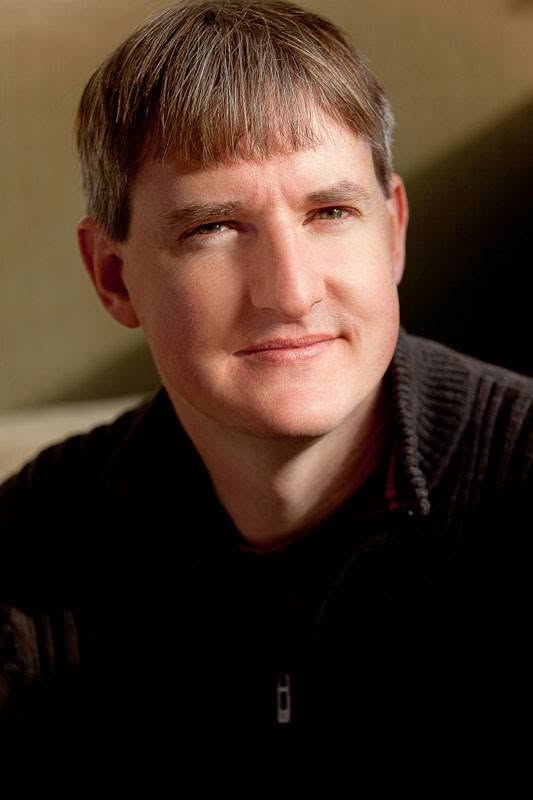
Ric Thompson covers AI Business Strategy in this Marketer of the Day episode. Ric Thompson explains how founders can compete in an AI-driven market by aligning who they are, how their business operates, and what reality now demands. His three-part framework examines alignment with yourself, alignment between you and the business, and alignment with present-day market conditions.
In a world where AI can generate almost any information on demand, traditional info-product businesses are quietly collapsing and many founders don’t yet realize why they feel so stuck. In this episode, returning guest Ric Thompson of TemporalRead explains why “information is free, but wisdom, judgment, and human connection are more valuable than ever” and how founders can adapt before they get left behind. Ric dives into how AI has blown up the old model of selling static courses, PDFs, and information products. Instead of competing with AI on raw knowledge (a losing game), Ric shows why the real leverage is in who you are: your unique perspective, decision-making, and ability to connect with people. They explore how books, podcasts, and content are shifting from being revenue engines to credibility and authority assets that drive done-for-you services, implementation, and deeper client relationships. A key theme of the conversation is Ric’s concept of the three critical alignments every founder needs: alignment with yourself, alignment between you and your business model, and alignment with present-day reality. If your business no longer fits who you are, or ignores today’s economic and technological landscape you experience friction, plateaus, and that “I’m doing everything right, but nothing’s working” feeling.
Ric explains why so many entrepreneurs struggle when they try to follow a mentor’s blueprint that was built for a completely different personality, skill set, or era. Ric also digs into the broader forces reshaping business: relentless AI acceleration, years of inflation affecting your buyers, and a massive changing of the guard as many established experts simply opt out rather than adapt. Inside that disruption is opportunity for founders willing to rethink their role, lean into AI as a leverage tool, and intentionally design businesses that showcase their humanity instead of hiding it. They even flip the classic advice about building owner-independent companies, discussing how you can now “clone” your voice, judgment, and presence with AI so that your personal brand actually becomes a sellable asset rather than a liability. To help founders get unstuck, Ric shares his diagnostic approach clearing the “fog” around what’s really capping your growth. He introduces a simple assessment at temporalread.com/gift/plank, designed to reveal the five core structural reasons an established business stops growing and which one is holding you back right now. Rather than guessing, binging more content, or endlessly chatting with AI, you can answer a focused set of questions about the business you’re actually running and get clarity on your true constraint.
The episode wraps with a powerful insight inspired by Marcus Aurelius: “What stands in the way becomes the way.” Ric explains how understanding your constraints, who you’re not, what doesn’t work for you, where the market has shifted doesn’t limit you; it points you to your real path forward. If you’re a founder feeling misaligned, overwhelmed by AI, or uncertain about your next move, this conversation will help you see how to compete in an AI-driven world by becoming more yourself, not less.
Quotes:
“You can’t beat AI at knowledge. You can only compete by doing what AI cannot do: wisdom, judgment, and human connection.”
“The world is not what it was two years ago, and if your business hasn’t kept up with that, you’re in trouble.”
“For decades we were told that to sell a business, the owner had to step out. Now, if I can throw everything about me into AI, I can go along with the business when it gets sold.”
Contact Details:
- Find the Constraint Your Strategy Keeps Missing → Apply for The Temporal Read
- Connect with Ric Thompson on LinkedIn for Smarter Business Strategies and Insights
- Follow Ric Thompson on Facebook and Stay in the Conversation
Podcast: Play in new window | Download (Duration: 27:10 — 37.3MB) | Embed
Subscribe: Apple Podcasts | Spotify | Amazon Music | iHeartRadio | Podchaser | RSS
Transcript
Download transcript (.txt)Founders don't always have a strategy problem. Sometimes the business they built simply no longer fits who they are, what the market has become, or when they're trying to move. And Ric Thompson is here. He's a return guest from 10 years ago, and so much has changed. And Ric has spent nearly 30 years building businesses, and he now helps founders diagnose those hidden mismatches because there are turning points, aren't there? They're starting up, they're scaling, there's pivoting, there's deciding when to make a big move, and even with the chaos, the craziness of AI, it can be really overwhelming, and it can sometimes get out of control. So we need to put these tools in the toolbox to good use, right? You have your phone, you have your computer, you have your internet, you have Zoom, you have social media-all these things at your disposal, and they can either like destroy your life or they can be the path to business success. So Ric Thompson is here to help us get some sanity and clarity. So how have you been, Mr. Ric?
Been fantastic, Robert Plank. Just trying to keep up with the fast changing 2026.
Of course, and and it only speed up even more. And and like you and I kind of use these these AI tools. I think for like just the perfect window, right? It's like you could geek out all day long and dabble and play around, but it's like, hey, we we've got some outcomes to get to. We've got some goals, and so in the couple of seconds before we started recording, I was thinking like, okay, I know that like Ric talked about outsourcing 10 years ago, and I just I fed the old transcript in the AI machine, and I got this quote. It's from you from 10 years ago. All information is free. What I'll still pay for is wisdom, judgment, and experience. So said by a really wise guy, and even more relevant today, don't you think?
It's absolutely that is the epitome of today, right? It is the ramifications of information is free is still blowing my mind. Of like you name it, you can pretty much get it. So I mean, and some of that can we can dive into details, but like you know, for business owners, here's a little interesting exercise: take your top clients, your top buyers' names and emails, and throw them into AI and see that comes up with whoa, whoa! Like you might understand some things about your buyers that you did not think. A little dark, maybe a little creepy, maybe. But again, all information is free, and so the ramifications of that in your business are massive. The world is not what it was two years ago, Robert. It's just not. And if your business is not keeping up with that, like if you're trying to still sell information products, yeah, good luck with that, right? Because they're not buying that; they're buying you, the expert, the human connection, the community, the network. Like, and this is coming from a guy, by the way, that I have made millions selling information products for decades. That whole industry is not what it was. As it was, is is dead. Is gone. It's it's got to be a human connection.
Scary place to be, but not as scary if we can adapt. And it's it's like who knew how much it was built on sand. And I know, like I I had a little bit of FOMO because, like you know, my my business changed the last few years, and I was I was kind of thinking back, like, oh, I missed the days of like selling PDFs or selling software or selling courses. But then I I would just I would I feel like I was maybe pushed subconsciously towards more like kind of done for you services. And when I look back at people that did have courses, did have software. There was just like AI is just eating a lot of their lunch, right? And and it's like I think when AI first came out, I I resisted it for a couple of days, and I was like, wait, what am I supposed to do with this? And then like you mentioned a few a moment ago, you kind of perform some exercises, you kind of just put something out there, and you see what happens. And so when AI came out, I was playing around with like, okay, like brainstorm like a movie for me, brainstorm like a a Star Trek episode. And it was like, okay, now I'm kind of through like a fun activity, kind of getting some results out of it. And then when I even like kind of talked to others about AI, like my mom the other day was like, you should read this book by this author. I put it into AI, and it like gave me a list. And she's like, "Well, that's only a surface level. And I said, "Okay, well then, let's unpack this part. Or I asked AI, like, knowing what you've known about me over the past four years of typing and all this stuff, like what would be most relevant to me, and unpack. And it's like like a choose your own adventure, super customizable. And it's like, how can a book compete with that? And so that that's kind of my my curiosity is for those of us who have businesses and like AI is just kind of making all these things free. Like, how can we compete with just the the world moving so quickly?
So a lot unpacked there. So. With AI, AI is the world's best source of knowledge. You can't compete with that. You can't beat with that. You can leverage it, but you can't beat it. But it kind of sucks at wisdom, judgment, and human connection, right? So that's how you compete is by doing what AI cannot do. So, having said that, I am not saying don't write books, don't write courses, don't write those checklists or those cheat sheets because they have value. But no one's going to-I'm exaggerating a little bit-no one's going to buy them for those things. However, let's say that you know here's Robert Plank with this amazing long podcast, and he's you know gives you X, Y, and Z versus somebody who doesn't have that stuff. People are going to go. I'm going to trust Robert Plank because I can see him. I can see his stuff. I won't buy his book, but I'll pull it up on Google, right? I'll pull it up on Chat or Grok or whatever, and say, explain to me, oh, this this sounds pretty good. Like this guy knows what he's talking about. I'll do business with him, right? So it's a it's a credibility piece. It's an authority piece. Those things need to be done. But just remember that from a business perspective, a marketing perspective, people are probably not going to buy them. The other thing to note also is that as much as the world has changed in the past few years from AI and AI disruption. It is only the second. It is the second layer. There is a layer underneath of that macroeconomics. Just to throw that out there, people to think about 30% roughly inflation of the past five six years. So who was your who is your buyer? If your buyer has been hammered by that because they had not gotten raises of 30% it might be tough to sell to those people. Like you have to be aware of the macroeconomics, and then plus the AI disruption. So, like if you think you're competing with just AI, you might not be. Your market may be financially really struggling, and AI on top of that. Just throw that out there.
So there's a perfect storm aspect, and I know like there's in business there's the aspect of like business and also kind of like stereotypical masculinity, right? If if you're so called a man, you have a job, and you you can't complain, you shouldn't complain, you just have to go and do it. And so it's like when there's all the all these kind of things happening outside of your control, right? There's AI, there's inflation, maybe a specific industry is upended. It's like psychologically, like kind of like compelling or psychologically like easier to say, well, I'll just give up, right? I'll just move somewhere else because it's too hard over here. And I'm the kind of person I don't know about you, Ric, but my personality is you know I I won't be doing something stupid. But if if it's harder, that just means I have to work harder, or I have to figure out a way to like 10x what I'm doing or find a better path.
Absolutely, you know things are not going. You mentioned it. Things are not going to slow down, right? Like 2027, things are going to move faster. AI is moving faster. Let's see, 2019 to 2023 ish. AI complexity ability was doubling about every seven months. 2024, 2025, doubling every four months, and that's going to get faster, right? So then we have to just tap dance faster. We have to adapt. Having said that, there's also at least in my I've been in the personal development, self help, spiritual industry for for over 20 years now. There are a lot of people at at the end of their career that could continue to work, and they're just saying, "I'm done. Forget it. I'm out of here. So there is a opportunity for new people to step up, because a lot of people at the top of your industry who have got you know enough financial success, they're saying forget it. This is too hard, and they're gone. They've retired. They've quit. And so just keep in mind that that you know yes, it's a challenge. Yes, it's a struggle. But the the flip side of that is opportunity because not everybody's going to choose to do it. So if you do, kudos and you're off and running.
That's a great way to flip the script there. That the the things that hurt a little bit from those that are either like too old or accomplished too much or just they you know whatever reason now there's more room for you when you adapt and innovate, and so I'm I'm fascinated with this idea that we're kind of dancing around, which like Perry Marshall says, teach long teach long division, sell the calculator, and and you you mentioned earlier about like you know what do your top five clients say, and I think about like my top number one client, like the path that he took to find me and like know, like and trust me, and he said that he bought a course from me, and he went through it, and then he like learned from it, and he said, okay, there's there's learning it, and he said there's no way I'll do it. There's no way I'll like have the time or the energy or the follow through, so I might as well just hire you to do it, and that was 13. Years ago, and I've met with him every week since, and and it's like that's that's a really great buyer to have, right? Someone that, as as you kind of mentioned, there was there's your book, or there's your course, or there's your website, and that's like an item on the resume for them to say, okay, Ric Thompson, he's got a website, he's got a book on this, and sure, I'll read it, but the real goal there is to then like hire him as a client.
Yeah, absolutely, absolutely. You know, you know, it used to be that you could just make a lot of money selling courses, right? They'd be evergreen. I don't think that that's true anymore. You know, unless you've got some sort of human facilitator, human community, human guidance, or like what you're saying, actual implementation, right? Those are all things AI at some level cannot compete with, cannot do, right? So it's that balance of like you were mentioning before: how do we leverage AI to make our business successful, and how do we compete with AI at the same exact time with everybody else, right, and that's that. That's that balance you have to have to strike.
That's a funny way of putting it. It's both your enemy and your friend, right? It's both the thing you're competing against, but it's also helping you to rise above. And how does this relate to the people that you help? Like, what's the problem that is facing these people that come to you, and what's the solution?
So thank you for that. So what we do is we work with people to align them. We think of three alignments that have to happen in your business: you with yourself, who you are, because that's the start of all your business, right? Your business has to be aligned with that, and then all of that has to be aligned with reality today, because reality is not the same as it was two years ago, four years ago, or five years ago, and so if things are not aligned, then there's friction, and typically people get plateaued or stuck, right? Or they're seeking a breakthrough to the next level, and so that's what we do: is we we come and we provide that clarity through diagnostics, through intensives. We're not coaches. We're not consultants. No long-term type stuff. We clear the fog, and we give them paths to move forward, and then they're off and running. And so that's kind of what we start off with. And we'll talk about a you know one quick gift that we can give away to help people move that forward here in just a minute. But that's the idea: is that in a world of AI, I'm a human being. I have to compete. Therefore, the more I know about who I am, how I'm built, how I'm not built, what unique gifts I give to the world become of critical importance because that is the essence or the root of how you're going to compete in an AI world. And there's nothing more human than you as the unique individual being that human. Does that help?
It does, self awareness, and I think around the the first time we met a decade ago, one of I don't know if it was you or one of my guests around that time period said that your business is an expression of yourself, and back then that was mind blowing. But now it's so much more important, right? Because there's like you you might kind of luck into some things in the 80s or 90s or 2000s, but now that it's if things change so much, you have to like deliberately kind of navigate the the turbulent tides, so to speak. And so this self awareness is important, and the the icky guy, as they say, is important, right? Knowing like what's your unique gift and knowing how that combines with what's enjoyable for you, what people will pay for, and kind of making all that line up. And so, as far as like you say, clearing the fog, like do you have an example of that? Like, what does the fog look like for some businesses?
Oh gosh. So again, you know, on those three alignments, right? So think about it. So reality today is the easy one. There are plenty of businesses that have not adapted to the reality. Like, why, why are my book sales not working, right? You know, things like that. So that's the first fog. Is let's get clear with what it is. The second thing is who you are. A lot of folks are like in this situation of where here is this mentor, or here is this program, and here is this coach, and they're saying this is what you have to do to succeed, but they're not built the same way. The coach is built one way, or the expert's built one way, and the expert is saying the expert figured it out over over years or decades, right? But they figured it out for them and how they're built, and then they sell this, thinking that well, this is just how it works. We're all we're all built the same, and the reality is we're not, right? This is this is why the student rarely, if ever, passes the master, because that program is built for the master, right? So we come along, we get this program, and we just kind of like, you know, like the guy's not full of crap. Like the program works, he's got these testimonials, but is it not working for me? Well, that's probably because that's not how you were built to succeed. That's not your path, right? So that's what we help to do from step one. Is what are your paths and what are your not paths, and that's part of the fog that we create, and that's a very unique situation. And but then we go all the way to okay, is the business support that? Because where you're built to not, you know, if you're not a maintainer, for instance, well, the business has to maintain things, right? And a whole god, 1000s of examples there, Robert, we could cover, and then again the the reality. Just like we've been talking about most of this conversation, lots of people have not fully grasped how misaligned they are with reality. Because when I say everything has changed, everything has changed.
Right, yeah, I mean, writing, building web pages, talking to customers, following up, graphics, video, like yeah, all of it. It's it's, but but I think it's it's changed for the better, hasn't it? Because it's kind of like similarly how like I think those of us who who grew up with like early computers and early internet, we kind of like we have the nostalgia about the old Atari or the Commodore 64, but hey, if if you ever fired one of those up, you're waiting 10 minutes for it to even like boot up fully. Like it's not it's fun to think back about, but to relive, it's not as much fun. And so, like you'd hope that with all the the point and click and instantaneous and all the world's knowledge, like it is, like on the whole better, isn't?
Absolutely, but like you were saying earlier, like there are always pros and cons, right? Nothing is ever clean, right? You've got nuclear energy, which is an incredible paradigm shift in energy production, but it also produces horrible weapons, right? I mean, you can't have one without the other. So, in an AI world, you know, we can either focus on, oh, look, there's a whole bunch of AI slop being produced out there and flooding the markets, and it's harder to compete, and there's all this crap. At the same time, we can look at it as a huge, massive empowerment tool. It is arguably the biggest productivity tool and boost that the human race has ever produced. It is the first tool that will teach you how to use itself.
Yeah.
Well, like I mean, this is we you you we are in incredibly historic times. This is going to be bigger than the personal computer, bigger than the internet. This is standing on top of all of those. It is being adopted much faster. It's accelerating much faster. It is. It's it's it's it is mind blowing. And going back to your earlier point, by the way, about people's businesses. Think about this: for decades and decades and decades, we have all been taught in business that if you want to ever exit or sell the business, it can't be you. You can't be the dancing bear. You have to have systems and processes where the owner is removed from the process and then into sellable asset. Well, now if I can throw everything into AI, like my tone, my images, my language, my judgment, my experience into AI, I can just go along with the business when it gets sold. And now I have become a unique value. Like I was talking, Rich Sheffrin when I spoke a couple months ago, and he's the one that introduced me to that. We just flipped the script on what makes a business valuable, and when he shared that with me, I was like, "Holy moly!
Yeah.
It's you have to step out of the business. It needs to be more about you, more about you as a human being, as much as possible. That's how you compete. That's how you succeed.
Yeah, you, you clone yourself, and and if if the business, if the marketing emails sound like you, and the the hey gen videos look like you, and it's all you just you have the workers kind of recreate you. Like that's that's pretty powerful. That's mind blowing, and I have heard of AI being compared to nukes. Right? They say it's it's bigger than computers and internet, but also kind of like the new nuclear weapons, as far as the proliferation and the way it kind of changing the strategy of all of it. Because as as horrible as nuclear weapons are, it put a stop to the the large scale wars, right? I mean, up up until war for for centuries, up until World War Two, it would just be like whole cities just like bombed out and destroyed, and and and up until nukes, we were finding more efficient ways of like, okay, well, fly all these airplanes over and firebomb all these cities and all this napalm, trench warfare, tank warfare, and you know the the conflicts still happen, but not the not the everyday like you know hand to hand fighting. Now it's more like skirmishes or drone fighting. So as bad as nuclear weapons are, you figure it kind of put to to end those huge wars where. Like 50,000, 100,000 plus people would like World War Two. Millions of people die. Like there's still death, but like it kind of put an end to that. And so you're hoping that with the proliferation of like AI and the slop and a lot of jobs will be lost, but the new jobs will be created. And so it's like kind of very world changing. And it's good that we have a company like yours and service like yours to help us navigate that. And so, with everything that we've been discussing, we we could easily go for five hours about this. But because we're a short podcast, I want to make sure we focus on what's important to you, Mr. Ric Thompson. So, in our conversation, do you think there might be a missing question that I should be asking you? I just don't know what to ask you.
Well, like you said, we could talk about forever. Here is the missing question that everybody should be asking themselves: is that again, in the world of AI, it comes down to me as a human being to compete. So, who am I? How am I uniquely built to succeed? What what is going to work for me and what is not going to work for me as a unique individual? I know it sounds a bit cliche, but that's going to be the crux of how to compete in the future, and that's what I'm encouraging everybody to ask because, and that's where we start when we work with clients is to find that out exactly.
Oh, nice! So more important than ever to know who am I, and we need to get these three things aligned that you've mentioned: ourselves, our business, and present day reality. And my understanding is that you have a sort of like a quiz or a gift to help us take this next step, correct?
Yeah, just a great simple first step to kind of analyze and get you thinking about some questions that maybe you haven't thought of before in trying to reach some breakthroughs in your business, and that is at temporalread.com/gift/plank for the amazing Robert Plank. So again, temporalread.com/gift/plank, and you can start there. And of course, if there are some larger questions and you want to reach out against to to me personally, just kind of ask. I'm open to doing that. My address is Ric. That's R I C at temporalread.com.
Very simple, very doable. So Ric R I C at temporalread.com, and then that gift is temporalread.com/gift/plan. and what will they go find when they go there? Like, what's the the motivation to checking out that webpage?
Well, the motivation is to find out what's capping your business. Like, what is kind of slowing things down? There are some general categories or some general things, and again, the idea is okay. Let's start getting a feel of what's stopping you, and that way, once that clarity comes in, we can help you move forward from there.
Oh, nice! So we all have our our limitations. We all things that are holding us back. So remove the bottlenecks because you say there are only five reasons why an established business quietly stops growing. So if you've done everything right and the number has not moved, then there are these five structural reasons that happens. And you could spend all day, all all month researching and learning and reading these books and chatting with AI. But what if you could just take a simple multiple choice quiz and answer for the business you actually run, not the one you are building toward. And then Ric will kind of get see this diagnostic and say, "Hey, here's a path to get unblocked, uncorked, and move things up, and and you know continue to scale and get to whatever that objective is for you, right? Grow the business, sell the business, exit the business, so that way you can actually pursue these future possibilities instead of just spinning your wheels and struggling with the current situation. So that is temporalread.com/gift/plank to take that assessment, and then Ric at temporalread.com if you have a personal question, if you say, "Hey, I saw you on Robert Plank's Marketer of the Day podcast. I want to open a chat with you. Well, then that is Ric at TemporalRead.com to take that next step because it's it's really tough to go about this without a guide to be directionless. And if you're not careful, then the time will pass you by. The innovation, the competitors, the the market that you're in, it'll kind of you know move on without you. So it's really important to take this stuff seriously and to get some outside help, especially from Ric Thompson at TemporalRead.AI. So as we're considering this and we're going to temporallread.com/gift/plank, it's time for the scary part of the show, Mister Ric Thompson, where I try to stump you. I try to put you on the spot by asking you about a fun or interesting quote or lesson that has served you. So, what comes to mind as far as a fun or interesting quote or lesson?
So, great question. I ran across this quote, little. A while ago, and it really hit home. And it's a very old quote by Marcus Aurelius, and his quote is: "The impediment to action advances action. What stands in the way becomes the way. So the reason why I love this is that when you find out what your constraints are, how you're not built to succeed, what's not going to work for you. You don't have to bang your head up against that wall. It redirects you, like okay, this is not going to work. My direction to move forward is over here. So what stands in the way becomes the way.
Very nice. They said the obstacle is the way, right? Ryan Holiday or Bruce Lee says, "Be like water. What does water do? Well, it kind of flows to where it should go. So that's very helpful, very powerful. Kind of understand those obstacles, those limitations, because that will point us to that path to success. Like Ralph Waldo Emerson says, "Everything you want is on the other side of fear, so it's it's helpful to just know what those boundaries are. And as we've been saying, it's hard to um to like read the what do they say? It's hard to read the label when you're inside the jar or something like that. And so get that outside perspective from Mr. Ric Thompson and his team at TemporalRead.com. And the first step for you is to take that quiz, that assessment at temporalread.com/gift/plank. And Mr. Ric Thompson, as we said, we could chat for hours, but it's been great catching up and just knowing what we need to know about AI and like the the magicalness of it, where you can use it to ask it how it would like you to talk to it to solve some problems and compete with the other AI out there. What a crazy world that we're living in! But it's good that we have you to help us out. So thank you for being here.
Thanks, Robert. You got a fantastic podcast, and let's make sure that another 10 years doesn't pass before we reconnect on it.
Of course.