Published Last updated
Read Stacey Kehoe’s bio and speaker profile →
View in Podcast Library: stories, quotes, books, and resources in one place.
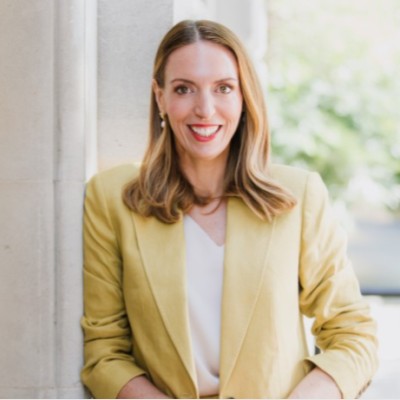
AI is accelerating digital marketing, but more automation does not always mean more growth. In this episode, Stacey Kehoe, founder of Brandlective Communications, explains why businesses should focus on their goals instead of chasing every new AI tool or marketing trend. She recommends using AI for administrative tasks while preserving human connection where trust, relationships, and decision-making matter. A recruitment agency’s experiment with AI recruiters illustrates how processing more candidates does not guarantee successful placements. Stacey’s core question is whether a tool creates meaningful value and moves the business closer to its objectives. Her practical advice is to start with the fundamentals, keep things simple, and build from there.
Stacey explains why businesses need a clear marketing strategy before choosing tactics such as social media, email, content marketing, paid ads, or web development. Strategy sets the direction and defines why the business is pursuing its goals, while tactics are the activities that help move it forward. She urges business owners to prioritize qualified leads, conversions, and revenue over vanity metrics like likes, shares, and impressions. Brandlective works with clients on everything from a specific part of the marketing funnel to a full-service digital marketing strategy. Its focus is helping growth-oriented businesses turn digital activity into a qualified pipeline and measurable business results. Stacey also shares how to niche marketing messages while diversifying markets, services, and lead sources to reduce business risk.
Purpose also plays a central role in Stacey’s approach to building a business. Brandlective’s 1 Million Days of Impact initiative connects everyday business activities with social contributions, including clean water access and business training for women in East Africa. At the time of the conversation, the agency had delivered 529,000 days of impact toward its 2030 goal, and Stacey says the mission supports employee morale and attracts prospective team members. She also discusses her book, Get Online: Six Simple Steps to Building a Digital Marketing Strategy for the Non-Tech Savvy. Brandlective works with businesses seeking growth, particularly in the sales and healthcare sectors, and keeps revenue and conversion at the heart of its marketing work. Listen for practical ideas on AI, digital marketing strategy, business diversification, and building growth with purpose.
Quotes:
“It doesn’t matter if you can be a one-man band, you can be a multi-million-pound business, you can still make an impact.”
“Get the basics done. Then go do all your fancy stuff that you want to do afterwards. But just get the fundamentals in place, like 101, back to the beginning.”
“Strategy should be your plan, and it’s where you’re going and why you’re going there.”
Contact Details:
- Ready To Grow Your Brand? Let’s Make It Happen with Brandlective
- Connect with Stacey Kehoe on LinkedIn for Smarter Brand Growth Ideas
- Follow Stacey Kehoe on Instagram for Fresh Ideas to Grow your Brand and Business
- Don’t Let Your Brand Fall Behind: Follow Stacey Kehoe on Facebook Today
- Ready for Ideas that can Change How You Grow? Follow Stacey Kehoe’s Podcast on Spotify
- Want Smarter Growth Ideas? Follow Stacey Kehoe on X and Stay Ahead
- Get Online: Six Simple Steps to Building a Digital Marketing Strategy for the Non-Tech Savvy On Amazon
Podcast: Play in new window | Download (Duration: 29:13 — 40.1MB) | Embed
Subscribe: Apple Podcasts | Spotify | Amazon Music | iHeartRadio | Podchaser | RSS
Transcript
Download transcript (.txt)Your business might not have a marketing problem; it could have a marketing that does not convert problem. And Stacey Kehoe was built to help us figure this out. She built Brandlective after starting in sales, and she has helped hundreds of businesses turn digital activity into real leads, real revenue, and real measurable impact, and we're here to chat about it on the Marketer of the Day podcast with Robert Plank, brought to you by dfypodcast.com, where we handle the editing, the publishing, and the promotion, so you can focus on the interview. And the interview we're focusing on today is how to think differently about your digital marketing. We're talking about social media marketing, organic, paid search, content marketing, branding, and much more. Especially in this super duper crazy world of AI and automation, who knows what's real and what's not, and how it can keep up. So, Miss Stacey, good to see you. How are you?
Thank you so much. Yeah, I'm very well, thank you. I'm very excited to be chatting to you about this topic because there's so much changing, isn't there, in today's world?
Oh yeah, and and sometimes we just have to hold on for dear life. And because I thought I was such a genius about maybe two weeks ago, I I didn't even know that AI could hook into Gmail, and so I was like, oh, I can like I'm over overwhelmed with the inbox, and I'm like, well, what should I be responding to? Craft the replies, respond, and then the people that like a handful responded like almost instantly because they were using AI also. So I'm like, okay, I use AI to respond back, and I'm like, I just I feel like I'm getting things done, I'm making
Even real anymore.
But, but yeah, it's like, I'm creating more work, and it's like here I was thought I was getting ahead, but like others have the same tools, so it's just moving at a faster pace.
Yeah, exactly. Everybody's just kind of doing it 100 times more in a day, which is yeah, really hard to keep up with, actually.
Yeah. So, so, so, what's the answer? What do we do? I mean, I know you have like a book and you have like the game changer framework. So, what are your thoughts on just you know how to get some sanity back?
I think, you know, I'm gonna maybe oversimplify that, but I think you just have to come back to what's the goal. Like, what is your business trying to achieve? You know, I think if we're talking about marketing specifically, it's like we get distracted by so many different tactics and so many different automations, and well, isn't AI really cool? It can do this thing where it responds to my emails in my inbox, or you know, can respond in real time to I don't know people that are responding to a newsletter, or it can comment back on my social media posts. But it's like, well, it comes down to value, doesn't it? What value does it actually bring your business, and is it moving you closer to what you're trying to achieve? I think ultimately it's trying not to get you know caught up in all the hype and actually really staying focused on what you're trying to achieve and doing it simple. Humans still matter. I think I'm really kind of protective of that, even though we are a digital agency and of course we love digital and I love AI. AI plays a big role in our agency, but ultimately, like people matter, and people are the ones that make the decisions, and people are the ones who are spending money. So they're the ones that you actually need to be convincing. So I think I don't know. I don't. I tend not to get too distracted, basically, by all the all the new things that are coming out AI related.
It's good to have that self awareness, and I get the the other side of the coin, the FOMO, the fear of missing out. Where someone says, "Oh, have you used Quad yet? No, I use ChatGPT every day. Well, have you used this other tool? Well, I wish I did, but I don't have as much time to play around. I'm focusing on those goals, as you said, and like I know that it took me like well over a decade to even hire anyone. I was just kind of maybe like arrogant or cheap or who knows, maybe a mix. Who knows what? But then when when AI came about, people like not everyone, but sometimes people were talking about it as like replacing employees or having like their their agents or things like that. And so what you say there as far as like if the AI is kind of just goofing around for you, well, would you hire an assistant to maybe do all those comments or do all those emails, or would you maybe maybe that could be like 10% of what they did, and you'd have them focus more on like paying for themselves and revenue generating activities? So even though the AI can be so so cheap, so to speak, well, it's cheap dollar wise, but maybe not so cheap time wise if it just like gets us distracted. So we need to focus on well, is the AI actually growing, building our business?
Yeah, absolutely. You know, I have a good example of this. I have a friend who actually runs a recruitment agency, and they recently integrated AI to take over the recruiter role, essentially, and so had these two AI recruiters kind of working for them, and the amount of sort of placements and things that they thought they were going to be able to make. You know, the amount of people they could speak to, the amount of resumes they could review, the amount of correspondence they could do back and forth to sort of segment and and sort of create. These different profiles of candidates was exceptional. I'm talking like 50 times what you know a human recruiter could actually do. But you know what happened at the end of three months? How many placements were actually made by the AI versus their original recruiters? It was non-comparable. It was because you know in that industry, like people matter, right? You have to have these like conversations. It's about relationships. It's about understanding the motivations of those candidates to place them in the correct roles. So I do think it's really easy to get distracted, and it's really important to just remember like where do the humans matter and where are they best placed, and just use the AI for like the administrative tasks. Like that is key, I think.
I like it, and it seems like there's the need, as you were saying, like to get back towards simplicity. And do you doesn't your brain ever sort sometimes hurt about like I'm solving these problems that they seem like so deceptively simple? But then when I go and say, okay, well I've got to like onboard this client or I've got to figure out this email campaign, like it's it's way more complex. And I find myself like my brain goes back from like shrinking to the simple, enlarging the complex, and I'm just like I feel dumb because I'm like on paper I draw some boxes and arrows, and like it should just be a simple start to finish, but then actually the details of making it happen make sure like the people are handled. I feel like I'm solving something that's it's simple and it's complex at the same time, and I don't know how to handle it. Am I alone?
Yeah, yeah. No, I actually completely relate to what you're saying. I'm exactly that way. It's sort of, and I have to outwardly say to myself, stop, start simple. Just start with the basics. Get the basics done. Then go do all your fancy stuff that you want to do afterwards. But just get the fundamentals in place, like 101, back to the beginning. So you you are not alone.
I like it, so just get that simple web landing page, get that headline on there, get the form working, make it ugly. It can be better later. And so, as far as like some some practical implementation here, like what kinds of problems do you solve when people come to you for help and you say, well, you get the simplicity in place, like what do you create?
Do you mean for marketing campaigns? Is that what you're speaking about?
Yeah, yeah. I mean, do you like? Is it mostly marketing campaigns, or what is it that you make for clients?
Yeah, yeah, exactly. So, I mean, as an agency, we're full service, so we do everything. So it really depends on the client. I would say that I don't. We're speaking about AI, like we're not AI led, so I'm not sort of like really pushing the fact that we're really AI focused. If AI can be a tactic that we can implement to help do this work better, we will lean on it. But fundamentally, it is you know we're starting with the basics, and it it really is strategy. So strategy is the first piece of any pipeline, right? It's to understand exactly what we're trying to achieve, and then from there, it's deciding like what does this campaign look like. And clients come to us for different things. So sometimes they, you know, if it's a business that maybe has their own existing marketing team internally, sometimes they're outsourcing a piece of their marketing funnel to an agency like ours, and we're helping to fill a need because there's a gap maybe in skills, for example, or it could be that they're completely outsourcing their entire marketing strategy and pipeline to us, and so in that sense, it just comes down to what is the goal, and we could be doing anything from web development, content marketing, email, socials, paid ads, yeah, the whole the whole shebang, really. But every business is a little different, and I think you know there's a lot of confusion out there right now. I think, particularly around AI, because everybody is getting really caught up in this, and they're like, "Oh, can you help implement this? Can you help implement that? And I'm, I'm often, you know, having conversations with people. I'm like, "We can absolutely do that, but for what purpose?
It kind of brings me back to like we have a, you know, seven marketing mistakes we often see businesses make, and if I had to pick sort of like one that comes up frequently as an issue. It is confusing tactics with strategy. It's like kind of the sneakiest one because it's like it feels like progress, right? You feel busy. You're writing the blogs. You're writing the so you know you're doing your socials. You're doing newsletters. You're doing your blogs. There's a lot of activity kind of happening, but for what to what direction? You know what is the strategy, and I think what I often hear from clients is their to-do lists are really long. They have a lot of things that they're doing, but really, like strategy is an issue. So, like strategy should be your plan, and it's like where you're going and why you're going there. Whereas your tactics are like the things that they help are going to help move you closer. So, for me as an agency, if a business is coming to us and saying this is the objective, this is the sort of customer demographic, and this is what we're looking to sell, then my role is to establish what does that look like. What what tactics do you need in order for that to be into in a position where you're actually going to convert? And you know, we kind of position ourselves as like revenue overreach, so I try not to get distracted by the likes and the impressions and all of that stuff that feels really nice and gives us that big dopamine hit, which people can be really obsessed with these days. And ultimately, all that matters is a qualified pipeline. You mentioned in the beginning, like I'm a salesperson. The reason I started a marketing. Agency is because I was frustrated. I was frustrated as a salesperson because I was sick of having a full pipeline of you know people who didn't want what we were selling.
Right.
It was annoying.
Right.
It's like you flood the pipeline. You think volume is best, but actually a qualified you know customer coming through the pipeline is much more valuable to your business than 1000s of people who don't care.
Right, and yeah, and, and working with the wrong people and just working way too hard in general. So what you're talking about can help us get that mindset to the simplicity and the clarity of saying, well, there's there's all kind of the day to day tactics that you do, which can be fun and exciting, and especially new because it's AI tools. But like, what's that overall strategy? What are you trying to accomplish? And are you getting excited about the vanity metrics, the likes and shares, or like what's actually leading to money? As maybe like unsexy as that could be, or as painful as it might be to kind of like throw out the old plan that's not working, and and do something new, and it can be just kind of frustrating, and and and take a while to to change directions, sometimes, can't it?
Totally, and I think it depends who you are in the business as to what you care about, right? Like, it's only unsexy if you are not the person benefiting from the sale. So, like, I can understand why the T, you know, if you're an employer and the team, like yeah, like some of this, you might want to be, you know, hooked into all of that fancy new stuff. But ultimately, like if you're a business owner or you're the CEO or you're the CFO of a business, like all you care about is the data, is the numbers that are converting. Nothing else matters. And I think it's really easy in marketing to get distracted by generating, you know, the brand awareness, because you have to do that, right? You have to do that. The top of your pipeline, top of funnel is always going to look like that. But it's you've got to stay focused on the bottom. Like the bottom has to be what is driving every decision. Is this converting? If the answer is no, then what you're doing is wrong, it's not working, so yeah.
Yeah, you have a lot of insights here, and for some reason, I'm having these flashbacks to remember when you were young and like everything was new, especially computers, and you know, use all kinds of computer programs for the first time, and it was always so fun to like, oh, here's some new interface, or I'll run something and I'll see it go from like you know 0% all the way to 100% and it's just like so exciting, and like,
How long it takes to download something?
Oh, oh yeah, running the speed tests and like using like Napster or something, and and yeah, they've got old days. And it's like if,
Showing our age.
Yeah, if we're using you're showing our age, but if you use some new some new system, you kind of have the the same kind of dopamine, right? And and the tinglies, and it's like, well, that's fun for a while, and I guess that can be like a like a temporary kind of fake motivation, almost like a like a caffeine boost or something. But then it's like, well, are you just going? Are you wasting time in the end of the day? And it's time to actually like you know get those right fit clients and and make some money. And so you've seen some things, and I'm curious about like the these million dollar days because I know like you've you've helped clients or what's happened with those.
Do you mean our 1 million days initiative that we made?
Ooh, one, okay, I misunderstood. I thought it was $1 million days. Well, what's the 1 million days? Okay, millions. That's an exciting big number either way.
Yeah, yeah, yeah. So that's a social initiative that we actually run at our agency. So it's really important to me. We're quite a purpose-driven business, and we love to work with companies that are also purpose-driven and really passionate about what they're doing, and you know about what they're the impact that they're making in this world. Like I think that fundamentally matters to us. So back in 2017, I first learned about the UN Sustainable Development Goals, which is basically a set of goals that are designed to move the world closer to equality by 2030. So we're like well into this now. We've got a couple years left to be able to hit these these 17 goals, essentially. And goal number 10 really speaks to me. So goal number 10 is is reducing inequality, and so I feel really passionate about that. And I sort of thought, and this is on a personal level, right? But then I thought, you know, obviously we all you know support different charities and non profits and all that kind of stuff in our personal time. But it got me thinking, like, could my business be doing something more along these lines too? And we're a relatively small agency. We're a boutique agency. We you do a couple of million you know pounds a year in revenue. We have 19 staff. We're we're not the biggest agency in the world, and so you can kind of get a little bit stuck sometimes and think, well, what impact can I really make? Or I need to hit this revenue goal before I can really start making an impact in this world. But actually, what I learned from speaking to a lot of other businesses, is actually no. Like you, it doesn't matter if you can be a one-man band, you can be a you know multi-million-pound business, you can still make impact. So we came up with this campaign that we called 1 million Days, and so by 2030, so this is back in 2017, we set this goal that by 2030 we wanted to provide one. Million days of impact. So, what is a day of impact? So, in our view, that means that we tie simple things in our business to a day of impact. So, to give you an example, every time we sign a new client, we provide one day's worth of human rights workers' wages. So, for every website we build, we give two days worth of business training to women in East Africa. For every 30-day contract we complete, we give 30 days access to clean drinking water. So this is a way that like the tiniest things can be happening in our business, but because we're making those micro contributions for every little tiny action, we're actually contributing to something a lot bigger. So we earlier this year we hit our halfway mark. So we I think we've delivered 529,000 days of impact so far. Now that might sound like we're behind schedule because we've got 2030. We've only got four years left, but obviously there's momentum building. Right, we're scaling at a rate that's actually allowing us. So I feel actually really confident that we will hit our goal of providing 1 million days of impact by 2030, but yeah, it's just essentially it was just very important to me that we were not just. I mean, I love sales and I love revenue, as I've maybe alluded to by this conversation so far, but I do think it's really important that we do tie the work that we do to something beneficial for the world, you know?
Oh yeah, it has to mean something, right? We're only on this planet for a limited period of time, and it seems like there's the there's there's traps to fall into, right? There's well, there's kind of the the time wasting, and and what's that even really serve a purpose? And you say we need to be kind of focused, organized, have a team, have goals, build a business, but then it's not only about that, right? It's not just making the money for yourself. Then, what will you then push it into, and what? How will you make the planet better? And that kind of puts a meaning and purpose behind the whole thing, right? Because it's easy to have low self-esteem on yourself and say, "Oh, I'm just, I'm playing around, I'm experimenting with these AI tools. Yeah, but if you're if you're wasting 10 hours or two days on some AI tool that's not growing your business and helping your workers, then think about the women in East Africa who are not being trained, or thinking about the the clean water that's not happening. So it's like you're kind of depriving the world of some good that could be done because you're you don't want to build that boring marketing campaign or run the ad to the landing page, they'll get to it
No, you're exactly right, and you know I really believe that like purpose doesn't need to sit in a separate box, really, from commercial success. Like I do think those things can be can run parallel, and I think kind of what's interesting about you just said is it's actually a it's a motivator for the team too. So you know we all have those clients that we don't love, or a campaign that's not that exciting, or whatever, and so when you are having a little bit of a tough day, like there's a little bit of morale that comes from within the team when it's like, oh god, that client was like I really did not enjoy working on that project, but then it's like, okay, but you know what happened off the back of it? There's a 60 day project. There was 60 days of clean water generated. We also provided two days of business training. We provided whatever. There is like all these little things that have happened off the back of it. So it's like, okay, yeah, I can feel good about the work that we just did because maybe we didn't love the the client for whatever reason, but actually the result that we were able to generate as a business, not only revenue for ourselves, but what we did in the world, that gives my team purpose and it makes them feel good about what they're doing. So yeah, it's it's kind of an amazing. I didn't even expect it to have that kind of impact actually when we created it, and it's being really beneficial to the point actually that when we have advertised for new roles within our agency, it's one of the key like sort of benefits that we actually put in the job ads now, and people raise it during the interview every time. They're like, "Oh, I want to know a little bit about this. Because one piece that we also do is so for we always we work out the carbon footprint of every one of our employees, and then we offset their personal carbon footprint. So if they're brave enough to tell us what it is, we will offset that by things like planting trees, investing in solar. There's lots of different activities that we do relating to that, but that's a motivator, you know. Like candidates are sort of like, oh wow, I love that my carbon footprint is going to get offset, and if they're not brave enough to tell us exactly what it is, we just work out the UK average and then we offset that for them. So yeah, it's it's definitely. And I didn't expect it to be such a motivator for like sort of morale within the within the company, and it's actually turned out that way, which is really lovely.
Oh yeah, that's such a good insight, and in so many ways, right? Like it's well, you don't let the the calculation stop you, and if in your hiring process, it's interesting of like who brings that up, or who gets excited, or who comes live as far as the culture fit. And then, yeah, as far as the that of that pesky dang motivation versus discipline problem that we all seem to run into. It's like, well, as an adult, you you have to do all kinds of things you don't want to do. Is it is it fun to pay your taxes and go to the doctor? Well, heck not. And and the you know the the point of life isn't to be happy 100% of the time. There's always like that in the pie chart. There's some things you kind of have to make yourself do, but to make that I mean you know that shouldn't be the the whole pie chart. But in order to get past that, you say, well, what will this lead to? What's the bigger picture, the larger goal? And so that's yeah, I love that a surprise motivating factor there, and so you know you do so much. You've seen so much with the with AI, with these marketing agencies, with you know helping them get some problems solved. And in these final few minutes of our conversation, I want to make sure that we focus on what's important to you. So, do you think there might be a missing question in our conversation that I should be asking you? I just don't know what to ask you.
I would say maybe something around niching. Like I get asked this question a lot, and I feel like I have a slightly not controversial view on this, but I feel like you know in marketing we're always taught to niche down, right? That's essentially what we should all be doing in order to create success. And I have, I've been challenged on this a little bit in the past. So maybe the question should be, yeah, should I be niching, or what? What? What about niching can make me vulnerable?
Ooh, I like that. Well, what, what can? What makes us vulnerable doing that?
So I'll maybe start by saying I'm not anti-niche. I think you know I do often you know if I'm at a speaking engagement or something, especially around those seven marketing mistakes I mentioned earlier. One of the things that I always talk about is like your target market being too broad, like you're trying to market to everybody, right? And so we are taught we should niche, and I I do agree with that when it comes to a specific marketing campaign. I do think you need to be very targeted, and that that should be a primary, you know, motivation. I think there's a risk with it, though, from a business perspective. So I own my agency, so I'm always looking at like risk to business. And I think one challenge that I've experienced myself is being too niched down in a specific sector or a specific geography. So when I started my business, we're London based. So I was, you know, started in the UK, and my audience, you know, I sold to UK businesses because that's who I knew, and had some really tough experiences. You know, when we, you know, during the during lockdown, the UK was very tough. You know, and we were very very strict, and we lost 70% of our business like overnight when that happened. I had a couple of U.S. businesses at that point, but actually, what I decided to do to counteract that is the U.S. were not quite as strict as the U.K. There was a little bit more flexibility, and so we just really drove the U.S. So that was the way that we diversified, and I was able to regrow the business. And now we are, you know, far extended to sort of where we were back in 2020. So the business has done really has done a lot since then. But diversification for me is really important. And so now I think about it in every aspect. So in terms of like my audience, I'm thinking, okay, yes, I do want to be niche, but do I want to focus in on different geographies? So you know, the UK and the US now are like equal markets for us, and that's really important to me. Do I want to diversify in services? You know, I was a little overarched in socials back then. Like social media was our key offering. That's what everybody came to us for, and so now I try to make sure that we are diverse. You know, across a lot of different marketing activities, does it mean that we're not niche down? No, because we are full service digital marketing agency. But it just allows us to be a little more stable, I guess. When you work in cyclical sort of industries where things do go up and down a little bit, I feel a lot more secure. So I think that is probably like the biggest, almost like learning for me, but also I think something that can be valuable to really any business to just consider, like how how are they diversifying? Your message outwardly marketing wise should be niche, but behind the scenes in terms of like where you've got all of you know what what's just it's like market marketing too, right? If you only do LinkedIn marketing, you're at risk. What happens if you lose your LinkedIn account? Or same thing if you're on you know Meta and you lose your Meta account. What happens if you your you know your email list you just get hacked and your email list is gone tomorrow? Like we have to make sure we're protecting ourselves by having multiple sources of you know inbound leads, and I think same thing applies to like every aspect of our businesses.
I like that. Are you differentiating those sources of inbound leads, and and that that can mean your your marketing can still remain what it is. Like the the messaging can still be like polarizing and and specific and all that. But if you're if you're only getting like only getting the UK people, only getting the US, only getting the LinkedIn, then that's a weak spot in your business. So it's worth considering it, and especially because if if you ask these important questions and say, well, if this traffic source dried up tomorrow, would I be in trouble? Well, maybe I should look into some other traffic opportunities. That way, I can solve the problem, before it becomes a problem.
Exactly niche your message, not your business model.
I love it, and and this is exactly why we need someone like you to think these things through, right? Because so many times we're stuck in our bubble, stuck in our own way of thinking, and same thinking, same results. So if we want some new results, then we should have a chat with the cool team at Brandlective Communications, and it's the website Brandlective.com.
That's correct, yes.
Very nice, and, and they help with social media marketing. You can improve engagement with existing customers and reach new ones while allowing you to promote your desired culture, mission, and tone across organic social media channels as well as digital marketing services, you can take these steps to create, streamline, or optimize your marketing strategy today and accelerate your results in the coming years. So, if someone goes to brandlective.com, they fill in that form to get that conversation started. What kind of person would you be excited to chat with?
Really, it's any business that is looking to grow, right? So that is really wanting to invest in their marketing to see growth, and I care about bottom line. So it's not about those top line metrics. It's really about you know, are we looking to convert businesses over the line, whether that's on a weekly or monthly basis? That's our key demographic in terms of sectors that we work within, two key sectors for us: we work in the sales sector, so I work a lot with sales agencies, and then also within the healthcare industry.
Ooh, exciting! So, if if that's you, growth in sales or in healthcare, then Stacey Kehoe and the people at Brandlective Communications are the people you needed to chat with yesterday. Their phone number is 074072672. That's 02074072672. Brandlective.com; that's B R A N D L E C T I V E.com. And is the the book still relevant, or any other places to go, or just brandlective.com?
Yeah, so I have a book. It's called Get Online: Six Simple Steps to Building a Digital Marketing Strategy for the Non-Tech Savvy, and that's available on Amazon.
Very nice, so check it out. We'll have the link to that in the show notes as well, where you can get more leads by embracing digital marketing. That's Get Online by Miss Stacey Kehoe. That last name is K E H O E. But where we really want you to go is Brandlective.com and get that conversation started. But before I let you go, Miss Stacey, it's time for the scary part of the podcast where I try to stump you. I try to put you on the spot by asking you about a fun or interesting quote or lesson that has served you. So what comes to mind as far as a fun or interesting quote or lesson?
I mean, the lesson I shared earlier about the diversification. But I think if a quote that comes to mind, I might get that. I feel like this is a Simon Sinek quote, maybe. But it's like people don't buy what you do; they buy why you do it. And I think his whole premise of like it starts with why it's so important, and many of the you know part of this conversation we've already had today I think plays plays a part in that. But that that for me is like a real motivator.
I like that a lot. People don't buy what you do; they buy why you do it. So it's important to think about these things. And your competition has thought this through, and maybe that's why they're doing better than you because they've kind of done that that hidden work, and it's time for you to ask these important questions and get some helpful advice from Stacey and the people at BrandLective.com. We'll have the link under the show notes, and we'll see you there. And thanks so much, Miss Stacey, for showing up, stopping by, and getting us re-educated and remotivated to achieve some greatness in our business and help save the save the planet. So thank you very much.
Thank you, Robert. Appreciate you being here today. Thank you for having me.