Published Last updated
Read Suzy Ryan’s bio and speaker profile →
View in Podcast Library: stories, quotes, books, and resources in one place.
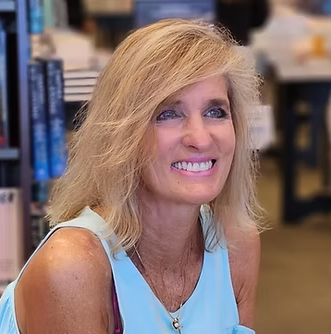
Author, educator, and Ironman athlete Suzy Ryan joins Marketer of the Day to discuss her books, teaching, resilience, and the experiences that shaped her work. She shares her survival story after spontaneous coronary artery dissection (SCAD), which caused multiple heart attacks while she was training and teaching. After realizing something was seriously wrong, she was treated by cardiologist Dr. Kenneth Carr, who identified a dissection in her left anterior descending artery and placed long stents. Suzy reflects on recovery, faith, listening to warning signs, and her determination to see herself as a victor rather than a victim. Her experience also inspired her to speak publicly about heart awareness and encourage people to seek medical attention when symptoms feel unusual. Her candid story highlights how unexpected adversity can become a source of perspective, purpose, and connection.
Suzy also shares the inspiration behind Two Spies in Time, a historical time-travel novel built around an alternative version of the American Revolution. In the story, Benedict Arnold’s treason succeeds, the British win the war, and a modern protagonist travels from Commonwealth Kansas to colonial New York City in 1780. Suzy uses the changed timeline to imagine how a different outcome would reshape daily life, culture, and the identity of the United States. Her research brings figures such as George Washington, Nathan Hale, and Benedict Arnold into the story as complex people rather than one-dimensional names from a textbook. She discusses George’s leadership under pressure, Benedict’s motivations and betrayal, and Nathan’s sacrifice as a young spy. By combining historical fiction, alternate history, and classroom-friendly storytelling, Suzy hopes to make the Revolutionary era engaging and memorable for readers.
Beyond her novels, Suzy reflects on her years as a middle- and high-school English and social studies teacher, and her goal of helping young people understand American history and the complicated lives behind its heroes. She connects that mission to a growth mindset, empathy, and her message that people can move forward without denying hardship. Suzy describes starting Warrior Publishing LLC, learning to format her own books, and collaborating with her husband, teacher friends, and audiobook narrator Todd McLaren to bring Two Spies in Time to readers. She also discusses Saving Summer and The Seaside Storybook, a student-created collection whose proceeds supported people experiencing homelessness. Suzy says stories can preserve lessons, honor the people who shaped us, and inspire the next generation. The conversation closes with reflections on motherhood, teaching, and quotes from Rudyard Kipling and Maya Angelou about seeing the best in people and the lasting impact of how we make others feel.
Books mentioned in this episode

Two Spies in Time
A time-travel adventure that asks what might have happened if the British had won the American Revolution.
View on Amazon (opens in a new tab)
Saving Summer
Suzy’s debut novel explores adversity, hope, and seeing yourself as a victor rather than a victim.
View on Amazon (opens in a new tab)
The Seaside Storybook
A collection created by Suzy’s students, with proceeds supporting people experiencing homelessness in Carlsbad.
View on Amazon (opens in a new tab)Quotes:
“You are not a victim; you’re a victor, no matter what you’ve gone through, because I’ve been through a lot, and I’m a victor.”
“When you feel something like that, you get in to the doctor, even if you’re healthy, even if you don’t have a history of heart issues.”
“Everything is there for a reason. There’s no random fact, even though you may be reading and think, ‘How is she going to pull all this together?’”
Contact Details:
- Read the Story of Resilience: Explore Suzy Ryan’s Website
- Discover More of Suzy’s Story: Follow Her on Instagram
- Follow Suzy Ryan on Facebook for More Inspiring Updates and Insights
- Subscribe to Suzy Ryan on YouTube for More Inspiring Content
- Saving Summer on Amazon
- Two Spies in Time on Amazon
Podcast: Play in new window | Download (Duration: 50:55 — 69.9MB) | Embed
Subscribe: Apple Podcasts | Spotify | Amazon Music | iHeartRadio | Podchaser | RSS
Transcript
Download transcript (.txt)Suzy Ryan is here, an author, an educator, Ironman athlete, and a SCAD survivor. And I just looked this up right before spontaneous coronary artery dissection, and there's something to be said there about some awareness of some people might have that and not know it, right? Chest pain, back pressure, jaw pain, and so she has many layers, but what we're here to talk about is her excellent book. She had a debut novel called Saving Summer, which encourages readers such as yourself to see yourself as a victor rather than a victim. And then what brought me and Susie together was her book Two Spies in Time, where you can appreciate those colonial heroes who helped forge the United States into an independent nation-it's historical fiction, it's alternative fiction because the timeline has changed. This revolution you already were-it's so exciting. She's a social studies and English middle school and high school teacher, so she even has things to say about the education system. And she's a Kansas native now living in California. So, Miss Suzy, how are you?
Oh, hello, Robert. I'm so glad to be here. I, I love how thorough you are because when you read these things, I'm living them back with you. You know what I mean? I'm doing great, and I love how you said we're victims, not victors. That was my that was my mantra for my students. And when you talk about SCAD, when you're talking about SCAD, that was 2017. Most people don't know that. I I want to tell you when you recover from a SCAD, you know you're a victor and not a victim because SCAD, my my phenomenal cardiologist from Stanford, he called it bad luck because you're gonna. This is gonna blow your mind because it blew my mind. It happens out of the blue. It's usually women and it's really healthy and athletic women, and your artery shreds. So my main artery. I know it's like a mind blow, isn't it? My main artery, my LAD, which they call the widowmaker's artery, because so many men die and leave their wives as widows, it shredded, it dissected. So that that's a pretty rough day, don't you think? You don't even know what's coming, and you don't. And I was training, like you said, I'm an Ironman, so I was training for another marathon. Think I was doing with my son the the the dopey where you do a 5k, 10k, half, and then the next day you do a full. And so I was training. So I was up with my students. I'm retired now, but we were doing a big English poetry cafe, and Robert, I felt just just sick, and in my stomach, I was like, "What's wrong? And then, and and then I got a terrible pressure on my chest, and I felt like there was a TV on my chest. But then I thought, "I'm an Iron Man. This, this must be dehydration. I mean, and this is what women do. I don't know if you know the stat, but women have more heart attacks than men.
Whoa, really?
And that's I know it's crazy. And I was having a heart attack, but I didn't know it. And women are pretty guilty of we can do anything, right? Because we really can. I mean, the women, you know, the kids and work and everything we we can. But I've, I've been on TV with my cardiologist, not mine, but another one, just talking about heart awareness. That when you feel something like that, you get in to the doctor, even if you're healthy, even if you don't have a history of heart issues. Well, do you think I did that, Robert?
I don't think you did.
I didn't do that. I sat down, and we had this poetry cafe. So the, the students it was a big buffet because I love to eat. Do you love to eat? Are you a do you just? I'm not. I love cook, but really I love to eat more. Someone else will cook. It's fine. So we had this spread of food. So I sat down and I told somebody. One of the parents came over and she said, "You don't look well because a a student was actually speaking. They did. They wrote poems and they spoke them in a cafe. I tried to create a really neat environment. The parents came. I was such. This was seventh grade. Such an incredible experience. So I sat down and I told my poet who this was happening when my poet was speaking, reciting his poem when this is happening, and I'm not going to take that away from him. So I afterward I said, you know, let's all get a break, and you guys go get go through the food line again, and and they did, and then I sat down, and I'm having trouble breathing too. So some really nice mom came over and said, "Are you okay? I said, "No, I really don't feel good. She said, "Well, what have you eaten? And I said, "Well, I don't think I've eaten. She and I said, "Would you go get me those little chocolate donuts? You know, those little ones that have the hard covering on the side-they're just oh, they're so good. So I think I ate six of those, and you know what? I felt better. So I got up and I finished the poetry cafe. I went for a run, went home. This is a Tuesday. Felt fine. Still training. Still running. Now that is not what you do, you know. I I just was not aware at all. So then on Saturday I was riding my bike, had this other attack again, and I thought, oh my gosh, I really need to eat more before I exercise. Such like hello, and then the third one. So now I've had three heart attacks. I've had three heart attacks, and they are not they're they're they're painful. They're painful, and each one is getting a little worse. And so now now Sunday I'm at the Masters Pool in Carlsbad, Aganorte, and I'm swimming, and it's a really cold, a competition pool, and I have to swim really fast to stay warm. And guess what happened? It happened again. Fourth. And now I'm in the pool, and my daughter's with me swimming, and it happens again. And I, I just have to. I'll always be very candid, even if it's bizarre and out there. I hear a voice that says, and so not a mean voice, but it's a strong voice, and I know this is God, and God says to me, "Stop swimming, get out of the pool. And I, I try very hard, I try very hard to obey God if I think He's saying Jesus, if I think He's saying something to me. So I stopped swimming and gone out of the pool. My daughter took me to the the urgent care. They could find nothing. They gave me an aspirin, but He said, "No, I'm going to send you to the ER. And I'm like, "I've got plans for spring break, I said, "Okay, I'll go. But my bestie from high school is coming out. We're going to Palm Springs, so I went to the urgent care, and I'm praying, God help me. What's going on? Something's obviously I knew something's not right, but now I can't find anything. All my EKGs are great, so my cardiologist, Doctor Kenneth Carr. He won't mind if I use your name because we became really great friends. He, I, I always told him, "Oh, I'm praying for you, Doctor Carr. And he goes, "I'm, I'm not really sure, you know, what you're talking about, but I knew Susie when I guess what they do in the ER is they they pick their who's going to take this, who's going to take this person. He said, "I knew that I had to take you. I knew no one else could figure it out, and and I was so thankful for him because I was praying for the doctor for wisdom.
Of course, I mean that's your first prayer. So he said, 'I can't find anything, but I'm going to keep you overnight because if I would have gone home, probably would have died. And if I, you know, wouldn't have come. I mean, it's it's really it's really bad. It's really really bad. And I don't know, I'm not having any symptoms because my strong heart from all the exercise, which is a great thing, and I just grew up loving to exercise. My dad loved exercise. We did it together. It's his legacy. It kept my heart carrying me, but but eventually, obviously, that can't that can't continue. So he said, "Tomorrow, well, I'll give you a stress test where they put you on a machine and you get your heart rate up the fastest you can, and they look at it because the EKGs are all coming back good. So I said, "Okay, but let's try to get me out early so I can get to Palm Springs. He's like, "Okay, okay, and so the next day he was getting ready to give me a give me a stress test, and my my EKGs now were bad. They caught up with me. He goes, "Oh no, no, we're not giving you a stress test. You're going right into the cath lab. At the cath lab, they go in in an artery and they look to see what's going on. But here's the problem: he was so wise because this is so uncommon. Doctors are knowing about it more, but if he would have gone in, because usually a clogged artery is plaque, right? And they go in and they balloon it so the flow can get through. Robert, if he would have done that to me, oh my gosh, it'd be over. And see, I didn't even think I was sick. My family doesn't. My three kids. I have three adult kids. I'm like, oh, don't come back. I'm great. I'm going to Palm Springs. Dad will be here. You know, we're good. So he was so wise. He didn't balloon me, and he went in and he saw that my main artery was it was unraveling from the top. Now, if it had been unraveling from the bottom, there would be no hope. But he was unraveling from the top. So, so I am. Which I don't understand this. They put you out, but you're not really out. You come back. Don't you just want to be out?
I would, yeah.
Wouldn't you be like? I just wake me up when I'm healed, right?
Yeah, let me know when it's done.
Exactly. No, I came to one time. I think he told my husband we'll be in there 30 minutes, an hour at the most. Well, I think it's at two and a half hours now, maybe three. I don't know. And I came to one time, and I I heard he's got Doctor Carr has a calm countenance. I mean, he is even, which is what you want in your doctor, especially your cardiologist, right? And so I hear him say, "It's not taking. We need another. So what he's doing is he's putting extra long stents in my LAD, my window maker's artery, my main artery, because it's unraveling from the top, but he can't get through the ravel. Like a straw to seal it, but he has one, and it's still unraveling. And I hear, then so I go back out. So I'm praying, Jesus, heal my heart, because I see my heart, boom, boom, boom, boom, boom, boom, and I know I'm dying. And I have three kids, and I have a husband, and I love him, and I want to be there, and I want to help him, and I know absent from the body, present with the Lord Jesus, will pick me up when it's my time. But I'm not ready to go. I want to pour into my family, my students. I know people will suffer. We're in the midst of rebuilding our house. We've torn it down. My husband and I are living in this trailer in our front yard with no no water. I mean, it's such a disaster to try to save money, my poor husband. I'm like, oh, so I'm saying, Jesus heal my heart, Jesus heal my heart, Jesus heal my heart. So then I go back out, come back again, and I hear the same voice say, it's not taking. We need another. So I go back to Jesus, heal my heart, Jesus heal my heart, Jesus, and then I'm out again. I come back a third time, and I hear Doctor Carr's voice with a slight, a slight inflection, slight say this one took, and I went out again, and I knew I was healed. So I was healed. So he put all those extra long stents in, and and and you know with that this procedure now it's not even done because it's so dangerous. But with me, that's the only thing that would save my life. So I love Doctor Carr. He he he saved my life. He fought for me on the table. He he he did a procedure that was still appropriate. I'm not sure they would even let him do it now because people die from it, because you can imagine, you know how. But but what else do you do if you go to open heart surgery? What? How do you stitch together arteries? You know what I'm saying? You're I'm in trouble. So so he saved my life. He let me PT myself. I couldn't get my heart rate over 120. I went back to school, kept my heart rate down, walked, PT'd, and then when I, you know, I think it was three months later in the summer. Does this happen during spring break? Right before spring break, he did that. He gave me that stress test, Robert, and guess what? My heart had completely healed. Some of it had his heart doesn't heal. Some of it had, you know, there's a little section, but it was it was all fine. It was I'm I'm totally healed now. I don't exercise like I did, and I don't race because why? I don't need to do that, you know. But I can do anything, and so I am so thankful. So let me just tell you about Doctor Carr. So I see him. I would see him at the pool, and so now I'd have to go in and see him, and I mean such a great guy, such a such a fighter for his his his patience. We we became good friends, and when he would have patience with SCAD, because he could recognize it, and it's a rough one. I mean, it takes you like you know, like you're like, what happened to me? I'm on my way to Palm Springs, and now you're telling me that you know it's just it's it's really rough, but but I just knew God was going to heal me.
I just you know how you know, and and perception is reality. As a man thinketh, so he is, and so I I just so I'm so thankful. Well, Doctor Carr will text me and say, can I can you call so and so? She's my newest SCAD patient, and she's struggling or whatever. And you know what? I call him and I say, "This is rough, but you're you're going to be okay. You're a victor. You're not a victim, right? The message, the message. So then I saw when I was doing two spies writing two spies in time, I saw Doctor Carr at the pool, and of course he's a great swimmer. And you know it's pretty cool to see your cardiologist at the pool. I said, "Hey, I'm writing a book, and it's two spies in time, and I'm writing you in it. You're going to be a cardiologist in the book, and I need you to name yourself because I wanted this book to be really everything that has happened to me. Does that you not? Don't waste anything. Like, if I cook, I don't waste any leftovers, even if I have to take it to the neighbor who doesn't want it, hey, can you have you know? I've got I've got lemons who are almost getting whatever it is. I just don't like to waste anything. And I said, so so what do you want your name to be? And he said, are you ready for this? The greatest name ever. He said, how about? And his name is Kenneth. How about Kenneth Clark? I said Superman.
I like it, yeah, Clark Kent, Ken Clark,
Kenneth Clark. So I wrote him in the book because it's time travel, and and and then in 1980 is when the teacher goes back to 1780, and and there's got to be a full circle, and and the premise is the British win the war. So I'm not going to tell you what happens, but there was a lot of freedom to create the time travelers' history. Does that make sense? Yeah. Yeah. With what happened in history and what you know. So so yeah. He's he he's so supportive. He's such a neat guy. So anyway, I got to live, hallelujah!
Live tell the tale, and, and you're just a natural storyteller, aren't you? I loved all the the randomness, and sometimes you're like, it's almost like listening to a comedian, like was this going somewhere, and then it connects a dot, and it calls back, and it comes full circle. It's just so much fun to experience, and then there's also that kind of the the and you probably know better than me. There's there's the magicalness of like you know, writing is self expression, and sometimes you deliberately like you put your friends or your people you know in the book, but you change your names. But then sometimes your subconscious just like sneaks tidbits in there, doesn't it?
Absolutely, and you know the the easiest person to write, Robert, is yourself. So even though I don't look like H H and and her name is a mystery, but you learn it at the end. And I don't look like her, but of course I graduated in 1980 from from high school. I know that time frame, and I wanted the idioms. And I mean, I was worried about a diet coke and fries. That that and so H H, of course, is just worried about her next diet coke and fries. And so when she gets, you know, flung into the the 1780 colonial New York. Then she's what's she going to do? Where's her diet coke and fries? You know, they're roasting meat. You know, she's she's not eating meat. So you know, it makes it for a lot of fun. And I love what you said because the book, every missing piece that you think that's random. What's that about? Oh, I'm an English teacher. I taught my kids. You tie the bow, the golden thread all the way through. So everything is there for a reason. There's no random fact, even though you may be reading and think, how is she going to pull all this together? Because I do tell the history. So the British win the war, and I hone on Benedict Arnold's treason. Now I'm-I don't want to put you on the spot because I don't judge anyone. My trauma growing up, I didn't really get-I got an education, but there was a lot of trauma in my house, and that was the first book fictionalized. So I memorized to get A's, and then I forgot everything. So I got out of high school really not knowing anything. I really couldn't have told you what a verb was. Now, I'm the most unlikely person to write a book because I've got a long way to go. I got a business degree at the University of Kansas, so I learned the math, and I I was in remedial math for three semesters paying and not getting any credit is that a bad day? That's not what you want. Your I used to tell my students do your math. Mrs. Ryan had three semesters of remedial math to be able to do calculus and had to pay for it, and it didn't it didn't help me with my credit. So everything that happened to me, I always told my students so they wouldn't make my same mistakes. You know, not pay the dumb tax, but anyway, I'm not hard on myself because I learned, and then I went back and got my English credential when my kids were young, and I became a PE teacher, an English credential teacher, and and so so I I understand kids, but the problem here I'm circling it back now. The problem is with kids today, and I don't judge because oh my gosh, I've I've learned everything, and you can learn it. But they don't know they don't know our heroes. They don't know who Benny McDonald is, and that's not so rough. They don't know Nathan Hale. That's not so rough because I can understand. But they don't. Some of them don't know who George Washington is.
That's sad.
That is so sad because that man that man was a star. Now I write him authentic. He's not. He's not a perfect man. He had a trajectory where he grew into being the general. He didn't even want the job. He wanted to stay home at Mount Vernon, but he was a he was a self sacrificing man who looked at himself and acknowledged his mistakes and did better, and and I mean he's a hero. And I take his quotes because I did so much research because I felt like I I had to have something to anchor everything I wrote. I took his writings and made it his dialog. So I feel like I really knew these these heroes, and I want the students. So I'm going into classrooms and giving giveaway books and prizes, and I'm talking to the students, say, "Hey, you are our next generation. Our country needs you. We depend on you. You got to know and appreciate your country. It's not perfect, but but these these men and and women, we need to appreciate them and and know them. So the book, Robert, the time travel is the fun part. It's like one big lesson plan. So that's easy. She's in the plane and she gets whisked, you know, to to Commonwealth from Commonwealth Kansas because remember the British have won the war. So she's not a soccer player because it's British. So what would she be?
Football player.
Exactly. So she's a football player, and that's so so that's a that's a mind twist. It was so much fun, and and so she leaves from colonial Kansas. Now she's back in, I'm sorry, Commonwealth Kansas, because it's a British, you know, colony. Commonwealth, we're like Canada or Australia or New Zealand, and. That has to be addressed too, and and then she's in colonial New York City in 1780, and she's really thinking, you know, what what am I doing here? But Benedict Arnold, did you know him? That he was? Did you know that he was? It's a byword for treason, treasonous.
Yeah, yeah, he's the traitor.
Okay, well, you do that. So, so I have to tell you, none of the kids know that. None of the students know that.
Oh man,
No, none, none. And so, so, but I started researching because I love people. Like I, I like to get to know people. That's why I think the students connected with me because I wanted to know about them. I wanted to know and let them know again the the message: you are not victims; you're a victor, no matter what you've gone through, because I've been through a lot, and I'm a victor. That doesn't mean it's easy. That doesn't mean I say things are great that are not, but I believe they're going to get better. Just like in the scat, that was a like my doctor said, that's just bad luck, Susie. I'm like, I'm not going to receive that. I'm going to think God is going to use it for good, and I'm going to get healthy, and I'm going to be able to talk about it. And I have been on TV talking about it, telling the women if you feel something weird, and the men go in, don't do what I did. But anyway, the thing about Benedict Arnold, and I didn't know this, but I love thinking about what makes a person tick. He, in his treason was going to give up George Washington and West Point, you know the, the,
Military academy.
Exactly, and before that, it was their big their big base at the Hudson. Now, if that would have happened, Robert, would America have won the war?
You tell me. It doesn't sound like it.
There's no way Washington, Washington was the only temperament that could have dealt with the Congress. And again, I'm not judging anyone. I tell it as it is, but we can't judge. We can't judge because we weren't back there. It was a hard time to be a patriot. That the Congress they were miserly. They wouldn't let George Washington. They wouldn't give him any money. They wouldn't let him promote his own generals, which offended Benedict Arnold. Which rightly so, many quit. It was a rough time. 40% of the people were patriots. 20% were loyalists. They wanted Britain because usually they were the wealthy people. They didn't want to lose their quality of life. And then 20 people were loyalists, and then 40 people, 40% of the people, they switched sides because if you weren't on the right side, the other side took all your land and all your wealth. Can you imagine? I mean, that's what happened. So 40% the Patriots, 40% loyalist, 20% loyalists, and then 40% switch sides. So I don't judge, I don't judge, even Benedict Arnold, because when I researched him, he had a really hard life. Now, the treason was wrong, no matter what. If he really wanted to commit treason, he could have been like General Lee in the Civil War, who switched sides to the South and asked for no money, Arnold. It was all about money, all about money. And but then you realize his life, and you understand avarice. That's what they called it. So that's what I tried to do in the book: is is show everyone's side. So we've got the time travel. That's like the fun intro in a teacher, right? It's got the intro, and now we get to the now we get to the the the lesson, which is we almost lost the war, and what happened? And it's such it's such a miracle. And Washington gave credit to Providence, which is a synonym for God back then. So he gave credit to Providence, and then, then it's it's the story is is amazing. So then after the story, then Robert, what am I going to do with the time traveler? Got it, got to figure it out.
So back to the present where the future's been changed.
Is you know I don't know. She really likes Nathan Hale because Nathan Hale is gorgeous. Nathan Hale is the 21-year-old Captain Nathan Hale, and he was our first spy. And he sacrificed himself as I mean, they had so much character back then. He was a Puritan, and the Puritans did some kind of weird things in history, but but they loved they loved God, and they they were ready to sacrifice. So he, even though he got sacrificed, he he he looked at it as if my life can help future generations. He was in. I mean, who does that? What what kind of character is that?
That's very selfless.
Exactly, exactly. So she's very she's she's pretty much throwing herself at him right now because she says they're not men. We don't have men like this in my day, and and so now I have to figure okay what's going to go on, and I'm not going to tell you what happens, but it's it's very exciting. And then at the end, after the book's over, then I have an epilog because. As a good teacher, you tell your students what happened at the end. So then I do do factual what happened, what happened, what happened. Now you might be thinking, or your read or your listeners, wait a minute, Nathan Hale, who knows Nathan Hale, he died in 1776, and she's going back in 1780. HH. So we have a problem here. But guess what? I'm the author. I can do anything I want.
True.
So you know what? gets. I'm not going to tell you how, but he's back. And you know what? He was happy for me because that man, that young man, died so young, and he was such a star. And I want people to know about him, so I had to research a lot to to really know the people. I really feel like I know Nath. I know Nathan. I know George Washington. I know Benedict Arnold. I I because I read so much and I wanted to give them their due and honor them, all of them, all of them. So that's two spies in time.
Nice, so you make history come alive. And there's there's so much to learn from you about your enthusiasm and and how to you know be a good teacher because like we can all do it, right? It doesn't have to be your profession. You're someone that teaches and and helps others no matter what you do in life. So there's just so many good lessons built in, and and at least for me, like the historical historicalness, if that could be a word, like so much fun. I took a AP U.S. history, and we had to write like six essays per week. So, and there's all kinds of who knows what's rattling around in my brain about like the Bank of the United States or Andrew Jackson or the Roanoke Colony. Who knows what's in there? But it's just like the the Gilded Age, right? There's just like there's so much cool stuff, and and especially, but I also like the Hairy Turtle Dove books about like what if there was a change in history, and like you just it leads to such a butterfly effect. It's just such a cool concept, and it's I'm always excited about new plots and ideas, right? Like television is so boring. They'll say, "Well, here's here's a cop show, and we'll set it in the future. And it's like, but it's the same everything. But like, you go and you dive into books, and there's just like new new worlds, new ideas that haven't even been devised yet. it's so cool.
So that's, what I love that you say that because I was so enthusiastic about writing it because it was fun. It was creating, making people think, but creating and just like you said, it's new. It's the British have won the war. What does that really look like? And I had to really flesh that out. And then, well, I will tell you, I had two editors lined up, and unfortunately, they weren't able to help me, so so you every writer needs an editor, and I am so humbled because I still have trouble spelling. That's something that I did not recover from, you know, from from my childhood because I didn't hear words said right in the books, like when I read it, and I didn't read that much as a kid, I didn't understand. My husband's from Boston; he is so brilliant. So I told him, and and if I get tired and I go fast, then I really have a trouble spelling. So I really need editors, but you need editors even if you're a great speller. So I told my husband, who loves history, I said, "You're my editor. He's like, "Great. I'm like, "No, no, you can do it. You're you're so bright, and so he really helped me. He helped me so much, and it was so great, and and he was so wonderful. And I do dedicate the book to him. I dedicate the book to my dad, who who's no longer with me, but he taught me. Even though my parents were divorced when I was four, and it was very tumultuous, I never remember Robert them, Robert them, saying a kind word to one another ever in their lives. I mean, you know, you think about how how sad that is. You know what I mean? Ever, but in spite of all of that, I knew he believed I could do anything. I knew, I knew that, and you know what? He loved history. He was a math guy, but he he engineer type. But he loved history. He loved maps. So I felt his presence. I even dreamt about him a couple times. Just tell him you're doing a great job. Keep it up. And and and so I I love that. But my husband was fantastic. But you know, then I needed more editors. But there were no editors. And then I wanted to get it out in time for the 250th anniversary. I mean, what are the chances, right? So then I start talking to my teacher friends and my English teachers, and I'm like, I need help, and they came to the rescue and edited. So this is a it's a collaboration of people who love kids, who love history, who love writing, and I I thought about that, and I wanted to make sure I told you that because when you said butterfly effect, what this marvelous-they're all marvelous-but Katie Maglia she uses that in her blurb about the butterfly effect. Nice teacher friend. And and you know her writing is so brilliant. I'm like I can't wait for you to write a book because her blurb is like just using the butterfly effect. I mean that's showing not telling, which is what you're supposed to do, but it's really hard. So I just like my friends came along me alongside me, and and I'm, I'm, I'm pleased because it's an adventure, and there's something for everyone, and it's very exciting to me.
Oh yeah, because I even hear about it's. It's so great just to hear about the the the warmth of the people that surround you, right? Husband, editor, father, these historical figures that kind of they they they still they're still alive in a way, right? In your head because you you you learn about them and you can kind of imagine and have these these conversations with them and sometimes if they're good enough they end up in print and in your book and we and so you came across me because you had the audio book and like needed help getting it like finalized and online and that narrator Todd McLaren that's some talent isn't he
Oh my gosh he is so talented he is so talented. But but see, I I I needed you. I prayed because I wanted to get this out. You know, it's the 250th anniversary, and I didn't have the skill set to get Todd's great his great audio reading. I mean, is that's what they call it-the reader, his narration, all those voices, and and who could do all those voices? But then you came along, and you were on it. I mean, you you must have an incredible work ethic because you had a lot of work to do, and I really wanted it done fast. And you flew through it and got it all done. And then remember when, and I didn't know because I'm learning. I this saving summer, I had someone help me format it and and put it on Audible. But this time, I wanted to own it all. So I'm a teacher, so I can learn. So I learned how to format, which is the best advice I could give any indie author, any indie author, because when you find a mistake, and it's hard to get the mistakes out of your book when you own the formatting. Guess what? You change it, you reload it, and you're done. So there's no panic that you have to get, you know, someone or whatever else. And I did start my own publishing company, which I'm not even sure how I did it. It's Warrior Publishing LLC. But I, it's not that the big no one was knocking down my door to publish me, and I did put it out there. But I'm so thankful. Sometimes what you think you want, you don't, because I wanted to own everything. I didn't. I didn't want to give any piece away. I didn't want someone to change my title. I. I put my heart, my soul, research years. My husband was so funny in school. I I love to sleep. I'm one of these people. Our whole families sleep. Yeah, like we like to sleep. So in college, I didn't even pull all nighters. Robert, I pulled so many all nighters trying to get to the next level. My husband was like, "What time? What you know? I was just trying to get to bed before he got up at five a.m. because because he was starting to get worried about. He was you've got to start going to bed earlier, and I'm like, I know, but I just need to finish this because I get so inspired by all of it. It's like all of a sudden it was two. It's like, oh, I get to bed at 230. It was 334, Like I got to get to that before five, but it it it is a labor of love for the people that that love me and came around, and we really, I felt like gave an offering to our country of, again, I don't sugarcoat anything because that's not healthy. But showing what these people did and what a miracle it was that we won the war, we need to appreciate that.
Oh yeah, of course we have lots to be thankful for, right? We we get up and it's so built in and easy to feel miserable, but it's like, hey, you're living in this world where there's like there's light, there's there's air, there's water. You can turn on a faucet. Like we're we're so and and like so many just like millennia of people didn't even have indoor plumbing, right? Didn't have internet, didn't have this convenience, and those those whippersnappers these days who don't even know what George Washington is, they don't know how good they have it.
Well, that's exactly right, and, and it is exactly right. And I feel like I'm on a mission to to let them know this is what you're missing because when when you study people like that, it makes you a better person. It made me a better person because what happened was there were some nights, and and and so I'm having to learn all these new skill sets. Even with the audio, I'm like, and I'm always praying, like God, how am I going to do it? God, I don't know how to do it, and then I'm starting to get tired. Of course, because I've been up so late, and you know, I have other things I have to do. So it's not like I can just you know stay in bed all day. I've got to get up, and I kept thinking, this is what came to my mind. If those heroes could do it, oh my gosh, I can stay up late and find someone to link my audio. Do you know what I mean? I can do this, right? Yeah. And and and you were brought in in such a seamless way, and I and I really didn't know what I was going to do because I couldn't do it. I did. Have the skill set, and their skill sets I can learn how to format. But your your skill set, your skill set, and and how fast you I, I, I couldn't do it. I just I just I just don't you know you know what you have, and that's not something I could do. So I was so thankful. I was so thankful. You're you're one of my you're one of my stars that just just did what I couldn't do, but I knew I needed to. So thank you.
You're welcome. That makes me feel so good. And you know, you mentioned that phrase "labor of love, and I forgot until now. Like in the the sixth grade, I was 10 years old. I came across some magazine, or I don't even know what magazine, but the title of the article was "Labor of Love, and they talked about all these publishing mechanics about margins and page counts and and all these things and like it just it's it sounds so boring, but sometimes like you get you just get fall in love with the details and and like it's just it led to all these other things, right? And and even like you're reminding me like I think there's there's something famous about there was something with George Washington where like eight of the redcoats ambushed him and they all opened fire on him at once and all these bullets like whizzed past him and missed him and like that you know about that
Well, no that's exactly right in the French and Indian War the same thing happened and horses were shot out from under him because he went straight to the fight. So he went straight to the fight. He was with his men. He was not afraid to die. And he, so this was the French and Indian War, and and the the bullets, the coats, the horses shot out from under him. But his men, his men, because he, you know, the smoke with the muskets. It's all in the air for so long. They were always afraid when it cleared because they didn't think he was going to be alive. There's no way, and he was always. So the eight, the eight. That I I don't know that particular story. I might have missed that, but every fight he was at the front with bullet holes, with you know horses shot out from under him in the French and Indian War. He was he was, it was a miracle he stayed alive. But you know what I think he thought, Robert. I think he thought that Providence had anointed him for such a time as this, and and he was not doing it for himself. He was doing it because he was called. Does that make sense? Yeah. And so he didn't fear. He did what he was supposed to do. Now, when he found out Arnold had committed treason, one of his greatest generals, I didn't know that Arnold was Benedict. Arnold was a war hero. He was a general war hero, and you think about he was one of Washington's bravest men, and then he was going to give him up. Washington was very sad, and he didn't really get sad much. But he looked, and so all the players you know, Hamilton was there because it's all a little small town. Lafayette, the the French general, and Knox was there. I don't deal much with Knox because it got so many so heavy with so many people. But Washington said after he found out that that Arnold had betrayed him and the country, and he felt like it was a personal betrayal because he loved his generals. Now the Congress was not letting him promote them, and that caused a lot of heartaches. They also weren't getting paid, which you know it's pretty hard to stay strong when you're not getting paid. Plus, a lot of them didn't have food, and you know they didn't have uniforms, and they they died. I mean, it was just what Washington did. I don't know how the worst, the easiest part was getting the bullets going through your hat. It was trying to feed his troops and protect his troops. But he said, he said to to Hamilton, he said, who else can we trust? Who can we trust now? Because Arnold, you know, Arnold's committed treason. Who can we trust now? He was just-he was just devastated. He was just devastated. But he learned. This is what he learned: not to take it personally and not to let anything bring him down, and it's it was such and and he rose above it, and then he became not bitter and not even angry, but he became just just militant, fastidious about trying to get Arnold back because he escapes to try to make an example out of him, and the example was treason will not be tolerated in our young country. So, so you don't mess with Washington. He's got a tender heart, and he was down for for a couple hours, and then he rose stronger. And look out, look out, because he had an iron will. He had an iron will. You don't mess with him, don't mess.
Very nice.
It's so awesome, so awesome.
Yeah, some, some principles and lessons in there, and and they do say that it's helpful and healthy to read biographies because you can kind of experience their transformation and get a feeling of that lived person. And I think with whatever that. George Washington's story is-I have to look it up, but and and who knows if it's even accurate if it's a tall tale. But like just that alone, I think it's this the genesis for a lot of the like alternative historical fiction of like what if this one change had happened and then it would lead to all these other things. So and I just I, I told and alternative history it's like so common now, like everything else. But like it wasn't always, and I think that just that one idea like spawns so much, so many like you know authors, TV, movie, things like that. Just that one idea, and it's it's so cool. And you've got that your own book that's a part of it. So we've already gone over like double time, but it's been such a blast speaking with you. It's been like three podcasts in one. But in these final minutes of our conversation, Miss Suzy Ryan, do you think there might be a missing question in our conversation that I should be asking you? I just don't know what to ask you.
Well, that is such a great question. Let me say one one really quick thing about I I didn't know about this alternative, anything alternative, because I've been studying so much and teaching school that I've kind of missed all the TV. And it's so cool that the alternative, and the alternative is Arnold's treason works. So that's why the British win the war. So that's the only thing that's hinging. So I love that you told me that there's all these TV shows out there because I didn't know it. Now I need to go watch them all, now
All kinds of like Marvel superhero alternative timeline, the multiverse.
I, I, I, I didn't know that. I you know what's funny is I I wonder if you can tell me what you think my greatest accomplishment. What would I say my greatest accomplishment in life is? Because I have overcome some adversity, but we all have, right? And there's one thing, and and I mean, and I I never thought I'd write a book. I I mean, again, I in college, in college, my poor college professor English, he's. I remember him saying to me, "You have a great voice, but you've got to learn your mechanics because I, I, they were. It was, it was maybe, maybe fifth grade level. I mean, that's that's terrifying, right? But I learned everything. So you know, I'm a hard worker. So I've accomplished, and I'm thankful to write a book. But what would you think that I would say my greatest accomplishment is?
I don't know. I wanted to say your kids or your students.
So my students for sure, but it's my three kids. I always wanted to be a mom, and I was so blessed to have three kids. I had three kids, and they were very close together. They were each about a year and a half apart, and we. And then I, then I taught PE when they were young, so and then that was only part time. So I was able to come home when they came home, and then when they got older, I started teaching full time English, and and but still we had the summers together, and I got to pour into them, and everything that I felt like I didn't get as a kid, I was able to give to them to the point where I remember my daughter. She's she was in the middle, two boys. I would go back in and say good night to her. Oh, good night, honey. Oh, you know, mommy loves you. You know, and this okay. And then this kind of went on for 20 minutes every night, and she's very passionate. I remember her saying one time she might have been five. She said, "Mom, I know. I think I think I need to go to bed now.
Oh boy!
But you know what was so wonderful is that I had the opportunity to to to experience life with them and have fun with them, and during the summers we used to sit around, and I didn't do anything. We just play cards. We would play all the the board games. We would just just have the most easygoing, relaxing summer, and I really got to experience my childhood again with my kids. And I, I thank God that that he allowed me to be a wife and a mother and have a family.
That's wonderful, and you, and you hope that the next generation has it better than you do. And if you like, you said your parents divorced when you were four, and you didn't see a lot of love, so you think, well, how can I? You know, it's it's so tempting to be bitter about the past, but you say, "Well, how can I just like learn from that and make sure to not do that to my kid and be encouraging and be optimistic and and nurture them and and be excited about them and give them my attention and and it goes both ways, right? Because as you say, you then reexperience their childhood vicariously through them. It's such a cool concept.
It's such a cool concept, and this is what I really appreciate about you. And you know, we met when you helped me, but I got this from you from the beginning. You really get things. You're you're a thinker. I mean, obviously, you're very bright. Anyone that can do what you do, I mean, I'm I'm so in awe of your skill set. But you're a thinker, and you're passionate. You care. So I knew. You would get that. I need to understand because because that's how you are. I mean, that's just you're. It's really exciting that, that there's such a well-rounded, smart young man. You know that that it's just it's exciting because this is what we need more of. Because you're you're a victor no matter what. I mean, you took on that project of me, that's a victor mindset. That's a growth mindset, and I used to teach that to my students. And you know, I love all my students. I always, I told them they were my kids. I taught, I taught them with the golden rule. I treated them the way I would want other teachers to treat my kids. So I loved them. I loved, and they knew that, and I still love them. But we used to talk about the growth mindset. You can do anything. You you you might need help now. It it's not a give all because I couldn't have done what you did. I I wouldn't be able to have the equipment or the time. But I knew I could find someone that could do it.
iYes, and that's a very American concept, right? Optimism, maybe even to the point of overextending yourself slightly, like saying, "Well, we're America. We're going to the moon. Well, it hasn't been done. Well, instead of finding ways not to do it, we'll, we'll figure out some of those problems.
No, that's exactly right, and it and it can get you in trouble. And you could talk to my husband how it gets me in trouble sometimes. But you know, it's a lot of fun. It's a it's a lot of fun, and and and I feel so thankful. I feel so thankful at this age in my life that I've been able to really fill a life stream of pour into so many kids because that was really that was really my dream. It always was, it always was.
Oh yes, the ripple effect being a positive force for change. So if you want to know about the amazing author and woman, author, educator, Ironman, athlete, as we said, scad survivor, Suzy Ryan. We can go to SuzyRyan.com and also check out those books. There's Saving Summer and there's Two Spies in Time. Is there a third book coming soon?
Well, it's when my students, my last year, I wanted to go out big, and again, I'm. I wanted to just do the very best I could, teaching every day, giving everything I could. So we wrote our own little book, and we published it. I published it. It's called the Seaside Storybook. So that's really our third book, and the students wrote what they wished they would have read growing up. And we watched YouTube videos on how to format it with Canva, and then we donated the proceeds, linked it on Amazon. It was a year-long project, and we we donated the proceeds to the Carlsbad homeless. And then we went to the homeless. Well, we have a park where the homeless are fed every Tuesday, and we we fed the homeless. So that's my third book. And I don't know if I'll do any more. I only have one story in there, but that's one I'm almost proud of, as proud of as any, because those students work so hard. But you know what, Robert, when they didn't want to work hard, I said, "Oh no, no, we're going to do this. You're going to do the very best you can. We're putting it out there. And and I mean, it was it was gnarly hard. And they wrote the they just Jay just shined. They wrote these unbelievable stories, illustrated them. It was so amazing. So I think that's my last one. But you know what? You never say never because if it comes in my heart, what happens is if a book comes in your heart, you have to write it. You got to get it out, you know.
Yes, of course. You get that call to action. So the Seaside Storybook is that third book, and you can find about Suzy Ryan and everything else at S U Z Y R Y A N.com. You could even find out about her tutoring services, appearances in the media, and so much more. Susie ryan.com. Before I let you go, Miss Suzy, it's time for the scary part of the podcast where I try to stump you. I try to put you on the spot by asking you about a fun or interesting quote or lesson that has served you. So, what comes to mind as far as a fun or interesting quote or lesson?
Well, the whole book and Two Spies and Time starts with a quote. I love quotes as a teacher. I love quote. I can tell you so many quotes. I'm gonna, if I can't, I'm gonna tell you. Can I do two? Can we? Let's do it. Do it. The first one. The first one is Rudyard Kipling, and he says, "I I prefer to believe the best in everyone. It saves so much time at the end. This is an author. This is an English author who suffered a lot, and I think that it's so important to. We we don't have to agree, and we have to you know if something's wrong, it's wrong. But but even Benedict Arnold, when I was writing about him, I preferred to think the best. What happened to that poor man? Why would he do that? And and it saves you so much trouble because there's always a story you don't know. So that's one of my favorite quotes, and then another one is Maya Angelou, and she says, "People may not remember what you did, people may not remember what you said, but people will always remember how you made them feel. And I want to tell you, you made me feel capable. You made me feel. Honored, you made me feel heard. You made me feel encouraged, and that's a gift, Robert, so keep it up.
Well, very nice. I love the encouragement, and I will. So we've been speaking with Miss Suzy Ryan, the author of Saving Summer and Two Spies in Time. We'll have those links underneath this podcast as well as to her website. Thank you so much for having just such a fun blast with me. We jumped around all kinds of subjects, and that's part of the randomness of podcasting. So thanks for being you, and thanks for being here.
Thank you, Robert. Thank you.