Published Last updated
Read J. Bryan Lail’s bio and speaker profile →
View in Podcast Library: stories, quotes, books, and resources in one place.
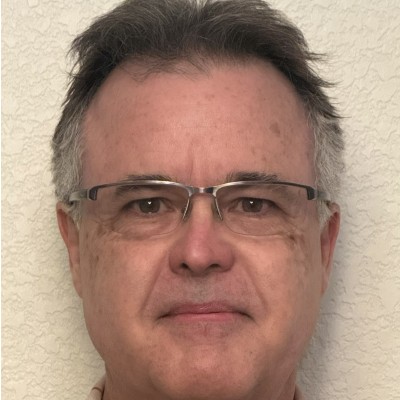
Global challenges such as poverty, unequal access to healthcare, and sustainability demand more than good intentions; they require coordinated initiatives that can work across nations while respecting local sovereignty. J. Bryan Lail, author of Journey to a Blueprint for Humanity: An Architectural Approach for Leaders, shares a framework for turning commonly shared human values into collective action. After 36 years as an architect and engineer, J. Bryan is applying proven business architecture methods to an enterprise on an unprecedented scale: humankind. His central idea is not a ready-made solution to every global problem. Instead, the book explains why a shared blueprint is needed and how leaders could develop one to guide complex multinational initiatives. The approach aims to help governments, enterprises, and agencies pursue shared goals while tailoring plans to their own contexts.
J. Bryan describes a blueprint that begins with real surveys and data to identify the values most commonly shared by people, rather than relying on the opinions of individual leaders. Business architecture methods can then map those values into value streams, capabilities, organizational elements, and information. This mapping helps clarify what needs to be done to create value and how different parts of a major initiative can work together. Rather than dictate a single solution, the blueprint would provide a guiding framework for shaping and implementing better solutions. J. Bryan argues that this kind of structure can help teams coordinate across different organizations, countries, and areas of expertise. The result could be more effective initiatives that better reflect what people value.
The book presents the vision and methodology as the first stage of a larger effort. Stage two is developing the blueprint itself, which J Bryan Lail says will require committed sponsorship and visionary leaders. Stage three is applying the completed blueprint to multinational initiatives and sharing successful examples so others can learn from them. J. Bryan emphasizes that impact not book sales is his priority, and that reaching the right decision-makers could help move the project forward. He also reflects on the patience needed to coordinate experts who may know their fields well but lack experience running complex initiatives together. Listeners can read the first chapter and learn more at blueprintforhumankind.com.
Quotes:
“The Blueprint for Humankind isn’t about saying what the solution is. It’s about a guiding framework to get to better solutions.”
“Every major multinational initiative or large-scale effort then is able to use the blueprint to end up with better results, more effective results, better value for humankind.”
“Just like a building blueprint doesn’t build the house or the building for you, it says when you build it, you better adhere to this code, and you better tie to these things.”
Contact Details:
- Explore the Blueprint for Humankind and Be Part of Shaping What Comes Next
- Connect. Inspire. Make an Impact: Connect with J. Bryan Lail on LinkedIn
- Journey to a Blueprint for Humanity on Amazon
Podcast: Play in new window | Download (Duration: 24:36 — 33.8MB) | Embed
Subscribe: Apple Podcasts | Spotify | Amazon Music | iHeartRadio | Podchaser | RSS
Transcript
Download transcript (.txt)After 36 years of solving complex problems as an architect and an engineer, J Bryan Lail is applying his same discipline to something much bigger: humanity itself. And he has a new amazing book we're here to talk about. It is called "Journey to a Blueprint for Humanity: An architectural approach for leaders, and it explores how leaders can turn shared values into coordinated action without sacrificing sovereignty. We're here to discuss it on the Marketer of the Day podcast with Robert Plank, brought to you by DFY Podcast, handling your podcast backend so you can focus on the conversation. And today's conversation that we're discussing is this journey to a blueprint for humankind. What it means, how it can change the world, and how it equips leaders with step-by-step methods to translate shared priorities into actionable policies and programs with measurable impact-such world-changing stuff-it gives governments, enterprises, and agencies the freedom to carry out strategies in ways that suit their own context while still driving collective progress. So, Mr. J Bryan Lail, great seeing you again.
Thanks, Robert. Good to talk to you again.
Wonderful. And so, what's this all about? And what are you currently all about? What's your focus and passion?
Sure, Robert. So I'm, I'm retired from my primary career, and I want to take the opportunity to give give give some things back to humankind in general, if possible. And I think there's a real potential here. What you and I are going to talk about with this book, which the important thing here is not the book. I'm happy for it to sell. The happy, the important thing is what the book is about, and that there's a real opportunity here that you and I will go through that could be of significant benefit for humankind.
Of course, solving problems, working together, making a change, and so what should we know? What are the sub pieces of this?
Sure, so there's the if you take a look in the book, and when you go to the website, then of course you'll provide Robert the the through chapter one is free access. You can go look at it at the existing website blueprintforhumankind.com, and you'll find that it starts with what's the vision? What's this about? What's this thing called a blueprint for humankind? Why do we care? What could it do for us? And how would it work? And then the rest of the chapters really expand on that original concept, and that is based on real proven practices. This, you know, I didn't invent these practices that this is built on. I'm applying it to a unique situation or enterprise that's much bigger than it's been used on. But then, once this blueprint is developed, that this book goes through and says, "Here's why you would want it. Here's how to here's how to develop this blueprint. Then it could be used in a way that's very powerful and really beneficial on you know a lot of the big multinational initiatives and things like that. That's basically what the book goes through.
Well, very nice. And on that website that we'll mention, which is BluePrintForHumankind.com. You asked, can we develop a blueprint directly linking the most commonly shared values of individual humans and communities up to goals at the scale of nations and alliances to guide better plans and solutions for all of humankind? And it seems like it should be possible, right? You figure, well, we're we're on this planet. We have when you look at things like the amount of resources that are there, the amount of landmass we take up. It's ridiculous that we have the current problems we have in the world, right? We've invented green pieces of paper or ones and zeros, and it's like, why don't we? Why don't we still have the poverty, the imperfect healthcare, the social inequality, I mean, like you know, what, what are your thoughts on all this? All these big world ideas.
Sure, Robert. So, to me, all the points you just made support the first thing I'd like to hit a little a little bit more detail, and that's to you know along lines what you were just saying. What do we want a guiding framework for major multinational initiatives? And of course, if that guiding framework can help improve some of the situations and shortcomings that you just described, of course we would want it. So, so what does it mean for there to be a guiding framework? Well, the context here, and this comes directly from the types of experiences I had in my career as an architect, is that whenever there's a big initiative, whether it's for a company like like my experience, or whether it's for a multi, you know, multiple nations to improve sustainability, feed that. Improve economic development. You know, a trade-off between a technology, technologically advanced nation, and a set of nations that have a lot of educated manpower or or people, but you know the two need each other. In those kinds of situations, I think we tend to do okay across our various big initiatives and organizations that are involved with those at bringing a lot of different experts together in in whatever that area is. How do you feed the hungry? How do you how do you get safe water? How do you increase sustainability? How do you match up an educated workforce to the places that need that to improve everybody's economic development. What we don't tend to do well, and this is where I've seen issues myself in during my career, is we don't tend to realize that running a multinational initiative itself isn't just what the goals of that initiative are and having experts in that area. It's how do you successfully run a multinational initiative of any kind for any purpose, and this guiding framework that you and I will talk a little bit more about today digs digs down. Is this here's how you might do that? A guiding framework that can apply across all of those types of initiatives.
Okay, so more universal, and so how is this solved? Because, like, yeah, you said there's you can have the plan, you can have the expert, but there's like the the management factor, right? Making sure that the plan solid, that that people are on board, that they follow through. So, how do we get this done?
Sure. So, so the way I think of that, Robert, is you know this blueprint that we're talking about. What would it look like? How, how would it do, to your point? How would it get it done? The blueprint doesn't exist. This book does not say here's the blueprint. It's it's this is stage one. It's saying here's why we would want it, and here's how you would develop the blueprint. Developing the blueprint is stage two. So what would that blueprint look like in stage two with the right sponsorship to really develop it and make it correct. Well, the basic essence is by going out and finding through real surveys, real data, not my opinion, not some president's opinion, not some prime minister's opinion. What are the most commonly shared values of humankind? And notice that wording. I'm not implying or stating that all humans have shared values. I'm saying what are the most commonly shared values, and then there's a discipline called business architecture that can basically take what those most commonly shared values are, put them into something called value streams, which are specific types of models that have been proven to work. Map those value streams into capabilities. What do you have to be able to do to achieve that value? And that maps to other things called organizational elements, information. We don't need to go into detail today. You know it's covered in the book, but this blueprint, which just like a building blueprint, doesn't build the house for you or the building for you. It says when you build it, you better adhere to this code, and you better tie to these things, and the electrical wiring better do this, and the plumbing better go here and support what the people need to be able to do in the building. This is about a blueprint that builds that mapping tied back to what matters most to humans, and says here's the methodology that lays out and gives you this blueprint. Says no matter what your initiative is, no matter what you're trained to achieve, scrub it through this blueprint to end up with better results that are better tied to what humans really care about and value, and how to implement it.
Very cool. So, so yeah, you take many steps back, and you you say here's here's the rules, here's the do's and don'ts to making that plan in the future. And I'm curious about how this idea came about because you say you had your architectural career, you're retired. Then a person thinks about their legacy, the messages they'll leave behind, what they'll be remembered for. So how did was this something that you always wanted to do? The message you always had, or was this reason, or just where did the idea come from?
Sure, Robert. So the that discipline I mentioned, business architecture, that the methodology that this book uses, you know, that's where it comes from. It's been around for 20 years in its sort of modern form, but it's really advanced dramatically in the last 1010 years or so. And what I mean by advanced dramatic, I mean really being applied to solve real problems, not just some abstract thing that we architects like to sit up in an ivory tower and dream about or something like that. You know, it's really worked. So the way this idea came up to me is because many experts across the globe have participated together. To develop this discipline and prove that it really works for large enterprises, just hasn't been applied to enterprise quite this large before. You know, all of humankind, and as a group of us, we're developing some of the guides about how to do this. Some of those things I mentioned real quickly about value streams, capabilities, organizations, information types, stuff like that. I started thinking. I kept talking to some really knowledgeable people that weren't expert business architects, but they were really bright, really skilled, really experienced, and they would ask me very challenging questions, like, "How big a scope can this go to? How big of an enterprise can you use this methodology at? You know how do you do that? And it got me to thinking several years ago. Why can't the enterprise it's applied to be all of humankind, the biggest enterprise there is? Why can't it help solve problems for all of us, not just a company or a government agency? And so the idea started percolating, and then I sort of sat there for a few years, and then when I retired, I was able to bam get going and start writing the book, reaching out to other people, which definitely read to a very enriched book, you know, and things like that.
Yeah, just thinking bigger and thinking like, what are what what are some even larger problems can I solve, and and it's always fun when that happens when it seems to take on a life of its own. And something I also find really cool is that when when you write something that says, I mean, I I think the the book is only like 88 pages, right? It's a quick shirt, but but but still, I mean, anything more than 10 pages and anything more than like five or even like more than two or three years of of time passed. You kind of it's like multiple versions of you working on it, right? It's like you at age 50 is not the same at age 60. It's like multiple people that are different and the same, and so you yourself go through different life transformations. And when it's like these multiple people that are also you doing the same kind of writing, which kind of it, you know, it's the the words kind of don't change, but the person does. It's just it's interesting things that happen. You come come up with like self discoveries about your own values, and so I'm curious about just what what you learned about yourself in the process of getting the words to paper? I mean, what what did you yourself learn about Mr. J Bryan?
Sure. So, so I guess a couple things, Robert is as I was learning practicing this discipline and you know applying it at my former company, I learned that I had to be more patient because remember when you and I were talking about that there's some very skilled and knowledgeable people brought together for something like a major initiative, but often none of them actually know how to run a major initiative. They're just experts in their area. Well, I found that happening over and over again, and it was very frustrating. And I had to learn a lot of patience, which will be required in this case because this idea of developing a blueprint for humankind, even though the methodology is pretty sand, it's going to take time. You know, it's it's it's going to take sponsorship. It's going to take some serious leadership power to say this is why we're doing it and when what it can do for us and bring the right team together. So I had to learn a lot of a lot more patience than I had when I was younger. And then I think you'll see in the book that I had to use some of those lessons to say, here's how you get past that. Here's how you go to that next step and communicate to leaders.
Oh, nice. Yeah, I'm, I need to go back and and look at our our meeting from when we spoke. But I think this this whole idea just gives me those terrible flashbacks to the group projects that we had in school, where, as you say, sometimes the most qualified people can't communicate or aren't in charge, or sometimes the people that that are in charge, so to speak, or who are the pushiest, they don't even know that much, and it's just such a weird mix of factors. And I think you know it's not an easy problem to solve, just like any kind of group project of any scale. But I think like a possible way to to decrease the pain is to put a few labels on things such as patience. Okay, why am I feeling this way? Why do I just feel like giving up? Well, maybe because I don't have enough patience in in making sure everyone's on board with the idea, being asking the right questions about the plan, like knowing all the like the budget and the time and the factors and the unknown unknowns. And so sometimes we have to pick apart a problem into smaller pieces. And I'm curious about just like where this is all going, because you said that there's kind of a movement here, and that this is just step one. This is just the journey to the blueprint, and step two is figuring out the blueprint. So is this the kind of thing where you like expect people? To pick up the book on their own, or do you have any kind of aspirations about like leadership or conferencing or bringing people together for this this humanity solving problems? What's the next steps after the book?
Absolutely, Robert. So yeah, to your point, although any author likes to see their book sell, that's really not what I'm after, I'm after the book making an impact, and if it gets to the exactly the right 10 people, and it only sells 1000 copies to get there, that's wonderful. If it gets to 100,000 people, none of them are the right 10 people. I've I've lost. So what that means is, as you said, this is the book. The book presents a vision and then how how to do it. Stage two is to develop the blueprint. That's going to require some serious sponsorship, which is why it needs to get into the hands of the exact right people. And if it's because one of them hears something through your podcast or one of them hears something from one of my contacts in the architecture community, and they just want to call me up, and we set and we have a video discussion, and then bam, they get it, and they never even read the book. That's okay. They don't have to buy the book; they have to get the message. And then stage three is once the blueprint is developed that the book describes how to do and why you want to do it, then it gets applied. So then every major multinational initiative or large scale effort then is then able to use the blueprint to end up with better results, more effective results, better value for humankind, because it's using a shared blueprint. And as those examples build, those examples are also shared, so you end up with an ecosystem, the blueprint for humankind ecosystem, where you not only have the blueprint that's easy to find and use, you have all these examples of using it successfully and why humankind ends up better off.
Nice, well, you're quite the world changer, and this is the Marketer of the Day podcast, so I'm just curious about, or I'm I'm curious, but also excited about the possibilities. I mean, imagine mailing a copy of this to every member of the UN, or every new person elected into Congress, or every new president, or the top Inc. 500 CEOs, or something like that. I mean, do you have any ideas on that? Like, who you'd want to get this book in the hands of?
Yeah, absolutely. In fact, interestingly, I think great minds, or at least our minds, think alike. I've already sent free copies to a few targeted individuals that I could find. It's not easy, you know, because I'm not really after somebody who's tied to just one initiative, you know, one initiative that are very all very worthwhile, you know, Habitat for for Humanity, or or feeding the hungry, or finding better care for children in third world countries-all very admirable efforts. That's not really who I'm after. I'm after a few visionaries who can say, "Oh my gosh, we do need this. It's worth doing, and this is at least a viable approach. Let's get it, let's make it happen. Let's get it started. That's what I'm after, and so yeah, I've actually mailed a free copy because again, I'm after the impact and getting the blueprint developed and then used more than I am about the book itself, and so I'll I'll be very interested through your podcast. Other people I've been reaching out to, people I've sent a free copy of the book, even if they can get me to the next right person to talk to, and I talk to them, that's wonderful.
Oh yes, what a great strategy and outlook that if it just if it leads to phone calls, and some of those even a small percentage leads to even more exposure, then you're just on this constant upward path. And so you're you're quite a visionary here, and you have just amazing ideas about collaborative problem solving and how these principles can guide policies and initiatives in the world, and I'm just curious in these final minutes here about perhaps what I don't know to ask you. So, in this conversation we're having, Mr. Bryan; J. J. Bryan Lail, do you think there might be a missing question in our conversation that I should be asking you? I just don't know to ask you.
That's, that's wonderful question, Robert. So I guess it would wouldn't be a question you should necessarily should have asked, but one that people might be curious about as they perhaps they get a hold get to the website and they just read through chapter one and they're wondering, you know, why haven't we already done this? Is it harder than it looks? And you remember you were making the points about how hard it is to even work with a team or a group in a class or something like that. And oh my gosh! And what I talking talking about here is it just impossible? Well, I would claim that that's part of what the blueprint helps make viable. And what I mean is, if you get the right kind of sponsorship from a few national leaders or visionaries, and we can get this blueprint developed, then it takes some of that stuff off the table. It says when you need to achieve this major new goal or objective, and you use the blueprint to tailor through it, and then help you help guide the initiative that will make that succeed. It takes some of that pain and how do we even communicate together with different data and languages and stuff like that, and how do we map map organizations to capabilities? It takes a lot of that off the table. That's sort of the part of the point.
I definitely could have used you in the fifth grade when we had to have four people do an oral presentation about the Civil War, and everyone had to participate, and it all had to be equal, and it was frustrating. And sometimes we need the help of someone like you and a proper strategy to get that communication figured out. And the book we've been discussing is called Journey to a Blueprint for umanity, an architectural approach for leaders. You can find it on Amazon, coming out november 10, and the website is blueprintforhumankind.com. This website has a set of architectural maps built on the most commonly shared values, providing a guiding framework that accelerates benefits to humankind, and you're going to want to check out that book because it will change your life, and we're hoping it will change the world. Getting it in front of the right people and getting them to adjust their thinking to get these goals for humanity accomplished and figured out. That's blueprintforhumankind.com and the book Journey to a Blueprint for Humanity and as we're settling down, wrapping up, Mister J Bryan Lail, it's time for the scary part of the podcast where I try to stump you, I try to put you on the spot by asking you about a fun or interesting quote or lesson that has served you. So, what comes to mind as far as a fun or interesting quote or lesson?
Sure, so, so the, the, the one that comes to mind in this context is one of the things that that makes this kind of thing difficult. One of the things makes any kind of team effort difficult is what most of us, almost all humans, probably are tempted to do is just jump right to a solution. You know, okay, I have an idea how to solve this. I have an idea how to solve this. I have an idea how to solve this. And The Blueprint for Humankind isn't about saying what the solution is. It's about a guiding framework to get to better solutions. So the quote that comes to my mind, Robert, is if you don't have a business architecture, if you don't have a blueprint that guides how you go implement something complex, even if it's just an office building, then you'll end up with a bunch of electrical wiring and plumbing and walls and lighting, you know, and doorways and stuff like that. None of it's going to work together. None of it's going to satisfy the users' needs for that building because there wasn't a guiding blueprint. So we would never do that, right? So why the heck would we do it for humankind when it's even more important than an office building not having a guiding blueprint?
It's ridiculous, we've done it this way so far. Something needs to change right away. Absolutely, very nice. And it begins with checking out your book. So it's by J Bryan Lail, that's L A I L, and it's Journey to a Blueprint for Humanity. And Mr. J Bryan Lail, he's retired now, and he focuses on applying the proven architectural methods he's learned and these tools into global challenges as one of the emerging humanity architects. So check out that book; it'll be so much of a fun read. You'll be so glad you did. Journey to a Blueprint for Humanity, Jay Bryan Lail. Thanks for showing up, stopping by, and educating us, I'm very grateful.
Thank you very much, Robert, for the the great, great interview.