Published Last updated
Read Brad Miller’s bio and speaker profile →
View in Podcast Library: stories, quotes, books, and resources in one place.
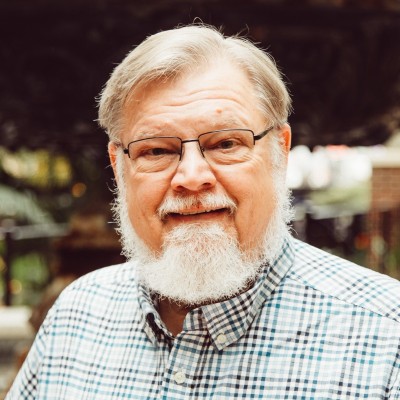
Independent podcasters often start with a strong idea, but sustaining a show can be difficult when they create alone and receive little feedback. Dr. Brad Miller, founder of PodIndy, helps creators build connection, belonging, and momentum through accessible podcast training and community. Based in Indianapolis, PodIndy grew from a local meetup into an event drawing podcasters from several states. It welcomes new and podcast-curious creators, as well as independent hosts covering subjects from local politics to Taekwondo. Brad explains that peer support, show reviews, and shared learning can help creators feel less isolated and stay motivated. His central message is that relationships and a sense of belonging can make podcasting more sustainable.
To stand out, a podcast needs a clear point of view and a format listeners can recognize. Brad illustrates this with CancerComedy.com, where humor, interviews, stories, and devotional reflections explore coping with cancer through hope and humor. He emphasizes that a lighthearted tone can coexist with serious, thoughtful work. Across his own shows, including Beyond Adversity and Daily Bible Refresh, new interests and life changes have inspired fresh directions. His experience shows how systems, purpose, and service can help creators keep publishing through challenges and avoid burnout. Rather than repeating the same approach, podcasters can adapt, find support, and reconnect with the people they hope to serve.
Brad also shares his AX process: take action, connect with a higher power and other people, think strategically, and serve. He says serving others can bring fulfillment and give creative work a stronger purpose. These ideas will be part of PodIndy on November 7, 2026, in Indianapolis, with sessions also streamed on YouTube. Featured speakers include Cliff Ravenscraft, Dave Jackson, John Lee Dumas, and AI educator Craig Van Slyke. The event focuses on practical podcast training, community, and helping independent creators grow their shows and impact. Whether you are launching a podcast or looking to sustain one, this discussion offers ideas for building connections, finding your format, and making the work worth it.
Want help keeping your own show consistent? My DFY Podcast team handles editing, show notes, publishing, and promotional content while you focus on the conversations. See podcast production plans ↗.
Quotes:
“Every podcast I’ve done, I’ve seen people get connected to something greater than themselves and have some fun doing it, and I love to see that happen.”
“The best way to make a personal connection still remains person to person, one to one in live environments.”
“Everybody has a choice in how they handle adversity. You can either kind of go down with it, or you can choose to pivot and get better.”
Contact Details:
- Take Your Podcast to the Next Level with PodINDY!
- Finding Laughter, Hope, and Strength Through Cancer: Explore Cancer and Comedy
- Connect with Dr. Brad Miller on LinkedIn and Discover New Insights, Ideas, and Opportunities!
- Ready for Fresh Inspiration and Meaningful Insights? Follow Dr. Brad Miller on Facebook
- Listen to Cancer and Comedy on Apple Podcasts
- Listen to Cancer and Comedy on Spotify
- Subscribe to Cancer and Comedy on YouTube for Uplifting Stories
Podcast: Play in new window | Download (Duration: 28:54 — 39.7MB) | Embed
Subscribe: Apple Podcasts | Spotify | Amazon Music | iHeartRadio | Podchaser | RSS
Transcript
Download transcript (.txt)Dr. Brad Miller founded the PodIndy.com live podcast training event to offer quality live and live stream podcast training that is impactful and accessible to independent podcasters looking to take their impact, influence, and income to the next level. It is now in its fourth year. You can find out about it at P O D I N D Y.com, and it's Doctor Brad Miller's vision of connecting podcasters with one another, so we can all benefit from one another. Doctor Brad Miller, great to see you again, glad to have you back on the program.
Robert Plank, what an honor and privilege to be a marketer of the day. Was privileged to be on with you a couple years ago. Great to be back with you. I'm here to serve your audience best way I can, my man.
Very nice, that's what it's all about, right? What's the saying? If you help everyone get what they want, then you'll get what you want. And so, as far as if if we're learning about you for the first time, we're just catching up. What's the elevator pitch? What are you all about?
I'm about connection. I'm about three words basically: connection, belonging, and life transformation. I actually I'm a former pastor, and so I was involved with life transformation. I actually got a doctoral degree in life transformation, so I love to see that happen from somebody from a bad place to another. So I had some of those life transformations myself, both in church life and religious life. But also, I'm a cancer survivor, so I went from being a grumpy old man trying to deal with cancer to being a happy or a fun grandpa. So I had some transformation that way in my cancer journey. So I created a podcast called CancerComedy.com. I also have a passion for podcasters because I actually grew up doing radio and all the way back to high school days, back in the 70s. I'm an old guy, and then I'd been podcasting since 2012. But every podcast I've done, Robert, I've seen people get connected to something greater than themselves and have some fun doing it, and I love to see that happen. So I have a heart for independent podcasters, especially if I can help them to belong to something greater than themselves. If I can develop some community in that, and then to see some life transformation. And one of the ways I do that is through a live and live stream event called PodIndy.com.
Beautiful, wonderful, and I think you're so right that there's something to the the good old days of radio, right? Talk radio when we just we tune into or Howard Stern or whoever and just like listen to them talk and and it's like for hours on ends and revisiting and getting to that point where you feel like you know someone that you've never even met, and then also with podcasting, like there is that tendency of you yourself to run out of content, right? If you talk for, say, it's a old school radio program, two hours a day, four hours a day, you run out of material. But then you bring in other people on, you have these amazing conversations and the witty banter. And so I'm curious about just what we can learn from you, especially like the the kids these days who maybe didn't grow up with radio, or maybe they radio is kind of something different now, right? There's like the Sirius XM and the podcasting, and so as far as these future attendees of PodIndy, like what's the usual starting point? Are they people that do they podcast or they podcast curious? What's the typical person that attends?
Yeah, well, we've been very fortunate. We started PodIndy. I'm in based in Indianapolis, so PodIndy stands for Podcast Independent, and also Indianapolis where we're based. But we started off initially with a meetup of local podcasters here, and we some some of us had been able to go to some major podcasting events, podcast, podcast movement, which are 1000 plus people, and they're far away places like Florida and New York City. And our people weren't able to afford to go or travel and take off work several days, things like this. So we just said, "Well, why don't we do something here locally? And so the initial feeling was to do like one day event, kind of a workshop, all day workshop. But we found out other people around. We drew people from two or three states then to come to this event who had similar ideas. These are basically independent podcasters, people who were either podcast curious, as you just said, or had their own individual podcasts. This is not basically your big corporate types, your Joe Rogans, anything like that. These are people who have a podcast about Taekwondo, or about divorce, or about local politics, or about Black history in our community, and other things of that nature. Very interesting things that people are involved with, rap music. We had one about that, but they come together and get a little training and a lot of fellowship and a lot of connection and see one another. So we started initially they meet up. We started to expand it out and make it a day long event, and we've had a lot of fun with it. But that's the that's the emphasis of it to get going to help the local people, basically new podcasters, get a little training and to learn from the board. People, myself, and some others who I've been able to fortunate bring in some some great high level trainers to come in and train. But people love the interaction one to another.
Oh yeah, and there's something unexplainable about that, isn't there? Just that you know, like if you if if you described baseball or kickball to someone that had never been in a baseball or kickball game, it's like what? Like there's a ball, it gets thrown around. It's like no, but if you if you became part of it, then it's really exciting. And so I can only imagine just being around these these huge names in the podcast space that you're friends with that you invited over. They can become you know part of the the magic. And so like with podcasts, there's all these stats and there's cliches and who knows where they come from? And they say things like, "Well, the average podcast episode only gets 37 downloads, or the average show only lasts six episodes. And how do we avoid another statistic? Like when you have that divorce podcast or that rap music podcast, like how do what do they learn at PodIndi that helps ensure success?
Part of the sustainability then has to do with relationships. Now, every podcaster I know is kind of has a passion for whatever their topic is. Like I mentioned, I have a cancer podcast, have a daily Bible podcast. Those are part of my passions. So you put that passion out there and you share that word. But the thing about podcasting is, most of the time, we're in our bedroom or our closet or an office space, and we're talking into a screen or a microphone, and we don't get a lot of feedback initially that way. If we get some, it's great. So that's one thing. So that's I believe where burnout can happen with people, as you mentioned. The many podcasts don't make it to their eighth or ninth episode because they don't get feedback, and so that's one thing. So, but they still have the passion for whatever their topic is. They want to get the word out, and many times they are, but they don't get the feedback. We at Pod Indy help people to get together with other independent-minded podcasters, like-minded podcasters, to support one another, listen to their shows, do a review, you know, hit the like, all that kind of stuff that that we do on their YouTube shows, and just have some fun together, you know, have some food together and fellowship together, and we can do that both in person and we also do online because when we do our online version of our conference, it is on YouTube Live, so we can have some interaction there on the chat, and so that's what we do as well. So we have a good, vibrant community of people who enjoy one another, and that helps to sustain stuff. People become a part of something for all kinds of reasons, or they have a motivation to do something initially for all kinds of reasons. They stay with something. This goes back to my church work and other things. They stay with something when they feel like they belong and something bigger than themselves, and almost always that means a personal connection. And the best way to make a personal connection still remains person to person, one to one in live environments. And the next best thing is live stream, where we actually you know, can see one another and have interaction.
Very cool. I can see many of the parallels to church going, right? Like you kind of you need to do it on a regular basis, not just once. The churches have the audio visual department. There's the one-on-one connection to keep coming back. There's the exploring different topics. There's the guest speakers. There's the just the unpredictability of it all, and you know something that that I think about sometimes is how some of some shows have kind of a shtick to them, right? Like there's like hot ones is like they eat spicy wings, or I've seen one where they hook someone up to a lie detector test, or like I have this this friend where when she when you're a guest on her show, she'll use social media and like call your friends on the phone ahead of time and try to get secrets about you. And so, have you ever thought about that? Or like, do you do you apply or do you tell people to have a like a shtick of sorts?
I think you have to have a point of view and you have to have a little bit of an attitude with that. So the the shtick, if you will, on my cancer and comedy podcast is I take two things that seem diametrically opposed in many ways: cancer and comedy. People go, "What? And there's nothing funny about cancer. Well, it turns out that there are some humorous episodes and some things that can happen to people, be it black humor or other things that can help lighten the load of something like cancer. So, so, so, for instance, every time I do a cancer and comedy podcast, I start off the show with a couple of bad dad jokes, and my co-host groans every time, and then I end the show with two other parts. I tell a more of a story type joke, then I also then I also have a devotional piece, so we generally have a joke, an interview, then a devotional piece or a joke and a and an inter and a devotional piece. So we interact those various parts of it, and you help me out with that, and done done from your podcasting service to help put all that kind of stuff together. But that. That's kind of the angle, I guess. I would say you need to have a point of view. You need to plant your flag somewhere and have a point of view. And if it's humorous, great. You know, I have a rubber chicken behind me here that I squeeze off sometimes because my granddaughter gave me a rubber chicken and just thought it was silly. So every once in a while, I get the rubber chicken out and just you know have some fun with that. I also like balloons and other things that I do too. It doesn't mean you're not taking the topic seriously. For instance, we take cancer very seriously in cancer comedy, and the coping we talk about coping with hope in humor. So that's what that's about. We kind of go to do the same thing with PodIndy.com. We like to have some fun together. We have a pizza party. We have some interaction. We also have some serious training, and some of the people we bring and help people to get the tools that they need. Like last year, we had a focus on AI, and this year a focus on taking your podcast, your business to the next level to improve. We've talked about making money. We talked about the business aspects, the serious aspects of it. But the serious aspects can have traction when you have interaction, so that's what we like to learn.
I like it, I love the soundbite too, and this idea that you can have fun but also be serious, right? The the fun can be five or 10% of it, and you think about like the the best doctors or hospitals or like you know we've all interacted with with some kind of medical physician one another, and the ones that are good communicators, they can kind of drop a joke or see the seriousness. But you know, like they've got their profession dialed in too.
Yeah, get they get to work. It's not just pure silliness. It is about get some work done with a with a attitude of gratitude or a lighter, a cheerful heart, which is what the Bible says actually in Proverbs, a cheerful heart is good medicine. So that's part of what we say in our cancer comedy podcast, and what we try to bring to hotindy.com is just an attitude of let's delight in one another, have some fun together, but also get some stuff done for the greater good. Because every podcast, whether it's you know just the hot ones, use as an example, you know, they have some lot of fun with that, and they're silly and fun. But you know, the host of that-I forget his name right now-has some really interesting interview points as well. And sometimes he gets some really interesting points out of the guest in the middle of them, you know, having a grocery milk or something for the highway. Because that's some serious work that gets done in the midst of a cheerful heart.
Okay, well, these are some important concepts that we should think through as we're planning out our podcast. And I just I think there's there's also something to be said that we've been mentioning about the idea of like the format or the structure that you can like evolve over time, like the rubber chicken. Or you and me both were really we're friends with Ray Edwards, who's such an awesome person. And I remember the early days of his podcast like motivated me to do podcasting. And he would have like, well, here's the spiritual foundations section, and he had like these you know these like five or 10 minute segments that kind of keep you engaged and entertained, right? Because if you're listening to one big long segment, it's boring. But if you're kind of switching gears, it just feels more like there's an intention and there's a speed to it. And and I'm curious about like what's you know like that's what got me excited about podcasting. But like you did the radio stuff ahead of time, and when it came time to like make that transition to podcast, because like radio for sure declined and maybe died a little bit. So when the the uptick of podcasting came, did you need any motivation, or was there a moment when you were like, "Oh, podcasting is fun, or was it just a natural transition?
Well, I had my moments where I just thought gave it up and things like this. I always found something new to motivate me, and I'll give you two quick stories about this. I started podcasting back in 2012, and my motivation then was that was when podcasting was in its relatively early years. But my motivation then was that my son, who was a junior in high school at the time, was the captain of his lacrosse team, and it just it was just a new team starting off, and so on. And I wanted to get involved with the team, and so I said, "This is something that I can do. I created a podcast, interviewed the players and coaches, kind of did a show around that. So it got me closer to my son, got to know the team, the coaches, and that was a lot of fun. Then I got motivated by some church work I was doing, so some things for my church and Bible studies and so on. I did some of that. So I got then, then I started thinking. Then started seeing people like you, Ray Edwards. I went to his event. I heard his podcast, kind of a magazine format, you know, a business idea. I like to call it magazine format, kind of a business segment. And then he has you know the spiritual foundations segment and his podcast, which I picked up on. One of the reasons I do that now is called the Ray and Rock podcast. I said, why can't I combine some of these new interests I'm having about the business world and how there's some crossover with the church world and things like that? So I created a podcast called Beyond Adversity, which was basically about business. People and any other people who had faced some adversity, business-wise, health-wise, and they found a way to get through it to navigate it. Because I've done this work in my ministry on overcoming adversity, which is basically what transformational leadership is. You try to get from one state that's not so good to another state, either individually or as a group, that is productive, and I saw some areas of that. So I created that podcast. I was getting kind of burned out on that, and I and I started going to some conferences. And about that time, also, I was about ready to give it up. Here's what happened, Robert. I was about ready to give it up when I when COVID hit because I was running on energy and steam, and COVID hit, and and the bishop of my church, which is kind of over my state of my denomination, called me up. I knew him a little bit because he and I had gone to school together. Said, "Hey, I understand you do a podcast now that all these churches are not able to meet in person. Tell me about podcasts. So I started helping churches podcast. We created a podcast, which I still do with with my bishop. I do I produce his podcast, and so that got me involved with that kind of thing. So I can start going down that little bit after a few years. Still do that, but then I got cancer, and they gave me a new motivation to do cancer podcast. So I've been doing that for about three years, 150 episodes, and I've been motivated to that. So one day I got motivated. I heard somebody say, "You know, if you do, if you have a system, you can do a daily podcast. And I thought, "Well, one of the things I'll do personally, I was having daily devotional time. So I basically started recording those, and that became the daily Bible refresh, which I now have over 1300 episodes, and you've helped me keep by the systems that you help me do help keep that a daily podcast@voiceofgodaily.com, and just get involved with people like you. Help me see the need to serve independent podcasters. Some of the corporate people got people serving them, so that led me to PodIndy and some of the other things. And I've just kind of so every time I've had a bit of a dip, I like to call it a God thing. Sometimes there's something new opportunity comes, and I like to take advantage of it. And a lot of that, Robert, has been built through relationship building that I did in church work, that I've done in the podcasting world, the business world, my local community. I'm involved with some podcasting efforts in for the tourism board here locally, and so all these things, and it's all been a joy overall. Every time I've had a bit of dip, new opportunity has come.
Yes, what a great message that you can turn into a bad into a good any time, and that what what you see as maybe like a collapse is is an upending, right? You think about.com bubble bursting, great recession, COVID seem to get hit with something every 10 years, and it in the as you're going through it, it seems really bad. But in hindsight, it kind of like it pushed you into something new, and maybe even in the long term, something better. And so you're saying that, and there's all these really great ideas here, right? It's like that. There's there's something to be said about combining the ideas that don't belong, and then solving the big problems that maybe need consistent revisiting, like coming figuring out the adversity, the resilience. But then you hear all these stories and perspectives, and if we're if we're finding ourselves frustrated or demotivated because we say, "Well, I can't figure out the equipment. If can't find the time to do all this recording, whatever the problem is, it seems like the way through is your purpose. And if your purpose is connected to helping people, then that's like the best purpose to have, and that will get you through all these difficult times.
Well, basically, Robert, every person, every person goes through adversity. They either go through a health adversity, they have a financial adversity, something like COVID hits, they have a divorce, they have depression, they you know they have debt, grief. Everybody has adversity, so everybody has a choice in how they handle that. You can either kind of go down with it and just go down the doom scroll as people do with too much, you know, you doom, or you can choose then to make a decision to pivot and get better. However, you do have to change. You cannot keep doing things the same way. You do have to change and to lean into some different thing. What I'm finding, Robert, see what you think, is people sometimes say, "Yeah, I've gone through this doomed time, and I don't really want to give up on life, but I do need some direction and some coaching about how to move forward in this. Like, if you want to do a podcast, there are certain things that you kind of need to do. You know, both there's some technical pieces and other pieces to keep you get you through that eight episode barrier, and that's where I come in. That's where people like you, with your service done for you podcasting, come into play to help people to sustain and get through those things with podcasting. To do the same thing with the cancer podcast, which is with those people who are down and out with cancer, to give them a sense, a guide. I'm a coach, a cancer coping coach as well, help them to have. Guide to we like to call it hope with hope and humor. Hope is the purpose that you're going for. Humor is the tone of how you do it with, but you've got to decide to do it. And so we're here to help instead of let people slide down that spiral, help them break out of and go go go.
All right, so there's definitely the. It's important to ask for help, and and you can't always solve it alone. Whether it's your spiritual crisis or the crisis of not having a podcast and needing needing that extra help, and so sometimes a podcast says something that I know will stick with me for years, and I think that was one of those things that when when bad things happen, like you have a choice: you can go down with the ship, or you can go in the other direction, absolutely, and and especially with these people who either they don't have a podcast or their podcast could be better, and they they they want to and they should attend PodIndy.com because you kind of owe it to yourself to be at your best. That way, you can help people as much as you can. And so, as we're having this conversation here with Dr. Brad about podcasting and PodIndy and cancer and comedy and all the rest in these final minutes of our conversation, do you think there might be a missing question that I should be asking you? I just don't know what to ask you.
Well, I think the missing question is, you know, what's your gut telling you? In my sense, my gut tells me to serve. I have a process that I that I use, that a framework that I use called the AX process. It start the A stands for action, the C starts with connection to a higher power and to other people. The T is to think strategically, and the S is to serve. Ultimately, your and then you commit to it by what I call the pact, which is making a promise to do it. But really, it's ultimately about that service piece, which is if you love other people enough to serve them, then you are going to be fulfilled yourself. And so that's what I like to leave with people: is a sense of that, yeah, you got to take action, get going, but ultimately, if you can find somebody to serve, that is going to fulfill you and your purpose.
Ooh, I like that. The it's paradoxical, here's the yin and the yang, and they on the small scale they say things like, "Well, if you are nervous about giving a presentation, you move the focus from yourself to other people. If you're at a party and you don't know anyone, well, then you you don't think about how shut in you feel. You think about the people that you meet and the questions that you'll ask, and so I and then you expand that to that bigger scope in life and those goals that you want to accomplish. I think it's a very healthy habit to apply that as well and say, well, it's not about you; it's about the people that you want to help, and then it kind of it doesn't solve all the problems, but it sure gets you into action a lot better than being stuck in your head, as they say. So you give it us so so many cool pieces of advice. What are some next tips here? How do we find out more about you?
Well, one of the ways you can find out more about me is by connecting up with the event, you'll get to know me personally as well as some other really cool people. That's at podindy.com, and this actual event is happening november 7, 2026. It's in Indianapolis. The live event is, and we are live streaming everything on YouTube. It's from nine a.m. to 4p.m. Eastern time, and it's only $37 for the live event, $27 for the live stream event, and people and you'll get connected up with me personally because we have a small group, usually around 50 or so people, and also you can get connected up with some of the great leaders that we have. Cliff Ravenscraft is called the podcast Answer Man. He is going to be teaching about taking your life to the next level. Dave Jackson from the School of Podcasting will be with us, and he'll be talking about how to form a podcast that makes an impact. We've got John Lee Dumas from Entrepreneurs on Fire is making a video presentation about taking your life to helping it to ignite, as he says, to be on fire, and we've got a presentation from Craig Van Slyke, who is who is from the podcast called AI Goes to College. He's a professor of AI at Louisiana Tech University. He'll be with us to give us some of the latest AI tools. Several other people are going to be give great presentations, and everybody there generally gets a point to share a moment or two about what they are working on. So everybody interacts, even those online will have the opportunity to interact with their group. So when people take advantage of that, and one of the people is going to be with us making a video presentation is going to be one Robert Plank from Done for You podcasting. So we're looking for that, and I would say one more thing. Hey, if you're listening to this and you're part of Robert Plank's world, just you go to potindy.com and put in the code five off numeral five OFF, and you'll get $5 off because we want to make a personal connection with you and serve you. Because our values are basically to make this event affect. Impactful, affordable, and relevant to you.
Very cool, that's a wonderful mission that you have to help these people get past all the the minor issues because because they are minor issues, right? And there's all kinds of things that we deal with, self doubt, etc. And to be in that group, whether it's live or live streaming, and to see what is possible and to get that excitement, I mean that's it's like going to church, right? Except for you're going to a podcasting church, and in Whiteland, Indiana, over there on 309 East Main Street, Heaven Earth Podcast Studio, and you go to podindy.com, you click the register here button, you register, get your tickets, you put in that code five off to get $5 off, and you can have such a blast with these people that you mentioned, right? Cliff Ravenscraft, Dave Jackson, Dr. Craig Van Slyke, and John Lee Dumas remotely, so that way you can just finally get your your mindset right and get these beliefs of high performers and the internal transformation that I know that you are all about 110,000% Doctor Brad Miller. So, podindy.com and november 7 is that event. And as we're winding down, wrapping up here, it's time for the scary part of the podcast where I try to stump you. I try to put you on the spot by asking you about a fun or interesting quote or lesson that has served you, and you're a you're a religious speaker, you're a wise man. I know you're full of quotes or lessons. So, what comes to mind right now as far as a fun or interesting quote or lesson for us?
I'll give you two brief ones, one's a scripture from Proverbs 17. It just says, "A cheerful heart is good medicine, but the dried up bones will blow you away. So that's the what we talked about earlier about you can dry up and blow away, or you can have a cheerful heart, and that's about attitude. And so I have tried to have that attitude. I also want to give you one from Cliff Ravenscraft, who's our keynote speaker at PodIndy.com. He said to me a few years ago when I was in a mastermind with him, and he's shared again here recently with me when I was on his podcast. He says, "I don't need easy. I just need worth it. I don't need easy. I just need worth it. And I love that because life isn't easy. We all know that, but we don't want to waste our time. We don't want to feel like we're going down a spiral. We want to make sure it's worth it. That goes to purpose, and so I can guarantee, folks, if you connect it with me at podity.com, we're going to work on helping you to know that you have methodologies and and people on your side to help you get through the tough times that are not easy, but it will be so worth it. Two things: cheerful heart is good medicine. It is not easy, but it's worth it.
Inspiring. It's time to get to it. Get to that work that is worth it in the end. So P O D I N D Y.com, Podndy.com. Bring your laptop. It's an interactive workshop, keynote speaker Cliff Ravenscraft will give presentations. There'll be Q and A, and even if you can't travel to that live event, the sessions will be live streamed and recorded, and you'll have so much fun by meeting Dr. Brad Miller in person and getting the help you need with your podcast. PodIndy.com is the place to go. And thank you, Mr. Dr. Brad Miller, for another successful conversation about podcasting. I'm so glad we did this.
My pleasure, Robert.