Published
Read Maddi Clarke’s bio and speaker profile →
View in Podcast Library: stories, quotes, books, and resources in one place.
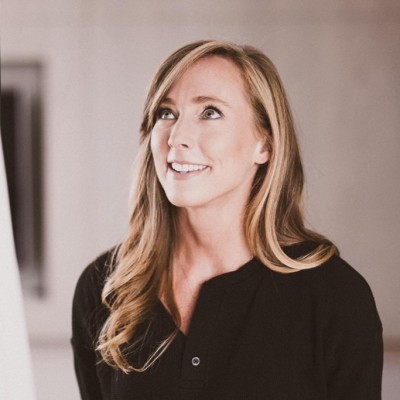
Branded content has to fit the platforms where audiences actually watch, and social media demands a different approach than traditional television advertising. In this episode, Maddi Clarke, founder and executive producer of Los Angeles-based Yada Yada Studio, explains how her team creates commercials and creative assets for paid digital media. Working with brands and agencies across categories from American Express and Mastercard to Gap and Lululemon, Yada Yada helps turn marketing goals into social-first video and photo production. Clarke’s career began as a production assistant and truck driver in New York City before taking her through reality TV, commercial production, freelance producing, and agency producing. Her background in finance and marketing helped her connect creative ideas with audience strategy, budgets, and the work required to bring a campaign to life. After seeing media investment shift from broadcast toward mobile and paid social, she founded Yada Yada in April 2024 to meet the need for production built specifically for digital platforms.
Maddi explains why social campaigns call for platform-aware creativity including the right visual format, hook, and audience fit instead of simply repurposing a television spot. She describes how brand strategy, creative development, and production come together, from understanding where an audience spends time to shaping an idea around the available budget. The process can mean scaling back ambitious concepts while preserving the campaign’s central goal. Maddi also shares the entrepreneurial challenge of balancing client work with consistent sales activity amid the feast-or-famine cycle of production. After becoming deeply immersed in busy projects and letting business development slip, she learned to protect time for sales and build a dependable bench of freelance talent. These practices help the studio manage growth, adapt to changing workloads, and keep projects moving while serving clients.
Team-building is another central theme, with Maddi drawing on trusted relationships and recommendations developed throughout her career. She looks for people who are hardworking, adaptable, collaborative, and open to constructive questions, while inviting them to improve the studio’s systems. Using freelance projects to assess fit gives both sides a chance to learn how they work together before making a longer-term commitment. Maddi defines Yada Yada’s promise through three pillars: speed, quality, and trust, which the team strives to deliver together rather than choosing only two. She connects that consistency to strong client relationships, noting that recurring clients account for about 90% of the studio’s current business. For agency creatives, producers, and brands seeking social video or photo production, this episode offers practical insights on building campaigns and teams that perform, and a simple reminder from Maddi: ask, because the worst answer may be no.
Quotes:
“Our job is to basically react and respond to that and fix it before somebody else finds out who’s gonna get mad. So that’s my whole job: putting out fires.”
“Ninety percent of our business now is recurring business from clients who had a great experience and they come back.”
“Why would you hire a production company that is making TV spots when you really need a production company who understands social?”
Contact Details:
- Bring your Brand’s Boldest Ideas to Life with Yada Yada Studio
- Discover Maddi Clarke’s Creative Work and Bring your Brand’s Story to Life
- Connect with Maddi Clarke on LinkedIn for Creative Insights and Video Production Updates
- Follow Maddi Clarke on Instagram for Creative Inspiration
Podcast: Play in new window | Download (Duration: 27:36 — 37.9MB) | Embed
Subscribe: Apple Podcasts | Spotify | Amazon Music | iHeartRadio | Podchaser | RSS
Transcript
Download transcript (.txt)Maddi Clarke is here, founder and executive producer of Yada Yada. Studio. They are a full-service creative production studio in Los Angeles, focused on branded content for paid digital media. So we're here to talk about some of this branded content and what goes along with it, and what happens behind the scenes, and the various problems that Miss Maddi Clark solves and helps these businesses to get some amazing reach. So, Miss Maddi Clark, how are you?
Hey, Robert. Thanks so much for having me, I'm, I'm doing great. Thanks, how are you?
I'm super dandy. It's always good to just get new ideas and hear about how the problems are solved, both literally and abstractly. And so, I'm curious about the people that you help and what you do to be unique and stand out. So, what's the latest? What has you so excited?
Yeah, totally. So, we are working with a bunch of different clients right now, either through various ad agencies or direct to those clients working with in-house creatives across a number of different spectrums. You know we are absolutely generalists when it comes to that side of things. Our clients range from folks like American Express and Mastercard down to Gap and Lululemon with pickleball companies and outdoor wear and sneaker brands and everything else in between, we've been around since April 2024, so about two and a half years now of working in the trenches. And yeah, we effectively make commercials, but for social media specifically, and the like, yeah, a very like the roundabout way of how we kind of got here is, I used to work as a like came up as a production assistant. I started driving trucks in New York City, and you know, taking out the trash and getting people coffee, and that was kind of my in into this industry of production. I worked in reality TV, and then eventually found my way over to the commercial space. And when I was working on commercials, it was a very different environment, and it kind of fused. Like I was a major, I majored in finance and marketing in school, and so it kind of like all came back in that sense, and it kind of allowed me to put on the like creative marketer hat when I was on set for for commercials, which I loved. So I kind of worked my way up through there. Started freelance producing eventually after a couple years of just kind of working my way up through the ranks. And then once I was on the producing side for production companies, that's when ad agencies started to come knocking and asking like, "Oh, well, do you ever agency produce? And I, of course did what anyone would do, and I said yes, of course I do that all the time. And then I immediately learned what an agency producer did. So that was man about 10 years ago now that I started agency producing, and I loved it. I loved being exposed to the creative from the start, and and versus just like having to execute on it, and having the opportunity to sit in the room, truly like where it happens, right? And it's it's receiving like a brand comes to us and they're like, how are we gonna sell these headphones? We really want to sell them to a younger like Gen Z audience, mostly females, you know, and we want to sell 30% more than we did last year, and so that's a problem that a brand would come to an agency with. And then I get to sit in with the strict like the strategy team, and they're understanding that okay, well, where are Gen Z females showing up on whether that's online or what channels are they watching on TV? Where are they walking? Where do they live? Understanding their true habits, and then that is all translated into creative. And then the creative team will come in and be like, "Okay, with these insights that our strategy team has found, we know Gen Z like females are really on their phone, and especially those who are listening to music, they're on the subway in New York City. So let's do a big push for New York City, like Gen Z females, let's come up with a few campaign ideas that work in that well in that market, and then that's when I come in and it's like, all right, cool. The client has X dollars to to create this spot. Your ideas are awesome. How can we pare that back a little bit and make it work within the budget that we have, and then kind of go through and and make that whole whole spot. So seeing it from like seed until like final like flower is is a really beautiful process to be a part of, and it feels like you're actually making something, which is such a pleasure being in this industry.
And as you were saying that a tree growing was what was happening in my imagination, so I think we're onto something here, right? Like there's the different stages where there's like in my mind it was like there's like a seed and a plant and a sapling and eventually it's a tree and then it bears fruit. But it's like there is the the logical path to solve this problem and like asking different questions on the way from figuring out like okay the the people and where do they hang out. And even just like the kind of mental games you play on yourself of having going to extremes and then dialing back, it's all just interesting solving. Just like you know, we take it for granted, right? When even something as simple as a as simple as a commercial involving-I don't even know how many different people, right? How many long hours and all these just disasters happening? Like it's it's a miracle every time. Like any movie that comes out, right? It's it's a miracle that literally one movie gets made because of all the tiny decisions and steps that go into going from start to finish. But you say like you've you've got the experience and you had the the mentors and you can kind of put that positive pressure and and high demand to work and get to some end result, get to some solutions.
Exactly, exactly. That's perfectly perfectly explained. Every, every time that we finish a project, I'm like, yeah, that was a miracle. That's exactly what that was. And off to the next one. Exactly, exactly. Or doing three at the same time. It depends on on the day. Oh boy! But yeah, so that's that's pretty much like you know what what we primarily focus on now with yada yada is so when I was just taking it back a little bit further when I was at on the agency side, I was the executive producer overseeing content production for mostly large scale commercials. You know things you would see like Super Bowl spots or like big commercials that you would see if you're watching like sports games or something like this-all TV, right? And and what kept happening is like, I mean, another massive factor in marketing is is media, and and like I'm sure some of the your listeners are acutely aware of of the nuances of media purchasing, and that is in in layman terms like where when you make a commercial, where is it going to show up? So it doesn't just magically appear on like Fox like prime time for an NFL game. Like that is a very strategic media placement that costs brands a lot of money to purchase, and so over the years, you can kind of follow the trends of media purchases, like with the the rise of broadcast, and then you have streaming that's introduced. But what kept happening, and as you kind of really double click into those media trends, is folks are spending money here on their iPhone. It's it's social because that's where the people who are trying to reach, just in our example, like our Gen Z females, they're on their phones, and so they wouldn't make a commercial that's made for like an NFL broadcast spot. Like it doesn't make sense. So why would you hire a production company that is making TV spots when you really need a production company who understands social and understands what works here visually, like like strategically, and and you need sometimes just a different perspective, and so I was watching these media trends start to flow from broadcast television into more of a paid social media, and while I'm making broadcast spots, and I'm like, holy, like I don't have a partner who can execute on creative that is made for social. I got to find someone. So I looked and I looked and I looked, and we kept trying to like basically put a square peg in a round hole or you know whatever that expression is. And and and I I was done with it. And I'm like I I think I can do this better myself. So I ended up leaving my job at the agency, and that's when I really started yada yada, so be a production company that works in service of of advertisements for social spots, and and so that's kind of how that all came together. And like I said, we launched in April 2024, so it's been two and a half years.
Whoa, it's very much needed, and you figured a lot out. And more things that we take for granted, right? Like when a commercial is on TV versus if it's you know phone size and all those all these different you know things. So many things you do differently, I can imagine, right? With like the the hook and the the sizing and it's like the the the targeting capabilities now are are so amazing and crazy, you can get so dialed in. But that's the also the the downside to it, right? That you actually have to do the work of like getting all those ads created and figuring it all out. And so I'm curious about the mistakes because we've said you know it's not always easy, and it just it seems like you've been going from like stretching yourself in one way or another. So I'm curious, like, how have you grown as a person, or what kind of failures have you bursted through?
Yeah, totally. So that's a great question, and I and I think like I said this before, Robert, but like, damn, that much time you got because I have a lot of things that I'm working through every day. But but I mean, ultimately, it's it. There's so many different like ways that I can approach this, and I think if you, I think about it as like an organization. Like, yes, I founded this company. We have five employees who all are incredible human beings, and they're amazing at their job. There are times where it feels like I'm failing my employees because I'm not bringing in enough like. Work or enough clients to keep everybody busy, or to make sure that they're feeling good, or I'm bringing in too many clients, and and everyone feels overwhelmed. And I think that any entrepreneur, any like you know, anyone can relate to this feeling of of the roller coaster, freelancer, whatever it is, right? And it's like you have this every every day. You're at a different point in the ride, and like you just have this like really horrific like situation where you're like oh my gosh like I like what have I done like we're we're so busy right now I don't know what to do and then three weeks later you're like oh my god what have I done we have no work like what what why did I do this and so you can kind of like catch that ride and and I think that like the one of the mistakes that like I have made initially when I really started the the organization was you know I was so in the weeds with everything and so on those really high highs when we're like super busy like I needed to be in doing the work and because we needed an extra set of hands and so then we get that second part of the ride where like okay everyone's gotten off, and now I'm like, oh shit, I wasn't, I wasn't focusing on sales, so now I'm, I'm at this low point, and and I have to like go all in on that, and so now what I've really learned over the last like year, six months to a year, is like, how do I remain consistent with my sales efforts, and while also doing the work, and is that hiring more people, which yes was the answer, is it relying on a bench of freelance talent that we've worked really hard to to build out and and find folks that we trust and love and who care just like we do, and and so that's kind of been like our saving grace over the past like year to really find consistency and to find growth, as me remaining in this like always on sales like mode and trying to grow the business in that capacity. So that's definitely like the biggest like lesson that I've taken as an entrepreneur from from this. Yeah, I don't know. It's it's interesting to ask that like if when it comes to mistakes that we've made as like a company, like there, I'm sure there's a million because I think like life is just a series of different mistakes along the way, right? But yeah, our team has this beautiful can-do attitude, and and again, that's all like strategic hiring, working with people who I I love and trust. But like we know we're going to solve everything. Like our production itself is is like it's a miracle. Like everything that you're setting yourself up in an like a like hot like keg environment where anything can go wrong and will go wrong. And our job is to basically react and respond to that and and fix it before somebody else finds out who's gonna get mad. So that's my whole job is putting out fires. Like so, it's just it's always one thing after the other, and I think it's just like you know, not dwelling too much on on those like negatives, and just like trying so like aggressively to focus on like oh well that's actually a really great solution like damn we just did that okay cool and so so yeah so like as as far as the company goes like project wise. There's no like big mistake that stands out. It's it's truthfully just like like me as an organization trying to to help manage that growth as an entrepreneur.
Oh yeah, and there's a lot to that, right? The kind of like the the risk tolerance of the chaos, and you think about rocket ship. The even just like the the size of it, the weight of it, it's like unimaginable. And then the amount of force you need to push this like many many 1000s of tons thing off the planet. It's like it's insane, right? That like the like the exhaust pipes need to be like two miles long. And if you think about like how big like one explosion, and it's just like this explosion just coming out constantly, and the way you describe it, it it seems like that, right? Just kind of, but what's the alternative, right? Staying stagnant-that's a-that's not a business. That's something that just dies, and so it's like you're. But yeah, it seems like there's there's like the lag time with sales and with growth, and so it's like there's the feast and famine, and it's like if you're not, if you don't have the self awareness that you're talking about, then you do have the like, well, I'm doing all this work on sales and nothing's coming in, and then I stopped, and then the sales came in, and now I'm too busy, and then the the pipeline's always just kind of too big one end or the other, and it's just like, yeah, it can it can destroy you if you let it, but it seems like you've you figure some of this out, and you're always evolving as a person.
Yeah, yeah, yeah. Always trying at least. Yeah, and and leaning on like everybody in my circle to help and to listen to me complain along the way, that's, that's important.
Yeah, but but you have but it's like there there's complaining and there's like being a like a dreadful pessimist. And so, Sam, you mentioned in here a little bit that like the the strategic hiring and finding the good circle of people has helped you so so much. And like, how do you sniff someone like that out on an interview? Because I can imagine if the if the bad people outnumber the good, then that's a toxic work environment. So you don't want to get any of that in. So. Like, how do you like hire the right people, and how do you get them to stay? How do you manage your people?
Yeah, yeah, that's that's an awesome question that I love because I love any opportunity to talk about the badass team that I have the pleasure of working with, and and I think that like what is so beautiful about production as an industry is like we there are that's an army of freelancers, right? And and like, there's no like full time lighting assistant to be like you know like they they exist, but it's a rarity, right? And and I think that with the folks that I've worked with that are on my team now, I've had the opportunity of working with them over the past 15 years, whether that's been one occasion or we did several different projects together, and it's all through recommendations. And so, when I was coming up as a literally as a truck driver, like the next job that I got on, it would be like because one of my truck driver friends was like, "Oh, yo, you guys, I'm not available for that one. I'm on a different job, but you guys should hire Maddi. She's a great driver and really trustworthy. And then I would come through, and then I would meet more people there, and so you start building your network, and then within that network, and on a set, like some of our our production sets are you know 150 people, and but you sniff out your your your tribe, and it's like who's a person that I'm going to laugh with, but I also know that will like be right with me in battle when it's like, all right, cool, we got to go pick up all this trash, and we got to get out of here quickly, and so like that's it. You find those people and and curate them over the course of your career as a freelancer. And and fortunately, I was a freelancer for 10 years before all of this, right? And so my team comes from a really like diverse representation of our industry. So my like full time like like production manager, she is like she trained me when I was coming up, and and like taught me all of the inner ropes of production. And then one of my like my my other team members lives here in Los Angeles, and I happened to work on a project with them, and is immediately I knew like I never wanted them to like leave my side, and and just like have been kind of recruiting them since the moment I met them, without even having a business. Another person that I work with, we used to work together at an agency, and she knew nothing about production when I brought her on. But I was like, "You're a hard worker. You make me laugh. Clients love you. I love you. The rest of the team is going to love you, and I know you can learn anything that I throw at you. And and she's our jack of all traits and can kind of help to pull together some of those like higher level esoteric agency briefs and like help interpret them for our production brains. So it's it's all of this like these different personalities and just knowing that like you're gonna work really hard. Quite frankly, you you give a shit, which is really important. And and and like like I would follow you in some more, and I know that. And like I like I trust your decision making 150% And if I don't, I know you're not going to get offended or be upset if I question that. And and that is like so beautiful. And I think it's like finding those people is it's so important to emulate the type of person that you're looking to bring onto your team, and and for me as like leadership, or you know, it's I'm approachable, and and I want my team to challenge me. And every rule that I set, like we are very organized, we are a meticulous organization. If you ask me right now, like can you pull up the budget from 2024 on that project? Like I could find it for you in less than 10 seconds, like it within like two clicks, and and I have all these systems that we've built, we've curated, whatever. Every person who comes to our team, I say, poke around. If you find anything that you think you can do better, let's hear it, and then let's change it all up again. Like we want to innovate, we want to create this environment where people feel seen and trusted and heard because if that happens internally, then imagine how that like that ripple effect down to your clients, down to your crew. Like we're hiring these these teams for one day sometimes, and they come on our sets and they're like, "Damn, there's nothing like a yada yada set. And it's because we we leave with love, we lead with trust, we take care of our teams. We want to make sure that they're seen and heard and felt. It's the same for our clients. It's the same for the internal team, and it's just really finding those people who you feel like, all right, I can trust you. And um, and the other side of this is like, we do work in a freelance capacity so frequently, so it's like you have the opportunity to kind of trial people out, which I think is really beautiful. And I think every industry should take a little like sniff from. If you hire somebody, they come in those first 90 days, and maybe they suck after, and you're like, "Shit, okay, well, I gotta run to this person, whatever. Like, hire them as a contractor, like you know, or as a freelance freelancer for a bit, and test out the waters because you might not find somebody who's like a great fit right away. And we have that that flexibility in our industry, which I, I really appreciate.
Oh yeah, and it makes a lot of sense to with the the speed of things these days, and then you can just kind of throw them in the deep end, so to speak, and see if they have what it takes with your guidance, of course. But someone can answer questions like all day long, but can they actually deliver? And so you're just illustrating to. How important it is to know what your principles and values are of yourself, and then that way you know what to look for in others, and have curiosity and learning. That way, like you said, there's that ripple effect, right? You're improving and you're helping others, and like I don't know anything about movies or TV, except for like when you see a Christopher Nolan movie, it's like oh, he's using you know Leo DiCaprio again. He's using Joseph Michael Caine again, Joseph Gordon-Levitt. Like these these filmmakers use like reuse the same people, or even like with TV shows, I notice the credits because I'm just like okay, if if someone is if if this showrunner that I like makes some other TV show, I'll watch that, and then you see like the same, you know, directors, producers, writers in the credits of that other show because they do what you say, right? They have these lifelong, decades-long friends that delivered for them in this project, and then they're available for the next. And so it's just it's a crazy world out there, but with these kind of rules, so to speak, that you've figured out there's a way to navigate it and deliver some excellent work and be a good person and help others in so many ways. And in the final few minutes of our conversation, Miss Maddi Clarke, I'm curious about what you think I might not be asking you. So, what do you think is the missing question in our conversation that I should be asking you? I just don't know what to ask you.
That's a great question. That is a great question. I think, like, when I think about what yada yada like wants to be known as from an external perspective, is like there are three things, and it's speed, it's it's quality, and it's trust. And these are three things. You know, you have this like you can get fast, good, and cheap. Pick two is is often like what's said in our industry. Like we think about our pillars as like seed, quality, interest, and and it's not pick two. It's it's going to be all three with when you when you sign up for our team. And I think that like what the a question is like, how do you how do you do that? How do you continuously show up with speed, quality, and trust? And and also like, why put the effort in? And I think the why is easy, and that's because 90% of our business now is recurring business from clients who had a great experience and they come back. It's because we deliver on all three of those things, and it really all boils down to the team that we have in place, who I personally know can deliver quickly, who I trust, and and their output is going to be great. And I I think just like finding those three pillars was something that I didn't really try to do. It just kind of organically developed, and then in speaking with like one of my my mentors, he was just like, "Oh yeah, it's speed quality trust. So like to challenge everybody out there when this is like either a personal like challenge, or if you are a business owner, or if you work at an organization, what are the things that you are are known for as as a human being, as as a company, as what you represent in your work. What are those pillars, and and how do you align yourself with all three of those pillars at every step of the way, and and remain like authentic to yourself and congruent with those pillars, and you you will find success if you are true to yourself, and if you are true to the things that that make you excellent, and and so yeah, I think like what are what defines our excellence as an organization, and it is our speed, our quality, and our trust. I think that's the question.
That's so helpful, speed, quality, and trust, and it's all about relationships, isn't it? The relationship with your team and your clients, and being in it for the long haul, and it might be an uphill climb to develop the muscle and getting to the point where you can look up the budget in 10 seconds. But once you have those habits in place, then you can just now you're really cranking, right? And like the the normal, so to speak, is to be at that breakneck fast-paced speed, and then that's a really wonderful place to be. We can learn a lot from you as far as just getting the discipline factor figured out. And so, if someone says, "I'm really impressed by what Miss Maddi Clarke is doing, has to say, and I want to find out more about her company and what those solutions are, what kind of people are you looking for, and what's the solution for them?
Yeah, totally. So, like I briefly alluded to, we work directly with ad agencies or with directly with brands. When we're working with ad agencies, you're either a creative director who knows about us, or somebody on the creative team, or an agency producer. You've got a project already in mind, and you're looking to kind of execute that. Reach out to us. We'll share a couple director options, and then we'll put together a budget and a creative treatment for you. Hopefully, you like the work, and we can work together there. If you're a brand who maybe doesn't have an agency yet, or you have some work that your agency isn't necessarily fulfilling, it's. Internal work, and if you're a brand creative or an in-house producer at the brand, you want to make something. You want to make something for your social channels. You want to make something for anywhere that's video or photos or anything in that capacity. Get in touch with us, and we'll help you find a solution, and we'll help you just you know price it out in a way that makes sense, and we'll also help elevate it. So it's going to be better than if you did it yourself, promise that.
Very exciting because you yeah you've had the experience. You've been around the block. You work for Lululemon and Mastercard, so you you've seen a few things. And so that's YadaYada.Studio to get that conversation started. If you're looking for an agency the way that Maddi Clarke described, and you go there, get yourself educated, and go to the live chat. Get a call scheduled, and just talk about some possibilities. They are a production company and creative studio representing creators globally. They were born through the observations that marketing budgets are decreasing, and that social and digital is the future of video, and that media trends are changing. So yada yada dot studio is the place to go to get in contact. And now, in our final few seconds here, Miss Maddi Clarke, it's time for the scary part of the podcast, where I try to stump you. I try to put you on the spot by asking you about a fun or interesting quote or lesson that has served you. So, what comes to mind as far as a fun or interesting quote or lesson?
Amazing it is. This is an easy one that I carry with me every day. One of my friends from New York taught me this many years ago. If you don't ask, you shall never receive. The worst they'll ever say is no.
So if you don't ask, you don't get. You never receive, and the worst they can say is no. So go ahead and ask that question, take the risk, make that contact, and the very first step you should take right now is go to yada yada dot studio. That's Y A D A Y A D A.Studio. Start that conversation, and you'll be on your way, Miss Maddi Clarke. It's been such an education from you about mindset and business and what's possible. So thanks for being here. Thanks for being you. I'm very grateful that we had this conversation.
I appreciate you so much, Robert. Thank you so much for having me on.