Media Appearances / Growth Architects
Federico Spiezia tried the frequent personal posts he saw working for another entrepreneur on Instagram and LinkedIn. He admired what she was doing, but the routine didn't suit him. He wanted a way to promote his work that he could keep doing.
I recognized the problem. I enjoyed LinkedIn and podcast conversations; Instagram was harder for me to figure out. A book still needed regular promotion, so I had to choose where I could contribute and make time for it each week.

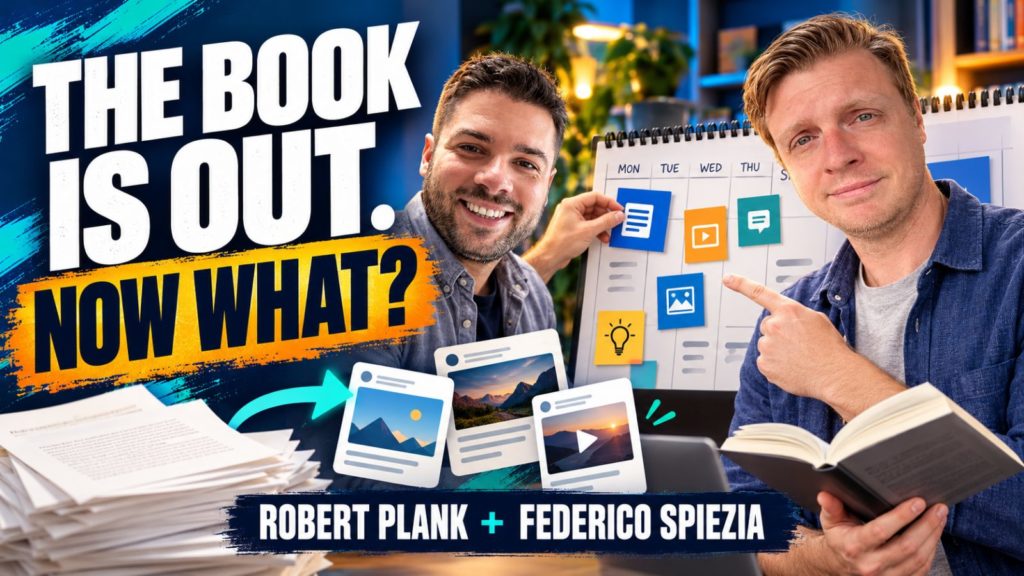
When Federico Spiezia interviewed me on Growth Architects about Next Level Self, I was promoting the book right there in the conversation. He asked what an author should do after publication. My answer was plain: 'you need to decide on what you'll do every week.'
Federico explains why he stopped copying another person's social posting routine. Watch our Growth Architects conversation for that decision and the book page I recommend before an interview. Federico's channel has the series; Sparkr has details of his work.
Choose a Weekly Marketing Routine You Can Maintain
Federico described an entrepreneur who had built a strong personal brand through frequent, personal posts on Instagram and LinkedIn. He admired her approach and tried it himself, but it didn't suit him. He wanted to choose a channel where he could do good work and keep showing up.
That's worth considering before you copy someone else's book promotion schedule. If making one social post takes your whole afternoon, it's going to be hard to keep that up while running your business. A channel can work well for another author and still be a poor choice for your weekly routine.
At the time of our conversation, I enjoyed LinkedIn and couldn't quite figure out Instagram. Podcast conversations suited me, too. I could answer questions, discuss the ideas behind Next Level Self, and meet someone in the process. Those preferences gave me a place to put my effort instead of trying to maintain a presence everywhere.
Personal fit doesn't mean everything should feel comfortable immediately. I had to learn to talk to strangers and get beyond hiding behind a computer screen. You can be nervous, inexperienced, and still be choosing something worth practicing.
Choose one or two places where you can contribute something you know. Give yourself enough repetition to improve, and describe the work you've actually done while you're learning.
Prepare a Book Page You Can Mention in an Interview
When a host asks where listeners can get your book, you should have an answer that's easy to remember. Sending someone to Amazon to search the title leaves them with extra work. They have to remember the name, find the right listing, and check that it's yours.
When Federico asked how a website could support a book launch, I recommended starting with a one-page book site. Put the cover where visitors can see it, write a useful headline, include a clear synopsis, and give them a direct route to purchase. Someone arriving from an interview should recognize the book you discussed and understand what to do next.
You already have much of the material. You've chosen a title, created a cover, and worked out how to describe the book. Bringing those pieces together on one page gives you a destination to mention aloud and send to the host for the episode description. My Next Level Self website is an example of giving a book its own destination.
Use an address you can say aloud, then test it on your phone. Does the page show the right cover and description? Does its purchase button reach the correct listing? Do that before mentioning the address in another interview.
Share the Appearance and Credit the Host
A clear book page gives you somewhere to send listeners. A useful guest appearance gives them a reason to go there. When Federico asked how I promoted my book, I could point to what we were doing right then: discussing Next Level Self on Growth Architects and sharing ideas his listeners could use.
Once the episode is available, you have something specific to share. Tell your audience which question made you think or which part addresses a problem they face. Give them a reason to listen beyond the fact that your name is on the episode.
Start by thanking the host and sharing the correct episode link. If there's a passage you want to highlight, make it easy to find with a timestamp or an accurate excerpt. Keep enough context for the point to make sense, and credit the host and show.
A relevant comment can continue the discussion, especially if a listener asks a question you can answer. There's no need to manufacture activity. Put a reasonable share of the promotion on your own calendar while the conversation is still fresh in your mind.
Put the Promotion on the Calendar
Federico asked why I would offer a book free for a limited period. I explained the chance to reach people who were not yet ready to buy. A temporary offer could also give an author a real reason to email their existing audience and talk about the book again.
The mistake I wanted to avoid was clicking the promotion button and considering the marketing finished. The book still needed an explanation: whom it would help, which problem it addressed, where to find it, and when the particular offer was available. That was another example of deciding what you would actually do each week.
The platform details need precision. Amazon's current Free Book Promotions guidance describes up to five free days within a ninety-day KDP Select enrollment period for eligible Kindle eBooks. Free promotional downloads do not earn royalties, and their free ranking is distinct from the paid list. The enrollment requirements also include Kindle eBook exclusivity during the enrollment period. Those conditions matter before choosing the tactic.
Whether or not that program fits your book, the marketing assignment remains concrete. Choose the event worth telling people about, prepare the message, check the actual destination, and put the work on the calendar. A book being available somewhere isn't the same as its intended readers knowing why to open it.
Record Your Own Answers Between Guest Appearances
Federico worried that listeners could learn plenty about his guests and still not understand his own work. A short solo episode can do that job. An interview can explore another person's experience without requiring you to interrupt it with your entire explanation.
As I told him, 'I'm trying not to steal my guest's thunder.' Use the interview to listen and follow up. Use the solo recording to develop a relevant idea from your book. Both can give a reader evidence of how you think.
Select the useful passage before choosing the format. An answer might become a clip; a longer explanation might need a written excerpt. Finish something that helps someone understand the book instead of creating every possible asset.
Keep Track of the People You Want to Contact
Production support can also leave you time for something that's easy to postpone: talking to the people you've already met. When Federico asked what could help a podcast grow, my answer was follow-up. You can record a good conversation, publish it, and then let years pass without speaking again.
I described reviewing my guest list roughly once a quarter. A guest spreadsheet makes that review easier. Include the episode and the date you last spoke, so you can see who you haven't contacted recently instead of relying on whoever happens to come to mind.
Give the next conversation a useful purpose. Ask what they're working on or what has them excited. Send an episode excerpt they might want to share, with the link already included. If their work has developed since the interview, consider whether a return appearance would give listeners something new.
I've also had follow-up meetings where we discussed possible referrals and what we could do for each other. Some of those conversations led to sales on both sides. Explore that when there's a fit, without making every check-in a request to buy something or promote your book.
The same applies when you're the guest. Stay aware of the host's work, and make it easy for them to find yours. If someone later asks you for help that falls within the host's expertise, you'll have a better basis for making an introduction.
Share One Passage and Link to the Book
Choose one useful passage from a guest appearance, check the book page and purchase link, and share the conversation with a sentence explaining the question it answers. Credit the host. Add a timestamp when that helps someone reach the passage.
Next Level Self is the book Federico and I discuss. Its website shows the contributors and subject, so you can decide whether it fits what you're working on. Use this appearance as an example for your own: a conversation with ideas worth hearing and one clear place to find the book afterward.
About Robert Plank
Robert Plank hosts Marketer of the Day, runs DFY Podcast, and is a contributing author of Next Level Self. His work brings together podcast conversations, content production, and business relationship follow-up.
Original Conversation and Resources
- Next Level Author Marketing: Robert Plank on Books, Podcasts & Productivity: The original Growth Architects conversation, hosted by Federico Spiezia with Robert Plank as his guest.
- Sparkr: Federico Spiezia's website, with a link to Growth Architects.
- Next Level Self: The compilation book discussed in the conversation.
- Robert Plank's Media Appearances: More conversations featuring Robert as a guest.