Media Appearances / Ray Edwards Show
Ray Edwards invited a friend back onto his show after a long gap. After recording, the friend mentioned a project and asked whether Ray would look at it. Ray described the arrangement that followed as lucrative for both of them. He hadn't needed to turn the interview into a pitch.
That story came up when I joined the Ray Edwards Show to discuss consistency and follow-up. It gave the familiar recording routine a consequence: staying in touch let Ray hear about work he wouldn't have known to ask for.
I understand getting bored with a show that's working. A new project looks more interesting than another appointment. Before throwing out the routine, I want to know what it still produces and whether I've finished the relationship work after the recording.
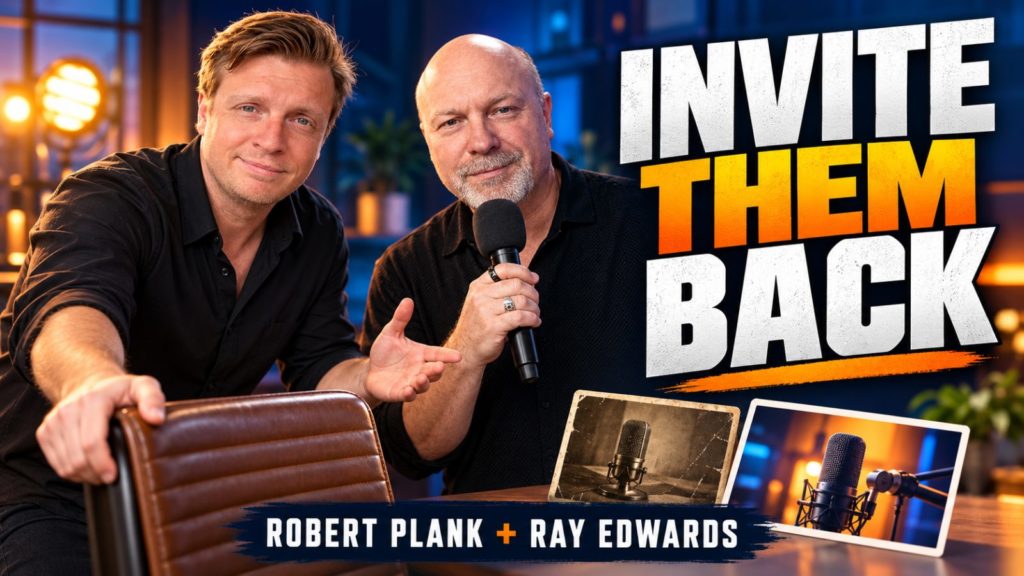
Ray explains how the return interview led to a business discussion. Watch the Ray Edwards Show interview for that story, how he judges progress and the guest orientation I use. His channel carries the other episodes.
Find Out Why the Business Slowed Down
A guest gives me experiences I haven't had and answers I couldn't write in advance. Ray described dialogue as richer and more alive. The production can be familiar while the person still has something new to tell me.
Boredom can tempt me to replace that with another experiment. There's room for curiosity alongside work that produces results. Name the problem before changing the whole schedule: poor conversations, an unfinished queue, neglected follow-up, or simply the fact that the process no longer feels new.
Check Whether the Work Produced the Result You Wanted
Ray pointed to leading indicators: useful actions can happen before a visible business result. For the podcast, review relevant invitations, completed interviews, published episodes and delivered follow-ups. Then examine the inquiries, introductions and paid work that actually followed.
If episodes are published but the guests never receive the links, you have an action to fix. If the planned work is happening without useful results, review the approach. Keep enough of a record to tell those situations apart.
Rewrite the AI Sentences You Would Never Say
Ray raised another reason familiar work can lose its appeal: so much AI content sounds impressive to the person generating it and repetitive to everyone else. He was considering interviews, solo episodes, tutorials and personal material as part of his own mix. The format decision and the writing decision both come back to judgment.
I admitted that I sometimes tolerate an AI-written, AI-narrated YouTube video if I'm interested enough in the subject. I might want to hear how The Rockford Files or The A-Team was developed. My interest can outweigh the awkward narration. That doesn't mean I want my own writing to depend on that tolerance.
The useful part of the tool is getting past the empty page. I can give it the topic and my approach, then read the draft and point to specific problems: this sentence doesn't sound like me, this format keeps repeating, this explanation missed the point. Ray agreed that those corrections matter. The time saved on a first draft can be substantial, but someone still has to recognize a good answer.
I compared it to seeing an assistant get a piece of work most of the way done. You can suddenly see what you'd fix, even if you couldn't make yourself start it earlier. That gives you a way to finish. It doesn't make the first version ready to publish.
Start With the Problem the Listener Recognizes
Before recording an interview, I give the guest a quick explanation of how we'll proceed. We'll aim for roughly 20 minutes. I'll read a little of their bio, then let them fill in the background. I confirm which website we're mentioning and explain that I'm interested in struggle stories and success stories.
I also preview the ending. I'll ask for the missing question, something I should have asked but didn't know to ask. We'll share their links, and I'll finish by asking for a useful quote or lesson that has served them.
Those last questions can stump someone if they arrive without warning. Mentioning them before we record gives the guest time to think while we're talking. They can notice what we haven't covered or remember a lesson that connects with the conversation.
As I explained this to Ray, I could hear myself reciting an orientation I've given hundreds of times. That familiarity helps ease my anxiety. I still have those thoughts about saying something awkward or upsetting the person, but we begin with an agreed direction and a reasonable expectation of how long we'll talk.
Ray described a frustration with poorly conducted interviews: the host misses something worth exploring because they're waiting to ask the next question. You can hear the opening for a follow-up, and then it's gone. A prepared structure helps me begin and finish the interview. Between those points, I have to pay attention closely enough to recognize when an answer deserves another question.
Stay in Touch Between Interviews
Networking advice used to frustrate me when it stayed vague. Help people, put good things out there, and eventually something comes back. Okay, but who do I contact, how often, and what do we actually do together? I prefer having a reason for the next conversation.
I described this sequence to Ray:
Introductory pre-call: Spend roughly ten minutes understanding the person and finding ideas worth exploring.
Recorded conversation: Ask questions and listen closely enough to create something useful for the guest and audience.
Optional post-call: When welcome, discuss referrals, introductions, or another way to help each other.
Publication notice: Send the live episode link so the guest knows it's available.
Later relevant sharing: Bring attention back to their ideas through a blog post or social post.
Future catch-up: Reconnect when there's something new to discuss, potentially through another interview.
I mentioned making a social post six months later, when it might also be time to catch up. The timing should fit the relationship and give you something relevant to share. I used Ray as a hypothetical example: if he liked or reshared one of my posts, I might write a new post about his work.
Timing was part of our discussion, too. Someone can understand what you provide and have no immediate need for it. Staying in contact gives you a chance to hear when their situation changes. As Ray put it, "You have a good conversation on camera, then don't let that die."
Contact Ten People You Want to Hear From
Ray asked what I'd tell someone who wants a podcast but feels overwhelmed by everything required to produce it. I started with the previous failure. Did the show cost too much? Did the recording setup get too complicated? What needs to change before trying again?
We were recording on Riverside. Opening a room and having a guest join is a different experience from the old Skype recordings and Flip cameras. Video calls have also become familiar to far more people. Those changes can remove some of the difficulty, but they don't choose the next guest for you.
My suggestion was to find ten past connections you'd enjoy speaking with again. Ask what they've learned since you last talked. Make it an interview show for now, and record those conversations. Once someone has given you their time and a useful discussion, there's a much stronger reason to finish the episode and share it properly.
Ray also asked whether recording video and publishing audio was worth the effort. I said yes. You can improve the camera and lighting later. Having video gives you a full YouTube episode and material for short clips; you can still publish the audio through the podcast feed. An audio-only recording doesn't give you the same choices afterward.
I mentioned Mitchell Levy, my LinkedIn mentor, who lives two hours away. We'd spoken on video many times without meeting in person. I felt I knew him better than some people I'd met face to face. Ray and I were having that same experience after a long gap since our last in-person meeting. That familiarity is one of the reasons I keep coming back to the conversation itself.
Invite an Old Guest Back for a New Conversation
List a few people you'd enjoy speaking with, then choose one. What have they learned or changed since you last talked? Contact them with that reason and suggest a recording if the subject fits.
DFY Podcast's production service can handle the episode and promotional materials between the recording and the guest's link. Assign those steps so the contact you wanted to renew doesn't end with another unpublished file.
The project came up after they finished recording. Ray had invited his friend back to hear what had changed, and the business discussion followed. That gave them something specific to discuss without starting the interview as a sales call.
About Robert Plank
Robert Plank hosts Marketer of the Day and runs Done For You Podcasting. He helps business owners use podcast interviews to meet prospects and referral partners, share useful ideas, and maintain professional relationships.
Original Conversation and Resources
- Turn Your Podcast Into a High-Converting Sales Engine: Robert's conversation as a guest on the Ray Edwards Show, hosted by Ray Edwards. The publisher also lists this conversation as The Boredom Trap: Why You Quit Right Before It Works.
- Ray Edwards's website: Explore Ray's work and podcast.
- Done For You Podcasting: Podcast production support for business owners.
- Robert Plank's Media Appearances: More conversations featuring Robert as a guest.