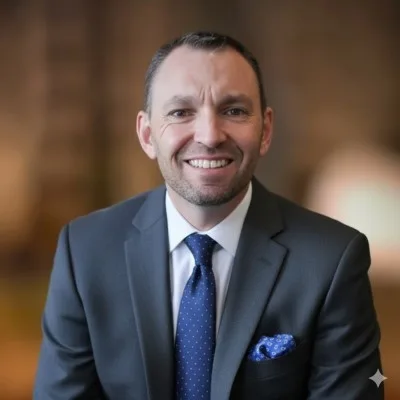
Chris McShanag helps leaders decide what work needs to change, who should own it, and how to measure the result. As Founder & Managing Partner of chmGroup Global Consulting Solutions, he works across healthcare operations, business services, and complex transformation programs. His current consulting practice covers interim executive management, strategy, program delivery, project management offices, and business process improvement.
His public career portfolio describes more than 25 years in consulting and operating roles, including IBM Global Services and IQVIA. It reports that, during his leadership of MedVA, BizVA, and MyOrthoVA, the virtual assistant team grew from 100 to 2,000 and supported more than 600 clients. Those figures are his published career account, tied to that former appointment.
Chris led MedVA, BizVA, and MyOrthoVA from December 2022 through June 2024, then founded and led Virtual Teammate from July 2024 through September 2026. Those businesses inform his experience with medical, dental, and business staffing. His current professional site places his consulting and interim executive work at chmGroup at the center of his work.
In his conversation with Robert Plank, Chris argues that remote employees need the same care in onboarding as someone hired into an office. He recommends recording the first training sessions so a second or third hire can learn the process. His examples include answering customer inquiries, managing email, maintaining referral relationships, and freeing an owner to make decisions and build the business.
One example from that interview involves a construction company that needed more reliable phone coverage and contact with referral partners. Chris describes pairing remote outreach and Zoom meetings with delivered refreshments, replacing the travel time of in-person visits. It is a specific way to discuss redesigning a task, rather than treating remote work only as a cheaper version of the same job.
His BOLD Business Podcast interview with Jess Dewell adds a later discussion of outcomes, distributed roles, and AI with human oversight. Chris distinguishes work that needs to happen in the office from work that can happen nearby or remotely. The conversation also examines removing low-value work so experienced staff can spend more time with clients and patients.
For a leadership event or podcast, Chris can discuss remote team onboarding, defining responsibilities, healthcare administration, and turning a strategic plan into work that someone actually owns. His current consulting approach starts with a diagnostic and a measurable baseline, then defines the mandate, reporting, delivery, and handover to the client team.