Offering and Need
Identify the product or service, the problem it addresses and the application in which a customer would use it.
Jeffrey L. Josephson helps business leaders connect customer needs, reachable prospects and a workable offering before choosing their sales and marketing tactics.

"If you don't have a need, if you don't have a solution, and you don't have a prospect that you can get to, you don't have an opportunity."
Last updated
Jeffrey L. Josephson is a sales strategy consultant, founder of LeadGen.com and author of Commercialization Drift. Through JV/M, he helps leaders examine the connection between their offering, the customer's need and the prospects they can reach. His work combines commercial strategy, B2B lead generation and sales training, with a focus on keeping marketing and sales aligned around a real market opportunity.
Jeffrey L. Josephson works where commercial strategy meets the daily work of finding customers. A consultant, founder and author, Jeff asks leaders to make three things explicit: who can be reached, what those people need and how the offering meets that need. His central concern is the gap between setting a revenue objective and defining the market opportunity that could support it.
Jeff began selling computer timesharing services to financial institutions at the Service Bureau Company. He later worked in marketing, strategic planning and sales management at Western Electric within the Bell System, helping bring emerging communications technologies to market. He left in 1992 to start his consulting firm, JV/M. LeadGen.com brings together strategy, prospecting, training and a network of specialist providers.
That experience led Jeff to develop the Lead Generation Paradigm and, more recently, Opportunity Architecture. On Marketer of the Day, he described reviewing records from more than 400 client initiatives with AI to look for recurring gaps in customer definition, needs, competitive reasoning and positioning. His ongoing Business Initiative Study explores how those elements relate to reported business outcomes; its published white paper describes preliminary, retrospective findings rather than proof of causation or guaranteed prediction.
His book Commercialization Drift examines how an initiative can lose its connection to the opportunity it was intended to pursue. He also teaches through The Lead Generation Paradigm, a book and instructional podcast series, and his earlier cold-calling handbook, The Most Powerful Weapon in Your Marketing Arsenal. The podcast applies his approach to campaign planning, call design, questions, objections and customer needs.
Jeff holds a Bachelor of Science in Biology from Union College and an MBA in Marketing and Strategic Planning from Rutgers, received in 1977, as stated in his official author biography. He is also the named inventor on U.S. Patent 5,623,660, a database-access system granted in 1997. Today, his consulting and speaking center on commercial clarity, qualified sales conversations and the management decisions that connect a plan to its market.
Opportunity Architecture is Jeff's model for examining how an offering, customer needs and reachable prospects fit together. He explains it through the three foundations of a market opportunity, then asks whether the decisions built on them still make sense.
Identify the product or service, the problem it addresses and the application in which a customer would use it.
Define the people or organizations with that need, and establish whether they can actually be reached.
Use that foundation to examine the value proposition, positioning and strategy, instead of treating each as an unrelated exercise.
On the podcast, Jeff describes Commercialization Drift as the initiative moving away from that underlying opportunity. A team might broaden its target market, change product priorities or disagree on lead qualification without revisiting the original customer need. His approach asks leaders to examine those connections as the initiative develops.
His published research is ongoing. The Business Initiative Study white paper distinguishes its preliminary, retrospective associations from causal proof and prospective prediction; the model is a way to structure the discussion, not a promise that a business cannot fail.
The Lead Generation Paradigm treats lead generation as a commercial strategy connecting marketing and sales. Jeff starts with customer needs, applications and the reason to buy, then builds the campaign and its qualification process around that foundation.
His book introduction groups the work into prerequisites, core campaign components and the company's public presence. Case histories, needs analysis and competitive research support the value proposition, questions and messaging. The point is to establish why a prospect should talk, meet and buy before adding another promotional tactic.
The instructional podcast follows this process through a cold-calling example. Its eight numbered lessons cover campaign structure, call design, questions, objections and needs, followed by a separate prologue. It is a teaching series rather than a guest-interview show.
Start with an identifiable prospect, a relevant need and a workable offering. Examine what a team must know before selecting channels, creating content or hiring salespeople.
A question to ask: What would you ask a founder who knows the revenue target but cannot clearly describe the customer need?
Explore how product priorities, target customers and positioning can lose coherence as an initiative develops, and how leaders can revisit those assumptions.
A question to ask: How do you distinguish a campaign execution problem from a change in the opportunity itself?
Compare names, clicks and inquiries with a prospect who has a relevant need and wants a sales conversation. Discuss handoffs, qualification and accountability.
A question to ask: What must marketing and sales agree on before they can judge whether a lead-generation program is working?
Connect research, a reason to talk, useful questions and an appropriate next step instead of treating the call as a script-reading exercise.
A question to ask: What makes a busy decision maker see a useful reason to keep talking?
Discuss Jeff's experience analyzing narrative client assessments and the difference between a promising association and a validated prediction.
A question to ask: What can a consultant learn from old client records, and what still requires a new study?
Consider how executives and boards can revisit customer, need and positioning assumptions alongside their existing financial and operating measures.
A question to ask: Which commercial assumptions should a leadership team revisit when the plan stays busy but progress stalls?
JV/M offers executive introductions, an initial assessment of a current initiative, team training and implementation or governance support. The engagement examines the initiative and whether this framework is useful for the organization.
LeadGen.com advises businesses examining an underperforming sales initiative, new market or product opportunity. Its consulting reviews the competitive situation and commercial strategy, develops market or territory plans and assesses the resources needed to carry them out, with related sales, marketing and business-development consultations available for new clients.
LeadGen.com runs B2B prospecting campaigns for companies needing qualified sales conversations and follow-up on existing inquiries. Its service includes professional calling, list or lead prequalification, survey calls, nurture campaigns and event follow-up, with campaign scripts, caller recruitment, training and management coordinated around the client's sales process.
LeadGen.com arranges sales appointments for companies trying to reach senior business decision makers. Its process examines the target organization's objectives and barriers, identifies decision makers and influencers, and develops positioning and outreach designed to establish a relevant reason for the conversation.
LeadGen.com helps businesses recruit and develop sales and marketing staff around a defined commercial strategy. The work includes role and recruiting-plan design, candidate screening, compensation considerations and onboarding, followed by training, coaching and sales-funnel management support to connect the new hire's work with the company's sales process.
Jeffrey L. Josephson and LeadGen.com provide sales and cold-calling education for individuals and company teams. Organizations can request a customized workshop or seminar, while paid individual coaching can examine scripts, sales aids, case histories, training material and management practices before recommending changes to the caller's approach.
LeadGen.com coordinates content and supporting materials for businesses that need to explain an offer throughout the sales cycle. Its published capabilities include case histories, economic-value models, sales scripts, proposals, white papers, videos and landing pages, with production drawn from its provider network to fit the campaign and sales strategy.
LeadGen.com offers research support for businesses refining their target market or preparing an outreach campaign. Its published work includes primary and secondary market research, surveys and questionnaires, list research, data cleanup and calling or mailing lists, supplied within a coordinated sales and marketing engagement.
LeadGen.com coordinates marketing delivery for businesses needing several campaign components to work together. Its partner network supplies options including paid search and social advertising, PR, email, direct mail and SEO, with LeadGen.com acting as the central contact rather than requiring the client to manage each specialist provider separately.
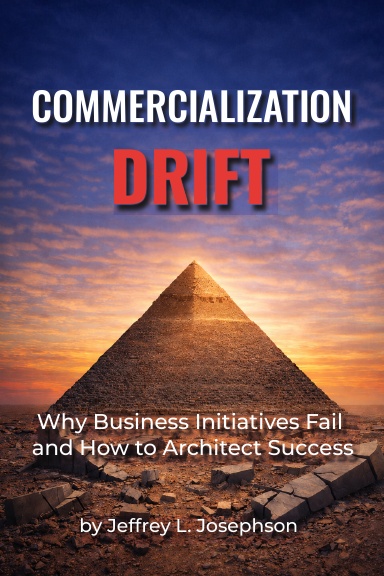
Why Business Initiatives Fail - and How to Architect Success examines the relationship between an initiative and its underlying opportunity. Jeff introduces Opportunity Architecture and presents his research on the connection between commercial coherence and reported outcomes. The publisher lists a 209-page paperback, ISBN 9781105159541.

A practical explanation of Jeff's approach to connecting marketing and sales. The book uses a cold-calling campaign to teach needs analysis, positioning, campaign design, questioning, qualification and follow-up. His official site provides the current edition and related learning resources.

A handbook on professional B2B prospecting, focused on generating qualified conversations and appointments with decision makers. The publisher description addresses the call, the prospect's need and how to establish interest. Apple Books lists this English-language edition as published September 24, 2012.

Jeff presents an instructional series on lead generation and cold calling. Eight numbered lessons move from the overall paradigm to campaign structure, call design, questions, objections and customer needs. The publisher feed contains nine entries including a prologue; the latest is dated October 9, 2024, as checked October 23, 2026.
| Date | Type | Show or publisher | Topic | Source |
|---|---|---|---|---|
| October 16, 2026 | Podcast interview | Marketer of the Day | Commercialization Drift, customer needs and Opportunity Architecture | Open source |
| August 12, 2026 | Research white paper | JV/M Evidence Room | Exploratory Business Initiative Study findings and limitations | Open source |
| August 18, 2026 | Article | JV/M Evidence Room | Recognizing possible symptoms of Commercialization Drift | Open source |
| August-October 2024 | Instructional podcast series | The Lead Generation Paradigm | Campaign planning, cold calling and customer needs | Open source |
Marketer of the Day - Episode 1680
Jeff and Robert Plank discuss the need, offering and reachable prospect behind an opportunity, how commercial assumptions can drift, and Jeff's ongoing work studying patterns in business initiatives.
Jeffrey L. Josephson is a sales strategy consultant, founder of LeadGen.com and author whose work connects commercial strategy, customer needs, B2B prospecting and sales training. His strategy consulting is offered through JV/M.
Official author biography and education | LeadGen.com | Opportunity Architecture at JV/M
Opportunity Architecture is Jeff's model for examining the relationships among an offering, customer needs and prospects, and the value proposition, positioning and strategy built from those relationships. He applies it to defining and revisiting the commercial logic of a business initiative.
Marketer of the Day interview | Business Initiative Study white paper | JV/M briefings, assessments and training
Jeff uses Commercialization Drift to describe an initiative progressively losing coherence with its market opportunity. Changing product priorities, customer definitions or positioning can become disconnected. His research remains exploratory; neither the term nor the framework guarantees a particular outcome.
Jeffrey L. Josephson explains Commercialization Drift | Business Initiative Study white paper
Yes. Lulu lists Commercialization Drift: Why Business Initiatives Fail - and How to Architect Success as a 209-page paperback published March 11, 2026, ISBN 9781105159541.
Yes. The Lead Generation Paradigm is an instructional podcast on lead generation and cold calling. Its publisher feed contains eight numbered parts and one prologue, with the latest entry dated October 9, 2024, as checked October 23, 2026. It is a teaching series rather than a guest-interview format.
The Lead Generation Paradigm podcast | Publisher podcast feed
Jeff's official author biography offers Sales@LeadGen.com and 856-638-0399 for inquiries. LeadGen.com also provides a contact form, and JV/M accepts requests for executive briefings, assessments and a conversation about a business initiative.
Official author biography and education | Public business contact | JV/M briefings, assessments and training