Start with the recorded transaction
Identify the people, amount, goods or service and the date before deciding what an entry means.
Reconstructing Mohawk Valley families and Revolutionary War history through original records.

"I view my history books as living entities. When the facts change, they change. When I'm wrong, I'm wrong. It's always nice to learn more."
Last updated
Ken D. Johnson is an author and genealogical researcher whose work preserves the history of Fort Plank, the Mohawk Valley and Colonial Upstate New York. His books include The Bloodied Mohawk, In Defense of the Facts and Genealogical Clues Provided by Colonial Merchants, co-authored with Marilyn J. Cramer. He follows connections among military papers, merchant ledgers, land records, maps and family accounts, making the surviving evidence available to other researchers. Ken can discuss tracing colonial families, reading financial records as historical sources and revising a history when new evidence appears.
Ken D. Johnson is an author and genealogical researcher focused on Fort Plank, the Mohawk Valley and Colonial Upstate New York. He collects and examines original documents to recover the experiences of families, soldiers and other people whose lives are often absent from broad accounts of the American Revolution.
His interest began with his own family. In his conversation with Robert Plank, Ken describes discovering that ancestors had died defending Fort Plank and sharing that finding with his grandmother. Her response helped turn a family-history question into a continuing effort to preserve the place and its people.
Ken describes the title Fort Plank Historian as a duty he took on himself. His work now draws on relatives and other researchers who find documents, examine claims and bring additional family knowledge. He recalls how Susan Watkins challenged his reasoning so he would be able to explain the evidence clearly when others questioned it.
The Bloodied Mohawk brings together Revolutionary War accounts from Fort Plank's defenders and other Mohawk Valley participants. Ken's author page describes sources including military journals, orderly books, correspondence, pension applications, deeds, mortgages and church records. The work lets readers trace statements back to the documents behind them.
In Defense of the Facts: In an Ongoing Search for Fort Plank examines the fort's location through contemporary maps, military correspondence and other records. The research follows historical references to Fort Plank, Fort Plain and related fortifications. It shows why a place name, a map or a later account needs to be considered alongside the other surviving evidence.
Genealogical Clues Provided by Colonial Merchants, co-authored with Marilyn J. Cramer, studies the financial records of the Sanders family of early Albany County, New York. Its subject is everyday commerce and what the transactions reveal about families, community life, travel and other parts of colonial society. Ordinary account books become a source for questions that birth, marriage or church records alone may not answer.
One example Ken shares with Robert follows a payment of four pounds, four shillings and three pence. He connects the account entry with land transactions and family names, then considers whether the payment might have been a dowry. He explicitly says he cannot prove that interpretation. The example is useful because it distinguishes a promising clue from a demonstrated family relationship.
Ken treats his historical works as living documents. New records can add a missing part of a story or require him to reconsider an earlier conclusion. The Fort Plank research library links readers to maps, source collections, a bibliography, additional partisan records and later discoveries so they can follow that continuing work.
His official biography also records a background in the U.S. Coast Guard, lighthouse keeping and emergency services. His historical research is the focus of his current author website. Research questions and book-related inquiries can be sent through its contact form.
Ken has discussed this work with Robert Plank on Marketer of the Day and with Logan Crawford on Global Book Network. For genealogy groups, local-history audiences and interview hosts, he offers concrete examples of how people, places and surviving records fit together. His starting advice is approachable: talk with grandparents and other relatives, learn the surrounding history and work backward carefully.
An account entry can identify people and relationships that are missing from more familiar family records.
Identify the people, amount, goods or service and the date before deciding what an entry means.
Compare the ledger with land transfers, debts, military service and the surrounding family history.
A payment can suggest a family connection without proving why the money changed hands.
Ken's example follows a payment of four pounds, four shillings and three pence through the Sanders family accounts. The entry led him to reconsider an inherited family-name explanation in light of the people named in the business record.
He proposes a possible dowry while explicitly saying he cannot prove it. That distinction is part of the lesson: preserve the original entry, explain the connections and keep a plausible interpretation separate from a proven fact.
A published account can continue to change when another original document appears.
Keep the record behind a factual statement available so another reader can examine it.
Relatives and fellow researchers can find missing records or challenge an interpretation.
Add the new material and reconsider the earlier account instead of protecting a conclusion for its own sake.
Ken recalls receiving a previously unknown Fort Plank document from someone whose family signature appeared on it. He describes the find as another piece in a much larger puzzle, rather than the final answer to every question.
The continuing maps, bibliography, additional partisan records and later discoveries in his public research library give that approach a practical form. Readers can follow the source trail and bring informed questions back to the research.
Fort Plank, its defenders and the families whose military, land and community records preserve their experiences.
A question to ask: How did a search for your own ancestors become a wider Fort Plank research project?
How merchant records can preserve names, transactions and possible connections when other documents are missing.
A question to ask: What can an old payment record reveal, and where does a useful clue stop short of proof?
Preserving original records, inviting challenges and revising a published account when another document appears.
A question to ask: What do you change in a history book when someone finds a new original document?
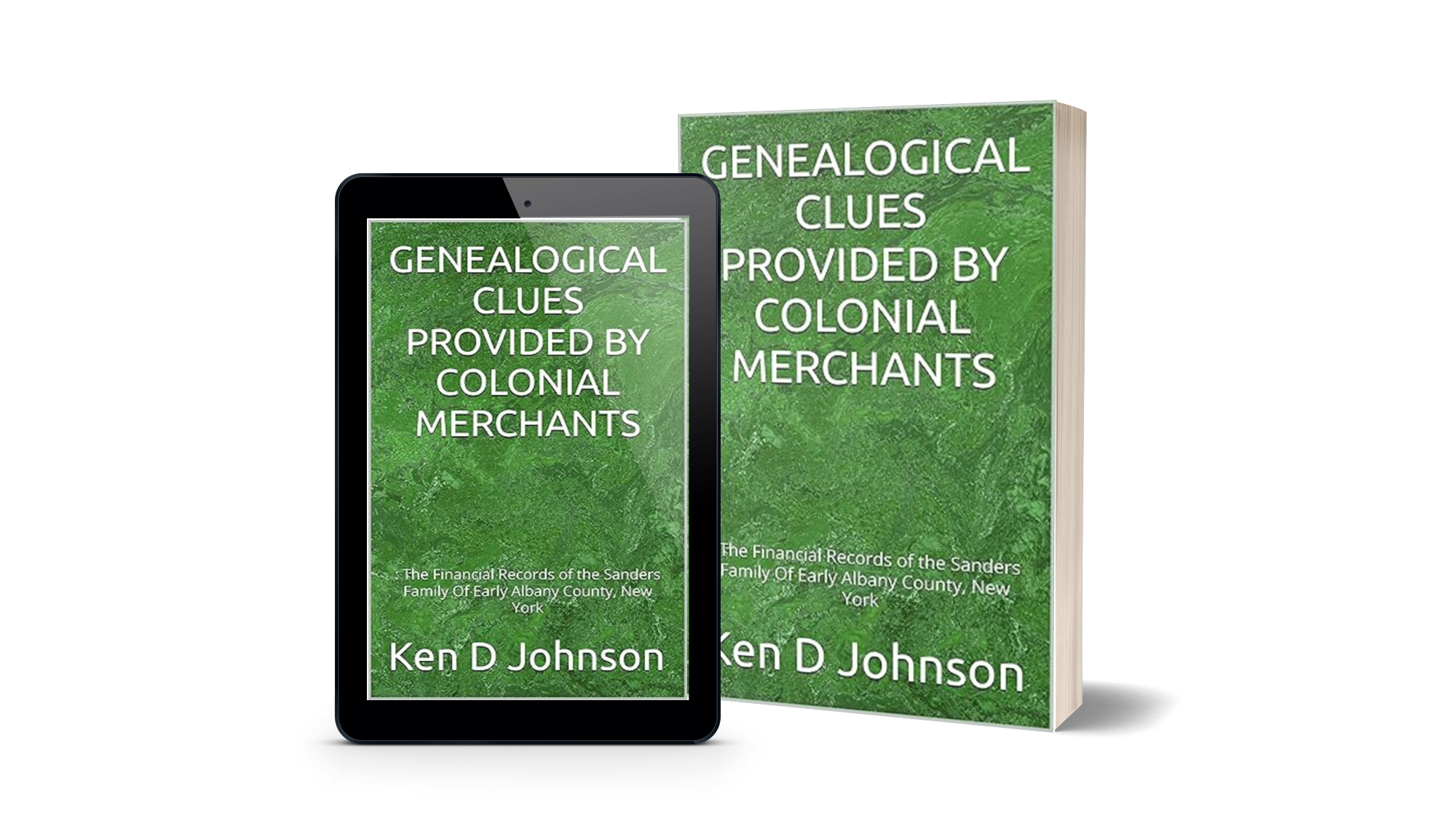
A study of the Sanders family financial records and the evidence they preserve for Colonial New York family history. Co-authored with Marilyn J. Cramer, the book uses everyday transactions to explore family relationships, commerce, travel and community life.

An investigation of Fort Plank's location and documentary history using maps, correspondence, church records and Revolutionary War journals. Ken's publicly available research document and the publisher-linked Kindle edition offer ways to examine the evidence and his argument.
A source-documented account of the Revolutionary War in the upper Mohawk Valley. It combines the words of military participants with records of service, property and community life. Ken's research site describes its digital form and continuing additions as new evidence is found.
A June 9, 2026 announcement from Global Book Network credits Ken with assisting Carolyn Smith-Pellettier on The Johann Christian House Genealogy: The First Four Generations in the USA and Canada From 1709 to the early 1800's (2023).
| Date | Type | Show or publisher | Topic | Source |
|---|---|---|---|---|
| June 25, 2026 | Podcast interview | Marketer of the Day with Robert Plank | Fort Plank history, merchant records and continuing research | Open source |
| June 9, 2026 | Book press release | Global Book Network release, distributed by NEWSnet | Genealogical Clues Provided by Colonial Merchants and coauthor Marilyn J. Cramer | Open source |
| June 3, 2026 | Podcast guest interview | Knew Amsterdam Radio with Flobo Boyce | Colonial New York culture and the family history in merchant accounts | Open source |
| Date not established | Author interview | Global Book Network with Logan Crawford | Research behind Genealogical Clues Provided by Colonial Merchants | Open source |
Marketer of the Day - Episode 1599
Ken describes how a family-history search grew into Fort Plank research, what colonial merchant accounts can reveal and why his books continue to change as new documents appear. He distinguishes a possible dowry interpretation from a proven conclusion and encourages listeners to begin with family conversations and surrounding history.
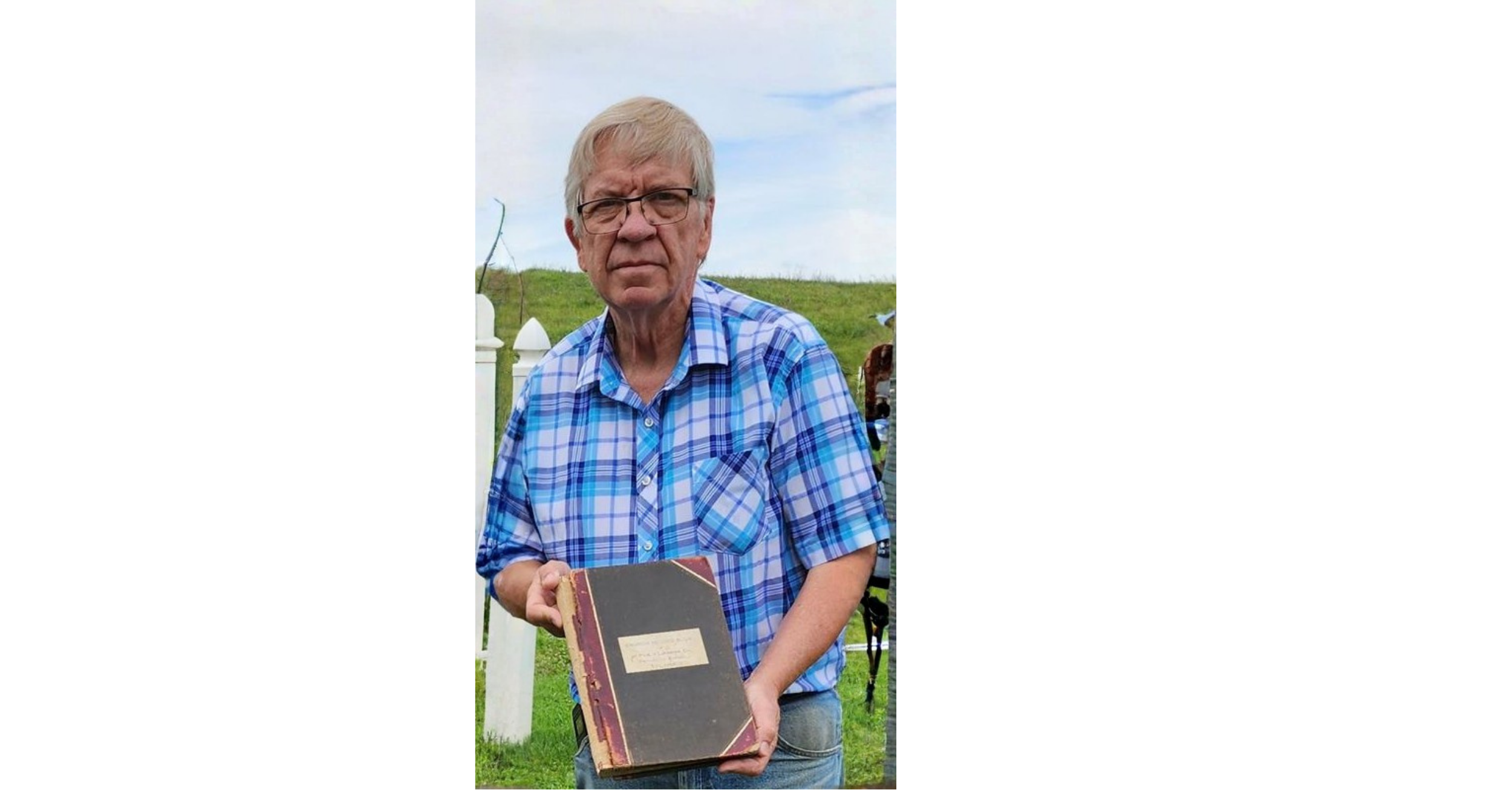
Ken D. Johnson is an author and genealogical researcher focused on Fort Plank, the Mohawk Valley and Colonial Upstate New York. He works with original records to reconstruct family, military and community history.
Ken D. Johnson official biography | Ken D. Johnson with Robert Plank
Ken can discuss Fort Plank, Revolutionary War families, merchant ledgers, land and military documents, working with other researchers and changing a historical account when new evidence appears.
Ken D. Johnson with Robert Plank | Fort Plank Research Library
Ken describes tracing ancestors who died defending Fort Plank and sharing the discovery with his grandmother. He says that personal connection grew into a continuing effort to preserve the fort's people and records.
In his conversation with Robert Plank, Ken calls the title a self-imposed duty. His author website uses the title for his historical research and preservation work.
Ken D. Johnson with Robert Plank | Ken D. Johnson official biography
His author website identifies The Bloodied Mohawk, In Defense of the Facts and Genealogical Clues Provided by Colonial Merchants. The merchant-records book is co-authored with Marilyn J. Cramer. The books section links to their official descriptions and sources.
Official book descriptions | The Bloodied Mohawk - author description
Ken D. Johnson and Marilyn J. Cramer co-authored the work. Its subject is the Sanders family financial records of early Albany County, New York and the genealogical evidence preserved in everyday transactions.
Fort Plank official author website | Official book descriptions
It is Ken's source-documented account of the Revolution in the upper Mohawk Valley, drawing on Fort Plank defenders and other participants. His research site describes military journals, correspondence, pension records, land documents and later additions to the work.
It examines the location and history of Fort Plank through contemporary maps, military correspondence and other documents. Ken's research library links to his public research text and related source material.
They can provide valuable clues, but a transaction does not explain itself. Ken's interview example suggests a possible dowry from a payment and surrounding records, while he explicitly says that interpretation is not proven.
Ken D. Johnson with Robert Plank | Official book descriptions
He continues to add records and reconsider the account when new evidence appears. His interview describes receiving an unknown Fort Plank document and treating it as another piece of a larger historical puzzle.
Ken D. Johnson with Robert Plank | Fort Plank Research Library
Ken recommends beginning with grandparents and other relatives, then working backward while learning the history around the family. Records of neighboring families and the wider community can help explain individual lives.
The Fort Plank research library links to historical records, Mohawk Valley maps and sketches, a bibliography, additional partisan records and later discoveries. These resources offer starting points for tracing the underlying documents.
Use the contact form on his official Fort Plank website for research questions, books or interview inquiries. His linked research site also publishes fortplankhistorian@yahoo.com as a research contact.
Official research and book inquiry form | Ken D. Johnson linked research website
Ken credits Marilyn J. Cramer with that saying in his interview. It should be attributed to Marilyn when quoted, even when it appears within Ken's account of his own research.