ExploreSpeaker directory
Biotech entrepreneur · Scientist · Author

Kevin J. Scanlon

Biotech startups, investor communication and the decisions that turn an invention into a business.

Kevin J. Scanlon smiling in a pink checked shirt
Photo source
"If you don't pivot to get the right product for the right customer, the company goes under."
- Kevin J. Scanlon · Marketer of the Day with Robert Plank

Last updated

Kevin J. Scanlon · Short bio

Dr. Kevin J. Scanlon is a biotech entrepreneur and author of The Hybrid Entrepreneur: A Novel Career in Science and Business. He is founder and CEO of International BioScience, with a career that includes cancer research, pharmaceutical leadership and angel investing. Kevin explains how founders, customers and investors evaluate the same venture differently, and why scientific expertise needs to be supported by customer demand and a capable team. He earned his Ph.D. at the University of London and received the Paul-Martini Prize in 1988.

Current work
Founder and CEO of International BioScience
Education
Ph.D., University of London
Business book
The Hybrid Entrepreneur
Recognition
Paul-Martini Prize recipient, 1988

About Kevin J. Scanlon

Dr. Kevin J. Scanlon is a biotech entrepreneur, scientific author and founder and CEO of International BioScience. His work addresses a difficult transition for scientists and inventors: explaining a technical idea in terms that a customer, business partner or investor can evaluate. In The Hybrid Entrepreneur: A Novel Career in Science and Business, Kevin examines the people, questions and decisions involved in moving from an invention to a company.

Kevin's scientific background includes cancer research and the study of RNA. He earned a B.A. at Sacred Heart University and a Ph.D. at the University of London, followed by postdoctoral research in pharmacology at Yale School of Medicine. In 1988, he received the Paul-Martini Prize for research on the combined effects of cisplatin and 5-fluorouracil in human ovarian carcinoma cells. His scientific work also includes editing and contributing to research volumes on ribozymes and gene therapy.

His business experience includes leading the cancer division at Berlex/Schering, serving as CEO and chairman of Melanoma Diagnostics and chairing the Pasadena Angels investment group. Those roles placed him on different sides of a venture: developing research, running a company and evaluating whether a team could carry an idea forward. His teaching draws on the communication problems that arise when people with technical expertise and people assessing a business use different language.

In The Hybrid Entrepreneur, Kevin calls these perspectives the Three Legs of the Venture Stool: entrepreneur, customer and investor. Kevin asks whether a product addresses a need that customers recognize, whether the team has the skills to build a business and whether the opportunity makes sense to investors. The book's five parts cover the team, product, business strategy, business model and supporting ecosystem, including the contributions of incubators, attorneys and investors.

Kevin developed the book alongside an entrepreneurship course in which student teams evaluated real university companies. In his conversation with Robert Plank, he describes the final work delivered to a CEO: a business plan, an investor presentation, a customer survey and a term sheet. The students' questions helped him refine the book. Their findings could also challenge a founder's assumptions; Kevin recalls CEOs who hired students after seeing the work, and others who dismissed the report.

A recurring question in Kevin's interviews is whether a founder can listen and adapt. He looks at how a CEO interacts with senior team members, not only at the product being presented. He explains that a company may need different skills as it moves from its first idea to a product, its first customers and later growth. He also asks entrepreneurs to examine criticism for valid questions rather than treating every objection as resistance to the idea.

Kevin's publishing record includes work for both business readers and laboratory researchers. He authored The Hybrid Entrepreneur, edited Therapeutic Applications of Ribozymes and coedited Ribozymes in the Gene Therapy of Cancer and The Internet Book of Gene Therapy: Cancer Therapeutics. He also coedited the 1998 Schering workshop volume Gene Therapy and contributed chapters to Gene Therapy Protocols, Gene Therapy of Cancer: Methods and Protocols and the separate 1997 Advances in Pharmacology volume Gene Therapy.

Dr. Kevin J. Scanlon's Three Legs of the Venture Stool

A scientist can explain an invention in detail while leaving customers and investors unsure why it matters to them. In The Hybrid Entrepreneur, Kevin examines a venture through three connected perspectives: entrepreneur, customer and investor.

The entrepreneur's questions concern the product, the team and the path from an idea to something that can be sold. Kevin asks whether the founder needs additional business expertise and whether the team can change as the company grows.

The customer's questions concern need, value and the ability to buy. Kevin uses customer surveys to test whether the proposed audience wants the product, whether its features need to change and whether a different target customer would make more sense.

The investor's questions concern the team, market, competition and potential return. Kevin emphasizes the people behind the product because a capable team can respond when the original concept does not fit the customer.

In his entrepreneurship course, Kevin put student teams to work on actual university companies from all three perspectives. He describes their final package as a business plan, an investor presentation, a customer survey and a term sheet. The exercise required the founder's explanation to be tested against questions from the other two groups.

Topics to discuss with Kevin J. Scanlon

Evaluating a venture from three perspectives

Comparing the questions asked by the entrepreneur, customer and investor before committing to a business plan.

A question to ask: What does each group need to understand or believe before this venture can move forward?

Listening to criticism and adapting

Looking at how founders respond to difficult questions and how team dynamics affect product changes.

A question to ask: What evidence would persuade this team to change its product or target customer?

Science and business vocabulary

Explaining technical work in terms that customers, businesspeople and investors can use to make decisions.

A question to ask: Which words in this pitch mean something different to each person in the room?

Consulting

Business consulting and executive coaching

Kevin lists business consulting, management consulting and executive coaching through his LinkedIn service page, with remote or in-person availability in the Los Angeles area. His professional focus is life sciences and biotechnology, with a background spanning research, company leadership and startup investing.

See the offer ↗

Books authored, edited and contributed to by Kevin J. Scanlon

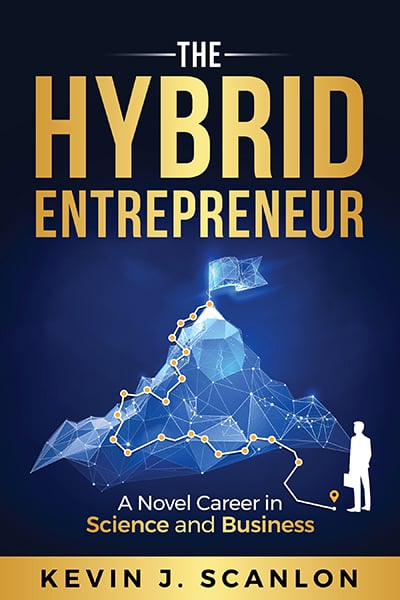
Cover of The Hybrid Entrepreneur: A Novel Career in Science and Business

The Hybrid Entrepreneur: A Novel Career in Science and Business

Kevin J. Scanlon writes for scientists, inventors and founders who need to turn a promising idea into a business that customers and investors can understand. The book examines a venture through three perspectives: the entrepreneur building it, the customer deciding whether to buy and the investor evaluating the team and opportunity.

Its five main parts cover the team, product, business strategy, business model and supporting ecosystem. Topics include customer surveys, product protection, competition, investor presentations, financial plans, incubators and attorneys. Kevin connects the questions raised in his entrepreneurship teaching with his experience in research, company leadership and investing.

Cover of Therapeutic Applications of Ribozymes

Therapeutic Applications of Ribozymes

Kevin J. Scanlon edited this 1998 laboratory reference on ribozymes, RNA molecules studied for their ability to act on selected RNA targets. Its opening chapters address ribozyme biochemistry and design, followed by research methods involving viral, cancer and other mammalian RNA targets.

The collection includes methods for delivery, expression and measurement, with an emphasis on the experimental controls needed to interpret ribozyme activity. Kevin also coauthored chapters on pancreatic carcinoma and applications in cancer metastasis research. The volume belongs to the Methods in Molecular Medicine series.

Cover of Gene Therapy

Gene Therapy

This 1998 workshop collection brings together reports on gene delivery and research involving cancer and cardiovascular disease. The contributors compare viral and nonviral delivery systems, tumor-suppressor genes, antisense approaches, immunological strategies and the regulatory questions surrounding gene therapy at the time.

Kevin J. Scanlon coedited the volume with R. E. Sobol and E. Nestaas, and coauthored its chapter on ribozymes as tools for modifying gene expression. The book is volume 27 of the Ernst Schering Research Foundation Workshop series, connecting his editorial work with his cancer research at Berlex Biosciences.

Cover of Ribozymes in the Gene Therapy of Cancer

Ribozymes in the Gene Therapy of Cancer

Kevin J. Scanlon and Mohammed Kashani-Sabet coedited this 1998 reference on the study of catalytic RNA in cancer gene therapy. Published by R.G. Landes, the volume focuses on ribozymes, disease-related genes and experimental approaches to cancer research.

Kevin also contributed with Hiroshi Kijima to a chapter on an anti-ras ribozyme in pancreatic cancer research. The book represents his scientific publishing work alongside his later writing on the business challenges of moving a technical idea toward a market.

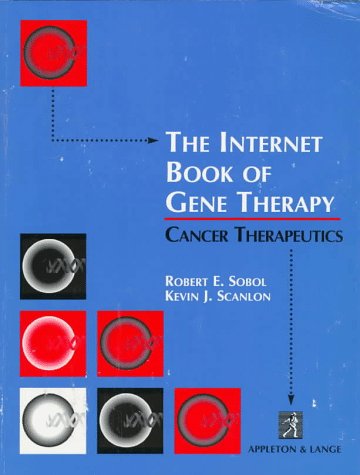
Cover of The Internet Book of Gene Therapy: Cancer Therapeutics

The Internet Book of Gene Therapy: Cancer Therapeutics

Robert E. Sobol and Kevin J. Scanlon coedited this reference on gene therapy and cancer therapeutics, published by Appleton & Lange in 1995. The National Library of Medicine identifies both editors and records its print and electronic publication formats.

Its foreword described an Internet version that could receive new and revised chapters before the next printed edition. That publishing model makes the volume an early example of linking a scientific reference book with an updateable online counterpart.

Cover of Gene Therapy Protocols

Gene Therapy Protocols

Kevin J. Scanlon and Toshiya Shitara contributed the chapter "Suppression of the Human Carcinoma Phenotype by an Antioncogene Ribozyme" to this 1997 laboratory-methods collection. Paul D. Robbins edited the volume in the Methods in Molecular Medicine series.

The wider book covers gene-transfer systems and methods for work with specific tissues, both in laboratory models and outside the body. Kevin's contribution appears on pages 391-401, placing his ribozyme research within a broader collection of gene-delivery techniques.

Cover of Gene Therapy of Cancer: Methods and Protocols

Gene Therapy of Cancer: Methods and Protocols

Kevin J. Scanlon coauthored a chapter on an anti-c-erbB2 ribozyme for breast cancer gene-therapy research with Toshiya Suzuki and Masami Bessho. Their contribution appears on pages 247-260 of the first edition, edited by Wolfgang Walther and Ulrike Stein.

Published in 2000, this Methods in Molecular Medicine volume brings together experimental methods, gene-delivery systems and clinical-research protocols. Its organization moves from preclinical approaches toward clinical studies, showing where the ribozyme chapter fits within the wider research program.

Cover of Gene Therapy

Gene Therapy

Kevin J. Scanlon is one of the coauthors of "Anti-oncogene Ribozymes for Cancer Gene Therapy" in this 1997 volume of Advances in Pharmacology. The chapter examines ribozyme structures, design strategies, oncogene and drug-resistance targets, delivery systems and the clinical questions being studied at the time.

The volume, edited by J. Thomas August, also includes work on viral vectors, antisense molecules, immunotherapy and tumor-suppressor genes. It is a separate book from the 1998 Schering workshop collection that Kevin coedited, despite their shared title.

Media appearances

Selected public appearances · Sources checked October 20, 2026
DateTypeShow / event / publisherTopicLink
August 3, 2025Podcast appearanceThe Hidden Entrepreneur Show with Josh Cary podcastPositioning a business for investors, clients and long-term successOpen ↗
June 25, 2025Podcast appearanceThe Healthy Enterprise podcastBridging science and business: investor communication, character and startup teamsOpen ↗
May 5, 2025Podcast appearanceMarketer of the DayTesting a Startup from Three PerspectivesOpen
April 23, 2024Archived presentationBio2Device GroupHow investors evaluate successful startup companies - organizer listingOpen ↗
August 11, 2013News appearanceLos Angeles Business JournalQuoted on regulatory approval and funding risks for biomedical startupsOpen ↗
May 21, 2004Speaking appearanceCaltech Biotechnology ClubRoles of business and science in drug development - organizer listingOpen ↗

Kevin J. Scanlon on Marketer of the Day

Kevin discusses how to evaluate a venture, understand customers and investors, and recognize when a team or product needs to change.

Stories from the conversations

Kevin J. Scanlon chooses RNA research

Kevin recalls choosing RNA research while many colleagues focused on DNA. He uses the example to explain his interest in scientific directions that other researchers overlook.

Explore the story

Kevin J. Scanlon sees founders react differently to criticism

Kevin recalls some CEOs hiring students after their company evaluations, while others discarded the reports. He connects those reactions with a founder's willingness to listen and adapt.

Explore the story

Business inquiries

The Healthy Enterprise podcast - Kevin J. Scanlon guest interview, exact video and maintained professional profile ↗ · Checked October 20, 2026

Questions about Kevin J. Scanlon

Who is Dr. Kevin J. Scanlon?

Dr. Kevin J. Scanlon is a biotech entrepreneur, scientific author and founder and CEO of International BioScience. He wrote The Hybrid Entrepreneur: A Novel Career in Science and Business and has worked in cancer research, pharmaceutical leadership and angel investing.

Cal State LA - Summer 2026 BioStart program guide ↗ · The Hybrid Entrepreneur - official publisher description and book information ↗ · Kevin J. Scanlon - university-hosted curriculum vitae, November 2018 ↗

What can Dr. Kevin J. Scanlon discuss as a speaker or podcast guest?

Kevin can discuss how scientists become entrepreneurs, how investors evaluate a startup team, how to test customer demand and why founders need to understand business vocabulary. He uses examples from entrepreneurship teaching and company evaluation to explain how a promising invention can still encounter problems with money, communication or team dynamics.

Kevin J. Scanlon with Robert Plank - science, entrepreneurship and evaluating a venture · The Hybrid Entrepreneur - official publisher description and book information ↗

Which audiences are a fit for Dr. Kevin J. Scanlon's expertise?

His book and teaching address scientists, inventors, early-stage founders, entrepreneurship students and people evaluating technical ventures. A university innovation program could focus on the move from research to a business; a founder or investor audience could examine team selection, customer questions and the information needed to evaluate a company.

The Hybrid Entrepreneur - official publisher description and book information ↗ · The Hybrid Entrepreneur - publisher-provided preview, including the first chapter ↗ · Kevin J. Scanlon with Robert Plank - science, entrepreneurship and evaluating a venture

What is The Hybrid Entrepreneur about?

The Hybrid Entrepreneur: A Novel Career in Science and Business examines a venture through its team, product, business strategy, business model and supporting ecosystem. Kevin connects those subjects with questions about customer demand, investor expectations, communication and the roles of inventors, entrepreneurs and CEOs.

The Hybrid Entrepreneur - official publisher description and book information ↗ · The Hybrid Entrepreneur - publisher-provided preview, including the first chapter ↗

What are the Three Legs of the Venture Stool?

Kevin uses the Three Legs of the Venture Stool to examine the entrepreneur, customer and investor together. The entrepreneur is building the product and company, the customer decides whether the product meets a need and the investor evaluates the team and opportunity. The approach tests whether the same venture makes sense from all three positions.

The Hybrid Entrepreneur - publisher-provided preview, including the first chapter ↗ · Kevin J. Scanlon with Robert Plank - science, entrepreneurship and evaluating a venture

Why do scientists and investors misunderstand one another?

Kevin describes a vocabulary problem: a scientist can explain the technology without addressing what a businessperson needs to know, while an investor can raise questions in terms the scientist does not understand. He encourages both groups to understand the other person's position and learn enough of the vocabulary to communicate usefully.

Kevin J. Scanlon with Robert Plank - science, entrepreneurship and evaluating a venture

What changes as a startup grows?

Kevin distinguishes the skills needed to start a company, create its first product, make its first sale and manage later growth. The original founders may not have every skill required at the next stage. He identifies money and company culture as recurring sources of trouble when a business grows beyond its first assumptions.

Kevin J. Scanlon with Robert Plank - science, entrepreneurship and evaluating a venture

What books has Dr. Kevin J. Scanlon edited or contributed to?

Alongside authoring The Hybrid Entrepreneur, Kevin edited Therapeutic Applications of Ribozymes and coedited several scientific collections, including Ribozymes in the Gene Therapy of Cancer and The Internet Book of Gene Therapy: Cancer Therapeutics. His chapter contributions include work in Gene Therapy Protocols and Gene Therapy of Cancer: Methods and Protocols. His 1998 coedited Gene Therapy workshop volume and the 1997 Gene Therapy volume containing his chapter are separate books.

Therapeutic Applications of Ribozymes - publisher catalogue and chapter credits ↗ · Ribozymes in the Gene Therapy of Cancer - National Library of Medicine catalogue ↗ · The Internet Book of Gene Therapy: Cancer Therapeutics - National Library of Medicine catalogue ↗ · Gene Therapy Protocols - publisher catalogue and contribution credits ↗ · Gene Therapy of Cancer: Methods and Protocols - publisher catalogue and contribution credits ↗ · Gene Therapy - 1998 Schering workshop volume, publisher catalogue ↗ · Gene Therapy, Advances in Pharmacology Volume 40 - official publisher catalogue ↗

Sources & research notes · October 20, 2026
Copy this text

Essential features — always available
Forms, spam protection, and podcast playback.

Optional Google Analytics runs only after you accept Analytics. Advertising tags stay off. Change your Analytics choice on the Privacy page.

How these choices work. You can change them anytime from the footer.