Examine a component
A close view can reveal specific features of an organism, pathogen or process.
Biological research, complex systems and the questions behind Kabbalistic Biology.

"If I concentrate only on details in biological research, I cannot see the whole picture."
Last updated
Michael Kosoy is a research biologist, author and founder of KB One Health in Colorado. His work examines zoonotic diseases and the relationships between pathogens, animal hosts and ecosystems. After a career at the Centers for Disease Control and Prevention, he continues independent research and writing. He is the author of The Ten Dimensions of Kabbalistic Biology and editor in chief of Atlas of Zoonotic Diseases in the South Caucasus. His book conversations explore how a researcher's scale of observation shapes the questions they ask.
Michael Kosoy is a research biologist, author and founder of KB One Health in Fort Collins, Colorado. His research interests include zoonotic and vector-borne diseases, the evolution of pathogens and the ecological settings in which infections persist. Alongside that scientific work, he writes on the philosophy of biology and the ways researchers frame questions.
Michael worked at the Centers for Disease Control and Prevention before continuing through KB One Health. His published curriculum vitae records CDC research fellowships beginning in 1994 and leadership of the Bartonella, Rodent-Borne and Wildlife Diseases Laboratory from 2007 to 2019. He described himself as retired from the CDC, while still participating in research, during his Marketer of the Day interview with Robert Plank.
His research has involved animal hosts, microbial pathogens and the conditions connecting them. The KB One Health publication catalog includes studies of Bartonella, Yersinia and other infectious agents in bats, rodents, fleas and domestic animals. His international work has included collaboration in the South Caucasus, Southeast Asia, Africa and the Americas.
Michael's curriculum vitae lists an MS in biology from Mechnikov Odessa State University in 1978 and a PhD in epidemiology and biology from the Gamaleya Institute of Epidemiology and Microbiology in 1987. His research training spans epidemiology and biology.
One recurring question in Michael's writing is how detailed information relates to understanding a wider system. His 2013 Entropy review, Deepening the Conception of Functional Information in the Description of Zoonotic Infectious Diseases, considers pathogens, hosts, vectors and environmental context at multiple levels. In the interview, he connects that line of thinking with the book he later developed.
The Ten Dimensions of Kabbalistic Biology brings his biological research interests into conversation with Kabbalistic concepts. Michael presents it as an intellectual framework for navigating questions of knowledge, observation and biological complexity. He asks readers to consider both what is directly studied and what remains outside their chosen frame.
Michael explains one axis as movement between segmentation and unification. An investigator can focus closely on a component or step back to consider a larger system. His point is that the useful level depends on the question and context. Staying only with details can lose the wider picture; moving too far toward generality can make a discussion less useful.
He also draws on Flatland by Edwin A. Abbott. Its story of a two-dimensional world gives Michael a way to discuss the limits of a viewpoint. He uses the analogy to invite questions about perception, rather than presenting a literary metaphor as proof of an additional physical dimension.
KTAV published the original full-length book, and a revised edition followed with illustrations by Jenia Kosoy. The Abridged Edition retains those illustrations while reducing technical detail. In its preface, Michael credits his daughter Jenia for the artwork and Claire Gerus for editing the original work. Jenia's illustration role and Claire's editorial role are separate from Michael's authorship.
Michael is also editor in chief of Atlas of Zoonotic Diseases in the South Caucasus, published in 2024. The collaborative atlas maps the distribution of seven zoonotic diseases across Armenia, Azerbaijan and Georgia, with geographic, ecological and epidemiological context. Its editorial team includes Paata Imnadze, Lile Malania, Nana Bolashvili, Andrei Kandaurov, Colleen T. Webb and Kendra Gilbertson. Michael's role is editor in chief, rather than sole author of the atlas.
In March 2020, Marquis Who's Who announced Michael as a recipient of its Albert Nelson Marquis Lifetime Achievement Award. His public record also includes scientific presentations, research papers and guest author interviews. He has appeared on Marketer of the Day, Vigilantes Radio Live and Global Book Network; his official media catalog also lists The Open Manuscript with Christine Blanchette.
Michael's public contact routes include his author website, verified LinkedIn profile and the email and telephone listed by KB One Health.
His segmentation-to-unification example connects the level of detail with the question being investigated.
A close view can reveal specific features of an organism, pathogen or process.
A wider view can include relationships with hosts, vectors and ecological context.
Michael proposes moving along that spectrum as the question changes, rather than treating one scale as sufficient for every problem.
The original full-length book was published by KTAV in 2024. The revised edition credits illustrations by Jenia Kosoy. The 2026 abridged-edition preface explains how Michael reduced technical detail while retaining the illustrations, and credits Claire Gerus for editing the original. His editor-in-chief role on the South Caucasus atlas is a separate collaborative publication.
In the abridged preface, Michael relates the work of shortening the book to Tzimtzum, a contraction or withdrawal that makes room for something new in the Kabbalistic tradition. He describes compressing and re-examining the material to clarify what was essential and let the central lessons stand out.
Discuss how a researcher moves between a detailed observation and a wider ecological system.
A question to ask: What changes when you examine the same problem at a different level?
Explore why a growing dataset still needs questions, assumptions and an explanatory frame.
A question to ask: How do you decide what information is useful for understanding the system?
Hear the author's reasons for bringing biological questions into conversation with Kabbalistic concepts.
A question to ask: What led you to write across these disciplines?
The abridged preface explains the work of selecting central arguments while preserving illustrations.
A question to ask: What did you choose to retain when preparing the shorter edition?
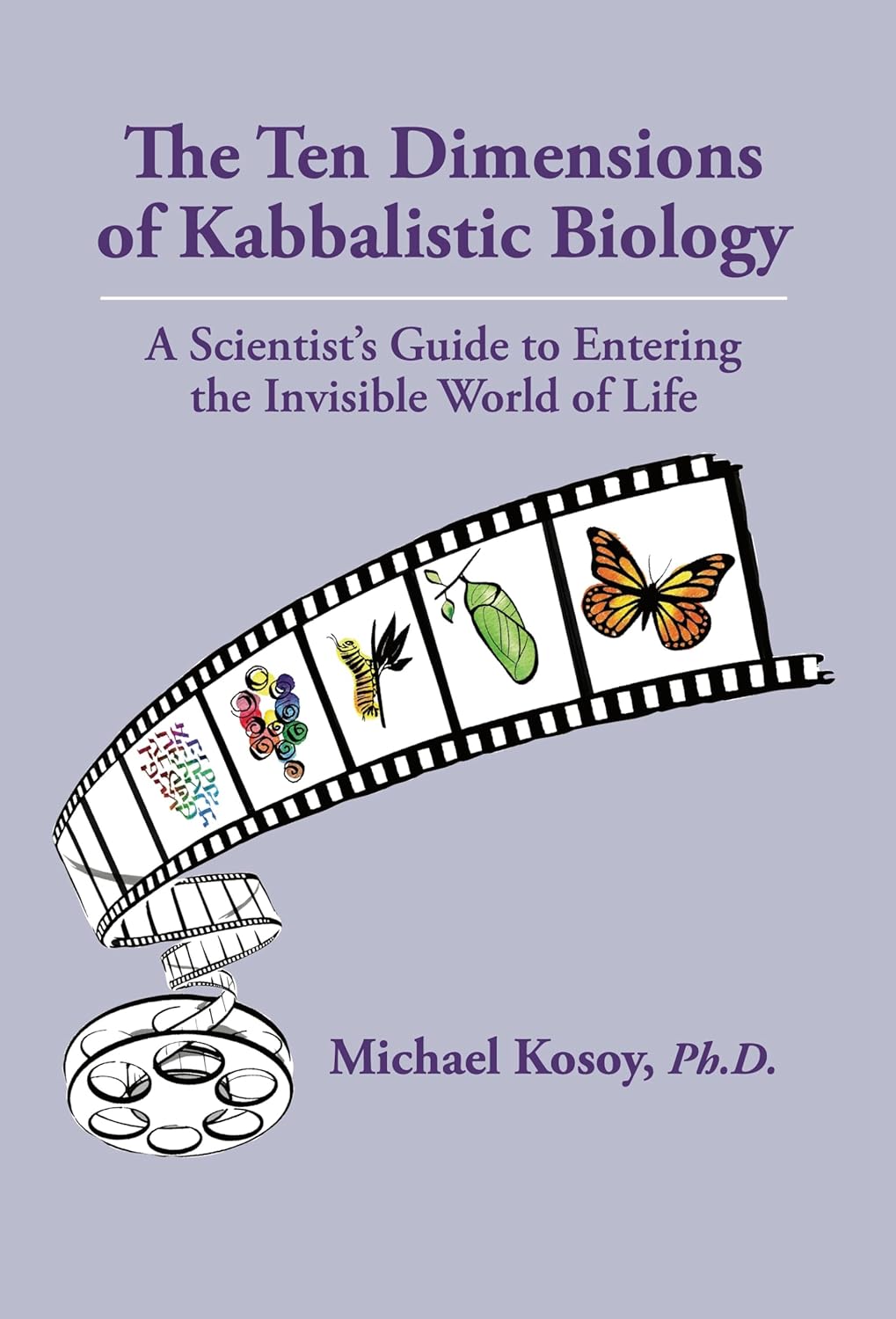
The full-length work explores biological knowledge through the author's research and Kabbalistic perspective. KTAV published the original edition in 2024. The revised edition credits Jenia Kosoy as illustrator.
KTAV's 2024 full-length edition. A revised edition followed in 2025.
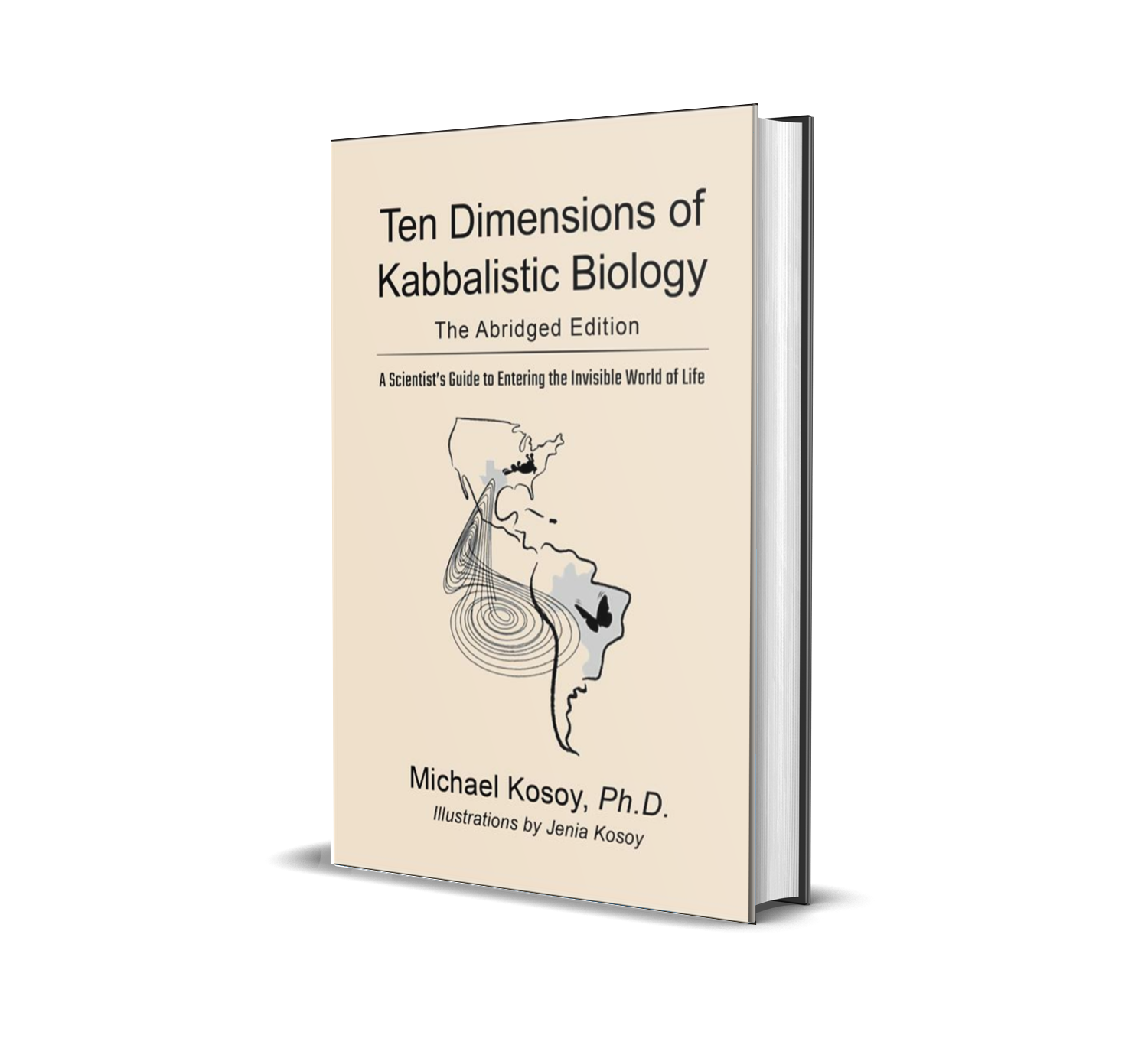
The shorter edition keeps the structure and illustrations while reducing technical material. Its preface explains Michael's process of choosing the central arguments and credits Jenia's artwork and Claire Gerus's editing of the original.
Abridged edition, 2026. Illustrations by Jenia Kosoy.

A 2024 regional atlas covering seven zoonotic diseases in Armenia, Azerbaijan and Georgia. Michael is editor in chief, with Paata Imnadze, Lile Malania, Nana Bolashvili, Andrei Kandaurov, Colleen T. Webb and Kendra Gilbertson as editors. It combines maps with ecological and epidemiological context.
| Date | Type | Show or publisher | Topic | Source |
|---|---|---|---|---|
| May 9, 2026 | Podcast guest interview | Marketer of the Day - episode 1579 | Kabbalistic Biology and the Hidden Dimensions of Life with Dr. Michael Kosoy | Open source |
| August 7, 2026 | Podcast guest interview | Vigilantes Radio Live with Dini | The Dr. Michael Kosoy Interview - author perspective on biology and Kabbalah | Open source |
| September 1, 2026 | Publisher-listed author interview | Global Book Network | Abridged edition author interview | Open source |
| January 28, 2026 | Publisher-listed author interview | Global Book Network | Full-length book author interview | Open source |
| Date not verified | Author-catalog interview | The Open Manuscript with Christine Blanchette | Exploring the Invisible World of Life Through Kabbalistic Biology - listed in the author's media catalog | Open source |
| August 28, 2026 | Company-provided press release | Global Book Network / NEWSnet | Abridged edition and interview with Christine Blanchette | Open source |
| March 30, 2020 | Award issuer announcement | Marquis Who's Who | Albert Nelson Marquis Lifetime Achievement Award | Open source |
| May 22, 2013 | Scientific review article | Entropy | Deepening the Conception of Functional Information in the Description of Zoonotic Infectious Diseases | Open source |
| 2014 - CV-listed presentation | Author-reported scientific presentation | International Conference on Sustainable Development on ONE Health - Khon Kaen, Thailand | Conference participation listed in Michael's published curriculum vitae; specific presentation title not listed | Open source |
Marketer of the Day - Episode 1579
Michael and Robert discuss the questions behind his book, the Flatland analogy and moving between details and whole systems.
Michael Kosoy is a research biologist, author and founder of KB One Health in Colorado. His work examines zoonotic diseases and the relationships between pathogens, animal hosts and ecosystems. After a career at the Centers for Disease Control and Prevention, he continues independent research and writing. He is the author of The Ten Dimensions of Kabbalistic Biology and editor in chief of Atlas of Zoonotic Diseases in the South Caucasus. His book conversations explore how a researcher's scale of observation shapes the questions they ask.
Michael Kosoy - official KB One Health biography and public contacts | Michael Kosoy - about
His published CV records research fellowships beginning in 1994, followed by research biologist and laboratory leadership roles. He led the Bartonella, Rodent-Borne and Wildlife Diseases Laboratory from 2007 to 2019. In the interview, he says he is retired from the CDC and continues research.
Michael Kosoy - original self-published curriculum vitae | Michael Kosoy with Robert Plank - Marketer of the Day
KB One Health is Michael's Colorado research organization. Its official site identifies him as founder and research biologist and lists his research publications, interests and public contact details.
Michael Kosoy - official KB One Health biography and public contacts | Michael Kosoy - KB publications
His work concerns the ecology and evolution of zoonotic and vector-borne diseases, including relationships among pathogens, animal hosts, vectors and environments. His publication catalog includes studies involving Bartonella and Yersinia.
Michael Kosoy - official KB One Health biography and public contacts | Michael Kosoy - KB publications
It is Michael's book connecting biological research questions with concepts from Kabbalah. He presents an intellectual framework for thinking about observation, knowledge, context and complex living systems. The book's metaphysical proposals are attributed to the author.
Michael Kosoy - book | KTAV Publishing House - original book catalog
Michael describes choosing how closely to focus on a component and how widely to view the surrounding system. He argues that the scale should serve the question. It is an axis in his proposed framework.
Michael Kosoy with Robert Plank - Marketer of the Day | Publisher-provided abridged edition credits and preface
Flatland is Edwin A. Abbott's story of a two-dimensional world. Michael uses it as an analogy for limitations of perception and the possibility that an observer's viewpoint misses part of a larger picture.
In its preface, Michael says he retained the structure and illustrations while reducing technical detail and specialized data. He explains the work of selecting the central arguments for a shorter edition.
Jenia Kosoy created the illustrations. Michael credits his daughter in the abridged preface, and the revised edition copyright and title pages explicitly identify her illustration role.
Publisher-provided revised edition copyright and illustration credits | Publisher-provided abridged edition credits and preface
Michael credits Claire Gerus as editor of the original book in his abridged-edition preface. That editorial contribution is distinct from Michael's authorship and Jenia Kosoy's illustrations.
Michael is editor in chief of Atlas of Zoonotic Diseases in the South Caucasus. The publisher identifies six other editors. It is a collaborative research publication covering seven zoonotic diseases in Armenia, Azerbaijan and Georgia.
His published curriculum vitae lists an MS in biology from Mechnikov Odessa State University in 1978 and a PhD in epidemiology and biology from the Gamaleya Institute of Epidemiology and Microbiology in 1987. This description follows his published CV.
Marquis Who's Who announced the Albert Nelson Marquis Lifetime Achievement Award for Michael on March 30, 2020. The media entry links the issuer's own announcement.
Marquis Who's Who - original award issuer announcement, March 30, 2020
Reviewed sources include Marketer of the Day, Vigilantes Radio Live and two Global Book Network publisher feed entries. His official catalog also lists The Open Manuscript with Christine Blanchette.
Michael Kosoy with Robert Plank - Marketer of the Day | Vigilantes Radio Live - original publisher RSS feed | Global Book Network - original publisher RSS feed | Michael Kosoy - official media catalog
KB One Health publicly lists kosoymichael@gmail.com and (970) 779-5114. His author website also has a contact form, and his maintained LinkedIn profile is linked here.
Michael Kosoy - official KB One Health biography and public contacts | Michael Kosoy - contact