Media Appearances / The Author Brand Show
An author wanted his great-grandchildren to hear his story in his own voice. That made the narration decision different from simply hiring the best-sounding reader. His voice was part of what he wanted to leave his family.
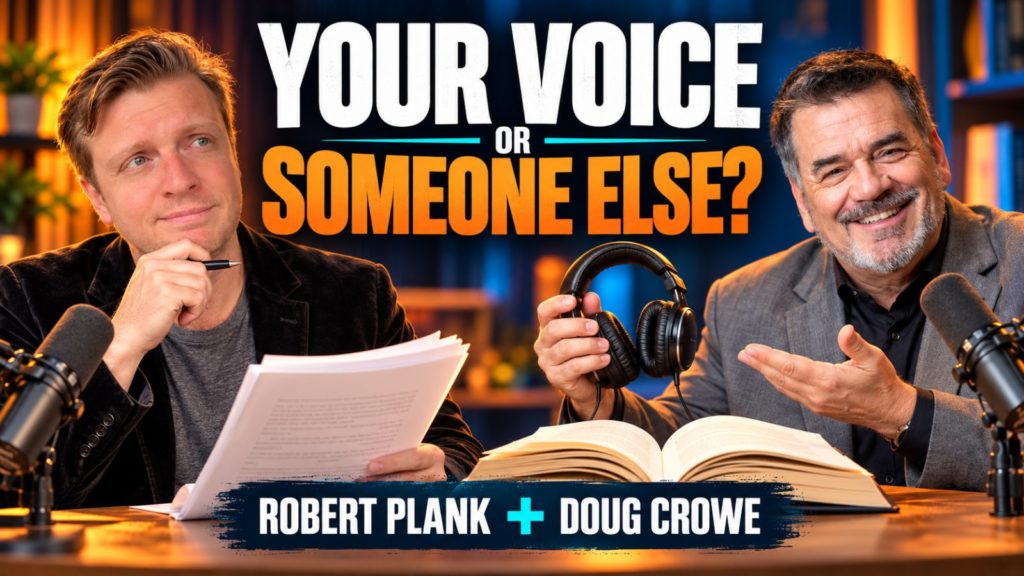
I told Doug Crowe that story on The Author Brand Show because the choice deserves more thought than whether you could do the reading. Is preserving your voice the point, or is the main goal getting a listening edition finished?
I'd put off audiobook versions of my own books for years. I know how easily 'I'll record it myself' can sit beside all the other work you're already doing. Give the choice a purpose and a completion date. Then you have something more useful than an intention to narrate someday.
Doug asks when authors should read their own work and when I'd reconsider a recording I hadn't started. Watch The Author Brand Show interview for that decision and the production work it involves. More interviews are on Doug's channel.
Why Would Someone Listen to This Book?
Doug sometimes buys the print edition after hearing a book while jogging, because he wants to return to a useful passage. I listen while driving or waiting at the doctor's office, when turning pages wouldn't fit. The same person can have reasons to use more than one format.
Choose one book in your catalog and picture when its reader would listen. A business explanation may fit a drive; a personal history may let family hear the author's voice. That purpose helps you choose who should read it.
Decide Who Should Narrate It
I had my own books before I got into narration, and I'd already spent years putting off their audiobook editions. Then I co-taught a class on different side hustles, including audiobook narration. I tried it, found that it fit my personality, and enjoyed learning from the material while doing the work.
That doesn't mean my voice suits every manuscript. As I told Doug, "my voice is not for everyone." I don't do accents or character voices. My approach is generally straightforward, with enough interest in the delivery to help someone stay with what I'm reading. That's one option for a nonfiction book, and the right choice depends on the material and how you want it heard.
One assignment I remembered was a book that blended a business story with practical advice. It followed a consultant working with a hurricane-shutter manufacturer in Florida, slipping accounting lessons into the chapters. I thought parts of the storytelling were hammy, but I still enjoyed narrating it. There was a story to follow as well as information to explain.
I also recalled an assignment that was much harder to sustain: 20 hours of affirmations and Bible verses, spoken slowly and deliberately. Some chapters ran 90 minutes. I got through it, but keeping that delivery going took concentration. Liking the sound of your voice is a starting point. You still have to carry the material through hours of recording.
Set a Deadline for Trying Self-Narration
If preserving your own voice is the reason for the book, include the help you'll need after recording. You may want someone else to edit and prepare the files while you remain the narrator.
My advice was simple: "set a date when you say I want my self-narrated book done, and put it on the calendar where you can see it." Choose a completion date you can work toward, then use it to check what you've actually accomplished.
The example I gave Doug was reaching that date without having started. That's a reasonable time to reconsider doing everything yourself. You may still like the idea of narrating, but the untouched project tells you something about how it fits into your schedule.
If you've recorded several chapters and have a workable plan for finishing, continuing may make sense. If preserving your voice is the central purpose, you might decide to protect more time for it or get help with the production work. If your priority is making the book available to listeners, hiring a narrator may be the better choice.
Understand the Editing and Production Work
Recording the last page can feel like finishing the audiobook, even though you still have files to edit and prepare. Doug mentioned authors who thought they could record their book on YouTube and call it an audiobook. His question brought us to the production work you need to account for before you start.
I started with the microphone and the room. In the setup I described, I used padding to help control sound reflecting back toward the microphone. You have to consider the equipment and the environment together. A microphone still records the room you're speaking in, so making a usable recording involves more than buying one and pressing a button.
Then someone has to turn those recordings into the finished package. We discussed separate audio files for individual chapters, opening and closing credits, and a sample that lets a prospective listener hear the book. We also covered technical processing, including audio levels and background noise. Each piece adds work beyond reading the manuscript aloud.
If you're hiring help, ask who handles those pieces and who checks the files against the requirements of your chosen distributor. If you're producing it yourself, include that preparation in your schedule.
Choose an Excerpt That Helps Someone Decide
Doug asked about visual versions of the material. A short author reading, trailer or excerpt can help someone decide whether they want the complete audiobook. Choose a passage that makes sense without the missing chapters, and tell the viewer where to hear more.
In that 2022 conversation, I was experimenting with Descript. Selecting a passage from its transcript let me find material for a teaser or captioned clip. The tool was useful after I'd chosen what the new listener needed to hear.
Tell the Interested Listener Where to Go
I admitted to Doug that list building was a weakness of mine. Publishing the book didn't automatically tell an interested reader where to go next. A relevant resource, more material on the subject or a newsletter invitation could give them that option.
Keep that reader invitation connected to the book. A listener finishing a chapter on a business process should be able to find the promised worksheet or the next explanation without searching through your unrelated offers.
Choose the Narrator and Schedule the Recording
Put two dates on the calendar: the next recording session and the day you'll decide how to finish. At that review, count the chapters recorded and the production work still waiting. An untouched manuscript is information you can use.
If you decide to hire a narrator, bring the manuscript to Done For You Narration. If you want to read it yourself, ask about production help around your recording. Schedule the first chapter and decide who will review the audio.
About Robert Plank
Robert Plank is an author, audiobook narrator, and host of Marketer of the Day. His work includes helping authors turn their manuscripts into listening editions.
Original Conversation and Resources
Robert joined Doug Crowe as a guest on The Author Brand Show for Why Create an Audiobook with Robert Plank. The conversation covers format choices, narration, production, and giving interested listeners a way to stay connected.
Find more guest interviews in Robert's Media Appearances archive.
Related service: Done For You Narration.