Media Appearances / Your Partner In Success Radio
The advice to write one page a day for 200 days always discouraged me. On day one, I'd already be counting the 199 pages left. On day two, I'd be thinking about the remaining 198. I knew how that project would end: with an unfinished book.

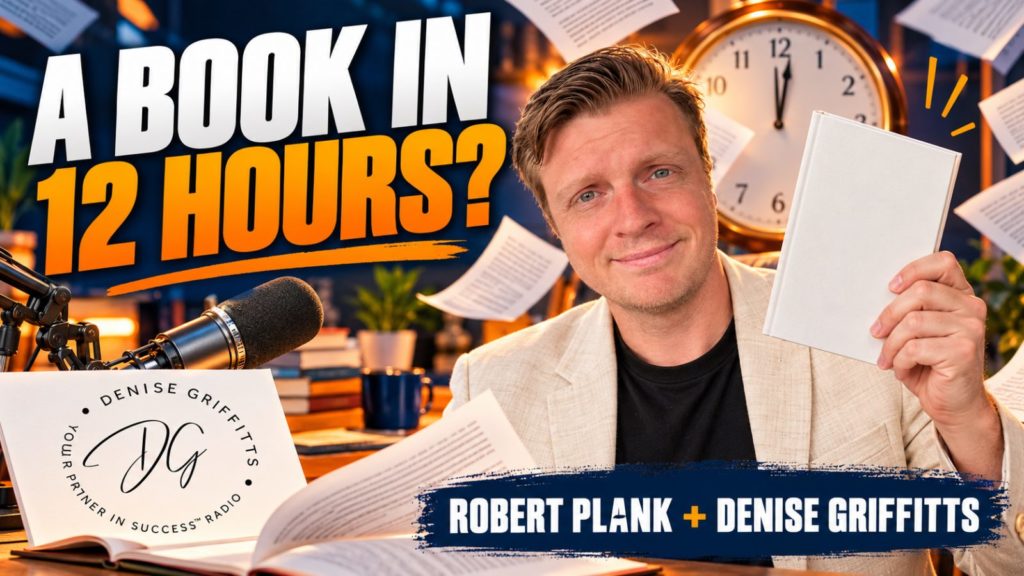
With The Checklist Mindset, I tried a different assignment. Start with an idea at 6 a.m., outline and speak the material, send it for transcription, arrange the cover, and submit the files around 1 or 2 p.m. Amazon approved the book around 5 or 6 p.m. That was the twelve-hour experience I described to Denise Griffitts on Your Partner In Success Radio in March 2017.
I couldn't promise that timetable to another author. Transcription, design and approval all happened to line up that day. What I could repeat was the structure: choose one useful result, turn it into questions, and answer them aloud. That gives me a much better assignment than filling 200 pages.
Denise had years of business knowledge she wanted to put into short books, but hadn't gotten the first one onto paper. We worked through how to give that knowledge a job before trying to give it a page count.
Denise had years of knowledge and no finished manuscript. Listen as we turn that knowledge into questions she can answer on Your Partner In Success Radio.
Decide What the Book Will Help the Reader Do
A 'business card book' can answer the basic questions you explain to customers every day. If you build websites, help the reader understand which pages they need. If you work on search visibility, explain what a ranking means. Give them enough to ask better questions and recognize where they might need your help.
When Denise asked whether my books were part of a bigger marketing process, she understood what I was doing. Someone could pick up a book about membership sites, learn how I approached the subject, and follow a relevant link to my website, podcast, or products. Denise described a similar aim for her own planned books: share her knowledge and give readers a reason to come back to her team.
I wanted a book on something I knew that could introduce me to a new customer. A specialized membership-site book could do that without becoming an airport-bookstore bestseller. That decision helped me leave out subjects the intended reader didn't need.
Write Ten Chapter Questions and Keep Seven
Before I outline chapters, I think of several possible subjects. My first idea might be good, but I want a few choices before committing. Then I narrow those ideas to one useful outcome: what should the reader be able to do after finishing this book?
That could mean setting up a WordPress website or using a few time-saving tools together. Once I know the destination, I list exactly 10 steps or topics that would help someone get there. I don't stop at five just because those came easily. Working through all 10 gives me more material to choose from, and sometimes the strongest ideas arrive after I've struggled with a few weaker ones.
Then I rewrite each topic as a question. "WordPress" leaves too much open. A question asking how a plumber could use WordPress gives me a reader and an explanation I need to deliver. When I look at the outline later, I have something to answer.
Next, I cross out the three weakest questions. If one contains useful material that overlaps with a stronger chapter, I can combine them. In the book I discussed with Denise, I'd considered separate chapters on Gmail and Google Drive. I decided to teach them together, which made that chapter more useful while helping me reduce the outline.
Finally, I arrange the remaining seven questions so the reader learns the prerequisites before tackling the steps that depend on them. Seven chapters is the structure I use for this method. Choosing the strongest material and putting it in a sensible order still takes judgment.
Put Four Questions Under Each Chapter
Even with seven chapter questions, I can still get stuck when I hit record. A chapter about Gmail and Google Drive could take five minutes or five hours if I haven't decided what to explain. I need four smaller questions beneath that chapter heading:
Why does this matter?
What is it?
How do I use it?
What becomes possible next?
Start with why the reader should care. For Gmail and Google Drive, I'd explain why someone would use those tools instead of their existing alternatives. That gives the reader a reason to keep going before I ask them to learn anything.
Next comes the overview: what the tools are, where to get an account, what they look like, and which terms the reader needs to understand. This part gives them their bearings before the instructions begin.
Then I explain useful actions. In the example I gave Denise, those included sending and responding to email, creating a document or spreadsheet, and sharing it with someone else. If I need reminders while recording, I can write a keyword beneath the question, such as Gmail conversations or labels.
The fourth answer prepares the reader for the next skill. If the following chapter covers WordPress, I could connect managing email and sharing documents online to building a website other people can see. That gives the chapter an ending and the next chapter a reason to follow.
I plan on two minutes per answer. Four answers make an eight-minute chapter, and seven chapters make a planned 56-minute recording. I often go over that target. In this conversation, I said the recent book had taken 80 to 90 minutes to record.
Record the Answers, Then Edit the Transcript
With those questions written down, I can explain the material much as I would on the phone. Typing gives me more opportunities to interrupt myself over spelling or sentence construction. Speaking lets me get the explanation out in my own voice, then return to the wording afterward.
Use a recording tool you already know. When Denise asked what I used, I said Camtasia because it was already on my computer. I also mentioned a smartphone or Audacity. Choosing software shouldn't become another reason to postpone recording.
With the outline in front of you, you can record the whole planned session, one eight-minute chapter, or one two-minute answer. If you have a few minutes between other activities, you know exactly which question to answer. You don't have to find an uninterrupted hour before making progress.
I used Rev for that 2017 project and received the transcript the same day. Budget for your actual provider's turnaround; my twelve-hour day isn't a production guarantee.
Once the transcript came back, I'd scroll from the end toward the beginning. Reading in that direction helped me notice repeated phrases, spelling errors, and obvious problems without getting absorbed in rebuilding the entire book. Denise pointed out that this kept my attention on anomalies instead of second-guessing everything I'd said.
Then read the chapters in order. A spoken explanation can skip a step that felt obvious while recording. Add the missing instruction, verify names and facts, and remove repetition before treating the transcript as a book.
Check the Manuscript and Order a Print Proof
After recording and editing, revisit the title. Does it describe the result the chapters actually deliver? You may have explained something more specific than the idea you started with. The cover should make that actual subject clear.
I gave the designer four details: title, author name, colors and image direction. A print cover also needed a spine and back cover coordinated with the finished interior. Changing the page count could mean changing the spine, so settle the manuscript before treating the cover as finished.
For a first print book, order a physical proof. Open it near the binding, read the inner margins, check the page numbers, and inspect the cover in your hands. This is the same question you asked while outlining: can the reader use what you've made? A fast production day still needs that slower check.
Plan How Readers Will Find the Book
The twelve-hour day depended on clear handoffs: audio for transcription, direction for the cover, and files and a description for publication. My Kindle and CreateSpace procedures were part of the 2017 conversation. Check the current platform requirements when you're submitting.
My email list was the promotional method that worked best for me. My Facebook and Amazon advertising experiments hadn't given me a reliable process. Begin with people who have a reason to want this particular explanation, and give the book a relevant destination for readers who want more help.
Start by Recording One Answer
Choose your reader's result, list ten questions, and keep the strongest seven. Under the first question, add the four prompts: Why does this matter? What is it? How do I use it? What becomes possible next? Say the first answer aloud.
Listen to that first answer. Could someone act on it without calling you to ask what you meant? Add the missing step before recording six more chapters.
The Checklist Mindset is the book whose production day Denise and I discussed. You can find it in my book collection and compare the finished work with the process in our interview. Start by recording the first answer; you'll have something to edit today.
About Robert Plank
Robert Plank is an entrepreneur, author, and host of Marketer of the Day. He teaches business owners how to organize their knowledge, create useful content, and use systems to finish projects.
Original Conversation and Resources
This article draws on Robert's March 10, 2017 conversation with Denise Griffitts on Your Partner In Success Radio.
- Listen to the original conversation: "Robert Plank: How to go from idea to fully published book in 12 hours".
- Visit Your Partner In Success Radio for Denise's show and other conversations.
- Browse Robert Plank's Media Appearances for more guest interviews.