Media Appearances / Authority TV
When I edit an AI draft, I remove the sentences I wouldn't say and put my own examples back in. Sometimes half the draft has to go.
That works better when I give the tool something substantial to begin with. Give it 4,000 words of a real conversation and ask for the strongest 400, or forty. Now it has my stories and phrasing. One vague sentence leaves much more for it to make up.
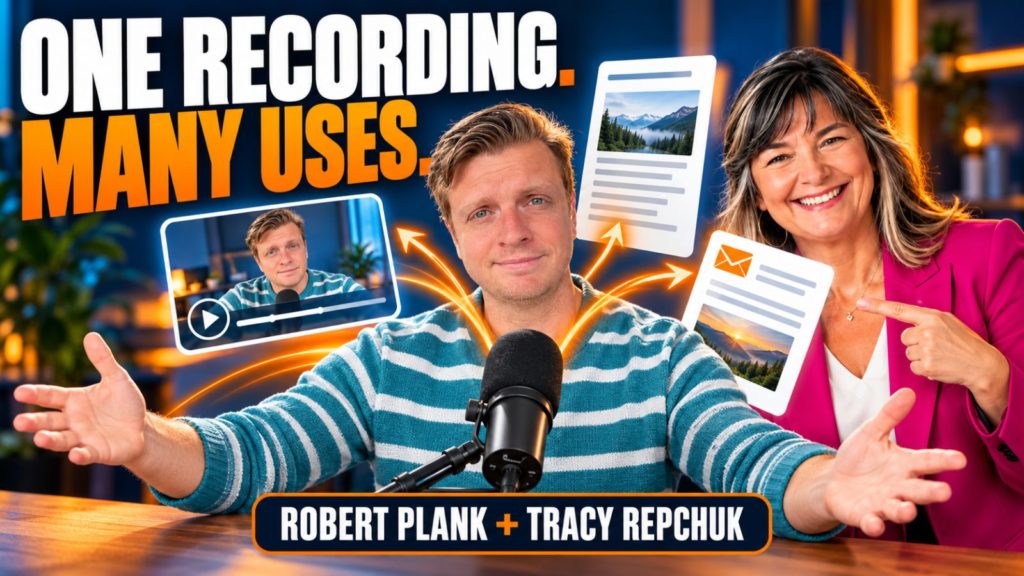
Tracy Repchuk invited me to teach that process at her summit, in a presentation shared on Authority TV. I described a five-minute introduction: how you got started, someone you helped, and how you can help the viewer. Follow that recording through a few useful forms before asking it to fill a month's calendar.
Watch the Authority TV presentation to follow the five-minute introduction through social posts, graphics and article ideas. I also explain what I edit before publishing. More of the summit presentations are on Tracy's channel.
Record a Five-Minute Introduction
Someone lands on your profile and wants to know what you do. Can they find a short video where you explain it? You might have plenty of posts and a detailed bio, but a simple introduction lets them hear how you talk and understand whether you can help them.
I suggest starting with a five-minute video covering three things. First, explain what you do and how you got started. Give enough background for a stranger to follow, without walking them through every job you've ever had. Explain the problem you help solve and how you ended up doing this work.
Second, choose someone you've helped. Explain their problem, the part you handled and what happened. A modest result with a concrete detail tells a new viewer more than a broad claim about transforming businesses.
Third, bring the conversation around to the person watching. Explain how you could help with their situation and give them a clear next step. You've introduced yourself, shown your work through someone else's experience, and connected it to what the viewer might need.
Use five minutes as a starting target. Record the three answers, then watch as someone who has never met you. Can they tell what you do, understand your example and find the next step? Correct the missing part before starting a weekly schedule.
Find the Passage You Want to Use
Get the transcript and use the recording to resolve strange wording, names or numbers. I mentioned Otter as one tool. The text gives you a place to find the explanation; the recording tells you what was actually said.
For the five-minute introduction, start with the person you helped. Which passage makes their problem clear, and which detail explains your contribution? Keep enough surrounding material to distinguish the result from a broad claim about your business.
Now ask for the shorter version. Keep the original beside it and compare. If removing three sentences also removes the reason the advice works, the shorter draft needs another pass.
Make Posts, Clips and Articles From the Transcript
The first example I gave was taking the five-minute introduction and asking for five social posts based on five points in it. If each point stood on its own, you could space those posts across several days instead of needing another recording immediately.
The transcript supplied the material. I discussed using a transcription tool or the text available with a published video. Once you had the words, you could select a useful sentence, develop a short post around a point, or find a passage worth turning into a longer explanation. The software wasn't being asked to invent what you believed about the subject.
For a quote graphic, choose a line that expresses the idea accurately and attach the correct speaker. The image still needs readable text and a format suited to where it will appear. If you rewrite the sentence substantially, make it an attributed paraphrase rather than putting quotation marks around new words.
A longer article requires a different assignment. Start with an outline built from the ideas actually explained in the source, then develop the sections enough for a reader to follow. Keep the example and the steps that made the advice useful. A short summary of a long interview isn't automatically a helpful article.
An email can introduce the particular question the full recording answers and link to it. A clip can show the answer being given. They can come from the same conversation without having to repeat an identical paragraph in every place.
I also described reviewing what a suggested comment said about somebody else's appearance. The draft needed substantial editing and my own understanding. A smooth response that implied I'd understood material I hadn't examined would miss the point of having a conversation in the first place.
Tracy connected this with work she'd already been doing for years: developing useful material for different platforms. The tools could shorten some preparation, but she still had the original message to work from. I had reached the same limit when finding guests, recording, editing, and preparing posts had become too much switching between jobs.
Try the method with this Authority TV presentation: select the passage where I explain the three questions for the first video. Make the short piece teach those questions, and give the reader the full source if they want the rest of the process. That is a specific assignment you can review before expanding the publishing calendar.
Read the Graphic and Watch the Clip
For the graphic example I discussed with Tracy, the practical decisions were shape, readable text and placement. View it at phone size. Shorten the passage if the type has to become tiny.
I acknowledged that generated images can misspell words. Read the actual graphic, including the name and website. An editable layout in a tool such as Canva lets you correct the text instead of accepting the error as part of the image.
Watch a clip from its first second without relying on your memory of the interview. Does it define the subject? Does the last sentence finish the thought? Those checks are different from proofreading the accompanying post. Each format needs its own review.
Share More Than Once and Follow Up
Publishing the episode gives you something to promote. You still have to help someone find it. If you share the recording once and move on, you're assuming the person who could benefit happened to see that first post.
Space the useful material over time. Share one point, return later with a different excerpt, and revisit the full episode when its subject comes up again. A recording can remain useful weeks or months after you publish it. Choose a schedule you can sustain with worthwhile material, giving each post a reason to appear.
Conversations help you build that library without having to invent every subject yourself. I used a possible invitation to Tracy as an example: we could discuss her projects, speaking, and mission on my show. That gives an invitation some substance. I can explain what we'd talk about and why my audience would want to hear it, instead of asking a busy person to meet with no particular purpose.
Keep the original show link and speaker credit with the finished pieces. Send the appearance to the person who contributed it, then return when you have a relevant passage or question. That is easier to continue than inventing a new topic every time you want to contact someone.
Read the Draft Aloud and Cut What You Wouldn't Say
Read the draft aloud. When I remove half an output, I want what remains to make the explanation more direct. Keep the useful detail, the candid qualification and the phrase you'd actually use in a conversation.
I brought in a team because recording, finding guests and editing created too much switching between jobs. That help can prepare the post or graphic. I still want the published explanation to be something I'd put my name on. As I said, 'We don't want to use AI as a crutch. We want to use it to enhance us.'
Finish the First Set of Posts Before Ordering More
Choose one recording and mark the passages worth developing. Prepare a post, a clip or graphic, and an article outline only where the material supports them. Read, watch and check those pieces before requesting another batch.
DFY Podcast's production service can turn your recordings into finished episodes and promotional material. Start with one recording and review the first set of posts, clips and graphics. Cut the lines you wouldn't say before you ask for more.
About Robert Plank
Robert Plank hosts Marketer of the Day and owns DFY Podcast. He helps business owners record useful conversations, build relationships, and turn their recordings into articles, clips, and social posts.
Original Conversation and Resources
Tracy hosted Robert's invited teaching presentation on Authority TV: How to Turn One Podcast Episode into a Month of Marketing Content. Find more from her on Tracy Repchuk's YouTube channel.
Browse Robert's other guest presentations and interviews in the Media Appearances index.