Media Appearances / Speak To Freedom
Suppose a sponsor pays $30 per thousand listens. A placement heard by 200 people would earn $6. That was the math I used in this presentation, and it didn't give me much reason to keep recording.
I wanted clients and referral relationships from the people I met. A guest could have a problem I could help solve, or know someone who did. That gave me a reason to choose the conversation and follow through afterward.
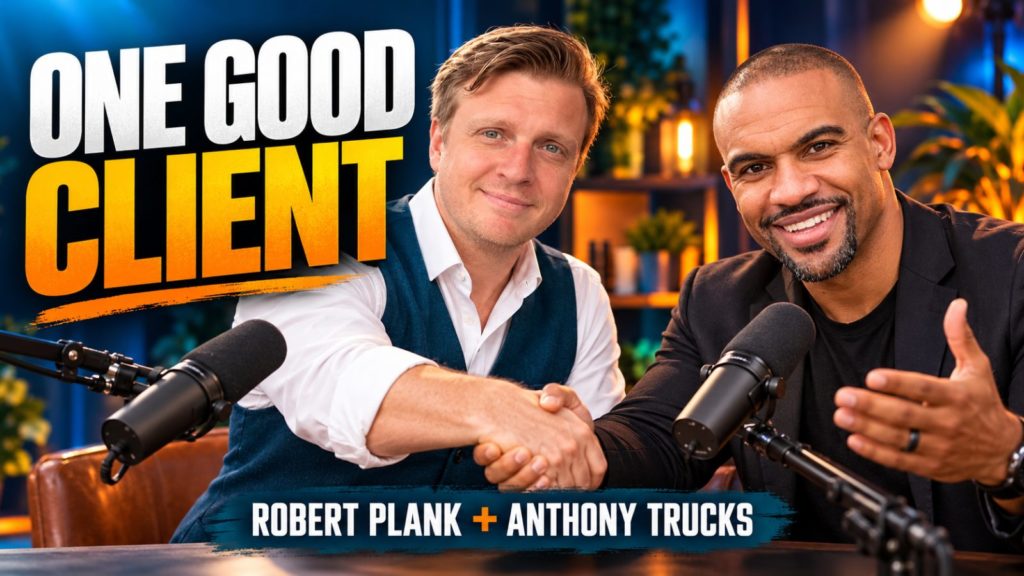
Anthony Trucks invited me to teach the approach at Speak To Freedom. He already knew my team's show-note work. That relationship was part of how I came to speak in the room, so I had a concrete reason to discuss the business around a small-audience podcast.
Watch the audience questions in my Speak To Freedom presentation on adding interviews to an existing show and using a guest appearance. Anthony invited me after working with my show-note team. His Speak To Freedom program has the event details.
Choose People You Would Like to Work With
I used to get caught up in the equipment and what I was going to teach. Then I saw William Shatner speaking at a marketing conference and wondered what he was doing there. He talked about his show, Brown Bag Wine Tasting, so I watched a few episodes.
The setup was silly enough to get my attention. He'd sit with a guest, taste wine from a bottle hidden in a brown bag, and see where the conversation went. As I remember it, Lou Ferrigno described the wine through weightlifting, while a flower shop owner connected it to her garden. The same starting point brought out something different in each person. Their personalities gave me a reason to keep watching.
At Anthony's event, I suggested comparing a participant's earliest speaking clip with a recent appearance. They could explain what had been difficult, what helped and what changed. The speakers already had experiences worth exploring; the interview would give those changes a format.
Then there was Jason Hartman, who'd been on stage earlier. I recognized him from a podcast connection years before and hadn't known he'd be there. That earlier conversation meant we already knew each other when we ended up in the same room again.
For a planning exercise, write down five people you'd like your podcast to bring into your life. Beside each name, describe the conversation you'd want to have and why your audience would benefit from hearing it. Give yourself a reason to invite them that still holds up if they never become a customer.
Use a Pre-Call, Interview and Follow-Up Meeting
I give the relationship three separate conversations: a short pre-call, the recorded interview, and a post-call when there's something worth discussing. Each gives us a little more context for the next.
Before the pre-call, I check the person's LinkedIn profile and watch a previous YouTube appearance. When we meet, I can ask about something they've actually said. I also ask about their current focus and mission. We might talk about our kids or hobbies. Ten minutes gives us a chance to get acquainted and find a subject we both want to explore.
During the interview, I want stories about the people they've helped, their setbacks, and what they've learned. I ask what happened when something didn't work and how they got past it. Give someone room to explain an experience and you'll often hear something more useful than their prepared talking points. The audience deserves a worthwhile conversation, and the guest deserves your attention.
After publication, I share the episode and relevant clips or graphics. Then I can ask for another short meeting about their current work, a suitable introduction or a service they want to discuss. Keep that next invitation specific, including when it's a business conversation.
Research before the invitation. Look at their LinkedIn profile, business, and past interviews. Find a specific reason to connect.
- Pre-call
Use 10 minutes to find common ground, choose stories, and explain the interview.
- Podcast interview
Record stories, mistakes, and useful ideas your listeners can learn from.
- Post-call
Talk through what you are both working on and where you could help each other.
Give the relationship a reason to continue. Send the episode or a useful clip. Share a resource, make an introduction, or follow up on a project they mentioned.
Start With Equipment You Can Record On
I'll record five or ten episodes, then reward myself with a better microphone or better lighting. That puts the upgrade after some actual recording. Otherwise, it's easy to spend your time comparing equipment and still have nothing to publish.
My starting requirements are good enough sound, good enough light, and a recording process I can repeat. During the presentation, I pointed to a lapel microphone and described recording an in-person conversation with a phone. You can start with a setup like that and improve it as you discover what needs work. The couch and neon sign can wait.
I also talked about Zoom and Riverside. A meeting lets you have the conversation, but you need a usable recording afterward. Before relying on any setup, make a test recording, listen to it, and check that you know where the files go. Find the problem before you've asked a guest to spend time with you.
Follow that recording through the work. The full conversation becomes the episode, which you can distribute where your audience watches or listens. A selected exchange becomes a short clip. The transcript supports show notes, a graphic, or a written post. Each piece should give someone a useful way into the conversation.
Anthony first found my team through our show-note work. We'd listen to an episode and prepare the important points, quotes, and links underneath it. AI can help with that work now, but I still want someone checking the finished material against the conversation.
Compare a Client Relationship With Six Dollars in Ads
For my service business, a small audience can still include someone with a suitable need. That possibility gives me a reason to pay attention to the people and the work that follows an episode.
I shared an example of a guest who taught nonprofits how to use fundraising postcards. When we first connected, he was concerned that I wanted to sell him something. We recorded the podcast, and he later chose to participate in a compilation book for $725. That was the price for that project at the time. Our conversation gave us a chance to get acquainted before I offered him something else.
Track the introductions, requested meetings and service inquiries alongside audience numbers. A sponsorship placement, a client project and a referral are different results with different work behind them. Keep the actual outcomes in the record so you can see what the show is contributing.
Record What You Promised the Guest
Each week I ask for my ten best opportunities. Calendar entries, meeting transcripts and sent email help me find the actual next action: someone asked me to return in three months, or I promised an introduction and haven't made it.
I use Read AI for meeting transcripts. The useful detail may be a few sentences inside a longer discussion. Compare that note with the sent email before deciding what remains undone.
For a first review, choose a few recent conversations. Record the person's name, last relevant discussion, next action and the message or note supporting it. An AI-generated draft can help with wording after that. Check the identity, timing and commitment yourself.
An introduction I owe someone belongs beside a suitable service conversation. If I can't find a real reason for the follow-up, I need to think harder about the person instead of inventing an excuse to contact them.
Discuss a New Project Before Using the Interview for It
If an interview contains material for a compilation chapter, ask whether the person wants to develop it. Explain what the book would include, the price and the review process. The recording gives you source material for that discussion; the contributor decides whether the new project fits.
An audience member asked how I chose contributors without making them compete for the same chapter. I described starting with a broad umbrella. A book with ten people giving the same advice on membership sites could repeat itself. A wider health theme could give one contributor sleep and another exercise. Each person has a distinct part to explain, and the reader can see why those parts belong together.
The transcript is the starting material. Select the useful explanation, arrange it so someone can follow it without hearing the interview, and edit the spoken repetitions. Then have the contributor review the actual chapter. A person can explain an idea clearly on a podcast and still need to clarify it when the reader can't ask a follow-up question.
I also described what my compilation project included at the time: the main book, a personalized cover version with the contributor's photo and name, their chapter moved forward, and smaller copies of the chapter on its own. Those copies gave the contributor something they could actually hand to people. I discussed Canva for the cover work and Lulu for the personalized print copies. That's an account of that project, rather than a rule that every publishing platform permits every variation.
The audiobook questions came next. Audience members asked about narrating it yourself, hiring a narrator and synthetic voices. My own narration work was part of why I included an audio edition in the project. The decision still needs a separate production plan: who reads it, who edits and checks the recording, and who prepares the files for the chosen distributor.
A transcript, a chapter, a print book and an audiobook are different finished pieces. Each needs its own review. The interview saves you from starting with no material, but it doesn't complete all that work for you.
Get Help With Editing and Publication
Audience members asked about short solo episodes, adding guests and the workload. A solo episode develops your explanation; an interview gives another person's experience room. You can try interviews inside an existing show before deciding whether another show needs to exist.
Choose the format for the conversation, then assign the editing, graphics, posting and distribution. Recording more doesn't remove those jobs. Each episode needs an owner for its route to publication.
If you're guesting, agree with the host on access to footage, intended reuse and source credit. I said I was happy to supply my guests with raw footage; other hosts can have different arrangements. Ask for the live episode link too, so you can share the actual published conversation.
One audience member noted that interviews help refine the message. I compared it with comedians testing material: another person's question exposes the part that needs setup or a better example. Keep that lesson for the next appearance.
Choose Who You Want to Invite
Name one person worth knowing and the question their experience could help your audience answer. Review their work and invite them to a short pre-call. Let the discussion supply a relevant follow-up: the finished episode, an introduction, or a project they asked you to revisit.
Anthony invited me because he knew the show-note work my team had done for him. If you'd like that same help after your recordings, DFY Podcast's production service can handle editing, notes and publication. Finish the episode, send it to the guest and keep the conversation going.
If that conversation leads to a finished book you'd like people to hear, Done For You Narration can help turn it into a professionally narrated audiobook.
About Robert Plank
Robert Plank hosts Marketer of the Day and runs DFY Podcast. He helps business owners turn recorded conversations into published episodes, show notes, clips, and other material they can share.
Original Conversation and Resources
- Watch the full presentation and audience Q&A: How to Get Clients From Your Podcast (Even With a Small Audience), published on Robert's YouTube channel.
- Anthony Trucks' Speak To Freedom program: the program behind the live event.
- Robert Plank's podcast and media appearances: more guest conversations and presentations.
Related service: Done For You Narration.