Media Appearances / The Entrepreneurial Odyssey
Rob Ratliff offered marketing help in a Facebook group and got little response. Then he invited business owners to tell him how they got started, what went wrong and what they'd learned. People volunteered.
The invitation gave them something they could picture doing with him. They didn't have to decide they wanted a marketing service before having a reason to talk.
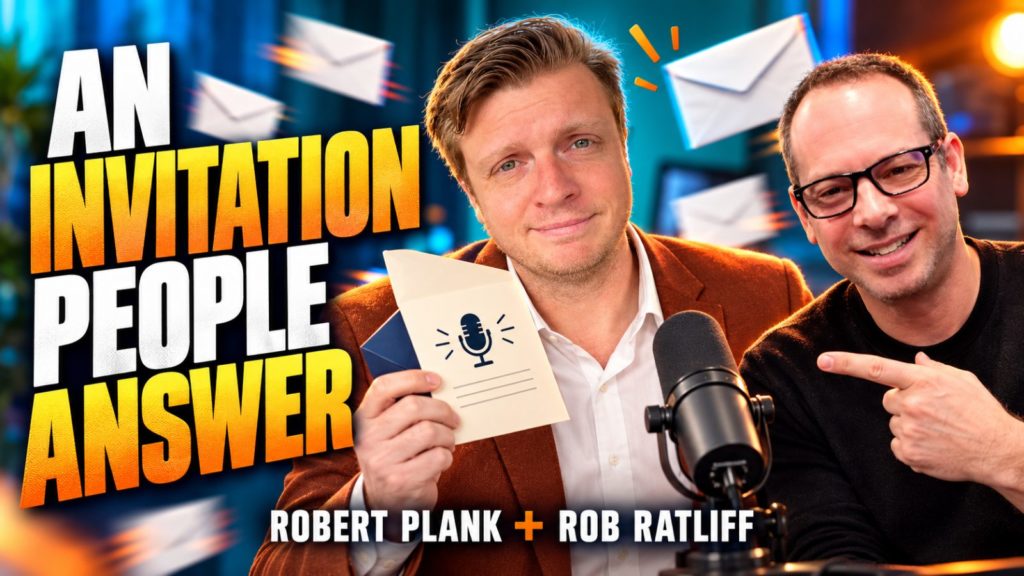
I joined Rob on The Entrepreneurial Odyssey because that deliberate conversation has become a useful part of my business too. It gets me out from behind the computer. It also gives me a recording I can use to hear where my own explanation needs work. The invitation and the preparation belong to the same job: give the other person a worthwhile exchange.
Rob sent twenty questions before this interview. Watch The Entrepreneurial Odyssey conversation to hear how I prepared and why his podcast invitation got replies. His channel has the other interviews.
A Marketing Offer Was Easier to Ignore Than an Interview
Rob asked what I had done before podcast production. I explained that programming was the work I could happily lose myself in. At ten, I'd overprepared for a computer camp by reading my dad's programming book, then arrived to find the class covering basics such as the mouse and keyboard.
The interest stayed with me. In high school I could work through programming assignments quickly because figuring them out was fun. What I didn't enjoy was the career path I imagined: becoming a manager directing other programmers instead of spending my time in the code.
Putting out my own software and ebooks let me keep building. It also gave me a new set of problems to solve: copywriting, pages, email marketing, list building, and traffic. A working piece of software didn't automatically introduce itself to the person who needed it.
Rob and I connected that with the value of a service. Information might help someone understand a process while still leaving them with the work of carrying it out. A podcast owner could know how recording worked and have no time to turn the file into a published episode.
That was the business perspective behind our conversation about generated content. Rob thought hearing someone's actual story would become more valuable as generic material became common. In my work, talking with the person helped identify which job they wanted completed. More instructions weren't necessarily what they needed to buy.
Practice Talking to People on Camera
Rob asked whether I considered myself an introvert or an extrovert. Introvert, 100 percent. When he asked how I'd become comfortable putting my face on camera and talking to people, I told him, "Well, I got better practiced. I think it's just as simple as that."
I also got tired of feeling overlooked. At my university IT job, I liked working independently and getting paid to learn new technology. Sometimes I'd finish projects weeks ahead of schedule. The work itself was fun, but I remember asking for a metal nameplate on my door and watching that small request drag on.
Then I was offered a choice of desks. One was in the middle of a room with people around me and little privacy. The other was farther away in the science building. I took the quieter location, which initially suited me. Eventually, I felt exiled. I'd chosen the space, but I wasn't happy with how removed I felt.
I could enjoy working alone and still want opportunities that required other people to know me. Keeping to myself wasn't going to accomplish both. My advice was to practice the social skills you need and find a way to recharge if those conversations wear you out.
Try one focused conversation with someone whose work interests you. Prepare questions you want answered, then notice which explanation you struggled to give. That gives your next practice session something specific to improve.
Explain Why You Want to Interview Them
My early podcast episodes gave me practice explaining what I knew, but mostly to people who already followed me. If I had a webinar course to promote, I'd record an episode about webinars. Existing subscribers could hear me explain the subject, and some episodes led to sales. I kept wondering how I could reach people outside that audience.
Interviews gave me a reason to start new conversations. Sometimes I'd meet someone at a conference and want to stay in touch without knowing how to move the relationship forward. Inviting them onto my show gave us something useful to do together after we got home.
Rob's original posts offered marketing and lead-generation help. His revised invitation offered a conversation about how a business owner got started. He recalled roughly 50 responses. Some guests later asked for help or referred someone to him.
That sequence gives you a useful test for your own invitation. Can the person picture the conversation? Have you explained why their experience would help your audience? Give them a reason to want the meeting before asking them to evaluate your service.
Then deliver the interview you offered. Prepare for the person's story, publish the conversation and send the finished link. If you discover work you could help with, ask whether they'd like to discuss that separately.
Include the Question When You Share the Answer
After recording, preserve the questions alongside the answers. A clip or a written explanation needs enough context for someone who wasn't in the conversation. The sentence before a suggested excerpt may be what makes it understandable.
Rob enjoyed reviewing clips and noticing useful moments again. I also suggested using several transcripts to explore a real audience question, keeping each guest's contribution and original link clear. That same source record gives you a practical way to improve your own answers before the next appearance.
Practice an Answer Before Going on Another Show
The Rehearsal gave me the idea of trying a small rehearsal for an interview. Take a host's actual question and your answer from an earlier appearance. Read them together. Where did you delay the point, skip the example or leave out the next action?
Before this conversation, Rob supplied twenty questions. I used a custom GPT with previous appearances, my biography and some videos to suggest answers. I reviewed the suggestions and noticed which parts I'd want to say differently.
Choose one answer to revise in your own words and say aloud. Keep the example and the qualification that make it yours. That gives you preparation you can draw on while listening to the actual question.
The test happens when the host follows up. If their question changes the direction, respond to it. A rehearsal should make it easier to explain the idea, not make you wait for the chance to recite the prepared version.
Publish the Interview You Promised
Rob's story invitation gave people a reason to volunteer. After that, the host still owes the work of preparing and publishing a worthwhile conversation. Decide where the recording goes, who prepares it, and when it will be reviewed.
A maintained archive also lets the next prospective guest hear what accepting your invitation would be like. Choose one finished episode you would send as that example. It should show the kind of questions and attention you're offering.
Prepare the Conversation Before Sending More Invitations
Choose the person and the subject their experience would help your audience understand. Explain why you want that conversation. Before meeting, practice one answer you've previously struggled to explain, then listen closely enough to adapt.
DFY Podcast's production service handles the work between that recording and the finished episode you promised. Use the support to keep publishing while you prepare for the next person who says yes.
Rob's marketing offer got little response. Asking people for their stories gave them something they wanted to do with him. Make your next invitation that specific.
About Robert Plank
Robert Plank hosts Marketer of the Day and owns DFY Podcast. He helps business owners use podcast conversations to build relationships, with production support for editing, show notes, publishing, and promotional content.
Original Conversation and Resources
This article draws on Robert Plank's guest appearance on The Entrepreneurial Odyssey, hosted by Rob Ratliff. The original conversation is linked above.
- Connect with Rob Ratliff on LinkedIn.
- Browse Robert Plank's Media Appearances for more guest conversations.
- Explore DFY Podcast production support for help completing the work after recording.