Death and resurrection timing
The authors compare the Friday-death/Sunday-resurrection tradition with the wording of three days and three nights. They connect this question with their understanding of the Sabbath and biblical timekeeping.
Bible Study, Doctrinal Questions and Independent Reading
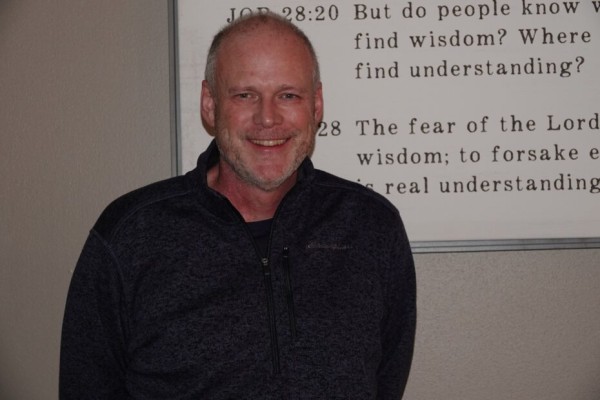
"If we tell you not to believe your pastor, minister or priest, then say you need to believe us, we're being hypocritical. Search the Scriptures."
Updated October 27, 2026
Sean Walsh is a biblical studies author, the founder of Unlock The Word and coauthor with Don Roth of The 3 Pillars Of False Doctrine. After a career in industrial sales, Sean turned to questions about faith, church teaching and reading Scripture without inherited assumptions. His work invites readers to test the authors' conclusions against the Bible rather than accept a new authority unquestioningly. In interviews, he discusses the book's three doctrinal questions, his collaboration with Don and how difficult conversations can become the starting point for further study and writing.
Sean Walsh is a biblical studies author and the founder of Unlock The Word, a ministry providing articles, videos, Bible studies and books for people examining their faith. He coauthored The 3 Pillars Of False Doctrine with Don Roth. Their work asks readers to compare familiar Christian teachings with Scripture, and presents the authors' own arguments about biblical language, context and chronology.
Sean came to this work after a long career in industrial sales. His official biography describes a major change in direction and a period of personal Bible study after his father's death. Raised in Roman Catholicism, he later explored nondenominational teaching while reading for himself. He describes noticing differences between what he was hearing and his understanding of the biblical text. Unlock The Word grew from his wish to encourage people to open and study their own Bibles.
His collaboration with Don began after Sean heard an advertisement for Don's calendar research and ordered a DVD. Watching it prompted him to contact Don, beginning a relationship in which Don became a biblical mentor. The official book page describes their shared problem-solving outlook, while their Marketer of the Day podcast conversation shows their different emphases: Sean discusses doctrinal assumptions and translation, and Don concentrates on timekeeping and calendar questions.
In The 3 Pillars Of False Doctrine, Sean and Don question the Friday-death/Sunday-resurrection tradition, conventional teaching about the Trinity and the meaning of church. They regard these as foundational questions affecting other interpretations. Sean's invitation is to examine their arguments directly. During the podcast, he says readers should test what the authors say rather than transfer unquestioning trust from one teacher to another.
Sean also discusses what can come from an uncomfortable exchange. In his conversation with Robert Plank, he reflects on moments when a challenge or disagreement helped him identify a missing point and develop an article. His subjects for interviews and reader discussions include inherited assumptions, biblical context, using a concordance, the difference between persuasion and inquiry, and the experience of reconsidering beliefs held for many years. The ministry's public contact page provides an inquiry route.
Sean and Don organize their book around three doctrines they believe influence how other passages are read. These are their theological arguments, and the book invites readers to examine the cited Scripture and context.
The authors compare the Friday-death/Sunday-resurrection tradition with the wording of three days and three nights. They connect this question with their understanding of the Sabbath and biblical timekeeping.
Their second argument concerns how the Father, Son and Holy Spirit are described. They challenge conventional Trinitarian teaching and ask readers to compare the relevant passages rather than rely on an inherited explanation.
Sean returns to the Greek term ekklesia and argues for understanding it as a called group of people, rather than identifying it with a building or institution. This distinction shapes the book's account of religious authority.
How Sean approaches the gap between a familiar teaching and his reading of the underlying biblical passage.
His use of word-study tools, surrounding passages and the example of Acts 20:7 to explain why a translation choice matters to his argument.
How a radio advertisement and a calendar DVD led to a mentoring relationship and a coauthored book.
How Sean reflects on difficult conversations and sometimes develops the unresolved question into an article.
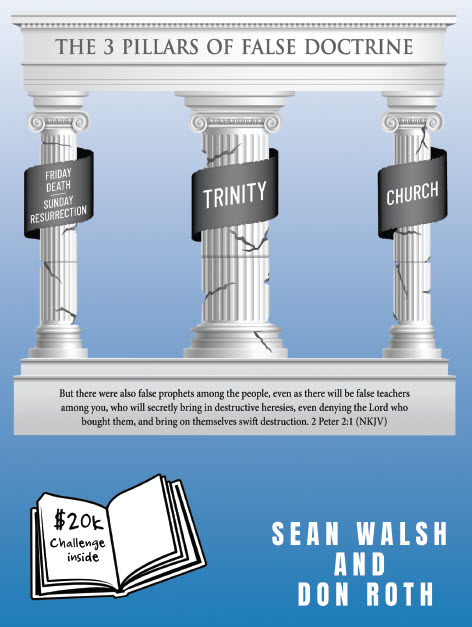
Coauthored by Sean Walsh and Don Roth
Sean Walsh and Don Roth examine three doctrines they believe shape other Christian teachings: the timing of Christ's death and resurrection, the Trinity and the meaning of church. They ask readers to compare inherited teaching with biblical wording, context and chronology. The book brings Sean's questions about denominational assumptions together with Don's calendar research. Its arguments are the coauthors' theological interpretations, presented for readers who want to study and challenge those positions directly.
| Date | Type | Outlet | Subject | Source |
|---|---|---|---|---|
| March 8, 2026 | Podcast appearance | Marketer of the Day podcast | The Three Pillars of False Doctrine and biblical-calendar questions, with Robert Plank | Open source |
| February 12, 2026 | Podcast appearance | Faith and Family Fellowship podcast | The coauthors discuss their book, biblical context and their critique of church teaching | Open source |
| January 22, 2026 | Podcast appearance | Deal By Me podcast | Joint author interview on The 3 Pillars Of False Doctrine, episode 300 | Open source |
| December 19, 2025 | Press release | Atticus Publishing via IssueWire | Announcement of the coauthored book and the questions behind it | Open source |
March 8, 2026 | Episode 1549
Sean Walsh joins Don Roth and Robert Plank to discuss their coauthored book, the assumptions behind religious observances and their approach to reading Scripture. Sean explains the three doctrinal questions; Don describes his calendar research and the challenge that started it.
Watch the complete interview on YouTube | Read the episode show notes
Sean Walsh is a biblical studies author, the founder of Unlock The Word and coauthor with Don Roth of The 3 Pillars Of False Doctrine. His ministry publishes Bible-study articles, videos and books.
The coauthors question the Friday-death/Sunday-resurrection tradition, conventional teaching about the Trinity and the meaning of church. They argue that these affect how other passages are understood.
Unlock The Word addresses people examining their faith, people who want to read the Bible more closely and readers questioning inherited religious assumptions. Sean asks them to compare his arguments with Scripture.
In the Marketer of the Day podcast, Sean says readers should not simply believe the authors. He points to searching the Scriptures and says replacing unquestioning trust in one teacher with unquestioning trust in another would be inconsistent.
Sean heard a radio advertisement for Don's biblical-calendar research, ordered and watched a DVD, then contacted Don. Their relationship developed into biblical study, mentoring and a coauthored book.
Sean discusses looking beyond a familiar rendering to word meanings and context. In the joint interview he mentions a concordance and explains his interpretation of Acts 20:7 as one example.
He describes reflecting on exchanges that did not go as he hoped and sometimes finding the missing point for an article. His example in the interview concerns questions around Christmas and Easter.
The official book page links ordering options for The 3 Pillars Of False Doctrine, including paperback and eBook information. The ministry also describes a direct ordering option that allows a free copy.
Use the public Unlock The Word contact form, email info@UnlockTheWord.com or call 262-510-8870. These are the ministry's published inquiry routes.