Media Appearances / Getting the Deal Done
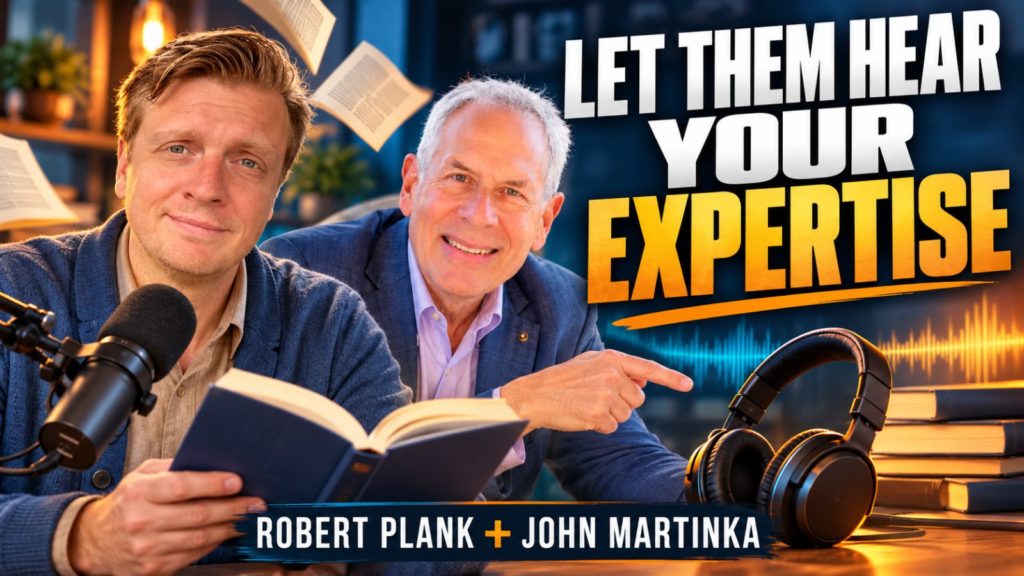
When John Martinka invited me onto Getting the Deal Done, I was also narrating his book, Exit with Style, Grace, and More Money. He already used my podcast production service. We could talk about the same expertise as an interview, a short excerpt and a complete listening edition, with actual work behind the discussion.
John disclosed the client relationship at the beginning. He knew what the finished episodes and graphics looked like on his side. I knew the recording, editing and narration jobs needed to make those different formats usable.
My move into narration had started with equipment I already owned and a wish to spend more time reading instead of doom scrolling. I also enjoyed reading aloud to my son. When an author had a finished book they wanted recorded, I had a reason to put that equipment and interest to work.
John asks as both my podcast client and the author whose book I was narrating. Watch our Getting the Deal Done interview for his questions on short episodes and full audiobooks. His podcast archive contains the other episodes.
Choose People You Want to Meet
At conferences, I could meet someone useful or spend the day in circles that didn't lead anywhere. Interviewing gave me a repeatable way to work on networking: learn a little about the person, invite them to explain their work, and ask the questions I wanted answered.
John's show focuses on buying and selling businesses, growth and preparing for an exit. Mine makes room for a broader range, although I enjoy entrepreneurs who have bought and sold companies. The theme should help you choose whom to meet and what a listener could use.
Let the Host Record and the Team Handle Production
You can finish a good interview and immediately give yourself five more jobs: edit the video, prepare the audio, select an excerpt, make a graphic, and schedule the posts. As I explained to John, that context switching can overwhelm the business owner who enjoyed having the conversation.
When he asked how we handle production efficiently, my answer was a workflow, a process, and a team. The owner can concentrate on the conversation while the team works through the production tasks consistently. You decide what the recording should become, then give each task a place in the handoff.
A practical sequence is:
Record the conversation.
Transcribe it so you can locate useful passages.
Select and edit the full episode, excerpts, and any quote graphics.
Review the selections for accuracy and context.
Publish the chosen formats.
Someone may have time for the full conversation. Someone else may only watch one answer. The full video, audio episode, short excerpt, and accurate quote graphic give you different ways to share the material. I mentioned enjoying Dave Ramsey's advice without having time for his entire show every day. A short clip could give me something useful and keep me interested.
I described asking AI for several episode titles, then having a person choose. Check the suggestion against the discussion: does it promise the answer actually in the recording?
John described receiving polished episodes, thumbnails, and graphics containing useful statements from his recordings. Those were his observations as our production client. The handoff gave him finished material he could share without having to create every asset himself.
Invite People You Already Know
Your first few guests may already be in your contacts. Think about your vendors, someone whose software you use, a former colleague who left on good terms, or a past business partner you haven't spoken to lately. When John asked where to begin, I suggested looking at those existing relationships.
Make a list of three or four people you'd like to reconnect with. It's easy to forget to contact someone when you aren't working together every day. An invitation gives you a reason to reach out, learn what they're doing, and consider whether their experience would help your listeners.
Here's a sample invitation you could adapt:
"I've been thinking about the work we did together on [project]. Your experience with [specific problem] would be useful to the business owners who listen to my show. Would you be open to a recorded conversation on that topic? If so, send me a couple of times that work for you."
The invitation explains why you chose them, what you'd discuss, who would benefit, and how to arrange it. Replace the placeholders with details you actually know.
Make clear that you're inviting them to a recorded appearance. They can choose a private catch-up first if that's what they want.
Make a Short Episode From a Customer Question
John already made short educational episodes alongside interviews. He asked how a manufacturer, distributor or repair business could use that format. Begin with a question customers actually ask, and let the qualified person explain one answer.
An interview gives another person's experience room. A short solo recording lets you explain a recurring point without waiting for a guest to raise it. Choose the format from the explanation you need to give, then reserve a recording block that fits.
John also described recording while traveling. He used to restart after verbal stumbles until a marketing contact encouraged him to leave a few natural mistakes. Keep the answer understandable and correct anything misleading. A harmless stumble doesn't make the explanation unusable.
Record the Full Book for People Who Prefer to Listen
At the time of our interview, I was narrating Exit with Style, Grace, and More Money. John asked what an audio edition meant for an author and their customers, rather than stopping at how the files were produced.
I described the listener who has time during a drive, exercise, or another activity when reading the printed page isn't convenient. The complete audiobook lets that person follow the author's explanation through. A short promotional excerpt has a smaller job: help somebody decide whether to hear the rest.
John's question also brought us to promotion. Making the listening edition available didn't remove the author's work of telling people about it. The next format needed a place in the author's continuing marketing, rather than an assumption that a listing would make the sales by itself.
For the manuscript, choose a representative chapter and listen without the printed page. Notice where a chart, heading, or instruction needs more support. Resolve those passages, then plan the narration, editing, and review for the whole book.
Find Authors With Finished Books and No Audiobook
I told John how I had begun finding narration clients. I'd noticed that relying on email broadcasts was becoming less dependable for my business, so I experimented with conversations on LinkedIn.
For narration, I could look at an author's existing work. They might already have a book on Amazon and people following their business, while a search on Audible showed no listening edition. That was a more specific starting point than asking everybody whether they wanted to write a book.
The next step was a conversation. Sometimes we met on Zoom so the person could see whom they would be working with. Some sales required years of follow-up. I was describing a service I had learned to offer, with the recording and the business development both needing attention.
That fit the wider point of our interview. A finished manuscript, an existing customer question, or a past professional relationship gives you something real to build on. Choose the next useful format for that situation instead of creating every format merely because the tools permit it.
Ask What the Listener Needs Explained
I use Why, What, How To, What If as a loose route: why the subject matters, what the listener needs to understand, how they can use it, and what comes next. The guest's answer should change the next question.
If a process sounds too easy, ask for an example. If a decision seems strange, ask what led to it. John and I could banter without trying to outdo each other's stories. He pictured the salesperson who talks so much nobody can get a word in. That's worth noticing in your own interview.
Choose an Interview, a Short Episode or a Full Audiobook
Choose the explanation and the person who needs it. A repeated question may call for a short episode. Another person's experience may deserve an interview. A finished book may deserve a full listening edition. Review the result without supplying missing context from memory.
Done For You Narration handles the narration, editing and production of a complete audiobook. Bring your finished manuscript and any passages that depend on a chart or illustration. We can discuss what needs explaining aloud and how you want the book to sound.
About Robert Plank
Robert Plank hosts Marketer of the Day and runs DFY Podcast, helping business owners produce and share podcast conversations. He also narrates nonfiction audiobooks. He joined John Martinka as the guest for this Getting the Deal Done conversation.
Original Conversation and Resources
- Watch John and Robert Plank Discuss Building a Business that Lasts
- Visit Getting the Deal Done's official show page
- Browse Robert Plank's Media Appearances
Related service: Done For You Narration.