Media Appearances / Success Thru Connections
I could have hundreds of podcast episodes behind me and still go two months without releasing one. Recordings were waiting while I tried to catch up on production. Knowing the software hadn't made the workload disappear.
I told Zelda Greenberg about that on Success Thru Connections. She described herself as a non-techie and wanted the work beyond recording made clear. She'd heard the expectation that you could start talking into a computer and go viral. I had a less glamorous problem: getting the next finished episode out.
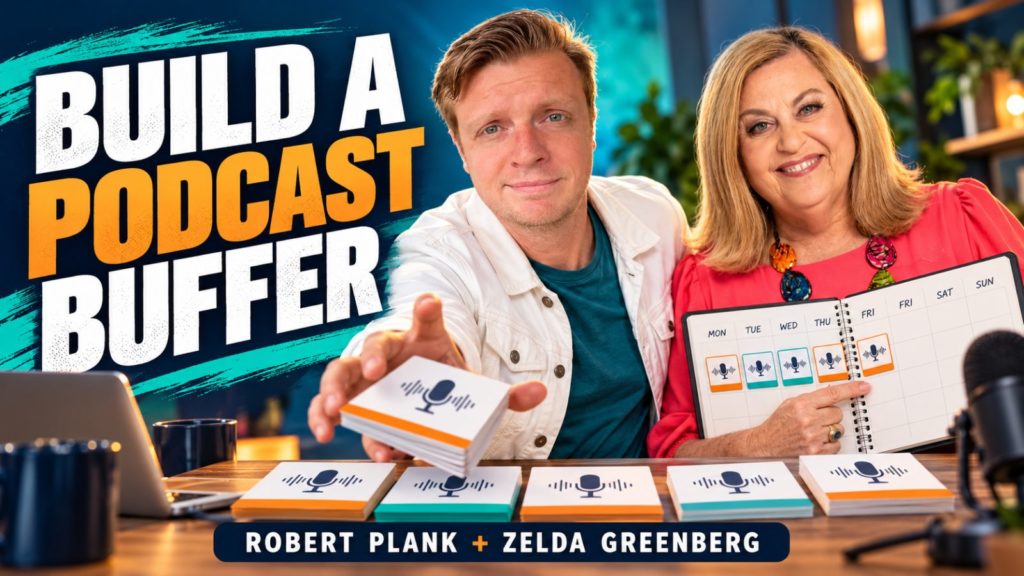
The three starting decisions we discussed were a usable recording, a few episodes in reserve, and default questions for a conversation that needs direction. Zelda already used a buffer for her weekly show. Those choices give you something dependable to return to when a week gets messy.
Zelda keeps four or five episodes in reserve for her weekly show. Watch our Success Thru Connections interview to hear how she does it and the questions I use when an interview needs direction. Her channel has the full series.
Finish One Episode From Recording to Publication
I'd come close to burning out on recording, editing, clips, graphics and publication. Hiring help had also meant repeatedly finding replacements. Building a team eventually gave me more room to concentrate on the conversations.
A new show can start smaller. When Zelda asked what you needed, I said a camera and microphone; she added lighting. Record something a listener can clearly hear and see, then follow it through editing and publication.
Notice where it waits. An unclear title decision or an owner who never has time to review can stall the release as effectively as a missing recording. Work out that route before filling another folder.
Record Ahead With People You Already Know
The example I gave Zelda was a month's releases. Depending on the calendar, that's four or five episodes. Start by identifying four people you could record with and arranging those conversations. You can begin publishing while you build the buffer, then keep recording to replenish it.
Start with a peer, mentor, vendor or customer whose experience would help the audience. Reconnecting gives you a subject to explore and a person to send the episode to afterward. You don't need four strangers before recording four interviews.
Zelda said she keeps four or five episodes available for her own weekly show, depending on the calendar and the guests she has scheduled. She also shared advice from her manager: some worthwhile episodes can come from recording your own expertise. She does that occasionally, whether to fill a scheduling gap or share something she wants her audience to understand.
A familiar customer question can give you enough to work with. I used closing costs as an example for Zelda. What are they? Who pays them? You may explain something like that regularly without thinking of it as an episode. A useful solo recording can fit alongside your interviews and help keep the schedule moving.
Keep a Few Questions Ready
Sometimes a guest gives you an answer you want to explore, and the follow-up comes easily. Other times, there's very little energy between you. Zelda recognized that situation immediately when I brought it up. Having a few default questions means you still have somewhere useful to take the conversation.
My usual sequence starts with introducing the guest, then asking what makes them focused or passionate about their work. Next, I want to understand what they do and the solution they provide. Before we get too far into their expertise, the listener needs enough information to follow along.
From there, I'll ask for a story. It might be a struggle they experienced or a client success they can explain. I might ask what makes their approach different, or what bothers them about how something gets done in their industry. Those questions give us something specific to discuss beyond the guest's biography.
Near the end, I like to ask about the missing question: what important question does the guest wish I'd asked? I've been choosing questions based on what I understand. The guest may know there's something important we haven't touched, and this gives them an opening to bring it up.
Then I'll ask where listeners can find them and invite them to share a quote or lesson that has served them. That gives the audience a resource to explore and something useful to take away.
Keep those questions beside the recording window. Follow the interesting answer when it comes; return to the list when you need direction.
Start With the Problem the Listener Recognizes
You announce the show, deliver the tagline, play a minute of music, read a couple of ads, and introduce the guest. Suddenly, you're three minutes into the episode and still haven't given someone a reason to listen. That was one of the production mistakes I brought up when Zelda asked what podcasters commonly get wrong.
I keep guest information available beside my recording window. During our conversation, I had Zelda's LinkedIn profile open, along with her YouTube channel. A guest's supplied biography and website can give you useful material, too. You can identify the experience that's relevant to this particular discussion instead of reading every credential they've accumulated.
I also described using ChatGPT to draft an introduction from the guest's supplied bio and LinkedIn information. Check every credential, then keep the part that explains why this person can answer today's question. The listener should know what they're waiting to hear before the music and biography consume the opening.
Why Zelda Greenberg and I Reconnected
Zelda explained that I'd contacted her on LinkedIn and invited her onto my podcast. She came on, then later invited me onto hers. By this conversation, we'd known each other for eighteen months. The interview gave the introduction an activity, and we kept the connection going.
Send the guest the finished episode and a relevant passage they can share. You have something you made together. That is a specific reason to contact them, especially when the invitation began as a conversation rather than a pitch.
The production delay can interrupt that follow-through. If a guest asks when the episode will appear, someone needs to know the answer. Keep their publication notice beside the editing and release tasks so it doesn't become an afterthought.
A Finished Book Still Needed Promotion

Zelda also asked about Next Level Self, the compilation book I was preparing at the time. Each contributor supplied a different chapter. An existing interview could give us the raw material, but I described substantial revision and editing to connect the useful ideas into an understandable account.
There were practical details after the first draft, too: follow up with the contributor, obtain the correct contact information and photo, review the chapter, and complete the physical book. A folder of transcripts wasn't a finished compilation any more than a folder of recordings was a published podcast.
We talked about choosing a theme broad enough for variety without losing coherence. If every chapter repeated the same lesson from a direct competitor, the contributors might have little reason to promote one another. Different people could address a shared theme from distinct experiences, giving the reader a reason to continue through the book.
At that point I was thirty days from launch and working on promotion. Guest appearances and speaking opportunities were part of getting the word out. Clicking Publish had completed one stage. It hadn't put the book in front of the people who might want it.
That was the same completion issue Zelda and I had been discussing throughout the interview. Know which stage is finished, then name the next one. Recording, packaging, publishing, and promotion need time even when the original conversation was the part you most enjoyed.
Count the Episodes Ready to Publish
Zelda's buffer only protects the schedule if the recordings can become finished episodes in time. Track which files are recorded, edited, approved and scheduled. Pick the next release date and work backward to the next incomplete step.
Get the Next Episode Ready
Choose a few people in your existing circle whose experience serves the audience. Reserve the recording times, then assign the production and review dates. Keep the default questions beside the recording window for the conversation that needs direction.
For a weekly show, the buffer has to include time for editing and review. DFY Podcast's production service can take on those recurring steps so your reserve becomes scheduled episodes. Start with the next release date and the recording that should fill it.
About Robert Plank
Robert Plank hosts Marketer of the Day and runs DFY Podcast. He helps business owners produce and publish podcast conversations, with his team handling editing, show notes, clips, and graphics so hosts can focus on their guests.
Original Conversation and Resources
This article draws from Robert's guest appearance with Zelda Greenberg on Success Thru Connections.
- Watch What No One Tells You About Starting a Podcast with Robert Plank.
- Visit Success Thru Connections, Zelda's official show website.
- Browse Robert Plank's Media Appearances for other guest conversations.