Published Last updated
View in Podcast Library: stories, quotes, books, and resources in one place.
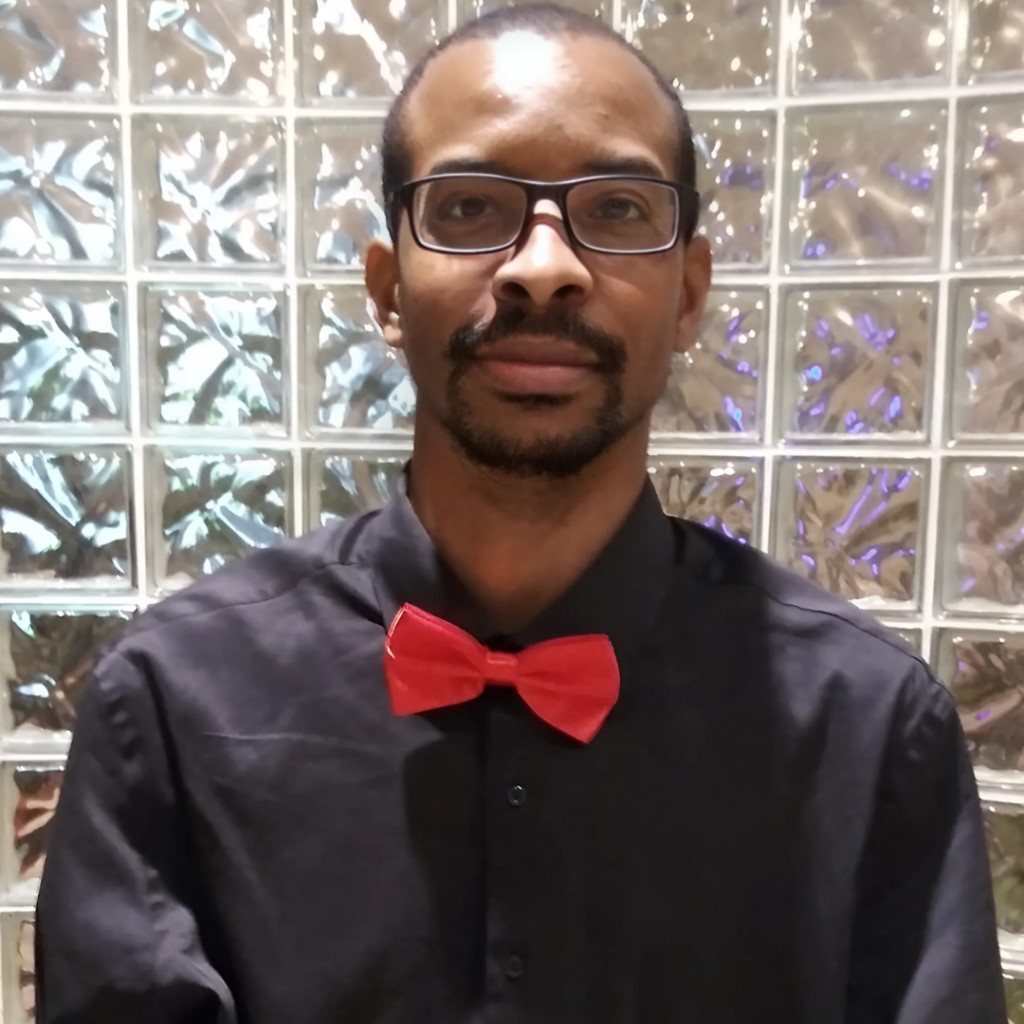
Joe A. Simmons covers High Performance Systems in this Marketer of the Day episode. Joe A. Simmons breaks down how busy professionals can hit big goals while lowering stress. He starts by naming why goals fail, from entitlement and impatience to four stress triggers: overthinking, perfectionism, destructive distractions, and unfocused catalysts. His core principle is 'competency comes before compensation', meaning skill-building drives money, confidence, health, and relationships. To raise ambition from an idea to a lifestyle, he uses six degrees: idea, interest, desire, commitment, dedication, and lifestyle. He ties habits to performance, noting that about 66 days of repetition can make actions automatic. For clearer communication, he teaches four pillars in order: branding (values), marketing (promotion), networking (relationships), and advertising (amplification).
Ever wondered if reducing stress could be the key to unlocking your path to success? Reducing stress is not just about feeling better; it’s about unlocking your pathway to success. Managing stress effectively can help boost productivity, enhance focus, and achieve your goals with greater ease. Embracing stress reduction techniques empowers you to navigate challenges confidently and create a more fulfilling life.
Joe A. Simmons is a creative producer, scriptwriter, and podcast host for Paradigms & Perspectives Media. He is also the author of the book “MAD Money.” Joe helps busy professionals achieve more success with less stress. With over 20 years of experience, he has developed a unique framework to help individuals overcome stress and fulfill their goals. Today, Joe identifies common reasons goals go unfulfilled such as entitlement, impatience, and stress, and emphasizes the importance of competency over compensation through developing specialized knowledge and skills.
Quotes
“Competency comes before compensation.” – Joe A. Simmons
“People are rewarded in public for what they practice in private.” – Joe A. Simmons
“Business is just solving problems, wants or needs for profit.”– Joe A. Simmons
Takeaways
02:41 Competency comes before compensation. Developing specialized knowledge and skills is key to achieving success and higher earnings.
16:56 Effective communication requires clarity, building rapport, and active listening – not just verbal delivery.
18:29 Branding is about establishing your values and identity, which then enables more effective marketing and networking.
25:04 Relationships and reciprocity are essential in business – solving problems and meeting needs for mutual benefit.
32:57 Practicing discipline and hard work in private will lead to being rewarded in public.
Resources
- MAD Money: 12 Foundational Principles To Make More Money In Half The Time With Half The Stress by Joe A. Simmons on Amazon
- Paradigms & Perspectives Podcast on Spotify
- Joe A. Simmons on LinkedIn
Podcast: Play in new window | Download (Duration: 34:49 — 48.0MB) | Embed
Subscribe: Apple Podcasts | Spotify | Amazon Music | iHeartRadio | Podchaser | RSS
Transcript
Download transcript (.txt)Joe Simmons is here visionary, author, podcaster and high performance accelerator. So if you're the kind of person that says, I know that I'm capable of more, I'm destined for more in my personal growth in my business career in my corporate lifestyle, then we have someone here whose passion is consulting, coaching, training, advising in personal and professional and learning and development. His name is Mr. Joe a Simmons, he's achieved an 85%, employee retention rate contributed to over $500 million in revenue growth. And He's doubled team performance to coaching, training and strategic execution. So Joe has so much to tell us today about achieving our goals, branding, marketing, communication, so many cool ideas, so many things to talk about. So Joe, happy to speak to you.
Oh, Robert, thank you so much for the invitation. It's good to be here. And
it's good to have you. And so we introduced you a little bit right hyped you up for our audience. But what do you all about from the source himself, what just gets you excited, jacked up, just jumping out of bed in the morning.
High performance I love to. I love progress. I'm very passionate about progress, goal, achievement, and just becoming our better selves. But more importantly, to be very succinct. And to sum it up in a sentence. I strive for us as busy professionals and as human beings to achieve more success with less stress. I like that
it rhymes. It's catchy. Because what's the point of having more in your life, if you're just adding to the chaos if you're just increasing your stress? And I imagine that maybe that holds people back right? Then they say, Well, I like the kind of athletes analogy, of training and of strengthening the muscle and of just getting better. And those things that were such a struggle for me to do two or three years ago, I could do them on my sleep now. And then in two or three years, imagine where I'm at. But then if people say, Well, if I want to get to that next step in my career, if I want to grow that business or pursue this opportunity, there's that hesitation of well, if I do, won't I just be increasing my problems? Won't I just be kind of adding to the stress? And so we don't want that, right. We don't want to hesitate. There's enough hesitation in the world. We want to be bold and take action. And so how do we do that? I mean, what causes stress? And why don't people really go for it when we know they should?
I'm glad you asked that question. That was that's exactly what I was looking for. That's a great question. So there are really like 10 major reasons why most goals go unfulfilled. The first one is entitlement. A lot of people think that just because they have a desire, or maybe because they want something that they they should get it. But you have to do more than that. Number two, is impatience. Right, Warren, know, Bill Gates has this famous quote, where he says that we overestimate what we can do in one year. And we underestimate what we can do in a decade. So a lot of people are impatient. If you look at the various successful people in the world, I mean, like China, for example, right? The reason why China has a lot of successful people is because they think in decades, they don't think in days, that's another Tony Robbins quote that you want to condense decades in today is but when it comes to business, you want to think in decades, not days. Now, if you Deacon decades versus days versus months, your strategy is going to be different, the moves that you're going to make gonna be different. So they've asked Jack Ma, the founder of Alibaba, and he says that he takes out the the Chinese philosophy that when he was creating Alibaba, it was how do I create Alibaba to last? No. 400? Yes. And then a third one, like you talked about, which is stress management, right? Most people don't want cheat day goals is because they stressed out. And there are four major stress triggers. There's overthinking this perfectionism. There's what I call distracted destruct this destructive distractions. And then there's also a ton of catalysts. So basically, your focus is off. That's the reason why a lot of people are stressed out. But when you really look at life, I've really condensed life into this one friend. This is So if nobody gets nothing else from this interview, this is a one thing you definitely want to get. Because I was thinking about this recently, and I was like, what can you really like compress life into. And it's this competency comes before compensation. I'll say that one more time. Competency comes before compensation. So getting back to what you were saying about why people don't achieve goals, that's because they're focused on the compensation, but they're not focused on the competency. If you focus on competency and not compensation, the compensation will come in alignment with the, with the compensation. So also to me talking about the entitlement. So I have a framework that I've also developed called the six degrees of ambition, right. So there are six levels. The first level is where a lot of people are, which is idea. So they have an idea about something they want to change, or they have an idea about a goal. The second one is interest. So not only that, you have an idea. So you take an idea, and now you have an interest in it, then the third level is desire. So now it's more of a burning, it's more of a passion. But here's the problem. Most goals do not get achieved on those first three ladders, you have to go deeper. So number four is commitment, you have to actually be wanting to commit to something in order for you to have achievement. And then the next level is dedication. Dedication is saying that you're going to do it when you don't feel well, you're going to do it when you don't feel like him. You're just very focused and determined. And as long as you're still healthy, and you have, you know, breath in your lungs, you're gonna give it a shot. And then the ultimate one is lifestyle. So it just becomes a part of your lifestyle. That is what you do. So everything becomes instinctual. And according to leadership expert and author, the 5am Club, Rob and Sharon, at the 66 days, we develop automaticity. So this is why habits also is so important. But when you start to compound your develop these habits, so I hope that kind of answered your question.
It does, it gives us so much to think about, I feel like I need to pull out that clip that last three minutes, and like transcribe or listen to again, and again, because there's so much good stuff in there. And for me, I'm just I'm picturing like a whole map of all these connected little dots, because it all like you broken down this huge problem we have into smaller pieces, but then and all sorts of connects in all these different ways, right? Because there's, there's basically this need to look at a larger picture and a longer timeline. And, and you know, Joe, when I was younger, I used to think that a longer term plan meant taking your time more and when it probably just means taking bigger action and taking more things more strategic and things that are more sustainable. And so like you mentioned, Jack Ma, and there's something he said that really impressed me when he said like, you know, when you're when you're in your 20s do this, when you're in a 30s do this, and he laid out like decade by decade like Well first, like work for someone, and then like in its other decade, like build this other company. And I found that really helpful in the atom assisity that you mentioned there when you look at like there's, there's all these tools available, right? There's so much information, there's like some calendar that you can print off, that's basically like the rest of your life, right? It goes to like age 83. And you can see like, every Sunday, every Wednesday, and it's and then you can fill in like how far you're in there so far. And it's a little bit depressing. But then you are going to force you to kind of look at things on a larger picture, right? Like, well, if I do this for for two years or for 10 years, then that's kind of thinking more in terms of okay, I'm not I'm not wandering through life anymore, right? And there's just so much of like the thinking grow richness in what you mentioned there that these ideas of like specialized knowledge and if you when you get the competency first and then that leads to better compensation because it's more specialized knowledge you do this higher paid work for someone because you're generating more money for whoever you're you're working for. It's like a lot of these really big ideas and like delayed gratification where if you just want the quick fix the quick reward now well then that won't lead to the bigger gains that come from learning a skill or building a business. serves like doing all these right things. And so you've given us so much to think about as far as like working towards our goals and achieving our goals and kind of working towards things more strategically. And I want to definitely keep this kind of grounded and keep it about you. So like, there's a lot of really cool concepts there. But as far as Mr. Joe a Simmons, and what you achieved, and what you've gone through what you've struggled? Do you have a fun story to share with us just about your roller coaster adventures? Oh,
absolutely. Yes. So yes, I said all that stuff. And then yes, I would like to think that I just woke up my morning, I'll just snap my fingers. And, you know, I just had all this success, but I struggled a lot. And, you know, I learned the importance of reading, I also learned the importance of what I call an accelerator, which in it, I come to realize that there are four categories of accelerators is mentors, coaches, consultants, trainers, and advisors. So I'll say that, again, mentors, coaches, consultants, trainers, and advisors, basically, anybody that can help you accelerate, to get your results faster. So either they have done it themselves, or they know somebody who has done it, that they can put you in contact with that person to help you. So getting back to my personal story, you know, from 2010 to 2012, I suffered from my mild depression. So my accelerators were books, like taking long walks, books, finding coaches, YouTube, like a lot of personal development, if you talk about with, you know, with Napoleon Hill was no thinking grow rich. But for me, during that time, it was, you know, it was a very dark time in my life. And personal development, and especially books is something that definitely helped me, you know, renew my confidence for me to get back on a journey. So, I took all the lessons that I learned prior in my career, to when I transfer to my new career in financial services, which, like I said, personal development is such a huge unlock. And I'm very grateful for Andrew Carnegie for creating the whole library system, because he was like, we have so much knowledge, and we want to pay for to the next generation. So yes, I've had my personal struggle of suffering and mild depression, overcoming that. I've also had my struggles of learning how to communicate, and to be more open, when you're on a team when you're collaborating and stuff like that, which led me to write my first book, in 2019, I've also been able to become a full circle accelerator. So I've been a mentor, I've been a coach, I've been a consultant, I've been a trainer, I've been an advisor. And I'm very grateful for those experiences. Because my main thing went out because my background is in financial services and a corporate trainer. So my main thing was that for my trainees, I always wanted to give them the blueprints and the guys that I didn't have, because most of the stuff that I learned I had from trial and error, you know, so there's really three ways to learn is trial and error and this research, and there's accelerators, but a lot of the stuff that I learned when I was in corporate, prior to me becoming the number one producer, becoming the number one training, and also at a time being on the number one team in a whole, you know, multinational BINALI conglomerate, was that change? It's just not about me. It's about the team. Like I always say, I'd rather be on the championship bulls. You know, if you're a sports fan, you know, everybody wants to be Michael Jordan. But it's the championship bulls. You know, Michael Jordan could win those championships by itself. So that's in life and in business, that life is really about relationships.
I agree completely. And it seems like you you've come so far and figured out so much, and I mean, again, there's a lot of good stuff in there. But what sticks out for me are the three ways of learning right you can do the trial and error method which that seems like it's the riskiest takes the most time has the most chance of failure. And then option two is reading and learning which that is important to have like the foundational knowledge but still only gets you so far. And then The third is actually applying it. And it seems like it doesn't have to be all or nothing, right? Because you, you can learn some foundational knowledge and figure out why you are the way you are. And if you're say you're going through depression, read some books on it, and then then act based on that. And so that's very interesting to think about as far as just books. It's such a cliche, and it's so simple, but books are so important. I mean, you think of like, if someone out there has, especially historically like nowadays, sure, you can just upload a Word document. But if like the Polian hill or Andrew Carnegie or someone put out a book, and it's lasted for decades, centuries, and it costs who knows how much money in 1910s money to go to the printing press and make all the copies like a lot of work went into that something that you just read a few pages on, and it's like that person immortalized in book form. And it's just there's so much knowledge out there. And there's, there's so many things I've looked back on Joe like as far as just my own like emotional intelligence or like business ideas or even like friendships, relationships, where like, if only when I was like 12 years old, if I read a book on on such and such topic, then it might have kind of shortcut some different things in life. And so what what stood out for me here is that you mentioned about this whole idea of communication, which like, again, having newer, more adult awareness, communication, like there's more to it than you think, right? Because you think, oh, communication, that's like how I say the words, but communication, a lot of it is asking questions, and listening to yourself and the words that you put out and listening to others. And so what do you have to tell us about being a better communicator, And have there been any unexpected surprises in your journey of beefing up your communication skills?
Well, just like anything else, you know, communication is a skill. And I still remember taking a communication class when I was in junior college, Professor Olson, great communicate as well. And he taught us a lot of tricks about communication. But one of the main things about communication is you want to have clarity, right, there needs to be clarity, there needs to be a clear message. Not only that, it also helps if you can build rapport with the person that you're trying to communicate with. Also, to going back to what you said about emotional intelligence, as we all know, you know, over 90% of communication is nonverbal. So a lot of communication is also listening, actively listening, I want to clarify that actively listening and adjusting, you know, just also being present in the morning in the moment. But one communication framework that I want to leave with you and the guests, part of the middle part of the book that I wrote in 2019, about how to make more money, but this also applies to just life in general. And I look at communication as there's like four pillars. There's brand in this order, branding, marketing, networking, and then advertising. So the reason why I put branding first is because we all have a personal brand, whether we know what not, and the way we interact on a daily basis, even with our family, our friends, our colleagues and associates. So my opinion of branding is, is the ideal is the values, it's the standards, this is your essence, it's like who are you as a person? And how do you want to communicate that brand to others, but it's mainly values. That's really what branding is all about is what are your values, marketing, marketing is basically do the promotion of that brand, or of those values. Because and the reason why I put a brand and before marketing, and everybody talks about marketing, marketing, marketing, or sales, sales, sales, but if you build a brand that people know, it makes it easier for your marketing message to get out there. Versus if you go to a networking event, and you haven't built a brand, and nobody knows who you are. And the first thing you try to do is you try to market a product or a service. It's like, Who is this guy? Who is this woman? So then so they're gonna be trying to be figured out what is your brand, what is your identity, what are your values? Then, what then also to free each market, you need to have a brand in order to market. So marketing is just a promotion of that brand, then the network, when you're engaging, and getting to know new people, it makes it easier to do business. Think about him, the biggest brands in the world do business with each other. So they're able to identify, Okay, you're a brand, I'm a brand, I know what your values are, I know what my advice are, let's see if we can have some continuity, where the CEO of the business makes sense. And that also have us on a personal level to which are, which are friends that you have like interests in. And then advertising, it makes it easier for you to advertise also money to advertise on top of you, I mean, for you. So let's say for example, if we want to talk launch a product to the marketplace, and we have a good brand, and we have good marketing, we have a network that can help us advertise. And then we do our own advertising, we have a higher probability of that product launch, being very successful, versus what a lot of people try to do, oh, I had this product, let me just go straight and try to advertise it. But you haven't built a brand, you haven't had marketing, and you don't have a network to help you. So that's so those are the four pillars, when I think about, you know, taking communication to the next level.
And that's an amazing concept, these four pillars because this way we can apply kind of these different techniques are working at the same time. And I just love your take on branding, because it's so easy to fall into the business speak with branding, isn't it? It's easy to say, Oh, well have these colors and have this font, and they think well, how does that really help my business? How does that make me more money. But when you're saying okay, well, this idea of branding, it's the kind of choose and express what your values are. That way someone that you're marketing to does not have to figure it out for themselves. You've already assited it's already clear, you've done the repetition. So that way, when you go and you meet someone and you figure out like at a networking event or something, then it's already pretty clear what it is that you're all about what your values are, they don't have to do the work. And then it's all about relationships are saying and again, relationships, it's easy to fall back on the cliche and say, oh, yeah, I've heard of that and give it lip service. But when you really think about what a relationship is, what relations are, it's when you have more than one person working together, right? You have to be working together. You and me are on a podcast, you watch a commercial on TV. It's not just about the brand. There's like us an actor, there's some celebrity talking about it, you want to talk show, and some some movie stars on it, right? So all over the place, there are these different people kind of overlapping their brands, and helping each other out and multiplying. And it's all it's all wonderful to think about right? Just in all these ways of thinking outside the box and applying some finesse, and even law. And just a lot of it is taking these cliches that we've heard, but maybe not been paying proper attention to like even that thing that you said about the 90 plus percent of communication is nonverbal. We've all heard that. But do we really understand what that means? Right? We think Oh, does that mean body language or pauses? But you're saying like this whole idea of rapport of like being strategic and saying, Well, what is your audience want? What are their fears and frustrations? How well do you know them? Are you speaking to what they want? Like there's just some outside the box thinking that is maybe needed for a lot of people, especially business owners, entrepreneurs, who have just not been putting in this deep thought that you have? And so where do you come in as far as if someone out there says, Man, this guy, Joe Simmons has all this wonderful advice. And he's really kind of opened my eyes to what's possible and what maybe I could be doing better, but then how do you relate towards solving our problems? Or is there like a product or service that you provide that we can find out more about? Besides the book? Of course.
Oh, well, yeah, you know, there's, there's a coaching program, I do coaching, I do consulting, that's what I currently have right now. Just coaching and consulting. So yeah, you know, I can be reached on social media or even through email. But yeah, that'd be the best way to to get in contact with me. But my main thing is reciprocity. Right? That's really what life is all about. It's really all about reciprocity. Let's go back to business for a minute, right? Business. I love Well, T Harv Eker don't After the main sequence that Amina Ma, he says that business is just you just solve problems for profit. So there's really only three ways that businesses make money, you have to solve a problem, a want. For D, I'll say that again, you have to solve a problem a want or need, right? Your electricity company, they're solving a problem that you have regarding electricity. So this is where the reciprocity comes in, and they provide your electricity, you provide them with a monthly payment, insurance companies do the same thing. Whether that's health insurance, life insurance, whatever it may be, okay, if you provide us with a monthly premium, then will provide access to a group of doctors where you can get medical claim. And then when you send money, when a doctor submits the claim to the insurance company, they'll pay the claim based on the premiums that you that you said then same thing with a one, you want a car, you want to be able to travel, even if you want to take a plane, and let's say for example, you want to go from here to you know, California, right, and let's say you want to go from here, I mean, I'm in, I'm in Florida, so if I want to go from Florida, to California, which I've been to San Diego, which is great. So shout out to all the people in San Diego. But if I wanted to go from here to Los Angeles, and I wanted to arrive at LAX, right, whatever airline carrier that I select, I'm going to give them money so that they can transport me to California. So it's going to be a win win, I get to go to California, they get money for their bottom line, and they get to continue their business operations.
That's deep. And that's interesting to think about that. It's all about like the reciprocity, and the tree and not necessarily an even trade, but a trade where I get, I get more from what I received than when I paid but then the the recipient also according to their own goals, also prophets in a way as well, because we have different goals. And we also benefit, we also multiply from both sides of the equation. And so then I just love your simplicity. And you're kind of giving us some new awareness to these these things that happen all over all around us, right? Because like marketing, and sales and advertising and everything else, and networking, all happens around us. But it helps to say, Well, why is that the way that it is? And what's working? And what can I further do for myself in my own personal development and my own business to really make the best use of that. And so, Joe a Simmons, you mentioned the book. So what's the book called? And you also mentioned social media and email. So what are those details as well? Okay,
yeah, so the book is called Mad Money, flow foundational principles to make more money, and half the time we have to stress. So I'll give a quick two second intro or what the book is about. So when so like I said, Before, I suffered a mild depression from 2010 to 2012. I met an individual named Mark, who was me two years into the future. So when I met Mark, at this financial services company, he was standing outside of the company that I wanted to work for him. And I, and I saw myself in him because I was him. Two years prior, when I was suffering from a mild depression, I was trying to get back into the workforce. So I saw Mark and me. Then on top of that, when I was in corporate, my colleagues used to always ask the question, how do you make more money? So I started thinking about, I'm like, there has to be a formula, there has to be some type of framework. In order for you to make more money half the time we have to stress online. That's obviously something that millionaires and billionaires are doing that obviously, I'm in that average person is not doing. So I had a dream. And it was like divine intervention. And these 12 Steps showed up as like a framework. So at first I thought I would just you know, dreaming and just some Hokey Pokey stuff. It sounds like okay, I'm gonna stress test this. I'm gonna go to the fortune 500 And I'm gonna go to the top business. If they do these 12 things. I'll write this book. So I looked at Jeff Bezos, I left the Elon Musk, I looked at Warren Buffett, I looked at Steve Jobs like all of the beaner CEOs, I looked at all of them. And I started realizing this is things that they actually do. So I, so I wrote the book, in order to give people a foundation on how to actually, you know, make more money, and half the time we have to stress. But to fast forward to 2024, they can all be summarized, as I said before, competency comes before compensation. And I also want people to think them. When I say compensation, I'm not just talking about money, you know, confidence, compensation can be a relationship, it can be your health, it can be a wealth, it can be a relationships, it can be anything that you want to achieve. So when I say compensation, I mean, like, totality, like comprehensive. So these same principles can apply to almost every area of your life, not just, you know, making money. So as far as social media, you can find me on LinkedIn, Joey Simmons. And then as far as email is concerned, you can find me at five parents@gmail.com. And that's a play on a media company that I'm building called pronouncing perspectives, his lease to the podcast of the paradise a prospectus podcast, which we're on all major platforms. We're on Apple and Spotify, Google. So all of the major platforms, you can go check us out. The paradox of perspectives podcast,
fantastic paradigms and perspectives podcast and then five paradigms@gmail.com. Is that number five or five spelled out? Five spell? No. Okay, I'm glad I asked in five paradigms@gmail.com. And then the book is called Mad Money. And as you know, Tony Robbins says, success leaves clues. And that's not just a saying it's that all these people have led left all this evidence, all these bread crumbs, Warren Buffett, Bill Gates, Steve Jobs, you can look at all their achievements and say, hey, well, what are the factors? What are the attributes? What can I do and say, Well, what did they stay away from? And what did they do? So that way I can apply to myself, the knowledge is there, but it's up to us to apply that. So go right now and check out the paradigms and perspective podcast, and Joe a Simmons on the social media platforms. As we sign off here. Joe, do you have any final parting words of advice as a helpful quote, I mean, we've set we've mentioned so many cooler lessons, but does a quote or lesson in particular jumped to mind as far as wrapping up our conversation? Absolutely.
In our in with the legend, Tony Robbins, and Tony has helped me a lot, especially on my personal journey. And this is one of my favorite Tony Robbins quotes, where he says, people are rewarded in public for what they practice in private. I'll say that, again. People are rewarded in public for what they practice in private. So going back to my whole competency, and cons before compensation, we idolize and we see all these successful people. But we're not understanding that. It's what they do in private, that allows for them to be rewarded in public. So I'll end with this. This is my remix. This is what I took from the Tony Robbins, quote. If you work hard in private, you will be rewarded in public. But if you're lazy or not discipline and privacy, you will be exposed in public.
Very powerful, amazing and inspiring. Joe Simmons visionary author podcaster highperformance accelerator wonderful speaking with your friend.
Thank you so much, Rob, I really appreciate the opportunity to share this with you and your audience.
This is Robert plank from the marketer of the day podcast which you can find at marketer of a day.com for more episodes, and d f y podcast.com. forward slash free if you want to know more about running your own podcast or running a better or more fun or easier or less time intensive podcast, go to d f y podcast.com/free. To find out more right this instant