Published Last updated
Read Patrick Sanaghan’s bio and speaker profile →
View in Podcast Library: stories, quotes, books, and resources in one place.
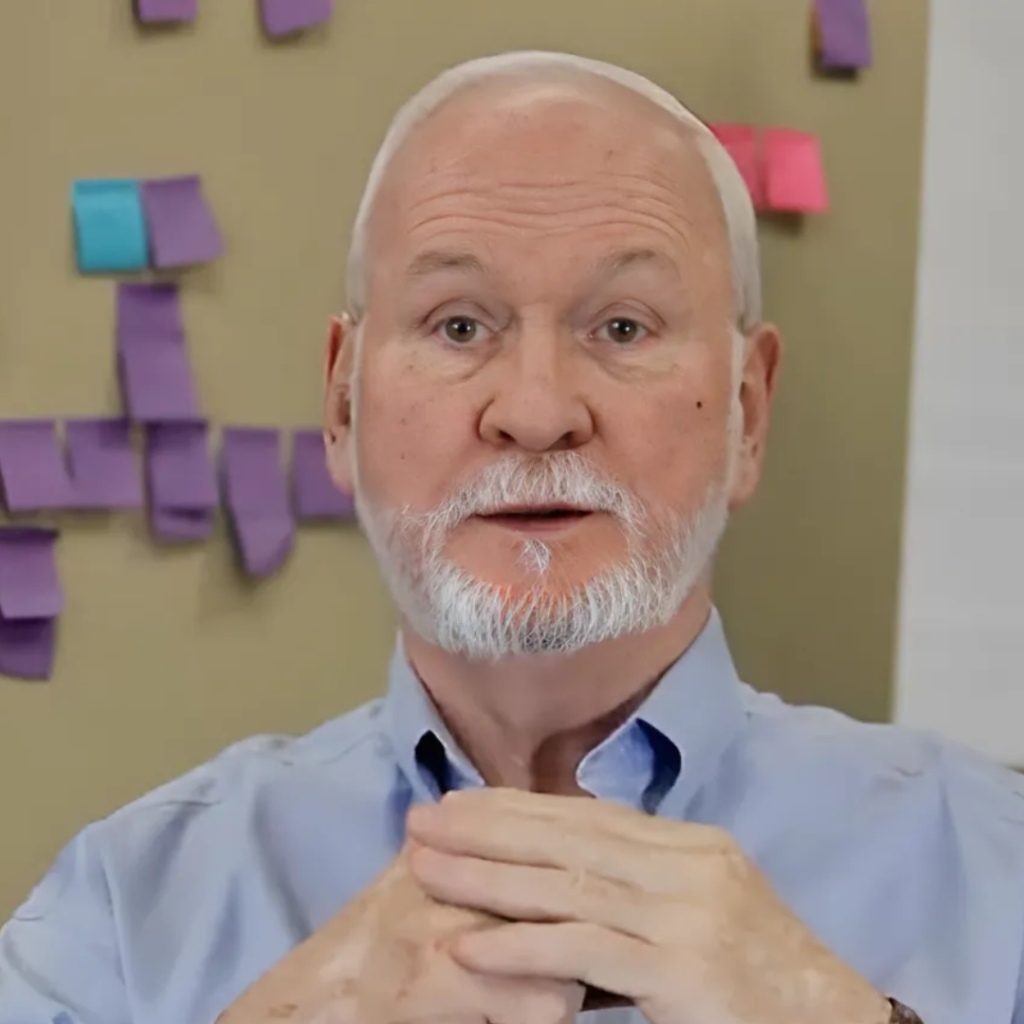
Pat Sanaghan covers Procrastination Strategies in this Marketer of the Day episode. Procrastination is an emotional management problem, and a few simple moves can help you finish the work. When a task feels noxious or overwhelming, stepping away brings relief, which trains the brain to delay. He recommends making progress visible, working in chewable 30-minute chunks, and using rewards to sustain effort. It helped him finish his dissertation after a one-year extension, and he reminds us about 50% never complete the PhD. For taxes, he uses temptation bundling: watch sports, do a little work, repeat, and focus on completion over speed. Since starting is hardest, he builds routines, limits the list to five or six items, and treats motivation as a small battery.
Are you struggling to stay motivated? Procrastination often sneaks up on us, turning simple tasks into daunting challenges the longer we delay them. It’s frustrating to watch time slip away, knowing we could have been productive. The cycle of putting things off can create a lot of stress and anxiety. Reflecting on why we procrastinate can be a crucial step in breaking this habit and reclaiming our time
Pat Sanaghan is an author and the president of The Sanaghan Group, an organizational consulting firm that focuses on leadership development, executive coaching, strategic planning, and leadership transitions. With 30 years of experience, he has worked with over 250 campuses and numerous organizations in both the corporate and nonprofit sectors. Today, he discusses procrastination and offers a toolbox of strategies to help manage emotions and stay on track.
Quotes
“Procrastination really is an emotional management issue. Usually, there’s something you have to do that’s noxious, uncomfortable, or overwhelming, and you get lots of feelings around anxiety and stress.” – Pat Sanaghan
“Procrastinators are not lazy. I am not a lazy person. I’ve written 12 books and published 50 articles. I have a great consulting business, and there are still some things I procrastinate on.” – Pat Sanaghan
“Motivation is a very small resource. It’s like a small battery that gets worn out with use.” – Pat Sanaghan
Takeaways
01:05 Procrastination is an emotional management issue, not a laziness problem, and requires specific strategies to overcome.
02:34 Breaking tasks into smaller, manageable chunks and using rewards can help boost productivity and motivation.
16:55 Seeking support and accountability from others, rather than relying solely on self-discipline, is an effective way to manage procrastination.
21:39 Recognizing the limits of motivation and using it strategically is key to sustained productivity.
25:39 Self-compassion is more effective than self-criticism in overcoming procrastination.
Resources
- The Sanaghan Group: Collaborative Strategic Planning
- Pat Sanaghan on Facebook
- Pat Sanaghan on LinkedIn
- How To Be A Better Procrastinator by Patrick Sanaghan on Amazon
Podcast: Play in new window | Download (Duration: 27:55 — 38.5MB) | Embed
Subscribe: Apple Podcasts | Spotify | Amazon Music | iHeartRadio | Podchaser | RSS
Transcript
Download transcript (.txt)Hey, welcome back to the podcast. Pat Sanahin is here from a very excellent book called How to be a bitter procrastinator. And Pat is going to blow the doors wide open about this thing called procrastination because you might be wondering about motivation or discipline, or strategies or wondering if you're lazy. We're going to change some minds get some insights, we have the man the myth, the legend, the master here, Mr. Pat, Santa's hand so fat, how the heck are you?
I'm doing well, Robert, how you doing?
I am fantastic. Now that I'm talking to you. And this is always a fun subject, right? Because the the brain is so slippery and weird. And sometimes we play tricks on ourselves. But so many times, he just you get back to the fundamentals, right, you write the little bit of a task list, and you go through that activity of like moving the hand and crossing tasks out and having the self awareness, accountability. There's all these tools at our disposal. But in your own words, what's the problem in front of us? Like, what is procrastination? Why can't we get things done? Yeah,
procrastination really is an emotional management issue, right? Usually, there's something you have to do that's noxious, or uncomfortable or overwhelming, and you get lots of feelings around anxiety and stress, and I can't do it. And the minute you step away from the task, emotionally, you feel relief. And that's the hook. That's the habit. So for me, I don't like to do income taxes, no one does. But I really have a lot of I mean, I'm a very productive progress. That's why I wrote the book, you can be a very productive procrastinator. But around income tax, I still have difficulties. And I've come up with a number of strategies I can use to get me through it, not to enjoy it, not to do it exactly on time all the time, but to get through this noxious task, and manage my emotions when I can. So there's a lot of strategies that are really useful for people.
Wonderful, so let's talk about some strategies. And this really good insight right off the bat, that there's the emotion involved. And when you jump into the income taxes, you hate it, when you jump away from it, you get the relief. So you get kind of what you get, like sort of a reward kind of thing happening in there. And then I know that you're big in education and universities, and I just have all these bad memories of having to do these stupid assignments and stupid essays. But we're, we're humans, we're adults, the point is not to be happy all the time, but to be productive and get things done. So you have all these strategies. Is there a one that you think is especially relevant these days? Yeah, I think that
the there's three that I'd like to share that had been kind of guiding principles for last 30 years, I got caught running a dissertation. But I wasn't writing it. I was reading it. I was doing more and more and more research. But the end of the day, if you don't write it, you don't get a doctorate. Right. So I have a doctorate because I finally got it done. But I had to get an extension, right. I had seven years, I still had to get another one year extension. And they said You better finish it now, buddy, are you out of here. So I had a lot of motivation. I asked a lot of people who had finished their dissertation, which is always a good thing for procrastinator do, don't do everything by yourself, ask for help get some advice. And the three things that they came up with were powerful, and I've used them all my career. One is make your progress visible somehow. So like you showed your little to do list, my to do list is a big yellow thing I do every day. And when I do something, I score it out with big black marker and it feels wonderful. So then I note number two, number three. So I don't have 15 things on my to do list, I used to have 10, which is nutty, I have six. And if I can get to five or six, I've had a great day. But this whole visual thing, it's yellow, I can see it across the room and scoring it out. The second thing is chewable chunks, I thought you had to sit down and just punch out seven, eight hours of writing. And all my colleagues said, Don't you nobody do 30 minutes at a time and take a break 30 minutes at a time and take a break. So that's a real important thing for procrastinators, to realize you don't have to sit there and punch it out, because you're probably not going to you're gonna run out of energy or motivation. But 10 minutes to begin something is really important. And then the third one, and this is something I resisted Robert, because they all had rewards set up for when they finished the chapter. And I said, Well, do you really need reward? Shouldn't I be more mature than that more disciplined? And they said, No, you're going to need rewards. Because it's the long haul. It's a marathon. It's a noxious task. And so one of my buddies who did finish, he had golfing outings, not just like in a neighborhood community golfing thing. He'd fly someplace in Palm Springs or down in Florida, and spend three days golfing which he loved to do after each chapter, that reward map enabled him to be successful. So the three things is chewable chunks little at a time, make your progress visible. And rewards do work. And don't get into this thing. I shouldn't need rewards, rewards work. Those are three.
I like it. And it's it's simple and it needs to be simple, right? And that too many of us play these mind games with ourselves and think we can just punch through it and sit it out and get it all done but Some of these are may be emotionally counterintuitive, right? Like the idea of kind of pacing yourself in a way, doing the chunks doing 30 minutes off, and then some time off, and then back on, it gives you reminders to like when, like the the police would like chase the criminals on horseback, right? And they would just rather walk the horse for an hour, but then jump back on and go fast. And overall, they would have something more sustained. And they would go greater distances. But it's in the moment, you're like, Well, I got off the horse, and I'm walking it slowly. You feel like in the moment like it's not happening very quickly. And so you know, this, this is all great pieces of advice. actionable, doable, but as far as your own personal, kind of like difficulties, right? You mentioned about the dissertation. Has there been a moment in your professional or academic career when you were just at the end of your rope where you're like, I'm not even going to finish this? I'm going to flunk out, I'll be completely a failure. Have you ever like really been in panic mode?
Oh, absolutely. And that dissertation, then they gave me a one year extension, you guys spend all your time and money in courses and exams. And 50% of people who start PhD programs in this country do not finish. They do all the hard work, but they don't get to the dissertation completed. So there's a big hurdle there. And that was very panicky. And once I had these three little strategies that I got from my colleagues who had finished, it made, it wasn't easy, but I broke through I wrote three chapters in this semester, and they said, Okay, you're making progress. And I just kept on going and going and going and going. The thing which is really important is, you said it earlier, Bobrick procrastinators are not lazy. I am not a lazy person. I've written 12 books by 50 published articles. I have a great consulting business. And there's some things I procrastinate on, so they're not lazy. And the difference is this. Lazy people don't feel guilty, or anxiety or stress. They just ask okay, we'll do it tomorrow. But procrastinators know, oh, geez, I know I have to do that thing. And I really can't enjoy the moment now because I got to do that. So that's a doozy. Lazy people and procrastinators, most procrastinators are not lazy people.
And that's a good insight there that was you have that little bit of stress and anxiety or hopefully, a healthy dose of it, not too much. But if you are a little bit anxious, it means that well, you're on the right track, at least you're trying to do the right thing. And I had a discussion a few years ago about I was worried about like, what am I a good enough parent, right? Am I a good dad? And the guy said, Well, just the fact that you're thinking about it is a really good sign because your parents or grandparents, they're probably just blazing ahead and, and doing whatever the heck they want to do without any of this kind of self awareness. And so you know, stress and anxiety, it's, it's a real problem, right in, in a lot of us. And many times I've noticed like sometimes I my wife and I call it the not working guilties. If we're just like sitting and watching like one episode of TV or like, Oh, I could have squeezed in half an hour. Sometimes I've noticed I sometimes like put the anxiety at like the front of my timeline, I kind of like used anxiety to like push the action taking and I know that's bad. And so what do you have to say about something like that? Like, what's your relationship with stress and anxiety? And like, how do we cope better without losing our momentum? Yep.
And sometimes it's important to dis name the emotion. Right now I'm feeling anxious. It lessens the power of it right now I'm feeling overwhelmed. It lessens the power of it doesn't go away just lessens the power. So your how you manage that is great. There's two other things that enabled me to do my income tax and it's something real powerful concept was called temptation bundling. And what that means you take something positive, and you marry it with something negative. So if you don't like exercising, you exercise with a friend, right? Make it a social activity. You don't like doing the laundry, you watch TV while you're ironing the laundry, you marry something nice with something that's not so nice. So when I do my income taxes, and this past year, I did it in the middle of March, which was almost a first for me. And years ago, I paid penalties. I haven't paid penalties in about 20 years. So I know I'm making progress, I still get stressed they'll get anxiety and still aggravating. But this notion of temptation, bundling is powerful. And what I do is I watch sports. So I do the income tests. So I'm a big sports fan and love football, it takes me a lot longer see because all it takes too long, doesn't take too long. My job is to finish. So if it takes me theoretically eight hours, it might take me 24 hours over five or six days watching basketball, watching football, watching you know, whatever, golf, enjoy myself and do a little bit of work, enjoy myself and do a little bit of work. And at the end of it, you have a cold beer or a glass of wine so you can reward yourself if you're not an alcoholic.
And that's a good insert right there that there's this these key words like efficiency, right? And you think that Well, I need to maximize my speed. And you're saying that well. Sometimes if there's a pressing task in front of you is not necessarily about how quickly you finish. It's Can you finish it all. And so the temptation bundling you, it may take a little bit extra time but you get things done that you otherwise wouldn't have noticed. And though I store that in my brain as there was a Tony Robbins story one time where he had to make some kind of phone calls, and he like gotten the hots up in the end that was back when phones had the long cord. So he just like made all these phone calls in the hot tub. And like, you know, sometimes we'll we'll play music or something while while getting stuff done. And so similar idea, right is mix in a little bit of the pleasure that way, it's not all work. And so you finally you conquered the income tax issue. You wrote your dissertation? Is there anything that is still iffy for you nowadays? Or is there anything that you still procrastinate are still struggling?
I'm on the road a lot, 150 60 days a year. And then one trip, last trip I made was on three different campuses. And so each campus has different invoicing things you have to mileage and meals and airplanes. And it's hell and I put it all the receipts kind of in a box, little paper guy, I mean, all these people just do Ding, ding ding on their iPhone, and everything's fine. It's just not me. And I collect all these things. And then I kind of look at this big bucket and say, Oh, geez, let me do that tomorrow. But if you don't eat, don't don't do the invoice, you don't get paid. So there's a little bit of a motivation in there. So it's still something I struggle with those two things are things but I've got all these strategies. Let me just share one with you. Okay. Mark Twain is pretty famous guy. And he said something, I think was a very big misdirection. He said, when there's two frogs that you have to eat, which is not a nice task, eat the big one first. And with procrastinators, now, other people might be able to tackle that, procrastinators will never eat the big frog first. But they might eat the small frog or the small task first. And they do it and chewable chunks that have some reward setup, they do it with some friends. And they get through and accomplish something that really builds their motivation and their confidence. And then they might say, okay, I can use some of these things I've used to tackle the big test. So if you've got two tasks, I'd say go for the small one first, because you'll build success, you'll build some strategies, and you'll get some momentum going forward.
And so along this idea, this kind of forever on about momentum and confidence, I find sometimes I put in, maybe I maybe superstition is the way that I call it there's certain like recurring tasks I have, such as the podcast I'm doing with you right now here, right? I do a few per week. And it's added up to over 1000. But I tell myself, you know, there's sometimes there's weeks where I'm just like, maybe I should clear the schedule, just focus on the deep work. But I tell myself, I need to at least fit in a few of the podcasts meetings such as this, because I want to keep the muscle going, I want to stay on my game. And I'm worried that if I let too many weeks passed, then I'll lose the momentum, lose the confidence. Do you have any ideas on that, as far as like, momentum going?
I think you're doing exactly what you need to do. I mean, deep work is a nice concept. For me, I'm pretty familiar with it. It's pretty privileged and elite, it's very powerful. I mean, I'm not saying it's a negative thing. A lot of people don't have four or five hours a week and break it out. You're a dad, you got a kid running around doing some things, there goes your deep work, but you have to craft some opportunities for you to do the work you're doing and you're doing. I mean, that's amazing. It sounds on podcasts over a long period of time. But it's a library of great stuff is one at a time. So just paying attention to that on an intermittent fashion or every once in a while. I think you I think you've got your game down. Absolutely. And so actually, a lot of world
that thank you very much. It's always good to have that that positivity and that reassurance. And we all wish that we had more time to do those things. But like you're saying, like sometimes it's like, well, you fit it in when you can and so have you had any kind of like time management difficulties such as that, have you like, played around with your schedule, and like figured out what works?
It took me a long time to get my skills I think I mentioned to you. Years ago, I used to have 10 times 10 things on my to do list. And a buddy of mine said why do you have 10 things? What you're supposed to do, and I wrote a book on time management 25 years ago, he said I don't do more than five or six. So really, and this guy must be more successful than me. So you got to be kidding me. He says, Yeah, so try it for a week. And that's exactly what I've done. I only have more than no more than five or six. So that's how I kind of manage the my to do list. But here's something that's really important. I just passed his name is Daniel Kahneman. And he's written a bunch of very famous books, he won the Nobel Prize. I mean, he's a bright guy. And he said, the two things you have to remember is when you take a test, I apologize. It usually takes longer, and it's harder. And that's a very powerful notion. Because sometimes I can do that in a week when you really can probably do it in three weeks. So we're very bad at deadlines. And we're oftentimes very over aspirational. But I have that in my in my office on the wall. It will take longer and 98% of the time it does like an email, I'll just punch out an email. An hour later. I'm done it because of double checking this and making sure it's fluid. Once an hour out of my day, it's not a five or 10 minute task. So it's it takes longer and it's usually kind of it's hard and that's we need other folks To help you, you need buddies, you need thought partners, you need accountability partners, whatever you can do to kind of move things forward. And then one last thing, we've got to get rid of this notion around the sports analogy. You know, we talked about the sports and excellence in the Olympics and 5.2 seconds. There's 1000 coaches for those guys and gals. Do you ever look at a football team, I played football in college football. And we have 55 coaches for 22 players. I mean, you don't have a coach in your life, you don't have someone saying, Robert, you should take a timeout down and we'll kind of do a brainstorm, you got to keep on to what you're doing. So get rid of these sports kinds of things. Are these world class athletes, which I respect a great deal. I love sports. But it messes people's minds up, well, how come I can't do that? How come I can't swim six days a week, seven hours a day? Well, that's a guy who also had mental health problems. He's a great guy. He's an Olympic champion. He's a mental health advocate now, but he paid a price for that kind of that kind of rigor and discipline. So just being conscious of that, does that make sense at all, it
does that it's something to perhaps aspire to. It's not necessarily practical in our daily life. And the way through is to use all these different tools in the toolbox, like you've been mentioning, right? Like the chewable chunks, and the accountability and the rewards, and all these other things. And I can definitely relate to what you're talking about, like I come from a software background, where there's a thing called the iceberg principle where there could be some software that it works about 10% is good, but it's full of bugs, that's quick, but then the actual long work is the the debugging and making it work well. And it feels your brain feels like it slows down, right? Because you, you get the prototype working, but then actually make it actually, you know, working in actuality, and then I've never read it a few of your audio books, and me and my wife are all the time being like, Oh, we can finish this book, and in three days, and then next thing, you know, it's three weeks later, and I I play games with myself, because I tell myself, well, if I didn't give myself that close of a deadline, then the time it would take to do it might then balloon up. So it's a lot to navigate.
Absolutely. And we're bad at deadlines, by the way, you know, and, and that's where a thought partner can be helpful. So I saw a paper done in a week, that's using my middleman, I'm just running a paper with a colleague of mine, in New Mexico, you know, great scholar. And we're going through our four draft, fourth draft, and we've written a lot of stuff. And you think, Oh, we just kind of put something together, we're really smart people. And we'll get it done. Now we're on our fourth draft, we'll do one more before we put it into the publisher. That's taking hours and hours and hours and hours. So it's just that we're not real good at that. That's where somebody else can say, Well, Pat, when's the last time you wrote a paper? Well, it was last October and how long it takes? That took me three weeks, well, maybe you shouldn't try to do it in a week. Maybe three weeks is your better deadline. So that's why these thought partners who don't agree with you all the time. They can't be like mind meld. They can't be your buddy says oh, don't worry about but I think you're right. It's gonna be someone can push your thinking a little bit. So whatever it is, do you have that that's only going to take that much time? I paid the house one time years ago, I thought it'd be a long weekend took me four weeks. Because I didn't repeated the house before. And I'm ladders and doing this and doing that. So getting some advice, getting some help would really be helpful. Another thing that's really important, is for procrastinators, starting is the hardest part. Right? Starting is the hardest part. So you got to make it easy. Somehow it did kind of trick your brain. You mentioned that earlier about starting. So there's two things you can do with starting. One is to have a routine. So I'll give an example. I walk 10,000 steps a day when I'm home when I'm on the road is a little bit harder. And when I first started thinking about that stuff, it was in the wintertime. And so I get in the morning, have a cup of coffee, I'm gonna go out and walk and I'm still gonna wear my gloves. And do I need a hat today? Oh, no, it's raining. And I just sat down and said, Let me have another cup of coffee I gave up. And so a buddy of mine was helping me says, Well, you should have all your stuff organized in a specific space in your house. I said really easy. Yeah, I have my shoes, my pants, my gloves, whatever I need for the next day is already there. It takes me two minutes. And I said, that's amazing. So every morning when I get up, I have a cup of coffee to kind of wake up. And I takes about a minute to dress and I'm out the door. So that routine is really helpful. So if you build a routine, that's really good. And a ritual is something that puts you in a psychological state you mentioned a little bit earlier. For some people, it's music. For me music is distracting. I know I've got colleagues, if they're not blaring music, they can concentrate me it just blows me away. But music sometimes, sometimes meditating right before you do an activity. I have one colleague who likes a little bit of incense, and just smelling the sage just puts her in a mental state where she's ready to work. So routines, and rituals can be really helpful because start and we also know that 50% of the time if you start something, you'll continue, not finish it, but you'll continue. So those are pretty good odds if you kind of start something you'll keep on moving forward. So it is important for procrastinators, and everyone knows there's a 20 to 25% of adults in this country have procrastination as a chronic habit. So that's 10s of millions of people and they delay their income tax returns a delay going to the doctor I gotta find My name is does a colonoscopy is a doctor friend, he has about a 15% cancellation rate a day before the people come in for the colonoscopy because they get really anxious and upset, and then they delay it again for another year. And that's a pretty dangerous thing to do. So, procrastinators can really get paid a price emotionally and pay a price. Physically, if they don't kind of be in to manage their destination, just helpful. It is helpful, there are
real consequences. And making the change is not instant. But the first step is knowing that this problem exists and try to strive to be a little bit better and manage your expectations to some of these hearts truths about life. But it seems like a kind of, there's some recurring things that we're we're talking about here, right? There's have a buddy, make sure you're thinking is not just on your own. Yeah, I really like your advice there on just starting. And there's been so many times where I'm like, let me just get the document open. Let me just set a timer for five minutes. And let me just get a little bit on here. And then I ended up doing more than five minutes, and I'm making more progress. And, and as far as like the routine, I mean, some people sleep in their workout clothes right away, they wake up and go right out the door, and you figure out what works for you. And having a few routines doesn't mean your whole life has to be routine. It's just if there's this problem, and the other strategies have not worked, you haven't stuck with it, then maybe it's time to apply one of these. And so as we're winding down our conversation, want to make sure we get to the good stuff. But also we leave people wanting more. So is there a hidden question or a conversation? There's something about about motivation, productivity, but I'm not asking you that you wish I would?
Yeah, no, that's all about motivation. If I'm a procrastinator is they say, Well, I want to feel motivated before I do it. And I'm never going to feel motivated to income taxes ever. So what you have to do is an action creates energy. And that's creates motivation. Right? So if you act, you get some energy kind of going, and the motivation will show up. And a big name in academia guy named Roy Baumeister, and he wrote a book called motivation. And he's one of the world's experts at it. And when I read it, I said, this is what my suspicion was. People say, Oh, you're not motivated, you gotta get your guts up there. He says, motivation is a very small resource. It's like a small battery that gets worn out with use. And it's not a big pool, you don't have a big pool in your backyard, just grab a lot of buckets of motivation and kind of move things forward. It's a very tiny resource. So his advice is you got to use it strategically. So for some people starting is where they got to use, okay, let me just do it as grind through it. Some people it's in the middle. For me, it's the end the last mile at this editing thing in the first draft. That's the tough stuff for me. Now, I talked to my partner about this, so that I can produce a lot of stuff. And I enjoy working with you. But you got to know that last mile, a really kind of getting it edited really quickly is an area of concern of mine. But that's when I use my motivation that kind of pump put through. And then I also don't want to disappoint a colleague, I respect a great deal. So the motivation miss is, it's not a lot of motivation out there, it's small. So try to use it very strategically, when you know, you need some help.
That's a very helpful insight that there's that that myth that motivation is all of it and that there's so much of it, and I can't do anything less I haven't. And you're saying like it's a very small battery. And it really helps to have the self awareness of know what's easy for you what's hard for you, where you need help, and that we in the in that roller coaster of say, working through all those drafts? Well, are you excited the most about finishing? Some people are excited notes about the middle or the beginning. So know yourself, know your strengths and weaknesses, know which strategies to use and know where to get help. And so now that we've kind of had this little bit of a discussion, gotten people interested about productivity and everything that's surrounding with it, what some next steps here, you mentioned about yourself and your book. So where should someone go to after listening to our conversation? Well, I
hope they go to Amazon books, and I think actually show up. Reverse I guess, it's called How to be a better procrastinator. It's not expensive. I think it's 699 for Kindle and 1099. For a paperback. It's a very practical, it's very easy to read. And I wrote it for progressives, because I am one. So procrastinators aren't going to probably started page one. They'll go like this. Let me see. Let me see. And every page, you got a little little nugget of a strategy that you can use, some people started. In fact, about 20% of people start at the back of the book, when they start reading. Well, I got stuff in the back of the book on lessons learned about procrastination. So it's really meant for you to take 10 minutes of your life and read something and I think you'll continue to get some real effective strategies. We've all been research based, and they work. And the other thing is don't be over aspirational and say, Oh, I'll do this one and this one and this one and this one. If you do one, try it for a week and see what happens and then do a second one but don't try to do four or five we we tend to go overboard procrastinators and just do one it will make a difference.
Well, they call that self sabotage right? When you when you say all of you all of these things, and then I've overloaded myself and we'll get nothing done. So it's time to break some habits and get some new results. And the first step to doing that is to get that excellent book How to be a better procrastinator by Pat Sanahin. That last name is spelled s a n a Ghan. And as we wrap up our conversation here about I want to make sure to get one last little quotable soundbite nugget. And I like to put my guests on the spot and ask for a helpful quote or lesson that can get us excited and send us on our way. So what comes to mind to you as far as the helpful quarter lesson?
I think the lesson is this Robert, self criticism is not effective. There's no research that I've been aware of, and I've done hundreds of hours of research, the beating yourself up and say, I wish I was smarter, I shouldn't be so weak, I shouldn't, shouldn't should when you start getting into shows you're in trouble. So self criticism tends not to be helpful. Self Compassion does work. And I did that research with college students, the ones that said, Okay, I messed up this semester. Next semester, I'll do better. And when they did that, they did a lot better. So self compassion, amount of touchy feely person, I'm just saying just saying, Okay, I kind of messed up this time, tomorrow's a new day, for this afternoon is a new opportunity for me to do the writing. And not to be beat up beat yourself up, because it just does not work. It does. So get rid of those military models about you know, being critical and doing this and you're not a man and whatever those things are, it doesn't help you being productive and effective and happy. You want to be a happy dad, right? I mean, you don't be worried. So, if you're a happy person, you're gonna be a great father. Yeah,
so that's a good habit to unlearn and then relearn better, right and knowing that you can be kind to yourself and still be responsible. And the very next step to make that happen is to get that book How to be a better procrastinator by Pat Shanahan. If you have one last thing to say, Pat.
Yeah, good luck, folks. Just try one thing. Don't beat yourselves up. And don't forget about those rewards. I mean, I've fought that for almost six months, saying I shouldn't be more mature and it shouldn't need it. And everyone who completed it said Pat reward so I can be kind of stubborn and hard headed. So whatever, even if it's counterintuitive, just try it and see what happens. Very
nice. So reward yourself and the first reward should be how to be a bit of progress. on Amazon,
thank you, Rob.
This is Robert plank from the marketer of the day podcast, which you can find at marketer of a day.com for more episodes, and d f y podcast.com. forward slash free if you want to know more about running your own podcast or running a better or more fun or easier or less time intensive podcast, go to do fly podcast.com/free To find out more right this instant Transcribed by https://otter.ai