Published Last updated
View in Podcast Library: stories, quotes, books, and resources in one place.
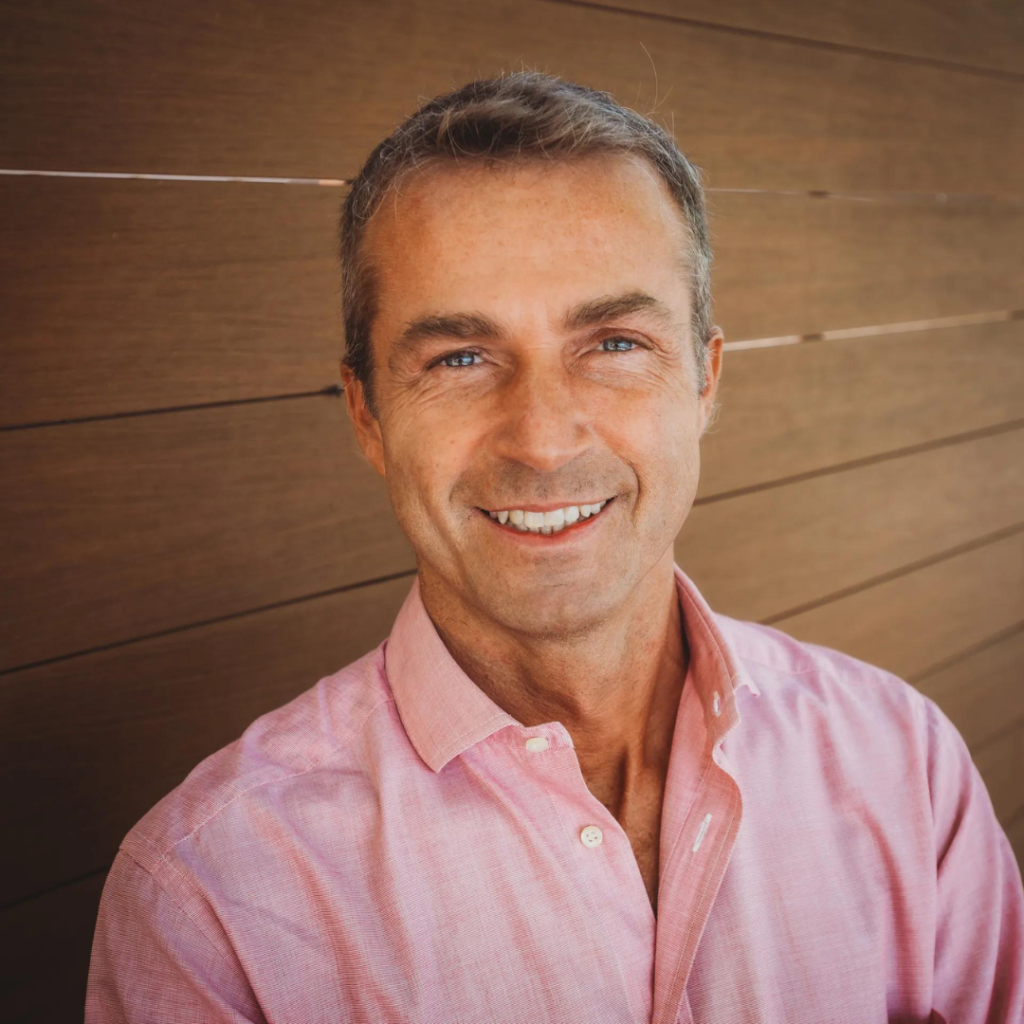
Matt Traverso covers Emotional Mastery Coaching in this Marketer of the Day episode. Matt Traverso explains how to master emotions so life storms feel temporary and you can live with more peace and purpose. He argues stress is created "in here" by thinking, so emotions are signals to listen to rather than enemies to control. His core practice is emotional mastery, dancing with feelings and letting them dissolve once you see they are just thoughts. To become more of who you are, he emphasizes self-love and ending the inner "civil war" that drains energy and drives self-sabotage. A key exercise is a personal manifesto, written over several weeks, to clarify who you are here to be and what you stand for. He also highlights building an internal compass by aligning values with intuition, especially in chapters 4 and 5 of his book.
Ever feel like life’s throwing punches, and your emotions are just along for the ride? You might be tired, stressed, anxious – the whole package. And on top of that, maybe you feel you’re falling short of your potential. But here’s the surprising truth: the source of that stress, frustration, and unhappiness often lies not in what’s happening around us but in how we think about it. The good news? We have the power to change the narrative. By taking control of our thoughts and perspectives, we can shape our emotional experiences. Take responsibility for your happiness, and be true to yourself. This is where the real transformation begins.
Matt Traverso is a transformative coach with over 25 years of experience. He works with CEOs, athletes, entrepreneurs, and everyday people, helping them unlock their potential, own their power, master their emotions, and live their best lives. Today, Matt discusses his book “Unlock Your Potential,” which focuses on developing a robust psychology to navigate life’s challenges and turn them into beneficial experiences.
Quotes
“If we remind ourselves that it’s just an illusion we’re caught in, making us believe that the situation, environment, people, or circumstances are causing our stress, we’ll see it’s not true. It cannot be true because we don’t even experience the world directly. It’s always through the middleman, the intermediary, the filter—our thinking—that separates us from everything else.” – Matt Traverso
“Success is how well you enjoy the minutes. Once you become a master and an expert at enjoying the minutes, you know who you are, and you understand all emotions.” – Matt Traverso
“We don’t need to control what we are not afraid of.” – Matt Traverso
Takeaways
02:06 Emotional mastery, not control, is the key to navigating life’s challenges and achieving happiness.
05:46 Taking personal responsibility for one’s emotions and embracing one’s true self are essential for personal growth and fulfillment.
14:23 Developing self-love and self-awareness can help eliminate inner conflict and unlock one’s full potential.
34:10 Connecting with one’s inner wisdom, intuition, and values can provide a compass for navigating life’s journey.
35:08 Simplifying personal development techniques and finding a trusted guide can make them more actionable and impactful.
Resources
- Matt Traverso: Helping you unlock your full potential and live a fulfilling life.
- Matt Traverso on Facebook
- Matt Traverso on LinkedIn
- UNLOCK YOUR POTENTIAL: Own Your Power, Master Your Emotions, and Live Your Best Life Today by Matt Traverso on Amazon
Podcast: Play in new window | Download (Duration: 40:02 — 55.2MB) | Embed
Subscribe: Apple Podcasts | Spotify | Amazon Music | iHeartRadio | Podchaser | RSS
Transcript
Download transcript (.txt)Hey, we're here back on the podcast with Mr Matt Traverso, who is a transformative coach with over 25 years experience. Matt works with CEOs, athletes, entrepreneurs and everyday people who want to get more out of themselves and their lives. Matt mentors coaches at all stages of theirs careers, from beginner coaches to seasoned professionals, including you right there in the audience, listening and watching. And we're going to discuss Matt's very excellent book called unlock your potential, own your power, master your emotions and live your best life today, and all three of those things sound very wonderful, so we'll find out how that is possible. So Matt, how the heck are you?
Hi, Robert, I'm very well. Thank you.
Great to hear it. So we introduced you a little bit. Gave your bio, but in your own words, what are you passionate about? What is your focus?
Well, my focus is helping people navigate life storms more easily, essentially, by adopting developing a more robust psychology, one that allows you to turn any challenging situation into a useful, beneficial experience, wonderful.
And I already like the metaphor of the life storms, because you think when a storm comes, it's only temporary, and you can seek shelter, and you can play in the rain, and you can collect rainwater. It doesn't necessarily have to be a bad thing, and it's not permanent. It's not forever. And so where are people stuck? You say that people have problems and like, there's the weight of the world on them, and there's always stress, anxiety not living up to our potential. Like, where do you see the hurt happening in the world?
Inside, inside, when we see in the world that is a that's the wrong that's the wrong expression. That's the wrong way of describing things that stress in the world. But it's not out out there. It is always in here and and the beauty is that we therefore we have all the resources and everything that we need to avoid feeling stuck or stressed out or even or just removing ourselves from such a state. Should we find ourselves there if we just remind ourselves that it's just an illusion we are caught in which makes us believe that the situation, the environment, those people, the circumstances, are causing our stress, not true. It cannot be true. It cannot be true, because we cannot even experience the world directly. It's always through the middle man, the intermediary, the filter, which is our thinking, that is what separates us from everything else. And since the only thing that can make us feel, whatever we feel is our thinking, then we are definitely in charge of our emotion, emotional destiny, our emotions. We are the creators of our emotions. And number one, when we realize that, and number two, when, then, then, when we become expert at managing our emotions. I don't know of anything more important than that to live a happy life, because ultimately, people's problems, you know what they are, Robert at the end of the day, emotional problems, period. I know it sounds like like a provocation. May sound very provocative, and it may be too simplistic, and it may be almost, uh, insulting, and it may be but it's true that's maybe people do need
to hear this, right? Maybe they do need to be slightly insulted in order to be woken up. And when I first started hearing things like this about how importantly emotional control is and how I have the power to be angry or the power to be insulted, I was a little upset about the. News, right? And it's like you think about how you don't see your own nose in front of your face, right? What you see is the combined vision of both your eyes. So there's this layer between what is out there and what is in here, and we can sort of have this control over our perspective and our relationships and and it's a it's a it's a little freeing, but it's also a little scary, right? Because it means that if I'm unhappy, miserable, unfulfilled, then now it's my fault. Now I need to take responsibility, and that can that can hurt a little bit. And so tell us about yourself, like, what have you experienced and what kinds of lack of emotional control. Have you gone through? What kind of stress has held you back?
Well, yeah. Well, two things while you were talking. First, it's not really self control or controlling your emotions, because you you really you can't and you don't want to. It's emotional mastery. Is dancing with them. It is. It is listening to their wisdom, flowing with them and and learning that they're always and understand, realizing, reminding ourselves that they're always the symptom of a thought, the fact of a thought. And that's great news, because once we actually realize and recognize that for what it is which is pure thought, which is 100% neutral, then they lose the hole that they have on us. They are not affecting us, at least not as deeply, but very often, we just let them fade and dissipate and disappear and dissolve and and, and as far as, and then, you know the other point that you raised about, you know the, oh yeah, you know the question you were asking, the stress, the stresses, well, I mean, that's the reason why I wrote the Book unlock your potential to really find out. It was originally for selfish reasons, meaning that it was to to really see if there's really something in the self help world, in the self improvement, personal development, personal growth, all these life tools and coaching and life coaching and NLP. And actually I learned all these tools, all of them, and I found that they are very useful, very, very useful. And so to know that. And when you said that, okay, that's, that's the thing that I was trying to remember, that what you mentioned that you were saying, Oh, it's kind of like, maybe, you know, you feel like it's your fault when you're feeling crappy, for example. Well, what I actually say to people, it's, is that it's never your fault, but it's always your responsibility. You're always responsible. You're always you're always responsible, and yes, if you enjoy feeling frustrated or angry at times, well then be my guest. But at least that you're aware. You're aware that you're causing you're making it, you're creating it. But usually you will find that when you realize that you are the creator of your emotions, you are always responsible. You know it's not your fault because I say that it's not your it's not your fault, because that it's like beating yourself up and therefore being using it as an excuse, as a justification. Oh, well, you know, is it as playing the role of the victim? When you say it's all my fault, it's a nice excuse for not doing the the things that you really need to do to move yourself forward, to move yourself to the next level, to do the things that you really want to do to achieve your goals, your aspirations, your dreams. And it's a nice it's very it's a and it's not nothing original or special, to not utilize your full potential. It's like, what else is new? It's not it's what's, what's what's strange, what's amazing. It's not that people are not utilizing their full potential. Show is when they are. I mean, it's not when people feel crappy, that's like average. It's when people feel great consistently and have a way of turning, shifting things around. That's what that's what's exciting. And of course, it's not necessarily easy, even though it becomes easy, but not initially, because initially you have to break through the old habits, the old patterns. But once you've created you've carved a new way of being, a new way of feeling, new habits, then what's easier than your new habit. Because what is the easiest thing for humans to do, what they are used to doing, what they've always done consistently, what it running their habit, running our habit, it become, becomes the easiest thing so, so and therefore, you know, the the moments of stress become very brief, and the moments of joy, of peace, of happiness, they expand and they rise in terms of quality. And sure, you know, there are all there will always be, you know, those moments of frustration, because we are humans, if you have a pulse, then you will always have these moments, but it's going to be like for a few seconds versus hours or days or weeks or years, for some people, I mean, it's a so they really, you know this, this book I've actually condensed, synthesized, distilled, the Best of what I've learned in over 30 years being a maniac on finding out the most powerful tools, secrets, approaches, ways of dealing with situations that can make us feel grounded, centered, present and really connected with our nature, with our true self. I think that's also very important, especially in the in the field of personal development, that very often you learn skills or techniques or strategies that do not honor who we are, who you are, who the person really is. And I think this is a a huge poor part of living a successful life, being true to ourselves, wonderful. Well, you
have some amazing ideas here, and so I'm still processing all of it. And so you're saying these things like, well, we can't control our emotions, but we can manage our emotions. We can dance with our emotions, and we can use them as our advisors in pursuit of this goal of saying, Well, I want to minimize the negativity. Of course, I won't get it down to zero, but I'll kind of reduce that period of time of stress and anger and all those things, and then lengthen and enlarge my happiness and joy and all that. And you're saying that that habits are huge, right? That as human beings, we get locked into these cycles where we're just afraid to do anything different, afraid to take a risk. And in order to get to where we want to go, we need to develop some of these new habits in pursuit of achieving our best self, our inner self. And that's a cool concept to think about, right, that the person that I am destined to become who's confident, happy, fulfilled, skilled is this is like, the real me, and that can be a tricky for some people, right? Because they say, like, I'm afraid of going down on this path, and it's, it's not really who I am. So can you kind of tell us more about this idea of the the inner self and the best self, and like, did you personally go on some kind of a journey to find your best self.
Well, actually, you know, I went through a journey of becoming quote, unquote perfect, and it didn't go very well. It didn't go very well because I was trying to be something else, someone else. And that's, and that's silly, that's that doesn't work. And And happily, fortunately, I found that we really, we really. Become what we are here to be, because that's, you know, you know, the main thing that's the purpose, that's the goal of goals, is to become what we are here to be. And it's not to become something, it's just not to fulfill our uniqueness, so our authenticity and our truest, most authentic self. And in fact, actually, you know, because you actually, you raised a beautiful question. So I put it at the very beginning of the book as a dedication, which is to just paraphrasing, in case I don't get it exactly perfectly the way it is, but it's essentially this dedicated to all those people who want to get most out of their lives while Becoming more of who they are, more of themselves, becoming so, becoming more of who we are. It's sure, it's a process. It's a personal development journey, absolutely, but it's really developing ourselves, becoming the more more utilizing and employing our inner resources to the fullest, becoming who we really are. In fact, there was a quote by Nietzsche. He said, become who you are, kind of, yeah, like the same. It's kind of like the same idea, but maybe more, maybe clearer, to understand when, when, when you actually understand when you realize that you have a ton of potential. And of course, we will never achieve 100% of our potential, even though that's the direction, but the more, the better. And because, and therefore it's like we, you know, the our our job is to become more of who we really are. I hope you know this, um, these phrases can kind of help, help understand more about the process of not because of not changing ourselves. The word change is like deny, deny who you are and who we've been. We don't want to do that because otherwise that creates a separation. We really want to feel great about ourselves. In fact, one key message of my work as a culture, and in the book, is falling in love with you, with yourself, truly loving, loving yourself, and not love yourself because, oh, it's a nice idea. No, because you finally have adopted, not just okay, trick to adopt the mindset. No, you really appreciate the love you have for yourself, like there is nobody more important in the world. And it's not like with a big ego, no. It's like, hey, Love thy neighbor like thyself. It's like, you cannot make anybody feel special if you don't know what really taking care of ourselves is really like, it's like, it's all a reflection, a projection, who we are. We see who we are in the universe. The universe will always reflect ourselves. The universe is a big reflection of who we are, and people treat us the way we treat ourselves, and if we don't treat ourselves with love and respect, we are not going to we shouldn't be surprised. If the universe is not treating us with love and respect, there's a great quote. It's really, it's really, can can sound a bit mean. By ruffled Emerson, very powerful, very powerful. And says so much. Here's the quote by Ralph Waldo Emerson, he says, Who You Are speaks so loudly that I can't even hear what you're talking about. So in other words, your body language, language, your posture, your physiology, your eye content, your facial expressions, your energy, your vibration, your presence. I feel it and and that tells me everything. I don't even I don't even need to listen to you. I don't have to, because you don't convey everything. So the beauty is that there's a great quote by Sam Francis the CZ that says, what you are looking for is you. And and I've seen this, this shift of loving oneself as being the most significant, the most powerful in the level of joy and happiness people have in their lives. And, of course, once you really love yourself, then you become connected, integrated, aligned, united. Now your team. Now you stop fighting against yourself. Now the inner Civil War stops. Now you're not wasting time fighting inner monsters, dragons that don't even exist and you actually waste. People waste the vast majority of their energy fighting these ghosts inside and then when they finally, when they actually, when they really need the energy to do stuff in the world, they're drained, they're exhausted, and they're and they often, you know, sometimes I smile to be more impactful in what I say, and more memorable, But it's tragic because it's like this, this inner fight, this self harming process, this self sabotage pattern, which is which is diabolic, which is very destructive. So once you finally love yourself, all those patterns just drop. I don't need to NLP them. I don't need to tap them. You know the Emotional Freedom Technique, all those techniques just drop away when we have a new attitude of genuine caring and and and genuine love for ourselves, really loving ourselves, so we don't waste time, like all those behaviors that are, you know, wasting so much of our time, and we just do the stuff that we honestly feel and believe are most important for our happiness and our success as well. If we enjoy that, if we want that it's not necessary, because I'm sure that most people, if, if they were presented with the choice of success and happiness, they would go for happiness, if they really think about it, of course. But guess what? The happier you are, the easier it is to be successful as well, for sure, and even you know, and people want to do business with happy people or sad people? Yes, of course, yeah, wonderful,
and we should all aspire to this, right? We need to amp up our game as far as the self love, the greater self esteem, that way, for nothing else than this whole reflection idea, right? Because that way, when we're happier, when we're better than what we see out there in the world is better, and the people that we are around and that we help are better as well. And we need to stop this self sabotage, because we're just making life way more difficult on ourselves than it has to be. And so you have this excellent book that can help us get there, and I want to make sure that we spend a few minutes at the end here to talk about what's inside the book, because you have some amazing ideas, and it's my understanding that you have a few exercises as well. So do you have perhaps a favorite exercise to help us accomplish some of these goals within your unlock your potential
book? Well, yes, at this stage in my life, even though you know there are lots of tools that and help you clarify what makes you click, what drives you, what juices you, what turns you on, what excites you, what you're passionate about, and also great exercises that allow you to eliminate limiting beliefs. That's all great. But my favorite exercise is one that, you know, that I call that's been referred to as personal manifesto. So it's a series of statements, and it's a, you know, you don't do it in a few minutes. It takes even you know, a month, at least several weeks, of thinking about who you really are. Who are you here to be in this planet, like who is? Who do you know in your heart, in your heart of hearts, is this person that you call you know your name, John, Mike, Matt, Robert, who's this first, who you know and beyond your name, your soul, your essence, your silent witness. Son, your your your spirit, your inner presence, your energy, and you know who you are when you refer to yourself and and then, therefore you want to actually cultivate a beautiful relationship. A beautiful relationship have all sorts of appointments, meetings with yourself, not that you necessarily have to write them down in your planner. Even though it's not a bad idea, I don't do it because to me, it's, you know, I I gotta come first to make my clients the people I care about, my family feel first, like they come before everything else. You know, the people that I care about that I really love. But of course, I have to, you know, it's like in the on in an airplane, in case of an emergency, what do you do with the oxygen mask? You put it on the mouth yourself, your children on yours. You might say, Well, that's very that's not very selfless, altruistic. Well, you know if you you know if you're not, if you're not, if you haven't taken if you're not taking care of yourself, don't kid yourself. You cannot take care of anybody. And so this is the exercise. It's the personal manifesto, writing statements, after pondering and meditating who you are, who you really are, and who you intend to be, that you are, that you are here to be like It's like observing, keeping the promise to yourself to the universe who sent you here, you got this incredible chance to incarnate. Now, what are you going to do with this? Like to use Einstein's language to this incredible miracle of all miracles. How are you going to treasure, cherish this in this incredible gift. And so by being your authentic self, like Shakespeare says, this above all, this above all, to thine own self be true. So just honor yourself, whatever you feel in your heart. Honor it, whatever is your heart's desire do it might take, I don't know, however long it takes. It's time well spent, because time is going to go by anyway, you might as well do what you love to do. So read 100% 100% yes, cool. And,
you know, you bring up something where I got a little bit scared, maybe when I was a teenager, and I, you know, when, when the elder people in my family died, right? Say, like, you know, dad dies, grandparent dies, and older people sometimes die without having figured this out, and I realized, like, oh, wow, there's no guarantee, and we might run out of time before figuring some of these things out. And so time is of the essence, right? And we need people like you to get give us the message and give it to a simplified because, as you've said, There's NLP, there's EFT, there's mindfulness meditations, there's affirmations, there's all these techniques, and they're all great, but there's this danger in the information overload and studying a little bit of each thing and maybe not practicing them. And so this is why we definitely need a guide such as yours to make it simple for us, to make it actionable, doable, step by step. And this book is called, unlock your potential, own your power, master your emotions and live your best life today, so that way we don't have to settle for this life of struggle, stress and frustration. And so tell us about some next steps here. Matt, how can we find out about the book as well as more about you?
Well, you know when you were mentioning all those tools, and before, you know, telling you about the book and about myself very quickly when you were mentioning about, you know, EFT, NLP, mindfulness affirmations and so many other tools. So, um, I think that what difference differentiates my approach, my style, from all these to some degree, wonderful tools. And I say to some degree because these are kind of old, and sometimes, you know, like NLP, I'm like, I'm a master trainer of NLP, but hey, you know it was, it was founded. It was, if it was a start. It was created in the 1970s it's still a great set of tools. And I believe that the next phase is something with more. Soul and and that's why in the fifth chapter, in the fourth chapter, when I talk about values, I also talk about connecting, which is something that it's a theme that runs throughout the book, connecting to your inner wisdom, your inner guidance, your your your your connecting to your true nature, your true self, This, this, this innate and ancient part of our being, which is our essence, and there and then, we can call it insight. We can call it intuition. That's a nice, simple term that everybody understands intuition and that comes from, you know, this gut feeling is something that we know without knowing how we know it's not intellectual. It comes from the heart. Yeah, that's that's another great, great, great set great criterion to know how to navigate life, follow your heart, but not like in the silly way. It's like listening to your inner wisdom. And we all have it, and we all know it, and we've all had experiences of listening to it and sometimes violating meaning, not following, not listening and not honoring this voice inside this voice of wisdom, and we always regretted it, have you? Can you relate to this experience? It's a universal experience,
of course, yes, right? So
you know that that chapter finally brings it all together, giving the reader and experience of having an internal compass, a set of values aligned with their aligned to their heart and their intuition. So back to the book. The book is available pretty much everywhere on Amazon, but it's it's been recently published, and it's been published on other platforms as well, but right now on Amazon, it's available in three, four months of hardcover and paperback and Kindle and ebook, Kindle, yeah, and in next week, it will also be available in the audiobook will be available as well. I have I found the best narrator, Tom parks, which I think he's phenomenal, and he's working on it right now. I'm very excited about it and about the author myself, I've been coaching people since the mid 90s. I've had fantastic coaches who coached me along the way, including Tony Robbins for many, many, many years, and many great coaches and enlightened people like Wayne Dyer has been one of my coaches, Jim, Jim Rohn. He used, you know, he was Tony Robbins, original coach and teacher mentor. And so I coach entrepreneurs, business people, private clients, coaches at all levels, helping them fully integrate, integrate within themselves and stop trying to change emotions, to control emotions. I help them to not avoid emotions. Because, again, emotions is the big thing, because and all the tools that you mentioned, NLP and EFT, they all work on shifting, changing emotions. And the paradox is, when is this once you are no longer afraid of emotions. Aha, surprise. You don't need to control it. You you understand, Robert, you don't. We don't need to control what we are not afraid of. We don't need to control it. We don't care. And because we don't care, because we're feeling good, don't care, maybe it's too strong as an expression, but you know, we're feeling great. We're enjoying the journey, the minutes, like a great quote says success. Is how well you enjoy the minutes. I like it so much. This beautiful quote, success is how well you enjoy the minutes. Once you actually you become an a master and an expert at enjoying the minutes. You know who you don't, and all emotions you see. You know the negative emotions. You see them for what they are, nothing but transient, temporary thoughts. Once you see that they are nothing but thoughts, you can't be afraid of just a bunch of thoughts that are already dissolving and just passing and dissipating, going away. And, you know, some, you know, some, some, some silly thoughts, is it's as muck as anything. It's like so normal, so that people, they just pay attention. They don't take the negative emotions. They don't give them any importance anymore, because they see them as totally neutral and impotent, no power to affect us in any way, and that's why we actually, finally, we gain more and more confidence and the fear, the the insecurities, just drop without using any special technique, even though you know there are some techniques, because that just helps you develop the mindset that you finally will develop by the fourth chapter and fifth chapter, then By the fourth chapter, you realize that, okay, I needed all these tools, all these strategies, all the techniques, to finally just drop them without being addicted to the next technique, the next techniques, the next technique, I don't I stop using techniques with people. I just engage them with a very deep, deep connection, deep connection, presence, empathy, and I, and I just feel and become and immerse myself in that experience, and then I can reflect and mirror what they're going through, and they see it in my eyes. We have these mirror neurons that were like, gosh, if Matt is seeing things that way, which is a cool way, which is an easier way, and helps me assume it says much simpler way to live life. You know, if he can do it, I can do it. Mirror neurons, they do it as well. Within a few sessions, their life totally transforms, and it's a beauty. It's, uh, one of my, my great, one of my greatest joys in life is to see people light up like like a Christmas tree.
What a wonderful I love. I love your passion and your empathy about this, and we definitely want to tap into some of this infectious energy you have, right? We need to reconfigure and get to that intuitiveness so that we don't have to rely on the techniques, but most importantly, be happy and fulfilled. So the book is called, unlock your potential, available on Amazon, in Kindle, hardcover, paperback, soon to be audiobook format, written by the very excellent Mr Matt Traverso, that last name is spelled T, R, A, V, E, R, S, o, so check out the book. Unlock your potential. And then, as far as just one final, last step here, Matt, if someone wants to reach out to you personally, and they say, hey, the book was great. I want to take some next steps looking at that coaching. Do you have a website, a LinkedIn contact details, absolutely sure
my website is like you were actually, you know, the spelling is spot on, perfect. So it's met travers, no, M, A, T, T, T, R, A, V, E, R, S, o, so the domain has three T's, of course.com, so my name, very nice. Her name.com,
all right, so that is the central hub. Matt Traverso from unlock your potential, own your power, master your emotions and live your best life today. Matt, thank you for a wonderful conversation. Was
great. I really enjoyed talking with you today. Robert, thanks.
DFYpodcast.com/free. Go there right now to see what you could be missing in your podcast. Maybe you aren't active enough on social media. Are you writing and broadcasting an email for every episode of your podcast? Do you follow up with your podcast guests? Do you do things to make your podcast interview and content creation easier? Go to dfy podcast.com/free, to click. Name your gift right now.