Published Last updated
View in Podcast Library: stories, quotes, books, and resources in one place.
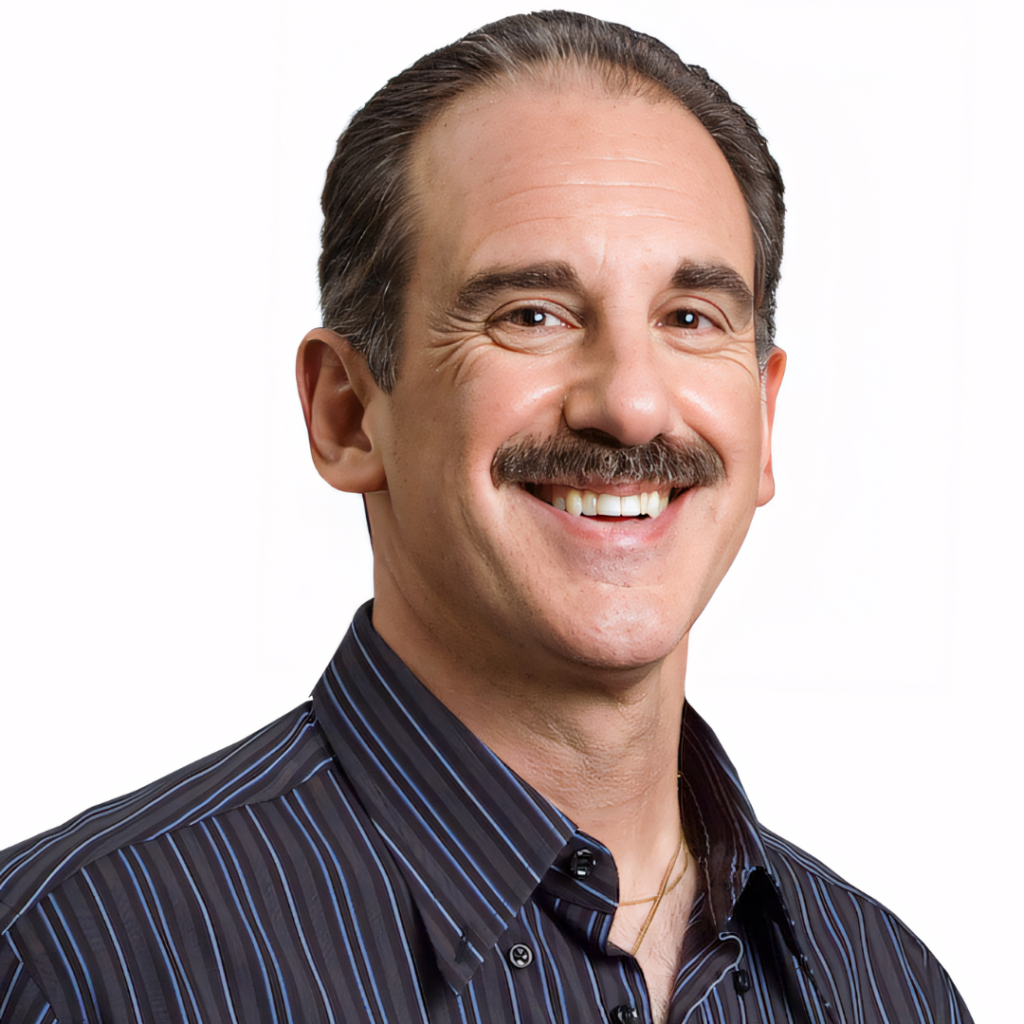
Jeff Blackman covers Business growth coaching in this Marketer of the Day episode. Jeff Blackman teaches leaders to grow revenue by replacing winging-it conversations with prepared, ethical relationship power. His "three P's" start with purpose, add power probes (great questions), then a parade of progress that prevents ghosting. He calls the world's fastest strategic plan three lines: where are you, where do you want to be, and how get there. Instead of "show up and throw up," he qualifies whether someone is a prospect or a suspect, a player or a pretender. To stay consistent, he writes a "dynamic dozen" of open-ended questions and practices them, plus a Sweet 16 list that fits any business. Two anchors are "What will you value most in our relationship?" and "How will we measure success?", which eliminate assumptions and confirm expectations.
Few things are more frustrating than working hard yet feeling stuck, watching others seize opportunities while you struggle to gain traction. The problem often isn’t a lack of effort but a strategy that no longer serves your goals. When you cling to familiar methods out of habit, you risk missing the breakthroughs that could transform your business. Growth happens when you step back, reassess, and adapt with intention. The question isn’t whether success is possible—it’s whether you’re willing to challenge your current approach and embrace the shifts necessary to make it happen.
Jeff Blackman is a Hall of Fame speaker, best-selling author, success coach, and broadcast personality based in Chicago. A lawyer since 1982 who never practiced traditional law, he built Blackman & Associates, a consulting firm specializing in business growth. He has authored multiple books, including Peak Your Profits and Bullseye: Hitting Your Targets at Home and at Work. Known for advising C-suite executives, Jeff helps businesses refine strategies through targeted questioning and preparation. Today, he talks about the critical importance of business preparation, strategic questioning, and developing a growth mindset to achieve long-term success. Stay tuned!
Resources
- Blackman & Associates: Creating Profit Through People
- Follow Jeff Blackman on Facebook
- Connect with Jeff Blackman on LinkedIn
Podcast: Play in new window | Download (Duration: 36:19 — 66.7MB) | Embed
Subscribe: Apple Podcasts | Spotify | Amazon Music | iHeartRadio | Podchaser | RSS
Transcript
Download transcript (.txt)Jeff. Hey, we're back with Mr. Jeff Blackman, who is a Hall of Fame speaker. He's a best selling author, success coach, broadcast personality and lawyer. He heads Blackmon and Associates. They are a results producing Business Growth firm in the Chicago land area. And Jeff's clients call him a business growth specialist. He's authored six best selling books. The most recent is peak your profits. But there's also Bullseye hitting your targets at home and at work. And we're going to find out today about this amazing concept called relationship power, of how to have integrity, how to act with ethics and how it all leads to your own success within without, in life and business and everywhere else it applies. So Mr. Jeff, glad to be speaking with you.
Robert, a pleasure. Great to connect with you,
likewise. And so what are you all about? We met for a pre call a couple of weeks ago. I was really impressed with your attention to detail and your personal people skills. So what should people know about you?
Well, I'll give you a client perspective. One of the things that clients say when I'm talking about clients, my key decision maker is really the C suite. So it's the president, it's the CEO, it's the chairman or the chairwoman. It is somebody who is in a leadership role. This is a black man, and a lot of my clients literally call me Robert by my last name. They never use Jeff. It's always black men. And they say, of anyone who we have ever worked with, whether as a speaker or a trainer or a consultant, first they see me as a business growth specialist, but what they tell me is, Jeff, you are the most prepared individual that we have ever worked with in business, and that really comes for me being an athlete as a kid. So I played a lot of baseball as a child, and then when I got to high school, I played three sports, and that was soccer, basketball and baseball, but baseball was always my best sport, and our coaches were terrific. And I was really fortunate to play with some terrific ball players as both a child and while in high school, some of them who actually went on to the professional level, either double A or triple A. And one of the guys who I played ball with in high school, Ray Baruch II, he was actually the roommate of Ryan Sandberg when they were the Phillies organization, and Sandberg eventually was traded to the Chicago Cubs, and obviously he had a Hall of Fame career and as a cub loyalist or a nutty Cub fan, and that's the great Ernie Banks over my shoulder, aka Mr. Cub. I love my cubbies, even though we had to wait 108 years until 2016 for our most recent championship. So I hear that from clients all the times that black men, you are really well prepared, share with our folks, the significance of that so they don't wing it. And as a result of being really well prepared, whether I'm working with only the leadership team or the leadership team and their other leaders, plus their sales people inside account management people or service people, we talk about the significance of being really well prepared. And I also learned that being trained as an attorney. So I've been a lawyer since 1982 but I have never practiced the law, but what it taught me is how to do really good research, how to ask terrific questions, which I also learned being trained as a broadcaster, both radio and TV or in Chicago, because that then enables us to look at things that clients haven't considered before. So I will often get a lot of we didn't think about that. Huh, black men, you're challenging us. And that's really what I try to do with my clients, Robert is I let them know very early. Do you want me to be honest or diplomatic. And they go, Oh, no, honest. And I go, Okay, I am not here to appease or please you. I'm here to help you reconsider and re examine and rethink how you do what you do and why you do it. And they're really grateful for that, because often they don't get it internal from their people who are concerned about their next paycheck me, if a client wants to fire me, I'm comfortable with that, because they hire me to help them change and look at their business differently. So that's client perspective, and that's the only perspective that matters, because what a client's perceive about the relationship we have, not what do I perceive?
Very nice. And I love the sort of attorney mindset, right? Like a lot of what you're describing when you hire an attorney for any sense, it's what you expect, right? You want someone who is prepared, who has thought things through, who can see all the angles. And when they have information for you, they just take a moment. To set it up properly, right? Especially what you said there, do you want me to be diplomatic? Do you want me to be honest? Okay, and then the lens that that is then seen through it is a lot clearer and more helpful and makes a lot of sense. And so in this topic of being prepared, something that drives me a little bit crazy is I'm concerned about being overly prepared or expending too much energy. It's kind of like when you were in school, and if you got a B grade or a B plus, and you say the amount of extra energy to get from a B plus to an A minus or an A is like 1020 times. And so when you say that, you thought things through and considered, how do you ensure that you're doing it properly and you're not just like wasting time or being obsessive compulsive about it?
Well, great preparation includes flexibility and adaptability. So one of the things that I encourage clients to do before they engage in a conversation with a team member, or, for that matter, a prospect or a customer or client, is what I call the three P's. And they go, what are the three P's? And I go, number one, know your purpose. Why do you want to accomplish what you want to accomplish? But also consider the purpose of your decision maker or your decision influencer. The second one, which we'll dive into a little bit deeper soon, is power pros. Ask really good questions. Most people don't. They have a tendency to do a data dump, or, as my good buddy Jeffrey Gitomer says, they show up and they throw up. That is a business blunder, Robert, that is a financial faux pas, let me be blunt. It's really stupid. So first, you need a purpose. Second, you need your power. Probes, really good questions, and then the third P is a parade of progress. So what's being done to keep things moving forward? So you're not in Purgatory, wondering, what the heck happens next? Why are they ghosting me? Why is there radio silence? Well, what did you do to assure what happens next? And that's why I tell clients. One of the reasons that I ask them a lot of questions is because it helps us eliminate assumptions and confirm expectations. And they go, Whoa, that's really good. Can I write that down? I go, well, not only could you write it down, use it let people know the reason that you're asking them questions is because it helps eliminate assumptions and it helps confirm expectations. So that's the purpose of preparation, but also being adaptable, which includes qualifications. So I always tell people very early, you need to qualify to determine, is this person a prospect or a suspect? Are they a pretender, or are they a player? And if they are a pretender and if they are a suspect, you're polite, you are sincere, but basically, it's sayonara Arriva, derla Shalom, dos vodonia, catch you later. I'm out of here. Do not waste time with them. But what does a great athlete do? I e a quarterback. They are well prepared. They have reps. A quarterback comes up to the line and they look back, they look forth, they look back, they look forth, then they make a decision, okay, we thought we would have a running play. Too many folks in the box. We're going to call an audible RPO we often hear in football, run Pass option I share with clients my RPO philosophy, which is results, possibilities, opportunities, and you can only be flexible and adaptable when you're well prepared. What does a pilot do? They have a flight plan, but what do they do? They alter it. Why weather, wind? All of a sudden, we need to alter our course, change our path, and it really goes to the world's fastest strategic plan, which I work on all the time with clients, and that is, where are you? Where would you like to be, and how do you want to get there? And if you can answer those questions for yourself, for your team and for prospects and customers and clients, that really puts you in the best position to provide the best solution. Okay, I now understand what your plight is, what your priorities are, what your challenges are. Now I can share with you solutions that have worked for others. Let's explore how they will not work for you.
It's a great framework, and I'm kind of hearing the same three steps in as parallels in some of these stories you're telling, right? That in any situation, there's Well, where do you want to go? What's kind of the path, to avoid the obstacles or to get there, and then what are you doing to get in motion, to pursue those sort of goals? And it's amazing how few. People think this through, right? A lot of people, they leave it up to chance, they guess, and then they wonder why they're getting these sort of guesswork results. And it is painful, right? And it does take some of this revisiting, some of this kind of advice and to help us really nail it down. I love hearing about stories, especially when you overcame crazy odds when you struggled, when you panicked. So do you have anything along those lines to share with us on this podcast about just a client story, especially one when you really struggled or panicked?
Well, in terms of struggle, as you and I briefly discussed a couple of weeks ago, struggle is part of life. If you are really living your life or attempting to live it to the fullest, you're going to have challenges. You're going to have difficulties, whether they attack you personally or those who you love, if you love others, guess what? If you are an empathetic individual and not a sociopath, you care about other people. So if you like, I can really talk about two struggles in particular, because these two had such a significant impact, a significant impact on my life, on my business and my career. And it's not necessarily a client moment, but to some extent it is. But if it's okay with you for the first struggle, can we turn back the hands of time real quickly. Because when I think of struggle, let's do it, persistence, I think of little boy and a little boy who, at the age of six, stood in his first grade classroom and he was asked to utter by his teacher, Miss Northrup, utter two words, listen and rabbit. So he stood Robert, and to the best of his ability, he said those two words. He said, listen and web it. And everybody laughed. He didn't know why, so he repeated those words again even louder. He said, listen and wabbit, everybody laughed even louder. So he went home and he said to his parents, my teacher, Miss Northup, she's crazy, crazy. She claims I need speech correction lessons. Can you believe her? She is wrong. So that widow boy worked very hard on his eyes and his elves for about two and a half to three years until eventually he could enunciate and articulate and communicate, and I assure you, your listeners, your viewers, I know that little guy real, real well. He eventually grew up to become a best selling author and an attorney and a hall of fame speaker and a TV and radio broadcaster. So that little guy who's obviously me could overcome his perceived difficulties. Anyone listening or watching can do the same thing. Life is about struggle, but the question becomes, what are you going to do with it? Quotes, they're important to you. They're important to me. And I think of two in particular. One is my late dad, who passed away in February of 2019 dad was a very successful CPA and a lawyer, the most published one, literally, in the world. And dad had a simple saying, which is that life is a series of adjustments. Always, stuff will happen, but how do we adjust? And I also think of the great John Wooden from your neck of the woods in California, terrific coach of the men's UCLA basketball team. 10 national championships in 12 years, the Wizard of Westwood, seven of those championships. Robert consecutively, unbelievable. And I think of John Wooden often, because I say this to myself, and that is that things work out best for those who make the best out of the way things work out, and then to jump ahead to really kind of a recent struggle. And you and I discussed this very briefly. In January of 2023 I contracted in my right eye a very rare fungal mold infection. So my right eye now looks, well, kind of normal, because it looks brown, and the reason is it matches my left eye. This is a brown contact lens over what's blue my right eye turned blue from all the scar tissue. Why? The fungal mold infection from fusarium led to three corneal transplants and 13 additional surgeries. My life, in essence, personally and professionally, came to a stop in January of 2023 I stopped working. I could not travel. I was in pain every day for six months. Started to get better, start travel and speak again, two more surgeries in August. So maybe I worked for 90 days in 2023 an unbelievable impact, personally and professionally, lost my voice for the medicine that I was taking. And there was a bunch 10 different drops to this dam still on 10 different drops. But then it was prevented. Positive, and we didn't know at the time what we were fighting, so I lost my voice. Now have really no vision in this eye, and I dropped 29 pounds in three and a half weeks. I was a pretty sick guy, but that was better than the alternative, because if it wasn't fusarium, it would have been acrimonium, and they said acrimonium would have gone from your eye to your brain, and it would have killed you. And we didn't know that for about 48 to 72 hours, until the lab gave us the facts to deal with what was next. So that's another really unique struggle, but I learned that keep moving forward. Just keep moving forward, no matter how difficult it might be, stay optimistic. And by the way, science doesn't care about optimism. Nonetheless, I stayed optimistic to keep moving forward. I've got one more quote if you like, which is one of my favorites. It still sounds serious, so yo puedo hablar Espanol, so I can make this sound very important, and that is con cuidado el piso mojado. So it sounds really important, until people realize all that I said is, Hey, be cautious, be safe. The floor is wet, but if you say with a certain amount of gravitas, it sounds really, more important.
Yeah, those are struggles. This is great, yeah, yeah. And I love hearing about the struggles, because it helps us feel the perspective right and that we're not alone. And I really enjoy your playfulness and your self deprecation and just showing a little bit of weakness, because it's so tempting to say, Hey, I'm perfect, and look at all what I've accomplished as an excuse for low self esteem. And who wants that, right? Who does that really help? What we love hearing about is how life has hit you, and there's things that were unexpected out of your control, but you still made the best of it. And so speaking to some next steps here, right? You have these books, you have a website, so if someone has been impressed with your advice so far, what is a logical next step for them, or what book is appropriate for them to read?
I'll answer that. But first, I want to make an offer available specifically for your listeners, for your viewers. So we've alluded to the importance of questions, and in peak your profits, just as an example, there are hundreds and hundreds of questions. So I'm pretty good at this, and I could rattle them off and I could wing it, but I don't, because, as I told you, I prepare for everything. So I always have got these questions written down. They're in front of me, or I'm looking at a big screen right now. They're off to the left. I let people know if I'm glancing in this direction, I'm looking at questions I prepared for our call. If I'm looking in this direction, if it's cool, I'm jotting notes, and nobody ever says no to that. So I actually developed something called the Sweet 16, and it's 16 specific power probes, questions that can work for any business, and we'll send them to a listener or a viewer. But they need to take action. The action is simple. All they need to do is to send an email to Sheryl in my office. That's S H E R y l at Jeff blackman.com, one more time, Sheryl, S H E R Y L at Jeff J, E, F, F, black, like the color. And then M, A, N Sherlock, Jeff blackman.com, in the subject simply put Robert rocks Sweet 16. So if we see Robert rocks Sweet 16, we'll know it's you. It's your show, and we'll know exactly what to send. And then Sheryl will send these sweet 16, and that will also include links to free stuff at our website. In terms of videos, folks can watch audios. They can listen to book excerpts, as well as the two most recent best sellers, which include the fifth edition of peak your profits, as well as bullseye. And the ironic thing about Bullseye is that it takes us back to an experience that I had with my dad when I was 16, where we went on a fishing trip. We came back and there was a carnival like setting, and we observed a man attempt to dunk a politician at the dunk tank. And you've seen those before. So to give you the abbreviated version, although people can see this in the results TV section at our website, where I tell the whole story. We saw him attempt once, and he failed from about 15 to 20 feet away. He then had a friend at his side, and she kept saying, higher right, higher right, higher, right. So his arm goes down, his elbow goes up, his shoulder goes back, and he throws and he hits the bullseye, and the politician Robert shoots up and splash. So I have always told this story, but there's one more fact, the man who threw that softball, he was blind, and when I share that. To an audience, there's a literally an audible. And I go, if you don't have targets, how can you ever hit them? He was blind, but he still had a vision of what his goal was. So that's the basis for the entire book about bullseye, comes out December of 22 at Amazon within four days, becomes a best seller. Six weeks later, my vision is in jeopardy, and it still is, that it'll never recover from the ophthalmologist, she said, you're 20, 2400 which basically means I don't have any vision in my right eye, but you adapt. Life is a series of adjustments. Things work out best for those who make the best out of the way, things work out. I've learned that I can live life, I can speak, I can travel, I can drive with one eye, so you adapt appropriately. So those two most recent books pick your profits. The fifth edition, in addition to bullseye, which is more motivational and it shares personal experience with folks who I've been on the platform with, or who I interviewed on radio and television. Bruce Jenner, I knew him as Bruce back in the 80s, not Caitlin Marie, but I share the story of Bruce and I together, and he was a great interview. Bill Russell, the great basketball player, one of the greatest champions of all time, from the Boston Celtics. I had a personal experience with him, because he asked me to consult with him. Mark Cuban. Mark Cuban and I were on a program together in Dallas years ago for some of the top financial advisors in the world. And then I chatted with him for five to 10 minutes, and he was terrific. So I shared the Mark Cuban experience. Jerry Seinfeld, so Jerry was on my radio talk show in the 80s here in Chicago. So I get folks, kind of behind the scenes, look at really some of the top achievers in the world, and really what their mindset was or is, because the mindset is what helps drive action. And I always tell clients, don't tell me about your grandiose plans. Tell me about what you intend to do to achieve your grandiose plans, and then we'll discuss the results, because when all is said and done, Robert, more should not be said than done. Let's focus on what you do, not only on what you know, because it's important to do what you know to do. Take Action, execute. Make things happen.
Very inspiring. We need to take some action. We need to make these things happen. And I always love thinking, especially recently, about the ripple effect that Jerry Seinfeld or Mark Cuban or John Wooden will say something, and then it gets passed on, and it helps many other people, far beyond what he even knows, right, far beyond what this one person can say when they interact. And just like how you've written these books, you have this advice. You do podcasting, you do radio. You don't even know the extent to which your reach will help others, and that's what I'm here to help you do. And so if you out there in podcast land are looking to get your business better, dialed in, to hit your targets, achieve your goals, have business growth. Then we mentioned some of these resources. Right. There is the book bullseye, hitting your targets at home and at work. When Jeff has many of these interesting stories of people he met, there's peak your profits, the explosive business growth. System, outsell out, serve out market out, negotiate your competition. But most importantly, that resource that we dropped and Jeff makes it easy. You don't have to go in and often, in a form, you send an email that's to Sheryl with an S, that's S, H, E, R, Y, L. At Jeff blackman.com, you put in the subject line. Robert rock, Sweet 16. And is it okay, Jeff, to probe you a little bit and like, give us a taste of like, one of the 16, just to get people excited about what they're about to get.
So one of the 16 is that World's Fastest strategic plan. And I encourage your folks to position it that way and say, one of the things that our customers, or our clients say they really value is that we're able to help them with the world's fastest strategic plan. Pause and people go, What do you mean? Well, they tell us that they value, that we're able to help them determine where are they, where would they like to be, and how would they like to get there? Then people, in essence, have not a framework. Yes, that's three. Again. Three, by the way, is a simple cadence, and it works in everything. That's why you'll hear about news, weather and sports, traffic or sports. There you go. Comedians will often tell three jokes about a topic, why there's but a being, but a being, but a boom. There's a cadence. I will often encourage people that you've got to. Choice, are you going to innovate, imitate or vegetate? If you choose the latter, you might as well abdicate. But abdicate was set up with three so there is that certain cadence that works well with that. So that's a really simple question. Other questions along the lines of, what are some of the challenges that you're currently confronting? You mentioned that your people aren't selling or negotiating as effectively as you might like them to what do you think you're losing on an annual basis because your folks don't have those skills? What are some of the things that you've done in the past that have really had a positive impact upon you and your business? How are those still generating results? Oh, you're not using them as much. How come? What do you wish your people were doing, but yet they're not yet doing? What are the skills or the attitudes or the behaviors that you'd like your people to be able to execute? And here are two really simple questions, and I always encourage people to ask these most people don't, what will you value most in our relationship? That helps you discover what they'll value, as well as what to avoid. And the other question is, how will we measure success? Why you eliminate the assumption? You confirm the expectation. And if I would have multiple people on with you as a decision maker, and the next to you is Susan, and the next to you is Steve, and the next to Steve is Alice, I would ask all four of you, what would you value most in our relationship? Each of you might have a different answer. Could be qualitative, quantitative or both, but now I know, so I make sure that whatever solution we provide for you, whether it's a Keynote or a half day results session or a full day or multi day or ongoing coaching or learning system, we're helping each of you and your leaders achieve what you want to achieve. And I always tell people, Robert, there are only two motivators, two motivators that drive every decision. It's the reason that you and I are doing this podcast today, because what your listeners and viewers are interested in is, first, how will you improve my condition? That's right now, because your listeners and viewers have got problems to solve, needs to fill, and dreams or goals to get so how do you and I together, collaborating, which is what we're doing help others improve their condition, but that's only part one. The second motivator is, how do we then help them attain a more favorable future? Because if you do that for others, guess what? You just did it for your self too. Let me give one other simple, really simple strategy. Most folks don't do it. I'll often ask people, Robert, what your dynamic? Doesn't? They go, What are you talking about? Beignets, bagels, donuts, what? What do you mean? Dynamic? Doesn't I go, No, what are your top 12? Open Ended need development questions. They begin with a, who, a, what, a, when, A, where, a, why, A, which, A, how. Here's the TED principle. T, tell me more about E, explain to me how D describe for me. And they go, Well, no, I got them all up here. And I go, Oh, so you're winging it. How would you like to maximize the greater likelihood for success. Oh, yeah, write them down. So write down your dynamic dozen. You might not ask all of them, that's fine. You can bob and weave, call an audible and adjust, and then take them, put them on your smartphone. And once they're on your smartphone, you can look at them, you can see them, and then create an audio memo on your smartphone so you can hit play and hear you in your voice reciting your questions. So I've got clients that do that, and they go, here's what we do right before we go into an opportunity to reinforce our purpose. We look at our questions, we hit play, we hear our voice reciting the questions, and that helps us be really well prepared. And we have had folks literally, because I talked to the CEOs who say, Hey, listen, I loved your message. Call me. Let's talk how you can help my company. They go, gotta let you know I heard you in the morning. That afternoon, I had a prospective client meeting. I used some questions that I had never considered before, but I learned them with you. In the morning, Jeff, I landed a new client, and I go, that's my juice. So my juice is somebody else's success. And I literally, it happened today. I've got a client. They're in the equipment business, they're in Alabama, and Trey sent me an email, and the subject was more juice, because he knows that my juice is his success and everybody else's success. He said, Jeff, want to bring you up to date, so I'm going to reply to him. Haven't done it yet. Is that my juice cup runneth over. So that's my juice. And I love to hear from your listeners and viewers is they tell you and I here's what we did as a result of listening today. Here's how it helped us. And I'm thrilled with that. Some people in my business there juice. I got a standing ovation. My feeling is you're a narcissistic fool. Who cares? What did you do for the people who were in those seats? To me, it's more important my impact upon what you can do to implement immediately, as opposed to, did you love me? Who cares? So my greatest juice will be when your listeners and viewers say, Hey, I listened, and here's how it helped me. That's really exciting. That's our juice.
It is helping people making a change. And the way that we can make a change is by checking out these resources. There's Jeff Blackman on LinkedIn, there's peak your profits. And there's the book Bullseye by Jeff Blackman on Amazon. There's Jeff blackman.com but most importantly, it's so easy to just listen to something and then not implement. It's time to implement. It's time to send that email to Sheryl with an s at Jeff blackman.com put in the subject line Robert rocks Sweet 16, and get their reply. And apply some of these tools that Jeff will reply to you that doesn't and recording it in your own voice and hitting these questions so that way you're prepared when you have the client meeting, and you can bob and weave and be and have some of these prepared materials. It sounds amazing, doesn't it? Jeff and like our brain plays tricks on us, we think that, oh, I have it all stored in my head, right? I think I know how this meeting will go. I'll write my best selling book, and it's all in my head. And then when you go to write it down, you're in for a rude awakening with reality, your brain and your imagination play tricks on you. You're perhaps not as prepared as you think. So write this down that way. You can get to excellence. You can put in the reps. You can go through the uncomfortableness of the struggle and the failures in the know and get this business growth problem figured out and help your people and help others. And it begins by sending that email. Sheryl at Jeff blackman.com, subject line, Robert rock, Sweet 16, get it, use it, and then make sure to follow up with Jeff and tell them how it changed your life, changed your business, how much you loved it. Any final words here, Jeff, I like to end a show with an interesting quote or lesson that has served you that you can pass on to us. You've shared so many do you feel like we're using one from before? Or is there a fresh one to cap off our conversation.
So I'll just reiterate what I say to clients all the time, and I alluded to earlier, and that is today should not be about ideas. It should be about implementation. It should not be about knowledge. It should be about action. And don't tell me what you know, tell me what you did with what you know, because all of us are really not compensated for intent. We are compensated for results, and that's why I tell clients that they're protected by an unequivocal no risk assurance. And your listeners, your viewers, can go to our website, and we'll see we've got to know risk, assurance. It's explained in multiple locations. I also explain it in a video. In addition to that, we insist, meaning I insist, that language is part of every agreement with every client. So I've been a lawyer since 1982 but chose not to practice law. So my business is now in its 43rd year. It began somewhat amorphously. The reason that we've been able to grow and to be successful after that first year where we grossed $3,000 literally grossed $3,000 but I really found my passion. I found my juice, and that was, how could I have a positive impact upon others? So I always tell people focused first on the impact that you can have upon others. If you focus on what you can do to help them improve their condition, to help them attain a more favorable future, you will be able to reap the same benefits. So my hope is not only that people watch and listen to our message, but they do it more than once, because if they listen a second or a third time, Robert, look, wait a minute that wasn't there in the first recording, how the heck did those guys sneak that in? And people often tell that to me. They go, Jeff, I just listened to five and a half hours of on, for example, the opportunity selling audio, but when I listened to it the second the third time I heard things that I didn't hear the first time. So the key is, what's your willingness to have an open mind? Because it does start in your mind. You need a strong belief system to see what's possible, and when you have an anticipatory result of an excellent outcome that will. These serve you well, because then you will move your mind, you move your body, you move your energy, your focus, your money, to the accomplishment of what you want to accomplish. And it's you don't do it for somebody else make it happen, because this is what you want. And when you do that, then you're really in the best position to help others attain what they want.
Life changing. Mr. Jeff inspiring. Well, it's time to go out and get it to impact others. Find our juice, take action, implement. Get results. Stop thinking, stop waiting. Get something done. And the very first step we said, Sheryl at Jeff blackman.com, Robert rock Sweet 16. And thank you very much, Jeff for showing up, stopping by just over, delivering 510 times and giving us what we need to get on our way and achieve excellence and grow our business. So thank you very much,
Robert. The pleasure is mine, and to you, keep rocking. All right.