1464: Fight Misinformation: Verify Content and Build Trust with AI Credibility Expert Dan Nottingham
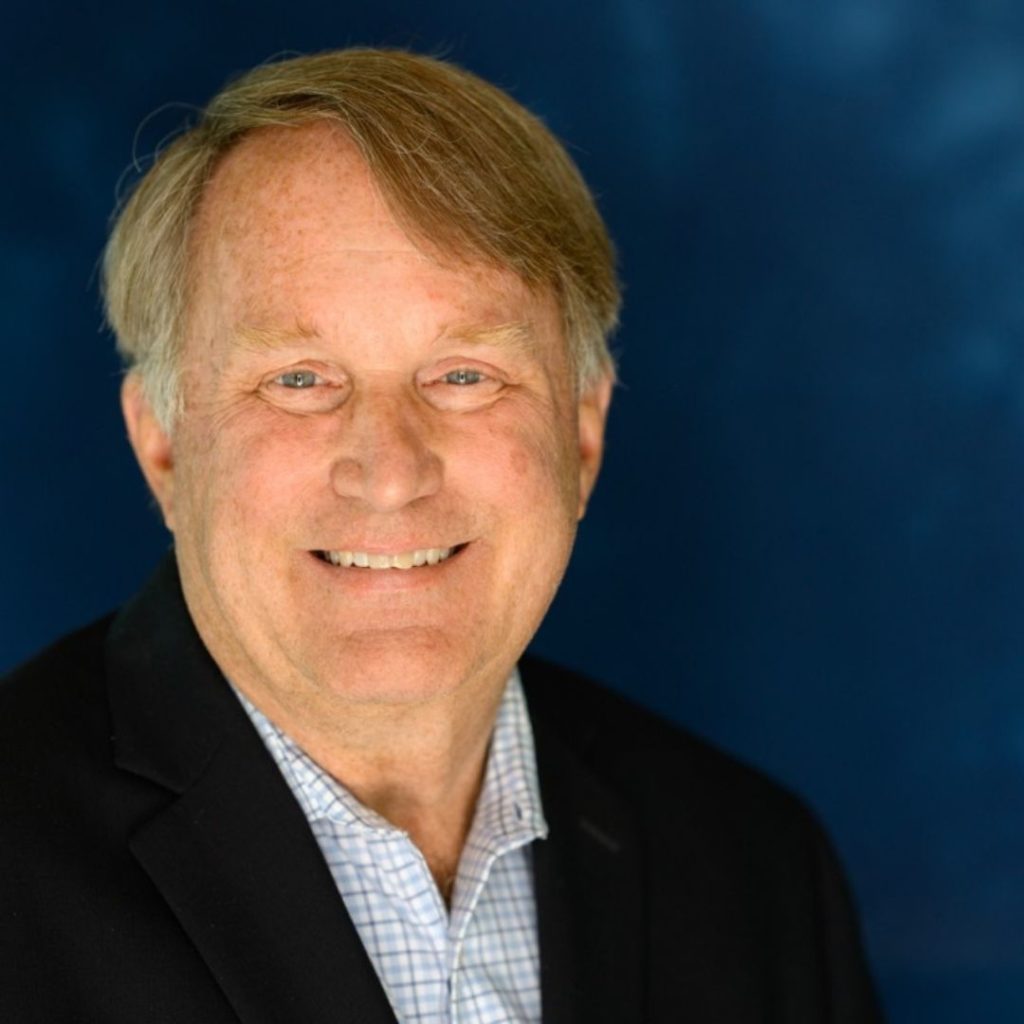
Dan Nottingham covers Credibility Scoring in this Marketer of the Day episode. Dan Nottingham built MiCredible.ai to help people check misinformation and speak with confidence. You paste a claim or ask a question, and it returns a credibility score plus the sources and reasoning. It reduces bias by sourcing across viewpoints and running multiple AI analyses to reach a consensus. He frames it as a lightweight "chief editor" for social media, where everyone can publish without vetting. He showed a bank message claiming online banking has "no downside" scoring 2.5 out of 10 due to fraud risks. Deleting the "no downside" phrase lifted the score to 9 out of 10 while keeping the core message intact.
Misinformation is a growing problem, with most Americans worried about the reliability of online information. Dan Nottingham created Mi Credible.ai to help people navigate this landscape by providing a credibility score for statements. The tool uses multiple AI models to objectively analyze sources, offering a numerical score and an explanation so users can assess the accuracy of their content before sharing it. This approach helps reduce bias, promotes informed communication, and gives businesses and individuals a measurable way to maintain trust and credibility online.
Mi Credible.ai can be used for business, social, and casual purposes, from validating marketing content to settling debates among friends. Users can input any statement to check its accuracy and receive a clear score, making credibility a key performance indicator. Nottingham envisions a future in which AI tools like this serve as impartial editors, helping people navigate misinformation with confidence. The platform is currently browser-based, with mobile apps in development, and encourages users to try it themselves to see how it can improve communication and decision-making.
Quotes:
“Everyone is a publisher, but not everyone is an editor. That’s where credibility tools come in.”
“Credibility shouldn’t be a buzzword; it should be a KPI for your business.”
“It’s not enough to be right—you have to persuade.”
Resources:
Podcast: Play in new window | Download (Duration: 25:21 — 34.8MB) | Embed
Subscribe: Apple Podcasts | Spotify | Amazon Music | iHeartRadio | Podchaser | RSS
Transcript
Download transcript (.txt)Did you know that four out of five Americans are concerned that the information they see online might actually be a deliberate attempt to confuse people? Well, it's called misinformation, and it's not even a secret, mysterious phenomenon, right? We deal with it. We experience it, especially with internet, social media, AI, it's so scary. It's out there. Misinformation leads to heated arguments and a division in our society, but we can do better with this misinformation problem, especially with the help of Mi credible.ai and our guest today, Mr. Dan Nottingham, so Mr. Dan, glad to meet you. Glad to
see you. Nice to meet you too. Robert, well, wonderful. So what
are you all about? We kind of did a little peek into misinformation. And am I credible? But I mean, tell me about what you have going on. Tell me about your solution.
Yeah. So you know, after seeing basically your setup was wonderful. After watching all this misinformation coming through, I really began questioning whether I was actually propagating misinformation, or how would I even respond to misinformation when I saw it? And it really became frustrating for me, because it seemed that nobody knew what to believe anymore. There Was You hear it all the time where people say, Gee, I don't know what to believe. I don't know where to find information, so I'm just going to go with my own research. And you got to figure this out for myself. And we started to find ourselves in a position where people were listening to just the loudest person in the room, not necessarily the person with the right information, just whoever sounded like someone who matched my own way of thinking. And so it seemed people were ignoring facts. They they, you know, truth was just, you know, in the eye of the beholder. And it just frustrated me, and I felt like I needed to do something about it. So I thought, How do I address this? And that was what started me down the road of trying to figure out how to use artificial intelligence and advanced search engine technology to try to solve this problem, even for myself, to better understand the difference between misinformation and what's actually credible,
wonderful and just to give us an understanding like, I mean, what the heck has happened, right? Because people seem to have this romanticism about, oh, well, that the days of Walter Cronkite or I could go and thumb through the library card catalog, and if somebody had something to say, it had to go through editors and be printed. But now somebody just can type anything, and it can be posted, and they say that the lie goes around the world before the truth gets his pants on. So, I mean, you tell me, like, why is this problem become so monstrous?
That is a great example. You know, we used to have people like Walter Cronkite that you developed a trust with and a rapport. And it in that idea around having, like a chief editor, being able to look at things before they went out, before it was published, you had other people vetting what was going to be said. And if you think about it with social media, everyone is basically a publisher. They with a worldwide audience, and yet they don't have that discipline that something like an editor might add to the equation. And so what we thought was with MI credible, you can think of it almost like a research tool that's able to do some of the work that an editor might do for you. So when you're going to make a statement, you can have it checked through, am I credible? And it'll come back with an analysis and a score of how credible That statement was and really and the analysis tells you why it was credible or not credible, and then it allows you to use some sort of your own personal editorial judgment whether you're going to post something or not. Ooh, okay,
so before you perhaps spread the bad misinformation, you can run it through this and say, Okay, well, am I contributing to the problem, or should I maybe rethink this? And I like how you've said that credibility shouldn't just be a buzzword, it should be a KPI. And so for me, that that things like, makes me think, like, okay, there should be, like, a numerical score. But what's the difference here between, say, a lot of the llms, like, chat, GBT, etc, they're all hooked up to the web, and you can, like, ask it a question, and ideally, theoretically, it goes and does multiple searches and strings them all together. But I'm still not sure. Like, well, what does that mean? Like, numerically, does it pass the test, or is it doing its best job? So how does what we've heard about, as far as, like, the chat GBT, type, search, compare with, am I credible?
Well, you know, it's interesting when you think about chat GPT. Or X, A is grok, or any of these engines, there's an applied bias that you that you might think it has. You don't really know what its prompt is. And people often say, Well, I maybe I don't trust grok, or maybe I don't trust chat GPT, because I don't, don't trust the people who created it. So what you needed was something that would be able to leverage multiple large language models and be able to have more of an independent ability to go and do that sourcing so being able to not allow things like just because it's popular doesn't mean it's necessarily a credible source or an authoritative source. So being able to use some logic in determining what kinds of sources should I use, and making sure you're using sources across multiple viewpoints, and then bringing them together and then having more than one artificial intelligence engines analyze those to come back with a consensus and then give you a result. So that whole stream of logic is an example of how we're a little different in that we're trying to figure out, how do we get rid of the inherent bias in any human interaction and just kind of level the playing field? You know, it's interesting. I sent, am I credible a statement not long ago, and I was testing out whether or not I could suss out some bias in it, and it came back with an analysis and enlisted the sources that it used, and in the same analysis, it used Fox News and MSNBC in the same analysis that well, it's probably trying to blend things the best that it can and and just passing the sniff test, The analysis actually made sense.
Very cool. Well, I'm curious about the stories like this, right? Because you it's one thing to like be like, well, I built this, but I'm curious about, like, what started all this? Like, did you have your own kind of frustration, or was like, what's the reason for building this?
Yeah, it really was all around the fact that I believe there is such a thing as objective truth and a shared sort of facts. But the challenge is, well, my truth isn't necessarily your truth, and what I consider a shared facts aren't the same shared facts you might think they are. So I needed a third party arbitrator to help me understand what those were, and that was really what was driving me to it. How do I know I don't have some magic ability to tell truth from fiction, no more than anybody else? So I wanted a tool that would help me do that. And you brought up KPIs earlier, and thinking about your audience here being more marketers and entrepreneurs, you know, thinking about the KPIs that you might run your business credibility is what we're thinking may be a very valuable KPI for businesses in the future. And the reason is, if you aren't credible, you aren't necessarily trustworthy, and people can sniff out when you're you're not saying quite the whole truth. I give, give you an example here. I tried putting myself in the position of being a bank manager. Now let's say I want to create some some content that says, hey, I want to drive more of my users to use online banking because of its convenience, right? It's easier for them. Might be easier for me. So I created some content completely fictitious that said that online banking is more convenient for our customers with no downside. So I ran that through, am I credible? And it came back with a credibility score of 2.5 out of 10, which means that was not a variable, very credible statement. The analysis then told me that while yes, studies show that online banking is much more convenient, there is a lot of downside to it because of fraud and access and other issues. So there were downsides. So I took out the part about with no downside, and just talked about the convenience of online banking, and then my credibility score went up to nine out of 10. So just by making that adjustment to my collateral, by not being hyperbolic, hyperbolic about my my my statement, I was able to make a more credible statement. But. Still preserve my point about it's going to be better for my customers. So the idea would be, if you start using that as a KPI, just like you would run any content through spell check, you might also run it through credibility checking to get a score, and if you won't publish anything and tell us above a certain score. And you can do that with your whole all the kinds of messaging you do for your organization. Therefore people who see your content will trust you more. That would be the goal, and you can track it through a credibility score.
And the analogy that comes to mind for me is when I have friends that send an email blast and they run it through a spam checker before they send it, right? Because you can send it and then they get flagged from Sam. Doesn't help you, but if you say, Okay, well, what do you wrote? Like, 95% of it's good, but there's this couple of keywords or a couple of phrases there, and that's what makes your spam score go through the roof. Similar idea, right where you like, the gist of what you're saying is great, but then this little thing about online banking will add that, that tail end of the sentence, and just that'll drop my credibility. So you make that little quick fix, and you still get the message output with just a little bit of tweaking, and it gets you to what you want. And so as you know, we're both a couple of business owners and software guys, and it's always fascinating when the tool takes on a life of its own right. You make it and you have one idea, and then your users get a hold of it, and it goes in crazy directions. And so tell me about something like that. Like, have you been surprised at the user. Usage of, Am I credible?
You know, we've been getting a lot of very positive feedback about it, a lot of comments about how, hey, this is something that the world needs. And I'll get comments from some of my friends who have started using it that during just regular conversations. They'll, they'll stop the conversations. Oh, let me check to see what am I credible? Thinks of that. And so you can, you don't always have to make a statement. It can also be a question, and it'll do analysis of it. And I think that the funniest one was, have a group of friends. They're out on the cruise now, just started last week, and they got off on this conversation about hot dogs for some reason. And someone suggested, hey, was there ever a time when hot dogs were made out of dog meat? And so they looked it up on, am I credible? And got a score and discovered that actually no, by the way, just so everyone knows hot dogs never were made of dog meat. But so it's not just for business. It seems that it's a lot of fun for people to use and just sort of just daily questions and the way, but the vision for it, the way I would really like to see it being used, is something that I actually used it for. Before it was even released, same group of friends were all together, and we're talking about caravans during the immigration thing, where you had caravans moving up through Mexico. A lot of stories and the news about that. And friend and I were having a discussion about those caravans, and I said, you know, I I don't think, in my opinion, I don't think those actually existed, because you've heard about these massive caravans, and then we just stopped talking about them. Just kind of went away magically that so I don't, I don't think they're there. And he said, No, no, what do you think I was lied to? And I said, Yeah, I think you were lied to. Well, then a few days later, am I credible? Was up to a point where it's working really well. And so I put that question about the caravans into, am I credible? And it came back with, oh yeah, the caravans are real. The size of them may have been exaggerated in the news, but they're a real thing. And gave me some history about it and how it worked and how it was portrayed in the news and fascinating. So then I reached out to my friend and said, You know what? I was wrong about that they actually were caravans, and we had a whole discussion about that. So I learned something. My opinion about that particular topic changed, and that's really my hope of how it's used, just socially, so that we can have more informed, cordial communication, rather than everything half informed and angry.
Yeah, it's especially the last 510, years, right? It's tricky to navigate because, like, the world is a mess, and some of these issues, there is some nuance to it. And when you hear like the click bait headline, or you see the quick reel, and then there's this thing that gets attention right, and then the algorithm rewards that, and then what you end up surrounded with is all of kind of the popularity contest on what everyone. Voted on what the truth is. And then someone like you says, Well, I want what what really is true. And it's like, well, all these things have, like, half truths in them. And then they're, they're overly simplistic. And then you have this need to be like, well, let me overly simplify the counter to that. And it just, it hurts your brain, right? And it seems like there's just feels like there's, it's a constant war and constant, almost like information, bullying, of like, just all this, all this stuff, trying to get inside. And so is there a a hopeful future? Because it just seems like, with social media and this information, it's just, it's, it hurts my brain. I just, I want to, I want to shut it all off, but then I'm like, well, is that what they want me to do is to be ignorant and not vote. And so what do you think will come of the next, like, 1020, years, with the AI and the fact checking, like, what's coming? Yeah.
So the reason I created, am I credible was because of hope for the future, because I see this as a way of getting around this, having a third party being able to validate things for you in a consistent manner using authoritative sources, where you're not just at the mercy of other people's opinions, where you can pose questions and ask things and have something that had you have developed a rapport with or a trust with that, then you've got that third party editor that that, that chief editor that's going to filter the content for you. Now I want to be careful here. All it does is it tells you about a statement you've either read or something you want to post. It doesn't tell you what to think. It doesn't tell you whether or not you should say something. It simply provides you with some additional information that you can ignore or accept. But I think in having that, in addition to all the noise that you may be here online, is something, how do I trust? How do I know that's true? I don't. I'm a critical thinker. I don't believe any of this stuff says, well, here's something that you may have, if you use it enough, start to develop some trust with and that might help you navigate those waters in the future. And so as long as we get more of these kinds of technologies, more of these things that go out of their way to try to blend out the bias in these communications and are actually honest brokers in information, the more of these we have out there, I think the brighter the future will be, because there'll be some guidance. It won't just be noise.
I like it, and it seems like the subtext with all this AI talk is that we want to find a path where we're smarter, not dumber, right? So you're saying we're not just accepting the output of the AI. We're saying like, hey, what do we trust and what's making sense to us, and what's that leading into the bigger and better decision making. And so in these last few minutes of our conversation, we've been speaking about, am I credible.ai? By Mr. Dan Nottingham, but I only just saw the platform and I only just met you, so I'm sure that you have a way better idea than I do, Mr. Dan of what an ideal question would be for me to ask you at this time. So if you'll let me cheat a little bit, I'll throw it to you. What do you think I should be asking you? I just don't know to ask you,
it's, it's really about, Why should I trust you? Right? You know, you have all these different folks out there saying, you know, I people who have blog sites like your own will will be saying, Hey, you should, you should trust what I have to say. Well, now I've got Dan Nottingham telling me, You should trust me. And I think the answer to that is, I'm not asking you to trust me. I'm asking you to go out, use it, find out how it works. That's the best way to judge it is just try it out. Put your own statements in there, see what it comes back with, and judge it for yourself. Again, I'm not telling you what to think or what to say. I'm just saying try the tool and see if it'll help you navigate these very tricky misinformation waters we all find ourselves in wonderful so
start using the tool. Have fun with it. They say something like, creativity is intelligence having fun. And I the first few days chat GBT was out, I ignored it. I was like, I don't have time for this. But then I started using it to brainstorm ideas for like, movies and TV shows. Or I would go in and be like, hey, like, make me a new episode of Seinfeld, or of news radio. And then it was like so much fun playing with it. Next thing you know, I'm using it every day. And so as far as from like a software point of view, it's, it's great to get people to just go and play with Am I credible and have fun see what come. Up, and next thing you know, you're using it in a lot of your marketing communication, and it becomes something where you're like, how the heck did I ever live without this? You can validate your post, check your statements credibility before posting, to avoid sharing false information. You can share with confidence. You can track your credibility and monitor this credibility score based on the posts you share, because Mr. Dan said that that's so important for us to just get this trust, get this SEO, get this engagement in our algorithms, all these results, but it's all because we are credible. And you can even check others posts. You can enter any statement into mi credible.ai to rephrase and verify its accuracy and help prevent misinformation from spreading. So what's the next step here? Mr. Dan, there's mi credible.ai. Is that the place we should go?
Yeah, for now, that's it's a browser based so for now, that's where we are, and we've already started development on the mobile apps, and we see a future where companies are using it, like we said, to validate their content before they send it out, or even to check, say, influencers who are maybe acting on them, or you're thinking of working with them or saying things on your behalf, you can be checking the credibility of their statements while you're maybe working with them or planning to work with them. So it can be used in a wide range of different ways here. But I'm looking forward to having the mobile apps out where you can just have people say things into it, and it'll come back with a credibility score right there for you in real time.
Very cool. This is an important subject, right? It's a huge problem we have in this modern day and age of this credibility issue disinformation. But you say that you have mi credible.ai so that way we can restore credibility, especially with this score, and that way we can get the sanity back right. We can tell about the factuality of a statement before it's shared online, assigning each statement a transparent credibility score that makes accuracy measurable and easy to understand. So try it out for yourself. Go to MI, credible.ai, you can click a button, use that free trial, no email required. And as Dan said, there's a mobile app coming soon. So right now, It's browser based, but before you know it, you'll be using it with your friends, for fun, for business, all these uses and purposes. SO MI, credible.ai, is the place to go, but before I let you go, Mr. Dan, it's time for the scary part of the podcast where I try to stump you. I try to put you on the spot by asking you about a fun quote or lesson that has served you. So what comes to mind as far as a fun quote or lesson?
You know, it's funny. It's something I've I never forget this. It was early on in my career, I was doing a technical product management and I was always pitching these technical ideas with deep passion and conviction, and I think we should do this, and I wasn't getting much traction. And my boss, at the time, took me aside and said, Dan, it's not enough to be right, you have to persuade and at first I didn't think much of that, until I realized what that meant is putting myself on the other side of the table to actually understand the people I'm talking with and what's important to them. Because a lot of what I was saying was simply introducing risk to them that I wasn't recognizing. And as I went forward in my career, I've always put myself in on the other side of the table, whether it's a customer, whether it's a prospect, whatever it is, I'm trying to think about how they see what I'm saying and what it's going to mean for them, and it's allowed me to build better products over the years, and made me a better listener. I like it. So what
allows them to see what you're saying and what it means for them, and having empathy and sympathy, right? What a concept, instead of like giving up a big laundry list or talking about what's important for you? What do they care about? What are their fears and frustrations? It's fundamental. It's marketing one on one, but it's easy enough for us to forget it or not apply it. So that's a great lesson into like, know your audience, basically, and speak to their fears, not just what is important to you, because you might be some software engineer right concerned with facts and features, if they're like, Hey, how does mi credible solve my problem? And so we can check out Dan's amazing tool, mi credible.ai. And thanks for being here, Dan being an amazing podcast guest. I love what you build, and thank you for sharing what you've created with us.
Well, thank you for having me, Robert. You. Simple.
Subscribe
If you enjoyed this article, subscribe to receive more just like it.


