1514: Get Off the Hamster Wheel: : Steps Employers Use to Control Healthcare Costs and Improve Outcomes with Charles W. Gragg
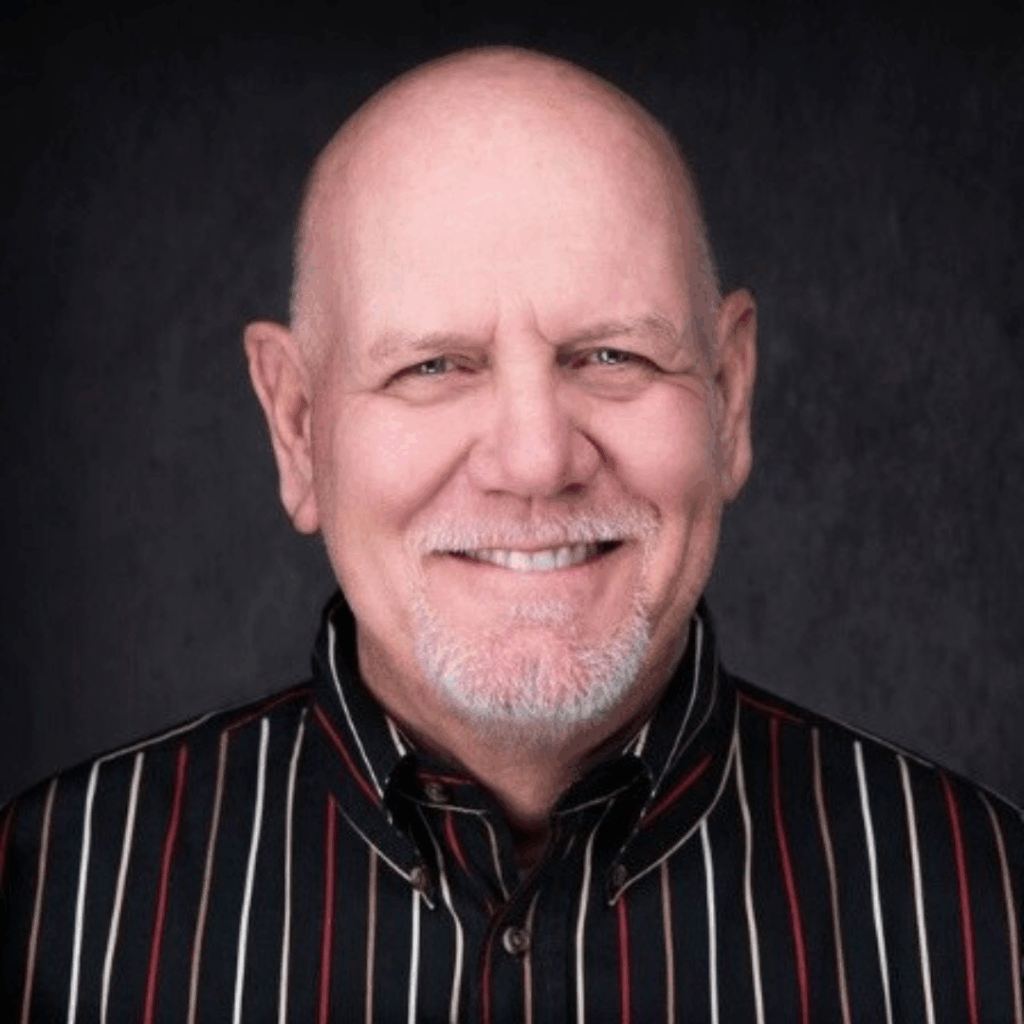
Charles Gragg covers Employer Health Cost Control in this Marketer of the Day episode. Charles W Gragg shows employers how to slash employee health plan spend by owning the plan instead of renting it. He says health 'insurance' for businesses is a known-claims expense, so turning over the checkbook invites unchecked prices. After consolidation from roughly 1,000 insurers to five giants, he recommends self-funding, independent TPA administration, and stop-loss protection. Next comes transparency: track every dollar, use claims analytics plus advocacy, and actively guide employees to better providers. Tools include reference based pricing using Medicare as the floor, and centers of excellence where travel still lowers total cost. He cites a trucking firm sustaining 30% to 50% savings, and a kidney-stone ER visit billed at $10,000 but $1,200 cash.
Charles Gragg is an accomplished healthcare benefit solutions strategist, consultant, and author with over four decades of experience inside the American health insurance industry. Having worked in virtually every aspect of health insurance claims management, brokering, risk, and employer consulting, Charles is renowned for guiding CEOs and HR leaders to reclaim control over one of their company’s largest operating expenses: employee health insurance. His bestselling book, “Get Off the Hamster Wheel: An Employer’s Guide to Controlling His Second Largest Operating Expense,” is transforming how business owners approach group health plans for long-term savings and better employee outcomes.
In this episode of Marketer of the Day, Charles joins Robert Plank to expose the myths and hidden costs plaguing employer health insurance. Drawing on his unique vantage point as an industry insider turned transparency advocate, Charles unpacks actionable strategies to shift from overpriced, opaque insurance models to self-funded, outcome-driven plans. He explains how employer ignorance, market consolidation, and entrenched carriers (“the cartel”) conspire to keep costs high and what leaders can do to fight back. Discussion covers stepping away from traditional carriers, hiring independent third-party administrators, leveraging technology and analytics, educating employees, and how reference-based pricing benchmarks real savings. Charles shares riveting success stories, practical challenges, and the essential mindset shift required for sustainable change.
Quotes:
“Employers must know where every dollar is going, and I will account for it for you.”
“The only way to control the cost is to control owning the business.”
“You can't just keep doing what you've been doing and expect a different result. That’s insanity.”
Resources:
Podcast: Play in new window | Download (Duration: 27:59 — 38.4MB) | Embed
Subscribe: Apple Podcasts | Spotify | Amazon Music | iHeartRadio | Podchaser | RSS
Transcript
Download transcript (.txt)What if you could slash your company's second largest expense, health insurance without cutting coverage? That is what Mr. Charles Gragg is here to tell us about. He's helped countless CEOs and HR leaders escape the broken, bloated healthcare hamster wheel. He has bold outcome driven strategies, and he turns group health plans from cost centers into competitive advantages. It's Mr. Charles W Gragg. That's Gragg with two G's. His book is called, get off the hamster wheel, an employer's guide to controlling his second largest operating expense, employee health insurance. We're here on the marketer of the day podcast with Robert plank. We are brought to you by D FY podcast.com we handled the back end so you can focus on building influence and growing your network. And we're going to be discussing perhaps a different kind of network today, which is that dang healthcare network. There are myths employers incorrectly believe about their healthcare options. It's costing them. Mr. Charles has worked inside the insurance industry. He has a message. He has the mission to share with us. So Mr. Charles Gragg, glad to be speaking with you.
Good. Good to be here. Robert, thanks for inviting me.
You're very welcome. And so what do you think I left out of that introduction? What are you all about? What's your focus and passion?
Wow, I could, I could speak for quite a while just on that, on that one idea. You know, I think I've drawn my experience. I've been doing this my entire health health insurance career. I got started right out of college, and I've drawn a large background with diversity in every aspect of the healthcare system, from claims paying to selling the products to selling the risk portion of a health plan to managing the broker relationships, to talking with and coaching employers on how to solve this issue. And so I've seen it from every side. I kind of feel like I've I've lived in The Wizard of Oz, where I got to peek under the curtain and see that little scared little man back there running the operation. And a lot of people haven't had that experience. They may have the education, they may have some training, but they may not have touched all parts of that. And I've been very lucky and fortunate to have been involved in each one of those. So what I bring to the table is maybe that education process of understanding the problems very deeply and providing transparency of the solutions. The rest of the story is, our system is set up such that employers don't, don't necessarily see or know what's going on, and they certainly don't know where every dollar they're spending is going. So I've always preached the gospel of I want you to know where every dollar you spend is going, and I will account for it for you. So that's that's kind of the message that we've always taken to our employer clients,
very nice, and it's very important, right? The saying is, if you don't tell your money where to go, it'll just wander off somewhere else, and you'll wonder, well, where to go? It's because you didn't tend to your flock, right? You didn't track where every dollar went. And so when, when someone comes, some company comes to you and they say, Hey, we need help. We're stuck with figuring out this health insurance situation. Like, what's the exact problem they find themselves in?
Well, they find themselves in not understanding that health insurance is not like a lot of other insurances, one of the definitions of insurance is define the risk. What is the risk involved in buying the insurance? And a risk is kind of in insurance language, known as a fortuitous claim. That means you don't know if it's going to happen or not. You don't know if, if you're going to have a claim, or how much that claim might be. And sure enough, in health insurance, you don't know how much it's going to be, necessarily, because nobody will tell you. But the fact is, you know you're going to have claims. Well, that's not insurance, that's banking, that's just funding and financing what you know a given expense you know you're going to have. So the problem is, why are you paying somebody for a known expense and and calling it insurance and letting them you've turned your checkbook over to the insurance companies and said, Here, take care of this for me, that is not the way to run or manage any any other form of your business. So to take control of your health care plan, you must take control of the business side, and that's processing. It's access to that health care, and it's full transparency of where every dollar is going to be going.
Well, very nice. And my mind is just going wild and crazy. You, because when you hear about, like, employer health insurance, it's like some of these companies are, like, humongous sizes, right? Hundreds, 1000s of people and so, like, what's the scope of what you do? How do you solve this problem?
Well, you dig into the history. Let me, let me back you into the history of how that all happened. Just 40 years ago, there were 1000 insurance companies in this country, in America, all independently owned and very financially well operated, that would sell an employer his health insurance program. It was a full free enterprise buyers market. If your health insurance got out of control, or the carrier you were with didn't, didn't give you the service you were looking for, you could easily transition to another carrier next year and go start all over with him. Well over time, our government got involved, they put in regulations. They made it tougher and tougher for smaller health insurance companies to compete in that environment, and all the while, a coalition of these larger insurance companies, and I'll name them in a second, got themselves together and said, Hey, let's build a plan that has that we control and that we own. Because once you once an employer gives that premium to the employee, to the health plan, to an insurance company, it's not his money anymore. They spend it and the profits are theirs today, those 1000 insurance companies have basically wound down to five United Healthcare, Aetna, Cigna, Blue Cross and Humana, and they run and control the healthcare systems. I call it the coalition, or maybe even the cartel of insurance carriers. They control everything. It's a monopoly. They make more money today than ever before. It's billions and billions of dollars that they make, and even some of those are nonprofits and and they make more money than most companies that are considered at profit or for profit. So the key is, they're not your friend. Yes, they've built the networks, they've built all the component pieces, and you give them your money, you're renting your insurance. You don't own it. The solution to health care is you must own your own health insurance. It's the second largest operating expense an employer has. And the only way to control the cost is to control owning the business. We can't talk about premiums and lowering premiums, or premiums and being out of control, until we begin to talk about the claims. So only control the cost is control the claims, and that part, you can do the first the first step in that is access. You've got to change the way your employees access their health care, the health insurance cartel is, we want to call it. They have, they've built in this system that says, oh, push the easy button. We'll tell you where to go, we'll tell you when to go. We'll tell you what's convenient. We've got all the providers in our network. We've made it so easy for you, just, just let us take care of that for you. And sure, but that comes at the cost they they're the ones who put this network together, and behind the scenes, they even have built in price increases or rate increases for those providers that provide that care for you. They know they're going to get paid more next year for the same exact claims they paid on this year, so they've got those prices built in. Well. So what does that mean to the to the insurance carrier, he's got a built in cushion of making more money next year than he did this year, because he's getting a percentage of that every time you spend $1 he keeps a bigger piece of that chunk of those dollars from you. So that's the system that employers are fighting today. If they keep doing what they've been doing, passing off that money to an insurance company,
and you're saying that that so there are, there are things that can be done, right? You control the the claims, and there are steps that can be taken.
That is correct? Is that a question? What do you do? So the first thing, what do you want to do? First thing you must do is get away from those carriers. I'm really a two headed coin right now. I work for most of those carriers at one point in time in my career, and I worked for several of them in different capacities, so I know where from whence this comes, but the employer has got to get away from that. They're not their friend, and they must self fund, self insure their own health plan. And wait a minute. Don't get it. Don't get too nervous. You're still not on this by yourself. We're going to provide. You should buy a risk portion or cover or umbrella, if you want to call it, to protect the risk of that plan, but you've got to pull that away and start managing your own health plan as the second largest expense you have and to own it is the only way to do that. So start with that. Find and let's hire a good third party administrator, an independent third party administrator, because every one of those carriers I mentioned, they'll let you self fund it. They call it self. Funding, but they continue to administer it. You're still in their network. And if you don't change those things, it's the old definition of insanity. If you, if you keep doing what you've been doing, expect a different result, that's insanity. You have to get away from all of that, including the networks and the way it's processed, and the way you access the health care or nothing's going to change your money is just going to keep going out the door. So there are solutions, and I didn't say it was easy, but it's simple. And we can, we can put you on a road map to take you down that road.
Wonderful. And as you know, Mr. Charles, I am from a software background, and when, when software, there is a big portion of the buy in of an idea, right? If I come out with an iPhone and I say, oh, it's got these apps. It does these things. If someone's not used to it, if it's not part of their habit, it's so difficult. But then someone starts using it and like, okay, now I have my my head wrapped around it. And so speaking in those terms, when you come to some company and you kind of educate them, what's their level of awareness? Are they ignorant of this? Does it take some doing to get them to buy into the idea? What's it like to get them on board with what you can do?
Yeah, you're that's a good point, and that is part of the issue. There is fear when this whole idea and everything I'm discussing with you brought up to an employer, if, unless they're asleep, they've at least heard of many of these things in the last five to 10 years, some of them have even tried some of them, some of these, some of these components and some of these pieces and solutions. But you have to understand, I said you, you've got to get away from the carriers and go self funded. Self funding is just the financial vehicle. That's not the solution. That's just the that's just the vehicle you're riding in to get to the solution. So disbelief, fear, disbelief of all the things I'm saying that that will or won't happen. They've tried this before, and the TPA they use was either corrupt or inept or just wasn't compatible. And as well, software you mentioned, software technology has come a long way in the last five years, 10 years, 20 years. And I'm talking I've been doing this over 40 years, so you can imagine when we were doing everything manually, without a computer at all. You computer at all, the disbelief that we could do these things and pull it together, and we did. We somehow managed to pull that together and help save employers hundreds and 1000s of dollars, even back then. But today, the technology is on your side. You can integrate the systems, the claim system, with the the medical advocate, the healthcare advocate that you hire with the analytics that give you the reporting capabilities to show you where every dollar is broken even hiring vendors that plug into those systems that help you find higher quality, lower cost providers. That's where we're talking about changing access. Let's not just go to the to the physician next door, because it's convenient. That's easy. Let's find the highest quality physician within a given range, whether that's your zip code, your city, your state, or all the way across the country, if that's where you need to go to get the best care, fly your people to to Oklahoma City to get their orthopedic surgery done, for their shoulders, their knees, their hips, because that's the one of the highest quality, lowest cost facilities in the country. Pay for the plane ticket, put them up in a Hampton Inn versus the hospital. You'll save twice or half as much money for the cost with a better outcome. We have to change the focus from let's buy more health care, spend more money, to let's look at outcomes first, and the quality and the cost will take care of themselves. So that's the change that has to be made inside of an employer's mindset. He's got to understand he's running this company. You've got to change the way access. We educate the employees to understand that's their engagement as well. They're complicit. They have to be a part of this solution. They can't just want to push the easy button and go next door, unless next door is the best place to go, and it very well could be. So that's the mindset and the change that has to start taking place once an employer is taking control,
it seems like treating it like a part of your business. What a concept, right? Instead of leaving it to random chance, you say, hey, like, let me do some research, figure out possibilities, and we might get cheaper, expense, higher quality by doing something like flying out to Oklahoma City, and the math works out, but is counterintuitive on the surface, until you run the numbers, but I'm sure that there are many ways this might go wrong, right? We even mentioned that there's there's resistance, there's fear. And do you have any interesting stories like that to share with us? From maybe there was some drama or struggle? Getting this in place.
Can talk all night about the stories for that. Robert, sure. Let me, let me maybe take a little different interview and give you a success story of what can happen. And actually did happen. Not that long ago, got a large trucking entity, and this trucking concern was growing leaps and bounds. I mean, they went from 300 employees to maybe 500 overnight. And what they were doing was buying up smaller kind of like the healthcare industry, buying up smaller trucking firms and merging them into their business and expanding by acquisition. So literally, overnight, they went from maybe a three or 400 employee operation to 1000 or over, maybe even over 1000 employees. This company had been fully insured with Blue Cross. I said that I'll say the name for many, many years, forever, forever. And they, they just lost control of what it was costing them to provide health insurance for their employees. We got engaged very early on in the process with them, and started talking about all these solutions that I'm discussing tonight, access to health care, controlling your costs, looking at charging or allowing your your payouts to be based on a reference that's called reference based pricing, and we use Medicare as the floor for that. Medicare is kind of the break even point for what health care should cost in America today. Ask anybody over 65 there, they have very little cost involved, and the providers have to provide that cost at those those service, same services for anybody else, at a fraction of what they're getting from the networks. So these people bought into that. They went to reference based pricing route. We're talking about a company that overnight saved half. Now the first year you go self funding, you should save some money anyway. But this is 345, years ago now, and they're sustaining 30% 40% 50% of what they had been paying before, because they changed their entire program to focus on outcomes, not just paying more premium and letting their people go wherever they wanted to go. And you got truckers these guys are traveling all over the United States. A smart employer today is not is even going to divorce that network that his provider claims is the solution to everything. Now that's part of the problem. Those those networks have been negotiated to pay three or four times the cost of providing the service. So Wouldn't we all like to have a 200 300% profit margin and running our businesses? That's what physicians and hospitals are doing, and some of them charge 10 times what it cost to provide that same that same benefit. So anyway, here there's a there's a big success story. Let me tell you about how the system has failed people. I had a relative who, like a lot of us, had an emergency wound up being kidney stones, ran to the emergency room. It was at night, in middle of the night, didn't know how to how to survive, that got into the emergency room. They took care of the pain, probably even helped get the kidney stone wrapped up. Went to check out. They started feeling better. Went to check out, they said, Oh, well, here's your bill. You're in here for six hours, eight hours, whatever the tally, it'll be $10,000 we'll file it with your insurance company and blah, blah, blah, she says, Well, I don't have health insurance. Oh, you don't have health insurance. Okay, that'll be $1,200 cash. Wait a minute, weird. You're telling me they were going to charge an insurance company 10,000 and since you don't have insurance, it's only going to cost 1200 and we'll even help finance it for you. You can pay us in payments. What's wrong with that system so much? That's where we are. That's where we are in health care. Is that lack of transparency and not knowing on the front end, had she gone in there telling them up front, hey, I'm just going to be paying cash. Then everything would have been they'd have issued a cash transaction. What if every provider would do that? They would charge you 1/10 of what they're going to charge you. If you go to the go through an insurance company, because you're going to pay them now and pay them in cash and and even them help finance it. For you, our system would turn around overnight. I'm not saying that's the solution, because you're not going to get all corporate America and corporate Wall Street to agree to cutting their prices to 10% for everybody that walks in the door. But what I am saying is that's that is possible. There are everything in healthcare is negotiable. There is no set price. Oh, I had a appendectomy. That's a that's a $20,000 bill. No, you can probably get it for 2000 somewhere, and you probably charge you 50,000 somewhere else. So all healthcare is not designed or defined the same way. The quality is not the same, the costs aren't the same. Any two facilities, any two practitioners, doctors, all have a plaque in there on their losses. I graduated from XYZ loss. I mean medical school. They're the best in the country. He may have been last in their class. He may have never treated somebody that's got the condition you have is that the guy you want treating you for that condition, not me. I want to go to the very best available that was probably number one in his class, at least in the in the hands on part of it, and how he actually with success ratio. And that information is out there too. Every provider who provides services to Medicare patients, of which I am one now has to, has to report that information to the federal government. I've done this many of those procedures. Here's what I charged. Here's what our costs were. Blah, blah, blah, that's the facilities. That's the practitioners, the specialists, the primary care physicians, and that's the way Medicare is, is controlled, is they know exactly what averages are, and by zip code in this area, people charge this here's what their success rate is, their readmission rate, their their their morbidity rate, how many people died from them providing this service, they know exactly those kind of statistics too. So once you know that information on a facility and a practice and so forth, you can decide who's the best there's it's like a report card. Well, here's the best provider for that kind of service in the country or in your zip code or in your state or in your city, and you can be steered to those practices to get your health care done. So that is one of the main solutions that I don't mean I bring it to the table. The industry can bring to the table. Today is Blue Cross going to do that for you? No, no, it's against their contract language. Their contract language says everybody that wants to come into our network can go, and we're certainly not going to try to tell somebody where to go get their service. Get their service. But if you self fund, you should have and you do have access to that kind of information.
Very nice. It's good to have this kind of education, right that way we know about the choices that are. And perhaps we have more choices than we think we do. And if someone, I'm sure there's someone out there who says, Man, I need Charles Gragg's help. He's already taught so much. Who are your people? Who would you like to reach out to you and what for?
Oh, I would love to talk with anyone about it. First of all, I would have a discussion with them about their current if it's a corporate who their current broker or their benefit advisor is, and perhaps he has these same solutions, or he can be educated to bring these solutions to him. If he doesn't and is not willing to, then I would find a new benefit advisor. That's my first piece of advice to any corporate or health employer they out there that's looking to solve this problem. There are plenty of them out there that that do know this and will help him with this. I will certainly help him with it, but I would do it more on a consulting basis. He needs somebody in his pocket, in house that you know will visit him regularly and is right there in his back door that can help him with this issue. And I say that with the way you can travel today, you can travel across the country. Point is, yes, come to me. I can, I can at least refer people to him and so forth. But there are solutions, and there are good brokers that can bring these same solutions to you.
All right, so it is a problem to be solved, like many other problems. So we have this book in front of us called, get off the hamster wheel an employer's guide to controlling his second largest operating expense. It reveals the fallacies of our modern healthcare system. So that CEOs, senior executives, HR, professionals, benefits, advisors and employees of a corporate group health plan can slash expenses. So find it on Amazon. It's by Charles W Gragg with two G's. And if you want to get some of this conversation started with Charles and say, you know, I'm I'm confused, I'm lost. I could use an extra brain to point me in the right direction. Refer me. You can find Charles Gragg on LinkedIn. That's linkedin.com/in/charles dash. Gragg. He's the Charles Gragg from Hendersonville, Tennessee. He's a healthcare benefit solutions professional strategist and a speaker with this amazing book and this amazing message to help us just be smarter about this second largest expense in our business. So that's Charles Gragg on LinkedIn, and it's get off the hamster wheel on amazon before I let you go, Mr. Charles Gragg, iat's time for the scary part of the podcast where I try to stump you. I try to put you on the spot by asking you about a fun or interesting quote or lesson that has served you so well. Comes to mind as far as a fun or interesting quote or lesson,
the question the the fun solution is, don't ever give up. Get started with this. And this is not a one size fits all solution for any employer. By no means. It's a very customizable you have to understand it's very customizable, and you need someone who can speak the language with you, for you. And I've learned that over time, too many and too many people, even in this segment of the industry, try to turn it into a product or just a box. Here's, let's fit everybody into this one box and giving them in the same solutions that doesn't necessarily work with each employer. So be very independent and own this thing. Run it like a backroom business. Yes, you farm that out. You're not involved in it day to day, but you stay plugged into it. And that's, to me, a fun way to run a business is, yes, it can be run for you, but at your compulsion not just paying the money out and not knowing where it's going. So call that a story. I think that's the fun part of what I do is to bring that solution to these employers.
Of course, they call that rugged individualism, right? It's what America is all about. You can have a $10 stake over here and right next door on $100 stake, and you get to choose, and who knows what the difference is? Well, that's up to you, and you're getting yourself educated. And we've been getting this education from Mr. Charles Gragg corporate health insurance strategist, professional speaker and best selling author. Find him on LinkedIn. That's Charles Gragg with two G's. Find him on Amazon. Get off the hamster wheel, an employer's guide to controlling his second largest operating expense, employee health insurance. Thank you, Mr. Charles Gragg, for an enlightening conversation. Glad that you made the time and thanks for being here.
Robert, thank you very much. Appreciate it. I'll come back anytime.
Subscribe
If you enjoyed this article, subscribe to receive more just like it.


