1542: Profit Acceleration & Predictable Profit for Service-Based Entrepreneurs with Cardinal Business Advisor with Jane Parmel
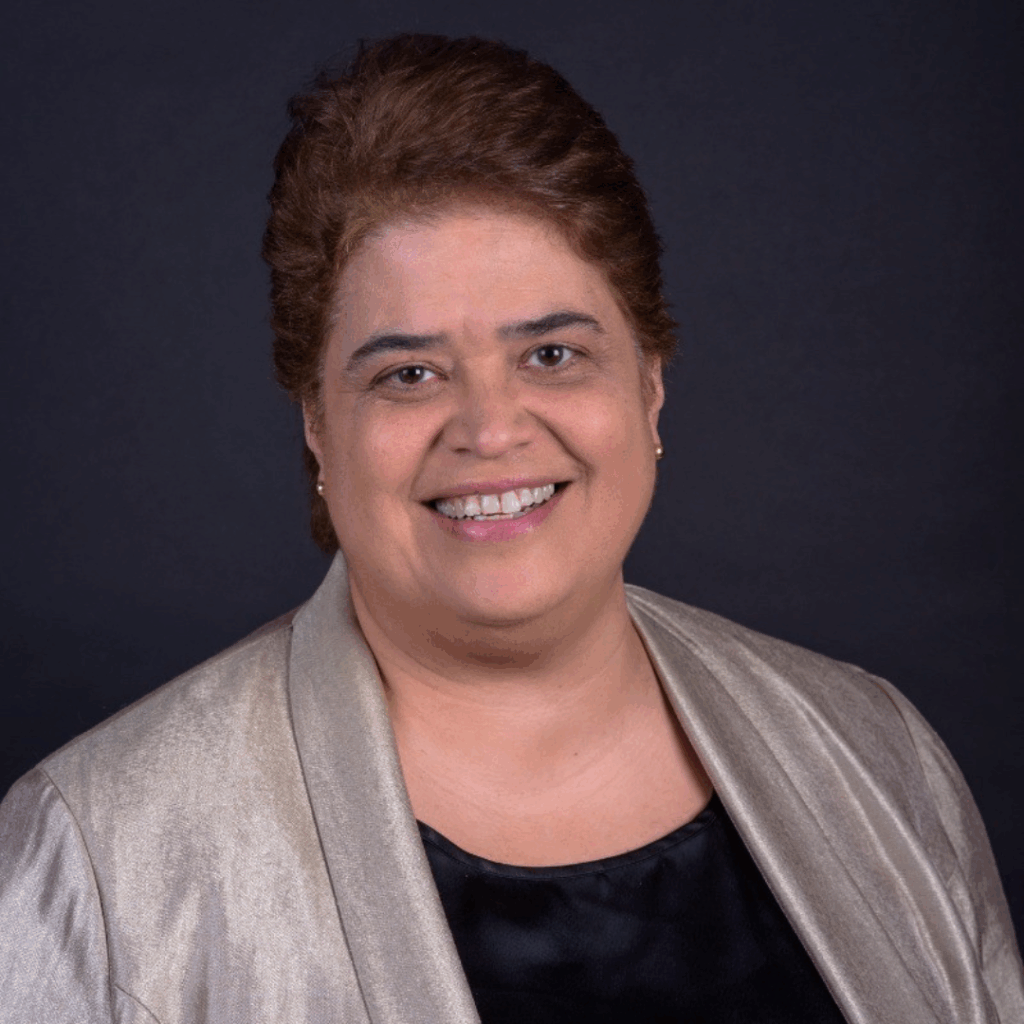
Jane Parmel covers Profit Growth Strategy in this Marketer of the Day episode. Jane Parmel explains how service business owners can move from survival mode to predictable profit. She says owners must stop only working in the business and start leading it with structure, connection, and a positive attitude. Her core framework centers on the 3 C's: clarity, confidence, and cash flow. She identifies two common traps: believing no one else can do the work and avoiding delegation because money feels tight. Jane shares how owning a children's party center taught her to train employees, release guilt, and become an observer instead of the constant doer. She also warns that resistance to change makes operations, systems, and profits suffer.
Service-based entrepreneurs often launch a business to do what they love, only to find themselves overwhelmed by tasks, burned out, and tied to operations they never planned for. In this episode, profit acceleration strategist Jane Parmel joins Robert Plank to explain why the real job of a business owner isn’t “doing the work” but leading the business. Drawing from her journey from teacher to children’s party center owner to coach, Jane unpacks how over-involvement, emotional attachment, and fear of delegation quietly destroy profit, stall growth, and keep owners stuck in the business instead of working on it.
Jane explains why mindset is the first system you must fix, from the belief that “no one can do it as well as me” to the dangerous comfort of “we’ve always done it this way.” You’ll hear how to step into the role of observer instead of constant doer, empower employees to take ownership, and design operations that support clarity, confidence, and cash flow. If you’re overwhelmed, short on time, and tired of your business depending on your every move, this conversation will show you how to embrace change, build structure, and finally create a business that serves your life, not the other way around.
Quotes:
“The moment you stop doing everything yourself and start leading your business, you stop surviving and start growing.”
“If you’re the most expensive person in the company, you can’t afford to be doing the cheapest tasks.”
“Your business will only grow to the level you’re willing to delegate, document, and let other people win with you.”
Resources:
Podcast: Play in new window | Download (Duration: 23:13 — 31.9MB) | Embed
Subscribe: Apple Podcasts | Spotify | Amazon Music | iHeartRadio | Podchaser | RSS
Transcript
Download transcript (.txt)Jane parmele is here. She is a profit acceleration strategist, entrepreneur, author, and she is the founder of Cardinal business advisors. And Jane helps service based entrepreneurs stop surviving, start leading and build predictable profit that actually supports their life. So if you have finally gotten to the point in your life, your business, your career trajectory, where you care about real numbers, real strategy and building a business that finally gives back, this might be the most important YouTube video podcast episode that you ever watch or listen to. So Miss Jane parmel. Nice to see you. How are you?
Thank you, Robert. I'm good and good to see you and happy to be here today.
Heck, yeah, it's what it's all about, right? Some people hide behind the computer screen or have a bad attitude, but not us, right? We're like, Hey, I'm excited to solve some problems and jump in and so speaking of that, what do you think I might have left out of your introduction a moment ago? What should we know about you.
You know, I'm big on leadership, I'm big on connection, and I think that people need to use that, need those, those two really soft skills to propose, propel their businesses forward, to propel their careers forward. So I try to use all of that to my advantage, and I try to use it to my clients advantage as well.
It's so important leadership and connection and like, we've heard our whole lives, and maybe when we're teenagers young adults, we don't take it seriously. And like, some people may be like, misuse it, and it's like, well, if you don't have it, you really feel the hurt, but if you do the right things, and you make sure, like, hey, I want to set a good example and lead people and delegate and do that extra mile and really connect and talk to someone. It sure adds up, doesn't it sure ends up in many ways, you end up with a good attitude, you're happy, you're fulfilled, you have people around you that also lift you up. It's a wonderful place to be if we can get there. So why do you think some business owners are struggling or not happy or both? Why are they sometimes maybe missing this leadership and connection you speak of,
it's so funny. I was at a networking event this morning, and one of the things that somebody said was having a positive attitude, and we all laughed, because the girl that mentioned it in our group is the bubbliest personality you could get. And it's so funny, because having that positive attitude she she comes at things, everything is is good. Listen. You know, day to day, things go wrong. We know. We all know that we things are going to happen. Maybe the client that you thought you were going to build your career on is not the one for you or whatever it is, but knowing how to put that into a, into a into its place, into a space where you can handle it, whether that's question of leadership or having people around you in those connections that'll help you rationalize it or get through it having a positive attitude, not thinking everything's light and fluffy, but understanding that everything happens for a reason. I think that that's one of the things that is so important that business owners kind of forget, because they get stuck working in the business. They get so overwhelmed by doing the work of the business, they forget to see the good that it's bringing. Even when you're overwhelmed with clients, or your systems are breaking down, or whatever it is, we work on that so that you don't have to mind that as much. But when we get it all structured, that's when everything starts to click, your positive attitude, your leadership, the connections you make, and then you watch as the profitability and your likability as a business increases, right?
So it seems like structure in different forms is important, right? There's like the structure of your business and well, what am I doing day to day? Or what's the overall plan, but also, like, your kind of emotional in the moment structure of like, if something bad happens, then you say, well, find the good in it. Or if, even if you can't find anything good, then maybe, like, less than it's important, and say, Well, hey, that wasn't for me. I know I maybe set my expectations a little too high, got a little too hyped up, hoping such and such deal will work out. But my choices are, either I can move on to the next deal, do the next thing, or just have the pity party feel sorry for myself and what I mean, what purpose would that serve? And so you mentioned about that, that phrase, which is, it's so great, right? The whole the Michael Gerber and E Myth of work on your business, not in your business. So if someone needs catching up about what that is, could you unpack that for
us? Sure? Very simple,
you work on your business. You are going out as a business owner, you're taking that leadership position, and you are realizing that you are the creator. Of the business, and you have to bring in business for the business to thrive. Most people don't think that they, you know, if they're, if they're a baker, they want to bake if they were, if they're an artist, they want to do whatever artistry they do. But if they are not conscious of bringing more business into the business, they're not working on the business. They're working in the business, working in the business. I mean, listen, we all have to jump in every now and then. But if you get so overwhelmed and that's the only thing you're doing, I did it. I know I'm talking from experience. If that's the only thing you're doing, your systems are not right. Your processes are off. Your operations are going to suffer for it. Your pocket will suffer for it. You won't be ever able to grow in the potential that you could so, yeah, I think that that, that that Michael Gerber saying that it's something that people really have to understand, that your job, your responsibility as an owner is to keep those people working with clarity, with confidence, cash flow that always helps those 3c three C's. And you are the real, the one responsible for that. That's what it means to be a business owner, an entrepreneur, a true leader. So if you're doing that, and you're not jumping in every time somebody doesn't show up for work, you're doing better work for your business, and you'll grow very nice.
And I think it's such an important message, isn't it, that it's we, well, we start off perhaps, as the worker, and then, and it's sometimes you take that kind of employee mindset with you into entrepreneur land. And it's like, if you don't have someone like you explaining, hey, here's what, you're kind of in the wrong job now. Or, like, your your function has changed, and you're trying to fit a square peg gun around a hole. It can't, like, mess with you psychologically, can't it? You say, Well, now I'm get I'm getting further away from my passion, right? I thought I was this baker, and now I have to, like, now do the press, the publicity, the advertising, bringing new business in, and then kind of slotting someone else into what my dream used to be like? I can imagine it can maybe up end some people, or maybe some of these business owners, maybe, like, didn't even know what they were getting themselves into.
Perhaps you hit the nail right on the head most of the time, business owners, entrepreneurs, whatever, whatever you want to call them, they don't realize what they're getting into. And that, from personal experience, we decided to open up a business. Everybody in our family was in the business, and the problem is they were very successful business owners. They hadn't done, either they hadn't done from startup, or they had done it so long ago. The economy changed. The world has changed. Technology has changed so that it didn't translate down to small businesses and the micro businesses. I mean, if we were, we were not making, you know, millions of dollars. In the beginning, we were a children's party center, when I first started coming off of, you know, being a teacher. But we had a lot of people with a lot of great ideas translating it down to when you don't have the money to invest and you don't need there's other things you need to do, and one of them is, is conceding the fact that you may not be able to do all the baking. You have to hire people, and you need to start training them in what you do as a teacher, as a leader, and have them help you grow that business. And, you know, we did it, and we didn't do it well, maybe in the beginning, but I learned from that in the sense that I've watched other businesses struggle with the same things, and now I show them. Listen, if you just empower your employees and you let them do this, look at how much time it'll give you back, and those are the important things. So I think, yes, you're 100% right when you say, most business owners have no idea what they're getting into. And we like to tell them. We like to tap them on the shoulder and say, did you know it was going to be like this?
No, but you're in it now, and now it's time for maybe some new perspective and some outside help. And I love having conversations like that. I feel like, every few years I talk to like, a operations or finance person, and they look at my business, or I share some numbers, and they they say some of these things, right? Like, well, you need to, like, increase this factor, right? You need to get more leads here, or allocate money to that. Or, like, have someone like fix this problem instead of you doing it. And so when you help out these businesses, do you see like a common problem? Is it this kind of delegating issue, or is there, like, something else that you just kept seeing on repeat,
you know, again, depending on the size of the business, sometimes it is a delegating thing. I've worked with a lot of. Of clients that you know, if it's not them doing it, they feel it'll never be what's what's saying. If you don't, if you want something right, do it yourself. They believe that with every fiber of their being, and it's like you know, if you teach somebody the right way, if you guide them, if you have operations in place, you should be good enough at what you do to get someone else to do it with you or for you, until they can do it on their own.
More than that,
I don't even know. I it's it's something that can really be the detriment. The other thing is, I would say to you a lot of times, it's a money issue because they're working so hard because they're not realizing that they themselves doing things raises the bar with expense. Sometimes they're not realizing they're spending more money doing it themselves than hiring out or teaching an employee to do, and if they don't have the money, they feel like they can't delegate comfortably. And then it just becomes a vicious cycle. I can't hire somebody because I don't have the money. I can't get this because I don't have the money. And then you don't have the money because you didn't hire and you don't have the new equipment or whatever it is. So we try to break the cycle of that kind of thinking. First, my job is really about mindset and putting a business owner, an entrepreneur, in the place where they can honestly understand what that actually means, just like you said before, they didn't know what they got themselves into. And then they have to really get out of their own way once they learn what it is they did get into
very nice and as you said, starting with the mindset, and they call that limiting beliefs, right? If someone has stuck on a phrase a story, and they like, well, I can't change anything because of this, this little sentence, or this two sentences that I some, maybe even someone just said to me, and it got stuck in my head, and now I'm just trapped in that way. And so you, you bring up these, these two really important limiting beliefs, right? One is, well, no one can do it as good as me. And I think about like, well, I've got a five year old son, and like, he doesn't know how to tie his shoes yet. And if I go and I tie his shoes for him every single day, then when he's 40 years old, he doesn't know how to tie his shoes. Whose problem is that it's mine, because I just didn't, I didn't go through that frustration period of, of course, he's not going to tie his shoes as well as I kind of had a whole life trying to do it. But then you kind of go through the struggle and the patience, and then you get there, and then you say, the also, other limiting belief here is, like, not knowing what the the like, quantity, number value is on your time, right? You say, Well, you know, I can't afford to hire, but if someone like you came in and said, Okay, well, here is what the the time is, and the output, or, like, the standard going rate for this task. And like, like, you're, you're too expensive for what it is that you do, right? You're you're running the books, you're doing the customer service, and your pay is way up here. So if you get someone and their pay is more like what it should be, that frees you up, and that's such a it might take months, years, to untangle that, that mess that someone like you can jump in and say, Hey, like, here's kind of a way to override these beliefs. And as you said, a little bit like you've seen some stuff, right? You've been through these different careers, businesses, and so what do you have to share with us about maybe, like your own like, struggles, trials, frustrations.
I, as I mentioned before, I went from being a teacher to owning a children's party center. We did all of the work. Literally did all of the work. I had one of my employees come up to me and said, Why are you doing everything? Why don't you let us do more? And I realized that I was because they were ex students of mine, but they had grown up. I didn't. Wasn't looking at them that way. So I actually his words made me stop and think and back off and really learn to delegate and not feel guilty in the delegation either, like I'm not doing the work they are and I should feel guilty about it. Those again, another limiting, another limiting set of beliefs that that affect the way people lead. But we, we go from that to moving into businesses, event planning and those kind of things. And now even the coaching, with the coaching, I am more the most comfortable I've ever been, because I'm
able to be the observer.
And I think that business owners need to, at a certain point, stop being the doers and start being the observers. And like you said, we come in as another set of eyes. We can see the things that they don't see or don't want to see, and we can get to those. Let's this. Could this little fix can make it change exponentially. And I think one of the things that most business owners have to worry about is how. How they have a relationship with the word change. If they are adverse to it, it is going to be a problem. It is going to manifest itself. It may not be in the beginning, you may have all the luck in the world and be a very successful business owner, but eventually things change. The world changes. The industry changes, employment issues change. Something's going to change, and if you're not open to that change, yeah, that's, that's one of the, one of the most expensive lines in business. What do they say is, we've always done it this way, and I cannot tell you how many people say that to me, and one thing I've always tried to do is learn from every experience, bringing it full circle, back to what we said in the beginning, bringing it full circle, learning, being open to hearing things with a positive attitude, and being accepted of the change that is possible. Again, it brings growth personally and in the business as well.
That's huge. That's profound. That change will happen whether you like it or not. And I mean, even if you say, Well, I have the same clothes, the same house, same small town, well, you'll get older, the world will change around you, right? The we're on a 900 mile per hour globe spinning and going around the sun like it's all changed, like there's like motion happening everywhere. So it's like, well, if you get comfortable and set in your ways, that'll really be to your detriment as AI upends your industry as some other competitor swoops in, or some cash flow issue. And so it makes sense to embrace the controlled chaos and know that change will happen, especially as we've been saying, like you're if you're on this entrepreneurial track, like you didn't expect it to be easy and calm, did you? But ideally you want it to be worth it. And so we've jumped around a lot of different helpful subjects, right? We talked about mindset and business and the determination, grit and work ethic, all those cool things, but you're at the star of the show here, Miss Jane parmel. And so in this conversation we're having, do you think there might be a missing question that I should be asking you. I just don't know to ask you.
I think you pretty much hit everything. The only question that I might say is the last thing you said, is it worth it? I think that people have to stop and think about being in business. What's worth it for themselves? What's worth it for their families? We get into business a lot of times with a lot of preconceived notions that we can do everything we can do and we can be the masters of our own destiny. And sometimes it doesn't work out that way, but it can, if you are willing to embrace the change and think about the bigger picture. So, you know, moving on to that, I think you've hit every question that I could possibly think would be asked nice.
And that's the role modeling we want to emulate, right? Is looking at the bigger picture, looking towards the future. You think about like Steve Jobs, and he was ahead of his time and all sorts of stuff. Or like Henry Ford said, If I asked people what they wanted, they would have told me faster horses. And I said, Well, I want to make this new thing called a car, automobile, and it might be awkward getting a lot of problems solved. People might not understand it, but hey, we're visionaries, right? We look towards the future, the optimism and this and a brighter path ahead. And so if someone says, and I was really impressed with what Jane had to say just about maybe some of these little wake up calls about my business. How does somebody know if they're a good fit to have a conversation with you, and if they are, where should they go?
Great fit for me is anybody that wants to have that conversation, that is open to looking at a deep dive on their business, that they want to embrace change, and they want to get another set of eyes looking at it, somebody that may not be emotionally tied to the business. And that's one of the bigger problems, too. We didn't talk about it, but people being emotionally tied, they don't see what they don't want to see. So if they want to come in and get in touch with me, I would say to them, visit Cardinal profit.com shoot me a message right on that, that website. And I would love to have a conversation. I love talking to people. I love finding out what makes them tick. So that would be the best way. And we can see if you're a good fit or not. Very good fit
for you, right? It goes both ways, right? It's a mutual exchange. And so you say, Well, if you're looking for that, you say the deep dive on the business, and also the emotional decoupling to maybe make some smarter, more logical decisions. So that way it's a business that grows. And it's not just like tied to the the ups and downs of of your mood that day, right? So that way you can create something that grows. And so that's Cardinal profit.com where Miss Jane Parmel can help you reclaim your time, maximize profit and grow. She has business development, growth and marketing coaching. You go right there. There's a contact form right there. You can enter a name, email, phone and just tell her where it hurts and. They say when you go to the doctor, right? What's the pain point in your business? What could that rosier future look like? And you can fill in that form, or, even better, give her a phone call. That's 64658413896465841389,
so either call that phone number right now, or go to Cardinal profit.com you fill in the form. There's an email address there too, and just get some help, right? Yeah? Like, sometimes you just, you need to get some outside help, no matter how, how hard you try, right? You say, Well, I can fix things around the house, but hey, if that, if the plumbing breaks, if the toilet breaks, the electrical like, at some point it just gets beyond what's what's your current skills are. So get some outside help to get some of those business problems solved. Cardinal profit.com, we've been speaking English. Jane Parmel, before. I let you go, Miss Jane, it's time for the scarier part of the podcast where I try to stump you. I try to put you on the spot by asking about a fun or interesting quote or lesson that has served you. So what comes to mind as far as a fun or interesting quote or lesson,
something I always say it's from Harper Lee, the author, many receive advice only the wise profit from it. Nice.
So be coachable. Listen, what a concept. And as we Yeah, so as we contact Miss Jane Parmel at Cardinal profit.com Be open to change, be open to some new ideas, and maybe that tiny uncomfortable period to get to where you want to go. So that way you can finally stop struggling, stop, kind of break out of that cycle of as we've been saying, there's all these situations where it's like, well, no one else can do it better, and I'm hurting for money. Well, perhaps there's some kind of new solutions that you can get from these new perspectives. Cardinal profit.com Miss Jane Carmel, thanks for being a blast to speak to you. I really appreciate you.
Thank you, Robert. I appreciate me. It's been great. It's been appreciate me. Heck yeah, you.
Subscribe
If you enjoyed this article, subscribe to receive more just like it.


