Published Last updated
View in Podcast Library: stories, quotes, books, and resources in one place.

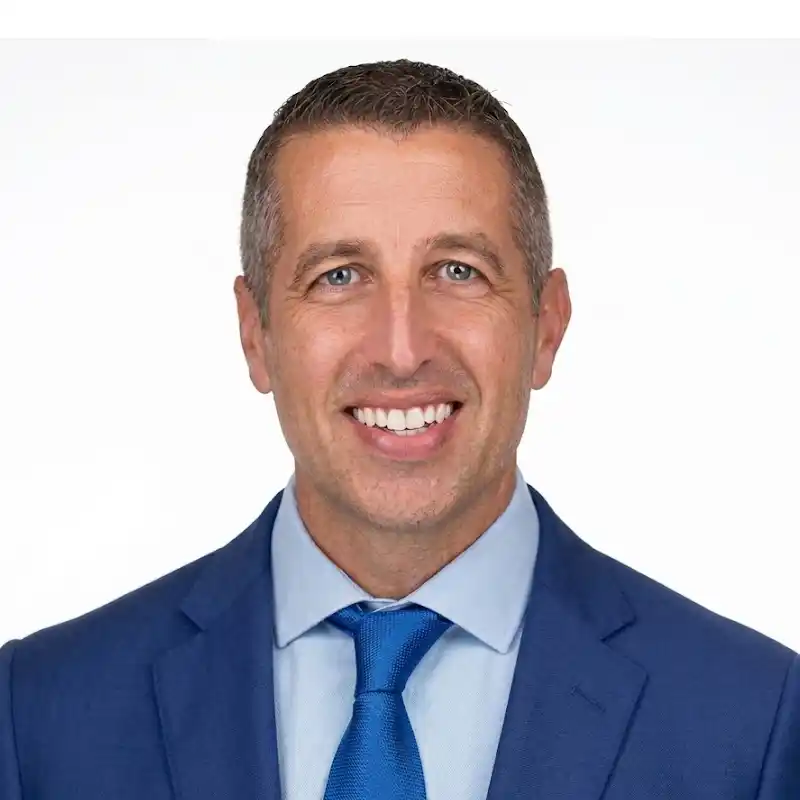
Richard C. Wilson covers Family Office Strategy in this Marketer of the Day episode. Richard C. Wilson shows how to win larger investment deals by using AI to prepare, then meeting investors in person to close. His club has run 18 years, hosted 300+ events, and shows why patient relationships beat quick transactions. For investors, his due diligence tool scans a 44-page pitch deck, flags red risks, and suggests sharper questions. For capital raisers, it analyzes the deck in 25 ways and distills the offer into one sentence. To cut inbox overload, he cites 1,000 emails a day and leans on WhatsApp, texts, and 40 voicemail calls. He pairs money with health, citing 60-pound losses, and upgrades thinking by reading 120 of 245 billionaire books.
Watching others succeed while feeling stuck is frustrating, especially when it seems like they have access to knowledge or opportunities that remain just out of reach. Growth isn’t always about working harder—it’s often about seeing what’s already there and using it in a smarter way. The right strategies, connections, and mindset shifts aren’t hidden, but they’re easy to overlook when caught in the cycle of trying to do everything alone. Sometimes, the biggest breakthroughs come from realizing the answers have been within reach the whole time.
Richard C. Wilson is the CEO of Family Office Club, a top investor community with 7,500+ members. He has hosted 300+ events, built a 17-million-strong social media following, and runs billionaires.com. With a YouTube channel boasting a million subscribers, he’s interviewing 100 billionaires and 100 athletes to uncover their success strategies. He has also developed six AI tools to help investors and businesses scale. Today, he covers AI’s role in investing, wealth-building strategies, and personal growth. He explains how specialized knowledge and AI-driven tools can accelerate business success while maintaining strong personal connections. Stay tuned!

Put a useful idea to work before collecting another recommendation. Our Atomic Habits guide explains how to turn an intention into a small, repeatable action and check whether it helps.
Resources:
- Investor Mastermind: Investing & Scaling in Uncertain Times
- Subscribe to Centimillionaire Strategies on YouTube
- Follow Richard C. Wilson on Facebook
- Connect with Richard C. Wilson on LinkedIn
Podcast: Play in new window | Download (Duration: 27:41 — 38.9MB) | Embed
Subscribe: Apple Podcasts | Spotify | Amazon Music | iHeartRadio | Podchaser | RSS
Transcript
Download transcript (.txt)C, hey, we're here. We're back on the podcast with Mr. Richard C Wilson, who is the CEO of the number one ultra wealthy investor club with 7500 plus investors. And they are called family office club. They are at Family offices.com and something that is really worth checking out is there is this YouTube channel of richards@youtube.com slash at family office club. And when you go there, there's a channel trailer, and it's like the best channel trailer I've ever seen. It's like, says all this stuff packed in. It says, Hey, here's why you want to check out this YouTube channel with a million subscribers, with 1000 videos. And so we're going to chat with Mr. Richard today about how he has all these exciting things happening with YouTube, with finance, he spent $25 million in the last 18 years hosting 300 plus live events. He has 17 million social media followers. He runs and owns billionaires.com where he's interviewing 100 billionaires publicly to create the number one resource on those scaling strategies and mindsets. Super amazing, super crazy. Good. Mr. Richard, glad to be speaking with you.
Yeah. Appreciate you having me here, Robert, glad
to have you and so you know, I did my best to hype you up and sing your praises, but in your own words, what are you up to these days? What has you super focused and passionate?
Yeah. So the last 18 years, we've been, you know, creating and growing our investor club, our investor community called family office club. These days, what we're finding is like this two fold path of creating artificial intelligence, tools for founders, capital raisers and investors, and tools that help us with our marketing. But then at the same time, meeting in person with investors is ever more important, because everybody wants to rely upon AI cold email marketing or AI optimized social media campaigns. But at the end of the day, big joint ventures get done because you have a digital marketing funnel that gets you broader, more customized messaging, but then it gets people to meet with you in person, to close a large transaction. Rarely will someone invest a million dollars on what you're doing, never meeting you in person, right? So that's kind of like the dual path we're most excited about is like making the in person events even more powerful, but also creating we've got six artificial intelligence tools I've created so far, and we're trying to grow that to, like, a stable of 10 tools. Well,
great, and that's a wonderful reframe just about AI, because there's this fear on a daily basis, isn't there of like, what's what's the new innovation? What will they make super cheap or put out of business? And so you're saying that instead of AI replacing the personal interaction. You use it to set up, tee up the meetings that you should be having, and to maybe reach people that you wouldn't otherwise have reached and customized, and have them just like, primed and ready and pre educated to talk with you. And so what kind of like, big idea Are you currently pursuing? Like, there's all this, like, AI stuff, and also with money, and it's like a crazy world out there. But like, what do you think specifically needs some attention these days
for investors, it is conducting due diligence more thoroughly, more effectively and almost instantly, identifying red flags, smart questions to ask. You know, if you look over a 44 page pitch deck, and you read every single word of what somebody wants capital for. You may miss a couple of things. There's a lot of details in there, and you can come up with three to five questions, but then our AI tool on due diligence can help you come up with additional red flags, more smart questions to ask. So just be more thorough and effective as an investor on the capital raising side, if you think about anyone who runs an investment fund a real estate platform, does real estate development, buys companies wants to grow their own business with capital, they're essentially doing marketing and sales in order to raise capital, right? You're marketing to investors. You're selling investors on investing in your company or platform. And so you have to be good at marketing, sales type functions to raise more capital. And I find that a lot of people are very, very poor at that. And so a lot of the AI tools on the capital raising side are about analyzing your pitch deck in 25 ways, summarizing your whole offering in one sentence that hits people between the eyes, keeping things concise, being unique, having a compelling, high conviction offering all like marketing 101, things. But a lot of people in the capital reason world just mess it up because they're experts in real estate development and they've never listened to a marketing podcast, and they should, right? And so we try to bridge that gap a bit.
Yeah, we have our blind spots and our gaps, and I think about that strategy all the time, like I'm using, like when chat GBT and the llms first came out, I was using it to, like, generate text from scratch, and it was kind of what you'd expect, right? It's like, you give it a little bit, it gives you a lot of garbage, but I'm using it more and more, and I'm feeding it something that I have written, or something I've created. I'm like, well, like, where do you think I lose someone? Or what do you. Think is missing out, or what's too much and what's not enough? And that's just a great insight off the bat, right? Of just like, well, if we can use AI to have a second set of eyes on what we're doing, either for looking at the pitch decks or selling the pitch decks. And so we need that extra assistance. And so as far as what you've done and what you've seen, you've got this social following, got the YouTube channel. You work with all of these investors. Do you have a fun story to share with us? Can you tell us about, like, something that demonstrates, like, what you're all about?
Yeah, sure. I think a couple of fun things. One is my most productive client has been a billionaire, and it took us six years of adding value to them, staying in touch, and then we've closed 19 transactions with them as a result. And it can be life changing if you get one client who's 100 million plus net worth or a billion dollar plus net worth, and not everyone in the family office. Investor spaces like that, you might meet an investor worth 1 million or 5 million or 10 million, and those can be productive too, but the more valuable the relationship, the more it's okay. If it takes time and to be a bit patient with it, if you try to really rush someone, you may lose the most valuable contacts you could possibly get in touch with. You know, through an investor club. The other thing is kind of fun, and not what people expect, usually, is that a lot of investor clubs just focus on how to become ultra wealthy. And people talk about the ultra wealthy industry quite a lot when they talk about family offices. But you're not really, truly wealthy in a holistic sense, if you're not healthy, if you're not doing if you're not going on fun adventures, you don't have good relationship with your kids, your spouse and friends, etc, if you're not mentally healthy and physically healthy, and so we talked a lot about being ultra healthy and ultra wealthy, and a couple of our members have lost 60 pounds and kept it off. And you know, we're not a weight loss program. We're not nutritionist coaches or it's basically telling people like, Hey, you're spending this much money on an investor club or your wealth management. If you're making more than 234, $100,000 a year, you should be investing a lot of money in your health and having more energy, more ability to focus, enjoying life, more living longer. Having a bunch of money and dying early is failure, right? And so that's just something a little bit unique about our investor clubs. We bring up health quite a lot.
Yeah, those are some great life lessons. What's the point? If you're just, like, making money at the expense of some other part of your life, or if you're miserable in other ways or not around to enjoy it, we don't want that. And so you've interviewed all of these billionaires and, like, what did they have figured out that we don't?
Yeah, that's an interesting thing about running an investor club, right? It's like, how do people become investors? Well, they either made a lot of money in the corporate world, or, more likely, more often, they're just entrepreneurs. So figure out how to make 789, figures a year or sell their business for seven, eight or nine figures. So it's really just founders who are further along the path. And what's most interesting to me is how often they have a voracious hunger to learn how often they dominated a niche, sometimes early on, but just really focused on a niche over 510, 2030, years. But most prominent is that if you go through life thinking, Oh, I should study my MBA, oh, I should follow these best practices. Oh, everyone says I should be using this marketing software, then at best, if you're always following the herd and what's the best practice, then at best, you're going to be somewhat good at being average, and you're going to fall on your face and fail. So you have to do things that are unique. You have to do things that other people said were impossible, not realistic. That's not how things are done. And by definition, you cannot out perform others and act like and be like most people right? And so you have to reject the herd, and the herd is typically right. So you have to be okay with being wrong a good amount of the time to find the unique ways you can grow and scale with your marketing or your positioning. And the last thing I'd say is that having the singular, unique, super powerful position is one of our keys to success. And so figuring out that one liner statement, the brand name that's going to sweat for you. Every time someone sees it, they want to be part of it, and they're attracted to what you're doing. And a lot of people, I think, just choose brand names that just don't tell you at all what they do, and don't bring people in and don't tell them the benefits. Get involved with you. And so those are some of the top couple of ideas that come to mind.
And that's great, and it's an interesting combination, right? That you need to reject the herd, but the herd is right. A lot of the times you have to be okay with being wrong. It's kind of a it's a recipe for a fun adventure of failure and resilience and coming back and all that good stuff. And so what have you figured out? Like you say that it's important to kind of reduce it down to the one line, the brand name. How did you arrive on what you did?
How I arrived in it is I was raising capital, and I was calling all types of investors. I figured out family offices have the most amount of capital. Put all per investor. So I thought to myself, Oh, let me go figure out who the trail guides are in the family office space. Because, like Brian Tracy and Dan Kennedy and Dan Sullivan and Joe Polish and Dean Jackson had all been kind of my marketing, you know, Jay Abraham, etc, I've been my marketing mentors. And I said, Oh, who's the family office mentor I can follow. And nobody had articles and websites and helpful books on the topic when I started in 2006 so I realized in 1007 I needed to start a blog and start sharing what I was learning along the way, because nobody else was except for some Bloomberg journalists, had never worked a day in their life in the space. And then I just learned by creating reciprocation, like Cialdini would say, and giving away value, that things would grow and grow and grow, and by interviewing the family offices, I'd get smarter as a business person. So I started with no net worth and no revenue at all, and we were able to grow to seven figures in our first three years in business. And now, 18 years later, we spent about decade buying billionaires.com and now we're interviewing 100 billionaires publicly and sharing that for free on the website. And the whole point of that is to figure out what all these billionaires saying in their books, what have they done in their life? Put it on the website to benefit everybody, but really selfishly, I'm doing it to my own interest, just to, like, learn more and see what we should be doing differently. You know, oh, yeah,
and that's why I do my podcast too, right? There's all these benefits, but there's also that continuous learning you're talking about and being hungry for learning and saying like, Well, hey, there's these people that I need to be speaking to, and I could learn a few things from their website on their book, but nothing replaces that live conversation. And what's also fun about a conversation is talking about the failures and the struggles. So Does anything come to mind as far as this upward journey you've been on since 2007 like, what has had you really stressed out or uncertain about if you could even continue forward?
One thing is the deluge of cold emails flying around. And just the difficulty our club members have on getting people to reply to emails when they come in cold, if you haven't met them at an event, why should they reply to your email out of the hundreds? Or I use a tool called Email meter, which monitors my inbox, and I get 1000 emails a day now, instead of 800 a day that I got three or four months ago. And so if that exponentially gets worse and worse, and I'm getting 2000 a day a year or two from now, what's going to help people stand out? How are we going to get the attention of others? So using WhatsApp, using text messages, having my team doing 40 phone calls a day, leaving voicemails. You know, I get 146 times more emails per day than I do voice mails per day. And I tell my team that all the time. And so I think doing what others are not doing super critical. And you know, one marketing painful lesson we had several years ago was changing our brand from family office club to Wilson conferences, and the sales went down right away. People want to be part of family office club, not what is Wilson conferences, right? It's like unless they know Wilson, why would they care? Right? Doesn't say what you do, doesn't say why they want to join. So that's kind of like an insight that a lot of people need to hear because their brand is horrible and doesn't really suck people in. But most recently, it's just the AI tools, getting everybody to shoot out these cold, random emails, you know, all the time now it seems, yeah,
so there's a need to look at, well, if everyone's doing a, then what's the B that's not done enough? Maybe do more voicemails. And there's also the multiple modalities in there, right? You say, Well, there's the email, there's the text, there's the voicemail, there's not just the one singular channel. You're and and anytime, I'm sure you're the same way, whenever I get, like, something in the mail and I get something on social media, I'm like, I pay attention because I'm like, Whoa. Like, they're doing something that no one else is doing. Them hitting me all of these different ways. And so you've learned so much, and you talk to all kinds of people, is there a particular like billionaire person or billionaire lesson that you think really stands out, that you think people need to hear about?
Yeah, there's several. One is, if you want to fill your brain with billionaire quality ideas, I would stop reading books from people who are really good at selling their books. They get on the best seller list, and everyone talks about atomic talks about atomic habits or whatever the book is, right? I would forget all those books and just read books authored by the people actually good at business and not marketing their books. And so there's 245, books authored by billionaires, and there's a free list@billionaires.com forward slash books. You can get the top 10 links to billionaire books on Amazon. So that's something that would I would keep in mind, one of my favorite books is by Arnold called be useful. Arnold Schwarzenegger, and if you watch the documentary on Netflix, it's pure gold. If you read the book, I have twice, and I read it to my kids, and they they help summarize it, and basically the very first chapter of the book. In the very first sentence of his documentary, say the same thing, and it's not an accident. He says, you know, my whole life, I've been very good at visualizing exactly the destination I want to get to, and it seems so real that I'll apply any amount of hard work to make it a reality. And I think being focused on your destination, you can try all types of marketing, methods, methods, positioning, channels of lead generation, AI tools, partners, joint ventures, affiliate programs, etc. And having that really crystal clear vision is super powerful, because I knew when I started that if I could ever be top three in this niche, that I'm in, that amazing things would happen, and I couldn't predict what those things were, but it'd be worth any amount of hard work to get there. And when Einstein won the Nobel Prize, a journalist said, like, oh, Aren't you proud of inventing, you know, relativity? And he said, like, well, I didn't invent it. People were studying it for 20 years before I was just a child, but I focused only on that for the last 10 years, and I thought about nothing else, and that's why I solved it. So I think that having that crystal clear vision and just putting your work effort into it, even if people laugh in your face and tell you that's not possible or it's not going to work, as long as you're a high conviction that that is the sandbox you want to dominate, then you should build up the marketing content walls around that sandbox and put in the work that nobody else wants to do. You know, that's
great. Yeah, 100% so you say, I have this vision of what I want, and I visualize it, and I say, you know, I'll have this daily obsession, dedication, focus and like, just figure out the path, despite the people laughing at you, the struggles, the obstacles, the hard work, the failures all that, just get to whatever that goal is and figure out a way to do it. And you mentioned really quickly in there about, like, reading this book to your kids, and I found that interesting that you mentioned earlier about how, like, you know, building a business and earning money is great, but then what about the rest of your life? And we're all thinking about this right, of, how do we raise our kids right? And how do we kind of pass along these good habits, knowing that you know your your children, they'll do what they want, right? You can't force them into anything. And there's always the fear of like, if I if, if I show them like, good principles, good work ethic, maybe they'll rebel or kind of go the opposite way. So do you have any guidance in that area, of like, passing things on to the next generation, having a good family, raising your kids, right? Do you have any like, like, a number one tip in that section?
Yeah, for sure. So my number one tip is to read this book called be successful. It has 55 principles by Jack Canfield on essentially how to succeed in life. And what I did was read that book to them one chapter each morning before school. I also read the be useful book by Arnold, but then I asked AI to summarize both books. I put them on a one page Word document, and at the top of the Word document I put our family values, and I tell my kids, you are free to ignore everything your teachers, your teachers tell you at school, ignore your friends, ignore people on the news, ignore people that write random books on random topics, or people on social media trying to be the new expert. If you only understand and act on this one page of information from Arnold, our family values and success principles, by Jack Canfield, you'll be amazingly successful. And that's your cheat code for life. It's like, just do this, master this one page, and you're gonna be great, like everything else will flow down from there. So I think that's like the foundation that we're trying to instill in them, which is pretty multi dimensional, because the success principles book is very diverse in these success principles, and Arnold is pretty focused, and I totally agree with them. And then our family values, you know, there's about 10 of them that kind of round them out as well. So that's kind of our kind of a free tool that encourage people to develop whatever your favorite books are, or just copy those books if you want to and and do that with your kids perhaps.
Yeah, I think this is a really important discussion to have. You hear all these scary statistics, I think they said, like, 40% of high school graduates don't even read a single book later in life. And it's like, it's only 40% like it's and I believe it, but then you'll see people like, watch all these movies, all these TV shows, and they won't even finish one single book. And so that's a great way for us to stand out. And especially you're saying here, of go directly to the source. And I love that concept. I know I don't read enough autobiographies of like, you kind of get a feel of like, who the person is and how they think, and there's the lessons built in. But the story, the adventure, the path they've traveled, even just that alone, is really a lot of fun, is to get inside their head. And so we said, there's the success principles by Jack Canfield, and that other page dropped there. It's billionaires.com forward slash book. So that way we can make sure to keep up on our reading and perhaps figure out that one page of what our our family values are and raise our kids right. And I want to make sure that we cover. What excites you, Mr. Richard, because you have all these cool things going on. And within this conversation we're having about this business that you build, and about learning money the proper way and living a good life, like, what's the missing question or a conversation? What should I be asking you? I just don't know to ask you.
Well, it all rolls up to one thing I found is that the billionaires actions were unique to get them where they were. But what drove the actions, it was really what Charles Munger says are their mental models and how their brain works and how they think. And Munger says we should all have 100 mental models that we operate off of little rules and things that you know if you do this, then this will likely happen, etc. And so what excites me most is seeing what's going to come in the future, because we're interviewing 100 pro athletes, like we interviewed Mike Tyson, a lot of NBA NFL athletes, some Olympian gold medalists, Hall of Fame, gymnast, etc, 100 and we've done about 75 of those 100 pro athlete interviews. We've done about 45 of the 100 billionaire interviews. And I really think that if you take the mental models of what it takes to be not only a pro athlete, but one of the top pro athletes out there, the grit, the discipline, the working out being ultra healthy champion mindset, and you take that constant improvement mindset of and health mindset. You combine it with what you learn from DECA millionaires, senti millionaires, billionaires that are on stage at family office club or that you just read in the books@billionaires.com and you take those scaling strategies, those business strategies, those mental mindsets, the gracious appetite for learning, etc. And you combine those two things together, then I don't know what will come from that new mindset and those new upgraded mental models, but we're about 50, 60% of the way through, getting through that. The last stat to know is that there's 245, books authored by billionaires. It's taken me two and a half years, years now, to read 120 of them, but I think that once we interview 100 billionaires, 100 pro athletes, I've read every book ever authored by a billionaire that I know of, something will happen, right? It'd be more efficient using my time, or at least get one idea that's just amazing. Who knows, but that's what I'm most excited about. And it's like an unknown, but that's partially what makes it exciting, because then my brain should just be hyper trained in this very specific way, and your inputs equal your outputs. So if you restrict your inputs to only be of a certain type, they should really help with your outputs. And the last thing I'd say there, since you brought it up as the whole like streaming Netflix and watching videos, it's a lot more entertaining than what than like reading a book, right? For most people, right? And so I really encourage people to look at like the Netflix documentary on Arnold that I mentioned, but also like quarterback, which studies NFL quarterbacks, or documentaries on, you know, McDonald's and, you know, it's called the founder, I think it is. And like just looking at pro athlete and billionaire documentaries, sometimes a documentary is trying to make the billionaire look bad, but you can learn a lot about their mentality, their decisions, their track record. And so if you do love streaming stuff, well then stream pro athlete mindsets into your brain and see how they act, to perform and work. You know, so long answer, apologize for that, but that's that I would respond. Well,
that's good, that's important. It's a helpful lesson. And with AI, especially when it, when it became more mainstream. A few years ago, they talked a lot about garbage and garbage out. And the opposite is true, isn't it? If you read these helpful books, is helpful streaming, you get this good advice. They check out your excellent YouTube channel, which is youtube.com/at, family office club. You put all this great stuff into your mind, and then you get all these ahas, Revelations, ideas, next step strategies. You get these 100 mental models figured out, and you get the actions that you want instead of like the self defeatism and the what if and the procrastination. Now you're on a better life path. And so if people were super energized and educated and excited about what you had to say, Mr. Richard, what are some next steps here? You mentioned how there's the billionaires.com and there's family offices.com and the YouTube channel. But what's a logical next tip of someone listen to this podcast, they say, I gotta check out more about Richard C Wilson. Where should they go? Yeah,
I think the best spot would be family offices.com it's plural family offices.com at the top is actually my personal WhatsApp phone number, so you can just text message me any questions you have, but check out our live events, because essentially, remember, almost all investors are just people who had a platform that are an entrepreneur. Usually they did really well, and now they're looking for things to invest in, but they also have this, this think tank inside their brain, and could be maybe strategic investors, or maybe you could learn from them, even if they. Don't invest in what you're doing. Maybe you're not even raising capital right now, and you just want to be around ultra successful business people. You know, those are called investors, and they're so successful, you know, they are still growing their own business, usually, but they're also investing in other people's because they have this excess cash flow, they had an exit so family offices.com would be the best spot to go to,
very nice, and we want that positive guilt by association, don't we want to be around the successful people that way. Some of that will rub off on us in one way or another. You have you're around it, you have the conversation, you ask the question, you pick up some life and business lessons. So that's family offices, plural.com. So that's F, A, M, I, L, Y, O, f, f, i, C, E, s.com, family offices.com, and before I let you go here, Mr. Richard, Mr. R, C, W, it's time to do the scary part of the show where I try to stump you. I try to put you on the spot, and I ask for a fun or helpful quote or lesson that has served you in life or in business. So what comes to mind as far as a quote or lesson?
Yeah, I just thought of one as you're talking. Dan Sullivan always says that there are two types of knowledge in the world. There's specialized knowledge and there's worthless knowledge. And so what are you putting into your brain, right? And you should make sure that you're sending things out to your list, which is really, genuinely unique specialized knowledge. And your inputs are really specialized knowledge. You should probably read everything in your niche, and then everything from billionaires, pro athletes, et cetera, if you have similar goals, to myself, then that's the quote that comes to mind. I love
it. Specialized knowledge right there, from even Think and Grow Rich, is when I first heard of it. And so it's really important to be seeking that, to be teaching that, to pass it on. And the very first step to getting educated and looking into these live events and absorbing some of the specialized knowledge is family offices.com Mr. Richard C Wilson said his private WhatsApp number is right on there if you feel like texting him a question. But right now the very next place to go, before you forget, before you get distracted, pull over the card, write it down, or type it in the phone or whatever. Family offices.com. Go ahead, do it right now, and thank you, Mr. Richard C Wilson, for showing up, blowing our minds. We really appreciate you being on and doing this.
Awesome. Thanks, Robert. Take care. All right. Transcribed by https://otter.ai