1470: Living a Full Healthy Life: Mindful Eating That Boosts Energy and Well-Being with Dr. Akil Taher
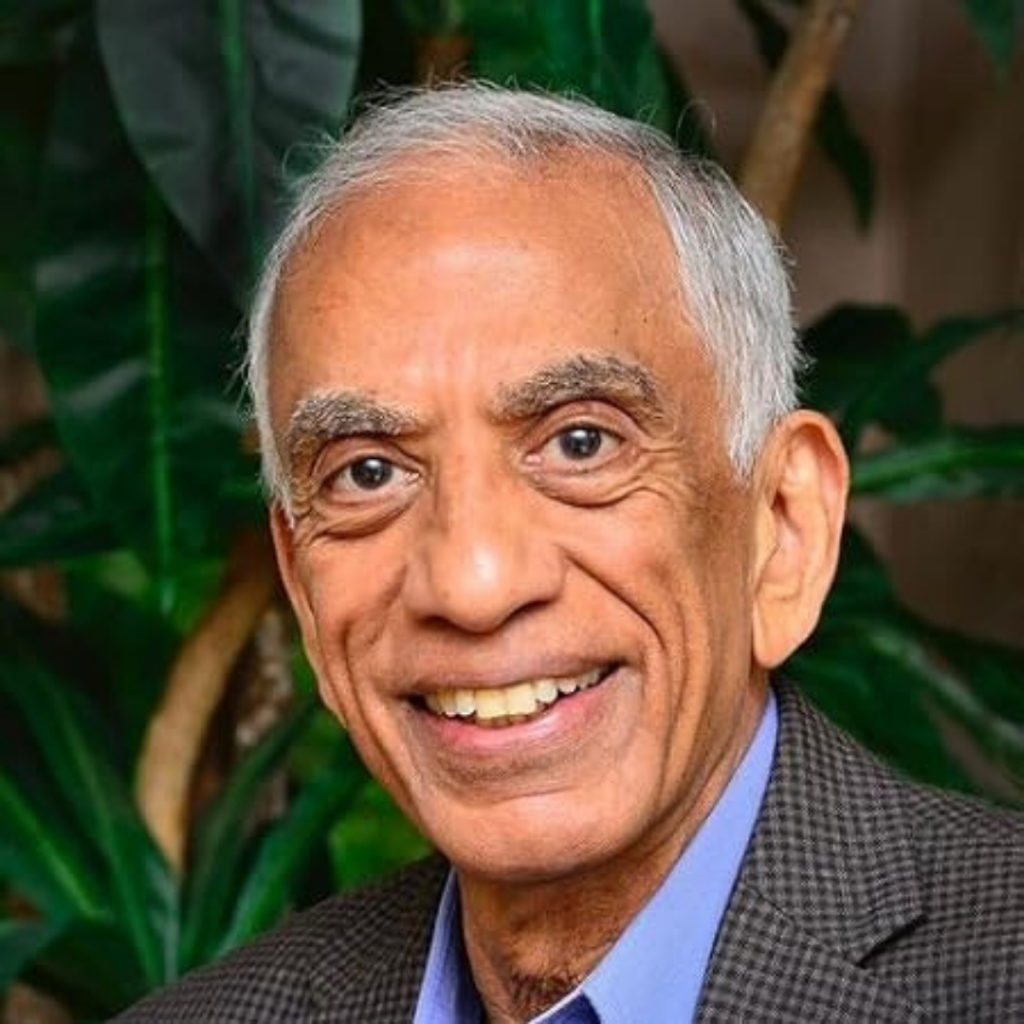
Akil Taher covers Lifestyle Medicine Reset in this Marketer of the Day episode. After open-heart bypass at 61, Dr. Akil Taher rebuilt his health and became a marathon-running, mountain-climbing septuagenarian. He admits decades of long hours, zero exercise, and indiscriminate eating led to stents, depression, and a failed recovery. His turnaround started with small steps, then a whole-food, plant-based shift that begins flexitarian, like cutting dairy and shrinking portions. He teaches the Six Pillars of lifestyle medicine: nutrition, exercise, sleep, stress management, avoiding abusive substances, and social support. For movement, aim for 30 to 40 minutes of moderate activity most days plus two strength days, and notice quicker heart-rate recovery. For sleep, target seven to nine hours, because chronic under-six-hour nights raise risks like heart disease, diabetes, dementia, and anxiety.
Dr. Akil Taher, MD, is a physician, author, and septuagenarian athlete who transformed his life after undergoing open heart surgery at age 61. Previously living with chronic illness, unhealthy habits, and a challenging family history of heart disease, he transitioned from a sedentary lifestyle to running marathons, climbing mountains, and embracing a whole food, plant-based diet.
In this episode of the Marketer of the Day Podcast, Dr. Taher shares insights from his book, Open Heart: The Transformational Journey of a Doctor Who, After Bypass Surgery at 61, Ran Marathons and Climbed Mountains. He discusses the importance of nutrition, exercise, sleep, stress management, and social connections for a vibrant, purposeful life. Dr. Taher outlines the six pillars of lifestyle medicine and offers practical advice for adopting a plant-based diet, exercising regularly, and managing stress. He highlights that age is not a barrier to change and promotes patient and consistent development of supportive relationships, physical and mental activity, and sustainable lifestyle changes.
Quotes:
''Adversity can be your worst enemy or your best friend. After my surgery, it became my best friend and transformed me.”
“Let’s not have perfection be the enemy of good. Start slow—be a flexitarian and make small, sustainable changes.”
“Age is not a limiting factor. Many people change their lives entirely even at 70, 80, or 90 years old.”
Resources:
- Connect with Dr. Akil Taher on LinkedIn
- Follow Dr. Akil Taher on Facebook
- Life isn't over after a bypass surgery
- Open Heart: The Transformational Journey of a Doctor Who, After Bypass Surgery at 61, Ran Marathons and Climbed Mountains on Amazon
Podcast: Play in new window | Download (Duration: 31:57 — 43.9MB) | Embed
Subscribe: Apple Podcasts | Spotify | Amazon Music | iHeartRadio | Podchaser | RSS
Transcript
Download transcript (.txt)After surviving open heart surgery at age 61 Dr Akil teher, MD, didn't just recover. He ran marathons, he climbed Mount Kilimanjaro and he became a septuagenarian athlete. He went from couch bound to conquering chronic illness with the power of a whole food, plant based lifestyle. We're here on the marketer of the day podcast with Robert plank, brought to you by D FY podcast.com your shortcut to podcast growth without the back end stress. But today we're focusing on the most important thing, right? Our body, we only have one of it. People like neglect it. They take shortcuts, they make compromises, and then it just leads to all these bad things, right, these emotional impacts. And ultimately, it seems like a life lived at an old age saying, I wish I'd taken care of my body years ago, decades ago. But luckily, it's never too late that we're here to get educated about maybe some changes we could possibly make. So Dr Akil, glad to see you, glad to be speaking with
you. Lovely being here. Thank you for that kind introduction. Rather generous. Thank you very much. And I'm very glad to be here with you,
and I'm glad to have you here. You have this excellent book called open heart, the transformational journey of a doctor who, after bypass surgery at 61 ran marathons and climbed mountains. So you are living the life that we hope to live, right where age isn't an excuse, isn't a factor. But you tell me, what are you all about, and what did I miss filling in the gaps there in that introduction for you
No See, the point is that I want people to read my book more so for learning from my mistakes, rather than the all the things that I've done. But of course, to learn from my mistakes and how I transformed my life after my open heart bypass surgery. So to just let you know, in short, till the age of 61 I'm 77 now, till the age of 61 I created my own unhealthy lifestyle. I came to this country rather late in my 40s, and had a lot of catching up to do. So I worked hard, long hours, paid very little attention to my family, my friends, my health, and then I was eating unhealthy indiscriminately, anything that I could lay my hands on without worrying what effect it would have on my body. So at one time, I was even called a seafood eater, S E, because I ate everything at site, and then, if I was not working hard or eating what was in front of me, I was a total robot. You will not believe it. I was a total couch potato. I did not do any exercise. Well, I stand corrected. I did exercise my hand muscles holding the remote to change the TV channels when I was lying on the couch or when I was in the park, and use my eye muscles to see the runners run by. That's the only depth of exercise I did. So with all this my I have a very challenging family history, both my my brother died at the age of 52 of stroke. Both my mother and sister died at the age of 61 second to heart disease. And I am a museum of heart disease, as I call because I've had stance put in. I would bypass surgeries done. I have had lately. I've got what is not lately, but before. I am also wolf Parkinson white syndrome. Sounds like a horror movie, but it means my I've got a conduction defect where my heart can beat very fast. And then last year, 77 I'm 76 they found out I had the LP little A which is an independent risk factor for atherosclerosis or heart attacks. Wow. So with that, I had a lot of stress, a stress everybody has in life, but I couldn't handle it. So was not shocked. I was not surprised when heart disease came knocking and they asked me that we knew need stents. They put stance Robert, and then people thought around me, my family and all that, that I would change my lifestyle. I didn't. I didn't. I thought medical science would get me through, and I felt I was a doctor. I was supposed to treat patients, not become one. So that led me into a kind of stage where I felt dejected, lonely, isolated and depressed. So at one stage, I almost wanted to end it all those five years after my stance were the most horrible five years I've ever had in my life, I continued my own erratic lifestyle. So it was no surprise that after the five years, my stance had failed, and I was taken into surgery for a bypass surgery. This is where my transformation happens, and this is something that people should realize, that adversity can be your worst friend or your best it can be worst enemy, sorry, or your best friend. It was my worst enemy, adversity till the stance. After that, it became my worst enemy, but after my bypass surgery, it became my best friend. I transformed myself. I told the nurses I would do a half marathon in a year's time if all went well. They humored me. They thought probably it was anesthesia, confusion, talking and they and I don't blame them. I don't blame them. But my recovery was remarkable. I was on the treadmill on the very third day, I didn't take any pain medications, and I started running. See this was a couch potato, so from being there and to do marathons was not easy. People thought I was having a midlife crisis. They were right. But instead of buying a red Corvette sports car, I went and bought running shoes, because they're far cheaper and the better for your heart. So I started running, taking small steps, and I ran, and within seven months, I did my first half marathon in Nashville, but it was four hours, grueling hours Robert but I felt like I was on top of Mount Everest, and I felt so good that I now started changing my lifestyle. I started eating better. I started sort of a spirituality, breathing exercises, meditation, yoga, and it helped me so there was no stopping now. So then I went on to Mount Kilimanjaro, Mount Kailash. I climbed those and I did, I get bored doing one thing. So I went for triathlon, did two or three triathlons, then I did four marathons, and I did six half marathons, all in a span of 16 years. And then I did 100 mile bike ride twice. So the point I'm making is that it's, it was a lot of fun and a lot of stories Robert in my it is shared in my book that there were, there were instances when people when I was doing the Boston Marathon, and it was so hot, and I just asked a stranger, can I have your head? And he turned around and he says, but this is a custom hat. And his spouse or girlfriend or his better half, absolutely give the gentleman your hat. And he gave it to me, and I was I said, I'll give you $20 for it is spouse said, No, we don't need any money, just go and finish the race. I tried very hard to find this person after that, I couldn't find him. I wanted to return his hat. I still have the hat with me, and there were instances when I am very cold natured. So when I did a triathlon, the cold waters absolutely made me worried what to do. So I, like a great guy, went and bought a full body wetsuit online. But also, like all men, do, they think they know everything, and I thought I knew all this, so I went upstairs in my bedroom and I put the wetsuit, but it is clearly written that you got to use your body glide on your wrist, on your hands, on your legs, on neck, so that you can take it. So I did not use it. So I was struggling to put it on. I finally put it on, but when it came time to put it off, I couldn't. Oh, no. I struggled. Man, I struggled. Robert, I struggled. I put it up to my waist now it wouldn't go down further, so I swallowed my pride, and I asked who my wife to come and help me. She takes one look at me and starts laughing. Then she. Says, sit down on the floor, and she throws the two leggings and tries to take the suit off me, but all she did was drag me like a rag doll, you know, all around Sure. Then she went out and the kitchen, got a pair of scissors. Now I got scared. She cut five inches of my leggings, both sides, you got a better grip, and then she pulled it off. We had a terrible laugh. I mean, terrific laugh after that, you know. But these were the important moments in that, you know. So I did that. But what happened, Robert was that even though I was I was because when they put the stance in at that time I might I had a cardiac arrest. My heart stopped and there to shock me, to get my heart beating again. That was my first encounter with death. Then I had severe diverticulitis, perforated twice the second time. My surgeon, my friend, turns around and tells me, if I don't take off your colon, you may not survive. So when I became a better person, transformed. I still used to I'm still was getting not that often, but diverticulitis attacks, bronchitis, sinus infections, and I was wondering why I'm doing everything right, what's going on? So I started researching. I started reading medical journals, I talked to my colleagues, and Neil Bernard, all this T Collins, and the more I read, the more I realized that there is something here. So I started researching on things that could really change me without just going into surgeries and medicines. And that is when I came upon the Six Pillars of lifestyle, medicine and one of them, several of them, are very important, but the three most important are your nutrition, your that is your diet and exercise and sleep in the fourth one is stress. Fifth one is avoiding abusive substances, and sixth one is social support. Just two days back, I saw on TV that America now people are 30% more lonely than there was in 19. I mean, 2020 Whoa. That's drastic. That is drastic, that we are, we are, we are becoming a lonely person. And I and I talked to my patients and that, that is what they say. So this is, in a nutshell my story, but when I turned and I said, Okay, got to do something. So that's where I found the whole food plant based diet. And when I changed to a whole food plant based diet, I started exercising at least 3540 minutes a day of moderate intensity exercises with two days of muscle strengthening, and then I started sleeping seven to nine hours prior to 61 I was sleeping four hours a day. So it improved after that, because I started feeling better. And once you feel better, you start doing things, and you feel even much more better. So I started doing the exercise sleeping. I started handling stress better. So my wife had a type A personality. It was either my way or the highway, and when my wife noticed this, then my type A personality had mellowed down. I started listening. I was I was a reasonably good doctor. I'm not going to say I was at top of the West, but I'm reasonably good thought. My patients love me,
but I started listening more,
and I and they taught me more than sometimes I feel I taught them, because from them you can learn every time I talk, I reinforce myself. I'm talking to you, Robert now and reinforcing that I got to keep doing things that I'm doing, because right now, the diverticulitis, which had ruptured and put me in the hospital for 1415, days at a time.
Is it the back burner? I am living my life with passion, purpose and positivity. Days of 77
I don't care if my lifespan is less, because I mean, something may happen and die,
but my health span.
The quality of my life is really great, and that's what I'm going to tell people, that you got to change. Age is not a limiting factor in changing one's lifestyle. A lot of people have done it after my age at 80 and 90. Some of them have done it younger. The younger you change your lifestyle, the better you're going to be.
I like it. So you figured out a lot of what we need to be thinking about and doing. And I love the pillars. And when you mentioned about the plant based diet and lifestyle, like it sounds extreme, and that's whenever I hear about something like extreme changes I want to make. Like, I find myself, like, already making excuses and talking myself out of it. But what I like about what you've given us so far, it's all very simple. It's all very doable. It's like, you start with these small steps, you see the results. You make better decision, and that leads to you listening better, and it leads you be you being more integrated and cohesive and like just sturdy about what you have to say and what you believe. But as far as this plant based diet, can you explain it to us and how, if we were to pursue this, how do we make it stick?
First of all, Robert, you are absolutely right. You hit the nail on the head. Let us not let's not have perfection being the enemy of good. That means I am not asking people to be a strict whole food, plant based diet with no oil, salt or sugar. I am trying to tell people, go slow. Be a flexitarian. Try to give up certain things, for example, dairy, unless you got your cow and you got your grass to feed and it's in your backyard that milk that you are getting is totally, absolutely not helping you in any way, but harming you. Why? Because, if you need the factory, the dairy milk that we are talking about, which are on the shelves of the supermarket, what does it contain? See, these cows have to be pregnant. More pregnant they are the more milk they will give. So they have been injected with estrogens constantly. So when you are injected with estrogen, you are getting that estrogen in your milk. And it is proven that prostate cancer is one of the cause is estrogen in the milk that you drink. So that is number one. Number two, when those huge metal things are used to extract the milk from the udders, they cause lacerations plus cells into the milk, and then you push antibiotics to help with this infection. There are more antibiotics used on animals than human beings. What are you doing? You're getting those antibiotics. You you feel there is a protein in the milk is called casein, where you try to double the size of a calf in 90 days.
You don't need it for a child. There
are a lot of other these things. You know, once you get your breast milk, that is fantastic, two years, even longer. But once you wean that we are the only people who, after being weaned off, we drink milk. And not only that, we are smarter. We don't drink our human milk. We go to other species and bring their milk, right? So that's number one, go slow, give up, one thing at a time. See if it helps you. If you want to use your meat and chicken or whatever goes low four ounces. You don't need things that fall off your plate, like in Australia and America. These are the only two countries I've been to where the things fall off your plate,
the huge right?
Smaller quantities increase your fruits and vegetables. So that way half your plate should be fruits and vegetables. A quarter of your plate should be plant proteins or other proteins, animal protein, but small quantity, and then the others should be whole grains, legumes, beans, lentils.
We don't do that. That is a closer to a Mediterranean diet too. So I am asking people to start changing, because we do not know why there are so many people who are now getting in that just Saturday, Sunday, I was working at my clinic in Alabama, in gas in Alabama, I'm seeing people 39 years old. Old cancer of the breast, 40 years old, cancer of the prostate. I'm not seeing one or two. I'm seeing so many of them. To us now as Americans, cancer is becoming like bronchitis and pneumonia. Oh, I got cancer.
You expect to get it? Yeah, you get it
because it does not show earlier in life, but that's the time. You got to be careful, because it shows later on in life, when you're 40, when you're 50, and you're 60, but now we are seeing even less and less even 30 year olds getting it. So change your lifestyle, and then a lot of people don't realize this, but you have exercise is the main thing. But generally, any activity is better than no activity. But do some purposeful activity, whereby you do about 30 minutes, as I said before, of moderate intensity exercises that you know that increases your blood flow. It helps to dilate your blood arteries, coronary arteries. It helps to protect your arterial wall. It lowers your blood pressure. It also, not only that, but have you seen athletes? They will always have the pulse in the 60s? Okay, more people have in the 70s, because when you are there, your heart works better, pumping less. Mean, not so many times it is pumping, but it is doing great work. And then classic way to find out if you are fit or not is do a workout. Get your heartbeat 70% of your normal, 70% of your maximum heart rate. Get that level so you know our heart is beating. Now, when you stopped exercising, think, see how soon it takes, or how long it takes for the heart beats to come back to normal. If it takes a long time you're not fit. So that is important. And then sleep. Everybody thinks that sleep is when a person is not awake, wrong. Sleep is something which the brain
is far active,
and the brain is, is, is in a in a active state of mind. So in during that activity, you have what is called the deep sleep and the dream sleep both are very important. See, that is why dream sleep comes a little later on in night. That's why you get up at a dream. But both, both of them are very important. If you are constantly getting less than six hours of sleep a day, your chances of getting heart disease, diabetes, Alzheimer's, dementia, your high blood pressure, high cholesterol, all increases, including your other problems, like your anxiety, your depression and even suicides. So sleep is extremely, extremely important, and then you have your the other factor how to handle stress. What is stress is when you have in a situation that you don't have any answers you cannot handle. And what are the four most common causes of stress? Think about it. It's when your debt in a lot of money that you owe. People. Debt, the four DS, death, divorce that can break you disease and death. So if you look at it in the four DS, somehow you will fit in somewhere. Yeah. So you got to do certain things about what you do.
Try to
medication should be your last resort.
Try to do meditation, exercise, spirituality, religion, whatever helps you but calm your mind, your clarity of thought will increase.
I mean, I'm not not the perfect person, because I have abused my body a lot, and so I don't know whether my longevity will be long or not. That I'm not concerned,
but I made a change, and I made a change for the better, and I don't want people to undergo what I've undergone, right?
So now you're teaching us what you've learned. And this is a great message. And I just, I love kind of getting into your your logic, your thought process, right? There's like, well, there's what's the problem? Put a label. On it, and then get the diagnosis, so to speak, and figure out the guidelines and so many of what, of what you've been saying? It's like, Well, do you have this? What? What of the four or five types? Okay, well, now here's some guidelines, right? Arrange your plate this way. Look to kind of slowly remove this or that from your lifestyle. Look to add this in kind of a plan where it won't turn around instantly, but it helps just to pay attention to some of these things, right? They say, like anything that you focus on grows, but the opposite is true too, right? If you don't pay attention to your teeth, you don't brush your teeth, you lose your teeth, and same with the relationship health, etc. So this is a great message. And we definitely want to send people to your website, which is Akil to hair, which is a k, i, L, T, A H e r.com, and we really, really want you to check out this book, which is open heart, the transformational journey of a doctor who, after bypass surgery at 61 ran marathons and climbed mountains. So Dr Akil, in these last couple of minutes of our conversation, I want to make sure that we get to what's important to you, but I don't necessarily know the ideal question to ask you. So what is the missing question here? What should I be asking you? I just don't know what you ask.
I think the most important thing is, I
believe very strongly that you know that adventure can hurt you. Monotony will kill you
now, adventure, here is a metaphor. It cannot I'm not talking people to climb mountains and run marathons, but anything new. Learn How To Play Chess, learn how to garden, learn cooking Mahjong, something that you are not doing every day, because then it becomes monotonous. So if you do that, you're always being challenged, and that challenge will always be an aspiration for you to achieve more, and your your health, your mind will be always there, because a lot of people either are physically active, the mind goes, a lot of people are mind active, but the physicality goes, we want both, and that gives you the mental strength. And mental and physical strength equates to what
emotional strength,
very nice. So it's time to challenge ourselves. Escape that comfort zone.
Get out of your comfort zone. Get out of comfort zone. That is my message to everybody. Get out of your comfort zone.
You know, wonderful and do something new. And it's one thing to listen to a podcast. We get a little bit of a tease or a taste, but in order to get a more like comprehensive step by step, something that sticks, we need to check out this book, open heart, the transformational journey of a doctor who, after bypass surgery at 61 ran marathons and climbed mountains by Dr Akil dehair, and I'm I think, did I cut you off there? Did you have something else to say?
No, no, I'm perfectly okay. Thank you so much, Robert. I appreciate this. I love talking to you, and I loved our conversation,
and I did as well. So that book is called open heart, and the website is a kill to hair.com and as we're going there, it's time for one last thing. Dr Akilah, it's the scary part of the podcast where I try to stump you. I try to put you on the spot by asking about a fun or interesting quote or lesson that has served you. So what comes to mind, as far as a fun quote or lesson,
a fun quote is that a lesson that I learned, rather, is that when you go, when you if you are ever going to go on a mountain or climbing this thing, be careful and be go slow, slow. They call it poly poly, because if you don't, you're going to be a problem and go and climb this mountains when you're younger, because if you get older, you get an enlarged prostate. If you get an enlarged prostate, when I climb Mount Kilimanjaro, there were lot of you to drink five liters of fluid, and so you pee like a horse, and you're going to enlarge prostate. You have to get up in the night. So I was 66 when I climbed. So I can eat a pea bottle. I peed in the pee bottle, but my pee bottle got full. Oh no. Now I had to get out in the cold. My God, it was cold. And to get out in that cold, I didn't know what to do, and especially to use a pee bottle when it is so called, it cold, it is like, you know, kneeling down and. I'm trying to pee, and there's another person next to me, who's a younger person. He says, What are you doing? I said, I'm praying to God. Something happens and the pee comes out, you know? That was the situation, you know? So, so these are the fun, fun things that ever and then another fun thing that I told you about is my story about my in the cold My vet soup. So these are fun things, and I do enjoy
a lot with my grandson.
So nice. So you've had many adventures and many more adventures ahead for you and for the rest of us. So check out Akil to here.com, that's a k, i, L, T, A, H, e r.com, you go there, and there's even a book that you can get called cook with me of easy, quick and simple meals. So the information is out there, right? We live in this internet age. It's just up to us to go and pursue these actions and experiment and make sure that these things we do that work for us become habits, and they repeat it, and that way, we don't live a life of regret or feeling bad. We're feeling great, and we pursue these six pillars, right? We have good sleep, and we have good relationships with others, and we stay off the substances, and we live the best life that we can within our capabilities. So Akil, to here.com in the book is called open heart. Dr. Akil, it's been wonderful speaking with you and thank you for being here.
Thank you so much. I do appreciate it. You.
Subscribe
If you enjoyed this article, subscribe to receive more just like it.


