Published Last updated
View in Podcast Library: stories, quotes, books, and resources in one place.
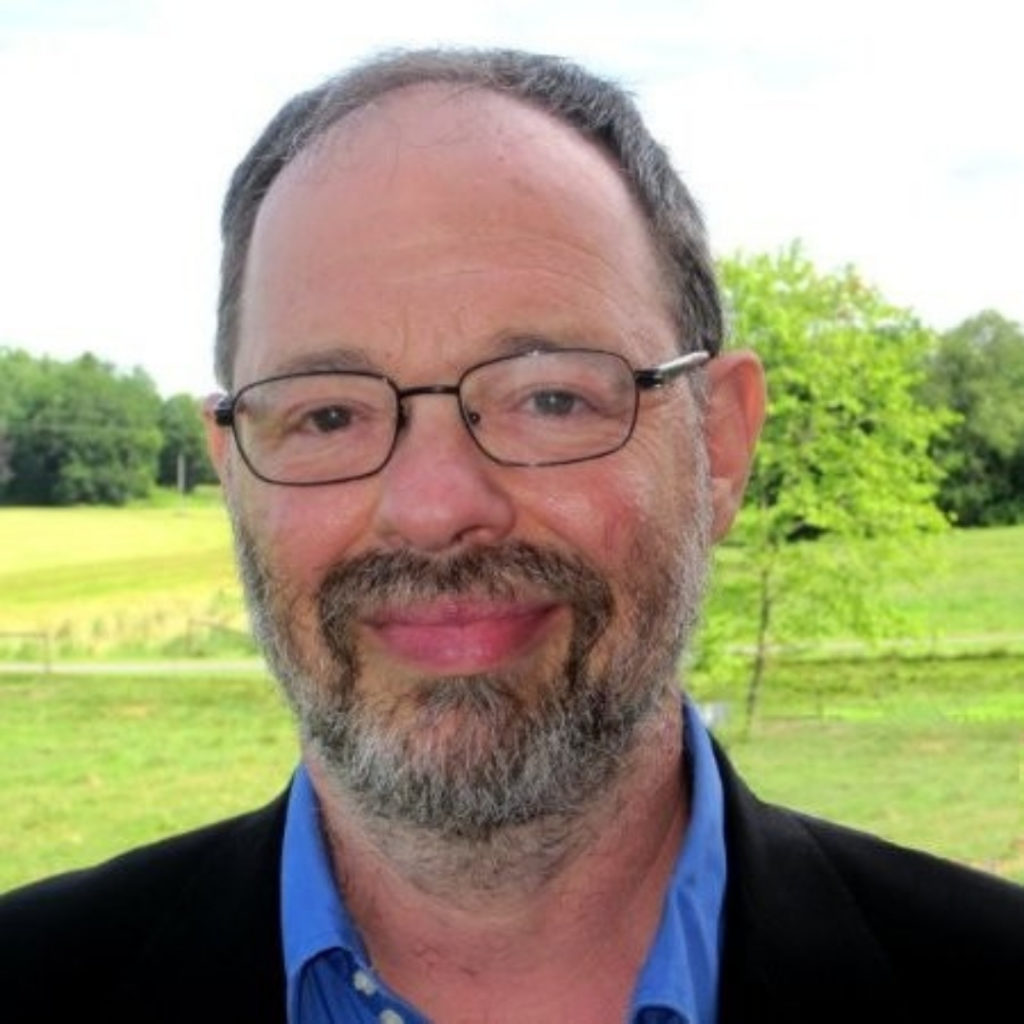
Shel Horowitz covers Regenerative Marketing in this Marketer of the Day episode. Shel Horowitz explains how a company can grow profit while making measurable environmental and social progress. He begins with purchasing habits, such as choosing organic Fair Trade chocolate to protect workers and avoid child slavery. For operations, he looks past sticker price: swapping to long lasting LED bulbs can slash labor and power costs. In one analysis, fewer bulb changes in a high ceiling venue turned a $10 bulb into roughly $4 million in savings. He notes even Walmart treats sustainability as a profit lever, expanding organic food beyond niche shoppers through logistics. After leading a 13 month campaign that stopped 40 McMansions on a ridge line, he turned activism into consulting and copywriting for regenerative brands.
Shel Horowitz, known as the “Transformpreneur,” shows businesses how to profit by solving global problems. As a consultant, copywriter, and coauthor of Guerrilla Marketing to Heal the World, he helps companies grow through sustainability, fairness, and social responsibility. Shel proves that green practices can boost profits by lowering costs and driving innovation, sharing examples from small businesses to major corporations like Walmart, which doubled the market for organic food.
In this episode of Marketer of the Day, Shel reveals how businesses can turn purpose into profit by focusing on regenerative, not just sustainable, practices. He explains why the smartest entrepreneurs start with small, high-impact changes, how conscious choices create ripple effects, and how thinking differently about marketing, energy, and consumption can both save the planet and build stronger brands.
Quotes:
“All of us can make a difference, even if it starts with something as small as buying a fair-trade chocolate bar.”
“Going green isn’t just affordable; it can be the most profitable choice you make.”
“Sustainability means running in place. Regenerativity means making progress.”
“Impossible is not a fact; it’s an opinion. Impossible is temporary.”
Resources:
- Visit Shel Horowitz’s Website
- Connect with Shel Horowitz on LinkedIn
- Subscribe to Shel Horowitz’s Newsletter
- Read Shel Horowitz’s Personal Blog
- Connect with Shel Horowitz on Facebook
Podcast: Play in new window | Download (Duration: 30:56 — 42.5MB) | Embed
Subscribe: Apple Podcasts | Spotify | Amazon Music | iHeartRadio | Podchaser | RSS
Transcript
Download transcript (.txt)We're here. We're back Shel Horowitz is here. He is the transform preneur, and Mr. Shel Horowitz has shown businesses how to thrive by doing the right thing. Shell shows how not just to go green and market green affordably and effectively, but also how your business can thrive by transforming society. We're talking about turning hunger and poverty into abundance, war into peace, othering into equity and catastrophic climate change into planetary balance. He's an international speaker, TEDx, talker, consultant, copywriter. He has 10 books out. The latest is called gorilla marketing to heal the world. Mr. Shell, glad to see you, gladly speaking to you, wonderful book.
Thank you, Robert, good to be here. Yeah. It's really a very pivotal time in the world of business. I think right now, as conflicting pressures are kind of building against each other. On the one hand, you have all of the good that it does when a business puts its weight behind making the world better. And on the other side, you have, globally, a lot of governments attacking the whole idea that doing good in the world matters. So it's, it's a more interesting time than it's been to do this work,
of course, and there's so many nuances to it, isn't there? There's the green washing aspect of it. There's the well, am I being taken advantage of? Is it transactional? And something that hit me the other day was just how messed up it is that a lot of the like, the poor countries are being hit a lot worse with, like, the extreme weather and all that and and like, they're they're less developed than us. So here we are in the Western countries, and we get all these benefits, and then other parts of the world suffer. So it's really messed up. But I imagine that someone might be saying, well, what can I even do? Right here I am. I'm just going day to day. I'm building a business trying to make money. How can little old me make any sort of change in the world?
Well, that's a great way to plunge in, because that opens the door to many, many bigger questions. And the reality is that all of us can make a difference. We can do it in our purchasing habits. So for example, when I buy a chocolate bar, it is an organic fair trade chocolate bar organic so that it doesn't harm my body and fair trade so it doesn't harm the bodies of the workers who are picking those cacao beans and processing them. And also, because fair trade, cacao is an assurance that child slavery was not involved, and I do not in any way want to support child slavery. So that's one tiny little action. Instead of buying the Hershey's or the Cadbury, I'm going to buy the one that has the Fair Trade seal. But there are so many other things we can do, and the nice thing Robert is that if we do it the right way, we can actually build more revenue while lowering costs, and now that, of course, is a recipe to increase profit, because profit is revenue minus costs. So if you have lower costs and higher revenues, you have more profit and you're a more successful business. So as an example, I did an analysis many years ago when led book LED light bulbs were about $10 each. They're now down below $1 and at that time, I looked at the case of someone who owns like a small arena with a very high ceiling, where changing the light bulbs involves sending somebody out with a cherry picker onto the floor of the arena, and factoring in the labor costs and the cost of operating the cherry picker, the cost to change a light bulb was way higher than the cost of the light bulb itself. So the LED light bulb gives you better light at about 1/10 of the electricity of the old style incandescence, and it lasts many times longer. I put in five LED light bulbs when I redid my kitchen in 2013 four of those are still the original bulbs. I had to replace one last year, but that was 11 years after I put it in. So the guy who's going out there with the cherry picker only has to go out once every five years, instead of once every six or eight months to change those light bulbs. Those labor savings add up very quickly. So by looking at this more holistic thing of what this thing actually cost versus what the list price you're paying, where are the hidden costs? Where are the hidden benefits? You get very different profit analyzes than if you're just looking at your basic bottom line and not looking at some of these externalities. And you mentioned externalities in terms of the climate impact on the countries that tend to be the poorest are having the hardest time with catastrophic climate change. We in the. Developed world have much more of a responsibility, I think, to fix that, but we also have good, solid business reasons to do it. There's a wonderful book called The Fortune at the Bottom of the Pyramid, and it talks about how, if you think differently about marketing to people who have basically nothing, you can come up with very profitable products and services to offer them that help them get out of the holes that their societies have dug around them. And catastrophic climate change is not something that these countries can solve by themselves, because the ones who are causing the climate change are us and the countries we live in, but by organizing together to build better lives for themselves and their communities, they actually develop purchasing power so they can become our customers. And that's something that a lot of people don't think about. But that book explored in detail, and I did not write that book I wish I had. So that's a long answer, but there you go.
Yeah, yeah. And I'm getting a little bit of a hint as far as your copywriting skills here, right? Because there's a lot of things where maybe people aren't asking the right questions, or they give up before they start. And then there's someone like you who says, Well, hey, here's my angle. Here's my argument that if you look at it this way, well, it's it's worth pursuing the LED light bulbs. You say, Well, you know, maybe if you have this 10 years ago, thinking where we hadn't quite reached some of these tipping points where the more like sustainable technology is cheaper or more profitable, like, there's there's some, just it pays to be up to date and to figure out a path forward. And saying, you know, the being green doesn't mean that you have to give up all this money. You can have your cake and eat it too, just like, have some kind of a strategy and ask these questions. And so you're super passionate about this. What were you always this way? Because I remember you from from way back, like maybe, like 10 or 15 years ago, and we both look different. But did you like, were you always so like, like, eco conscious, or did you have like, a tipping point of your own where you said, Hey, I really have to dedicate my life to this?
Well, I had two tipping points among several, but two that really mattered, that were very close together. One was the fall of 1969 when I was 12 and I went to my first Vietnam War protest, and I found out from one of the speakers that the Vietnam War was not actually a declare, declared war that Congress had authorized. And that really shook up my whole thinking and led to my involvement in social change that has continued to this day. And then a few months later, was the first Earth Day. I was 13. By then, and I became aware of the importance of environmental issues, and since then, it's just both of those things have been growing. And then for the past 25 years or so, I've been working on how to really put that forward in a business context. Speaking of which, I realized I left out the piece when I was talking about the light bulbs in the little arena. I forgot to mention that my analysis showed that the owner of that arena, and again, this was when the LED bulbs were 10 bucks apiece, so they're now 89 cents. But even back then, even when they were paying so much more for the light bulb, it was like $4 million over. I think it was two years or five years. I forget how long the period was, but it was a significant amount of money just from not having changed light bulbs so often. So when you look at these sorts of things, you discover that many ways to go green that you thought might not be affordable turn out to be not only affordable, but quite profitable. Walmart is a great example. Walmart is a company that I don't shop at, but I have enormous respect for what they've accomplished in the environmental arena. And Walmart is not tree huggers. Walmart is the most bottom line driven retailer, I think, that has ever been in existence. They probably even outdo the British East India country company from hundreds of years ago, and Walmart went big on selling sustainable products and also converting their own operations to be more sustainable. And they actually sell. Last time I checked, more organic food than Whole Foods does. And the really interesting thing is, number one, they're selling it a lot more cheaply than whole foods because they understand logistics in a way that other companies really don't. But number two, they're selling it to the truck drivers in Mississippi. They're selling it to the construction workers in Utah. They're selling it to people who ain't never gonna go to Whole Foods. They doubled the market for organic foods by thinking differently about who would buy them and what they would pay for them. So, you know, they're making a ton of money doing that, and I'm really glad they're out there doing it. You. Because I want those truck drivers in Mississippi to be able to get decent food, and I want them to be able to do it at a price that's not going to break their budget, right?
And it's like, we want to do good. But there's the, you know, there's the bottom line, there's the motivation, there's the money, and there was the, at least, when I was a kid, when I was, you know, 1213, I had that fear of my own, of, like, the future would be like Blade Runner, right where, like, Coca Cola would own it all, and it would we just all be exploited. And so it gives us this hope for the future. But as far as your bottom line, like, how does this turn into you making money? Like, I know you do, like the speaking gigs, but do you have copywriting clients? Are like, how do you yourself run a business and, you know, earn a living and pay the bills, but also keep this kind of like, you know, eco conscious brand?
Yeah, I do consulting and copywriting, and a lot of it the last 20 years has been for authors of socially conscious books. And I've actually been a book Shepherd, helping them go from a rough manuscript all the way to a finished, published and marketed book. I'm not going to be doing the full service book shepherding anymore, but I still will be doing hourly consulting about that. But I've also had some interesting clients who were not book clients. I have, for example, a woman who invented a solar lamp system that's the size and weight of a cell phone it fits in your pocket. So like with her, we sat down and we did a brainstorm of all the possible applications there were, and they were everything from a very low cost kids night light that you could keep on all night without worrying about the power consumption, because it's using an LED, and it's charged by the sun on up to in disaster emergency situations where both the rescuers and the people who need to be rescued, it can use it for a source of light. Can use it to signal a helicopter that's going overhead, if they're stuck on an island surrounded by 20 feet of water everywhere. Just so many applications that there were, we came up with a few dozen. And each one of those, of course, takes a different marketing approach. And some of them would be fundable by grants, like the disaster relief stuff, and some of them would be fundable by sales.
Well, super cool. Well, I like the insight in this kind of brainstorming process, right? And that's like, what the fun of copywriting is, at least for me, when, like, you know, people get so hung up or stuck on like, Well, what do i What's my headline? What do I write? But then taking those steps back and, like, fleshing out the offer, and thinking about the marketing angle and even just those beginning parts, how do I get attention, like, that's the, the real secret sauce, right? And especially, I imagine when there's some there's that definitely a value in someone like you coming in and saying, like, Hey, I know that. I know you're this author. I know you've got the solar powered flashlight. I know that you're you're so close to it. But then here's Mr. Shell hoards coming out from, you know, around the mountain saying, Well, I know the whole sustainability thing, but I'm looking at your product with fresh eyes, and I've seen enough of the other stuff to be like, Hey, here's what is could be kind of fun to brainstorm and fun to figure out. And so along those lines, like you have that story there about the solar powered flashlight. Have you had any kind of like a struggle? Have you had, like, a moment of drama, stress, failure, worry in this crazy journey we call life?
Well, yeah, many it's been, for one thing, it's been harder to get clients for the non book consulting in this area than I thought it would be. That's been slow struggle, but the book stuff has kept me afloat while I've been doing that. And there are so many places I could go with your last comment, it's funny that you said around the mountain, because if we hold up, you can see out my window, there is a mountain right there, and the mountain is a state park. And next to that mountain is another mountain. And the way I got into this work in the first place, Robert was that in late 1999 a developer announced that that second mountain that you can't see from my window, was going to be where he was going to put 40 McMansions going up to the ridge line. And I was the one who said, Nah, I don't think so. Started a movement. Had 70 people in my dining room for the first meeting, and I knew we would win. I went into it with the attitude that we would win, which was interesting, because the experts are all saying, This is terrible. There's nothing we can do. And like, What do you mean? There's nothing we can do. So then I went and started this movement, and we won in 13 months flat. I was not prepared for the speed of our victory. I had no plan B for what to get people involved in organizationally, and the organization withered and died because we had already done the work we were formed to do. In retrospect, that was the one mistake I made, is not getting people involved in the next cause to save a different mountain. But. Uh, it was incredibly effective. It was the most exciting thing I'd ever done. And it led me to think, Well, gee, this campaign that only took a year was using everything I knew after 20 years at the time of a career in marketing, what could I bring to the marketing world, to the business world, from the activism side? Because, as I said, I've been an activist since I was 12, and that's when I really started thinking about how doing the right thing in business could be a success strategy. And then I've done four books on that, and so it's been an interesting journey. And yeah, it's, it's not been smooth sailing. All the other times that I pivoted my business and scaled up. It was very successful, and I was being having more clients and having more lucrative kinds of work and more interesting kinds of work. And this one has been I have the occasional client and the work I really want to be doing, and I have other clients that are not out of harmony with that, but not really what I want to do. So I go where the clients are and but you know, I do see that the ideas that I've been espousing for these couple decades have become much more mainstream, like I went to something called the responsible business summit a few years ago. It was before covid, so it was probably 2018 or 2019 and the speakers were from Coca Cola, and they were from Pirelli tire, and they were from the car companies, and they were from timberland shoes. And the mainstream business world has now accepted that doing the right thing is a profit strategy. So they don't need me to tell them that anymore, the way they did in 2003 when I did my first book on this topic, because now they know, and they're proving it every day, and they would not go back. And that's very exciting. And it's just, it's just amazing how rich a vein there is out there in innovation. I'm not an engineer, but I engineers are among the people who make the impossible possible, and we will get to impossibilities and possibilities when you ask me about my favorite quote, but I will share that at that time. And you know, it's just everywhere I look. You've got my client with her solar folding lamps. You've got people who have put together a Frisbee sized hydroelectric plant that does not require a dam. It simply spins in the water from the current. It has, if I remember correctly, it has a series of radio blades like a wind turbine, but it's only a foot wide, and so no environmental impact at all from damming the water, because you're not damming the water, and dams can be really quite negative in their impact on the environment. So looking at these sorts of solutions, looking at what Amory Lovins, the brilliant physicist who started, Oh, dear me, I'm forgetting the name of his think tank now, Rocky Mountain Institute, yeah. He lives in the Colorado Rockies, in a suburb of aspen. Now, Aspen is known for, what industry, skiing, yeah, what do you need for skiing? Skis, and what are the skis go on snow, yeah? Snow, cold weather,
right? You don't have that
well, but he's living in this place where the entire economy is based on it being cold. And his house that he built in 1984 doesn't have a furnace because it doesn't need one. It's warm enough inside that he's growing bananas in his sun room. No furnace, no air conditioner. Passive solar design state of the art for 1984 when I heard him speak quite a while ago, he said that his monthly electric bill was $5 now, if you multiply that 10x because this was a while ago, so that's $50 I mean, I live in a house that has solar, that has a methane heating system, and I still pay more than $50 a month in electricity, although my new solar system, I'm hoping, will reverse that come next summer, we're going into the cold and dark time of the year, just as we turn switch on. But you know, it's so if that house built in 1984 had been modeled by all the developers who slapped up these huge numbers of massive developments in the intervening 40 years, we wouldn't have gone to war in Iraq. We wouldn't still be thinking that nuclear power is any part of our solution. We would be off fossil fuels entirely. I. Um, as incidentally, Iceland is a country that the non vehicle part of Iceland's power consumption is basically entirely from renewable sources, either hydro or geothermal. And I visited them in 2011 and that was already true by now. They probably made progress on electrifying their vehicle fleet too. So it can, if it can be done in Iceland, which has no sun to speak of, what are we waiting for in Arizona? You know, every house in Arizona should be on solar, yeah.
So yeah, and it's like, yeah, what are we waiting for? And you know, you're giving me flashbacks to when I was in college. I took like, an environmental class, and we learned about all, like, the CO two stuff, and how much of a lag time there is, right? When there's like, it's like, they say, like, you know, if we stopped at all now, it would take decades to reverse. And some of the issues now are from sometimes 60 years ago, 80 years ago, the stuff we were putting in the air. And at the time, I thought, man, we're so screwed. Because who is going to have the foresight to stop now when it won't even have an effect now, but it seems like, as you say, the tide has turned right that we have we're better educated, and we see how things can be done, and especially this kind of multiplier concept that you mentioned here, and you also mentioned with like the stadium and the LEDs, like, imagine If we just been a little smarter back in 1984 and rolled all this out, it would have saved all this money, and it would have changed this other course of history. It's like, that's the kind of thinking that we need to be keeping in mind, right? Just about the forward future and the bigger picture, and the optimism and the future, not just Well, here's the way it's always been done, oil, dinosaur juice. Let's just run everything off that for some reason. And all the scary subsequent with plastics, it's like, hey, there's got to be a way to make things more sustainable. And my mind is always blown just hearing about like, for example, like that, that super efficient house, right? You hear about little tidbits and stories all the time, and that's why I'm going to throw things to you here, because I'm sure that there's something really amazing that we can fit into the end of our podcast. But I just don't necessarily know the ideal question to ask you at this point. So this conversation we're having here. Mr. Shel Horowitz, what's the missing question? What should I be asking you? I just don't know what to ask you.
Well, there's so much you could, I mean, I have. I could give you another two hours of material, just riffing off the questions I didn't fully answer that you already gave me. So one question is, where should you start? And you should start with the low hanging fruit. You should start with the things that are going to be saving you enough money quickly enough that you can then use those savings to do more. And again, it's not just about going green, and you use the term sustainability a lot. I prefer the term regenerativity, because I want it not just to be about running in place, but about making progress. So we need to be engineering the kinds of solutions that can consume CO two out of the air and perhaps turn them into bio fertilizer of some kind. Again, I'm not an engineer, so this is just the visionary part of me with no basis in whether the science is practical. But when I was a kid, the science that is now practical was unimaginable that we could carry the world's knowledge in our pockets, right? Yeah, and you mentioned copywriting earlier, and for me, a lot of copywriting is just again, that thinking laterally, that thinking making the connections that other people may not see, and reinventing publicity in ways that serve people better, like I years ago, invented something I call the story behind the story, press release. If you know anything about how to write a press release, you know the 5w formula, who, what, when, where, why? That makes lousy press releases. For those of us that are not in big corporations, where everything can be stamped out in a mold, it's I prefer the story behind the story, so that instead of the headline that I might have written with a 5w press release for a client with a book on Electronic Privacy that would be Electronic Privacy expert releases new book, The headline I wrote for him was, it's 10 o'clock. Do you know where your credit history is cute, yeah, so that, you know, just again, we don't have to connect the dots the way they've always been connected. There are other paths,
yeah, and it's worth exploring and asking these interesting questions and pursuing the non obvious. And so, man, there's so much to think about, and so so much that's being worked on. And as you said, like we have infinity in our pocket. I mean, even, like, I was thinking about the Isaac Asimov book Foundation, right? And it was like 20,000 years in the future, and they're like, we're going to have an encyclopedia, a Galactica of the all humans knowledge. It's like we have that in the in the model. Not in 20,000 years from now. So it's like
pockets, not in the main like three rooms in the spaceship,
yeah, in our pockets, and instantly accessible anywhere. And so it's like these things that we thought would take centuries, 1000s of years. We have them now, but it's up to us to make sure that we don't destroy the planet in the process, with our with our greed, right? And like you hear about the the server farms running the AI and all the kind of the new danger there. So there's always the downside and the upside, but we need to get educated from people like you.
Yeah, and I have a lot of resources on my site going beyond sustainability.com. You'll see a button that says freebies. Stick your email in there to subscribe to my monthly newsletter. But you'll also get access to all sorts of things, including, for example, an ebook with 111 tips to save energy and water. They may not necessarily be. It was basically just a one or two session brainstorm. I just went, Okay, boom, boom, boom, boom, boom. And I didn't really give thought to Should I have different tips in there? But those that'll get, you'll find, anybody will find 20 things in there that they're not doing already, that they could easily do.
And as you said, start with what you're at, right? It's, it's like some people saying, well, how do I improve my financial situation? We have a garage sale and have a little bit of money, and then you put the money towards other stuff. And then you kind of have this forward momentum, right? Yes, save the mountain. You say, Well, now that we accomplish this, what other mountains can we save? And so it kind of you get a little bit of a jump start. You get excited about the possibilities. You say, Hey, I save some energy, save some money, I reduce my carbon footprint slightly. What else is possible. And so if this is now, maybe with those savings,
you can afford to go to your local farmers markets and buy local, organic produce that maybe was felt a little out of reach before, and that'll help your body in ways that you can't even begin to imagine if you haven't done it. And you know, each each little step, you can then take more steps.
Yeah. Yeah. You don't have to do it all at once, but it takes a little bit of vision and foresight and having a goal and and taking action, which sometimes is uncomfortable if you don't want to do right? I'm sure you've been in that situation where you're like, oh, I don't feel like working on this press release, working on the sales letter, but then you start at it five minutes in, you're like, hey, this is kind of exciting, and you keep on at it. And so what we want you to do is to go to going beyond sustainability.com and check out and scroll down a little bit and get to those freebies and resources that Mr. Shel Horowitz mentioned. You go and fill in your email address, and you get those 111 tips, and you can scroll around his amazing site. And he's also
one of the several gifts, by the way, and it's you don't even have to scroll down, because it's on the top menu, you'll see freebies, wonderful.
And so it's worth it to get educated about this Mr. Shell Horowitz. He's also a co author with Mr. Jay Conrad Levinson, and their book is called gorilla marketing goes green, winning strategies. It's now gorilla marketing world. So is that like the new one?
This is the newest one. Gorilla marketing goes green is 2010 and this one was 2016 so it's six years newer, and has a lot more about the social change stuff.
Okay, so gorilla marketing, to heal the world is the new one. So get that on Amazon. If you're a book reader, and we want you to
go into if you want to support your local independent bookstores with that purchase.
You got a million of these. Have to think of these things. So go to your your local
I use ecosia.org, to search rather than Google most of the time, because that plants
trees. Oh, nice. See, there's, there's all sorts of things we need to know about. And so use Ecosia, your local bookstore. But most importantly, going beyond sustainability.com, could your business thrive? Because it's helping to change the world. Well, go enter that site and check out. And if you're someone who is an author who is pursuing this regenerative environmentalism, and you need help with book coaching or copywriting, Mr. Shel Horowitz, is your guy. So going beyond sustainability.com, is the place to go. And before I let you go, Mr. Shel Horowitz, it's time for the scary part of the show where I try to stump you. I try to put you on the spot by asking about a fun quote or lesson that has served you. So what comes to mind as far as a fun quote or lesson?
Okay, this is from Muhammad Ali, and it's actually on page 303 of the book, impossible is just a big word thrown around by small men who find it easier to live in the world they've been given than to explore the power they have to change it. Impossible is not a fact, it's an opinion. Impossible is not a declaration, it's a dare. Impossible is potential. Impossible is temporary. Impossible is nothing that. I built my whole TEDx talk around that quote,
Oh, that's beautiful. There's so much packed in that's nice to think about. It's, it's a dare, it's, it's a lie, it's, so we need to be thinking bigger and pursuing new opportunities, starting by going to going beyond sustainability.com. And we've been speaking with Mr. Shell Horowitz, who saved the mountain, and he's changing the world, and we're here to see it. So thank you, Mr. Joe Horowitz, for stopping by and being an awesome human being. I'm glad that you came and shared all this with
us. Thank you, Robert. It's been a pleasure. I really had fun. You.