1477: Mindful Body Reset: Resolve Chronic Pain and Strengthen Body-Mind Connection with Yoga Therapist and Bodywork Pioneer David Scott Lynn
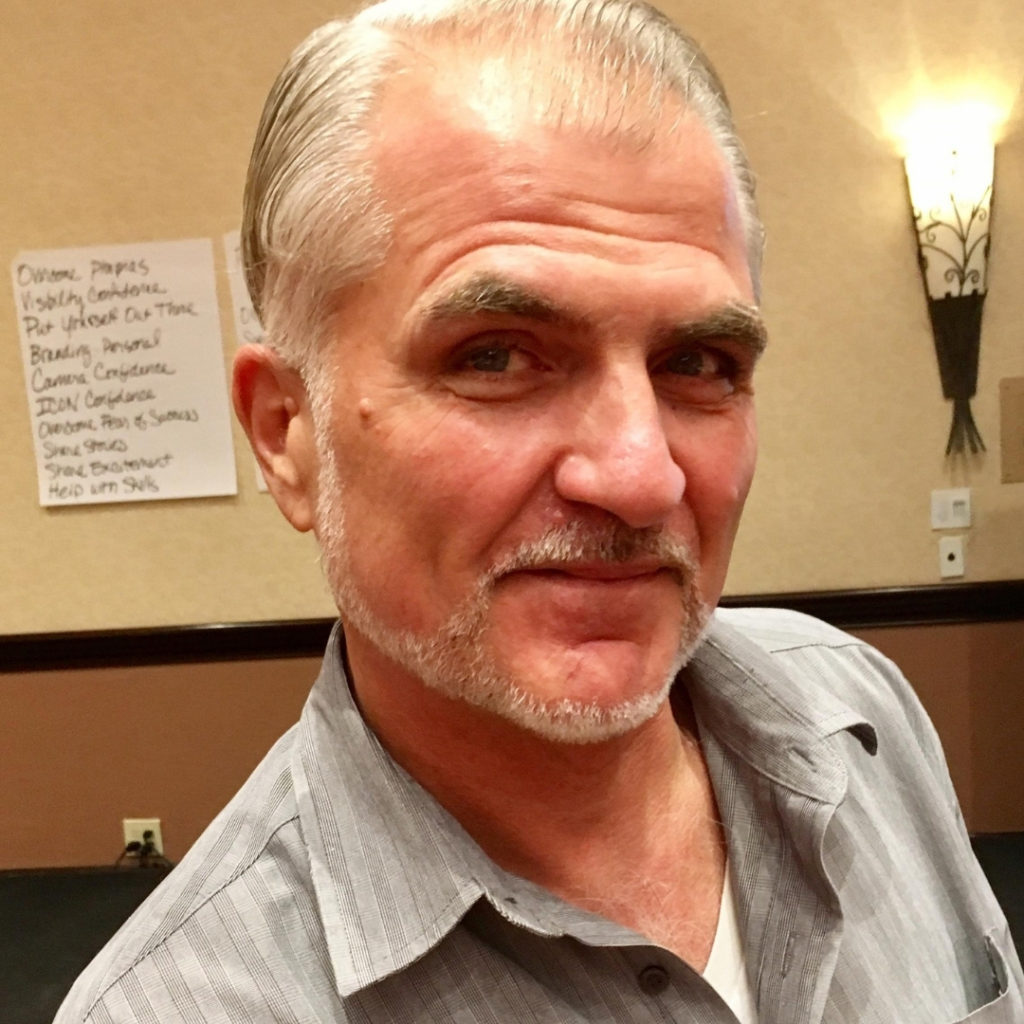
David Scott Lynn covers Mind-Body Performance in this Marketer of the Day episode. David Scott Lynn explains how mindful massage and 'let-go' yoga can reduce chronic pain and improve function. With 45 years in the treatment room, he targets excess muscle tension through deep radical relaxation, not quick fixes. Many clients arrive after 10 to 30 years of pain, hoping to avoid hip surgery, drugs, or hardware. He argues emotional intelligence grows faster when you work from the body, because emotions start as physical signals. Step one is bringing attention into physiology, so the mind stops trying to think its way into calm. To make it doable, he teaches tiny reps, like a 20-second drill moving the elbow away from the torso on each inhale, or letting the jaw drop while walking.
David Scott Lynn is a yoga therapist, bodywork specialist, and creator of Myo-Structural Bodywork. For over 45 years, he has helped people resolve chronic pain and avoid unnecessary surgeries through deep relaxation and mindful movement. His approach blends yoga, massage, and emotional intelligence, showing that muscle tension is often the hidden root of long-term pain. He teaches people to reconnect their minds with their bodies to restore health, balance, and awareness.
In this episode of Marketer of the Day, David explains that most physical and emotional issues stem from disconnection from the body. He breaks down the myths around yoga, explains why real mindfulness starts with physical awareness, and shares simple, practical ways to reduce tension and stress in daily life. Listeners learn how relaxation improves not only performance and focus but also emotional intelligence, creativity, and resilience in business and life.
Quotes:
“Most pain comes from excess muscle tension. When you relax the muscle, you release the problem at its root.”
“Your emotions live in your body. You can’t think your way out of tension; you have to feel your way through it.”
“Real yoga isn’t about poses or flexibility. It’s about awareness in motion.”
“When you slow down and reconnect with your body, thinking quiets down, and action becomes effortless.”
Resources:
- Visit David Scott Lynn’s Website
- Connect with David Scott Lynn on LinkedIn
- Connect with David Scott Lynn on Facebook
- Follow David Scott Lynn on X
- Concise Simple Steps to Let-Go Yoga
Podcast: Play in new window | Download (Duration: 28:17 — 38.8MB) | Embed
Subscribe: Apple Podcasts | Spotify | Amazon Music | iHeartRadio | Podchaser | RSS
Transcript
Download transcript (.txt)Hey, David Scott Lynn is here, and he helps therapists use mindful medical massage and yoga therapy to resolve complex, chronic issues of their clients, neuro muscular fascial systems with also focus on emotional and augmented intelligence issues. So we're going to find out about David, what he does, how it stands out, most importantly, how some of us entrepreneurs can get better tapped into this emotional intelligence concept, get our mind and body right. It's so important, right? Only get one mind and body. You can always create more money and create another business. But hey, what you have physically, you need to take care of it. A lot of people don't, so we need to get educated about it. So Mr. David Scotland, great seeing you after so many years. How you been?
Well, heck yeah. Well, we're here doing the important stuff right, getting the the word out, and talking about what's important. And so if someone says, All right, Mr. David Scott, Lynn, what do you do? I know you have all of these amazing stuff, like the myost structural body work, the yoga therapy, but how would you package it up? How do you explain quickly about the change, the difference you create? I
very good. Robert, thank you very much for having me. I greatly appreciate the opportunity.
Well, basically, my main focus for 45 some years in the treatment room, one on one with people, has been getting people out of pain, getting their restored functions. And we're talking about people who are scheduled for, like, a hip surgery and would rather not have a hip surgery. I have a good track record of keeping people from going into surgery or getting left drugs or whatever, because most people, including physicians, have very little idea how many problems in the body are created strictly by excess muscle tension. And if you can get that excess muscle tension to relax, I call it deep radical relaxation. Radical means get to the root of what's causing your
attention. Wonderful. It sounds like an amazing approach, because you hear about, well, there's, you know, if you have some kind of ailments, there's pills or surgery, but it always sounds really scary, right? There is, it's a matter of your only choice, or it'll fix it temporarily, and then you have worse problems later that just that sounds terrible, right? And you hear about a lot of people end up with like back pain, and they say, Well, you could get all this metal hardware. And it's like, boy, that just sounds like you're you're making the situation worse. And it would be great if there are ways to fix it in a less crazy, intrusive way. And so it seems like yoga, especially the past like five years, I've heard so much more about it, like even my five year old son at school, they do yoga. Amazing. What a time to be alive. But me, as an adult who grew up in like 1990s I'm kind of stubborn in my thinking. Whenever I hear yoga, I think it's, it's, it sounds really girly and at the same time really scary and intimidating. And I can't be the only one. So like, what would you say to someone who, like, says, you know, I hear all these great things about yoga, but I'm afraid to even look into it, because I don't even know where to begin or like, what it's involved you
is what makes.
Well, what's interesting is to contradict all the mythologies, the physical yoga postures, all the stretches in the movements you know that people do. They actually did not originate 5000 years ago with mystical Yogis. They originated in the gymnasium of Europe, and in the late 1800s and early 1900s Indian military, with the help of the young men's Christian Association in America, imported the physical exercises from the gymnasiums of Europe to India in order to strengthen up the physical health and strength of Indian men and the Indian military was using yoga as part of that, because we get into it. It can be very strenuous. You know, you can do power yoga to strengthen, or you can do what I call let go yoga. I focus more on people who need to release and relax, because I work with injured people, people who want to get strong. Though yoga is an incredible strengthener. And it was the military that first started using it in India, and then the gurus adapted it, and then they added all this mystical stuff into it, which has made it started sounding girly, you know. So there's a very, very different than most Americans realize, and what really yoga is, is just paying attention in the moment to what's going on. That's even if you're watching TV, paying attention to yourself and your TV as you're watching
TV, and it's all connected, it seems like, and it's worth watching pursuing these other avenues, and you hear a lot of good things about mindfulness and being in the present and just in general, like being aware. Like, don't just drift through life on autopilot. Don't just accept that you are miserable. And so when someone comes to you, like, would you say, is there like a pie chart, like a certain percentages, or like, what even in problems do people usually have when
they articles, but they, most of them, talk about it from the point of view of, how can you use your mind to fix your emotions? But your emotions all start in the physical body. So that's why yoga and hands on body work, size Tai Chi, by focusing in the body that actually does more for expanding your emotional intelligence than trying to fix it with your willpower. Not that you shouldn't do the willpower oriented exercise. That's fine, but but the root of it is in the physical body. So
Well, that's kind of all over the map, but it tends to be, historically in my work, it's tended to be people who were in physical pain, had multiple car accidents, fell down stairs, all that kind of stuff. Most of them, well, a large portion of them in pain for 1020, 30 years, and been trying everything, trying to get better and and I have a very high track record of getting not just getting the feeling better, but out of pain. That tends to be the majority of it. What I'm trying to do now is move more towards people are interested more in the mind body connection. Those people come to me because of their physical body. But now I'm trying to get into the whole thing about enhancing emotional intelligence, because we need to get the three characteristics of being human that AI doesn't have, so we can compete with AI, you know, stuff like that. But most of the people that I've worked with in the past were people who scheduled for a surgery or been in pain for 20 years or whatever, and but they all almost always say, Wow. You know, I remember one guy when I Yeah, where you
you do take, put in different inputs, you get different outputs, right? It's like Seinfeld, George Cassandra said, I'll start doing the opposite of everything that I want to do. And then his right. And you think about, if you just, if you mix things up in your life. So people come to you, and sometimes they have this physical pain, and you say, it's all connected. You kind of get tapped into your your emotional intelligence. Feeling it's over. How does someone get there? Because I imagine that many times might have been trapped in the same pattern for decades. How does someone say, Well, how do I begin to control my emotions, or how do I use my mind to getting much better, change my physical pain? How's it
done? Positive thing for him, and so that's what always kept me in the back and stuff like that happens on the side. 10 20% of people have those kinds of like, Oh my God. I talked to my wife, different My husband, things like that. You sister,
Minute. Well, the first thing is one of the values of getting body work or doing yoga. Doing yoga is free right away, and you can do it by yourself, anytime, anyplace. You don't need a therapist, you know. And you can do self treatment, you know, you can self massage yourself. But basically the first step is become getting your mind more connected to your physiology, because we are in such an abstract society. Now, you know, everything, we don't have a lot of farmers, you know, a lot of construction workers. Are small. Everybody's dealing with their computer. They're dealing with the numbers, you know. So it's they're kind of abstract. So they've lost touch with their physical body. So one of the things, doing these exercises or techniques that starts the process of just drawing your mind down into the body and trying to force your mind to think about and that's a very, very different approach, because you I've got an article I'm writing called thinking thoughts about not thinking, you know, meditation supposedly slowing down or stopping your thinking? Well, you can't stop your thinking by thinking very nice. What you have to do is you have to get your your attention distracted or actually attracted to what's really going on. And your body is always in the physical moment. It's always present. So if you can start feeling what's going in your body instead of thinking about it, you just naturally start it, doesn't it? And
it seems like the way that you explain it is, it's not a fast and change process, isn't it? I imagine that it takes a lot of practice and immune like you're giving me flashbacks to like, just learning different techniques. Right? When they say things like, well, look at five things you can see and four things you can hear, three things you can smell, and like that
distracting your brain. And I think just
by that, like, that's almost like magic. I'm like, that calls me down. And then, like, some body scam where, like all the meditation audio, they say, you know, relax the top of your head, relax your ears, relax your jaw muscle, relax your tongue. And I'm just thinking like, how, like, by breaking it down, it's pointing out parts of me that I didn't realize were tense. And then I just go step by step. And I realized, like, it takes some patience, right? It does seem tedious at first, but then you imagine that as it becomes more you can do it with less deliberate effort, and then you can, like, you know, continue to push forward and work on some of these more advanced goals and milestones and really slow down your thinking. And so, like, what do you think stops people from doing this. You say that you provide yoga coaching, or others can do yoga coaching, but all the information is out there, right? You say, We're in front of computers. We got this information age. We got podcasts like this one. We can learn all this stuff. But why are so many people still stressed, still unhappy? Why don't they take action on this? You
hmm,
You. Well, I could tell you one story from when I first started teaching yoga, one of my best, my best friend at the time, he said, you know, David, I'd really love to come to your run of yoga classes, but I like to go out drinking with my buddies on Friday and Saturday nights. And I'm I'm afraid that if I start doing yoga, I won't want to drink anymore, and then I won't have fun with my buddies on weekends. Other people, you know, it's just I don't have the time because they think they gotta do 20 or 30 minutes of a meditation or yoga stretching. And I have a solution to that. But it's all over the every every excuse you can imagine has been used, you know, even completely crazy stuff. And then what you said, you know, there's a lot of men who think it's for girls, you know. And the way it's taught, you know, if all you've seen is women in a yoga class doing yoga to Madonna songs, then it's going to look girly. That's Yes, the gym gym class yoga. And whereas historical yoga was always one on one, the group thing was more of an American thing, and then the Indians adapted. But anyway, yeah, every excuse you can imagine has been used, even crazy stuff, like I'm afraid of appeal. Got drinking with my buddies, you know, and which taught me something, though, because you made me realize what I was up against, because I started teaching yoga in 1976 and talk about, you know, limits on who would be interested. It was, it was pretty, pretty intense. And although I started in Zen meditation when I was 13, in martial arts. So I had some preliminary stuff going on, so I started using it, Zen meditation through my teens. I was an iron worker. I raced motocross. I crashed my motorcycle a lot. Entertained for the audiences, quite a bit, but, but so I was applying it. And then I started doing yoga when I was 19, and lots of aches and pains started going away, and that's what got me into it, and and, and so for me, it was kind of the Zen meditation thing was kind of by accident, because I was in martial arts, mainly because I didn't I wanted to learn how to fight, you know, and I just stumbled. Nobody taught me meditation. I just accidentally discovered about had the experience. And then a few months later, my mom bought me this book on karate, and there's a chapter on meditation. Oh, my God, that's what happened to me, that when I started zoning in because meditation being this kind of being in the zone, things like that, so I was kind of predisposed to it, sort of by accident. I didn't have the intention and but other people, they just have to decide. Now, what I tell people is, look, if you can't fit your life in the yoga classes, just like, for example, whenever you're walking, just start letting your joints go. You know, you know whenever you're typing, whenever you say,
there is value in relaxing, right? You relax and allows you to think better, even, like, you know, when you having this conversation here, right? Like, when I was younger, used to think to be 100% have to be, like, fully charged up. But there's still value in being relaxed and just having a nice conversation. And like, when we teach, I would rapid fire a big list of both places, and now it came back. It's like, who would have followed that, versus just kind of being slow and deliberate and ideal human being? What a concept. And so it seems like you're saying a lot of like, people make excuses. It's easy to make these objections. And you're saying, well, find the time, figure it out, solve the problem, and look into some of these techniques, right? There's yoga, there's in meditation. There's so much that you learn, and it's being discovered all the time that's being used. Give us a little bit of a taste, a tease about what's possible that way, people say, Oh my gosh, I need to check out more of what David Lynn has going on. So in these last few minutes of our conversation, what's the missing question? What should I be asking you? I just don't know what to ask
you. Oh, of course. Give me a technique. I Okay, do.
What
Well, can I take 20 seconds to give you a technique, if you hold your arm, one of your arm, either One out to the side, and then start is on your breathing, on your inhales, move your elbow away from your torso,
yeah, and different and see about your different results. And so someone says, Here woke me up, blew my mind. A lot of sense, but I want to find out more from him about what he teaches how that can benefit me. So who would be reaching out, and where would they
go? And maybe you'll go and do that. But it's that simple that any joint in your body, whether you people, have jaw joint problems, if they just take them up to let their jaw drop, you know, when they're walking down the street, instead of pulling your legs forward with the muscles on the front of your leg, relax the muscles on the back of your leg and the muscle and then the joint decompresses in the leg just flows forward, little things like that that you just integrate yoga principles into your life, rather than trying to fit into Some paradigm of what yoga is supposed to look like.
Well, the main people I'm working with right now is, is massage therapy and yoga therapists who want to learn my technique, which I developed back in the 80s. But you know, and I know from a marketing point of view, you're never supposed to say this is good for everybody. You know you're supposed to have a sub niche, but you know it can. It applies to everything people do. There is nothing in your life that that relaxation and meditation and letting go can't help whether you're an executive who wants to integrate emotional real, emotional intelligence. Instead of thinking about emotional intelligence, you know, you're someone that you know, give me a call. We can talk about your situation, you know, and I can give you some tips, like move your elbow away from your shoulder. Come a couple times a day, people who are therapists who want to learn the integration of yoga and body work into a holistic system with the myost structural balancing, which is all about this, how I analyze which muscle fibers to work on and in what sequence, because if you do the wrong sequence, sometimes the person gets worse. And I wish I could answer your question more more clearly, I struggle with that. Well, who's my target market? Well, for training, it's therapists who want to learn how to do assistance for emotional intelligence. It would be entrepreneurs and executives who read a few articles of Harvard Business Review or something saying, Well, you know, they're telling us that profitability increases when the people are more emotionally intelligent. You know, that might be a motivator,
right? Not just use it as a crutch. But I love using AI as a tool in that way of being like, well, give me some new ideas. Or I was thinking about this approach to the writing, because communicating this project, it gives me something I add to it. You're working with the machine, and so that's great. There's two buckets. You say, there's therapists who wants to know your system. And then there's what we're focused on here, entrepreneurs who want to get dialed into this emotional intelligence. Concepts for me today, Mr. David Scott, where you just have a little snowball and get a little bit of result from the yoga. Do a little something with a torso distance. On the walk, you see a little bit of improvement. It makes you curious for more and that's valuable. And then there's also that idea of it's so easy to make excuses because of your own low self esteem. They say, Well, why should I get more fit. Why should I make more money? Why should I get a better handle on your emotions? And I think something that's really important for us adults is to say, well, it's not just about you. It's once you get your emotional intelligence better, then you can better serve others. So if you won't do it for yourself, at least do it for the greater. It and for others. And so those are just some helpful ideas that, just by speaking to you, just were great reminders for me. And so you say that there's the therapist and there's the entrepreneurs. And so if someone wants to look into some of this stuff, what's the website? What's the next step? You
David Scott lynn.com. Is my main website. It's, it's in redevelopment right now because I've expanded my thinking. I was out of the picture for a number of years taking care of my parents and covid and all this stuff. So I'm doing a lot of rewriting on it, but there's a lot of information there. And contact information is there, and I'm willing to talk to anybody for 20 or 30 minutes, just, you know, just, hey, you know how you doing? What you up to, can I help you? And so that's the main, the main website, and I had to let go yoga.com but it's, it's that's a little more in need of more reworking. And there's a lot of yoga stuff on David Scotland. If I could just real quick say, you know you're saying about people's resistance to taking action. In my 3c on my formula, 3c is conative, is cognitive, creative, cognitive intelligence tonation is the art science of what makes people actually take action, and what people start to discover in meditation mindfulness is that thinking actually, while it might get them interested in taking an action, it also becomes the block to taking action. So the trick is, if you can get more in touch with your psycho, emotional, physical processes, and reduce the amount of thinking that's running the show all the time like a freight train. What you want to do is keep the the attention on things, and then thinking just reduces, and everything takes care of itself, and the action just happens.
Subscribe
If you enjoyed this article, subscribe to receive more just like it.


