Published Last updated
View in Podcast Library: stories, quotes, books, and resources in one place.
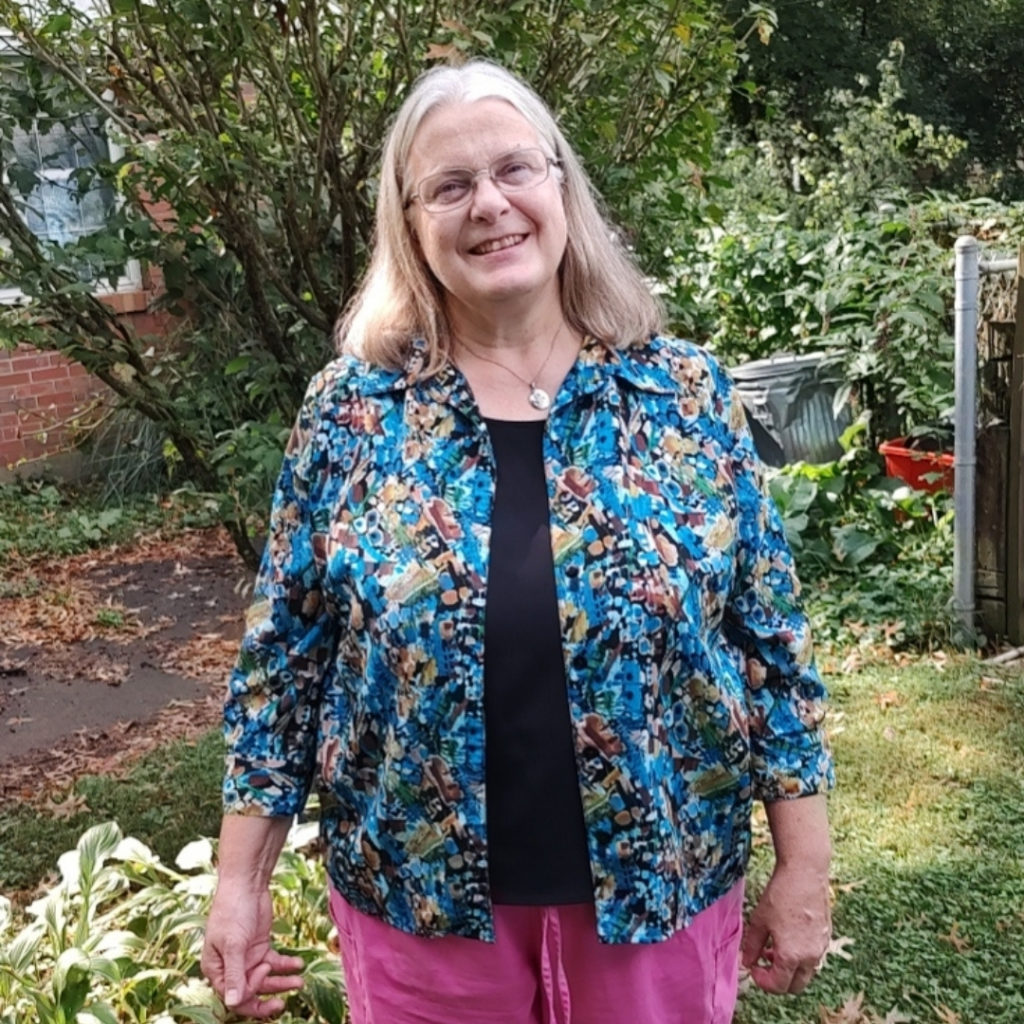
Susan Bernauer covers Beginner Gardening Journey in this Marketer of the Day episode. A practical journal approach helps new gardeners keep plants alive and steadily level up their skills. Susan Bernauer says you become a gardener the moment you buy one plant and care for it. Start where your space and curiosity are, from a balcony pot to a small vegetable patch and basic composting. Because her yard sits under heavy tree shade, she learned to choose shade-tolerant plants and improve the look of bare ground. She also grew obsessed with succulents, noting that buying five or 10 varieties proves they do not all want the same sun or water. To avoid repeating research, her Gardener's Journal includes a weather tracker, Plant Information Forms, and removable plant notes for water, fertilizer, and pruning.
Susan Bernauer, author of Gardener’s Journal: Journey into the World of Gardening, shares how anyone can begin growing plants, whether on a small balcony or in a large backyard. She explains that gardening is less about expertise and more about curiosity, patience, and observation. Her book offers practical guidance for beginners, covering seed starting, soil care, composting, and how to record plant notes to remember what works year after year. She emphasizes that gardening can be both educational and therapeutic, helping people reconnect with nature and relieve stress.
In this episode of Marketer of the Day, Susan talks about how gardening evolved from a childhood pastime into a lifelong passion focused on shade gardens and succulents. She explains how to choose plants that fit your space and lifestyle, avoid common mistakes, and turn your gardening into a creative project instead of a chore. Her spiral-bound version of the Gardener’s Journal even allows you to cut out pages and create a custom notebook to track your plants, making it a hands-on guide for personal growth through gardening.
Quotes:
“If you’re caring for a plant, you’re already a gardener. It’s about learning and trying, not perfection.”
“Gardening is a journey. Even advanced gardeners don’t know everything. You learn through trial and error.”
“When life gets stressful, working in the garden helps you relax and reconnect with yourself.”
“Write down what works for you. Next year, you’ll be ahead instead of starting over.”
Resources:
- Connect with Susan Bernauer on Facebook
- Get “Gardener’s Journal: Journey into the World of Gardening” Amazon
Podcast: Play in new window | Download (Duration: 22:34 — 31.0MB) | Embed
Subscribe: Apple Podcasts | Spotify | Amazon Music | iHeartRadio | Podchaser | RSS
Transcript
Download transcript (.txt)Sue gardening is for everyone, whether you have a balcony full of plants or a full scale vegetable garden, gardeners at every level can explore, experiment and learn from their experiences. And we're here with Sue Bernauer, who is here to help us about this gardening journey. She's an author, and she has a very excellent book out there on Amazon called gardener's journal, journey into the world of gardening. And she can help us if we're a novice in gardening, and if we it's just something that began for her as a childhood hobby. It's become an obsession focused on shade gardening and propagation of succulents. So it's signage jump into this exciting world of gardening. Sue, glad to meet you. How
are you? I'm doing fine. Thank you so much.
You're very welcome. And so what did I leave out of that introduction there? What has she so focused and passionate? And what should we know about gardening?
Well, gardening is for everyone. There's a lot of people who ask me, How do I get started? And it's really not that hard. I mean, just buying a plant, you're a gardener. If you're caring for that plant, I consider you a gardener because you're you're worried about, you know what to do best for the plant, to keep it alive and thriving. The book is introduction. Is introduction for beginning gardeners who may need that little extra help to get started. It has the everyday backyard gardener in mind to get you started, it's not meant for the big, elite gardeners or for those who already know everything there is to know. It's for us who are trying to learn as we go how to garden and how to do it better
for the rest of us, folk that you say that if someone's doing robotic gardening or saying, I'll grow all my food in this huge expanse, like that's great, but it can be overwhelming, I imagine. And if someone says, it looks like fun, I want to have the pride and the joy and maybe show off a little bit of my surroundings. Pass the time. Have a fun project, etc. I can definitely see many of the benefits here. But how did that start with you? My understanding is that when you were really young, it was a hobby, and it's just turned into, let's take it over your life, it seems.
Well, growing up, the family always had a vegetable garden, and my aunt always had a flower garden, so it's just a natural part of my childhood to see people gardening and to be a part of that, whether it be pulling weeds or whether it be planting my own flowers. But yeah, I just kind of grew up with people doing it around me.
You had the culture I love that you give me flashbacks to. I saw a video once of, I was super young, and I was riding on a tractor with my grandfather, and he's like, you know, been gone for decades, but then he himself came from the Midwest, where there was a lot of farming. So there's something to that, right? There's like, your your lineage, your heritage. You grow up around the gardening, the growing, the building, and you just continue it on to the next generation. So you say, we can start with just one plant, right? We don't have to have that imposter syndrome. You say you're growing one thing, you're in the club, you're a gardener. But what should someone know if maybe someone has all these excuses, reasons for not even starting gardening. Do you start with the plant, the soil, the vegetable, the space? Where does someone begin to tackle this problem?
I think it's where their interest lies. If they're in a position where they want to grow their own vegetable garden, then that's where you need to start. If you're in a in a an apartment, or something like that, maybe just a couple of plants to scatter around your apartment. This place to start. When I began, you know, I saw my father growing from seed tomatoes and green peppers so that he could set them out in the spring, he starred them in his basement, and then when they got big enough, he put them outside and And there they go. So it's just kind of where you are with that. I had an aunt who used to say, if you have a piece of land, you can grow your own food, you won't starve to death. Maybe in this day and age, that's important to remember that you can help yourself out if you have land and you can, you can know how to grow some basic vegetables,
yeah, have a little bit of self sustainability, right? You don't have to live completely off grid, but you can say, hey, I can just grow my own pet. Uppers and get the rest of my food at the store, farmers market, whatever. But then, you know, grow a few things on my own. And what has this journey been like for you? Like, did you go like this? Like you started small and you expanded? Or, like, what has been the scope of your gardening over the years?
Well, in the recent years, my focus has become more on succulents and on shade gardening, just because, again, of my environment. I live in a house where we have some big trees in the front yard and you don't get any sunshine under it, so there's no grass. So my goal was to find a variety of plants that I could plant under there that would grow in the shade. So that's how I got started with the shade emphasis, not only here at the house, but at my church. There's also the same situation of a tree that shades the ground, and what can we plant there to make it look nice with plants that will grow in the shade? So that's how I got started with with that emphasis. And then a few years ago, there's such an emphasis, popular emphasis on succulents, and it's like, well, let me try some of those. And succulents are so easy to propagate, it's very hard to fail with succulents. So I started playing with those, and I ended up with a little greenhouse, and they just expanded to the point that now I'm overwhelmed with succulents. Those two areas are where I'm focused right now.
That's a good problem to have, right where the you say, my my kind of casual hobby has just grown and literally taken over, and now there's a whole greenhouse, and it's fascinating to hear about some of the research and the problem solving, right? Because you might say, like you said, Well, there's the this grass won't grow because of shades. So what can I grow in there? Or you can imagine that someone might be, well, I'm in such and such climate, right? I'm in a tropical climate. I'm near the coast. I'm in the desert. What grows well in this area? Or maybe I'll do the the raised beds or growing in the basement. It just seems like it can be a lot of fun to look this up. Or I imagine maybe even like, share with friends. So like, Do you have a gardening club you're in? Or do you have friends that you kind of just like trade stories and advice with?
I do not belong to a gardening club at this time, but I did this summer, I was selling my extra plants from my front yard, a glorified yard sale, if you wish. And there's a lot of people asking for advice. How do I keep this alive? I've never had a succulent before. How do I water it? How do I not water it? How do I know when it needs to be watered so yes, there's been a lot of advice and sharing, and really a realization to me that there's a lot of people who don't have the basic knowledge that I was provided as I was growing up,
and that's why we need resources such as your book. And as far as that basic knowledge, is there anything that you are maybe outspoken about, like, is there anything that people maybe skip over or do you see like this advice out there and you say, Oh, that's so raw. I'm so against it, anything like that that just maybe drives you crazy, that people should know about gardening.
Gardening, in itself, is a learning experience. That's That's why the book is called journey into the world of gardening, because you just don't know everything. There is, even your advanced gardeners don't know everything. So there is a lot of research that goes into it, a lot of trial and error, seeing what works this year and remembering it for next year. That's one of the things I had in mind when I wrote this book is I had, particularly with the succulents, a lot of information I was learning, and I have to remember that information for next year without having to redo the research and looking at what was available for gardeners journals. There's a lot of gardeners journals out there, but I was looking for one that was more usable in terms of being able to to make notes and organize those notes as be useful to me. So that's why, when I created the. Book, I created a page in the back called plant notes. And it's just simply a page where you can identify the different needs of that plant, what kind of water it needs, what kind of fertilizer it needs, when when to prune it, and that kind of thing. And I've in this spiral bound book, I'm encouraging people to cut these pages out of the book and actually take them out and create your own notebook where you can organize in your own way, how you want to store your notes? So in this notebook here, for example, I have some of my notes under house Clance, and I have some notes under succulents and shade, whatever your category is, you can organize them as you want them organized, and you can keep all the information about those plants available. And that's what I was looking for when I created the book. Was some way of being able to learn and organize and remember so that you can get ahead the next year, knowing already so much information and remembering that, so you can go forward with that.
I like that, and to me, that makes it the difference between a chore and a project, right? Because if something's a chore, it's like, oh, I have to do the dishes, sweep the floor. There's no shortcut, and I'm just starting from scratch every time. But then, if it's a project, and we can document what we're doing with the gardening, as you're saying, the fertilizer, the pruning, the watering, then you can get that and make it your own. And it seems like we all just mis estimate our memory, don't we? We think, Oh, next year, I'll remember all that. You won't even remember what you plan in maybe So write it down, get it in those special pages, cut out the pages, and that way, you have something that's customized in your own next year. And ideally, that means it can become a crazy, out of control project, like your greenhouse, right? That every time you say, Okay, now that I figured out how to take care of this one succulent, what else can I do? Can I do it on a bigger scale? Can I automate the irrigation? Can I do other sorts of plants? Can I grow other things? It seems like that's a lot more exciting, right, when it can just grow and grow. And as far as maybe when gardening goes wrong, because I know it's slow going and it's not always fun and easy, but it is rewarding. So have you had any gardening disasters, mishaps in this crazy adventure
with the succulents? I sometimes I'll go out and I'll buy five or 10 different varieties of succulents and bring them home thinking I can treat them all the same, and some are just as happy as can be, and others just simply don't make it. And it's like, what is different about this one than that one? They're all succulents. They should all be cared for the same way, and that's that's not the case. There's a lot of variation even within the category of succulents. Some don't like to be watered until they're completely dry. Others like to be in the sun. Others like to be in the shade. It's a lot of variety in them, and you have to research each one if you want to give it the best care.
It seems like nurturing, right where, if you raise a kid or take care of a dog or a cat, you get to know them, and you know their own quirks. You know what works for them and doesn't work for them. So I can see how the caretaking itch in all of us can be scratched by just figuring some of these things out. And as far as what you have ahead in your own gardening journey. Miss, Sue, what are you planning for the future, like for the next gardening season?
Well, that's a good question too, because each year you want to grow and and maybe do something a little different. This year, just for the fun of it, I tried to grow peanuts. Every year I tried to do something on unusual. One year we did loofahs. One year we did gourds, and this year I'm trying out peanuts, and it's about time for me to dig those up. I haven't done that yet to see whether or not I was successful, but sometimes it's it's fun just to try something unusual in the garden. As I go forward, next year, I. Probably continue with much the same things, just try to get them under control. Because, like I said, I have a lot of extra plants I need to to disperse. But, yeah, there's always something new to try.
Yeah, and there's different forms of new. It seems like, right? You can have the crazy project where you say, let me just see what happens here by growing the loofah. And you can also get really good at the repetition of, like, saying, I'm the best person in this area to grow this type of succulent. It's like, you can either, like, double down on what's working or try some crazy experimental project, and it's been a lot of fun so far. Miss Sue just hearing about gardening and what you've done and learned and discovered, but I want to make sure that we talk about what's important to you. So do you think there might be a missing question in our conversation? Is there something about gardening that I should be asking you, I just don't know to ask you.
I think we've done well. I think what's important in the book is that the reader knows that they can find their basic questions answered. Where to start, how to start your seeds, how to get them in the ground, how to take care of the ground and do composting so that you can put nutrients into the soil. All those things are very basic to the gardening process. There's help in the book about how to start like a hot house, if you need to carry over some plants when this weather starts to get cold, different things like that. There's even some fun things in there for the kids to try out. How to how to start a plant from sweet potato, how to get lettuce to grow from the chopped off end of the of the lettuce you brought home from the store, how to get it to grow. Things like that for the kids to do, which is a great opportunity to encourage them to be interested in gardening. It can very easily be a family affair, and it can very easily be something the family does together, is gardening,
yeah, well, this is amazing. It's so great to hear about just all the different possibilities and uses of gardening. And it just, it always blows my mind to think about this amazing planet that we live on, right? We're like, if you tried to list everything that you could possibly grow in the ground, you'd never get to the end, right? There's like, all these different forms of things that we can grow and that we just you, you put it in the ground, and sure, there's like, the nurturing and the do's and don'ts, but this planet provides for us, right? You put your seeds in there, and you grow it, and you you prune it, and you're fertilized, and you water and all that stuff, and you can create something out of nothing, basically, or take that little piece of lettuce and turn it into something more and amazing. And so you say that book is called gardener's journal, journey into the world of gardening by Susan Bernauer. That's B E R, N, A, U, E R. And then you also have this website, Sue fly creations.com So what would we find there at that website?
Sioux fly creations.com is where you can go and see an example of the book and where you can order the book, there's a link there that will take you to Amazon, where you can order a hardback or soft back cover book. But you can also, there's also a link there for the Lulu publishers, and they're the ones who publish the spiral bound. So if you're interested in making the notebook, as we described earlier, I would buy the spiral bound from Lulu, and you can get there from my website and make that happen.
Very nice. So that's Sue fly creations.com, S, U, E, F, L, Y. Creations.com, and you can especially get the Lulu printed version the spiral bound that way. You can make that customized journal that's tailored to exactly what's worked for you. And then the next growing season, you can not have to start from scratch every time that sounds amazing, and it's Sue fly creations.com, and gardeners journal journey into the world of gardening. And before I let you go, Miss Susan, it's time for the scary part of the podcast where I try to stuff you. I try to put you on the spot by asking about a fun quote or lesson that has served you in life and gardening. You take your pick. So what do you think? What comes to mind for you, as far as a fun quote or lesson,
gardening has always been a source of relief for me, when I get uptight, stressed out, frustrated with the world, it's therapeutic to go outside and to pull a few weeds or to work in the yard. And I think the people can get in touch with not only nature, but with themselves as they work in the yard and work with their plants. I think it's a therapeutic thing that can be beneficial,
that's beautiful, that's wonderful. Get the stress out. Get the happiness up. Be around nature. Work on a project, and then pat yourself on the back for a job well done. You grew your own peppers. Grew your own tomatoes. What a wonderful activity at sure beats watching TV. So consider gardening and jump into it. And many times we get overwhelmed, or we say, you know, there's this big, fancy book at the bookstore and 300 pages thick, versus someone who is more relatable, who's someone more like you and me and Sue says, well, here's what you should do, and here's what I've done to grow my plants. And it's in this book, gardener journal, journey into the world of gardening, especially with those tear off sheets, when you can make your own journal if you need to remember about specific plants and recall last year's observations. And now you can design your garden landscape plan steps to implement your gardening plan, weather tracker, plant information forms. It's what you need to not have to always be guessing and try going about it yourself. Listen to Sue's advice. Who has done it, who is excited about it? And she's all about this world of gardening that you're about to journey into. So that's Sue fly creations.com We've been speaking with supernauer, author of gardeners journal, journey into the world of gardening, thanks for being here Sue and educating us about this exciting world of gardening.
Thank you. Thank you very much. Bye.