1484: Mercy Moments: Rekindle Your Passion for God and Build a Life of Lasting Faith with Pastor and Author Brian Kinsey
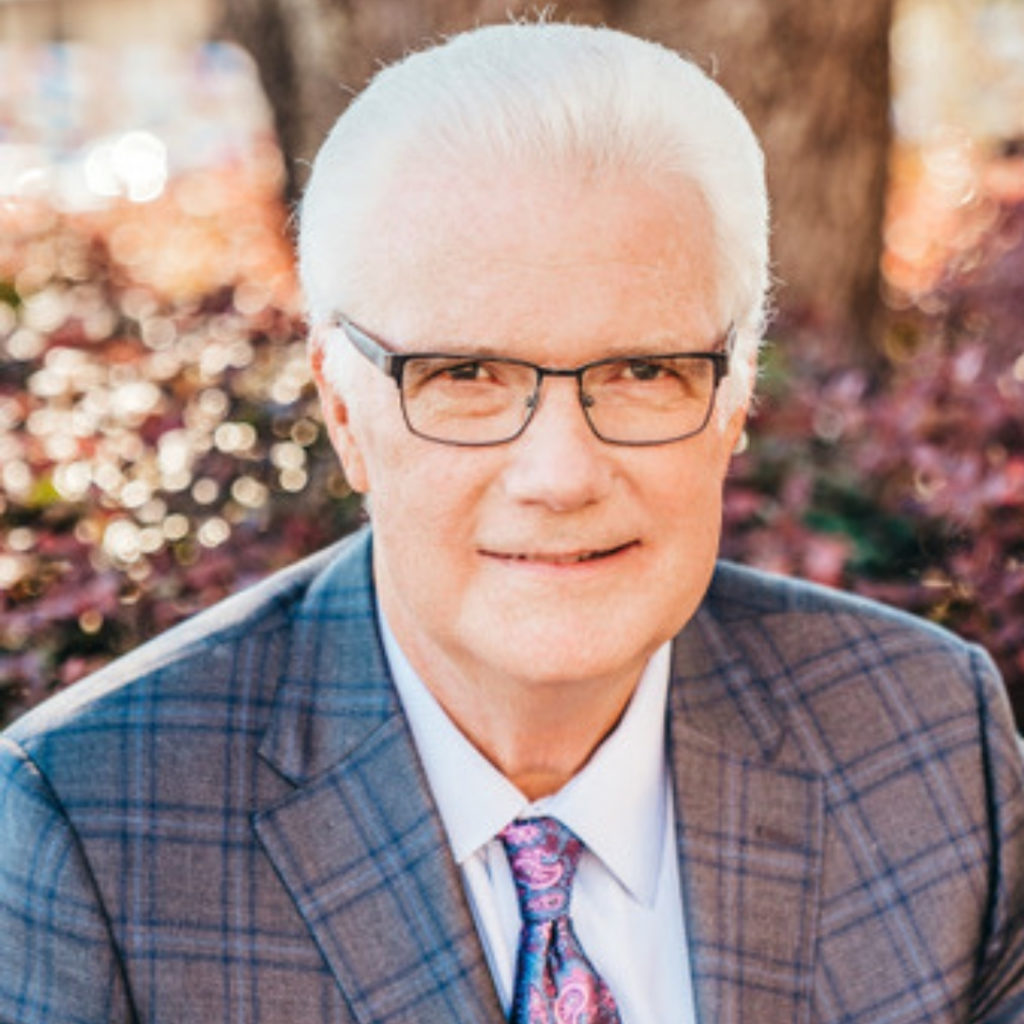
Brian Kinsey covers Christian Devotional Habits in this Marketer of the Day episode. This 40-day devotional shows how short daily "mercy moments" can reignite passion for God amid chaos. Brian Kinsey calls a mercy moment an intentional encounter where one sentence from God changes direction, as in Genesis 1. He chose 40 days because it is long enough to feel the benefits of consistency and decide to keep the habit. His "rule of five" keeps it simple: read Scripture, pray what you read, write what you hear, and bless someone with it. He starts newcomers at 15 minutes and suggests a one-year Bible covering Old Testament, New Testament, Psalms, and Proverbs. Each day adds an action step and the pattern "I know, I pray, I will," turning devotion into outward ministry.
Brian Kinsey has spent over 50 years guiding people toward a deeper connection with God. As a pastor, life coach, and author, he brings clarity and structure to spiritual growth through daily devotion. In his book Mercy Moments: 40 Days to Rekindle Your Passion for God, he introduces a simple daily plan called the “Rule of Five,” built around reading, praying, writing, speaking, and acting on God’s Word. He shows how small, consistent steps transform lives by helping believers experience God’s mercy and discover their purpose.
In this episode of Marketer of the Day, Brian shares how daily discipline leads to lasting transformation. He explains why 40 days is the ideal time to build a spiritual habit and how mercy, not perfection, sustains faith. Drawing from his decades in ministry and mentorship, Brian encourages listeners to move beyond inspiration into practical action—helping others, showing mercy, and focusing on the future rather than the past.
Quotes:
“You are one prophetic word away from your breakthrough and deliverance.”
“If you’ll meet God every day, He will show you how to live the life you were meant to live.”
“Passion fades when life hits hard, but mercy rekindles the fire.”
“Your identity is not your past. Your identity is your future.”
Resources:
- Visit Brian Kinsey’s Website
- Get "Mercy Moments: 40 Days to Rekindle Your Passion for God" on Amazon
- Connect with Brian Kinsey on Facebook
- Connect with Brian Kinsey on LinkedIn
Podcast: Play in new window | Download (Duration: 37:17 — 51.2MB) | Embed
Subscribe: Apple Podcasts | Spotify | Amazon Music | iHeartRadio | Podchaser | RSS
Transcript
Download transcript (.txt)Announcer,
Today's guest has dedicated over 50 years to ministry, mentorship and helping others deepen their walk with God. It's Mr. Brian Kinsey. He is a pastor, a seasoned life coach, gifted speaker and passionate encourager who understands that spiritual growth transforms every area of life as this world grows more chaotic, his voice is a steady reminder of God's enduring mercy and grace. And Mr. Brian is here to talk about his latest book, Mercy moments, 40 days to rekindle your passion for God. It is a devotional guide that invites both new believers and longtime followers of Christ to rediscover intimacy with the Lord. So Mr. Brian Kinsey, glad to meet you, glad to be talking with you on the subject. So great to be on this podcast with you, and to be able to discuss one of my very favorite subjects in all the world, and that is to be able to share my passion for spiritual growth and to try to motivate people to do what I know works that will transform their life. Very exciting. And you you speak it, you live it, and you've written a book all about it, called Mercy moments, 40 days to rekindle your passion for God. So why is it called Mercy moments? What are these mercy moments? Well, whenever you have a divine encounter, and the encounter doesn't have to be a long period of time, but just when you intentionally go into His presence and you allow him to speak into your life, that word is so powerful, it can change you in a single moment, all you need is that moment. And I like to say it like this, when I'm preaching, you are one prophetic word away from your breakthrough and your deliverance, one prophetic word, because it only takes one sentence from God, and some people will question the validity of that. And then I take him to Genesis. One one when God said, Let there be light. And there was light, one sentence changed everything
very exciting. And so we have this, the solutions available to us, right? But many people say, Oh my gosh, there is the Bible. There's all these quotes. I don't even know where to begin, and that's why we need you to set to light the path, as they say, right? You say, Hey, here's my structure, here's my plan, here's this passage in Genesis, or here's this book mercy moments. And so why did you choose this format, the 40 day format for the devotional
because generally, it takes about 40 days for somebody to decide whether they want to establish a new habit. It'll take them longer than that to establish the habit, but at least they'll begin to experience the benefit. It takes 40 days to give them that experience, to say, Hey, I think I need to keep this up. I'm going to do this for the rest of my life, because that's really what I'm aiming at. And I'm aiming I'm not aiming at 40 days. I'm aiming for them to complete this for the rest of their life, because that's what transforms you, is when you make that choice. It's a choice, it's a discipline, yes, but that gives God so many opportunities when you just go into His presence for a few moments every day, and you just read His word and begin to pray and seek His face, he will change you into the person he wants you to be, and that will help you realize your destiny. That's what we want. That's what I want to see. That's what excites me, is when I see people transform and become what God wants them to be.
That is exciting. There are many things to be accomplished, but it that's a powerful message you have there that, well, have you really decided yet? Have you really started yet? And you take your pick right? Attending church, regularly, reading your Bible every day, eating healthy, running whatever the habit is. Well, it's like there's the setting of expectations, isn't there? There's, well, I've done this for a few days, and someone like you says, Well, have you done it every day for 40 days? Well, if it's on and off, you haven't really started yet. And then if you're at 40 days, you're not at the end, you're at the beginning right now, you're it's starting to stick now. You're doing this rest of your life habit, and it's always great to hear about this, but I'm sure people out there like, well, that's great about you, but what about me? So maybe we could talk about the readers of this book, right? Because we said before that these are for seasoned believers or new Christians. So I mean, tell us about the people that you want to be attracted to your message.
Well, one of the things that I've learned. Learned, especially in doing the personal coaching, the life coaching, is that a lot of people the task is so daunting, with all of the chaos in the world, with all of the distractions that are in their lives, they just feel like there's just no way that I can discipline myself to do this. So I want them to start out very simple, very small. That's how I started, because I had that divine encounter with God where I was asking, God, I don't know how to do this. I was 19 years old. I didn't have the skill set to accomplish what I wanted to accomplish. And I said, God, I'm I'm floundering here. I'm not doing what I'm supposed to do, and God literally visited me, and this is what he told me. He said, If you'll meet me every day, I'll show you how to do it. And now, after all of these years, I have kept that. I have met him every day, and he has changed my life. So what I started doing, I began to define it. I wanted to work it to where I defined it perfectly. I call it the rule of five. I do five things every day, very simple. Sometimes it takes me 20 minutes. Sometimes I end up two hours. But that's on down the road. All I'm asking people to do is take 15 minutes out of your day to start with, and let's just do 15 minutes. If we can do that, then we can grow it beyond that. It's not important that you try to do the two hours, because that's something that has to happen organically, because it just you're in a zone. You're not going to start in a zone. You're going to start. You're going to start not wanting to do it. You're going to start with your flesh crying out, saying you got too many other things to do beside this. But it always starts with reading God's word. And this is what I tell people, because a lot of people don't know how to pray. They don't even know what to say. I mean, they have needs that they want to present to God, but that's not meeting with God. That's just simply bringing your list to God. That's not good enough. You've got to meet with God. He's got to talk to you. So I tell them, whatever you're reading from the word, pray that word over yourself. Start using those words as your prayer language, and pray the Bible over your life, your family. Okay, you've got a need, present it, and then pray that word over that need. That's why I really recommend people to get a one year Bible, they read the Old Testament, the New Testament, Psalms and Proverbs every day, so that way, they have good encouraging words, because you can get stuck in the genealogies of the Old Testament, and nobody knows how to pronounce those words but a Hebrew scholar, and I often times, will joke with congregation when I'm trying to transfer this information, I said I'm just praying. I'm not cussing in Hebrew, and don't realize it, because it's really a very powerful and and and and explosive way to present yourself to God. Read the word and then pray it, and then write something down that God spoke to you. Write something down because that's that's what helps you remember it, and then take that word and go and encourage somebody with it. Go speak it to somebody, because you can't just read it, pray it and write it. You gotta speak it to somebody. Go speak a blessing on someone. And I try to get that blessing tongue working in my life, where I I'll bless a leader, or I'll take a hurting soul and I'll try to pour some oil into their spirit to where they can feel the healing touch of God through my words, and that that tempers my spirit. Now I'm not so anxious about what what's going on in my life. I'm concerned about what's happening in somebody else's life. That's where transformation takes place. That's the power of transformation is when I'm not so concerned about myself. What happens with depression and anger and all of these things that are a phenomena of the 21st Century, because of all the chaos that we've got going on, the uncertainty, the fear is that we're so focused on ourselves, we don't see all the needs around us, and people have needs, hurts and and they need a word from the Lord, yeah, and there's no better way to to to speak into their life than to get that fresh word from God today. Word not a yesterday. Word not something. Than you heard 10 years ago, and and there's nothing wrong with that, but I want a fresh word as well. Yeah, I want that fresh word that today word, and you don't get that if you're not spending time with him, he's there's no opportunity for him to speak it to you. And so you gotta take the time. If you take the time, this is the word. This is the word they need to hear. If you take the time every day God has promised I will meet you there.
Very cool. So I love what you've introduced to us, right? There's this prayer language, and it seems like there's just an approach to this, right? That, well, say you go to school and you say, Oh, I'll learn chemistry. I'll just flip through the book and I'll just kind of look at it sometimes, versus, you take a class in school, you learn things. There's homework, there's tests, there's presentations, there's group projects, right? You're you're making the material come alive. It's not just words on a page. So I can see how if someone has maybe not gotten the results they want from life or from their spirituality. Here's Mr. Brian Kinsey saying there's a new approach and to get us excited about what's in this book, can you describe the structure of each day's reading?
Well, every day I want them to read an inspirational, encouraging word, there's a story, there's a scripture that we present to them to inspire them. So we don't want to just simply say, Okay, you got to try to read and pray the Bible and try to come up with something that'll help you. We want to inspire them, and then once they know what that inspiration is, then they can go to the Word of God, and then they can read it, and then they can hear that voice and write that word. And I have places there where they can even write a note, even in the book. So if they are not used to using the Bible. They already have scriptures there. They can use those scriptures to pray. It's not something it's not rocket science, and it's not something that has to be rigid to where it's got to be a certain particular way. Everybody can develop their own and that's the good thing about it. God didn't promise to meet us because you follow my plan. God promised to meet us because our heart is searching for him. Doesn't matter which plan is, just get a plan. Develop one. I'm excited if you develop anything. And I'll pick at the congregation that I'm kind of communicating this to. And I'll say some of you've got the rule of 2.6 you haven't quite made it to five. Well, do the 2.6 to what you can do in order to make this work for you, because everybody's got a different schedule. Everybody learns at a different pace. Everybody's got a different life cycle. So we understand that, but do something every day that you present yourself to the Lord, and when you do, it makes a difference. And then I use the I know. I pray, I will. I know. First of all, you got to know what to pray. If you're not, if you just pray in general prayers, you're not going to get anything out of that. You got to know. Then you pray. Go, first of all, know something, then go pray. And that's why I have the inspirational thought and the word there is that gives you what you need to know, and then you pray because you don't want to do something and not have prayed, or not have sought after God, or don't know what you're supposed to do, then I will, I will bless Robert today so that Robert and his family and his life will increase abundantly and multiply and be lifted up and encouraged. I want to do that in the Spirit, and then you just plant the seed. You can't make the seed grow. All you can do is plant it there. And a farmer on this planet that can make a seed grow, but he can plant it, and the seeds designed to grow. So the seed is the Word of God. You plant the seed and it's going to grow if it finds good soil.
We need this encouragement, right? We need the encouragement. It shouldn't be the habit sticking, so that way we can make progress. And we know that there are many devotionals out there, who knows how many 1000s? So how does mercy moments differ from some of those other devotionals?
Well, there are so many wonderful devotionals, and I always use devotionals in my everyday connection with God. I love their inspirational thoughts. I mean, there's just so many on the market, and any one of them will be a blessing to individuals, but mercy moment. Is conveys to people that rule of five. It gets them more consistent. It's a specific target. I'm targeting something in people's lives where I want them to develop the habit of it, not just simply gain the inspiration all of the other inspirational and motivational. They don't really try to get you to develop the habit. They just simply are inspiring you with whatever word they have to offer for that day. It's fantastic. Nothing wrong with it at all. I recommend them find another devotional that they enjoy, streams in the desert, my utmost for his highest awaken the dawn. By Baxter, all of these are tremendous. Spurgeon wrote a tremendous morning and evening devotional. I love them all, and I enjoy reading all of them, but this is a targeted effort to try to get people to develop that daily walk. That's what this does, different than what they do.
That's important. So you say inspiration is great, but you provide the other side of the coin, which is this goal setting that's pursuing your target, and it's called Mercy moments. And what role does mercy play in deepening one's relationship with God?
Well, I have found because we're all flawed human humanity, we're all flawed human beings, and we have to be transformed. The only thing that can do that is the mercy of God. There is no effort on my part that can better myself and become a better individual. I need God's mercy in my life, and it's not going to be through entitlement. It's not going to be through self righteousness. It's not going to be, oh, look at me. I can do this. It's going to be God loved me and showed me mercy and gave me grace. And because of his grace, I can overcome my dysfunction, I can overcome my sin. I can overcome my own desire, I guess, or my own self destruct mechanisms that everybody has in their life. They can self destruct. And we all can do that because it just seems like the enemy. We do have an enemy, and the devil will try to get you to self destruct. He can't destroy you if he if he could, he'd already done it, sure, but he can get you to destroy yourself. He can tempt you to do things that you shouldn't do that will destroy yourself. So that is the reason why you need the mercy of God. First of all, he needs to protect you from the enemy, and the only way he can fight the enemy on your behalf is through mercy. And so the way I receive mercy is to show mercy. I've got to show mercy to Robert if I'm going to receive mercy. So here I am on this podcast, fulfilling a part of my rule of five, encouraging you, letting you know that there is a merciful God who will forgive you and who will not just forgive you of what you've done in the past. He'll set up a whole destiny for you in the future. And this rule of five, this mercy moments book, will help people get there, not just in the inspirational aspect of it, but also in the transformational of the practical, everyday steps to do it.
Well, you're making us think, Mr. Brian and the ideas that you shared already on the podcast, I can only imagine what more is in store for us inside of Mercy moments. And I know that you are great with the phrases and the keywords, and I know that one of your phrases here is all about rekindling passion for God. So can you kind of unpack that some for us, rekindling passion for God? What does that mean in practical terms?
Well, in practical terms, if you're driving a car, a car doesn't will get out of alignment automatically, just because of life and driving and bumps along the way. And life has a lot of bumps along the way. Life has a lot of crises that come up that we weren't expecting doctors reports that we don't like, blood tests that come back and they cause for caution and pain, and that pain can rob you of that passion and to where you're not as excited about life. Even life doesn't offer you anything to excite you. People disappoint you, people betray you, people say ugly things about you. Well, those words can hurt you, and you just walk in life and be hurt by life itself and by what goes wrong well that you need to rekindle your passion, because just by the natural flow. Of life, you're going to get drained of joy and peace, because you've got to have that joy, you've got to have that peace in order to generate passion. Passion only comes when you've got love, operating mercy, joy, peace, hope. Those are the virtues of the Christian life that God has promised to put in us through His Word and through His Spirit. So if you've got those, that's what passion is. Because I'm passionate about you being blessed, not just me being blessed. I want others to be helped. That's why I wrote this book. Is because that is my passion, but that can get that can get upset quick, and the passion can get drained from your spirit when you get hit by life, and life can throw you some very terrible curves. And I've, I've had to help people through a lot of valleys of death and valleys of tragedy and crises, but I've helped them through this process. Has helped me help them. And then if I can show them, whenever they're emotionally capable of receiving it, if I can show them how to do it, it changes them, then they find new strength. Now they've got a mission. I want to take what God did for me and my crisis and go help somebody else. That's the key. That's the key to developing passion. Is helping others.
That's great. I like the subtext of our conversation here that it's all about relationships, right? It's not just about helping you. It's helping others. It's not just about getting excited again. It's about helping others, and that helps with that. And including, we're on a podcast, right? It's not just you and me talking. We're, we're broadcasting it on YouTube and places like that. So it's, it's really, it's mind blowing, isn't it, to think about, okay, well, who can I help? And in the process of helping others, can I help myself? And your reassurance here that life just beats you up, right, mentally, physically, emotionally, financially, in all these ways. And it's it's okay, because it happens to all of us, but it's up to you to get back up, even when these unexpected things happen. You could take perfect care of that car, change the gas, change the oil, you still get an accident or something still breaks in. You get 100% everything right, but maybe you have to go and just fix those unexpected things that happen. And so we've been talking about some of these ideas, like not just inspiration, but also goal setting and habits and disciplines. So as far as these spiritual disciplines. What spiritual disciplines are highlighted in the book?
Well, there are several, of course, the reading of God's word, praying God's word. And then I give them action steps to try to get them to the I will, I know, I pray. And then I will, because I found that if all they do is read and pray, that's not enough for transformation, you got to have an action step. And so the action step is what I think is the practical aspect that the book really focuses on, is getting them to take action first of all, I mean, going to church is a great thing. Please understand. I very much encourage everybody to attend church. But what good is it if you're not helping anybody while you're there, if you're not praying with somebody? Yeah, I mean, if you're just there to hear the music and and, you know, judge the performance of the preacher of whether or not you enjoyed it because of how many times he made you laugh. Well, that's no good. No wonder you don't want to go to church, no wonder there's no excitement, no passion there, because you're not helping anybody. You're not taking any action. Now, you took action to get there, but you didn't take any action to put into force what you've learned from the your reading of the word, your prayer and those things that come should become natural for all believers, whether they're first time believers, Whether they are long time, long term believers, doesn't matter. I mean, that should be a part of our lives, but take some kind of action every day. And so I get them to write, what? What are you going to do today? So that's the action point that, I think, is the practical aspect of the book that really can focus in and explode and ignite passion in their life. Because when you start helping people, yeah, you're going to get a few, I hate to say it this way, you're going to get a few duds. There's going to be people that aren't going to respond to you, and there's some people that may even respond to you negatively. Don't let that discourage you, because we all get that. There are people that will reject us, but we've got to keep trying to take that action every day, do something for somebody, write a note, call them on the phone, send a text, write an email, not just about what you've got to do that day, but somebody that you know is hurting. It's so important that we learn to do that, and that is what this book really tries to the focus, yeah, get you praying, get you going to church, but take a an action of ministry. That's what I call ministry. Ministry is not being a preacher. Ministry is helping other people with what God has done in your life.
Very awesome. So take some action and help others. And speaking of this ministry terms, we said that you've had 50 years in ministry. So how have these 50 years in ministry influenced the writing of this book.
Well, it started when I was 19. That's when God I had the divine encounter, and that's developed over the years and defined more and more. And then when I met John Maxwell, a leadership trainer, and I am a John Maxwell coach alongside him with his team. So I have been trained by them to do this life coaching, and that's also on my website, where people can be coached by me individually, as well as by all the books that I've written. But he called it the rule of five. I borrowed the rule of five from him. Now, my rule of five is different than his rule of five, but my rule of five is more faith based than his. His is more secular, which is still good because it can help anybody, anytime you develop this kind of habit and discipline. It can help you in business, in life, any which way, but I'm more faith based. I want people out there speaking God's Word into other people's lives. That's where you experience multiplication. And I think one of the greatest things that's happened to me in my ministry now that I've gotten older, is that now I want to train others. And the good thing about it, Robert, this is the good thing that I feel that in after 50 years, I am more excited about seeing young men and young women do ministry and succeed in life than I am about my own success. Because I'm not here to sell my success. I'm here to see them succeed. That is what 50 years of ministry is supposed to do. Yes. In other words, you get to a point where you want to hand the baton off. You want to be. Course, we call it impartation in the Apostolic Movement, it's a spiritual impartation where, like I believe, it was Paul that told Timothy, said, You received this from your grandmother and your mother, and also by the laying on of the hands of the elders. They laid hands on you, and they transferred it to you, and they imparted this to you. And so there is an impartation. There's a generational impartation, grandmother, mother. But there is also a a ministry impartation, where ministers who recognize your anointing recognize your possibility and your future potential, and they impart to you. So there's all kinds of different impartations. So it's very important that impart, that I see the people I've trained succeed. I went to a general conference just a couple of years ago, and I was so excited. Four of the speakers, I have spoken quite a bit at our general conference. I think 10 times or 12 times, I've spoken at our General Conference through the years, but four speakers I wasn't speaking that year, but four speakers that I trained were speaking at General Conference who have seen growth and explosion in their ministry that I have mentored, that I've poured My life into, and given them a hope for a better tomorrow. And they've taken the word and they've they've applied it to themselves, and they've done so fantastic. And I'm over here rejoicing, because I'm all relaxed. I'm not worried about having to preach to 25,000 people. So I'm I'm rejoicing, and I'm just watching them grow, watching them preach, and it's just phenomenal. That makes it worth it all to me. That makes it worth everything to me, right?
You're applying leadership. You're getting others to to. Go forth on their own, and you're applying that power of multiplication, so you're accomplishing amazing things. And that website that you mentioned, I want to make sure we plug it before we get closer to the end. You said that Brian kinsey.com that's where you can find out about those books and the speaking that's b, r, I, a, n, k, I, N, S, E, y.com, that's Brian kinsey.com and we've been talking about this book, Mercy moments 40 days to rekindle your passion for God and how can readers stay connected with your ministry and coaching work after they finish the book,
they can by the website, and we do have a YouTube channel, and they can also connect to first Pentecostal Church of Pensacola, first pent.org and that's first pent p e n t.org and they can connect with my ministry. And there's all kinds of messages that I've preached. There are some on YouTube, and then there are some on Facebook, but there's also so many different messages on the church website that I've preached to the church through the years, and they can stay connected to my ministry through that, and of course, through the website, they can email me at any time, and I always get back to my emails. I respond to emails much better than I do Facebook Messenger. A lot of people will use Messenger, and I don't use it that much. So that's just a word to the wise.
Yeah, that's where you're the most responsive. So first pent.org and you also mentioned about talking about the website, that there are other books. So what are those other books of yours that are available?
Well, I've written two commentaries, one on Ephesians and the other on Philippians, and they're more scholarly works and more theological in their presentation. But I've also written made for more. Made for more is a sister companion book to Mercy moments. It's more in depth. And then the dancing father on how to develop a relationship with God. And then qualified for your anointing, which is a very powerful book, if people want to experience that impartation and know how to be effective in ministry, and I choose to win. And that's when you're going through crises, and you you know you're you're down in the dumps, you're depressed, you feel defeated. And then you just decide somewhere in your spirit, I'm going to win this because God did not create me. He did not save me to lose or to be a failure. He saved me to be a winner, and so I choose to win, and we all have to make that choice.
Yes, very awesome. So we're hoping that people get bit by the Brian Kinsey book, right? And we've all gone through kind of past where we find Brian on a podcast, we check out his book, we check out the YouTube, we check out the other books, and we just say, hey, it doesn't stop at just finishing a book. There's a whole experience to be had with what you've learned and what you're passing on to us. And in our final few moments here, Brian, I wanted to make sure that we cover the bases, or we get to anything you think that needs to be put in here last minute. So is there a missing question in our conversation? Is there something I should be asking you I just don't know to ask you?
Well, that's a very interesting question, and I think that it we need to consider it, because one of the things that I want people to know, and I think it is so vital and important for their future, is that they do not look to the past and get stuck in the past. The past will hold you captive. It becomes a prison. Yes, you can learn from your mistakes, and yes, you can learn from your past and take things with you on the journey. But remember, we're on a journey. We're not here to camp in the past of what used to be and what happened before. And I got so many people there full of regret, and they're full of I wished it would have been different for me, and maybe made some wrong choices because of that. I understand that because everybody's made wrong choices, that's why you need mercy. It's because everybody's made some wrong choices, and they need the mercy of God to help them. But what I want them to think of is focus on your future. Has God said anything in his word about your future, and, and, and, I guess we could say it like this, the devil knows your name and God knows your past, but when the devil speaks to you, he calls you by your past, but when God speaks to you, he calls you by your name, because. Your name that represents your future. It's who you are as a person that represents your future. Your identity is not the past. Your identity is the future. And so you've got to stay focused on that, because the the enemy will do everything he can to trap you in the past. Because if he can trap you there, he's got you. He doesn't have to do anything else. Just keep you focused on the past, crying about what used to be, crying about what happened 30 years ago, 20 years ago, five years ago. I think we need to quit crying about what happened and start finding out what God has prepared for us, because he has something great things prepared for you. And so I say, let's walk on into the future. That is the message that I want to send to the viewers and the listeners today.
Let's do it. What's done is done. Past can't be changed, but the future Sure can. So let's focus on the future, and we mentioned first pent.org Brian kinsey.com, but where we really want you to go is to Amazon and check out that book. Mercy moments, 40 days to rekindle your passion for God. It's a testament to the victories that await us when we welcome God's divine presence into our daily lives. Mercy moments invites you on a 40 day journey as you use it as a guide and a daily companion to cultivate the habit of seeking God, you'll discover the abundant depths of his enduring mercy. That's Brian Kinsey, author of Mercy moments, 40 days to rekindle your passion for God. Mr. Brian, mind blown today, you've given us so much to think about. You're so encouraging, inspiring. Thank you so much for being here.
Well, thank you, and I really appreciate the opportunity. This is just wonderful, and you did a great job.
Thank you for tuning in to the marketer of the day podcast. Marketer of the day is managed by D FY podcast. Claim your 12 podcast boosters at D FY podcast.com/free, you.
Subscribe
If you enjoyed this article, subscribe to receive more just like it.


