Published Last updated
View in Podcast Library: stories, quotes, books, and resources in one place.
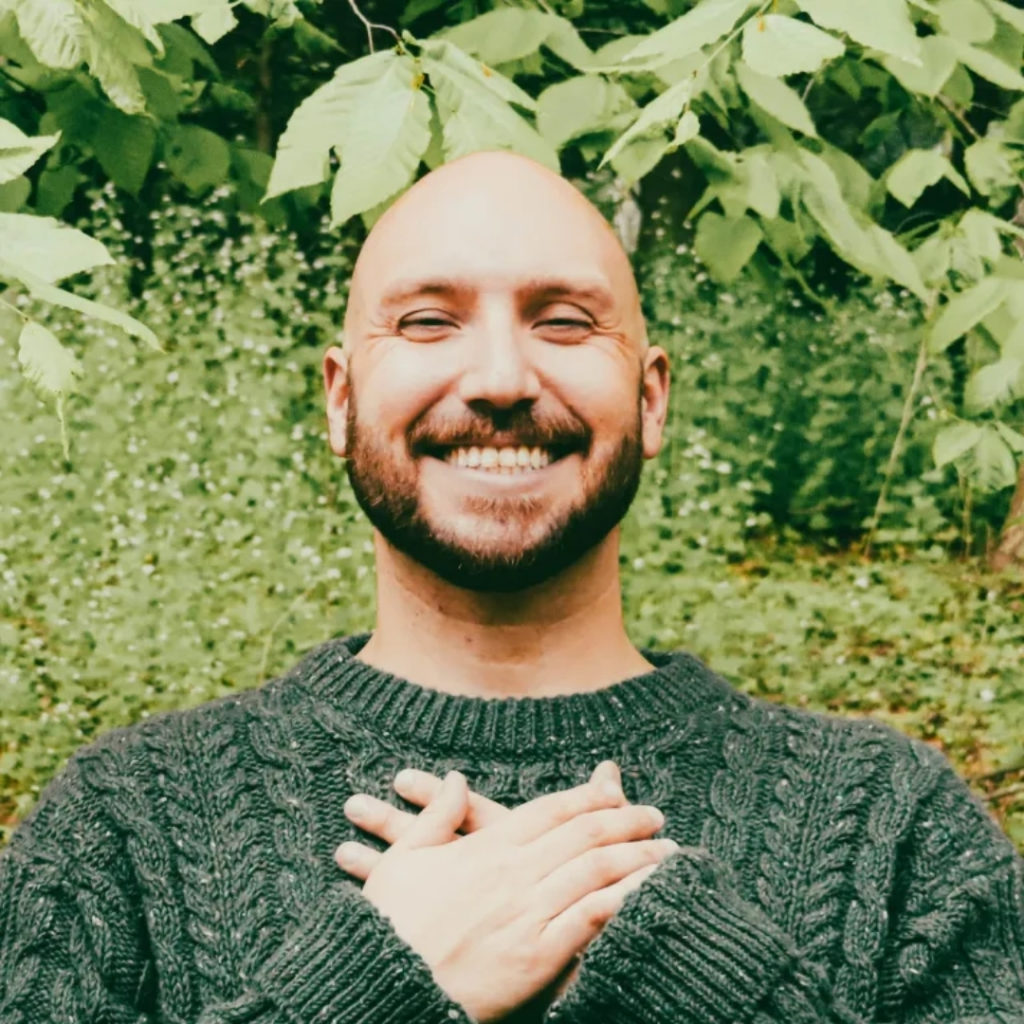
Johnny Scifo covers Mindful Creativity in this Marketer of the Day episode. Johnny Scifo pairs mindfulness with fiction to help you feel calmer and more connected. The Kettle Pours a Universe uses a cyclical, Asian-inspired structure to highlight interconnected lives, elders, and healing. He says spirituality is built from daily inputs: food, media, exercise, and attention. After a hospital crash on show six of 14 as a touring DJ, he learned to pause, reassess, and pursue work that communicates clearly. Brain Flowers took nearly 10 years to distill, and he recommends assembling an a-la-carte indie team of editor and designer. His mindfulness drill is simple: set a timer, sit with knees below hips, breathe in the nose and out the mouth, notice thoughts as road signs, then invite the sticky one to dinner and release it.
Johnny Scifo is an award-winning author, musician, and meditation teacher, renowned for blending neuroscience, spiritual practice, and creative artistry. From touring musician to founder of Yoga Sound School, Johnny has empowered Ivy League students, wellness professionals, and everyday seekers to cultivate awareness, resilience, and self-connection. His unique approach unites Eastern and Western philosophies, encouraging people to be present, embrace experimentation, and honor their interconnectedness. Johnny’s latest work, “The Kettle Pours a Universe,” invites readers into a lyrical exploration of mindfulness, creativity, and the beauty of interwoven lives.
In this episode of Marketer of the Day, Johnny discusses his transformative journey, the role of daily habits and mindfulness meditation, and the lessons found in both failure and artistic pursuit. He shares the pitfalls of chasing fleeting trends versus finding authentic creative expression. Johnny offers practical meditation guidance, explains how creativity is a process—not just a product—and highlights why honoring elders and community is central to lasting happiness. You’ll come away inspired to experiment, reflect, and connect more deeply with yourself and others.
Quotes:
“Art is the byproduct of a creative process. If we focus only on the end goal, we get stuck—take a break, reflect, and creativity returns.”
“It’s not about suppressing thoughts, but seeing where your energy is going. Meditation helps you notice, honor, and let go.”
“Interconnectedness—remembering our stories are all woven together—is the lesson that leads to a fuller, happier life.”
Resources:
- Visit Johnny Scifo’s Website
- Follow Johnny Scifo on Instagram
- Follow Johnny Scifo on Insight Timer
- Follow Johnny Scifo on Substack
- Get “The Kettle Pours a Universe: A Novella” on Amazon
Podcast: Play in new window | Download (Duration: 31:51 — 43.8MB) | Embed
Subscribe: Apple Podcasts | Spotify | Amazon Music | iHeartRadio | Podchaser | RSS
Transcript
Download transcript (.txt)He dropped out of law school, he lost 70 pounds, and he even built a self playing synthesizer. But now Mr. Johnny skiffo teaches the neuroscience of meditation to wellness pros and Ivy League students. He's a fierce realist, he's an award winning author, and he's the founder of yoga, sounds school. And we're here to talk about his new book called The kettle pours a universe. And we always need help. We always need refreshing in this area of self development, self improvement. And Mr. Johnny has learned a few things, and he has going to teach us a few things, especially speaking about his book. So, Mr. Johnny, nice meeting and nice speaking with you. Thanks, Robert, glad to be here. Man, glad to have you. And so just what's, what's, I don't know what the phrase is, what's the bee in your flower? What's got you so just kind of on the move excited these days. Well,
both of my books are really about like the inner world and connecting to the inner world. As somebody who teaches yoga and has had, like, a real vast experience with spiritual practices, the main thing that I really like that gets me excited that I'm trying to share with other people is that if, like myself, you have not really found a particular spiritual path that calls to you. The good news is that there are a lot of practices that are pretty universal, even if you're not being able to, like, sift them out of the Scripture. Let's say so one of the things that I like to focus on is really like, what is something that I can do right now that will help me ground myself and get towards that elusive, you know, best self, better person, happier version than what I am today. And so I like to focus on, you know, like, what am I eating? What am I consuming? Not only just like food, but, you know, media, like, where am I putting my attention? How am I exercising? What does my lifestyle really look like? What choices Am I making on a daily basis that are helping me grow in the long term? I think that sometimes we pick lofty goals, and those are great, but it's spiritual practice is really like an everyday piece by piece, one step at a time, process, and as I saw, traditions that I had never encountered before, and that have never touched historically, and that they're so interwoven, they all kind of say the same thing. I really tried to take
my own kind of perspective, my own path, and blaze a way forward that anybody could follow.
I like that, and that's amazing, because, like, when you think about, like, you know, religion versus spirituality, right? There's a lot of well, well, I adhere to, like, 50% of what my religion is, or I haven't fully understood it. But then spirituality, it feels more customized, doesn't it? It seems like you say, well, here are all these kind of best practices. Here's what's worked and here's what you can then apply to yourself. And it seems like a lot of what you're speaking to here is the awareness of what goes in and one comes out, right? There's like what comes out, like your words and your actions, but then what goes in, your food, your liquid, your your media, people you hang around with. And so as the way that it applies with this book, The kettle pours universe, my understanding that it's not like a self help, it's not an instruction manual. It's got like a like a plot, right? There's like the absolute girl and the tea farm and so tell us what this amazing book is. So when I wrote my first book, brain flower is 10 keys to awakening in the real world, that's the self help book that's like the very structured, not, you know, nonfiction kind of setup. And after I had written that book, I still had more lessons that I wanted to share. So the kettle pours a universe is really more about things like interconnectedness, respecting your elders, how to hold space for healing, how to just be there for people in general, and to acknowledge how all of our stories are intertwined. I like Asian literature specifically, because it's not really like we start here and we finish somewhere over here, like a lot of Western stories are, it's much more cyclical. And we started here, but then we go into the past, we go into the future, and then we find our way to the end, and we learn the different lessons all along the way to me, that's more reflective of what life is really like. You have these messages that get sent to you one way or another. You internalize them. And then there are other moments where it's like, ah, there's the context for that lesson that I have already learned. Ooh, that's beautiful. That's wonderful. And yeah, it's less cookie cutter, more the way that life is, and some of these little lessons that you already shared with us there. I mean, sometimes i i hear or learn things as a kid and I'm like, that's that's lame, right? That's uncool. Just being there for someone, why don't you solve someone's problem? Why don't you, why aren't you an amazing person? And then you get older and you think, man, sometimes that's just exactly what I need.
Someone just to be my buddy, or just to hang out, or you don't even have to understand just kind of be there and have a presence. And so have you experienced anything similar? Was there anything where maybe, like, when you were a youngster, you didn't take aspects of life seriously, and then when you're older and wiser, you're like, oh my gosh, like, now that I have the context that's way more important than I gave it credit,
definitely.
I mean, in my own journey,
I I've always been a musician. I've been a touring and traveling musician since I was teenager, and I learned the very hard way that you have to be careful with your body, you you do have limits. We cannot just there are certain things that, no matter how hard you try, they're just like not meant to be. So you could push against it and push and push and push, but when you crash, you're just going to crash that much harder, because it really was never something that was meant for you. And I was, I was a DJ. I went on tour as a DJ, and on like, show six of 14, I wound up crashing, and I was in the hospital, and it was at that moment that I realized, like, it doesn't matter how much I want this, how much desire or passion I'm putting into this, this path is really not meant for me. And as a writer, one of the things that has really like shown me that truth is not that I didn't have the energy to do it, but that my music wasn't really reaching people the way that I wanted it, but my writing is something that like what I'm saying is how it's being received. And I think that that is a huge part, especially as a creator, that just because you like something, or just because you'd, oh, it'd be cool if my life could be like this, like, that's not the foundation for pursuit. The real foundation for pursuit, I think, is not only that you like it, but that you're communicating clearly. Like, when we talk about art, if you create a piece of art and people look at it and they're not like fostering the reaction that you're trying to give them,
it's easy to say, Oh, well, art is super interpretive, but as the creator, there's a message that you're trying to put out. So I would encourage people the same way that I found it myself, that the thing that you're creating, the the special thing, is the thing where you're saying exactly what you mean, and people are hearing exactly what you're saying. Interesting.
So yeah, there's not just how it affects you or you enjoy it, but how it's communicated. And am I getting that across? And are people getting what I want them to get? And this whole idea of the artistic pursuit and pushing through and dealing with the discouragement, the obstacles, like I psych myself up all the time, because so, I mean, sometimes I'll be doing some kind of long term projects, right? Or in entrepreneurism context, sometimes I have, like, this idea, and I'm like, Well, how long do I spend to to push it? How? How much patience do I have to make it work? And I'm sure, I mean, as an artist, like, how do you know, if you just need to put more into something and put in more time, or if you're kind of like flaking out, like, how do you know the difference between like, it has to be more, or am I just like jumping from thing to thing and not following through?
That's a great question. Though. The way that I would try to approach that is take a break anytime that I've been in, like the crosshairs of an obstacle, and just felt like this is not playing out the way I want. The best thing to do, I think, is take a break and do something else. Creativity is not limited to just the end product. Creativity is the process, right? Art is not the end product. Creating. Art is a process. And then we have a painting at the end, or we have a film or music score, whatever it is, but that's the product, you know, the byproduct of the creative process. If we focus too much on the end goal, I think that's where we get stuck. From my own experience, it took me almost 10 years to write my first book. I really didn't have a specific plan. I was journaling, and it just kept getting distilled more and more. And then finally it was like, Ah, I think I have something that I could actually, you know, share with other people. But in my music, there's been many times that I felt like I was playing music in the wrong place, at the wrong club, in the wrong audience. And when I look back on that, now that I've gotten space from it, it's because I was just pushing so hard I would take any gig that I could get, you know, like there was no discernment, there was no discretion. And so I think it's those kind of whether you want to say that they're emotive at their base or their business oriented at their base, there are decisions that we're making that are not necessarily the best for us or the best for the product, and that's really where I see us, like, spinning our wheels. I think that's when the imposter syndrome gets, like, really stirred up, because it's like, oh, I'm doing all this work, but I'm not getting any results. And then there's always that question of, but are you doing the right work? Are you practicing the right way? Because there's plenty of things we can put our energy and influence into, but that's. Necessarily mean that they're going to serve us well. So having the ability and the wherewithal to not only see ourselves clearly, but see the karmic reaction that we're getting the you know, like I'm putting all my eggs in this basket, what am I getting back? That may sound very transactional, especially when we're talking about art, but I do believe that everything you know, like, if you're worn out, it's going to come through in your art, if you're stressed out, it's going to come through. So taking that step back and having the opportunity to say, hey, you know there's I'm not, I'm not just not getting what I want, or I'm not creating what I want. Just pause, most of the deadlines are in our heads. Anyway,
yes, yeah, I mean, and it's all just an artificial construct, right? We're above average primate circling an average star on a rock in space, and we invent things like years and months and dates and deadlines and GPS coordinates. We and we made it all up, right? We just assigned it. And it's all important for structure and to get things done, because our lifespans are finite, but we do sure add a lot of stress to ourselves. And maybe it doesn't have to be that way. And so you're saying, take that break, get that perspective, and revisit, see it from a different angle. And it seems like our kind of subtext so far in our conversation, there's the ideas of like, there's like the journey in the destination, right? There's the well being productive versus having the enjoyment. And it's like, the the stereotype, or like, the default setting is, well, there's like capitalism, right? Just make a bunch of money, get a bunch of goals, hit a bunch of objectives. And then there's like, the like, say, like academia or something of just like, you know, studying and enriching yourself. And it seems like, well, it's like, you can't have too much one or the other, and at some point you have to actually, like, apply things, right? Like, I'm a I used to do, like, computer programming, and I would make computer programs, like, just for fun, be like, Well, can I embed this data in an image and the image still looks the same? And it's like, that's a fun exercise, but instead of actually helping someone, and my understanding is that, like, you've kind of jumped around, right? And you kind of figured out a way to there's Sure, there's like, your own journaling and and all that, but there's also, like, applying things. And I know that you're a conservationist, and you you figured out this way to, like, create some new irrigation method. Is that right?
I didn't create anything brand new, but I have just looked at my suburban property that is not, you know, something that would stereotypically be, you know, we would do these rural practices. But I've set it up so that I haven't turned my sprinkler on in two years because I have a well and I don't want to use my well water, my drinking water for irrigating my property that isn't producing food. So one of the ways that we went about that is I live on a hill, and so we built a bunch of berms and things to basically just control how the water flows so that it hits all the parts of the garden that we want to before it just makes its way back out. We put up bird houses, and that's like more of, like, a personal project, the conservation that I'm just trying to, like, be the example, be the person who says, you know, like, Yeah, I know it sounds really crazy that, you know, like, I don't have a front lawn, and that it's all wild flowers, but front lawns are, like, a new thing, and they don't produce anything. So I'm just, like, personally, not into it. My I have cool neighbors, so, like, they're not offended, but the town that I live in does not nearly think it's as cool. But those are different to me. Those are like, styles of being creative that it's like, just try it like, as somebody who practices Buddhism, like, you have to just try it for yourself. You don't like the Buddha said that. Like, you don't believe me, you try, you know, and it's not about telling you what to do. It's that process of reflection that you you keep trying and you figure out what works. And once you figure out something that works, you don't need to try all these other different things necessarily. Once you found the thing that works for you, it's having that like innate confidence to say, Okay, this works, and so I'm going to keep doing this, but also to have the flexibility to say this worked at that point in time, and maybe now I have to make a shift. But those are daily decisions. It doesn't have to be this, like, you know, 90 degree turn of like, I'm just changing my life direction, because they're like, for all the creative things that I've done, I've always had a full time job. I still have a full time job, because I haven't hit that chord yet where I really feel like I'm ready to just take the leap and everything's going to work out. I hope that that day comes. I don't consider that imposter syndrome in particular either, because for me, one of the ways that I've been able to keep my art completely void of outside influences that I do it all myself and I take on the financial responsibility I opened up the publishing company, and I haven't really been willing to follow other people's rules. And the excitement for me was when I won my living now award for my first book, brain flowers, because when I pitched that book, everybody told me, it's too short. It's got to be longer. It's got to be more of a traditional nonfiction and I told them. Listen when I read those books, there's 80 pages of garbage in every single one of those books. So I do not want to do that. I want a book that I would read that with my impatience and everything cuts right to the chase gives me the information I need and can be applied immediately. And so those are just like flavors of my creative process that you know, have really worked for me, but I wouldn't necessarily, you know, I try to push that on anybody else. Time is definitely relative, and you have to just trust yourself and know that, like, Hey, this is something I want to pursue, and to just have the guts to say sometimes, like, this isn't working, so time for a new direction. Yeah, I like it contradictory.
Yeah, everything you said makes sense to me, and especially this idea of having, like, a healthy percentage of experimentation, right? Like, there was the it's an hour drive from my house to my mom's house, and I used to take the same way, and one day I tried a little slightly backwards way, and I was like, hey, this way is it's like, 10 minutes longer, but it's a heck of a lot more relaxing. And then I was like, Well, maybe if I turn on this other background, I was like, Hey, that's a little bit of an improvement. And I don't always go that way. So it's not like, I'm gullible. I'm not just dropping one for the other, but I'm like, open to new ideas and new experimentation and the I mean, then some of the things in our own everyday lives, we just kind of accept them for the way they've always been. Like, the whole thing about, like, the front lawn, the little bit, I know, was, like, it was a way for like the English lords to show off or something, right? It's like a patch of grass that serves nothing. And then some of the like, more like hippie cities, so to speak, like your Portland or your San Francisco, they'll have like the front garden, and they'll just like the community gardens, they'll just be like, hey, anyone can just come off the street and just take some fruits and vegetables to take what they need. And it's like a new, I mean, not new, but a different way of doing things, versus the kind of structured Western civilization that maybe we should let go of slightly, or just experiment and see what else is out there. And so you mentioned about getting the Book Award, and I'm curious about that, because from what little I've heard, is the awards don't always just happen, right? Like, you have to, like, apply, or you have to go out there. And so, like, what's the process, or what did it take to get a Book Award? And what does that really mean?
Yeah, so I'm an independent author. I started my own publishing house both I got both of my books into the Library of Congress through that route, and that was really like the main feather in my cap that I wanted, because you never get to control how many books you sell. But I wanted to create something that was at least something that like as I kept picking it back up, I kept feeling like this is exactly how I meant to say this. I hope that people understand it this way, and you apply to these awards, there is definitely some industry pressure for like, you know, hey, awards sell books. I can tell you that we had an author meet up amongst all the medal winners, because there was, like, a variety of different categories, and it was a really eye opening experience for me, because everybody's just kind of throwing stuff against the wall, even though you feel like, Oh, we're all colleagues now and we're all successfully, you know, now we all have these awards, and this should be selling more books, and the wave should just be paved for us. You know, that's really not the reality. The reality of I can't even get my cousin to leave me a review on Amazon is definitely the more common reality in my experience and in the experience of the other independent authors that I've encountered. But I don't, you know, again for me, like I have, like a creative vein that, if I don't, you know, keep working like something happens to me, like the creativity, it turns into an ugly force inside the body. So it doesn't really matter for me whether or not it's successful, it's the expression of trying to make the world a better place. I think that my books are timeless. I think my meditation music is timeless, and as people are encountering it years later, and they have that fresh feeling that's like the winning feeling for me, of like, Oh, I did something good. I made something good. So I wouldn't focus on awards in general. It's nice to win them. It certainly was validating to say, Hey, I'm not the only one who thinks this book is awesome. But that being said,
the main process for anybody who's an aspiring author, that I would highlight, especially for independent authors, is it's going to take a little bit of money, but make your own team like the ability to pick your editor A La Carte now, with all the different services that are out there, and the ability to find an independent book designer, it gives you the same energy that I used to feel when I was In a band, it's like everybody's bringing their own flavor to the mix, and you're still in control. So I do graphic design. I went to Parsons, the new school for a certificate in graphic design after I graduated college, and I make all my own covers. I do all the formatting and stuff, at least in the very beginning, before I hand it to my book design.
Her Becky, and then she makes it a beautiful and professional and amazing. So having people that understand your vision, that are encouraging, not because they want to take your money, but because they actually have faith in what you're building and understand your vision, that's huge. And there are a lot of people out there. I don't think it's so small. I wouldn't focus on the big five. Chuck Palahniuk, right the author of Fight Club, he wrote a great book called consider this. And one of the things that he talks about in the book is how, if you're chasing what the like Hot Topic is right now, or the new genre, or whatever, there's already somebody else who's got that in there, you know, in their desk, hiding away because they've been waiting for this moment, and that that manuscript is coming from a place of passion. So trying to chase the bouncing ball is a commercial endeavor in the world of art, and you might be successful, but I certainly wouldn't, you know, encourage anybody to take that track. I say right from your heart, because it's therapeutic before anything else. And I love sub stack too. Sub stack has been a place that I've been posting my poems and articles and shorts and things that aren't going to make it into a book. And there's so much community for these kinds of pieces that it really it just takes a little looking around. But it's wonderful how much the community in general is growing.
Oh yeah, and just how accessible some of these resources are, as long as we know what to do and we maintain our focus and and they figure out, well, who are the people that are going to be on my team, who will help me, which is the that team that you hire, the writers group you go to, and then who are the people that are going to benefit from what I do when I put out my music or my writing. Who is that audience? And it's like, as long as we kind of get out of our own bubble and say, Okay, well, who am I going to help? Then that seems to be like a wonderful motivator to embrace this chaos and to create some of these things. And so you've kind of taken us around quite a whole gamut, right? I've been enjoying finding out about you and the like. There's the nature aspect, there's the kind of the Eastern philosophy, there's the yoga, there's the creativity. It's all been great to hear about, but in these final few minutes, what do you think is like the final missing piece of our conversation? We've been talking about creativity. I know we've been kind of light on, like the music topic. But what do you think is the missing question in this conversation? What should I be asking you? I just don't know. To ask you,
how important is meditation? And the answer is very important. How important it takes a lot.
It takes a lot of different forms, but there's one practice that I'd like to share, because I think that this is a practice that anyone can do that isn't like, you know, very like, woo, woo, or anything like that. And has really been the singular thing. Like, if you said, like, give me one thing that I could do today that like, if I didn't change anything else. And so it's the practice of mindfulness meditation, and I in the beginning of brain flowers. There's 100 word poem to just describe the process, and I don't have that poem memorized, but I'll keep it just as short. You sit down, you get a timer, and you keep your back straight. You want to support your weight. It doesn't really matter where you're sitting. You could sit in a chair. I recommend that you get your knees below your hips, because that'll just keep you from getting uncomfortable. You close your eyes, or you stare at some point in the floor, and you take deep breaths in through your nose, and you exhale out your mouth. And you just notice. You notice the way that you're feeling. You notice how your breath sounds. Can you make your breath a little bit deeper? Is there a rattle to it? Is there a shortness to it? Or is overall things are like very smooth and long and relaxed. And while you're doing that, thoughts are going to come up. And those thoughts are not distractions. Those thoughts are road signs to where energy is going, and that's what's taking up your mental space. That's what's keeping you distracted. So it's not the thought itself that it's distracting. It's where is the energy going that's away from the task that's at hand. So when we meditate, it's not practicing breathing at all. Look how good at breathing I am. It's using the breath as the vehicle to say, where is my mind actually? So when we're sitting there, right, and we're watching the breath, we're not focused. It's not the thought itself that it's the distraction, right? It's, it's where we see the mind going away from where we are, like when I come and I sit down first thing in the morning and I got a full day of work ahead of me, a lot of the times, what I'm thinking about is what's on the agenda today. You know, like, I run a factory and I send out trucks full of material, so it's like, where are the trucks going today? That's not a distracting thought about life. That's just, where's my where's my energy going? Oh, I got, you know, my God, take the kids to school today. Oh, got to make sure I go food shopping this weekend. Those are just the life tasks. That's okay, but it's when we're sitting there in silence and we keep replaying that one thing over and over and over, and there's nothing we can do about it right now, right? It's completely outside of our control, but we just see it keep coming up and keep coming up. If you try to suppress it, it's not going to go anywhere. So the idea is to see it clearly, to say, Oh, this is important to me. This is where I'm putting my energy. And then I had a teacher who used to say, so you invite that thought to dinner, and then after you're finished eating with it, you send it away. Because just like dinner guests, they're not meant to stay around forever. So the idea is to just approach everything in life in this same way of like, give it its time, honor it, but then let it go. So specifically for creative people, I think meditation is a great way to just dig into what am I feeling. How is it impacting the way that I'm creating? And Can I sit here and let go of those thoughts long enough that when that timer rings at the end, I'm in a more peaceful state of being than I was when I first sat down, that's really the main objective. And I think it's something that anybody can do, and I think once you start to do that, you'll start to look at the way you eat differently, you'll start to look at your relationships differently, because you'll start to see yourself with more honesty through this practice, and then you'll be able to be more empathetic to the other areas of your life,
wonderful. So there's this upside that leads to more upside. Getting these thoughts sorted out that way they don't hang on to us, and we just don't keep getting caught in that same loop. And we get things done and we're happier and we help others, which seems like a great place to be headed in life. And so we've been talking with Johnny skippo, that's s, c, i, f, O, and his new book is called the kettle pours a universe, a novella. And just to send people on their way to get this book, like, how does someone know if this is something that they would want or what's what are two final elements that you think they would benefit from it?
So for the cattle poorza universe, the best thing I think about the story is that it's a feel good story. There's plenty of stimulating media and stuff out there today. So I wrote a book that when you put it down at the end, you're going to feel happier than when you started it. And the main thing, the main theme, I would say, of the book, is interconnectedness. So as the characters lives are interwoven into each other that is reflective of the way that we really live, and so I hope that it inspires people to just keep those connections open. Honor your elders, honor your ancestors, remember that we all came from somewhere, and that we have tons of similarities amongst ourselves, far more than our diversity, and that we should keep clinging to that similarity together so we can honor the diverse perspectives that are out there, but first and foremost, recognize that we're mostly the same
excellent interconnectedness. What a concept. And so if someone says, All right, I've got to have this book yesterday, and I like how you said that it's like, it's on the shorter side, right? There's other books that got these other awards, and they've got all this bloat. You're like, hey, no, this is the book that I would want. This is the thing that would get this to me without all this extra fluff, all this extra work. So what is the next step here? Should someone go to Amazon or your sub stack or a website? Or where is the next logical step for someone to go?
So the easiest place to connect to everything at once. It's definitely my website, johnnyskifo.com and then it's on Amazon. It's on all the major booksellers. There's a Kindle version and just a regular electronic, and then there's a full paperback. So whatever you're most comfortable with, there is an option for you.
Very cool. So that's the hub, johnnyskifo.com that's J, O, H n, n, y, s, c, i, f, o.com, he's an award winning author, musician and meditation teacher, and the book that we've been discussing is the kettle pours a universe. It's a lyrical story of interconnectedness that proves as soothing and enjoyable as the drink it celebrates. It's a magical brew that opens new world. So go get it. It's the kettle pours universe by Johnny skifo, and before I let you go, Mr. Johnny, it's time for the final scary, terrifying part of the podcast, where I try to stump you. I try to put you on the spot by asking you about a fun or interesting quote or lesson that has served you. So what comes to mind as far as a fun quote or lesson?
So there's a there's a couple in the theme of what we've been talking about so far. I'm gonna have to paraphrase this, because the speech is amazing, but Albert Camus wrote an amazing piece called Living Dangerously, right, creating dangerously. And he said that if we continue to make all of our art commercial, that basically, there's a point in time where it's just entertainment or propaganda. So I work very hard personally, and I encourage all the other artists to, first and foremost, remember that we're commuting. Communicators. We're communicating feelings that other people have a tough time describing, so we cannot sell those opinions and those feelings and still communicate them clearly. So that would be the thing I would emphasize the most. Stay honest, stay authentic, and the rest of it will come naturally.
I love it, honesty, authenticity and being a communicator. We've all experienced that, right? A book, a movie, etc, and it like unlocked some revelation, some emotion, because it was communicated to us. So that's just interesting and fascinating to think about, and we can definitely think about it as we check out Johnny skiffos, amazing book, The kettle pours, universe and novella. Find it at johnnyskifo Calm. That's the hub where you can go to his sub stack his Instagram, his Amazon book. You can find out about brain flowers, 10 keys to awakening in the real world, if you love the kettle porters, universe book, and you see, okay, I've got the fiction, the drama, the story. Now let me get some more practicality and the spiritualness. Then check out brain flowers. 10 keys to awakening in the real world. The place to go is Johnny skifoo.com check out his book, The kettle pours universe and Mr. Johnny. It's been so cool speaking with you. I feel like it's like three or four podcasts and one, uh, it put me in such a good mood, made me think and I might have to go meditate after this. So thanks for being
here, my pleasure, man, thanks for having me. You.