Published Last updated
Read Christopher S. Mahan’s bio and speaker profile →
View in Podcast Library: stories, quotes, books, and resources in one place.
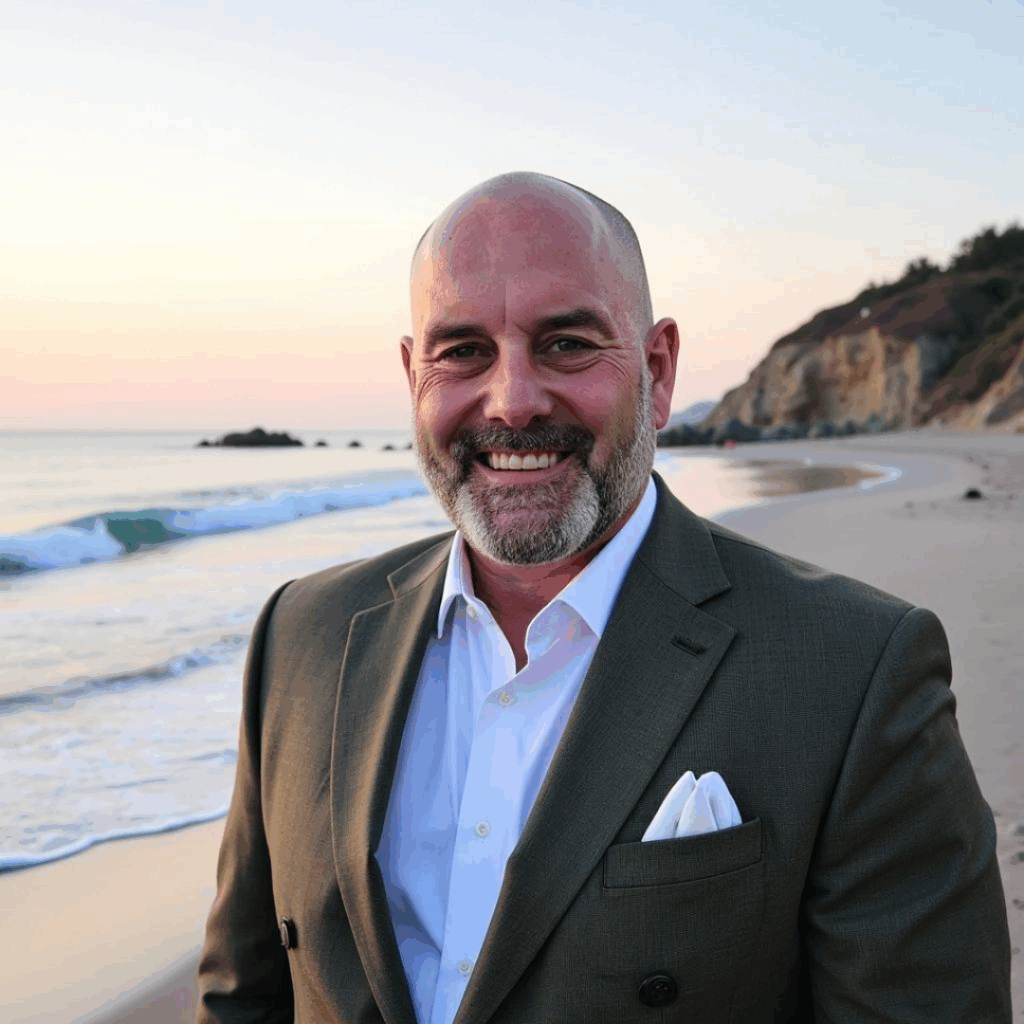
Christopher Mahan covers Teen Parenting Leadership in this Marketer of the Day episode. Christopher S Mahan shows parents how to lead with intention, not just react, so teens feel safer and more capable online. After teen suicides spiked in his Florida county and he lashed out at his 9-year-old over a practice test, he changed course. He names the problem MSP parenting and replaces it with LSP parenting, where you act as the family's CEP. Using business tools, families run a SWOT and root-cause analysis, then map a 20-year plan in five-year stages. For motivation, he teaches priming the mind plus EPP: effort, passion, purpose. Parents prepare for threats like cyberbullying, social media shame, and sextortion, while building soft skills through chores, volunteering, and real conversations.
Christopher S Mahan is a transformational speaker, family coach, and result-driven mentor who has spent over a decade empowering parents, teens, and young adults to break cycles of dysfunction and build thriving, resilient families. As the creator of the “Empowerment to Employment” app, author of “Parental Leadership: Seven Principles to Lead Your Teen in the Digital Age,” and host of the “Lead Your Teen” podcast, Christopher brings deep experience in leadership, parent-child dynamics, and personal development. His work has directly impacted thousands, providing tools and strategies to overcome adversity and find purpose.
In this episode of Marketer of the Day, Christopher joins Robert Plank to share his powerful journey—from recognizing alarming spikes in teen suicides in his Florida county to building a movement around parental leadership and family empowerment. Christopher reveals how his early struggles and career pivots fueled his mission, the challenges of getting essential messages into schools and communities, and the transformation that comes from facing fear, developing soft skills, and putting passion into action. Discussion topics include leadership versus parenting, breaking out of old patterns, the impact of technology on youth, resilience, personal responsibility, and how families can cultivate effort, passion, and purpose (EPP) for real-world results.
Quotes:
“Obstacles aren’t in your way to stop you—they beg the question, how badly do you want it?”
“If the home is broken, society is broken, because what the home puts out is a reflection of that home.”
“Preparation is part of leadership. You have to be ready for the hard work and not look for an easy out.”
Resources:
- Connect with Christopher S Mahan on LinkedIn
- Get Christopher S. Mahan’s book Parental Leadership: Seven Principles to Lead Your Teen in the Digital Age on Amazon
- Explore actionable strategies from Christopher S. Mahan.
Podcast: Play in new window | Download (Duration: 1:07:10 — 92.3MB) | Embed
Subscribe: Apple Podcasts | Spotify | Amazon Music | iHeartRadio | Podchaser | RSS
Transcript
Download transcript (.txt)Christopher S Mahan saw a spike in teen suicides in his county in Florida. But Chris didn't just stay silent. He built a movement. He is a speaker family coach and host of the lead your teen podcast. Chris S Mahan empowers overwhelmed parents to stop managing and start leading their teens with strength, clarity and love. We're here on the marketer of the day podcast with Robert plank. We're brought to you by D FY podcast.com we handle your editing and your promotion so your voice can lead the way. And the leadership we're here to talk about is one of these most important jobs in the world. Doesn't matter if you're man woman parenting right, that next generation raising your kids right, so that way they treat the world and and life better than you have and it's just an upward track. We're here to talk with Chris about maybe the ways that we go wrong as kids and as parents, and how we can better lead our team. So Mr. Christopher S Mahan, glad to see you. How the heck are you?
Thank you so much, Robert. This is awesome. Thank you so much. I do appreciate it. This is amazing. Every time I get a chance to talk about the things that matter to me, I enjoy it, and I know we have only a short time, but I can go for hours and hours. So I absolutely love this, trying to help people, help young people, help families. It's just, I don't even know why sometimes, but I just know that this is what I've been doing now for over a decade, and I can see myself doing it till I can't speak anymore. So absolutely love it. I think it's very, very important that we support our families and our young people, especially, especially in today's crazy world. So everything that you do as well I know you, and I've had a lot of lengthy talks about different things. I appreciate everything you're doing with your son and just helping people like myself get our message out there is greatly, greatly appreciated,
and it's important conversation to have, and it's I struggle with it so much because it can seem cliche or sappy to say these things, like, family is so important, but then I'm always looking to tap into the Mr. Rogers of it all. Not even sure how to explain it, but just that idea of how important it is to care about people, to brighten someone's day, and to overcome the maybe wanting to pace yourself right, because like, like you're even just knowing you right. You're a guy that sometimes you'll chat with someone for half an hour, for an hour, just because that's what the happenstance of life has become but sometimes I think like, Oh man, I've got to get some work and I've got to pay the bills. If I spend an hour talking to Chris, I only have so many of those slots in the day. I can't help 10 people. Can't Help 20 people. So do you ever have these thoughts? Do you ever try to reconcile of saying like, you know you want to help people, have these one on one conversations and talk about the teen parenting and all that, but you say, Well, I only have so much to give, and I'm worried about maybe being a waster of my own time. Do these thoughts ever enter your head?
That's a great question. Years ago, when I was first starting this type of work, because it was not my original career path. This was, this was something just kind of happened. So I think years ago, what I was having was the, you know, the imposter syndrome, you know, the doubt Am I really? Is this really where I should be talking to people? Is this really what I should be doing? And sometimes I would go off on tangents, like I'm known to do. And then sometimes I'd be like, Wow, I really learned something just talking to that person. And other times you'll start talking to somebody out of the blue, like, completely just a random conversational start. And those are the ones that I get the most energized by, because it was just random. And when you can walk away from a conversation just as organic and spontaneously started as anything, and that person walks away and thanks, you just that little bit of information that you gave them, that to me, is worth everything. And I will do those all day, every day, if I can just help people, just on the whim. And years ago, when I was starting this, I was trying almost too hard to help people, and I think they got burned out by my message. So now I had to just kind of, you know, take it back and just let things happen when they happen, but be ready. I think the biggest thing in this type of work is because you're never going to know who you're going to talk to or what their situation is. For me, I like to always be ready. And that just means that if someone says, Hey, I've got a problem with my daughter. Who's cutting, or I have a son who just will not leave his room, or I have a spouse who just does not see eye to eye with me on how we should do something. I love to have those quick conversations and just give people little nuggets to get them to think. And when I do that, I walk away energized. I walk away knowing that I gave them in that 30 seconds, maybe a minute. I gave them years of experience, I gave them hours and hours of research time, all for free. And when I when I see them, walk away feeling a little bit better, a little more energized themselves. As cliche as that sounds, I really do love that, and I know that the hours that I put into doing things and the hours that I've lost with my own kids because of writing books and doing podcasts and doing these things, even though I included as much as I could, I did lose a lot of hours of my own children to make it better for others, and in doing so, the research that I did, I realized that I was a I was a bad dad. I was a bad dad because I did everything like everybody else does. I followed the rules of society, I followed the rules of the schools. I followed the rules of, well, that's how we always did it. We grew up, so you have to it that way. And when my oldest son was nine years old in the third grade, he took what here in Florida that was called an F cat. It was a pre test to go into fourth grade. They took a practice test the second week of third grade. He was nine years old, and he failed it. And instantly, when I found out he failed it, I went back to my own childhood, my own nine year old self, and how horrible school and how hard it was for me, and I cussed him out. I do you want to fail? What's wrong with you? He was nine years old, Robert. And I just, I think of that moment of that man. I was a jerk. So in the book, I talk about all of the things that I did wrong, how I listened to everybody, how I felt like and you know this, you did the voiceover for me. I felt like a car on a track that I couldn't I couldn't steer myself because the track was already set out for me and how I was supposed to do things, and I had to look at myself and listen to what I was saying to my boys, and how I was saying it, and how I was reacting to them, and then realized that this was all my own broken childhood issue coming out on them, and It wasn't fair. So when I started the whole thing, it was just because I love psychology. I got out of the film industry, did that for 25 almost 30 years, went back to school for psychology and discovered that love helping people human behavior. And then it was through that that I discovered that kids in our county here were killing themselves like one to a month, you know, the school year of 2012 2013 2011 we were losing kids one a month. And I just, I was like, wow, this is, you know, my sons are coming up at this time. They were now Middle School. And it scared me as like, what's going to happen with them, so I decided that if you know you're going to make a mark, you need to just put your money where your mouth is and do it. So when this young lady by name of Jessica Laney, took her life a local high school here didn't know her nor family, I decided that I want to do something. So within a month, we'd started crazy eight freedom. Now for those of you know Tony Robbins, you know that he has thing called the crazy eight, and the crazy eight is his way of describing the cycle that people get into. And I love that, so I called it crazy freedom to break the cycle. I thought, Well, does Tony own that? Right? I don't know. So I called his office in California. I talked to his assistant. She said, Nope, we don't own that. You can use it. I think he'd love it. So I named it crazy freedom to help kids get out of this cycle of depression, anxiety, self harm, the bully victim scenario. And in doing so, I did public events. I talked at schools until they kicked me out. I will say that back in 2013 2014 schools did not like you talking about suicide, and I had a really hard time getting my point across to anybody that would listen. It was like, you know, beating your head against a wall. And it was frustrating, you know. So to answer your question again, it was frustrating back then, because no one would listen, and the frustration that I felt to get parents to understand, if you don't do this, you're going to have a kid that is going to go one of two ways, incarceration and. Overdose death, that was pretty much what they were all doing. And that's very grim. It's a very grim reality in a very dark way. Look at things and the more it happened, the more it happened. I just got more consumed with, Why are kids doing this? What is happening to this whole generation where young people think their life isn't worth living to another day, what is driving them to feel so broken that they cannot see the light through the tunnel? And I don't even have the answer for that. I know that at the time, cell phones were coming out, the selfie thing, the craze was coming out, and kids were more apps were coming out. And so the digital world was really, really exploding 1015, years ago. And as that was happening, more and more anxiety, more and more suicide, more and more self harm, more and more bully victims, more and more school shootings, all these things were adding up. And I was like, What in the world's going on? And I couldn't get anybody, anybody to listen to me. So I started what is now the book that you helped with, as a rant on Facebook every time something happened, like, This is wrong. And so I came up with the idea of parental leadership. After going to a morning breakfast business, talk to talk about parental leadership, and I got basically run out of the room. I had gotten run out of the room because the parents there and the business owners there said, our kids go to this high school. Nothing like that ever happens at our high school. And this was in February 2014 in April 2014 a young man from that very high school that they were bragging about took his life. I thought, Wow, if I could just be a fly on the wall. Because I tried to warn them, I tried to tell them, but that was the more affluent school, not the poor kids, not this, not that. I was like, Oh my gosh, there's no there's no boundary for this. There's no socio economic boundary. There's no this house or that house, or who drives a Mercedes, who drives this? That doesn't matter when it comes to kids emotional distress. So with all this going on, I kept pushing, and I was ostracized. I was no longer allowed in schools. I was no longer longer allowed talk at community events, because I was bringing the dark message. I was that grim reaper guy in the more the things happened. I kept doing more rants and more rants on Facebook, and I created a blog back in the day on one of those blog sites.
And all of that is what accumulated into the book that you helped with. This one. You know, this is the book that that is 10 years plus in the making, and I sense I've worked with over 1000 young people taught over now, over 7000 hours of my workshops, and all of that information came from those early days of just a frustration. So now, when I can help somebody for just a minute or 30 seconds, it is absolutely great. I mean, I never done drugs in my life, but I get this euphoric feeling like, Wow, maybe I helped them make a turn, maybe help them see a different angle of how they talk to their kid, or how they can help them, you know, go after this goal, what they can do. And that happened just the other day. I was on the phone with my bank because my my card had apparently been, apparently hacked, and I was talking with Lady, and I made a joke about getting a royalty check from the book and someone go buy a coffee, and we're joking. And she said, Would you write? So I told her, and she went on Amazon as we were talking, and she said, Well, I have two kids. I have an autistic son who's nine, and a daughter who's seven, who is not autistic, and it is just it's hell, because I'm trying to do things for him, and she sees me new things for him, and then she gets upset and misbehaves because she thinks I'm favoring him too much, and so I literally gave her a 45 minute talk while we were on this, this bank call. And it was funny, because her supervisor heard in the background, they were like, Why are you still talking to this person? What's going on? So she had to quickly say, Oh, thank you for, you know, talking to so and so bank and have a nice day. It's kind of funny, but she bought the book, and she's like, I'm gonna do a review. Here's my name. You see it? It's me. I got off the phone, and it wasn't even that I sold a book. It was the fact that I took this mom who had this, this problem with her autistic nine year old son and her non autistic seven year old and the conflicts that were happening and how. I was able to give her some hope and help her make some changes, to help her talk to her husband a certain way, because it was causing stress between the two of them as well and how they handled things. Those are the moments that I look back and go, Man Who would have thought 10 years ago, I'd still be doing this. I'd have a book on it, a podcast, 100 episodes, and now I am back in the school, speaking, and I'm working with local library, and I'm doing things with them, and you know, here with you, this is like an amazing thing. So I do love what I do, and I do love helping people get through that, that dark time in their family, because there is no other greater relationship than the parent child relationship. There just isn't. And I tell people all the time, if the home is broken, society is broken, because what the home puts out in society is a reflection of that home. And if all this craziness we see in Chicago and Detroit and not even just the big cities, but in small towns. You know, things are happening all over the place. What are we putting out into the world? If our homes are this dysfunctional, I'm not supposed to use that word. According to a a counselor friend of mine, we're supposed to use the word challenge, but I say dysfunctional. If this is what we're doing, how can we expect our young people to be successful? How can we expect our workforce to be successful? How can we not expect to see more and more craziness on Tiktok and more school shootings and all this negative stuff? Because what we're putting out in the world starts in the home, in the living room. And that was the message I tried to tell people years and years ago, and again, I was like the negative Nancy. I was the guy that just didn't see anything positive. And that wasn't the case at all. It was just I knew that if we don't do this because of human behavior in the way the brain gets conditioned and what happens in the way I was as a dad, I was conditioned to believe that the site did things, it's never going to get better. We have to stop it, and it starts with parental leadership 100% so that's my rant.
Yeah, I can see why. I can see with the with the storytelling and the speaking and the podcasting and the Facebook posts, how that could lead to you getting your message figured out and like, you have to wonder if the the harshness, the meanness, it probably did, serve humankind well for millions of years, right? The weakest die off. And if you're the loudest and the bully like, of course, that made sense during medieval times and caveman times and all that. But now, now that we're living in a more of a civilization, it's like, well, that that stuff backfires, but I imagine that it's like built in human programming. And like, you give me all these flashbacks. So, like, I just have the one kid, one and done. He's five year old. Five years old. He's autistic. But, like, it took a good, like, two years to override so much programming, right? Like, the kid cries and you, you want to shout at him, you want to say, Oh well, crying, I'll do anything you want. Like, it's, it's my, my biology, and then you have to, just like, see a better way that it's done, and kind of, like, use so much logic, right, so many layers, and so much of, like, months, years of like, reconditioning yourself, and it's so much work just to not repeat the same mistakes that your parents and their parents did of just like the the chain of streaming, basically, right, and just to figure out a better way. And it just seems like all these things, all these these ills of the world that you're talking about, it seems like if we don't manually override and have a plan and say, Well, I'm going to, like, push towards optimism and being organized. If you don't have that, then all the bad gets in, right? The debt, the addiction, the anger, the screens, the school shooting. It, it seems like, in a way, it's, it's all in kind of the same category, right? Of just the the negative space and all just that the muck that kind of soaks in if you don't counter it yourself. And so I know that this book is called parental leadership, seven principles to lead your team in the digital age. And what you're making me realize is that there were all these many years of like being a business owner, and I never delegated. I never hired anyone else to do work. I thought all the usual stuff, right? I can do it better. I can do it faster. I wouldn't be able to explain it. And then, as I had my one child, I realized, like, oh, you know, he needs to learn how to take the garbage out. Had to put the roll of toilet paper on the wall. And at the same time, I feel like I solved that problem in my head. And I also, at the same time said, you know, I can't do it all in myself and my business. I have to be a leader in that aspect too. So it was like one solution solved another solution. And it's a great message. And so can you tell us about I mean, we went, we've been chatting, and the time flew by. But what is different? What stands out about this book? What got the Wells Fargo lady to go and rush and buy it? What's so great about it?
I think when you know after that young boy in 2014 the last one that I was talking about, took his life, I had to figure out a way to get people to see it in a bigger picture. And being a business person, I only knew business, so I thought, you know, having children is like having a product, right? If I'm going to sell this pen, I need to market it and find people that want to buy it, things like that. And if I can't sell it, I'm going to go out of business. Okay? I'll start something else. No big deal. But if this pen represents my child, and I don't think about all the things that can affect his life, all the threats, all the things out there, just like in a business so in the book, I have a SWOT analysis. We talk about, well, why is that important? A root cause analysis, why is that important, a business plan. I actually came up with the business plan idea back in 2014 and there was a dad I was talking to. He was like, wow, the kids are in business. That's ridiculous, I said, But wait a minute, when your child is zero to five, they go into the system, they go into school of some kind. Then when they go to the school, that's when you kind of lose some control. If your kid is not prepared for that, they're going to tell you, Oh, they got to go on these meds, or they got to go in this program. They got to do this. You don't have any more control over it. If you at age three or four, realized my son, my daughter, is having issues in this area, let me empower myself and get them prepared. Maybe school won't be as hard for them, but so many parents just put their kid in school, put them on a bus, and think the school's gonna take everything. That's not the case. We have to again, just like back in the 80s, with computers, garbage and garbage out if we're putting bad things out in the world, or get bad things back, if we're putting good things out in the world, we'll get a much better, higher result than what we would have done nothing. And for most parents, they just put their kids out in the world and hope that somebody else takes care of it and fixes it. If they don't like it, they fight about it, and that's when all these issues start. So what I had to come up with was a way to align parenting with a business model that people could grasp. Everyone's worked for a company, or people have either started a company, but in either case, you know what it's like to have a boss or customers yelling at you that you're trying to appease and trying to communicate with and trying to make happy, and you have an end goal, which is to get paid, and for parents, is to make sure your kids are happy and secure. So I had to put all these parallels together to allow people to read this and go, Okay, it's a weird concept, but it clicks. If I'm at a job that I don't like and I'm getting belittled and it's toxic and people are yelling at me not respecting I'm gonna quit. I'm gonna go look for something else that's human nature. A child cannot do that. They are in that home, they're in that toxicity, they are in that dysfunction, they are in that abuse, and they cannot leave. That's not fair. If we as adults have a problem, we know how to communicate it. Hopefully, we know that our vocabulary is to describe this feeling, to this emotion, or whatever it is. But young people don't have that. They don't have the world knowledge, they don't have the vocabulary, they don't have the experience. So in their mind, they create a story around that to process it. If a business did that and they said, Hey, we're just gonna, you know, not think about anything, because we don't understand that you're going to go bankrupt, and then, okay, fine, we'll start all over. But again, a kid can't do that. A kid takes this story to understand something, and they process it in a way that they can justify the actions in their mind. And again, to quote Tony Robbins, he had a thing called the safe life story, and I used to watch these videos of him, that is the most amazing thing. So he gets quoted in here immensely with so much stuff, because his work really got me into doing what I'm doing. I respect his work, and he does like, if I could ever meet him, I'd probably, you know, like, wow, I've worked a lot of actors and a lot of people, but he's someone that I just admire because of the things that he's done to help so many millions of people with so many simple mind shifts, just little thought patterns that change. I thought, if I get parents to do that and think about in a business sense and apply it to the. Children, their family, the outcome of their family. You know, you got 20 years, essentially, to take this, this small child in groups of years of five. It's break out my my business plan, and develop them. I don't use the word raise, because that's to me. It's more like what you do with animals and crops. I develop so at each stage, you develop your children like you just said a second ago, I had teach them how to, you know, do laundry or do this. You're developing him at an age appropriate level so that the next stage, he's got that under control. Now we can go on to riding a bike or maybe doing this, or maybe getting a job, and then when that's under control. Now we can think about moving out one day, you're developing them along the way, just like you would a business. If you never thought about your business a year from now, or two or three years from now, you wouldn't be preparing yourself for growth or problems or the economy, whatever it is that we have to deal with, with business, with parents, the same thing if you're not thinking about what's happening. I read a story the other day about sextortion. A lot of parents today have no idea what sextortion is, and the suicide rate associated with young boys with sextortion is incredible. So I'm gonna do a whole podcast on that. Well, these parents were interviewed, and they're like, We don't know what that is. We have no idea what it means. Idea what it means. So I did some research on it, and most parents have no idea, or they think that it's only going to be girls that are affected by this. No, no. Boys are affected by a lot more than what we think in society, but we don't talk about it because it's taboo. These are the things that I talk about with parents when you when you do your SWOT analysis, what are our weaknesses? Okay, what are our threats? Is there a crazy guy down the street? Is there? Are we gone too much during the day? They're by themselves, like, what? What do we have to be ready for? What's our school like? Is the school getting worse? Is the neighborhood getting worse? Is you know what's happening? Do we allow them online at age 10, or we wait till they're 16? If so, what do we do? What these are all the things that parents aren't thinking about, usually, until it's too late, when there's been a problem or something's happened, then they try and go back and retrofit it, if you will, to fix it to make it okay. How can we make this happen. Preparation is also part of leadership. You had to be prepared for the worst, and parents don't always want to do that because it's hard. Or I did this my way as a kid. You did this your way as a kid, as you know the wife and where do you meet in the middle? So again, just like business partners. You have to, you have to communicate what's good for me is good for you and vice versa. Or, you know, I talked about this in the book, you know, how do you negotiate so that you both have a win win for each other, ultimately, then for your children? So all of this stuff is, it's a lot, if you just talk about it here in 30 minutes, but I tried to put it in the book in a way that was easily digestible, so that you can break it off. And there's little there's little assignments in there, different things, because I want parents to be empowered. If they're empowered, their kids can be empowered, and that's the biggest thing. Children today, teenagers today, young adults today, do not feel empowered, and that's why they're so scared and afraid to move forward. And it's absolutely frightening what's happening, and we're seeing in the workplace, we're seeing in society, we're seeing it all over, and it has to stop, and it stops with parents being leaders in the home.
Very nice. Well, it's a fun concept, and you're giving me such a flashback to probably 2013 I saw William Shatner at a marketing conference you talk about, you know, like celebrities that you wish you'd meet. And like William Shatner, he had a, I guess it was a podcast, but it was like a YouTube show. It was like when all this stuff was super early, and he had, he had a show called, like, brown bag wine tasting. Have you ever heard about this? I have not, and so, and it's just it was, like, so silly, like, he'd sit down with like Lou Ferrigno, or he'd go to some like, flower shop owner in Santa Monica, and they just, like, they drink a bottle of wine in a brown bag, and they would, and they would say, like, what it meant to them, right? And Luke fra would be like, I feel like I could, I could lift 400 pounds. And it would just be like, it's kind of taking a thing, you know, and transferring it to some other aspect, right? Kind of like making an analogy that. So that way you can, kind of like, bridge that leap, and so similarly, you're saying, Well, hey, here's this thing we all know, like the workplace and SWOT analysis and all these and like, and also this kind of component of, if you work a job or your business owner, you have to do the hard work, right? You're always doing things that I have to get out of bed and do this. Yes, you do and you do it because otherwise there's consequences. And so it's like, just a funny and then at the end, they'd like, take the. The bag off and see what the bottle was on the wine. But I thought, like, What a cute concept, because the conversation with Lou Ferrigno versus the flower shop lady should say, Oh, well, this, this reminds me of the orchids I grow in my backyard. And so it's just like, you meet people where they're at, and it's fun to play with the ideas and with the podcasting. There's the storytelling and something that I really like about your book, which, like, I'll be using it forever in all my books moving forward, is you say, like, here's this concept, right, the SWOT analysis or the timeline, and you'll bring in like stories or quotes from your own podcast to like, kind of enhance it. And it's like everyone should do that, right? Everyone who has a book, a message, a mission, like you, something to say, like, bring in the sprinkles of other people, because it's not just about you, right? It's like the things that you learn from Tony Robbins, or the guests that you have, or the stories of the kids when the school shootings, like it all kinds of interconnects in a messy way, but that can be fun, right? Like, how boring would life be if it's all just nice and tidy? We have to sometimes embrace the silliness, the messiness, and we can do that with some of these resources you have, right? There's this book parental leadership, seven principles to lead your teen in a digital age, and you also have the lead your team podcast, and you also have these new apps, is my understanding, but we're like you said, we're trying to pack so much into a short podcast. I want to make sure that we focus on what's important to you. So as we're approaching the end of our conversation here, what do you think is the missing question? What do you think I should be asking you? I just don't know to ask you,
I would say,
Why are parents so afraid?
Why are parents so afraid to be a leader, to their kid and break out of that societal box. You know, there's so many parenting ideas today, from Tiger parenting to eggshell parenting to gentle parenting. There's just, it's like, every week there's a new one.
And I think parents are looking for an easy out, and there isn't one,
you know, we decided to have a child, another life, and we decided to give it everything we could. But at some point, like you said, it gets messy and it gets hard. And just like in business, same thing gets messy, it gets hard. And we have, you know, a global pandemic. Well, there's that we have, you know, the economic shutdown of 2008 there's that it gets messy, it gets hard. And in 911 when 911 was happening, my my ex wife was eight and a half months pregnant with my first son, and I was freaking out, you know, we just had two towers hit. Then we got into Word that the the in Pennsylvania had been hit. I called my dad down here in Florida, I was in it as in North Carolina. And I was like, Dad, was he? What am I doing, bringing a kid in this world like, look what's happening, like, what's happening? And my dad, very calmly, just said, Every generation has a 911 What are you talking about? He said every mine was the Great Depression. Then there was World War Two. Then we had Vietnam. Then we had, you know, the the, you know, Reagan attempted assassination. Then we had, there's always something that every generation has to deal with. He goes, this is yours, and it's going to change the world. It changed our country. It's going to change a lot of things, but not wanting to have a child because of the fear
isn't the answer.
Have that son, we knew it was a boy, and bring him up to be the best that you can make. And maybe we won't have him in 911, or another Great Depression. You know, if every parent believed that that it was someone else's responsibility, then it's just going to never end. So my dad was not the most poetic guy. He wasn't the most out there vocal guy, but when he spoke,
he spoke volumes,
and I've never forgotten that from him. It's like just, you know, do what you have to do to make your son the very best he can be, so that we won't have more problems. And it it somewhat calmed me, because I knew my dad understood my fear. When I was growing up, he said it was Vietnam. It was, you know, the oil crisis of the 70s. There's always something the economy was terrible. But as a kid, I didn't know that. I didn't know it was terrible, you know, because he didn't allow me to see it. Yeah, we dealt with it. And so when Liam was born, I decided, Okay, I'm gonna do the best I can. But again, it took some time to understand. And then we had Keegan. And both those boys now are Marines and doing great. I'm very, very proud of them. And had I not had another child, or neither one at all. I wouldn't have all the messiness. I wouldn't have the writings on the wall and the spilled, you know, paint on the floor and but I also wouldn't have the joy of a Marine Corps graduation. I wouldn't have the joy of knowing that my son called me today asking, Hey, I want to buy this car. What do you think? You know? Just that, that that camaraderie, that that connection, because I would have been scared. So I want parents to just ask the question, you know, what are you afraid of? Don't be afraid. You're going to get messy. It's going to get hurtful, but you can do it. You have to be the leader, and you have to be the ones they turn to, because ultimately, kids want leadership. They want you to be that person. They may not say it at the time, but they do. And I promise you that if you are a leader versus a friend, and a leader versus a manager, which is the opposite to my in my book, and you are there for them. When it feels like the end of the world, you will come out of it, and you will all be much better for it. And I think if my dad was alive right now seeing this, he would say, Yep, it turned out pretty well. So that's what I would say to parents.
Very nice, that term leader, there's so much built into it, isn't there? You think of someone's a leader versus a manager, which is maybe like rigid and thrown into it, versus a friend, which is maybe like accidental, right? Like, do you really choose your friends, or do you just end up like sitting next to that person in school one day versus a leader. It seems like there's more of the nuance and the preparedness that you were mentioning at the beginning of our conversation, right where you know these things and you have stuff to say, but if you kind of, you know, have it in reserve, and if someone comes you and say, Hey, here's my problem, you're like, hey, you know, here's what I have to say about that I'm not forcing my thoughts or my agenda on you. It's like you asked me, and I'm like, Hey, I've seen this situation, and because you cracked the door, you let me in a little bit. Then here's my way of helping you, and not necessarily solving your problem for you, but helping you solve the problem. So that way that ripple effect that we've been discussing can then continue out there, right, like you got your son and he's in the Marines and now he's he's leading others. Now he's helping others. So by helping you warrant overly controlling, you didn't hold him back. And it's just a great message and a lot to think about. And it seems like that comes up a lot in the self help, personal development, this idea of everything you want to the other on the other side of fear, As Ralph Waldo Emerson says, or they say things like, don't wish it was easier. Wish you were better, or that ships are safe in the harbor, but that's not what ships are for. So you have to get out there and accomplish themselves, even though there is difficulty built in. And if someone says, Man, this guy, Christopher S Mahan, he's really made me think about just all these different issues. And we want to avoid some of the these problems in the world, like parental leadership, attention deficient disorder, which you discuss in your book, and family dysfunction and denial. We instead want to be great leaders. What are some resources? What are some next steps, as far as book, podcast, apps, etc?
Well, the things I look at the most are, I just scour the internet and see what's out there, and then if it's something that you know catches my eye, I'll research that and see how valid it is, or if it's kind of, honestly, a lot of things that I've read, all these different things from psychologists and PhDs, I'm thinking, man, yeah, why am I not there yet? This is exactly what I've been saying for 10 years. But I'm not a PhD. So maybe that's why I don't know. But resources, there are resources everywhere. You can type in anything on AI, you can type anything on YouTube. You can type anything, anything that is concerning you, if it's self harm, if it's internet knowledge, if it's how do I get my kid motivated? You know, one of the things that there was a thing the other day about motivation, and I read it, and I was like, that's just like mine. In my book, I call it priming the mind. This PhD was talking about how you got to inspire your kids and spark them. I was like, that's exactly what I'm talking about. You know, I have something called. EPP, effort, passion, purpose, and as a parent, it's our job to prime our children's minds, and what I mean by that is they have great potential, but if we don't give them something to spark that potential, their imagination, their thought process, that's going to sit there dormant, it's not gonna do anything. So I talk about priming the mind and how we do that, but then also it's effort, passion, purpose. EPP, and if you don't make 100% effort in something, then again, this goes back to business. If you don't make 100% effort to make your business successful, it'll fail if you don't have a purpose for it or a passion for it. One of the great shows I talk about in this book is Bar Rescue. I loved all those shows because in Bar Rescue, you think they're going to go fix a bar, but in reality, what they're fixing is the staff, the mindset, the behavior. Because everything was great at the beginning, everybody's making money, it's wonderful. And then something falls off and the kitchen goes bad, or the management goes bad, or someone quit, or so then the passion goes away, and the purpose goes away, and by the end of it, by the time the guy comes in to fix it, the place is about bankrupt, so they have to, in one show, which I think is always kind of funny, talk to the people. They don't, they don't go and fix the menu until the very end. That's the least of it. They're they're talking to the people, to figure out what was your effort level when you first opened? Oh, here, every day is great. What was your passion for why you do this? What was your purpose for doing this? And where have you lost it? Where? Where did that go away? So when it comes to our kids, we have to help them see the imagination of what they can do. I talked to a young boy did for this podcast, and he wants to be a TSA agent, but he's got a learning disability, and he know how to ask for an accommodation. He knows about the ADA, so I'm giving him this information so that when he's ready to try to go with the TSA when he graduates high school, he'll know how to ask for an accommodation. He'll know what the ADA is. He'll know that there are certain things laws to protect him and help him. Parents need to also understand that there's resources everywhere to help you get to the next level so you can help your children be the best that they can be and to live up their full potential. Resources are just everywhere. The problem is, how do you figure out what's going to work best for your family? That's where the work comes in. You can't just read something go we're going to try this. That's like trying to diet, but not doing the exercise or trying a new exercise, but not, you know, stopping a bad habit like drinking or sleeping in too late, whatever it is, you have to make all the changes. That's the hard work. In the book I talk about that. It's like, this is what you have to do. It's not just going to happen. You have to put in the effort. If you're obese and you want to run a marathon, you have to change your behavior, change your habits, and create a new, more positive way to do things so you can achieve that goal. For parents, it's the same thing with their kids, what regardless of what the situation is, you know, like I talked to mom the day with the bank call, her youngest daughter was now acting up because she was seeing the mom favoring the Son, and they were calling the son special. So the daughter, then, at five years old, thought that she wasn't special, and she was just, you know, going crazy. And before the mom could even tell me what was happening, I said, Can I tell you what I think might be happening between little sibling rivalry, rivalry? So I told her what I thought was probably happening. She's like, Oh my gosh. I feel like you were in our house actually seeing this. And I said, Now let me ask you this, when this was happening, how did the relationship between your husband change? Because there's a ripple effect. You have to put in the work because it affects every single aspect of your home, and that's what people need to understand there's lots information, but figure out what works best for you and how you can implement it to make it work for your family. I can't tell you what to do. It won't work. You have to feel it innately. Figure out, yep, this is good, that's good. I can adjust things. I can, you know, move it around. But just getting started and trying, that's the effort. What is your passion? I want my I want to have a great family. What's your purpose? I don't want my kids to fail, and I don't want to feel like a
failure as a parent. EPP, effort, passion, purpose.
And I stress that in the book, I stress it every day when I talk to people, regardless of where I am, my boys, when they joined the Marine Corps, I said, Why? Why you joined the Marine Corps? One wanted to feel like he could lead people and be in charge, not in a bad way. But he didn't want to feel like if something happened that he couldn't step up. The other one wanted. He wanted some purpose. He wanted to figure out, you know, what am I doing my life? So I told him about effort, passion, purpose. And I'll tell you, you go to boot camp, you put in a lot of effort. Oh, yeah. And, you know, it's, it works. It works. Those three things, effort, passion, purpose, know what they are. Do it 100% and you may not get the result that you were thinking right away. It's probably higher than if you didn't put in the effort, but you have to know what's important to you and what's going to work for your family. So I hope that answered your question, but that's you know this, just people have to find the resources and figure out works for them and then put it to work for them.
Of course, it's an underrated skill that your passion and your purpose and the discipline and knowing the price to be paid and actually like putting in the effort. I mean, it can't be a coincidence that the military puts boot camp first, right? And there's been so many situations in my life when there's a struggle, there's difficulty. And I tell myself, like, this is kind of the test to see if I really want it right, just to see if it's something that I actually like, am I? Am I deserving of this? And I'm sorry, there we go. But like, it's like, in parenting, you know, sometimes things are hard, and it's like, well, you know, what am I going to just give up? Well, that's not an option, so I need to solve this problem and have that curiosity. And you know, you would have thought that when Google became a thing and you could just type in any search, you would have thought we'd all be geniuses, we'd all be millionaires, but still stuck with those same human problems. Then, 20 plus years later, chat GBT comes out. Cool now I can just research anything. Why aren't we all just living in mansions? Because you still have to do the work. You can give you limitless ideas, but unless you actually put that into action, then it's worthless. So make it worth something and and so we mentioned about these resources, like you have like, an app or two coming out. Is that correct?
Yeah, I'm actually so I've been teaching classes for vocational rehab in the state of Florida since 2017 and I work with kids 14 to 2221 and then prior to that, I was in a job, a federal job program, the youth program for what was 1824, year olds. And I took all that information that I had gleaned from that time and what I'm still doing now with the the vocational rehab kids, and I discovered that although a lot of kids could benefit from these classes if they're not in vocational rehab, and they have an IEP, they don't qualify. So what I'm doing now is I'm taking all of my my curriculum in my information, of all the literally, you know, 1000 plus kids I've worked with and the hours I put this together, and we're building it right now. It's an app that is age it's like 13 to 1717, to 19. I think 19 to 22 and then I think 22 to 24 something like that. So it's broken up again by age group. So if you have a older child and a younger child, or whatever it is, there's sections in there the app, the same app can help you. And then, because I work with so many kids with autism whatnot, there's a whole other section on that app that is geared just for kids that have an IEP, or maybe autistic or whatever, on Spectrum, because they have different needs. They have the same wants, but they have a different learning style. They have a different way of doing it. Their attention span is different. So on the app, like this mom that I talked about the bank, her son was autistic and her daughter was not, and I told her about the app, although their kids were young for this, it was perfect, because she was like, so I can get this app and they can both learn on it. I said, yeah, and there's things there for the parents too. It's not just for the kids. It's a whole family. I don't but when people would tell me, fix my kid, used to annoy me to death. So I do team coaching. Parents say, fix my kid. Make something wrong with my kid. So there's nothing wrong with your your son or daughter. They're not a machine. You can't replace a part and make them better. That's not how that works. And if you're having an issue with your child, there's something going on further upstream, which is you right? It's the parents. It's how you run your household. So I would first thing before I take any client, say, I have to talk to the whole family. This is a whole family thing. And then from there, I'd figure out what the dynamic is. So on the app, it's the same thing. I want the parents to be involved in this app, whether it's in the learning whether it's in watching the videos. So there's videos on the app, there's learning modules, there's quizzes, so they can kind of pass different things. I'm thinking about as much they don't like doing little tokens, rewards. I'm thinking about doing like, once they pass into one area to the next, maybe like a certificate, or something like, you know, you. Did well to kind of show they actually achieve something. So the app is being developed. I have the full curriculum, everything's going and what I'm doing right now is, I'm talking a lot of parents in autistic groups and different things. What's important to you, what scares you, what what would you like to see? And again, I don't have a child's autistic, so I don't know what that's all about, but I work with them, and I hear the parents concerns, and I see their concerns. I talk to the kids, and the kids give me their concerns, and they they don't like being different, they don't like feeling a certain way. So I'm trying to create this app to give them all empowerment. Because again, when the families, when the parents are happy, the kids are happy, the kids are happy the parents, it's symbiotic. It has to work together. So I can't just say here's an app for kids. Okay, that doesn't work. It's a family app, and because it's broken down by age groups, you could have a range of kids in your family. I'm actually working with, I'm talking to a foster care Group here in Tampa to have them on because foster kids that are aged out of foster care have zero skills, social skills, job skills. They just at 18. They're out the door. So I'm doing a whole section on there for kids in that population that maybe they're 18 years old, but they act like they're 13 because they've never been shown anything. So how do we then address their issues? They're maybe not autistic, but they don't have the developmental skills to be ready to be 18 out in the world. So I'm working with them as well. It's called Matty's movement. It's a great group. We haven't finalized anything with their organization yet in terms of the legalities, but we talked a few weeks ago, and they were all for it. And even if they at some point at the end say, hey, we just, you know, whatever we can do it. I'm still going to include that information for that population as well. Kids are coming out of foster care. There's just 10s of 1000s of kids in that population, and they've been in their whole life, and then at one point, society says, Okay, you're you're on your own, do your thing, and they end up on the street. They end up in some bad situation. It's not fair to them. So the app is, it's a very grueling task right now, because there is so much going into it. It's far more grueling than writing a book. But I want to make sure that when when people get on it, it gives them not just the information they need, but it gives them that spark. It gives them that, that idea, it gives them that thing, oh, I can do this, and that's all it was. Why was I so afraid of and then they can take that on to next level, so that when they're 2223 not looking for a job in the workforce, they can get out of that stigma that, oh, you're a young person. I don't wanna hire you because you know you on your phone too much, or you're not no work ethic, or you're not this, or that. They will have the mental skills, maybe not the job skills, but they'll have the soft skills to be able to get that job, the hardest skills they can learn. The soft skills is what so many employers want, and so many young people today have no idea how to be a good leader, how to be a good team player, how to communicate. So, so soft skills that we have to teach all of our kids, parents can work on those. That's something that's very, very important, soft skills. So that's and it's
all, it's all connected anyway, right? So there's, yeah, if the kids don't have the soft skills, then there's something else upstream that
needs to be fixed as well. Yeah,
because soft skills are the number one thing that employers want, but it's also what society needs. You look at these kids are out of control. Those aren't soft skills. That's just misbehavior, and that's just, you know, complete lunacy. Soft skills are things like, how well do you deal with people? How do you communicate? Are you a good person? Are you good listener? Do you have compassion? You know, the one thing that people annoy me with in this world, they say, oh, there's a you know, you just respected me. It's like now, I have to know you first. You don't even know the definition of respect. What we do have is a compassion and kindness problem. No one is nice to anybody anymore. You know, we're all trying to one up each other. I don't understand that that's all ages. That's everywhere. We see it all the time, and our kids see that, and people glorify that type of behavior, and it gets them in trouble. So the worst show on TV is teen mom. When that first came out, I could have kicked my television because they're glorifying teen pregnancy. And for the girl that is not television is pregnant, her life is gonna be a whole lot different than the girl from West Virginia who's on, you know, Teen Mom. And it's very harmful those types of shows, because, to me, they are glorifying that, you know, teen pregnancy life, it is not easy. Not fun. I've dealt with hundreds of girls in that situation, and trust me, no young girl wants to be in that situation. It's not fun. It's not fun, of course, but
it seems like what you've done is you set a better example, right? They say, don't tilt at windmills. Don't shake your fist at the clouds in the sky. And if that 911 or the Vietnam or whatever, that the huge event that's outside of your control does happen, it's like, well, can you do something better on your own side, kind of like you said, Well, I had this this message to say, I had this mission, and the schools kept kicking me out, but I kept on broadcasting until I found what my fit is and you are unapologetic about it, right? You're like, hey, this here's this problem still not solved. Here are some possibilities, some techniques to solve it. And so this amazing app that you have coming out, does it have a name, or is there a place where we will be able to find it?
Right now I'm just calling empowerment to employment. I've used that line from my workshops for many, many years, empowerment to employment. And I think that encompasses so much, whether it's personal empowerment, hopefully, to get them a job, but we cover so many things on this app, from just not just job skills, it's just life skills, how to get up every day, feel good about yourself, how to measure your self worth, how to communicate with each other. There's so many things. Of course, a lot of it's in this book. So a lot of the curriculum is probably going to be this book broken down. Because, you know, a lot of what I talk about is in this book, but, you know, it's just empowerment to employment has been something that I've used for, oh my gosh, probably nine years, because I couldn't think of any other cool name that would really encompass what I do and why I do it. It's not just employment. Class, there's so much more to that. It's not just a Why do you feel bad? Class, there's so much more to that. So empowerment to employment will be the app, and I'm looking at launching that probably in April. I'm building another app right now, a nonpartisan political app, which will be out in January for 2026, midterms. So that one's kind of taking the the immediate forefront while this one's being developed, to the curriculum and entrepreneurship. That's another thing I talk about with parents. Teach your kids how to start a business, mowing lawns, you know, picking weeds, I don't care. Teach them the value of $1 get them out to volunteer, teach them the how to be compassionate towards other people, to be kind to other people. And, you know, just, just so important to get your kids out there and interacting with people instead of the the laptop and the computer, because the digital age is just it's taken over and it needs to stop. We need to get back to our roots as humans.
Yes. Do we wish we? Did we say I wish my kids spent more time on their tablet? Do I wish they watched more TV, did more drugs? Well, heck no, what do I wish that they did more volunteering? That I wish that they they learned the value of the dollar. Well, of course we do. And so we want to have that next generation be better off than us. And so as far as like finding out, keeping up to date with you, and when this app comes out, etc, what's the website? Where should we go?
They can go to Christopher S Mahan and powers.com there's always updates going on. There's been more coming out, because things are changing with me. So Christopher S Mahan, M, a H, a n empowers.com or on Spotify. Lead your team is the podcast. I've got 100 episodes on there. I haven't done much lately because I've been doing everything else with these, the book and everything. But I'm getting back into that, and you can go back a couple years. There's so many topics and things and and there's stuff with just me. Me with other people. Everything is on Spotify and super easy to find. Lead your team, very easy and download it. I'd love to have everybody download it. Take a listen. I do talk about my personal life. My dad passed away. I did some stuff with that. I'm very candid on that podcast. I think it's, it's kind of cathartic, because how can you say the word right now? It helps me get through a lot of things, too. And I think talking into a microphone is much easier, and talking to a person sometimes, but knowing that people can hear your your deepest secrets and desires and fears, if they can learn from that or relate to it, then I'm all about it. I I'm an open book. No pun intended, but because I think we need to do that, people need to understand they're not the only one feeling a certain way or afraid of something and how they overcame it, or, you know, I don't have the answers for everything. I just I tell people how I'm feeling and what I'm dealing with or what I've experienced, and if they can relate to that, fantastic. If there's something they want to share, I give them my email. My email is lead your team@gmail.com I'm always open to ideas. Is discussions, podcast ideas. Lead your team@gmail.com. Is the number one way to get to me. And, you know, it's just, I want, I want to start a community. I want people to reach out and let's start a dialog. You know, this is a great thing. These podcasts are great. That's our dialog. Yes, we need to get back to that as society. We've just shut ourselves out and shut other people out, and we are not designed that way as human beings. We are not isolated creatures. We are social creatures. And when we are isolated, we feel weird, we get depressed. We feel anxious. I think that's what's happened to young people, because they have isolated themselves behind the keyboard, behind the digital screen, and we need to get them out and talking to people and volunteering and seeing that they can do things without the fear of ridicule or judgment. That's like a big thing for kids on where it comes from, but that is one of their biggest fears, is, what if I make a mistake? Well, we all make mistakes, trust me, I've made plenty, made plenty more, but life goes on, right? That's the thing we have to teach our kids. Life goes on, and that's probably the biggest message, is, you're gonna mess up. We're gonna screw up, but life goes on, and just keep trying, make that effort, find your passion, live your purpose, and you'll be fine.
Very nice, very great. Well, you figure like, what would happen if you were a prisoner of war, or if you're if you're in jail and you really mess up, what would they do? They'd isolate you, right? They put you in solitary confinement. That's like the biggest torture there is. And then you combine that with the with the kids these days, it still blows my mind that this generation, they didn't know what pre internet was like, right? They didn't know about checking the newspaper for the time your favorite show was on, or calling the phone number for movie times going to Blockbuster it was all just digital. And so you have to wonder, with the group texts and the digital footprint, it's all just this permanent record. It's this surveillance state. So I do have a lot, not a lot, but some understanding of them thinking like, if I, if I do the one, one thing, it's, it's gone viral, right? It's on the internet. There's the sextortion. So it's quite a scary world for those kids to navigate with the group chats and the cyber bullying, and who knows what's coming down the pike. As far as the future of all that, I'm sure it'll be even more to navigate. But we need to be educating of ourselves and to learn these things and just to communicate as you're saying. And we've been speaking with Mr. Christopher S Mahan, he speaks to parents, teens, young adults, job seekers, and he delivers impactful, inspiring talks that leave a lasting impression. He's got this blend of personal experience humor and actionable advice that makes him a sought after speaker for events focused on leadership, career development and personal growth. And we said that email address is lead your team@gmail.com correct. It's lead your team on Spotify. It's Christopher S Mahan empowers.com and parental leadership is the Book Seven Principles to lead your teen in the digital age. We've packed like 10 podcast episodes in one here, Mr. Chris, and my mind is just like bursting. I feel like we could birth out 10 more. But in the spirit of giving us one final sound bite, just to wrap things up, it's time for the scary, frightening part of the podcast where I tried to stump you. I tried to put you on the spot by asking about a fun or interesting quote or lesson that has served you. So what comes to mind as far as a quote or lesson?
I would say there's a lot of quotes, but I would say a lesson would be to simply believe in yourself. And I've got so many instances where I didn't I grew up with dyslexia and didn't know it until a couple years ago, so I had this horrible, deep seated voice in the back of my head that it could never do anything. I'd never be good enough. So for me, the lesson is you have to overcome. And so I came up with a quote a couple years ago on obstacles, and that quote is, obstacles are not there. They're not in your way to stop you. That's the myth, the obstacles in your way to beg the question, how badly do you want it? And when I was a kid, I was always wanting something, but I was always told how I couldn't have it, wouldn't have it, would never be. And I believed that for a long time, until I started working in film. And then I got a lot of confidence, because working in film, I didn't have to read a lot. There was no math. It was just me working my hands and being me. And so the biggest life lesson is, don't listen to others. Listen to your heart, if it I believe wholeheartedly that from the day we are born, there is a passion, there is a a gift. Put in us, and we have to listen to it, and for so many of us, that that is pushed aside because of negativity or people telling us what we can't do won't do, and I was guilty of that. So I had to fight that. I had to fight that urge to give up, and I'm so glad I didn't, because I was told to never be a writer. I've written two books. I was told never work in film. I did that for 25 years. I was told never win awards. There's some behind me. Here you can see everything. People told me wouldn't do, couldn't do, would never do. I beat it. So my message in my life lesson is, never give up. Make that effort. Believe in yourself, have that passion, that purpose, and just keep moving. Keep Moving Every Day,
beautifully set, wonderful, excellent, inspiring, Christopher Hess Mahan and powers.com and you can learn a lot right in there about the SWOT analysis, about effort, passion, purpose, and to just find out about parental leadership, youth and team leadership, leadership for early 20s to 30s, and it's all the hub from there. Check out the podcast, the book, the apps when it comes out. Mr. Christopher S Mahan, powerful and engaging, empowerment speaker. Very lovely speaking with you today. Thanks for being here.
I appreciate it so much, Robert, it's been it's been awesome. Thank you so much. You.