1512: Break the Chaos Cycle: Find Focus and Success with the 5S Framework with Dr. Lyman Montgomery
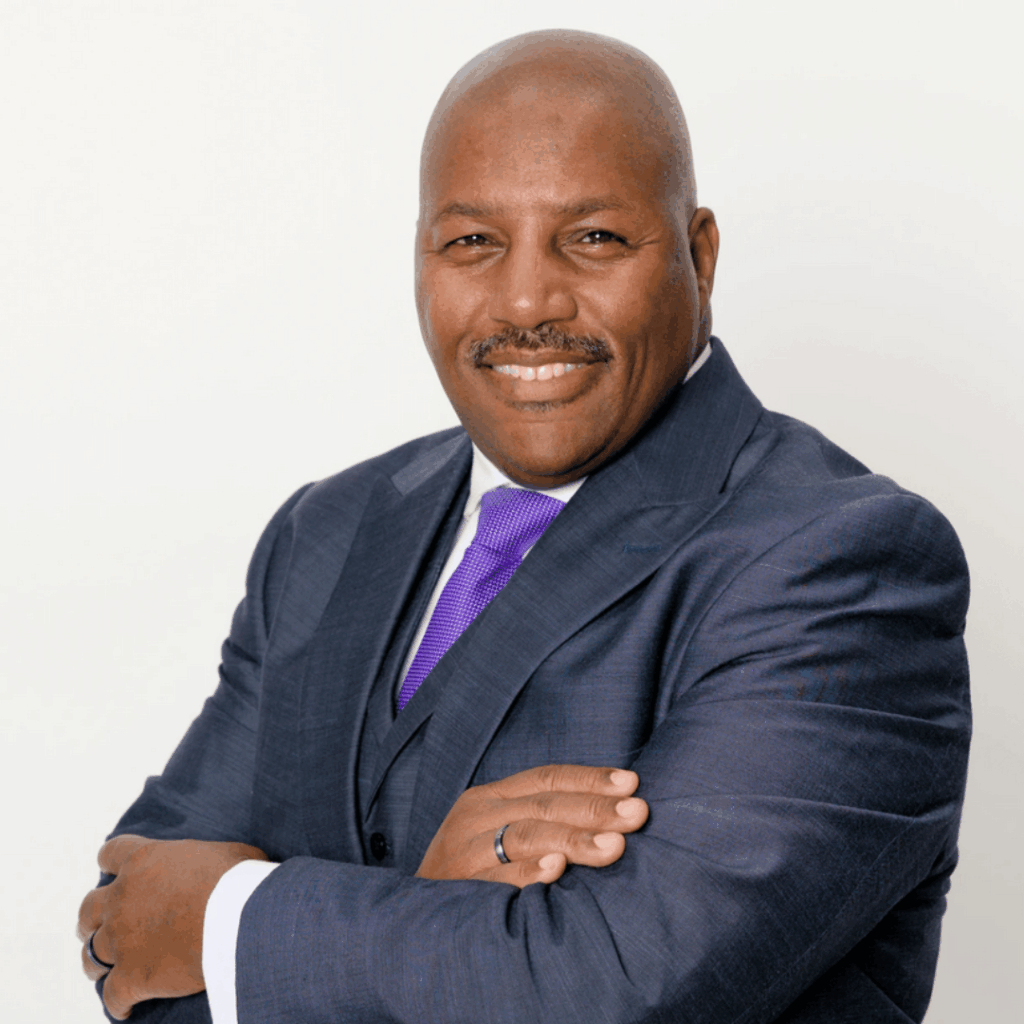
Lyman Montgomery covers Focus Driven Leadership in this Marketer of the Day episode. Dr Lyman Montgomery helps leaders turn chaos into clarity by rebuilding how their business runs day to day. His 5S framework starts with Structure: a clear mission and purpose that guides every decision. Next come Systems, including SOPs and automation, so results are consistent like a franchise playbook. Strategy then coordinates marketing, promotion, and sales so teams stop blaming each other and act in sync. Simplicity is the filter: if a product cannot deliver a visible result within 24 to 48 hours, it is too complicated. For adoption, he contrasts an 'I can't' mindset (perceived cost, lack of authorization, no need, and trust gaps) with an 'I will' mindset (intentional, seeing worth, willing, liking the direction, and leveraging tools like Gamma or ChatGPT).
Dr. Lyman Montgomery is a renowned clarity and culture strategist, author, coach, and business leader with decades of experience empowering organizations and individuals to turn chaos into clarity. As the architect of the “5S Framework” and a globe-trotting consultant, Dr. Montgomery has guided over 60,000 leaders, built multiple businesses, and become a powerful voice for faith, focus, and cultural transformation. His latest work, "Sacred, Not Sinful," explores the intersection of Greek life and Christian discipleship, while his digital hub, CoachLyman.com, serves as a gateway for leaders seeking personal and professional growth.
In this episode of Marketer of the Day, Dr. Lyman joins Robert Plank to unpack his actionable 5S Framework Structure: Systems, Strategies, Simplicity, and Sustainability, which helps businesses and individuals thrive amidst distraction and overwhelm. The conversation traces Dr. Lyman’s journey from humble beginnings to global influence, explores how leaders can overcome resistance to new tools and documentation (including leveraging AI for business efficiency), and examines the shift from an “I can’t” to an “I will” mindset. Discussion topics include building strong foundational systems, driving business results with clarity, embracing collaboration, leveraging automation, and nurturing the habits that support sustainable growth both in the boardroom and at home.
Quotes:
"Simplicity drives business... The more simplistic you can make it, the more users will use it."
"Everything we do is designed to get a result within 24 to 48 hours—otherwise, it's too complicated."
"There's a difference between an 'I can't' mentality and an 'I will' mentality. Which are you choosing?"
Resources:
- Connect with Dr. Lyman Montgomery on LinkedIn
- Transform chaos into clarity—grab Dr. Montgomery’s book on Amazon.
- Learn more about how to navigate complex compliance challenges on their website
- Follow Dr. Lyman Montgomery on Facebook
Podcast: Play in new window | Download (Duration: 31:20 — 43.1MB) | Embed
Subscribe: Apple Podcasts | Spotify | Amazon Music | iHeartRadio | Podchaser | RSS
Transcript
Download transcript (.txt)He went from being labeled the dumb twin to coaching over 60,000 leaders worldwide, plus building three businesses plus becoming a voice for faith, clarity and cultural redemption. It's Dr Lyman Montgomery, PhD, return guest, eight years later, and he is here to help you turn chaos into clarity with his 5s framework. We're here at the marketer of the day podcast with Robert plank. We are brought to you by D FY podcast.com we handle the back end of your podcast so you can focus on building your brand through conversations that matter and the conversation that matters today is with clarity and culture strategist, Lyman himself, who has this 5s framework, and if your business has chaos, unfocused, disorganized pain, it's just harder than it needs to be, then he has the answer for you, and he has a better way of driving your business and your personal life with the focus driven lifestyle. So Dr Lyman, we were just here. We're chatting, and we're like, talking all these amazing things. We're like, wait a second, we need to hit record. Get this on the record.
Absolutely, you know, I'm so passionate about about what we've been doing. And you know, eight years, can you believe it, man, we're both still going strong. Eight years later, and I was sharing with you in the green room, the virtual green room. I said, Man, I feel like I'm a founding member. Yeah, you know, back in the day, but love to see the growth. And so what I was sharing with you, and I think this would benefit your audience as well, is that as I travel across the world, working with organizations, large organizations, institutions, universities, and also coaching private clients. I noticed that a lot of the distraction, a lot of the frustration, centered around five key areas that I call the 5s framework. And the first S is structure. If you look at successful companies, they have a strong foundation, they have a strong mission, a strong sense of purpose, and that is and that emulates from the top down and throughout the organization. And so when I would go into organization, and I noticed they had a weak foundation. They were sort of scattered. They kind of took the approach, you know, take everything, throw it up against the wall and hope something sticks. Well, that sounds good, but it's a horrible strategy, because you're always trying something different. Now, are there times when you need to test Yes, but you have to dedicate yourself to what's our main mission that's going to drive everything. And so once you understand the importance of a strong structure, then you move into the second S, which are system I was sharing with you when I did a speaking tour three years ago in India, at the airport, they had a KFC. I was surprised that the KFC in India, in Mumbai, India, tasted exactly the same as the KFC in the United States. Why? Because they operate off of a system and not just a whim. Saying, Well, we're going to add a little bit of this, a little bit of that. No, they systematize it through automation. And so great companies, you understand that they have systems in place. They have what's called standard operating procedures, or SOPs. Well, how do I market? There's an SOP for that. How do we do advertising? How do we handle personnel issues? There is a policy and SOP. And even if you are a one person operation, you still should have systems in place, systems for how you handle email through automation. How do you handle requests for speaking engagement? Then I started looking at, well, what makes up a great system? Great systems is nothing more than the synergistic energy between strategies. For example, instead of having a marketing system that operates outside of promotion and operates outside of sales, a great strategy would be okay, let's look at how we market, how we sell and how we promote, because those have to work synergistically together to drive sales. And the problem a lot of times, with marketers and sales is the sales team blames the marketing Well, if you got our message, we can make sales the sales team say, Well, if you brought in leads, I will have someone to market to. So when they begin to work together and put these strategies together, these coordinated strategies, now you can create systems that operate within the structure. So once you have a structure, you have systems, those systems. Are coordinated with various strategies, which are your tactical plans, the day to day things that you do, then you start looking at, okay, the end user, simplicity drives business, and that's what's key. And so what I noticed is you will walk into a company, a Robert and they have a great structure. They're built Correct. They're organized correct. They have great systems. They have great strategy. The problem is they're so darn complicated. And one of the a lot of the feedback that I would get, a lot of the feedback that I would get would be, well, you know, we brought these consultants in, you know, we built these great products, but no one's using them. And the problem was they were so complicated. And I said, Okay, what is the key major, not the features, but the benefits. What? What is this designed to do, what do you want the end user to walk away with? See, it's easy to talk about the features. It comes in blue, it comes in yellow, the bells and the whistles, but what people really care about, will this work? For me? How long is the learning curve to be able to use said product or service, and the more simplistic that you can make it, you would notice the user will use it more, the more complicated. Guess what? It decreases if a person looks at something and say, You know what? I can't make heads or tails and I come back later. But if it's something, I always say this, can your product or service get the personal result within 24 to 48 hours? If the answer is no, it's too complicated. Everything that we have in my business is designed to get you a result within, in some cases, seven minutes, but most of it between, between 2448 hours, you will have a result. And that's the power of when you have simplicity. Now, the last F, I mean S, is what I call sustainability. You want to be able to fire test this in different markets. I've tested this 5s framework in relationships, in business, in coaching, even with kids. It works. Look, give me an example. You have a five year old, right? Try this out, yeah. Let's say your five year old wants his favorite toy, but it's time to eat, right? And you say, Okay, what's the structure? The structure is, he's having a moment because, rather than eating, he wants to play with his toy, right? So what's the system to get little Johnny to get to the table? You say, Listen, little Johnny, let's play a game, a game, yeah, this is the game. The game is whoever finished their food and have a conversation. Then guess what? You get to play with the game. And I go better than that. I even play with you. Now, what's Johnny thinking? What? This is a good deal. So we're gonna have a race to eat, and when I finish my food, we're gonna have a conversation while I'm eating, and Dad is going to play with me. Guess what? You've created a structure based around around conversation. The system is you're going to be able to enjoy the toy, right? Dad's going to be there. That's the strategy. Dad is going to be engaged and play with little Johnny, right? What's the simplicity play? It's not You're not sitting there giving this kid. I'm gonna give you 10 Reasons Why You need to eat your broccoli. He doesn't care this broccoli. He wants to play with his new toy, right? What's sustainability? The sustainability aspect is you've built a relationship, you built a bond. You've got little Johnny to open up, and that sustains itself from five years Guess what? When he's 10 years old, he's like, You know what? I can talk to dad, I can talk to mom, because you gamified. It. Does that make sense? Yeah, good training, good habits, good Perfect. Good training, great habits,
yeah, and I like how what you've discovered here, because it's like you said, it applies to your business, it applies to your personal life, and one step leads to the next, and it seems to overcome a lot of the dysfunction, because I feel like we've all dealt with many of these issues right where someone on the team, they don't they don't want to document, they don't see the value in it. They think they'll remember it in six months. They don't understand that what you've discovered, it might evolve, might go out of business. You might pass it on to someone else, and it would, you say, it can maybe be. Like, tedious and required discipline, maybe to have this kind of mindset of saying, like, I've got to write down I've got a document I've got to do, like, the the boring business tasks that maybe the benefit is, it'll free up my stress. But in the moment, it seems like there is some, some pain, some just like, it is boring to get some of these problems solved in the present moment.
It used to be not, not anymore, with the use of AI tools. I'm telling you, it's a cinch once you understand and how to use and I know we're not talking about AI, but I will say this if, let's say, for example, you have a PowerPoint and you don't have a lot of time, you can use an AI tool called gamma, dot, A, P, P, G, A, M, M, a, it will spit out a perfect It's almost scary, how fast it will spit out a PowerPoint in under a minute. You just put a prompt in, you tell it what you want, add some parameters, and guess what it's done. You could do the same thing. You could use gamma dot app or a p p the same thing for your SOPs. The key is learning how to problem. You use chat G P T, for example. And you can say, hey, chat G P T, act as if you are an HR professional, and I need a standard operating procedure on whatever, and it will in a matter of seconds, spit out at least a template that you can use so the speed of being able to move from ideation to an end result has been slashed by 90% through the use of AI. The problem is, a lot of business people, especially entrepreneurs, that's over a certain age, are still hesitant, just like with with covid. I remember I was sharing with you two years prior to covid, I had moved pretty much 70% of my operation to online. Why I had a teenage son. And you know how teenagers can be, right? I was a teacher, and I want to spend more time. I was a single dad at the time, to spend more time with my son. And rather than, you know, being all over the world, I said, How can I still provide quality service, but still being present? Dad and a friend of mine said, Hey, man, you got to get on Zoom. And I said, What's Zoom? Zoom? What? I didn't even know what it was. I found out, and I was so glad I did. And again, a lot of my colleagues, they resisted moving on. And I remember the conversation with one of my very close friend. He was doing about 350,000 a year in speaking engagements alone that had nothing to do with his books and his coaching. That was just speaking engagement. It dried up. Why? Because he refused to move to an online presence. And so again, I think what covid did, and in a way, is kind of a dichotomous situation, because on one hand, yes, it was horrible. A lot of people lost their life. A lot of people are still dealing with the after effects of covid. But on the other hand, this the strange part. It It created a new avenue of look at the number of multi millionaires that's under the age of 25 because they were able to take an idea from ideation and launch it and create a YouTube channel. Look at the number of podcasts. I remember, man, eight years ago, you was probably one of what a hand doesn't and now, everywhere you turn, you know, little six year olds got podcasts first, yeah?
And, I mean, you're talking about the blue ocean strategy, basically, right, like you think about, well, what would put me out of business if I'm this big speaker, if suddenly there was all this zoom stuff, then I would be screwed. So why don't I proactively get to that and add that to my business as kind of like a bolt on experiment, side project, and then that way, that's kind of my contingency plan. And even in the worst case, something like pandemic hits emergency, and I have that backup. But even a good case is I have this new kind of diversity in my business. I have this new just kind of experiment project. I appear more as an innovator or as a leader. And you know, you bring the light. I know you say you don't want to be like aI focused in this conversation, but you bring to light this idea, like, you know, AI was supposed to make us so smart, but we still have those same human problems of have to be absolutely curious and have the faith and have the belief and have the attention span and see these goals and process. Projects through. And so when you come to some organization, you say, hey, you know, you can use gamma and make these slides. You can have a help your your strategy, yes. Like, why do people still get stuck? Like you mentioned how sometimes we're not open to new ideas. But when you see these companies fail despite, like, all these tools, like, where do you think the problems still are,
I think, the big, the major problem you have, sort of like this, Americans operate in what's called a zero sum game. Our legal system, somebody has to win, somebody has to lose. We're not good, as opposed to in other cultures of collaboration, where everybody wins. We see that as socialism. We see it as communism. You know, we believe in this rugged individualism, right? I have to destroy you. You're my competitor, okay? And yet, that's a red ocean strategy, right? As opposed to, wait a minute, you can have 20,000 ocean liners in the ocean, and there's still room. We don't have to have just one, one big ocean liner in the Atlantic Ocean. There's room for everyone. And so part of that has to do with a scarcity mindset. If I collaborate, Robert, you're going to steal what I have, so I'm afraid to share, oh, you're gonna steal my idea or the lack of trust. And it's just a scarcity mindset versus an abundance mindset. And it leads me to what, what I call an I can't mentality versus an I will now I can't stands for and this is why people struggle at making sales. For example, the reason they struggle with making sales is due to these reasons. It's real simple. Number one, the perceived cost. The individual looks at the cost and they perceive the cost is being too high or too low, right? The A is they don't have authorization that you've heard this, right? Well, I'm not, you know, I'm just here to take notes. I'm not authorized to make a decision my husband, my wife makes the decision, right? So they don't have the authorization or the authority in themselves to make a decision. The end is they don't see the need of it. They say, We know that's like someone trying to sell me a tobacco product. I don't smoke, so I'm not I'm sorry, cigars. I'm not your customer. Okay? So you can try to tell me the benefits and how great they smell made in Cuba. I don't see a need for so I'm not going to I'm not a customer. And then the real issue is the T, which is the trust issue. And there's three reasons why people don't trust they don't trust you, they don't trust the product or the service. Honestly, they don't trust themselves. I know I'm not going to use it. Now, juxtapose that to an I will, an I will person says, You know what, I'm going to be. Number one, intentional. I see this as a worthy pursuit, which is the w the other I stands for. I'm willing to incorporate the tools that I need to bring it to fruition, right? And then they look at the other they look at the L as, you know what I like, where this going, how many times you've been in conference? I said, You know what I like, where this is going, right? And the other L's, they can leverage it. And so again, they have to be intentional. They have to see the worth or the value of it, or they're not gonna do it. I don't see the worth in something or the value in it. It's like, well, I really don't see the value of the worth of it, right? Then you see people say, You know what? This is promising. I like the direction. I don't understand it fully, but I like the direction that is going. It's important to explain expand this some more, and then they look at the leverage. How do I leverage this at the end of the day? And that's the difference between the I can't mindset versus the I will now, why did I not say the I can't to I can can is passive. Well, I can do it, but which is more powerful? And this gets back into the psychology of how the brain operates. You have to give your brain a command. I'm moving into my focus bag right. The brain operates based on two key functions, survival and progeneration. In other words, how do I save the body, the species, right? And how do I recreate or reproduce the species? That's the only purpose of the brain. That's why, if you are in a cold climate, the brain says, You know what, I need to. Conserve energy, I need to say the species. What can I sacrifice? You know, what? You really don't need your fingers to live. You don't need your toes. That's why the first thing to get frostbitten are your fingers and toes. Because the brain says, I have to preserve the key, the core to keep you alive. And then the second aspect of that is, if you look at the species as a whole animal kingdom, everything is about what food and sex. Sure, that's it. The base needs of the human species, of any species, is survival and procreation. And the same thing with the business, right? How do we survive and how do we grow when you invest your money? I don't want my money sitting in a savings account earning 0.1% right? I want my money to have some babies. It's called compound interest, and so that's the difference from having a person that will look at AI and use it, is moving from that I can't, or they don't even, they don't even try to say, No, I can't, I can't use it. And really it comes down to the cost, either their individual cost, the cost of time, the cost of money, the cost of energy, they don't feel that they have the authority, you know what? I'm not a techie person, you know, maybe my cousin or my mom. I have them take a look at it, and then they don't see the need for AI yet. And it's an argument that my wife and I have, she doesn't like AI. And I said, But Ben honey, you use AI every day, but I still don't like it. The machines are taking over. Now. She has a good argument. Part of her argument is she feels that over reliance on AI causes people not to think anymore. She said, We already got a problem with folks not being able, especially young people, to critically think, to solve problems, whereas my mindset is I look at AI not as a problem solver, but I look at AI as an assistant to help me do a lot of the the tedious tasks that would take me hours, like putting together a PowerPoint that I can now go to gamma, as I mentioned before, or or durable. Matter of fact, they've got aI now that can build apps like lovable that you can prompt. And I'm working on an app right now for one of my projects. And literally, in a matter of an hour, I have a fully functional app, and I love to take a look at, just go to sacred Greeks. Sacred Greeks live.com sacred Greeks live life. I'm sorry. Sacred Greek life.com, sacred Greeks life.com, and that's where I have my sacred Greeks Life app, and you can put in the show notes. It's actually free love for your audience to test it out and give me your feedback.
Very nice. So you've accomplished a lot, you learned a lot, and it seems like a lot of with your mindset here is centered around breaking these problems down into smaller, manageable pieces, right? There's the 5s 5x framework, and there's, like sometimes, reasons why people perhaps shoot themselves in the foot, or self sabotage. And you say, well, there's this big problem. But hey, isn't this the you're holding yourself back from just being a little bit curious? Or you say, well, the AI, it doesn't work. It's because using it wrong, right? You're not leading it. You're either expecting it to do the work or the thinking for you. And it's like, whenever I talk to these AI guys, I'm like, Well, what's, what's the secret, what's the strategy? And it's just like, well, put the human factor in, right? You absolutely say, well, I need to make these slides and put put some effort into what you tell it, and then what comes back actually look at it and refine it and revert back to it. And instead of just, like, standing back and hoping that it'll just figure it all out for you, because it won't. And so you've got so much figured out here. And yeah, as far as what you want people to approach you for, do you do coaching, consulting or, like, what's the service that you provide in relation to all this?
Yeah, we still provide our bread and butter, still our coaching. And what we've created, we created a one shop hub at coach lyman.com made it real easy. Coach lyman.com real easy. Coach lyman.com and you'll see three buttons if you're interested in our coaching, select that consulting, or we have this new product that we launched for college students called our sacred Greeks. Those are in fraternities and sororities. To build leadership skills, you don't have to be in a sorority, a fraternity or sorority, but if you're a young person you want to learn, you know, how do I market? How do. I, you know, launch out on my own, create products and services. We have an we have a program specifically for young people. Wow. You know, in eight years, got eight books out that are doing well, just launch a new book, sacred, not sinful. Matter of fact. Yes, my newest book, sacred, not sinful. And this one deals with, there was a lot of conversations about, if attorneys and sororities are, you know, evil and bad is there? Is there conspiracy to take over the world? And so I wrote this book, just launched it a couple of weeks ago, to kind of answer, you know, those questions that, no, you know, there's not a conspiracy. I'm a member of fraternity, Phi Beta, Sigma Fraternity Incorporated, and I've seen a lot of good works that being a part of any organization that's that's there to serve humanity. Can do one of the things I can say as well as I traveled the world, is the United States is still the most generous country in the world. When there are catastrophes disasters, we lead the world in our giving, and I think a lot of has to do with the social and civic organizations, nonprofits that we get behind and support. And so that's what this book is about, is how to not just be a member of a fraternity and sorority, but how do you really give back to the community, and also deal with some of the objections that people may have when it comes to any type of fraternity, sorority or any type of what some would call secret society. There's nothing really secret about it. But anyhow, that's it again. Go to coach lyman.com and there you could find everything, or you can go to my social media is a real easy just google me. I'm easy to find. And same number, same website. Just put everything under coach, lyman.com,
very nice, very cool. And so that is L, Y, M, a n, that's the first name and last name, Montgomery, yeah. And if that book sounds interesting, it's called sacred, not not sinful, biblical response to the black Greek letter organization's debate, debate where Dr Lyman provides a bold, biblical, balanced exploration of the tension between Greek life and Christian discipleship. And then for the business side of things, we said Coach lyman.com where he helps faith driven leaders stay compliant, protect what they built, and live fully aligned with their values, so they can lead with peace instead of pressure. And I just love your simplicity today and your storytelling, and you've kind of given us some new perspectives, right? And many times we have we're blocked by problems, struggles, and it just takes someone like you to say, hey, you know, there's a better approach. And maybe you're making it too hard on yourself. I'm running through the five best framework, right? Are you lacking the structure or the systems or the simplicity or the sustainability? Yes. And there could be a better way to approach all this, and Coach lyman.com is your hub for that? Yeah, C, O, A, C, H, L, Y, M, a n.com and as we're headed to coach lyman.com it's time for the finale, scary part of the show where I try to stump you or try to put you on the spot by asking you about a fun or interesting quote or lesson that has served you. So what comes to mind as far as a fun or interesting quote or lesson?
Yeah, I would say probably the my wife reminded me that I lost a good friend his funeral eight, matter of fact, eight years ago yesterday, Darwin l Lofton and we grew up together, same neighborhood, same high school, same boys and girls school, Boys and Girls Club, same university, even, you know, players the same fraternity together. So we were like tied to the hip. And one of the things that he used to always say, I'm not pressed. Don't allow life to press you down. If anything, turn those lemons into lemonade and add some sugar to it. He would always say that. And so that's my quote for the day, from rest in peace, Darwin, Darwin. Oscar Loftin, I'm not press. And if you feel pressed, that's okay. Turn those lemons into lemonade and add some
Yeah, that's inspiring. Turn a bad into a good feeling, the optimism, positivity, and that's a message that we can't get enough of right. We always need that reminder of doing the right thing and turning a bad into a good yes, think about that as we had to co. H lineman.com he provides clarity for your calling, your agency and your influence. It's great catching up with you after do it again soon. We thought about a lot together.
We did, we did, and in a way, you really helped launch my business, because I was just starting out. I had been in business probably about three or four years and so thank you, thank you. This has been fun,
And thank you for being here. All right.
Subscribe
If you enjoyed this article, subscribe to receive more just like it.


